Saltwater fishing destinations shape the entire boating experience because the right water determines what species you can target, how far you need to run, what gear you should carry, and what kind of trip you can realistically plan in a day or a week. For anglers researching the best fishing destinations by boat, a useful hub article must do more than list famous names. It should define what makes a destination truly productive, explain how seasons, access, and boat type affect success, and show where different fisheries fit different goals. After years of planning coastal runs, offshore trips, and island itineraries, I have found that the best saltwater fishing destinations consistently combine healthy fish populations, reliable boating infrastructure, navigable water, and a clear match between local conditions and angler expectations. Some places excel for flats fishing and sight casting, others for bluewater pelagics, reef species, or inshore mixed-bag action. Understanding those categories matters because a destination that is perfect for a center console crew chasing tuna may be a poor fit for a family in a bay boat targeting redfish and snook. This guide covers the top saltwater fishing destinations for anglers through a boating lens, so you can choose waters that match your vessel, budget, target species, and skill level while building a smarter travel plan for future fishing trips.
What Makes a Saltwater Fishing Destination Worth the Trip
The best saltwater fishing destinations by boat share four practical traits: productive habitat, dependable access, manageable conditions, and species diversity aligned with the local season. Productive habitat includes grass flats, mangroves, passes, reefs, wrecks, canyons, and current edges. Access means more than a marina. Serious anglers need quality ramps, fuel docks, bait availability, charter support, tackle shops, and nearby lodging that understands early departures and fish cleaning needs. Manageable conditions matter just as much. A legendary offshore ground loses value quickly if small boats are regularly weathered out. Species diversity is the final multiplier because it gives you backup plans when wind, tides, or migrations shift. In Florida Bay, for example, I have seen trips pivot from tarpon to redfish to sea trout within the same weather window, preserving the day when the primary plan faded.
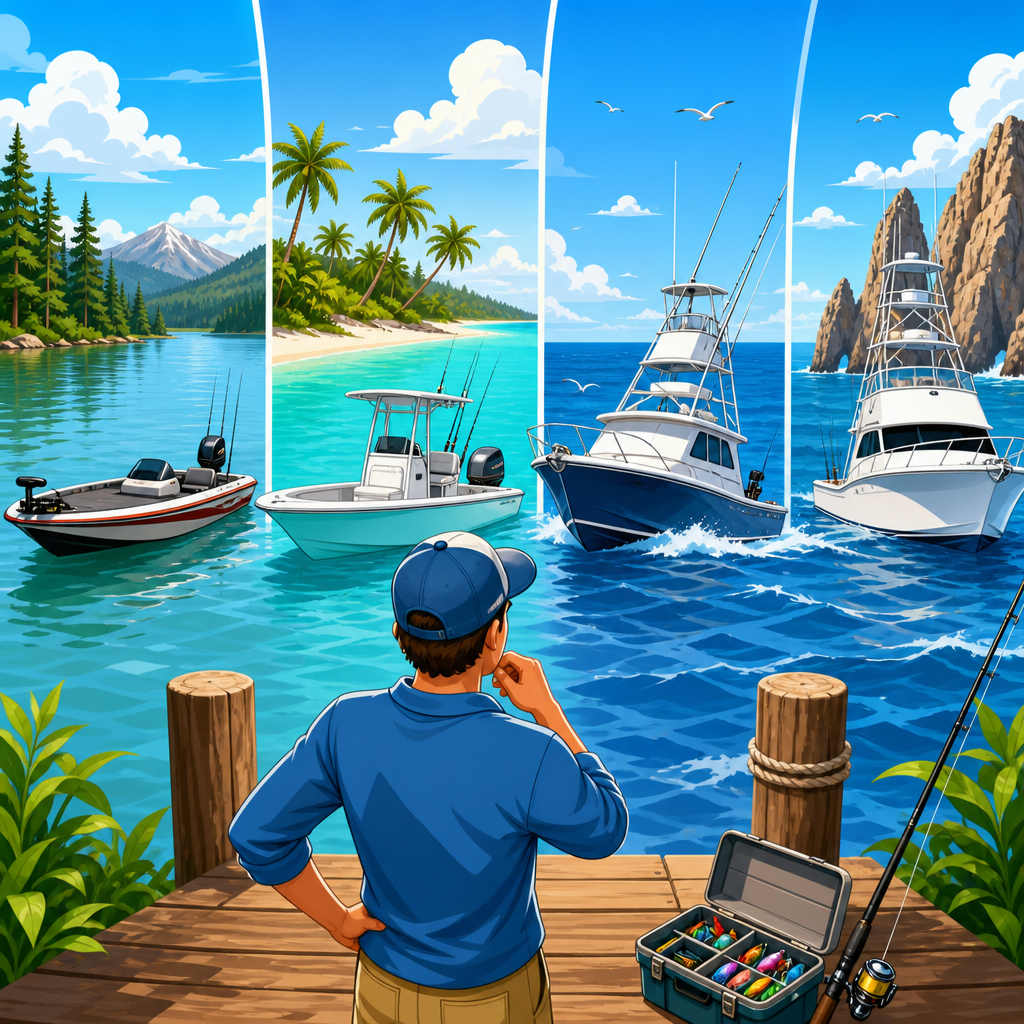
Boat suitability is the filter many travel articles ignore. Flats skiffs unlock shallow fisheries in the Florida Keys, Louisiana marshes, and Texas bays, but they are not ideal for long offshore runs. Deep-vee center consoles dominate places like Venice, Louisiana, the Outer Banks, and Southern California because they handle chop, carry fuel, and fish multiple zones in one trip. Trailerability also matters. Destinations with several launch options, like the Gulf Coast of Florida or the Carolinas, let anglers move with wind direction and fish movement instead of committing to one harbor. Before booking any trip, match draft, range, livewell capacity, electronics, and crew experience to the local fishery. That decision influences success more than any lure selection.
Another defining factor is how well a destination supports both independent boaters and guided trips. A strong hub destination offers enough information and services for newcomers without stripping away opportunities for experienced captains to explore. Areas with marked channels, updated charts, reliable tide data, and active local reports are easier to fish safely. NOAA charts, Navionics, Garmin BlueChart, and local marina briefings reduce risk, especially in tidal inlets, coral areas, and shifting delta passes. The difference between a famous destination and a dependable one is usually infrastructure plus information.
Florida Keys: The Most Versatile Saltwater Fishing Hub
The Florida Keys remain one of the most complete saltwater fishing destinations in North America because they offer flats, backcountry, reef, wreck, and offshore fishing in one connected island chain. From Key Largo through Islamorada, Marathon, and Key West, anglers can target tarpon, bonefish, permit, snook, redfish, mangrove snapper, yellowtail snapper, grouper, mahi-mahi, sailfish, and blackfin tuna depending on season and weather. Few destinations allow a boater to fish shallow turtle grass at sunrise, patch reefs by midday, and blue water in the afternoon. That range makes the Keys a true hub for anglers planning multiple future trips by technique and species.
Islamorada is especially strong for backcountry and sport fishing because Florida Bay, the Everglades edge, and the Atlantic side are all within reach. Spring brings tarpon migration, summer favors reef species and dolphin fish, and winter is known for sailfish on the edge. In practical terms, this means even a four-day trip can be tailored around conditions. If easterly wind dirties the ocean side, the backcountry often remains fishable. If summer heat slows the flats bite, reef and wreck fishing can save the day. For boaters, the Keys reward preparation. Coral heads, shallow banks, and tidal flow require updated charts and disciplined navigation, but the payback is one of the broadest fishing menus anywhere.
Gulf Coast Favorites: Louisiana, Texas, and Florida Panhandle
Louisiana is unmatched for inshore numbers. Venice has become famous for yellowfin tuna offshore, but the state’s marsh fisheries are equally important for anglers in bay boats and shallow-draft skiffs. Redfish, speckled trout, black drum, and flounder thrive around ponds, bayous, and broken marsh edges. The Mississippi River Delta creates nutrient-rich conditions, and that productivity shows in bait concentration and fish growth. I have watched visiting crews underestimate how dynamic this fishery is; falling tides pull shrimp and minnows from grass into drains, and those drains can fish like funnels. The result is action that is often more pattern based than luck based.
Texas offers a different inshore style built around large bay systems such as Galveston Bay, Matagorda Bay, Corpus Christi, and Laguna Madre. Laguna Madre is especially notable because it is one of the few hypersaline lagoon systems in the world and supports excellent redfish, trout, and black drum fishing over grass flats and sand pockets. The Texas coast suits technical anglers who like to read wind, water clarity, and seasonal bait movement. Meanwhile, the Florida Panhandle, including Pensacola, Destin, and Panama City, gives boaters another blend: nearshore king mackerel, snapper, grouper, cobia migration, and inshore redfish and trout. It is one of the easiest regions for family boating trips because launch access, marinas, and vacation lodging are abundant.
Atlantic Standouts: Outer Banks, South Florida, and the Mid-Atlantic
The Outer Banks of North Carolina are elite because they bridge inshore sounds, inlets, nearshore structure, and bluewater access. Hatteras is famous for marlin, tuna, wahoo, and dolphin, while the Pamlico Sound system offers red drum, speckled trout, and flounder. Few places let anglers choose between giant bluefin in cold months and classic billfish action in warmer seasons. The geography is the advantage. The continental shelf and Gulf Stream influence create pelagic opportunities that many ports cannot match, while the sound side gives protected options when offshore weather turns.
South Florida, especially Miami, Fort Lauderdale, and Palm Beach, stands apart because deep water lies close to shore. For boaters, that means less time running and more time fishing. Sailfish, kingfish, mahi, wahoo, tuna, and reef species are all realistic targets, and the region’s year-round seasonality makes it practical for repeat travel. The Mid-Atlantic, including Ocean City, Maryland, and Virginia Beach, should also be on any serious list. These ports are tied to canyon fishing for tuna and billfish, and they reward larger boats with range and weather discipline. They are not casual fisheries, but for anglers seeking offshore prestige species, they deliver.
West Coast and Pacific Options for Boat Anglers
Southern California is one of the most strategically interesting saltwater fishing destinations because species availability changes with water temperature, current, and bait movement. San Diego is the flagship port for bluefin tuna, yellowtail, dorado, calico bass, and seasonal yellowfin. Long-range fleets have shaped the region’s reputation, but private boaters also benefit from excellent launch facilities, fuel access, and a strong tackle culture. When bluefin push within range, the fishery becomes one of the most exciting in the country. Success here depends heavily on electronics, sonar interpretation, and current fish reports, more than on simply arriving at a famous spot.
The Pacific Northwest offers a very different but equally valuable boating fishery. Washington and Oregon are prime for salmon, lingcod, halibut, and bottomfish, with ports like Westport, Ilwaco, and Neah Bay drawing trailer boaters through peak seasons. Alaska deserves mention as a dream destination for anglers willing to travel farther by trailer, lodge boat, or charter vessel. Homer, Seward, and Sitka are known for halibut, salmon, rockfish, and lingcod, and the fish quality is exceptional. The tradeoff is that weather, cold water safety, and trip logistics are far more demanding than in warm-water destinations.
How to Choose the Best Fishing Destination by Boat
Choosing the best saltwater fishing destination starts with a simple question: what do you most want from the trip? If your goal is variety, the Florida Keys and South Florida are hard to beat. If you want inshore action with high catch rates, Louisiana and Texas should move to the top. If you are chasing offshore prestige species, the Outer Banks, Venice, Southern California, and Mid-Atlantic ports deserve serious attention. Budget also matters. Fuel, slip fees, guide rates, bait costs, and lodging can differ dramatically. A trip that looks cheaper on airfare may cost more once long offshore runs are added.
| Destination | Best For | Typical Targets | Ideal Boat Type |
|---|---|---|---|
| Florida Keys | Variety and multi-zone fishing | Tarpon, permit, snapper, mahi, sailfish | Bay boat, flats skiff, center console |
| Venice, Louisiana | Inshore volume and offshore tuna | Redfish, trout, yellowfin tuna | Bay boat or offshore center console |
| Texas Gulf Coast | Technical bay fishing | Redfish, speckled trout, drum | Shallow-draft bay boat |
| Outer Banks | Offshore pelagics plus inshore backup | Tuna, marlin, red drum | Center console or sportfisher |
| Southern California | Tuna-focused Pacific trips | Bluefin, yellowtail, dorado | Trailerable offshore center console |
Once destination fit is clear, narrow the timing. Migration windows, spawning closures, water temperature, and hurricane or storm patterns can define the difference between a great trip and a frustrating one. Then evaluate boating logistics: ramp security, trailer parking, local fuel availability, sea conditions, and distance to fishable water. The best fishing destination by boat is not the one with the biggest name. It is the one where your boat can operate efficiently, safely, and often enough to maximize productive hours on the water.
Top saltwater fishing destinations for anglers are not interchangeable, and that is exactly why a hub approach is useful. The Florida Keys lead for range and year-round flexibility. Louisiana stands out for inshore abundance and delta-driven productivity. Texas rewards anglers who enjoy refined bay fishing. The Outer Banks and Mid-Atlantic shine for offshore ambition, while South Florida offers rare access to deep water close to port. Southern California and the Pacific Northwest round out the list with highly specialized but world-class options. Across all of them, the winning strategy is the same: match target species, season, weather, and boat capability before you book ramps, slips, or lodging.
If you are building a smarter boating travel calendar, start by choosing one destination that fits your current boat and one species you most want to catch. Then research launch options, seasonal peaks, and local regulations in detail. From there, expand into nearby fisheries and techniques. That is how experienced anglers turn a single trip into a long-term plan for better fishing, safer boating, and more productive days on the water. Use this guide as your starting point, then map your next saltwater run with purpose.
Frequently Asked Questions
What makes a saltwater fishing destination truly worth visiting by boat?
A great saltwater fishing destination is not just a place with a famous name or a few good catches posted online. For boaters, the best destinations combine productive water, reliable access, manageable running distance, and a strong match between target species and the type of vessel you own or charter. In practical terms, a worthwhile destination gives anglers realistic opportunities to catch fish without forcing them into unsafe runs, overly specialized equipment, or narrow seasonal windows. Productive structure such as reefs, wrecks, inlets, flats, estuaries, ledges, and offshore temperature breaks all matter because they concentrate bait and game fish. Destinations that offer multiple habitat types are especially valuable since they allow anglers to adapt if weather changes or a bite slows down.
Another major factor is consistency. The best boating destinations support fishing across different times of year, not just during one short peak run. Areas known for species diversity are often more rewarding because anglers can shift from inshore redfish, snook, or speckled trout to nearshore kingfish, cobia, or snapper depending on conditions. A destination also becomes more appealing when it has good marinas, bait availability, fuel docks, ramps, lodging, and local regulations that are clearly communicated. These details may sound secondary, but they strongly affect how enjoyable and efficient a trip actually is. In short, the top saltwater fishing destinations are those where water quality, fish habitat, seasonality, boat access, and trip planning all work together to give anglers a realistic chance at success.
How do seasons affect the best saltwater fishing destinations?
Seasonality is one of the most important pieces of the puzzle when choosing where to fish in saltwater. A destination that is exceptional in spring may be average in late summer, and a place known for offshore pelagics may be less productive when water temperatures shift or bait migrates away. Fish movements are driven by temperature, spawning cycles, bait concentration, salinity, and current patterns, so timing often matters just as much as location. For example, coastal marshes and estuaries can be outstanding during periods when redfish, trout, and flounder feed aggressively, while reef and bluewater destinations may peak when tuna, mahi, wahoo, or sailfish push into range.
For anglers planning by boat, seasonal timing affects more than just what bites. It also influences weather windows, sea state, water clarity, and how far you may need to run to find fish. During some parts of the year, nearshore waters may hold enough life to make a half-day trip highly productive, while in another season the better action could be concentrated far offshore, requiring more fuel, range, and planning. In tropical and subtropical regions, storm season can also shape when boating is most practical. That is why strong destination guides do not simply say a place is “great for fishing.” They explain which species peak when, what techniques are most effective during each season, and whether the destination is best suited for quick inshore trips, nearshore runs, or full offshore outings during specific times of year.
How should anglers choose a destination based on their boat type and experience level?
Your boat type should play a central role in deciding where to fish. A shallow-draft bay boat, flats skiff, center console, walkaround, or sportfisher all open different possibilities, and choosing a destination that matches your vessel makes the trip safer, more comfortable, and more productive. Smaller boats often excel in destinations with extensive inshore water, tidal creeks, flats, back bays, passes, and protected nearshore structure close to launch points. These locations let anglers target quality species without long offshore runs. Larger offshore-capable boats, by contrast, can take advantage of destinations where canyons, ledges, oil rigs, deep reefs, or bluewater current edges are farther from shore and require greater fuel capacity and sea-keeping ability.
Experience level matters just as much. Beginner and intermediate anglers generally benefit from destinations with straightforward navigation, multiple protected options, easy access to bait and fuel, and dependable fishing close to the ramp or marina. More advanced anglers may prefer areas with technical tidal movement, long runs to offshore grounds, live-bait opportunities, and highly seasonal trophy fisheries. The right destination should let you fish efficiently within your skill set rather than forcing you into conditions that are overly demanding. If the area has rapidly changing weather, heavy vessel traffic, strong inlet current, or complex offshore routing, it may be better suited to seasoned crews. The best destination is not always the most famous one; it is the one that aligns with your boat’s capabilities, your local knowledge or guide support, and the style of fishing you want to enjoy.
What should anglers look for when comparing inshore, nearshore, and offshore saltwater fishing destinations?
When comparing saltwater destinations, it helps to think in terms of range, species, and trip style. Inshore destinations usually appeal to anglers who want access to flats, marshes, mangroves, back bays, estuaries, and tidal creeks. These waters can be incredibly productive for species such as redfish, snook, tarpon, speckled trout, flounder, and striped bass depending on the region. Inshore destinations are often ideal for shorter trips, family outings, or anglers using smaller boats. They also provide more shelter from rough weather, which means plans are less likely to be canceled by wind and sea conditions.
Nearshore destinations bridge the gap between protected coastal fishing and true offshore runs. These areas may include beaches, hard bottom, reefs, wrecks, buoys, and artificial structure within relatively easy reach of land. They are often excellent for anglers targeting king mackerel, cobia, snapper, grouper, Spanish mackerel, and seasonal migratory species without committing to long-range offshore travel. Offshore destinations, on the other hand, are built around distance, deep water, and highly migratory game fish. Anglers may run to ledges, canyons, banks, seamounts, weed lines, or temperature breaks in search of tuna, mahi, marlin, wahoo, amberjack, and swordfish. The key is to compare not only what species a destination offers, but also how far you must travel, what weather tolerance your trip requires, how much fuel and time the run consumes, and whether the destination supports the exact experience you want from a day on the water.
How can anglers plan a successful trip to a top saltwater fishing destination?
Successful trip planning starts with defining realistic goals before you ever leave the dock. First, decide which species you want to target and whether your trip is primarily about action, variety, or trophy potential. Then research the destination’s seasonal bite, average run distance, local regulations, launch options, marina services, and typical weather patterns during your travel window. Good planning also means understanding the local ecosystem. Tides, moon phases, water temperature, current direction, bait migrations, and recent weather all influence where fish position and how they feed. In many destinations, success depends on adjusting to these factors rather than fishing the same spots all day.
Preparation should also cover equipment and logistics. Match your rods, reels, terminal tackle, bait systems, and safety gear to the destination and target species instead of packing generic gear for every scenario. A flats trip requires a very different setup from trolling offshore ledges or bottom fishing deep structure. Review fuel needs carefully, especially if the destination is known for longer runs. Check charts, navigational hazards, inlet conditions, and backup plans in case wind or storms limit your options. It is also wise to identify alternative inshore or nearshore areas so the trip remains productive if offshore conditions deteriorate. Finally, consider local knowledge a major advantage. Hiring a reputable guide for the first day, studying regional reports, and talking with marinas or bait shops can shorten the learning curve significantly. The best saltwater fishing trips happen when anglers combine a strong destination choice with smart timing, proper gear, and a flexible plan built around real on-the-water conditions.