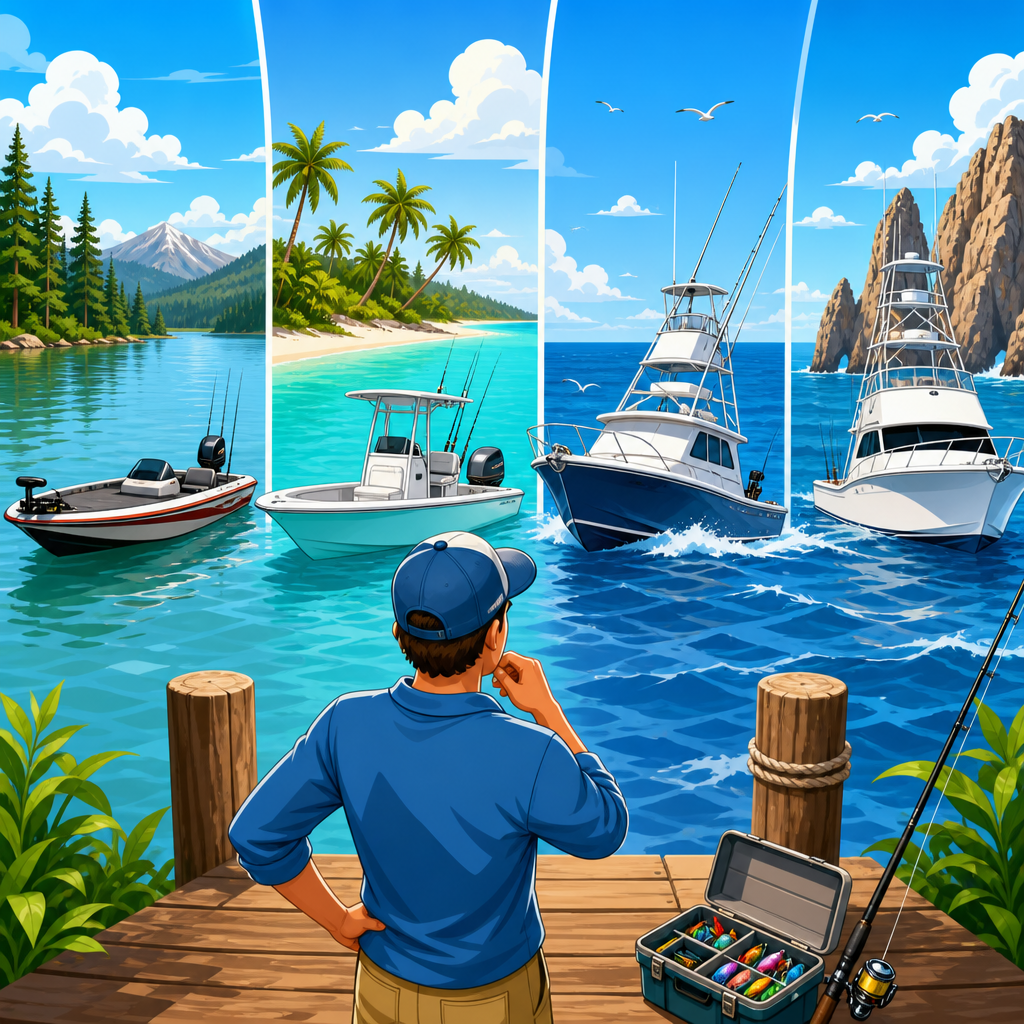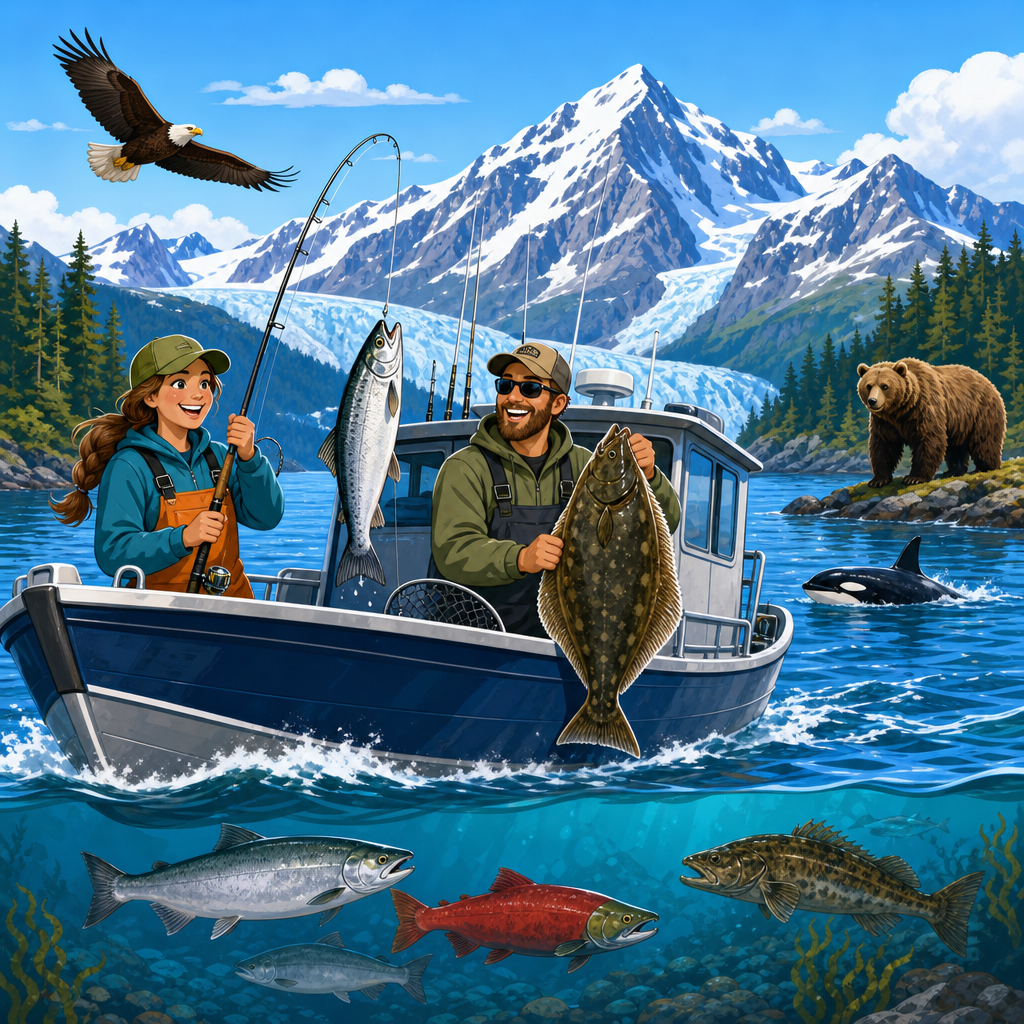
Fishing in Alaska by boat delivers something few destinations can match: access to immense water, wild fish runs, and coastal scenery that changes by the hour. For boaters, Alaska is not a single fishery but a network of very different environments, from protected Inside Passage coves to the open Gulf, from glacial river mouths to broad freshwater lakes. Knowing where to go and what to catch matters because distance, weather, tides, and species timing shape every successful trip. A halibut run out of Homer requires different planning than trolling for king salmon near Sitka or jigging for lake trout in Southcentral Alaska. In my experience planning and running boat-based trips here, the best outcomes come from matching your vessel, season, and skill level to the right region instead of chasing every species at once.
Alaska fishing by boat generally falls into three categories. Saltwater trips target halibut, salmon, rockfish, lingcod, and sablefish in coastal waters. River and estuary boating focuses on salmon, rainbow trout, Dolly Varden, and pike where tides and currents interact. Freshwater lake boating opens up trout, char, Arctic grayling, and landlocked salmon opportunities. Regulations are equally important. The Alaska Department of Fish and Game sets seasons, size limits, annual limits, and emergency orders that can change by area and species. Saltwater anglers also need to understand federal rules when fishing near national parks or offshore waters managed with National Marine Fisheries Service oversight. For travelers building a broader boating itinerary, Alaska stands out because one destination can support serious fishing while also offering wildlife viewing, kayaking, and multi-day cruising routes that turn a day on the water into a complete adventure.
This hub article covers the best fishing destinations by boat across Alaska, explains what each area is known for, and helps you decide where to launch, hire a charter, or base a trailerable boat. It is written for anglers who want specifics: which ports produce halibut, where salmon timing is strongest, what species are realistic for families, and which places reward experienced skippers. Use it as the starting point for deeper destination planning, then narrow down your route, target species, and season.
Southcentral Alaska: Homer, Seward, and Prince William Sound
Southcentral Alaska is the first stop for many visiting boat anglers because it combines road access with world-class saltwater fishing. Homer, on Kachemak Bay, is the best-known halibut port in the state and has earned its reputation. From the Homer Harbor, private boats and charter vessels run to productive grounds in Cook Inlet, lower Kachemak Bay, and farther offshore when conditions allow. Pacific halibut are the headline species, with fish from twenty to sixty pounds common enough to keep anglers engaged and true barn-door fish always possible. Anglers also catch salmon, especially king and silver salmon depending on timing, plus Pacific cod, rockfish, and occasional lingcod in open seasons. The practical advantage of Homer is infrastructure: ramps, charters, fuel, processing, freezer services, and lodging are all built around fishing traffic.
Seward offers a different profile. Resurrection Bay gives boaters relatively protected water close to the harbor, which matters when Gulf conditions turn rough. Charter captains and capable private skippers can reach halibut grounds, silver salmon schools, rockfish structure, and lingcod habitat. Seward is especially strong for combo trips, where trolling for coho salmon in the morning transitions into bottom fishing later in the day. During peak summer, anglers often see humpback whales, sea otters, puffins, and glaciers in the same run, making it one of the best destinations for mixed-interest groups. If you are traveling with family members who care as much about the scenery as the catch, Seward often outperforms more purely utilitarian fishing ports.
Prince William Sound appeals to boaters who want sheltered cruising with productive fishing. Valdez is the main launch point and is famous for pink salmon in odd-numbered years, plus strong silver salmon opportunities later in summer. Halibut, rockfish, and lingcod are available in the sound and nearby Gulf access points. The geography matters here: islands, fjords, and passages reduce swell exposure, but weather can still become serious quickly. For trailer boat owners, Prince William Sound is one of Alaska’s better balances between adventurous scenery and manageable navigation.
| Destination | Best Boat-Target Species | Typical Strength | Best For |
|---|---|---|---|
| Homer | Halibut, king salmon, silver salmon, rockfish | Big halibut and full-service fishing harbor | Anglers prioritizing meat runs and charter support |
| Seward | Silver salmon, halibut, rockfish, lingcod | Reliable combo trips in scenic water | Families and mixed-interest boaters |
| Valdez / Prince William Sound | Pink salmon, silver salmon, halibut, rockfish | Sheltered cruising with varied fishing | Trailer boat travelers and multi-day explorers |
| Whittier | Halibut, salmon, rockfish | Fast access from Anchorage region | Boaters wanting shorter logistics |
Whittier deserves mention because it is the closest major saltwater access point to Anchorage. Through the Anton Anderson Memorial Tunnel, anglers can reach Prince William Sound and fish halibut, salmon, and rockfish with less overland driving than Homer or Seward require. The tradeoff is congestion. On busy weekends the launch, tunnel schedule, and harbor can become a logistical bottleneck. Still, for travelers combining city access with an overnight fishing plan, Whittier is highly efficient.
Southeast Alaska: Sitka, Ketchikan, Juneau, and Petersburg
Southeast Alaska is the state’s premier salmon-by-boat region, although that label undersells its halibut and bottom fishing. Sitka is often the first name serious anglers mention because it consistently produces king salmon, coho salmon, halibut, lingcod, and rockfish in the same general area. Positioned on Baranof Island with direct access to the outer coast, Sitka benefits from nutrient-rich Gulf waters that support bait, which in turn supports top-tier predator fishing. I have seen why so many experienced crews return here: even on a weather-adjusted day, anglers can usually build a productive plan around trolling kelp lines, mooching bait schools, or dropping jigs to bottom structure. Sitka is not the easiest destination logistically, but it is one of the most complete.
Ketchikan offers another excellent option, particularly for salmon-focused trips. Protected Inside Passage waters make it approachable for many boaters, while nearby ocean structure still supports halibut, lingcod, and rockfish. Chinook salmon can be excellent in season, and coho action often builds strongly later in summer. Ketchikan also fits cruise-and-fish itineraries because marinas, lodges, and floatplane services connect scattered islands and coves efficiently. Anglers using a rented boat or booking day charters appreciate how quickly they can move from town services into fishable water.
Juneau has a growing reputation among independent travelers because it combines city amenities with immediate marine access. Auke Bay is the practical boating hub, and from there anglers target king salmon, coho, halibut, and rockfish. The area’s mix of channels, island shorelines, and access to open water means trips can be tailored to weather and experience level. That flexibility is important in Southeast, where marine forecasts and tidal exchanges shape safety and catch rates.
Petersburg and nearby Frederick Sound are less famous but highly rewarding. This area produces salmon, halibut, and excellent scenery with less traffic than larger ports. For boaters who prefer a working-fishing-town atmosphere over a more developed tourism center, Petersburg is one of the strongest choices in Alaska. It also works well as part of a longer Inside Passage route linking multiple ports rather than a single-base trip.
Western and Remote Alaska: Kodiak, Bristol Bay, and the Aleutian edge
Kodiak is one of Alaska’s most serious boat-fishing destinations, and it rewards anglers who respect its conditions. The island sits where protected bays meet powerful Gulf exposure, creating outstanding habitat for halibut, king salmon, coho salmon, lingcod, rockfish, and Pacific cod. Kodiak is also a place where weather dictates everything. Experienced captains do very well here because they know when to stay inside, when to run outside, and how to use current, contour, and structure. For visiting anglers, Kodiak is best approached either with a professional charter or a highly capable private vessel supported by local knowledge. The upside is exceptional catch quality and fewer compromises on species variety.
Bristol Bay is better known globally for its commercial sockeye salmon fishery than for casual recreational boating, but it deserves attention as a bucket-list region. Rivers and estuaries around the bay support extraordinary salmon runs, and nearby freshwater systems hold rainbow trout, Arctic char, and grayling. Recreational boat access can be complicated by remoteness, weather, tides, and limited services, so most traveling anglers experience Bristol Bay through lodges using jet boats, skiffs, or larger support vessels. If your goal is numbers of salmon and trout in an undeveloped landscape, few places compare. If your goal is easy DIY trailer boating, this is not the first Alaska region to choose.
Farther west toward the Aleutian chain, opportunities become even more specialized. The waters are incredibly rich, with halibut, Pacific cod, salmon, and deepwater species available, but the environment is demanding. Wind, fog, swell, and limited harbor support make these trips realistic mainly for commercial-scale planning, expert local operators, or highly experienced expedition cruisers. For most recreational readers, these areas are inspiring examples of Alaska’s scope rather than practical first-trip recommendations.
Freshwater boat fishing: Kenai Peninsula, Interior lakes, and pike country
Alaska boat fishing is not only saltwater. On the Kenai Peninsula, anglers use drift boats, powerboats, and small lake craft to target sockeye, silver salmon, rainbow trout, Dolly Varden, and lake trout. The Kenai River is the most famous system, although motor restrictions, crowding, and species-specific regulations require careful review before launching. Skilak Lake and Kenai Lake can produce trout and char while giving travelers more room than the main river corridors. This region is ideal for anglers who want freshwater action tied to a road-trip itinerary.
Interior Alaska offers a different experience. Near Fairbanks and farther north, boat-access lakes and rivers hold northern pike, Arctic grayling, lake trout, and sheefish in some drainages. Pike fishing around the Matanuska-Susitna region and parts of Interior Alaska is especially attractive to families because action can be steady, tackle is straightforward, and fish often occupy accessible weedy bays and sloughs. A simple skiff, canoe, or small aluminum boat can be enough, which lowers the barrier compared with offshore saltwater trips.
Lake Iliamna and other large freshwater systems open yet another category: expansive, weather-affected inland boating with trophy trout and char potential. These waters behave more like inland seas than casual lakes. Boaters should treat them accordingly with proper safety gear, conservative routing, and local knowledge.
How to choose the best Alaska fishing destination by boat
The best destination depends on four factors: target species, boat type, season, and tolerance for weather. If halibut is the priority, Homer, Seward, Kodiak, and parts of Southeast should top the list. If king salmon is the dream, Sitka, Ketchikan, Juneau, and select Southcentral ports offer the strongest marine options. If you want the easiest road-access saltwater planning, choose Homer, Seward, Valdez, or Whittier. If you want protected cruising with regular fishing opportunities, Prince William Sound and Inside Passage ports are more forgiving than exposed Gulf runs.
Seasonality is decisive. In broad terms, late spring through early fall is the main boating window, with June through August delivering the highest combination of access, fish activity, and services. King salmon often peak earlier than coho, halibut remains a core summer target, and pink salmon surge strongly in certain regions and years. Lingcod seasons are area specific. Because emergency orders can alter retention quickly, the safest planning habit is to check local regulations within days of departure, not weeks.
Charter versus self-guided is another key decision. Chartering makes sense in exposed areas such as Kodiak, Sitka outer waters, and deep halibut grounds where local seamanship sharply affects outcomes. Self-guided boating works well in Southcentral and Southeast harbors with strong infrastructure, provided your vessel is equipped with marine electronics, immersion gear where appropriate, a VHF radio, tide knowledge, and a conservative go or no-go threshold. Alaska punishes overconfidence faster than almost any destination I have worked in.
Planning, safety, and practical trip logistics
Every Alaska boat-fishing plan should start with marine forecasts, tide tables, and fuel calculations. NOAA weather, local harbor reports, and current charts are not optional tools. Large tidal swings can expose ramps, accelerate passes, and change anchoring conditions dramatically. Cold water immersion is the constant risk many visitors underestimate. Even on bright summer days, water temperatures can incapacitate an unprotected person within minutes, so life jackets, emergency communication, and realistic float plans are basic requirements, not advanced precautions.
Fish care is also part of trip quality. On successful days in Alaska, you may land more premium meat than your cooler system can handle. Bring insulated fish boxes, ice or slush planning, and a processor reservation in major ports such as Homer, Seward, Sitka, and Ketchikan. If you intend to fly home with catch, confirm airline box policies and local freezing turnaround times before fishing.
Finally, think of Alaska as a destination ladder rather than a single trip. Start with a manageable port like Seward, Homer, or Whittier if you are new to the state. Advance to Sitka, Ketchikan, or Kodiak once you understand Alaska weather, tides, and fish timing. That progression leads to better catches, safer boating, and a far richer experience overall.
Fishing in Alaska by boat is best when the destination matches the fish you want, the boat you have, and the conditions you can handle safely. Southcentral ports such as Homer, Seward, Valdez, and Whittier give most travelers the easiest entry into halibut, salmon, and rockfish fishing. Southeast destinations including Sitka, Ketchikan, Juneau, and Petersburg offer some of the state’s most complete salmon-and-bottom-fish combinations, often in more protected cruising water. Remote areas such as Kodiak and Bristol Bay raise the reward level further, but they also raise the demands on planning, weather judgment, and logistics. Freshwater boat fishing adds another layer, with the Kenai Peninsula, Interior lakes, and pike waters expanding Alaska beyond the coast.
The central lesson is simple: Alaska is not one fishery, and there is no single best port for every angler. The best place to go by boat depends on whether you value king salmon, halibut, family-friendly scenery, easy road access, or expedition-scale adventure. Check current regulations, build around seasonal timing, and be honest about your boating range and experience. Do that, and Alaska becomes one of the most rewarding fishing destinations anywhere. Use this hub as your starting point, then choose a region and plan the next article in your itinerary around the species and trip style that fit you best.
Frequently Asked Questions
What are the best places to go boat fishing in Alaska?
The best place to fish by boat in Alaska depends on the species you want to target, the kind of water you are comfortable running, and the time of year. Southcentral Alaska is one of the most popular starting points because ports such as Seward, Homer, Whittier, and Valdez give boaters access to productive saltwater for halibut, salmon, lingcod, and rockfish. Homer is especially well known for halibut fishing on Kachemak Bay and nearby offshore grounds, while Seward offers strong mixed-species opportunities in Resurrection Bay and the Gulf of Alaska. Whittier gives access to Prince William Sound, where boaters can fish protected passages, target salmon and rockfish, and sometimes find better shelter when open water conditions are rough.
Southeast Alaska is another top region, particularly around Sitka, Juneau, Ketchikan, Petersburg, and the broader Inside Passage. This area is attractive because it combines excellent salmon fishing with halibut, lingcod, and bottomfish opportunities, all within a maze of islands, channels, and coves that often provide more manageable boating conditions than fully exposed Gulf waters. Sitka is famous for big-water saltwater fishing and a strong chance at multiple species in a single trip. Ketchikan and Juneau are also productive, especially for anglers who want access to both protected routes and open-water options depending on weather and tides.
For freshwater boat fishing, large systems such as the Kenai River, the Susitna drainage, Lake Iliamna, and other Interior and Southcentral lakes can be outstanding. In those waters, anglers may target rainbow trout, Arctic char, Dolly Varden, northern pike in some regions, lake trout, and seasonal salmon. The key point is that Alaska is not one uniform fishery. Protected bays, island channels, glacial outflows, offshore banks, and inland lakes all fish differently. Choosing the right area means matching your boat size, experience level, and target species with the local conditions and seasonal patterns.
What kinds of fish can you catch from a boat in Alaska?
Alaska offers one of the broadest boat-fishing lineups in North America. In saltwater, Pacific halibut is often the headline species. These powerful flatfish are highly prized for both sport and table quality, and many anglers build entire trips around them. Depending on where you fish, boaters can also target all five Pacific salmon species: king salmon, also called Chinook; silver salmon, also called coho; sockeye; pink; and chum. Not every area is equally known for every salmon species, but many Alaska ports give you a realistic shot at excellent salmon fishing during the right run timing.
Bottomfish are another major draw. Lingcod are aggressive and hard-hitting, especially in rocky structure areas, and Alaska’s rockfish fishery can be very productive in suitable depths and habitats. In some places, anglers may also encounter sablefish, cod, and other deepwater species, though regulations and access vary. In freshwater, boaters can pursue rainbow trout, lake trout, Arctic grayling, Arctic char, Dolly Varden, and landlocked or migratory salmon depending on the drainage. Northern pike are present in some inland waters and can provide exciting action, particularly in quieter backwater systems.
What makes Alaska unique is the ability to combine species in one outing if conditions line up. A boat trip out of a port like Seward, Homer, or Sitka might include trolling for salmon, drifting or anchoring for halibut, and then working structure for lingcod or rockfish. That variety is part of the appeal, but it also means anglers need to know the local seasons, size limits, retention rules, depth-related restrictions, and species identification requirements before they leave the dock.
When is the best time of year to fish in Alaska by boat?
The best time to fish in Alaska by boat is largely driven by your target species and your tolerance for changing marine weather. In general, late spring through early fall is the main boating and fishing window. May and June are excellent months in many parts of Alaska because the days are long, fishing activity picks up, and major ports begin seeing strong effort for halibut and early salmon. King salmon are often a key target in early summer, though the exact timing and fishery strength vary by region and by annual regulation changes.
July and August are peak months for many Alaska boat fisheries. This is when a lot of anglers target silver salmon, sockeye in certain areas, halibut, rockfish, and lingcod. Weather can still change quickly, but these months often offer the broadest mix of available species and the most predictable access for private boats and charters. In Southeast and Southcentral Alaska, this period is especially popular because it can produce full coolers and diverse catches. September can still be productive, particularly for coho salmon and some bottomfish opportunities, but shorter days, stronger storms, and more variable conditions begin to affect planning.
Freshwater timing is equally important. Salmon runs into river mouths and connected lake systems follow seasonal patterns, and trout fishing can improve dramatically around those food sources. The real answer is that there is no single statewide “best” time. A halibut-focused trip, a king salmon trip, and a silver salmon trip may each be best in different weeks and different ports. The smartest approach is to choose your target species first, then match it to the specific Alaska region and run timing you plan to fish.
What should boaters know about Alaska weather, tides, and safety before fishing?
Boaters should treat Alaska as a world-class fishery and a serious marine environment at the same time. Weather changes quickly, especially in coastal areas where wind, swell, rain, fog, and cold water can combine with little warning. A route that looks simple on a map may become difficult or unsafe when tide exchanges, current, and afternoon winds build. In places such as Prince William Sound, Resurrection Bay, Cook Inlet approaches, or exposed Gulf coast waters, even experienced boaters need to plan conservatively and be willing to change or cancel a trip.
Tides matter enormously in Alaska. Large tide swings can create strong currents in narrow passages, affect anchoring safety, expose hazards, and change the fishable windows around reefs, pinnacles, and river mouths. Launching and retrieving can also be influenced by local tide levels, especially at ramps that are steep, shallow, or heavily current-affected. Good trip planning means checking marine forecasts, swell forecasts where applicable, tide tables, currents, and daylight hours, then building a route with extra fuel, realistic timing, and backup options in more protected water.
Safety gear is not optional in Alaska conditions. Cold-water immersion can become life-threatening very quickly, so properly fitted life jackets, a VHF radio, emergency signaling devices, navigation electronics, charts, a float plan, and a strong understanding of local conditions are essential. Many boaters also carry immersion gear, redundant communication equipment, and emergency supplies in case weather forces an overnight delay. If you are new to the area, local knowledge is invaluable. Harbormasters, tackle shops, charter captains, and current fishing reports can help you understand not just where fish are biting, but where conditions may turn dangerous faster than visitors expect.
Do you need a guide or charter, or can you fish Alaska successfully with your own boat?
You can absolutely fish Alaska successfully with your own boat, but whether that is the best choice depends on your boating experience, local knowledge, and trip goals. Anglers with seaworthy boats, strong navigation skills, and experience handling current, tide, weather, and fish processing logistics often do very well on self-guided trips. Alaska has many harbors with good launching and marina access, and there is no shortage of productive water. For skilled boaters, running your own trip offers flexibility, privacy, and the ability to adjust tactics and locations throughout the day.
That said, hiring a guide or charter can be one of the smartest decisions you make, especially if you are visiting a new region or targeting species with highly specific timing and techniques. A good charter captain shortens the learning curve dramatically. They know seasonal fish movement, productive structure, tide windows, gear setups, local regulations, and safe travel routes. This is particularly valuable in Alaska, where a small mistake in route planning or weather judgment can cost time at best and create real risk at worst. Charters are also helpful for anglers who want to maximize a short trip, since the captain already understands where to go and what is currently biting.
For many visitors, a hybrid approach works best. You might book a charter on your first day to learn the water, see how locals fish for halibut or salmon, and get a sense of the conditions, then use your own boat afterward with more confidence. No matter which path you choose, make sure you understand licensing requirements, species rules, possession limits, and any area-specific closures or conservation measures. Alaska rewards preparation, and the more you align your boat, skills, and expectations with the local fishery, the better your results will be.