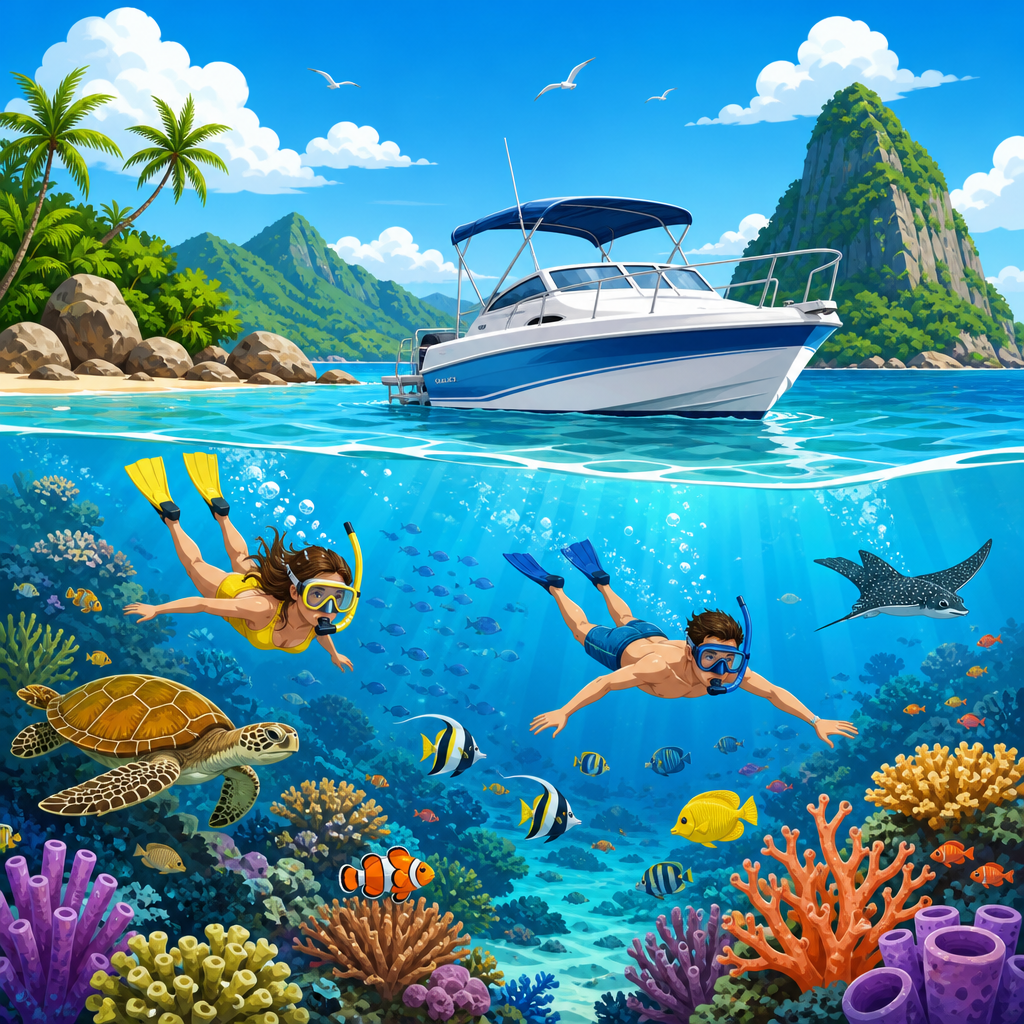
Boating opens a different world for snorkelers and divers because the best marine life, healthiest reefs, and clearest water are often beyond crowded shore entries. The best boating destinations for snorkeling and diving combine reliable sea conditions, protected habitats, skilled local operators, and easy access to multiple sites in one outing. For travelers planning boating for adventure and wildlife watching, this matters even more: the same routes that lead to coral gardens, drop-offs, and wrecks also pass dolphin pods, migrating whales, seabird colonies, turtles, rays, and seasonal bait balls. I have planned dive charters, liveaboard itineraries, and small-boat wildlife days in enough regions to know one rule holds everywhere: the destination is only as good as the way you reach it. A well-run boating destination offers safe moorings instead of reef anchoring, short transit times to prime sites, accurate briefings on currents and species behavior, and weather windows that maximize time in the water without compromising safety.
Snorkeling usually refers to surface swimming with mask, fins, and snorkel in shallow water, while diving includes scuba diving and, in some destinations, freediving. Boating can support both by letting mixed groups reach drift dives, offshore pinnacles, mangrove channels, blue-water encounters, and calm lagoons in the same trip. A hub article on boating for adventure and wildlife watching should therefore do more than list pretty places. It should explain what makes each region special, what kind of boat access is available, which wildlife experiences are realistic, and how to choose based on skill level, season, and conservation standards. The destinations below are the strongest global examples because they deliver exceptional in-water experiences while also showcasing the larger appeal of travel by boat: mobility, proximity to wildlife, and access to ecosystems that remain hard to appreciate from land alone. If you want one framework for evaluating any future trip, use this: water clarity, biodiversity, boat logistics, safety infrastructure, seasonal timing, and protection status determine whether a destination is merely scenic or truly world-class.
What makes a boating destination great for snorkeling, diving, and wildlife watching
The strongest destinations share a specific set of characteristics. First, they have varied habitats within practical boat range: fringing reefs, walls, seagrass beds, channels, wrecks, kelp forests, or offshore islands. Second, they support healthy wildlife populations because marine parks, no-take zones, and mooring systems reduce damage. Third, they offer boats suited to conditions, from rigid inflatable day boats for fast site-hopping to liveaboards for remote archipelagos. Fourth, they have experienced guides who can interpret behavior and conditions in plain terms. In my experience, this guidance changes the trip entirely. A guide who knows when manta rays feed along a cleaning station, where turtles rest between seagrass patches, or how a current line gathers baitfish turns an ordinary outing into a memorable wildlife expedition.
Boating also expands the adventure profile of a destination. On the same day, you might snorkel a reef edge, watch spinner dolphins on the transit, dive a wreck, and finish near mangroves where juvenile fish shelter. That variety is why subtopics like reef snorkeling, wreck diving, shark encounters, marine mammal watching, island hopping, and liveaboard travel all connect naturally under this hub. Good planning still matters. Some places are ideal for beginners because they have protected lagoons and shallow coral bommies; others are better for advanced divers comfortable with blue water, surge, or strong currents. Before booking, ask direct questions: How long is the boat ride? Are there ladders suitable for older travelers? Are marine park fees included? Is there shade, freshwater rinse, oxygen, and VHF or satellite communication onboard? Those details decide whether a trip is comfortable, safe, and worth the cost.
Top global boating destinations at a glance
| Destination | Best for | Signature wildlife | Ideal traveler |
|---|---|---|---|
| Great Barrier Reef, Australia | Reef variety, liveaboards, beginner to advanced access | Turtles, reef sharks, minke whales, giant clams | Families, mixed-skill groups, photographers |
| Raja Ampat, Indonesia | Biodiversity, soft corals, remote cruising | Mantas, wobbegongs, pygmy seahorses, dolphins | Experienced snorkelers and divers seeking remoteness |
| Galápagos, Ecuador | Big animal encounters, expedition cruising | Sea lions, marine iguanas, hammerheads, penguins | Wildlife-focused travelers and advanced divers |
| Red Sea, Egypt | Clear water, wrecks, value liveaboards | Oceanic whitetips, dolphins, anthias, turtles | Divers wanting high site density and strong infrastructure |
| Belize Barrier Reef, Belize | Easy Caribbean boating, atolls, snorkeling | Nurse sharks, rays, turtles, tarpon | Couples, new snorkelers, reef lovers |
| Sea of Cortez, Mexico | Marine mammal watching and warm-water adventure | Whale sharks, sea lions, mobula rays, whales | Boaters prioritizing wildlife over coral cover |
Great Barrier Reef and Coral Sea: the benchmark for reef boating
The Great Barrier Reef remains the reference point for reef-based boating because of its scale, management structure, and range of sites. Stretching more than 2,300 kilometers along Queensland, it includes ribbon reefs, coral cays, outer reef walls, and lagoon systems that support both easy snorkeling and advanced diving. Boats departing Cairns, Port Douglas, Airlie Beach, and the Whitsundays can tailor experiences around sea state and skill. Day boats commonly use fixed pontoons on outer reefs for stable access, while liveaboards reach remote ribbon reefs with less crowding and better dawn wildlife activity. On a strong trip, guests may see green turtles, white-tip reef sharks, giant trevally, potato cod, and giant clams in one circuit. Seasonal dwarf minke whale encounters on the northern ribbon reefs are especially notable because guidelines for in-water interaction are tightly controlled.
For snorkeling, the reef is strongest where operators use protected moorings and site rotation to avoid overloading popular bommies. For divers, the Coral Sea adds dramatic walls and pelagic action beyond the main barrier. Visibility can exceed 30 meters in good conditions, but weather and bleaching history vary by region, so expectations should be realistic. I advise travelers to look for operators participating in programs such as Eye on the Reef and to favor itineraries that explain reef conditions honestly rather than selling a single postcard image. This destination works as a hub example because it supports nearly every branch of marine adventure travel: island cruising, reef education, wildlife observation, family snorkeling, night diving, and multi-day liveaboards.
Raja Ampat and Komodo: Indonesia’s highest-reward boat itineraries
If biodiversity is the goal, eastern Indonesia stands apart. Raja Ampat, in West Papua, sits within the Coral Triangle, the global center of marine species richness. Scientists regularly cite the region for having more reef fish and coral species than almost anywhere else on Earth. Boating is essential here because sites are spread among limestone islands, hidden lagoons, mangrove fringes, and current-swept seamounts. Dampier Strait is known for manta cleaning stations and dense fish schools; Misool is famous for karst scenery, soft corals, and recovering shark populations supported by protection. Even snorkeling can be extraordinary because reef structure often begins just below the surface. On well-chosen routes, guests combine snorkeling, diving, paddle excursions, and beach landings without spending much time ashore.
Komodo, farther west, offers a different type of adventure. It combines strong currents, volcanic landscapes, and highly productive water that attracts manta rays, sharks, turtles, and immense schools of fusiliers. The same boats used for diving also support island-based wildlife watching, including the terrestrial draw of Komodo dragons on ranger-led walks. These are not casual destinations for every traveler. Current can be significant, entries may be negative or drift-based, and remote logistics demand reliable vessels and guides. Yet for experienced boaters, photographers, and marine life enthusiasts, few regions are better. The lesson from Indonesia is clear: when boats unlock isolated habitats and nutrient-rich channels, both underwater encounters and above-water scenery reach another level.
Galápagos and the Sea of Cortez: where boats deliver big animal encounters
Some destinations are defined less by coral and more by animal behavior. The Galápagos is the classic example. Boat-based travel is the practical way to experience its dispersed islands, and the marine reserve supports species assemblages found nowhere else in the same combination. Snorkelers often encounter playful sea lions, marine iguanas feeding underwater, turtles, rays, and, in cooler seasons, penguins. Advanced divers seek Wolf and Darwin for schools of hammerheads, Galápagos sharks, eagle rays, and occasional whale sharks. The key here is seasonality and exposure. Conditions can be cold, surge can be significant, and itineraries are tightly regulated, which is good for long-term protection but requires advance planning.
The Sea of Cortez, between Baja California and mainland Mexico, offers a more flexible but equally wildlife-rich boating scene. Jacques Cousteau called it the world’s aquarium for a reason. Around La Paz, Espíritu Santo, and Loreto, boats access sea lion colonies, whale shark zones, mobula ray aggregations, and seasonal gray, humpback, and blue whale areas. Visibility is less predictable than in classic reef destinations, and coral is not the main attraction. Instead, the appeal lies in dynamic ecosystems, desert-meets-sea scenery, and frequent marine mammal sightings during transits. For travelers interested in boating for adventure and wildlife watching, this region is one of the best reminders that a destination can be world-class even without postcard coral gardens.
Red Sea, Belize, and the Maldives: reliable access, strong infrastructure, and clear planning choices
The Red Sea is one of the most efficient dive-boat regions in the world. Egypt’s resort hubs, especially Hurghada, Marsa Alam, and Sharm El Sheikh, connect quickly to reefs and wrecks with excellent visibility and relatively low travel friction. Famous sites such as Ras Mohammed, the Brothers, Daedalus, Elphinstone, and the SS Thistlegorm cover reef diving, pelagics, and wreck history in one network. This matters for a hub article because it shows how boating infrastructure shapes destination quality. Good marinas, established liveaboard fleets, nitrox availability, and experienced crews make it easier to match itineraries to ability. For snorkelers, dolphin house reefs and shallow coral gardens can be exceptional, though crowding at popular sites is a real limitation.
Belize and the Maldives are similarly strong, but for different reasons. Belize offers straightforward Caribbean boating with easy access to patch reefs, atolls, and iconic snorkeling zones around Hol Chan, Shark Ray Alley, Lighthouse Reef, and Glover’s Reef. It suits travelers who want warm water, manageable travel distances, and a blend of reef life with laid-back coastal culture. The Maldives, by contrast, is a current-driven atoll system where boats connect channels, thilas, cleaning stations, and blue-water crossings. Depending on the atoll and season, travelers may focus on mantas, whale sharks, gray reef sharks, or simply high-quality drift snorkeling. In both places, choosing the right season and boat style is decisive. A short luxury day boat and a functional dive liveaboard can produce completely different experiences in the same archipelago.
How to choose the right destination and operator for your trip
The best destination is the one that matches your actual goals, not the one with the loudest marketing. If you want shallow, colorful reefs and easy family access, choose places with calm lagoons and stable day-boat operations, such as parts of Belize or the outer Great Barrier Reef. If your priority is rare marine life and remote expedition travel, Raja Ampat or the Galápagos will deliver more, but with longer transfers and higher costs. If you care most about wrecks and efficient dive logistics, the Red Sea is hard to beat. If wildlife watching from the boat is equal to time in the water, the Sea of Cortez deserves serious attention.
Operator quality matters as much as geography. Look for captains who use moorings, not anchors on reefs; dive leaders who assess current honestly; and companies that carry oxygen, emergency action plans, and functioning communication equipment. Ask whether group ratios are capped, whether guides brief wildlife interaction rules, and how the company handles weather cancellations. Conservation standards are also practical quality markers. Operators that support local marine parks, participate in reef monitoring, and avoid chasing animals usually provide better experiences because wildlife remains calmer and habitats healthier. Use this hub as a starting point, then compare destination-specific guides, seasonal breakdowns, liveaboard reviews, family boating resources, and marine wildlife ethics articles before you book. The payoff is simple: choose well, and every boat ride becomes part of the adventure, not just transportation to it.
Frequently Asked Questions
What makes a boating destination especially good for snorkeling and diving?
The best boating destinations for snorkeling and diving usually share a few important traits: clear water, healthy marine ecosystems, dependable sea conditions, and access to multiple sites in a single trip. Boats make a major difference because many of the most vibrant reefs, walls, pinnacles, and seagrass meadows are located well away from busy beaches and shallow shoreline entry points. When you can reach offshore or protected areas by boat, you often find better visibility, more abundant fish life, and less damage from crowds.
Another key factor is habitat variety. Great destinations offer more than one type of underwater environment, such as coral gardens for beginners, drift sites for experienced divers, and calm lagoons or sandy patches for snorkelers who want easy, comfortable conditions. Strong local marine protection also matters. Places with marine parks, mooring systems, fishing restrictions, and responsible tourism practices tend to have healthier reefs and more reliable wildlife sightings.
Finally, quality local operators can elevate the entire experience. Experienced captains and guides know how to time departures around weather, tides, and currents, and they can match guests to appropriate sites based on skill level. That is especially valuable for travelers combining boating, wildlife watching, snorkeling, and diving in one trip, because the same destination may offer dolphins, sea turtles, rays, reef fish, and even seasonal encounters with larger pelagic species depending on the route and time of year.
Which boating destinations are considered the best for snorkeling and diving?
Several destinations consistently stand out because they combine excellent underwater visibility, rich biodiversity, and strong boating access. The Great Barrier Reef in Australia remains one of the most iconic choices, largely because boats can reach outer reef systems with healthier coral, dramatic reef structure, and impressive marine life that shore-based visitors may never see. In the Caribbean, destinations such as Bonaire, the British Virgin Islands, and the Bahamas are favorites for warm water, colorful reefs, and easy day-boat access to multiple snorkeling and dive sites.
In the Pacific, French Polynesia, Fiji, and Palau are regularly praised for coral health, reef sharks, manta rays, and exceptionally clear water. Southeast Asia also offers world-class options, with places like Raja Ampat, Komodo, and parts of Thailand and the Philippines attracting boaters who want both biodiversity and scenic island-hopping routes. In the Red Sea, Egypt is a top choice for reliable visibility, coral walls, and liveaboard or day-boat itineraries that access remote reefs and wrecks.
The “best” destination ultimately depends on what kind of experience you want. Some travelers prioritize calm, family-friendly snorkeling over dramatic deep diving. Others want advanced dive conditions, wrecks, current-swept channels, or seasonal megafauna. If your trip also includes boating for scenic cruising and wildlife watching, destinations with island chains, protected coves, and mixed marine habitats are often the strongest overall choice because they allow you to explore several environments without spending the entire day in transit.
Are boat-based snorkeling and diving trips better than entering from shore?
In many cases, yes. Boat-based trips often provide access to sites that are healthier, less crowded, and more visually impressive than what is available from shore. Shore entries can still be excellent in some destinations, but they are often limited by waves, shallow reef flats, rocky access, or heavy use from casual beachgoers. By contrast, a boat can take you directly to protected reefs, deeper coral formations, mooring points near drop-offs, or quiet bays where marine life is less disturbed.
Boat access also improves efficiency. Instead of spending an entire outing at one location, you may be able to visit several different sites in a morning or afternoon. That means snorkelers can enjoy a calm coral garden first, then move to a turtle habitat or a clearer offshore reef later in the trip. Divers benefit in the same way, especially when operators can plan a sequence of sites based on weather, current, and experience level.
That said, “better” depends on the traveler. Some people prefer the simplicity and lower cost of shore snorkeling, while others value the comfort, guidance, and range that boats provide. For travelers focused on seeing the best underwater landscapes and maximizing wildlife encounters, boat-based access is often the superior option. It becomes even more worthwhile in destinations where the most pristine reefs and clearest water lie beyond the reach of easy beach entry.
How do I choose the right boat operator for a snorkeling or diving trip?
Start by looking for operators with a strong safety reputation, experienced crew, and a clear understanding of local conditions. For divers, proper certification standards, equipment maintenance, emergency oxygen on board, and adherence to dive briefing protocols are non-negotiable. For snorkelers, good operators provide flotation options, patient instruction, quality masks and fins, and careful site selection based on ability and confidence in the water. Reviews can help, but it is even more important to see whether the company explains who the trip is for and how they adapt to sea state, visibility, and guest experience levels.
It is also wise to ask about group size and trip style. Smaller boats may offer a more personalized experience and quicker access to sites, while larger boats can provide more amenities, shade, and stability. Some operators focus on fast-paced site-hopping, while others emphasize interpretation, marine life education, photography support, or family-friendly pacing. If wildlife watching is part of your goal, ask whether the route commonly includes areas known for turtles, rays, reef fish, dolphins, or seasonal migrations.
Finally, responsible environmental practices should be part of your decision. The best operators use established moorings instead of anchoring on reefs, brief guests on reef-safe behavior, avoid wildlife harassment, and support local conservation rules. A great operator does more than transport you to the water. They help protect the very habitats you came to enjoy while making sure the experience is safe, informative, and well matched to your expectations.
What should I bring and how should I prepare for a boat snorkeling or diving excursion?
Preparation makes a big difference in comfort and enjoyment. For most boat snorkeling and diving trips, essentials include a swimsuit, towel, reef-safe sunscreen, drinking water if it is not provided, a hat, polarized sunglasses, and a dry bag for valuables. Lightweight layers are useful because conditions can change quickly on the water; even warm destinations can feel cool during a fast boat ride or after time spent in the water. If you are prone to seasickness, it is smart to take motion sickness medication or use other remedies before departure rather than waiting until you feel unwell.
For snorkeling, having your own well-fitting mask can significantly improve the experience, even if fins and flotation gear are rented. For diving, bring certification cards, logbook details if requested, and any personal gear you strongly prefer, such as a mask, computer, or exposure suit. It is also worth checking whether the operator provides all equipment, whether tanks and weights are included, and whether site conditions are appropriate for your skill level. If you have not been in the water recently, a refresher session may be a good idea before booking more advanced dives.
Mentally, it helps to approach the day with flexibility. Water visibility, currents, and wildlife activity can vary, and good captains may change sites for safety or better conditions. That is usually a sign of a responsible operation, not a disappointment. The most rewarding trips often come from trusting local knowledge, listening carefully to briefings, and being ready to enjoy a mix of boating, reef exploration, and wildlife watching as part of one well-planned marine adventure.