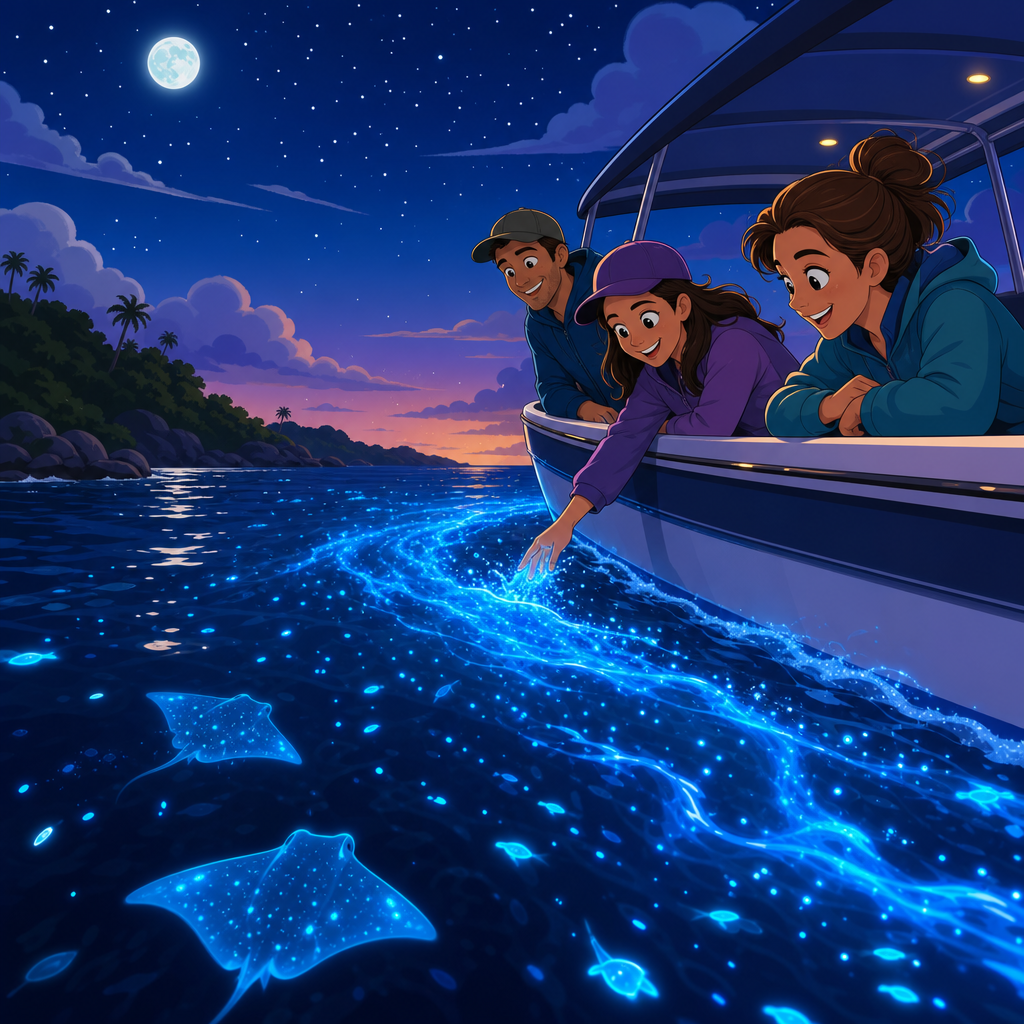
Bioluminescence turns ordinary night boating into one of the most memorable wildlife experiences on the water. If you want to experience bioluminescence from a boat, you need more than a ticket and a camera. You need the right destination, season, weather window, vessel type, and on-water habits to see glowing organisms at their best without diminishing the ecosystem that creates the display. I have planned and taken nighttime wildlife trips in mangrove lagoons, estuaries, and protected bays, and the difference between a disappointing outing and a spectacular one usually comes down to preparation.
Bioluminescence is the production of visible light by living organisms through a chemical reaction, commonly involving luciferin, luciferase, oxygen, and energy stored in cells. In boating destinations, the glow most travelers see is usually caused by dinoflagellates, a type of plankton that flashes blue-green when disturbed by paddles, fish, prop wash, or a boat wake. In some regions, comb jellies also create light, but their effect looks different, often appearing as softer streaks or pulses rather than sparkling bursts. Knowing what is producing the glow matters because each organism responds to seasonality, salinity, water temperature, and nutrient conditions in different ways.
This matters for boaters because bioluminescent waters sit at the intersection of adventure travel and wildlife watching. A good trip combines seamanship, natural history, timing, and conservation. It also opens the door to related experiences that define this broader travel category: dolphin encounters at dusk, manatee viewing in warm shallows, bird rookeries near estuaries, night fishing in plankton-rich bays, and eco-tours through mangroves and coastal lagoons. As a hub topic within boating destinations and travel, boating for adventure and wildlife watching is not just about where to go. It is about how to choose operators, how to read environmental conditions, how to minimize impact, and how to connect one unforgettable excursion to a deeper itinerary built around wild places.
The key question most travelers ask is simple: where and when can you reliably see bioluminescence from a boat? The short answer is in warm coastal waters or protected estuaries with healthy plankton populations, low light pollution, and calm, dark nights, usually around the new moon. The better answer is more specific, because reliability varies sharply by destination. Puerto Rico’s Mosquito Bay is famous for exceptional brightness. Florida’s Indian River Lagoon and Merritt Island area are known for summer displays. Southern California’s red tide events can produce dramatic glowing surf and boat wake, though they are less predictable. Vietnam’s Halong Bay, the Maldives, and parts of Jamaica also offer seasonal sightings, but trip quality depends heavily on recent weather and water conditions.
Choose the Right Destination for Reliable Viewing
If your goal is the brightest possible display, destination selection matters more than boat size or camera gear. In practice, I look for four conditions: sheltered water, low urban lighting, healthy plankton concentrations, and operators who actively track current conditions instead of selling a generic night cruise. Protected bays and lagoons usually outperform open coasts because wave action, sediment, and strong currents can disperse the organisms or cloud the water. That is why iconic locations tend to be enclosed systems such as Mosquito Bay in Vieques, Laguna Grande in Fajardo, and Florida’s Banana River and Indian River Lagoon.
Puerto Rico remains the benchmark because several bays there have the ecological conditions that support dense populations of dinoflagellates. Mosquito Bay is widely recognized for extraordinary brightness due to its enclosed geography, mangrove-fringed shoreline, and stable salinity. Florida offers a different style of trip. Around Titusville, Cocoa Beach, and Merritt Island, summer kayak and small-boat tours often combine bioluminescence with sightings of mullet, stingrays, and dolphins stirring the water into glowing trails. The Maldives and some Southeast Asian destinations can be visually stunning, but they are often marketed broadly, and visibility may be inconsistent compared with places where local guides monitor bloom strength nightly.
For travelers building a larger boating-for-adventure itinerary, this destination choice also influences what else you can do by water nearby. A Florida trip can pair bioluminescence with airboat wetlands excursions, manatee tours, and birding cruises. Puerto Rico can combine glowing bays with reef snorkeling, island hopping, and mangrove paddling. A destination becomes more valuable when it supports several wildlife experiences rather than a single night tour.
Time Your Trip Around Moon Phase, Season, and Weather
The best time to experience bioluminescence from a boat is usually during the darkest nights of the lunar cycle, especially near the new moon. Moonlight does not eliminate the glow, but it reduces contrast, making the display look weaker to the human eye. This is one of the first filters I use when planning. If I have flexible dates, I book within a few days of the new moon, then check recent guide reports for brightness, water clarity, and wind. Calm conditions are ideal because wind can roughen the surface, stir sediment, and make smaller flashes harder to notice.
Season matters because plankton populations fluctuate with temperature, rainfall, salinity, and nutrient availability. In Florida, the warm months are often strongest, commonly from late spring into early fall. In Puerto Rico, bioluminescence can be seen year-round, but brightness still changes with environmental conditions and local disturbances. After heavy rain, runoff can alter salinity and reduce visibility. After storms, turbidity may remain elevated for days. That is why travelers should avoid treating bioluminescence like a museum exhibit. It is a living system, and natural variability is part of the experience.
Direct answers help set realistic expectations. Can you see bioluminescence on a full moon? Yes, but the effect will usually appear less dramatic. Does rain cancel a tour? Light rain may not, but thunderstorms, strong winds, and lightning usually should. Is summer always best? Not universally. Local guide reports matter more than assumptions. Experienced operators often post nightly updates or mention recent conditions by phone, and I trust those reports more than old travel blogs.
Pick the Right Boat and Tour Style
The best boat for viewing bioluminescence is usually a low-impact vessel that moves slowly and keeps passengers close to the water. Kayaks and small electric boats often provide the strongest sense of immersion because every paddle stroke creates visible light. Pontoon boats and covered eco-cruise vessels can work well for families, older travelers, or anyone who wants stability and easier boarding, but larger boats can create more ambient light, more noise, and more distance from the waterline. Fast planing boats are usually the worst option for observation, even though their wakes may glow, because speed shortens viewing time and reduces your ability to notice subtle effects around fish and shoreline structure.
When I evaluate an operator, I ask practical questions. How many passengers are on the boat? Are white lights minimized once the vessel is underway? Does the captain explain the biology, local regulations, and viewing etiquette? Are life jackets sized correctly and safety briefings taken seriously? A high-quality wildlife tour balances interpretation and restraint. The guide should know when to stop talking, reduce lighting, and let the water tell the story.
| Tour Type | Best For | Main Advantages | Main Limitations |
|---|---|---|---|
| Kayak tour | Active travelers, photographers, couples | Closest interaction with glowing water, quiet approach, highly immersive | Requires paddling ability, less ideal for mobility limitations or rough weather |
| Small electric boat | Families, eco-focused travelers | Low noise, stable ride, minimal wake, good guide interaction | Limited availability, smaller capacity, may book out early |
| Pontoon or covered eco-boat | Groups, older travelers, mixed-ability parties | Comfortable seating, easier access, weather protection | Less intimate, more onboard light, weaker near-water perspective |
| Private charter | Serious wildlife watchers, custom itineraries | Flexible timing, personalized route, easier pairing with other wildlife goals | Higher cost, quality depends heavily on captain expertise |
Private charters can be excellent if your captain understands nighttime navigation in shallow estuaries and is honest about current conditions. I have seen travelers overpay for generic private outings that promised glowing water but never left light-polluted marinas. Expertise matters more than exclusivity.
Prepare Properly for the On-Water Experience
What should you bring on a bioluminescence boat trip? Keep it simple: dark clothing, a light layer for wind, insect protection if permitted, water, and a dry bag. Avoid bright phone screens, flashlights, and camera flash because your eyes need time to adapt to darkness. Full night vision takes roughly 20 to 30 minutes, and even brief exposure to white light can reduce your ability to see faint sparks in the water. If you need a light, use a red filter when allowed.
Photography is the biggest source of disappointment. Many travelers expect smartphone photos to match what marketing images show, but long-exposure cameras, image stacking, and post-processing often create brighter results than the naked eye sees. On the boat, I tell people to prioritize observation first. Watch the hull line, the paddle drip, fish movements, and your hand trailing in the water if guides allow it. Those moments register far more vividly in memory than a blurred phone image ever will. If you do bring a camera, a fast lens, high ISO capability, and stable support help, but many tours prohibit tripods or discourage equipment that emits light.
Motion sensitivity, heat, humidity, and insects are manageable if you prepare. Eat lightly beforehand, take seasickness precautions if you are on larger open water, and confirm restroom access before departure. Families with children should choose shorter, calmer tours and set expectations honestly: the experience is magical, but it is also dark, quiet, and dependent on nature rather than entertainment scheduling.
Understand Wildlife Behavior and Protect the Habitat
Bioluminescent bays are not theme parks. They are productive nurseries for fish, crustaceans, birds, and shoreline vegetation, often bordered by mangroves that stabilize sediment and support juvenile marine life. Responsible boating is essential. The most important rule is to minimize disturbance. Follow no-wake zones, never dump anything overboard, avoid touching sensitive shoreline roots, and listen when guides restrict swimming or prohibit entering certain coves. In many locations, sunscreen, insect repellent, and skin oils can affect delicate water chemistry in enclosed systems, which is one reason guided rules may feel strict.
Wildlife watching often improves when boaters become quieter and more patient. In Florida lagoons, glowing mullet schools can look like moving comets under the surface. Dolphins may carve bright arcs while feeding. In mangrove channels, the smallest baitfish can leave tracer-like flashes as they scatter. These are not guaranteed sightings, but they become much more likely when a captain positions the boat carefully, cuts excess lighting, and gives the habitat space.
Conservation concerns are real. Coastal development increases light pollution. Runoff can alter nutrient balance and encourage harmful algal events that are different from healthy bioluminescent blooms. Boat traffic can stress shallow estuaries. Some well-known bays have experienced declines tied to dredging, pollution, storm impacts, or changes in circulation. Travelers can help by booking operators with clear environmental practices, supporting protected areas, and respecting access limits rather than pushing for closer or flashier encounters.
Build a Full Adventure and Wildlife Itinerary Around the Night Tour
The strongest travel plans treat a bioluminescence excursion as the centerpiece of a wider boating and wildlife trip, not a stand-alone novelty. Start with habitat logic. If the glowing water is in an estuary, what other species use that estuary by day? Often the answer includes dolphins, wading birds, sea turtles, rays, and juvenile game fish. If nearby waters include seagrass meadows or warm spring systems, manatee tours may fit naturally. If barrier islands or reefs are close, snorkeling or wildlife-focused boat transfers can extend the experience without shifting to a different region.
For example, a Space Coast Florida itinerary can include a sunrise birding cruise in the Merritt Island National Wildlife Refuge area, an afternoon paddle through mangroves, and a summer night bioluminescence tour on the lagoon. In Puerto Rico, travelers can pair a glowing-bay outing with a daytime boat trip to cays, reef snorkeling, and a mangrove natural history excursion. In Baja California Sur or Alaska, the focus shifts away from plankton glow but still fits the same travel theme: small-boat whale watching, seabird colonies, sea lion haul-outs, and remote coastal exploration. That is why boating for adventure and wildlife watching works well as a hub category. The traveler’s core interest is not a single species or a single destination. It is meaningful encounters with wild ecosystems from the water.
As you plan, use this page as the starting point for deeper decisions: where to go by season, what boat style fits your group, which wildlife experiences combine well, and how to prepare for ethical viewing. The reward is not just seeing water glow. It is learning how skilled boat travel reveals nature after dark in ways daylight never can. Choose a reputable operator, plan around darkness and conditions, and make your next boating trip one that puts wildlife first.
Frequently Asked Questions
When is the best time to experience bioluminescence from a boat?
The best time depends on the destination, the species creating the glow, and local weather patterns, but in most places you will have the highest chance of a vivid display on warm, dark nights with calm water. Many bioluminescent bays, lagoons, and estuaries are most active during the warmer months because the microscopic organisms responsible for the glow become more abundant as water temperatures rise. In some regions that means late spring through early fall, while in tropical destinations the phenomenon can be visible year-round with seasonal peaks. Moon phase matters more than many first-time visitors realize. A new moon or a night with very little moonlight usually produces the most dramatic experience because your eyes can detect the glowing water more easily in darker conditions. Cloud cover can also help if it blocks ambient light, but storms, heavy rain, strong wind, and choppy water can reduce visibility or disrupt the conditions that make the glow easier to see. If you are booking a trip, look for operators that schedule tours around lunar cycles and know how local tides, rainfall, and wind affect the brightness. The ideal night is usually a combination of low light pollution, a dark sky, warm water, and a guide who knows exactly where recent conditions have produced the strongest bioluminescent activity.
What kind of boat is best for seeing bioluminescence clearly?
Smaller, quieter boats are usually best because they let you get close to the water, move gently through sensitive habitats, and avoid overpowering the experience with engine noise or bright onboard lighting. Kayaks, canoes, paddle craft, and small electric-powered skiffs often provide the most intimate view because every paddle stroke or ripple can trigger glowing trails in the water. That said, not every location allows paddle craft, and some areas are best explored on guided pontoon boats, flats boats, or other shallow-draft vessels that can navigate mangrove channels and protected bays safely at night. The key is not just boat size but how the vessel is operated. A good bioluminescence boat should use minimal white light, avoid unnecessary speed, and keep passengers low enough to observe the water surface without glare. Boats with large deck floodlights, loud engines, or a party-tour atmosphere can make it much harder to see subtle glowing patterns. If comfort, stability, or accessibility is a concern, a guided small-group boat tour is often the best compromise. You get local expertise and safe nighttime navigation while still having a strong chance to see bright swirls, fish streaks, and glowing wakes. Before booking, ask whether the boat uses red lights, how many people are onboard, whether the guide enters narrow or sheltered areas, and whether the experience is focused on wildlife viewing rather than general sightseeing.
How can I maximize my chances of seeing bright bioluminescence during a boat trip?
Success starts well before you step onboard. First, choose a destination known for reliable bioluminescent activity rather than assuming any dark shoreline will produce the same effect. Estuaries, mangrove lagoons, protected bays, and nutrient-rich coastal waters are often better than exposed open-water areas. Next, book during a dark moon window and try to avoid periods of heavy rain, strong winds, or recent cold snaps if those conditions are known to reduce local visibility. Once you are on the boat, help your eyes adjust by staying away from bright screens and flashlights for at least 20 to 30 minutes. Even a quick look at a phone can reduce your night vision enough to make faint glow harder to notice. Follow the guide’s instructions closely, because experienced operators know where current, salinity, depth, and shelter combine to create the strongest display. Pay attention to movement in the water. Bioluminescence often becomes most visible when water is disturbed, so watch the boat wake, paddle strokes, fish movement, or your hand trailing gently in the water where permitted. Wear dark, non-reflective clothing if possible, and choose a seat with minimal glare from navigation lights. Finally, keep expectations realistic. Some nights deliver explosive neon blue trails and sparkling fish, while others are more subtle and magical in a quieter way. The best approach is to prioritize darkness, good timing, a knowledgeable guide, and patient observation rather than expecting every trip to look exactly like a long-exposure travel photo.
Can I take photos or video of bioluminescence from a boat?
Yes, but bioluminescence is one of the most difficult nighttime subjects to capture well, especially from a moving boat. The glowing effect is often much dimmer to a camera sensor than it appears to your dark-adapted eyes, and boat motion adds another challenge because long exposures can blur easily. If photography is important to you, use a camera that performs well in low light and allows manual settings. A fast lens, high ISO capability, and image stabilization can help, but the biggest advantage often comes from minimizing movement and light pollution. Ask your guide before the trip whether photography is realistic on that specific vessel and whether there will be opportunities to pause in calmer water. Avoid flash completely. Flash not only ruins the natural atmosphere and affects other guests’ night vision, but in wildlife-rich areas it can also disturb animals. For video, modern phones and action cameras may capture some glow in excellent conditions, but most casual devices struggle unless the display is unusually bright. In many cases, trying too hard to document the experience can pull you out of it. A practical approach is to take a few attempts early, then put the camera away and let your eyes enjoy the full effect. If you do photograph it, keep screens dim, disable autofocus-assist lights, and never ask a guide to shine white light onto the water just to improve a shot. Protecting the darkness is part of protecting the experience itself.
How do I experience bioluminescence responsibly without harming the ecosystem?
Responsible viewing is essential because the same sheltered habitats that create spectacular glowing water are often ecologically fragile. Start by choosing an operator that follows local wildlife regulations, uses small groups when possible, and emphasizes education over entertainment. Good guides keep lighting to a minimum, avoid reckless wakes, respect no-entry zones, and understand how to move through mangroves, seagrass areas, and shallow estuarine waters without causing damage. As a guest, do not throw anything into the water, do not use bright flashlights or phone flashes unnecessarily, and never assume it is acceptable to swim, scoop organisms, or agitate the water aggressively unless that activity is specifically permitted and guided in that location. In some areas, direct contact is discouraged because sunscreen, insect repellent, skin oils, and general disturbance can affect water quality or sensitive organisms. Keep noise low, stay seated when instructed, and avoid sudden movements that can interfere with navigation at night. It also helps to wear reef-safe or environmentally conscious products if there is any chance of contact with the water. Most importantly, treat bioluminescence as wildlife, not as a special effect. The glow comes from living systems shaped by water quality, seasonal cycles, and habitat protection. When you support responsible operators and follow low-impact habits on the boat, you not only improve your own viewing conditions, you help preserve the very ecosystems that make the experience possible for future visitors.