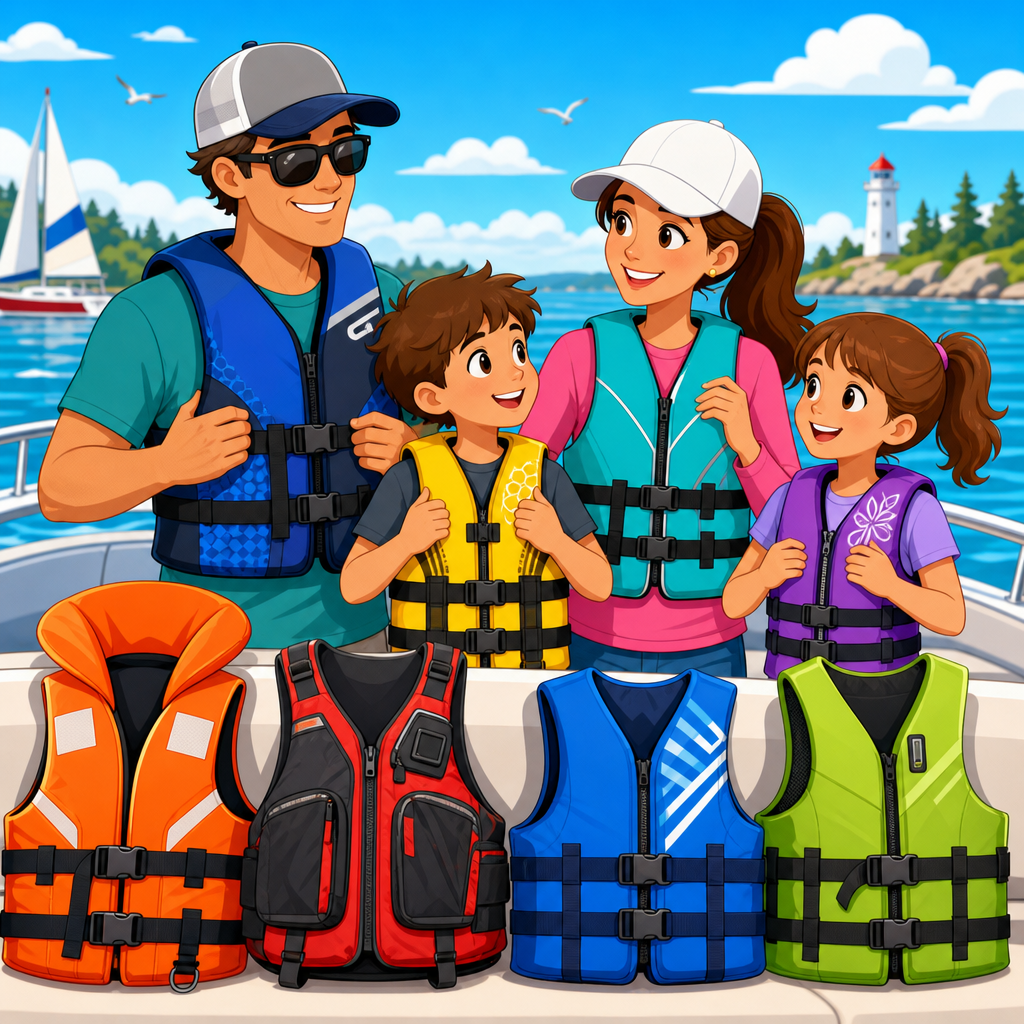
Choosing the best life jackets for boating starts with understanding a simple truth: the right personal flotation device can turn a routine accident into a survivable event. A life jacket, often called a PFD, is designed to keep a person afloat and, in many cases, position the airway above water after a fall, collision, or capsize. In boating, that distinction matters because cold shock, fatigue, injury, or unconsciousness can make even strong swimmers ineffective within minutes. I have outfitted small fishing skiffs, family pontoons, tow boats, and coastal center consoles, and the same pattern repeats every season: people focus on horsepower, electronics, and coolers, then treat flotation as an afterthought. That is backwards. Safety and emergency equipment begins with a life jacket that matches the activity, fits the wearer, and is worn consistently.
The best life jackets for boating are not the same for every person or every vessel. Offshore cruisers often prioritize buoyancy, visibility, and turning performance. Kayak anglers want mobility and pocket storage. Parents need infant and child models with crotch straps, grab handles, and head support. Water sports riders need impact-rated designs approved for high-movement use. Boaters also need to understand key terms such as buoyancy, inherently buoyant foam, inflatable PFD, manual inflation, automatic inflation, and approval categories set by the U.S. Coast Guard. This article serves as a hub for boating safety and emergency equipment by explaining how to choose a life jacket, how regulations affect your decision, what features matter on different boats, and how life jackets connect to other essentials like throwable devices, signaling gear, VHF radios, EPIRBs, first-aid kits, and reboarding ladders. When you build your kit around realistic risks rather than assumptions, you protect everyone on board more effectively.
What Makes a Life Jacket the Right Choice
The right life jacket does three jobs at once: it provides enough flotation, fits securely, and matches the conditions in which it will be used. Many shopping mistakes happen because buyers only look at label size or price. In practice, a proper fit is more important than brand loyalty. A jacket that rides up over the chin, leaves side gaps, or shifts when lifted at the shoulders will be uncomfortable and less effective in the water. I always tell boat owners to test fit over the clothing they actually wear on board, especially in colder regions where bibs, rain shells, and fleece layers change how a PFD sits on the body. A well-fitted jacket feels snug but not restrictive, allows breathing and arm movement, and stays in place during a pull test.
Activity matters just as much as fit. A bass angler standing on a casting deck has different needs than a sailor clipping into jacklines offshore. For calm inland boating, a low-profile foam vest may be ideal because it encourages wear all day. For coastal runs or open water passages, an inflatable with harness points, spray hood, and higher buoyancy can be the better tool if the user understands maintenance and rearming. For children, simplicity is best: a foam model with clear weight-based sizing and strong head support. The practical question is not “Which life jacket is best?” but “Which approved life jacket will this person actually wear for this trip?” Compliance without wear is weak protection. Comfort without approval is not enough. The best solution balances both.
Understanding Approval Labels, Buoyancy, and Regulations
Before comparing models, read the approval label. In the United States, current labels identify the intended use, performance level, size or weight range, and whether the device is suitable for watersports, general boating, or specific conditions. Older boaters may still refer to Type I, II, III, IV, and V systems, and many articles online mix old and new terminology. The important point is that the label tells you whether a PFD is carriage compliant and how it performs. Inherently buoyant foam jackets require no activation and are the simplest option for most families. Inflatable PFDs are lighter and cooler to wear, but most are not approved for children under sixteen, for users below a certain weight, or for activities with a high chance of impact unless stated otherwise.
Regulations also shape purchasing decisions. Recreational boats must carry a wearable U.S. Coast Guard-approved life jacket for each person on board, in the correct size, and in serviceable condition. Most boats sixteen feet and longer, excluding canoes and kayaks in many cases, must also carry a throwable flotation device. State rules can add wearing requirements for children and special conditions for personal watercraft or towed sports. Boaters should also remember that carriage compliance is a minimum standard, not a complete safety plan. A life jacket stored under a console does not help during a sudden ejection. Federal data from boating accident reporting consistently shows that drowning victims are frequently not wearing life jackets. That is why many experienced captains treat “wearable” as “worn,” especially underway, at night, in rough weather, in cold water, or anytime a solo operator is on deck.
Foam vs. Inflatable Life Jackets: Which Is Better
Foam and inflatable life jackets each solve a different problem. Foam jackets are always ready, require minimal maintenance, and perform well for non-swimmers, children, and mixed-ability crews. They are also easier to inspect because there is no firing mechanism, CO2 cylinder, or oral inflation tube to service. Their drawback is bulk. Some adults remove them because they feel hot or restrictive, especially while casting, paddling, or moving around a cockpit. Inflatable PFDs solve that comfort problem. Belt packs and suspender-style models are light enough that many adults forget they are wearing them, which can dramatically increase real-world compliance. On boats I rig for coastal day runs, seasoned owners often choose inflatables for themselves and foam for guests.
Neither option is universally superior. Inflatables depend on correct operation and maintenance. Automatic models inflate when immersed, which is valuable if the wearer is stunned or unconscious, but they can be triggered by heavy spray or poor storage. Manual models avoid accidental inflation, yet they require the wearer to pull a cord in an emergency. Both need cartridge checks, status indicator inspections, and periodic rearming according to manufacturer instructions. Foam jackets, by contrast, can lose effectiveness if crushed, torn, or UV-damaged, but they do not rely on gas systems. The best choice is based on user ability, age, temperature, trip profile, and whether the life jacket will be worn continuously. For most family boats, a mix of primary wearable PFDs and at least one backup foam vest is a practical setup.
Best Life Jackets for Different Boating Activities
Matching the jacket to the activity increases comfort and safety. Anglers benefit from fishing-specific foam PFDs with large arm openings, short torso cuts for seated use, and pockets for pliers, whistle, or a compact strobe. Paddlers usually prefer high-back designs that clear kayak seats and avoid pressure points. Sailors on deck in rough weather often choose inflatables integrated with safety harnesses, reflective tape, and attachment points for tethers. Families cruising on pontoons or bowriders usually do best with straightforward foam vests for guests because they are intuitive, durable, and easy to size quickly. For wakeboarding, waterskiing, and personal watercraft, choose a model specifically approved for those impact-heavy uses; offshore automatic inflatables are not substitutes for tow-sport vests.
The table below shows how those choices typically line up in the real world.
| Boating activity | Best life jacket style | Why it works | Main limitation |
|---|---|---|---|
| Family cruising | Foam general boating vest | Simple, durable, guest-friendly | Bulkier in hot weather |
| Kayaking/canoeing | High-back paddling vest | Freedom of movement, seat compatibility | Less storage than fishing models |
| Bass fishing | Low-profile fishing PFD | Mobility, pockets, all-day wear comfort | May offer less insulation |
| Offshore boating | Inflatable with harness | High comfort, advanced features, good buoyancy | Needs maintenance and rearming |
| Wake sports/PWC | Impact-rated watersports vest | Secure fit during high movement | Not ideal for offshore utility |
| Children on any boat | Foam child or infant vest | Head support, grab handle, simple use | Fit must be checked often as they grow |
Brand selection should follow feature needs, not marketing alone. Mustang Survival, Spinlock, Stohlquist, Astral, NRS, O’Neill, Hyperlite, and Onyx all make strong products in specific categories. For example, kayak anglers often gravitate toward NRS Chinook-style layouts because the pocket configuration is genuinely useful on the water. Offshore sailors frequently favor Spinlock Deckvest systems for integrated safety features. Budget-conscious family boaters may find Onyx foam vests perfectly suitable for inland use. Read the label, inspect the stitching and hardware, and prioritize fit on the intended wearer over online rankings.
How to Fit Adults, Children, and Pets Correctly
Adult fitting starts with chest size, but chest size alone is not enough. Put the life jacket on, fasten every buckle or zipper, and tighten from the bottom up so flotation panels sit evenly. Raise your arms, twist your torso, and sit down if the jacket will be used in a helm seat or kayak. Then have someone lift at the shoulders. If the jacket rides up over the ears, it is too loose or the wrong cut. Women should pay special attention to panel shaping and arm clearance because generic unisex fits often create pressure points that reduce wear time. Cold-weather boaters should repeat the test over layered clothing; a summer fit can become unsafe over flotation bibs and foul-weather gear.
For children, weight range is the controlling measurement, not age. An infant model needs a large collar to support the head, a grab handle, and a crotch strap to prevent slip-out. Child and youth sizes should stay snug when lifted, and the child should practice floating in a controlled setting before the trip. Many parents buy oversized jackets expecting “room to grow,” but that is a serious error. A loose child PFD can ride up or fail to keep the face clear. Pets also need dedicated flotation if they ride regularly, especially dogs that move between dock and boat. A pet life jacket should include a top handle for lifting, bright color for visibility, and enough buoyancy to support the body without restricting shoulder motion. Dogs can swim, but they fatigue, panic, and struggle in current just like people.
Maintenance, Inspection, and the Wider Safety Kit
A life jacket only works if it is serviceable. Foam models should be inspected for torn fabric, broken buckles, compressed flotation, mildew, and UV damage. If the foam feels hard, brittle, waterlogged, or permanently misshapen, replace it. Inflatable PFDs need more disciplined care: check the status window, verify the CO2 cylinder is full and properly seated, inspect the bobbin or activation mechanism where applicable, and inflate orally at intervals recommended by the manufacturer to confirm bladder integrity. Store all PFDs dry, out of direct sun, and never under heavy gear that can crush the flotation. I advise owners to schedule a start-of-season inspection and a midseason recheck, especially on heavily used boats.
As the hub page for boating safety and emergency equipment, this topic connects directly to the rest of your onboard preparedness. A life jacket is the first layer, not the whole system. Pair wearable PFDs with a throwable device, a sound-producing device such as a whistle or horn, visual distress signals where required, navigation lights, a waterproof flashlight, and a VHF radio for communication. On larger or offshore boats, add an EPIRB or PLB, a trauma-capable first-aid kit, a fire extinguisher sized for the vessel, bilge pumps or dewatering tools, and a boarding ladder that allows reentry from the water. Man-overboard recovery is often harder than boaters expect; even fit adults struggle to climb over a high transom without assistance. The strongest safety setups are layered, visible, maintained, and practiced. Review your life jackets now, replace the wrong ones, and build the rest of your safety kit around realistic boating risks.
Frequently Asked Questions
What type of life jacket is best for boating?
The best life jacket for boating depends on where you boat, the conditions you expect, and who will be wearing it. In general, a properly fitted, U.S. Coast Guard-approved life jacket is the right starting point for most recreational boaters. For adults in typical inland or nearshore boating situations, many people choose a comfortable Type III or equivalent performance-level vest because it offers good mobility for fishing, cruising, paddling, and general wear. That matters because the best life jacket is the one you will actually keep on. If you boat in rough water, offshore, cold conditions, or situations where rescue may take longer, a higher-buoyancy option or an offshore-oriented design may be more appropriate, especially if there is a real risk of falling overboard injured or unconscious.
It is also important to match the life jacket to the activity. A fishing vest may prioritize arm movement and pocket access, while a high-speed boating vest may focus more on security and impact-conscious design. Inflatable life jackets can be excellent for some adults because they are lightweight and comfortable, but they are not ideal for every user or every condition. They require maintenance, may have age or activity restrictions, and are generally not the best choice for young children, weak swimmers, or situations with frequent water entry. For children, the best life jacket is a child-specific model sized by weight, with features such as a crotch strap and head support when appropriate. In short, the “best” life jacket is the one that is approved, properly fitted, suitable for your boating environment, and comfortable enough to wear every time you are on the water.
How should a life jacket fit for safe boating?
A life jacket should fit snugly and securely without restricting breathing. If it is too loose, it can ride up over the chin or ears in the water, which reduces effectiveness and can make it harder to keep the airway clear. If it is too tight, it becomes uncomfortable and far less likely to be worn consistently. The right fit starts with choosing the correct size based on the manufacturer’s instructions, which usually rely on chest size for adults and weight range for children. Once the jacket is on, fasten all zippers, buckles, and straps, then tighten it evenly so it sits close to the body without large gaps.
A simple fit check is to raise your arms while another person gently pulls up at the shoulders of the life jacket. If it slides up significantly, it is too loose or too large. For children, the fit test is even more critical. A child’s ears and chin should not slip through the openings, and the jacket should stay in place when lifted at the shoulders. Children should never wear adult life jackets, even if tightened down. It is also smart to test a new life jacket in calm, shallow water while supervised. That helps you confirm how it feels when floating, whether it stays positioned correctly, and whether the wearer can move and breathe comfortably. A proper fit is not just a comfort issue; it is central to whether the life jacket will perform the way it is supposed to in a real emergency.
Are inflatable life jackets safe for boating?
Inflatable life jackets can be very safe for boating when they are used correctly, fit the user and activity, and are maintained according to the manufacturer’s directions. Their biggest advantage is wearability. Because they are less bulky than many foam vests, adults are often more willing to keep them on all day, and a life jacket that is being worn is far more valuable than one stored under a seat. Many inflatable models provide substantial buoyancy once deployed and can be an excellent option for calm-water cruising, sailing, and general boating by responsible adult users.
That said, inflatable life jackets are not the right answer for everyone. They depend on manual activation, automatic activation, or both, and they require regular inspection of the inflation mechanism, cartridge, and bladder. If they are not rearmed after deployment or maintained properly, they may not function as intended. They are generally not recommended for small children, many non-swimmers, or people participating in activities with a high chance of impact or repeated immersion, unless the manufacturer specifically approves that use. They can also be a poor choice in situations where the wearer may be unconscious before activation, depending on the model and configuration. Before choosing an inflatable PFD, check the approval label, age and weight guidance, intended use, and maintenance requirements. Inflatable life jackets are safe when matched to the right user and boating conditions, but they demand more attention than standard foam life jackets.
Do children need a special life jacket for boating?
Yes, children need a life jacket specifically designed for children, and it should be selected by weight range, not by guessing or sizing up for growth. A child’s body proportions are different from an adult’s, and a properly designed child life jacket helps keep the head supported and the face oriented out of the water more effectively. For younger children especially, features such as a crotch strap, grab handle, and additional head flotation can make a major difference in stability and safety. A child wearing an oversized or adult life jacket is at serious risk of slipping out or having the vest ride up in the water, which can interfere with breathing and rescue.
Parents should also think beyond the label and look at real-world fit and behavior. Put the life jacket on the child, secure every strap and buckle, and perform a fit test before getting underway. Then, if possible, test it in calm water under close supervision so you can see how the child floats and whether the jacket stays properly positioned. Children should wear their life jackets whenever they are on deck, near the water, or in a boat, not just while the boat is moving. Comfort matters here too. If the jacket chafes, pinches, or restricts movement too much, a child is more likely to resist wearing it. The safest child life jacket is one that is approved, fits correctly, suits the child’s size and boating environment, and is worn consistently from launch to landing.
How often should you replace or inspect a boating life jacket?
A boating life jacket should be inspected before every outing and given a more careful review on a regular basis throughout the season. Start by checking for obvious wear: torn fabric, broken buckles, failed zippers, damaged straps, compressed foam, mildew, or signs of UV degradation such as fading and brittleness. Foam life jackets should feel resilient and evenly buoyant, not stiff, thin, waterlogged, or misshapen. Inflatable life jackets need extra attention, including inspection of the CO2 cylinder, firing mechanism, status indicators, and bladder integrity. If the manufacturer recommends scheduled service or replacement parts, follow those instructions exactly.
There is no single expiration date for all life jackets, but any jacket that is damaged, no longer fits, has lost buoyancy, or no longer meets label and approval requirements should be replaced immediately. Children’s life jackets often need replacement sooner simply because kids outgrow them. Heavy use, improper storage, and long exposure to sun and heat can also shorten a life jacket’s useful life. Store life jackets in a dry, ventilated place out of direct sunlight, and avoid crushing them under heavy gear. If you are unsure whether an older life jacket is still serviceable, compare its condition to the manufacturer’s guidance and replace it if there is any doubt. When it comes to boating safety equipment, reliability matters more than squeezing out a few extra seasons of use.