Boat seats and cushions take more punishment than almost any other surface on a vessel, which is why choosing the best waterproof sprays for boat seats and cushions matters for both appearance and lifespan. In real maintenance work, I have seen marine vinyl crack after one hot season, stitched seams mildew under covers that trapped humidity, and foam cores turn sour because owners treated upholstery as if it were patio furniture. Boat upholstery lives in a harsher environment: ultraviolet exposure, salt residue, fish slime, sunscreen oils, rain, temperature swings, and repeated flexing. A waterproof spray can help, but only when it is matched to the fabric, applied correctly, and used as part of a broader deck and upholstery maintenance routine.
For clarity, waterproof sprays for boat seats and cushions generally fall into two groups. The first are fabric protectors for woven marine textiles, canvas, cockpit cushions, and removable seat pads. These products usually create a hydrophobic barrier so water beads and rolls off while preserving breathability. The second are protectants and water-resistant conditioners for marine vinyl and synthetic upholstery. Vinyl does not need “waterproofing” in the same way fabric does, but it does need protection from UV degradation, staining, drying, and mildew growth on the surface. Knowing that distinction prevents one of the most common mistakes I see: spraying a heavy solvent fabric guard onto vinyl seats and ending up with residue, slickness, or premature wear.
This deck and upholstery maintenance hub explains what works, what to avoid, and how waterproof sprays fit into a complete care plan. It covers spray types, top product categories, application methods, cleaning prep, mildew prevention, seam care, storage, and maintenance intervals. If you want boat seats and cushions that stay cleaner, dry faster, resist fading, and last more seasons before reupholstery becomes necessary, the details below will save money and reduce avoidable damage.
What makes a waterproof spray effective on marine upholstery
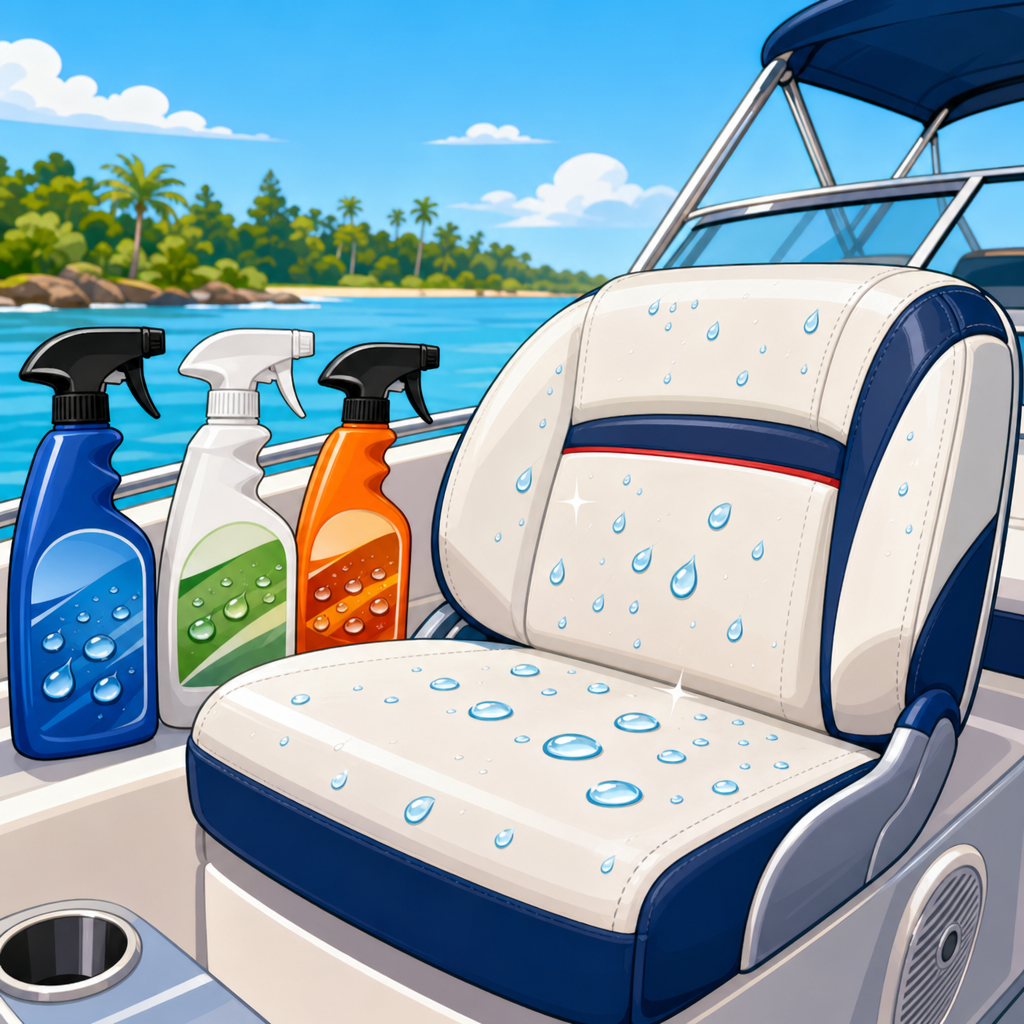
The best waterproof sprays for boat seats and cushions do three things reliably: repel water, resist contamination, and avoid harming the substrate. On woven marine fabrics, effective formulas lower surface energy so droplets bead instead of soaking in. On quality products, that water repellency also reduces staining because dirt, fish blood, and drink spills have less opportunity to penetrate fibers. On vinyl seating, effective protection is more about UV screening, soil resistance, and maintaining flexibility in the topcoat than about adding a thick waterproof shell.
Marine environments add complications that ordinary household protectants are not built for. Salt crystals abrade surfaces, humidity encourages mildew, and high UV load breaks down plasticizers and dyes. That is why marine-grade products outperform generic upholstery sprays. In practice, I prioritize sprays that specify compatibility with Sunbrella, solution-dyed acrylic, polyester marine canvas, marine vinyl, or closed-cell cushion covers. I also look for non-silicone or low-residue formulas where seat slipperiness would be a safety concern.
An effective product should also preserve breathability on fabric cushions. If a coating seals the fabric completely, trapped moisture may remain inside the cushion, especially after rain or washdown. That can accelerate mildew inside seams and foam. The strongest products are not always the best products; balanced repellency with vapor escape is the goal for cockpit cushions and backrests that stay outdoors.
Best types of waterproof sprays for boat seats and cushions
Different upholstery materials need different chemistry. For woven cockpit cushions, mooring cushions, and removable deck pillows, fluoropolymer or advanced water-based fabric guards remain the standard because they repel water without leaving a waxy film. Well-known options include 303 Fabric Guard and Star brite Waterproofing with PTEF, both commonly used after deep cleaning marine fabrics. For boat covers and bimini fabrics, the same products often apply, making them practical if you want one maintenance system across deck textiles.
For marine vinyl seats, the better choice is usually a protectant rather than a classic waterproofing spray. Products such as 303 Marine Aerospace Protectant and Meguiar’s Marine Vinyl & Rubber Cleaner/Protectant are designed to defend against UV fading, surface drying, and grime buildup. They help water shed from the seat surface, but their real value is preserving the vinyl top layer and reducing staining. I have had the best long-term results using a dedicated vinyl cleaner first, then a UV protectant on a cool surface, buffed dry so the seat is not slick.
For heavy-use fishing boats, mildew-resistant treatments can add value if seats stay damp under covers. These are not magic shields; they work best after existing mildew is removed and the area is dried. If cushions already smell musty, no spray will fix contaminated foam. At that point, cleaning, drying, and sometimes replacing inserts is the only durable solution.
| Material | Best Product Type | Common Examples | Main Benefit | Key Caution |
|---|---|---|---|---|
| Marine vinyl seats | UV protectant spray | 303 Marine Aerospace Protectant, Meguiar’s Marine protectants | Prevents fading, drying, and surface staining | Avoid greasy overapplication |
| Woven cockpit cushions | Fabric waterproofing spray | 303 Fabric Guard, Star brite Waterproofing | Restores water repellency and stain resistance | Apply only to fully dry fabric |
| Canvas and bimini fabric | High-durability fabric guard | 303 Fabric Guard, Scotchgard Heavy Duty Water Shield | Improves beading and weather resistance | Test for colorfastness first |
| Mesh or specialty synthetics | Manufacturer-approved treatment | Brand-specific protectants | Maintains warranty and finish integrity | Do not use generic solvent sprays blindly |
How to choose the right product for vinyl, fabric, and foam-backed cushions
Start with the seat covering material, not the marketing label on the bottle. If the seat is smooth, slightly glossy, and heat-welded or stitched like standard marine seating, it is probably vinyl or synthetic leather. Use a cleaner and protectant built for marine vinyl. If the cushion has a woven texture like cockpit lounge pads, helm seat inserts, or bow sun pad covers, treat it as fabric and use a true water repellent. If you are unsure, check the boat builder’s care manual or the upholstery supplier’s specifications.
Next, consider exposure. Boats stored on lifts in full sun need stronger UV defense than boats in enclosed dry storage. Fishing boats with bait, scales, and blood on deck benefit from stain-release properties. Cruisers in humid climates need mildew management and airflow more than maximum water beading. I also factor in touch points: helm seats and transom loungers should never feel oily after treatment, because slippery vinyl is not just annoying, it is unsafe underway.
Foam-backed cushions deserve special attention. If a cushion absorbs water through seams or zipper tracks, the outer spray alone will not solve the problem. Look at seam construction, venting, drainage, and whether the insert is open-cell or closed-cell foam. In many refit jobs, the biggest improvement came not from changing spray brands but from adding breathable storage, elevating cushions off wet decks, and replacing foam that had lost resilience.
Proper cleaning and preparation before applying any spray
Preparation determines whether a waterproof spray performs for months or fails after the first washdown. Salt, oxidation, sunscreen residue, body oils, and previous protectant buildup block adhesion and leave patchy results. For vinyl, clean with a marine vinyl cleaner or a diluted pH-neutral soap solution, using a soft brush on textured grain. For stubborn marks, products from 3M, Star brite, or Meguiar’s work well when used according to label directions. Avoid harsh degreasers, bleach-heavy mixes, and abrasive pads that strip the protective topcoat.
Fabric cushions need even more discipline. Vacuum first, then wash with a manufacturer-approved fabric cleaner. Sunbrella, for example, publishes detailed cleaning methods that are worth following because they preserve color and finish. Rinse thoroughly. Any cleaner left in the fibers can interfere with repellency and attract dirt. Most failed applications I have corrected came down to one issue: the owner sprayed a damp or still-soapy cushion. The result was uneven beading and wasted product.
Drying must be complete, including seams and undersides. In shaded marinas, that can take longer than expected. I usually stand cushions on edge in moving air before treatment. Tape off nearby fiberglass or acrylic panels if overspray is likely. Work in a ventilated area, out of direct blazing sun, and follow the recommended temperature range. These simple prep steps matter as much as the brand you buy.
Application techniques that make protection last longer
Even the best waterproof sprays for boat seats and cushions underperform when applied too lightly, too heavily, or at the wrong distance. For fabric guards, the goal is even saturation without puddling. Spray overlapping passes, maintain consistent distance, and pay attention to seams, piping, and high-contact areas where water enters first. Some products require two light coats rather than one heavy coat. Respect cure times. Water testing too soon can disrupt the finish before it bonds.
On vinyl, less is usually better. Mist the protectant onto a microfiber towel or directly onto the seat in a controlled amount, spread evenly, then buff off the excess. This leaves a dry-touch finish that protects without creating glare or slipperiness. I do not recommend soaking stitched seams on older seats, because excess product can collect dirt and accelerate cosmetic discoloration.
Reapplication intervals depend on use, cleaning frequency, UV load, and whether the boat is covered. A practical schedule is every four to eight weeks for vinyl protectant during peak season, and once or twice a season for quality fabric waterproofing after a full cleaning. Test performance with a few drops of water. If fabric darkens immediately instead of beading, it is time to retreat.
Mildew, stains, UV damage, and other problems sprays can and cannot solve
Waterproof sprays are preventive tools, not cure-alls. They help reduce moisture penetration, make cleanup easier, and slow UV-related aging, but they cannot reverse sun-brittled vinyl, remove deep mildew inside foam, or fix torn seams. If vinyl is chalking, cracking, or peeling, replacement is often the only professional answer. If a cushion smells sour after drying, the contamination is usually internal.
That said, the right spray materially improves common maintenance headaches. UV protectants reduce fading and stiffness, especially on white and light-colored seating that lives uncovered. Fabric guards cut down on coffee, wine, fish blood, and grease absorption, giving you more cleanup time. In practical marina use, that means fewer permanent stains and faster washdowns after a weekend aboard. On covered boats, good sprays also reduce the musty film that forms when humidity cycles under an enclosure.
Prevention still requires basic habits: wipe seats after use, keep drains clear, avoid trapping wet cushions in lockers, and ventilate under covers. If mildew spots appear, clean them promptly with a material-safe cleaner. Delay is expensive. Once colonies establish in stitching and foam, labor rises quickly and cosmetic recovery becomes uncertain.
Building a complete deck and upholstery maintenance routine
As a hub within boat maintenance and repairs, deck and upholstery maintenance should be treated as a system rather than a single product choice. Start with regular rinsing to remove salt and airborne grime. Follow with scheduled cleaning for vinyl, fabric, nonskid, canvas, and isinglass using material-specific products. Add protectants based on exposure: UV defense for seats, water repellency for woven cushions and canvas, and sealants where manufacturer guidance supports them. Then support those treatments with smart storage, breathable covers, and prompt stain response.
It also helps to connect upholstery care with nearby maintenance tasks. Inspect seat bases and deck hardware for leaks that drip onto cushions. Check snap locations and hinge points for abrasion. Review cover fit, because a loose cover can chafe seat tops while a too-tight cover traps moisture. If you maintain teak, cleaners, or oxidation removers nearby, keep overspray off upholstery. Cross-contamination is common in spring commissioning, and I have seen more than one pristine helm seat stained by runoff from adjacent detailing products.
The main takeaway is simple: the best waterproof spray works only inside a consistent maintenance plan. Choose the correct chemistry for vinyl or fabric, clean thoroughly before application, apply it evenly, and manage moisture at the source. Do that, and your boat seats and cushions will stay cleaner, dry faster, resist fading longer, and hold their value through more seasons on the water. For the next step, inspect every seat and cushion on your boat, identify the material, and build a product list and schedule you can actually follow.
Frequently Asked Questions
What should I look for in the best waterproof sprays for boat seats and cushions?
The best waterproof sprays for boat seats and cushions should do more than simply make water bead up for a few days. In a real marine environment, upholstery is exposed to salt, ultraviolet radiation, sunscreen, fish slime, spilled drinks, temperature swings, and constant flexing from passengers sitting, kneeling, and shifting around. A good product needs to create a water-repellent barrier without making marine vinyl stiff, greasy, slippery, or discolored. For boat cushions with fabric sections or stitched seams, it also helps if the spray supports breathability so trapped moisture can still escape instead of getting sealed into the material.
Look first at material compatibility. Some sprays are designed for marine vinyl, some for canvas and fabrics, and some are marketed as multi-surface protectants. Boat owners get into trouble when they assume one upholstery spray works equally well on every seat skin, seam, and cushion panel. If your seats are vinyl, choose a product specifically labeled safe for marine vinyl or synthetic upholstery. If your cushions include woven acrylic, polyester, or removable fabric covers, use a spray formulated for those textiles. The label should clearly explain acceptable surfaces, drying time, cure time, and whether the product leaves a residue or sheen.
Next, pay attention to UV protection and mildew resistance. Waterproofing alone is not enough. Boat upholstery often fails from sun damage before it fails from direct water exposure. The most useful sprays help reduce fading, drying, and cracking while also making it harder for mildew to get established on damp seams and shaded areas. That matters because mildew often starts where owners cannot immediately see it, especially under folded cushions, around piping, or under covers that trap humidity. Finally, prioritize products from reputable marine-care brands, test in a hidden spot first, and avoid anything that promises a heavy “seal” but does not mention flexibility, breathability, or upholstery-safe use.
Can I use a regular fabric waterproofing spray on marine vinyl boat seats?
Usually, no—not unless the manufacturer specifically states that the spray is safe for marine vinyl. This is one of the most common mistakes boat owners make. Standard fabric waterproofing sprays are often built for patio cushions, jackets, tents, or household upholstery, and those surfaces do not behave like marine vinyl. Boat seats expand and contract in heat, receive direct UV exposure, and are frequently cleaned with marine-safe soaps. A spray that works beautifully on woven fabric may leave vinyl tacky, cloudy, brittle, or slick, which creates both cosmetic and safety problems.
Marine vinyl has a protective top layer and plasticizers that help keep it flexible. The wrong chemical treatment can interfere with that surface, accelerate drying, or create a film that attracts dirt and body oils. In practical maintenance, this is where seats start to look prematurely aged: they lose their natural finish, develop uneven shine, or begin cracking after prolonged sun exposure. Fabric sprays can also collect in seams and around stitching, which may trap grime or encourage mildew if the product reduces breathability without truly protecting the underlying material.
If your boat has mixed materials, treat each one correctly instead of using one generic spray everywhere. Use a vinyl-safe marine protectant for seat skins and a dedicated fabric water repellent for removable textile cushions or canvas-backed sections. Before full application, clean the surface thoroughly, let it dry completely, and test the spray on a hidden edge. If the material changes color, texture, gloss, or feel, stop there. The safest approach is always to match the spray to the upholstery material rather than forcing a household or general outdoor product into marine use.
How often should I apply waterproof spray to boat seats and cushions?
There is no one-size-fits-all schedule, because the right frequency depends on sun exposure, climate, storage habits, boat usage, and the type of spray you are using. As a practical rule, heavily used boats in hot, sunny, or humid regions may need attention every few months during the season, while lightly used boats stored indoors or under well-ventilated covers may only need treatment once or twice a year. The label instructions should always guide the timing, but real-world conditions matter just as much as manufacturer claims.
A better approach than blindly following a calendar is to watch the upholstery’s performance. If water stops beading and begins soaking into stitched areas, if the surface starts drying out, or if the cushions stay damp longer than they used to, protection is probably wearing off. For fabric cushions, reduced repellency is often obvious during washing or after a rain. For vinyl, the need for reapplication may show up more subtly as loss of suppleness, faster heat damage, or increased difficulty wiping off spills. Any time you deep-clean upholstery, especially with products that remove previous residue, you should assume some protective layer has been reduced and may need refreshing.
Seasonal timing also helps. Many boat owners get the best results by applying a waterproof or protective treatment at the start of the boating season, then inspecting mid-season, then retreating before long storage if the product is suitable for that purpose. Just remember that waterproofing is not a substitute for routine care. Seats and cushions last longest when they are cleaned gently, dried thoroughly, ventilated properly, and not left baking under tight covers with moisture trapped underneath. A quality spray extends service life, but maintenance habits determine whether that protection actually pays off.
Do waterproof sprays prevent mildew and foam damage inside boat cushions?
They can help, but they are not a complete solution. Waterproof sprays are best understood as part of a larger moisture-management strategy, not a cure-all. They reduce surface water penetration, which can absolutely lower the risk of dampness working through seams, stitch holes, and fabric layers. That said, mildew and foam deterioration often begin because moisture gets trapped and cannot escape. If a cushion is put away wet, sealed under a non-breathable cover, or left sitting in a humid compartment, even a well-treated exterior may not stop the interior from developing odor, mold, or foam breakdown over time.
This is especially important with stitched boat upholstery. Needle holes, seam channels, zipper areas, and underside fabric panels are all common entry points for water and humidity. Even when the top surface is repelling water, moisture can still migrate from the edges or underside. Once the foam core stays damp, problems escalate quickly: mildew growth, sour smells, heavier cushions, and eventual deterioration of adhesives and internal support structure. In severe cases, owners assume the seat “looks fine” because the vinyl skin still appears intact while the inside is already compromised.
To truly protect boat seats and cushions, combine a suitable waterproof spray with proper ventilation, regular drying, and smart storage practices. Remove or prop up cushions after rain, avoid wrapping upholstery in ways that trap condensation, and periodically inspect seams and undersides where hidden moisture accumulates. If you notice persistent odor, discoloration around stitching, or cushions that feel unusually heavy, the issue may already be inside the foam and will not be solved by another coat of spray. In other words, waterproofing is valuable, but airflow and moisture control are what keep marine upholstery healthy long term.
What is the right way to apply waterproof spray to boat seats and cushions for the best results?
Proper application makes a major difference. Even the best waterproof sprays for boat seats and cushions will underperform if they are sprayed onto dirty, damp, sunscreen-coated, or salt-covered upholstery. Start by cleaning the seats or cushions with a product appropriate for the material. Remove body oils, mildew residue, salt deposits, food spills, and old protectant buildup. Rinse if required by the cleaner, then allow everything to dry completely. This step matters because trapped contamination can interfere with bonding and leave you sealing grime into the surface rather than protecting the upholstery itself.
Apply the spray in a shaded, well-ventilated area, never on hot surfaces in direct sun unless the manufacturer explicitly says otherwise. Shake the product well, hold the can or sprayer at the recommended distance, and use light, even passes instead of soaking one area heavily. Pay close attention to seams, piping, edges, and high-wear seating zones, but avoid oversaturation that can lead to blotching, residue, or long cure times. For fabric cushions, multiple thin coats usually perform better than one heavy coat. For vinyl-safe protectants, wipe or spread as directed so the finish stays even and non-greasy. Always follow the label on drying and cure time before putting the boat back into service.
After application, evaluate the result rather than assuming success. Check that the seat is not slippery, sticky, or uneven in appearance. Once cured, test water repellency on a small area with a few droplets. If the product beads water but leaves the upholstery feeling unnatural, you may have used too much or chosen the wrong formula. Reapply only as needed and keep expectations realistic: no spray eliminates maintenance. The best outcome comes from clean surfaces, the correct product for the material, careful application, and ongoing inspection throughout the boating season.