Yellowstone National Park offers some of the most memorable freshwater boating in the United States, but the best boating experiences in Yellowstone National Park depend on knowing where boats are allowed, what rules apply, and which waters match your skills. Boating in national parks is not like boating on a typical resort lake. Access is limited, wildlife is close, weather changes fast, and regulations are designed first around ecosystem protection. That mix creates a different kind of trip: quieter, more scenic, and often more rewarding for boaters who prepare well.
As a hub for boating in national parks, Yellowstone is an ideal place to start because it shows both the opportunities and the constraints that define this category. In my experience planning park-water itineraries, Yellowstone stands out for two reasons. First, it has a flagship destination in Yellowstone Lake, one of North America’s largest high-elevation lakes, with cold water, broad fetch, and genuine small-craft risk. Second, it also includes river and paddling settings where scenery, wildlife viewing, and backcountry access matter more than speed. That range helps explain what boating in national parks really means.
Key terms matter here. Powerboating refers to motorized craft such as fishing boats, runabouts, and small cruisers where permitted. Paddling includes kayaks, canoes, and stand-up paddleboards. Car-top boating usually means lightweight craft launched without a marina sling or ramp services. Backcountry boating involves remote travel where permits, campsites, and self-sufficiency become central. In Yellowstone and across many park units, aquatic invasive species inspections are mandatory, and seasonal launching windows can be narrower than visitors expect. Understanding those definitions saves time and prevents the most common trip-planning mistakes.
Why does this matter beyond one park? Because boating in national parks sits at the intersection of recreation, conservation, and logistics. A family comparing Yellowstone with Grand Teton, Voyageurs, Lake Roosevelt, or Everglades needs clear information on access, boat types, permit systems, and hazards. Searchers usually want direct answers: Where can I launch? Can I bring my own boat? Is a motor allowed? What about rentals? What is best for fishing, wildlife, or a first paddle? Yellowstone provides useful answers to all of those questions while also setting a realistic standard for how to boat responsibly in protected waters.
Why Yellowstone is a premier boating destination in the national park system
Yellowstone deserves its reputation because it combines scale, scenery, and ecological significance in a way few other boating destinations can match. Yellowstone Lake sits at roughly 7,733 feet above sea level and covers more than 130 square miles, creating conditions that feel more like an inland sea than a casual mountain lake. On calm mornings, it offers mirror-like views of forested shorelines, distant peaks, and geothermal terrain. By afternoon, wind can stack steep waves quickly, which is why experienced boaters treat it with the same respect they would give a large western reservoir.
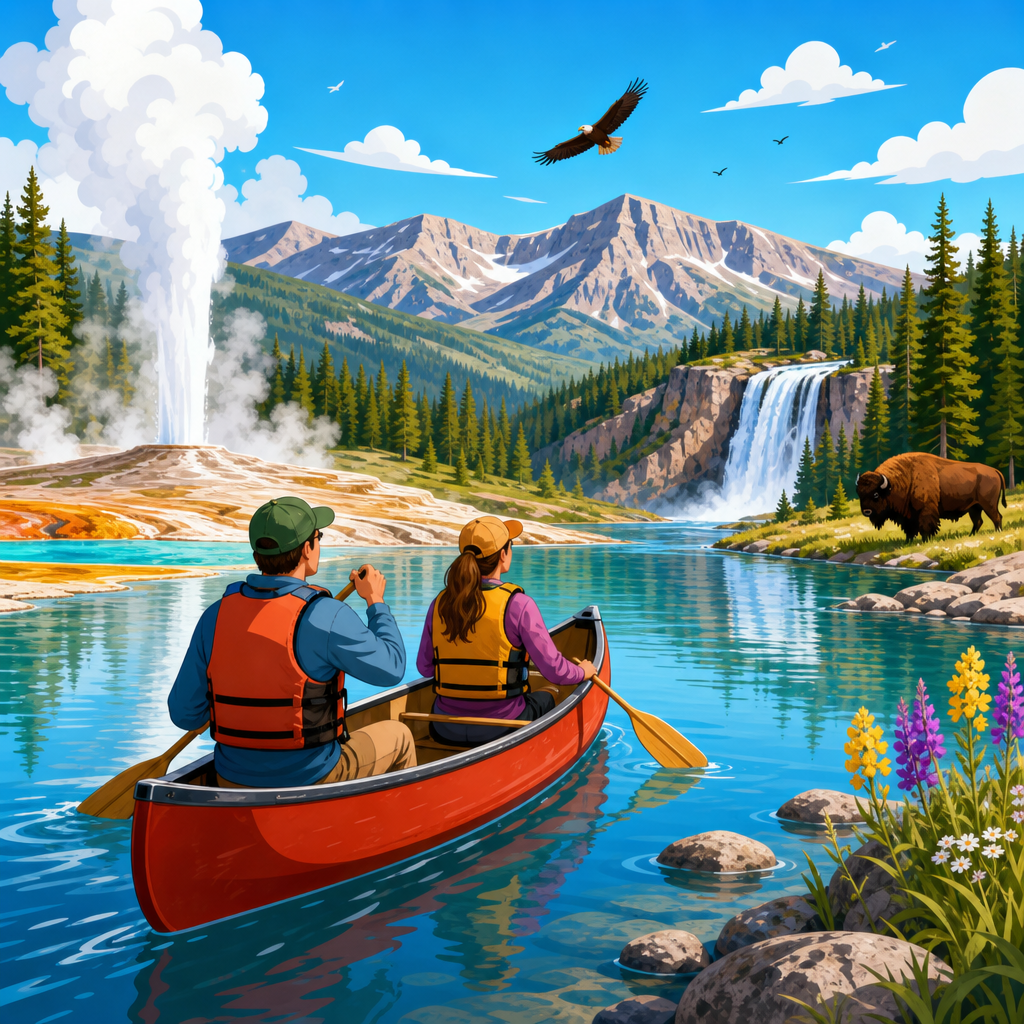
The park also offers a distinctly Yellowstone experience from the water. You are not boating through a built-up shoreline of vacation homes and marinas. You are moving through habitat used by bald eagles, ospreys, trumpeter swans, river otters, elk, and occasionally bears along the shore. In practical terms, that means quieter launch areas, fewer developed services, and a stronger emphasis on self-reliance. It also means every outing has a sightseeing dimension, even if your primary goal is trolling for lake trout or reaching a backcountry campsite.
Compared with many national park boating destinations, Yellowstone is also unusually instructive. It highlights the operational reality of boating on federally protected water: inspections for invasive species, permit requirements, designated marinas or ramps, and strict seasonal management. Boaters who learn Yellowstone’s system generally find it easier to plan trips in Grand Teton National Park, Glen Canyon National Recreation Area, Apostle Islands National Lakeshore, or Curecanti. This hub page uses Yellowstone as the anchor while pointing to the broader principles that govern boating in national parks nationwide.
The best boating experiences in Yellowstone National Park
The single best boating experience in Yellowstone is a well-planned day on Yellowstone Lake. For anglers, that often means an early launch from Bridge Bay Marina, when winds are lower and fishing structure is easier to work methodically. The lake supports native Yellowstone cutthroat trout in some waters, but management has heavily focused on suppressing invasive lake trout that disrupted the native food web. That makes fishing here more than sport; it exists within an active conservation framework. Visitors should always check current rules, species limits, and area closures before departure.
For paddlers, the standout experiences are shoreline explorations in calmer sections and short crossings only when weather is stable and skill levels match the conditions. Sea kayaks and touring canoes are far better choices than casual recreational kayaks when wind exposure is possible. Cold water is the defining hazard. Even on sunny days, immersion can become life-threatening quickly, so proper personal flotation devices, layered clothing, and conservative route choices are not optional. I advise first-time Yellowstone paddlers to think in terms of coves, sheltered reaches, and turnaround points rather than mileage goals.
Another signature experience is using a boat to access fishing or photography water that shore visitors never reach. Quiet morning runs can reveal loons, waterfowl, and dramatic light over the Absaroka Range. Backcountry boat camping, where permitted and reserved properly, adds a wilderness dimension that few front-country visitors experience. In national park terms, that is Yellowstone at its best: limited development, meaningful solitude, and travel that deepens rather than interrupts the landscape.
| Experience | Best Location | Best For | Main Caution |
|---|---|---|---|
| Motorboating day trip | Yellowstone Lake via Bridge Bay | Scenic cruising, anglers, experienced families | Rapid wind and wave buildup |
| Kayaking or canoeing | Sheltered shoreline sections | Wildlife viewing, photography, quiet travel | Cold-water immersion risk |
| Backcountry boat access | Designated lake routes and camps | Remote overnight trips | Permit logistics and self-rescue demands |
| Fishing-focused outing | Yellowstone Lake structure and inlets | Experienced anglers | Species rules and seasonal closures |
Where you can boat, launch, and plan access
Most visitors associate Yellowstone boating with Bridge Bay Marina, and for good reason. It is the park’s primary developed boating center on Yellowstone Lake and the most logical starting point for trailered boats seeking ramp access, marina services, and current local information. Depending on the season, services can include launching support, slips, fuel availability, and nearby visitor infrastructure. Even so, Yellowstone should never be approached like a full-service lake destination. Hours, staffing, weather disruptions, and inspection procedures affect your launch day, so building extra time into the schedule is essential.
Other waters may allow boating or paddling under specific conditions, but access in Yellowstone is tightly managed. Some rivers are closed to protect thermal areas, wildlife, habitat, or visitor safety. Certain lakes may be open only to hand-propelled craft or may involve shoreline restrictions. This is common across boating in national parks: the map alone does not tell you where legal access exists. You need the superintendent’s compendium, current boating regulations, and any seasonal notices. The National Park Service publishes these updates, and boaters should review them before arrival rather than at the ramp.
For a hub-level planning approach, think in three stages. First, confirm whether your intended waterbody is open to your craft type. Second, confirm what inspection, permit, registration, or fee requirements apply. Third, match the route to your launch logistics and retrieval plan. That system works not only in Yellowstone, but also in parks like Isle Royale, Acadia, and Biscayne, where access and operating rules vary sharply by area.
Rules, permits, and inspections every boater needs to know
Yellowstone boating regulations are strict because the park protects a globally important ecosystem. The most important requirement for visiting boaters is aquatic invasive species control. Yellowstone has long required inspections for motorized boats and many hand-launched craft entering park waters. Inspectors look for standing water, attached vegetation, mud, mussels, and evidence that the boat recently operated in infected waters. In some cases, decontamination is required before launch. This process can affect arrival timing significantly, especially during busy summer periods.
Permits and documentation matter as well. Boats may need park permits in addition to state registration, and backcountry users may need campsite reservations or separate travel authorization. Anglers need proper fishing permits and must follow species-specific regulations. Fire extinguishers, navigation lights, sound-signaling devices, and wearable life jackets are not box-checking items in Yellowstone; they are basic survival tools on cold, open water. Rangers do enforce these rules, but more importantly, the conditions justify them.
The broader lesson for boating in national parks is that regulation is part of the experience, not an obstacle to it. Protected waters often face pressure from invasive species, shoreline erosion, and wildlife disturbance. Compliance is how access remains possible. The best national park boaters I have seen are not the ones with the biggest rigs; they are the ones who arrive clean, organized, early, and fully informed.
Safety, weather, and trip-planning realities on Yellowstone waters
If you remember only one safety point, make it this: Yellowstone Lake is cold and can turn dangerous fast. High elevation, open fetch, and afternoon winds create conditions that surprise visitors accustomed to lower-elevation lakes. Hypothermia is possible even in summer. Small craft should launch early, monitor marine forecasts and local ranger guidance, and return before the common afternoon deterioration. Dry bags, spare layers, maps, communication devices, and a realistic float plan are standard, not advanced, precautions.
Weather judgment matters even more for paddlers. A route that looks easy on a map may require an exposed crossing that becomes unsafe with a modest wind shift. Staying near shore, identifying bailout points, and avoiding solo travel on larger reaches are smart baseline practices. For motorboaters, fuel management and mechanical readiness are equally important. You do not want to discover a battery issue or clogged fuel line on a remote, wind-affected shoreline miles from launch.
Families should be especially cautious about assuming Yellowstone is beginner-friendly simply because it is famous. Parts of it are, with the right weather and route selection. But this is not the place for a discount inflatable, cotton clothing, and no backup plan. The same truth applies across boating in national parks, whether you are on Yellowstone Lake, Crater Lake, or the coastal waters near Channel Islands: scenery does not reduce risk. Preparation does.
How Yellowstone compares with other national park boating destinations
Yellowstone is exceptional, but it is not interchangeable with every other park. Grand Teton National Park, just south, offers Jackson Lake boating with major mountain views and a somewhat different access profile. Voyageurs National Park is more water-centric overall, with houseboating, interconnected lakes, and a culture built around water travel. Everglades National Park emphasizes flats boats, paddling trails, and navigation through mangrove systems. Lake Mead National Recreation Area and Glen Canyon provide larger marina networks and broader motorized access than Yellowstone does.
What Yellowstone does best is combine iconic scenery with a true protected-water ethic. It is stronger for boaters who value wildlife, cold-water fisheries, and a less commercial shoreline. It is weaker for visitors expecting abundant rentals, nightlife, dense marina services, or casual all-day tubing. That distinction helps travelers choose the right park. If your priority is a wilderness-inflected boating trip with high scenery and strict stewardship, Yellowstone is among the best in the country. If your priority is convenience and watersports infrastructure, another park unit may fit better.
As the hub for boating in national parks, Yellowstone also sets the editorial roadmap for deeper guides. Readers comparing launches, permits, paddling routes, seasonal timing, fishing opportunities, or family suitability can branch into destination-specific articles from here. That is the practical value of starting with Yellowstone: it frames the whole category clearly.
The best boating experiences in Yellowstone National Park come from matching expectations to place. Yellowstone is not a generic boating lake with a national park sign at the entrance. It is a cold, high-elevation, tightly managed, ecologically sensitive water landscape where the rewards go to prepared travelers. The payoff is substantial: dramatic scenery, genuine solitude, wildlife encounters, and access to one of the most distinctive boating settings in America.
For most visitors, the winning formula is simple. Use Yellowstone Lake as the core experience, launch from established access points such as Bridge Bay when conditions permit, follow inspection and permit rules closely, and build the day around weather, not wishful timing. Paddlers should stay conservative and route-plan for shelter. Anglers should study current species regulations and seasonal changes. Families should choose calm windows and short outings over ambitious crossings. Those choices consistently produce better trips than chasing distance or squeezing too much into one day.
As a hub for boating in national parks, Yellowstone shows what matters everywhere else: legal access, clean boats, realistic safety margins, and respect for protected water. If you are planning a broader parks-based boating itinerary, use this page as your foundation, then explore destination guides for comparisons, launch details, and seasonal strategy. Start with Yellowstone, plan carefully, and your next boating trip can be both safer and far more memorable.
Frequently Asked Questions
Where are the best places to go boating in Yellowstone National Park?
The best boating experiences in Yellowstone National Park are generally found on Yellowstone Lake, Lewis Lake, and Shoshone Lake, with each location offering a very different kind of trip. Yellowstone Lake is the park’s most famous boating destination and the largest high-elevation lake in North America. It appeals to experienced boaters who want expansive open water, dramatic mountain scenery, remote shoreline views, and the chance to explore a truly wild setting. Because of its size, however, it can also become dangerous quickly when wind builds and waves rise. Lewis Lake is often considered one of the more approachable options for visitors who want a calmer introduction to boating in Yellowstone. It is smaller, easier to understand, and popular for motorboats, small fishing craft, canoes, and kayaks. Shoshone Lake is especially attractive for paddlers seeking solitude and a more backcountry feel, but access is more limited and the experience is better suited to those prepared for a quieter, less developed environment. Choosing the best location depends on your boat type, comfort level, and goals. If you want iconic scenery and a big-water experience, Yellowstone Lake stands out. If you want easier logistics and a more manageable day on the water, Lewis Lake is often a strong choice. If your priority is remoteness and wilderness atmosphere, Shoshone Lake can be unforgettable.
Do you need a permit or special inspection to boat in Yellowstone National Park?
Yes, boaters should expect both regulatory requirements and protective measures before launching in Yellowstone. The park manages boating very carefully because aquatic invasive species, shoreline disturbance, and wildlife impacts are serious concerns. In practical terms, that means visitors typically need to follow Yellowstone’s boating permit process and comply with inspection rules designed to prevent non-native organisms from entering park waters. Boats, kayaks, canoes, paddleboards, and other watercraft may be subject to inspection, and some vessels may need documentation showing they have been properly cleaned, drained, and dried before arrival. This is especially important for anyone bringing a boat from outside the park or from other lakes and rivers in the region. Regulations can also vary by waterbody, season, and vessel type, so it is important not to assume that rules for one lake apply everywhere. The smartest approach is to check directly with Yellowstone National Park before your trip for current launch requirements, open dates, inspection station procedures, fees, and permit details. This planning step is essential, not optional. It protects the park’s ecosystem and helps you avoid arriving at a launch area only to find that your boat cannot be used that day. In Yellowstone, boating access is earned through preparation, and that preparation is part of what keeps the experience so special.
Is Yellowstone Lake safe for boating, or is it only for experienced boaters?
Yellowstone Lake can be safe, but it demands respect and is best approached with caution, especially by visitors who are more familiar with smaller or more sheltered lakes. The key issue is not just the size of the lake, but the speed at which conditions can change. Winds can rise quickly, temperatures are cold even in summer, and rough water can develop faster than many first-time visitors expect. Because the lake sits at high elevation, cold-water exposure is a real hazard, and even a short time in the water can become dangerous. That is why experienced boaters often treat Yellowstone Lake more like a serious open-water environment than a casual recreational lake. Beginners are not automatically excluded, but they should be realistic about their skills, the capability of their boat, and the importance of staying close to shore, monitoring weather closely, and wearing properly fitted life jackets at all times. Launching early in the day, when winds are often lighter, is a common strategy. It is also wise to carry extra layers, emergency gear, navigation tools, and a communication plan. If you want the scenery of Yellowstone without the demands of big open water, another lake in the park may be a better fit. For confident boaters who prepare carefully, Yellowstone Lake can be extraordinary. For unprepared visitors, it can become challenging very quickly.
What kinds of boating rules should visitors expect in Yellowstone?
Visitors should expect boating rules in Yellowstone to be stricter and more conservation-focused than what they might find at a typical vacation lake. The park’s rules are built around protecting water quality, limiting disturbance to wildlife, and reducing ecological damage, so convenience is not the primary goal. Boaters may encounter restrictions on where vessels can launch, what types of boats are permitted on certain waters, seasonal access rules, speed or wake considerations, inspection requirements, and limitations designed to prevent the spread of invasive species. There may also be rules affecting fishing from boats, shoreline use, backcountry access, and the transport of gear from one body of water to another. In addition, wildlife has to be given wide berth. Yellowstone is not a place where boaters should approach animals for photographs or drift too closely into sensitive habitat. Sudden weather changes also mean that even when boating is legally allowed, conditions may still make travel unsafe. The most important mindset is to treat the park’s regulations as part of the experience rather than as obstacles. They are there because Yellowstone’s waters are part of a delicate ecosystem, and every launch carries responsibility. Reading current park guidance before your trip, checking local notices in the park, and speaking with rangers when needed can make the difference between a smooth, memorable outing and a frustrating or unsafe one.
What should you bring and plan for to have the best boating experience in Yellowstone?
To have the best boating experience in Yellowstone National Park, visitors should plan as though they are heading into a remote, cold, fast-changing natural environment rather than a standard recreational marina. Start with the fundamentals: properly fitted life jackets for every person, essential safety equipment required for your vessel, extra warm clothing in waterproof storage, food, drinking water, sun protection, and a reliable weather check before launch. Because temperatures can shift rapidly and storms can build with little warning, layered clothing is especially important, even in midsummer. Boaters should also think through navigation, fuel, distance, and turnaround time carefully, since services are limited and some areas feel much more isolated than they appear on a map. If you are paddling, bring equipment suited for cold water and wind exposure. If you are using a motorboat, make sure the boat is in strong operating condition and that you understand where launching is permitted. Dry bags, maps, emergency signaling devices, and a conservative float plan are all smart additions. It is also important to plan around wildlife and park etiquette. Keep your distance from animals, avoid creating unnecessary disturbance, and be prepared for a trip that emphasizes observation and stewardship as much as recreation. The best Yellowstone boating days usually come from boaters who launch early, stay flexible, choose water that matches their ability, and understand that in this park, preparation is a major part of the adventure.