Boat upholstery mildew and mold removal is one of the most important jobs in deck and upholstery maintenance because stained vinyl, damp foam, and musty odors can quickly turn a usable boat into an unhealthy, high-maintenance space. In practical terms, mildew is a surface fungus that often appears as gray, black, or brown spotting, while mold can grow deeper, spread faster, and create stronger odors and material damage when moisture remains trapped. On boats, the problem usually starts with a predictable mix of humidity, body oils, sunscreen, fish residue, rain intrusion, and poor airflow inside cushions, bolsters, coamings, and under-seat storage.
I have cleaned upholstery on fishing boats, cruisers, and family runabouts where owners assumed every black spot meant replacement, but in many cases the issue was removable contamination sitting on vinyl grain, stitching, or the upper layer of foam backing. The key is understanding the surface, choosing a cleaner that matches the material, and fixing the moisture source so the growth does not return in two weeks. This matters beyond appearance. Mold spores and mildew odors reduce comfort, lower resale value, accelerate seam failure, and can migrate into carpet, canvas, life jackets, and locker interiors. A good cleaning plan protects both the upholstery and the rest of the boat. As the main hub for deck and upholstery maintenance, this guide explains how to remove mildew and mold from boat upholstery safely, when to use stronger products, how to avoid damaging marine vinyl, and how to prevent repeat outbreaks with better storage, cleaning routines, and ventilation.
Identify the material, the extent of growth, and the source of moisture
The first step is diagnosis, not scrubbing. Most boat seating uses marine-grade vinyl over foam with polyester thread, though higher-end boats may include woven marine textiles, silicone-coated fabrics, or removable cushion covers. Each reacts differently to cleaners. Standard mildew on vinyl usually looks like scattered dots or hazy dark patches on the surface and around seams. Deeper mold growth shows persistent staining, stronger odor, and signs that moisture has penetrated below the skin, especially if the foam feels damp or heavy. If you clean only the visible spots and ignore the source, the stain pattern often returns from underneath.
Start by checking where the water came from. Common causes include torn seams, cracked vinyl, missing snap covers, blocked cockpit drains, leaking bimini hardware, wet life jackets stored against cushions, and shrink-wrap or boat covers that trap condensation. Lift every removable cushion and inspect the underside. Check the plywood seat base, hinge areas, and storage compartments for black speckling or dampness. Use a moisture meter if you have one; survey-style meters from brands such as Protimeter or General Tools can quickly reveal whether backing panels and nearby substrates are still wet. Also note whether the “mildew” is actually transfer staining from leaves, rust, sunscreen, or carbon residue. Correct identification saves time and prevents the wrong chemical from being used on expensive upholstery.
Use the right cleaning process for marine vinyl and stitched upholstery
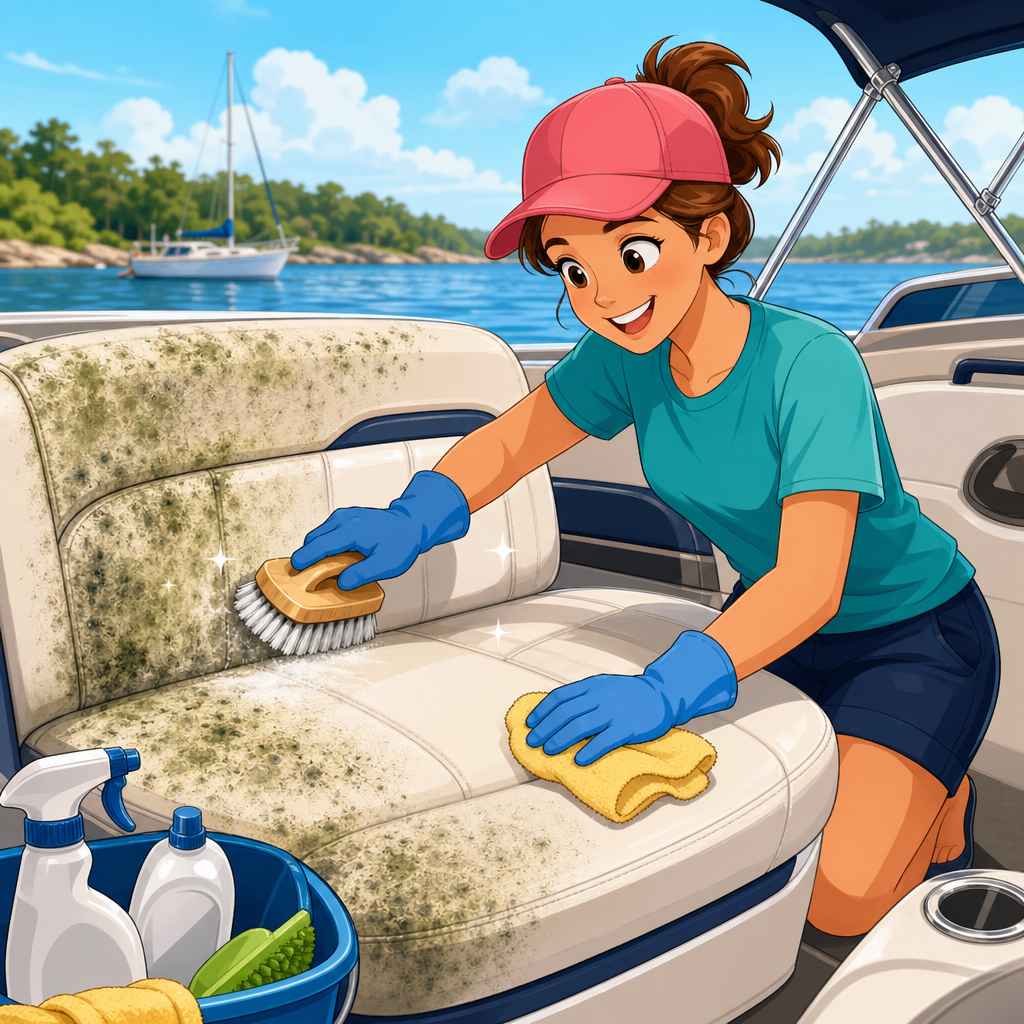
For routine mildew and light mold on marine vinyl, the safest process is mechanical cleaning plus a marine-approved cleaner. Begin by vacuuming dry debris with a soft brush attachment so you do not grind grit into the grain. Then wash the area with mild soap and warm water using a microfiber towel or soft-bristle detailing brush. This removes surface film that can block the cleaner from reaching fungal residue. After that, apply a dedicated marine mildew remover or vinyl cleaner according to the label. Products commonly used in boatyards include Star brite Mildew Stain Remover, 303 Multi-Surface Cleaner, Marine 31 Mildew Remover, and Iosso Mold & Mildew Stain Remover. Test first in a hidden area because formulations vary.
Let the cleaner dwell for the manufacturer’s recommended time, usually thirty seconds to several minutes, but do not let it dry on the surface. Agitate lightly, especially in embossed grain and along welt cords, then wipe and rinse thoroughly. Repeat if needed rather than jumping straight to aggressive chemistry. On stitched upholstery, use less saturation than you would on a hard deck surface. Excess liquid can wick through seams into the foam, creating the same problem you are trying to solve. I prefer spraying product onto a towel or brush for seam work instead of flooding the cushion. Once cleaned, dry the upholstery completely with towels and moving air. A small fan, open storage lids, and several hours of ventilation are often more important than the chemical itself.
Know when stronger products help and when they damage upholstery
Many owners reach immediately for household bleach because it visibly lightens mildew stains fast. Bleach can work on some white marine vinyl in severe cases, but it is not a universal or risk-free solution. Sodium hypochlorite can weaken thread, dry vinyl plasticizers, fade color, and corrode nearby metal fasteners if it is not diluted and rinsed correctly. It can also discolor decorative stitching and piping. Manufacturers such as Spradling and Morbern, both major marine vinyl suppliers, generally recommend using approved vinyl cleaners first and treating harsh oxidizers with caution. If you use bleach at all, reserve it for stubborn white or very light surfaces where gentler methods have failed, dilute it properly, protect surrounding materials, and rinse far more thoroughly than most people do.
Stronger cleaners are also not the answer when staining has migrated below the vinyl skin. If the foam or backing board is colonized, the top surface may look cleaner for a short time while odor and spotting return from underneath. In those cases, the durable fix may involve removing the cushion cover, replacing foam, rebuilding the seat base, or having an upholsterer restitch failing seams. I have seen owners spend hours chasing “mildew” that kept reappearing because the real issue was a waterlogged cushion stored on a rotting plywood base. Chemical cleaning has limits. Use it for contamination on the surface. Use repair or replacement when the underlying structure is wet, degraded, or biologically active.
Safe removal workflow, recommended tools, and prevention habits
A consistent workflow gives better results than random product swapping. The sequence below is the one that works most reliably on boat upholstery, deck cushions, and adjacent vinyl trim because it combines removal, drying, and prevention.
| Step | What to do | Why it matters |
|---|---|---|
| 1. Isolate | Move removable cushions into a ventilated area and wear gloves and eye protection. | Reduces cross-contamination and limits skin or eye exposure. |
| 2. Dry clean | Vacuum loose debris and brush seams gently. | Prevents grit from scratching vinyl during wet cleaning. |
| 3. Wash | Use mild soap and water first. | Removes oils, salt, and film that shield mildew. |
| 4. Treat | Apply marine vinyl or mildew cleaner per label directions. | Targets staining without unnecessary damage. |
| 5. Rinse | Wipe with clean damp towels until residue is gone. | Stops chemical carryover that can age vinyl and thread. |
| 6. Dry fully | Towel dry, then use airflow and open storage compartments. | Prevents moisture from remaining in foam and seams. |
| 7. Protect | Apply a UV and vinyl protectant such as 303 Aerospace Protectant if compatible. | Helps reduce drying, cracking, and future soil adhesion. |
| 8. Correct cause | Repair leaks, improve cover ventilation, and avoid storing wet gear on seats. | Prevention is what stops mold from returning. |
For tools, keep the kit simple and marine-specific: microfiber towels, a soft detailing brush, a bucket, nitrile gloves, a wet/dry vacuum, fans, and labeled cleaners you have already spot-tested. Avoid stiff deck brushes, melamine foam used aggressively, and pressure washers on upholstery. They remove more than dirt. For prevention, clean seats regularly during the season, not just before winter layup. Salt film and sunscreen residue hold moisture and feed growth. Store the boat with airflow, use vented covers when possible, tilt cushions on edge during off-season storage, and never seal damp interiors. On trailer boats, raising the bow slightly can help drainage. On larger boats, dehumidifiers or desiccant systems in enclosed cabins and helm spaces make a measurable difference.
How upholstery care fits into complete deck and upholstery maintenance
Removing mildew and mold from boat upholstery is only one part of deck and upholstery maintenance, and it works best when linked to a wider care routine. The surrounding deck surfaces matter because contamination travels. Dirty nonskid, wet carpet, clogged scuppers, fish boxes that do not drain fully, and canvas curtains with mildew can all reintroduce spores and moisture to otherwise clean seating. That is why this subtopic hub should connect every task: upholstery cleaning, vinyl protection, deck washing, stain removal, seat repair, cover care, drainage inspection, and off-season storage. Treat the area as a system rather than isolated pieces of trim.
In real use, the boats that stay cleaner longest follow a simple maintenance cadence. After each trip, owners wipe seats dry, remove wet towels and PFDs, hose and dry the deck, and leave compartments open until the boat is no longer holding humidity. Monthly, they inspect seams, snaps, hinges, and cover supports, then clean both upholstery and adjacent hard surfaces with compatible marine products. Seasonally, they deep clean, renew protectant, inspect cover fit, and address leaks before storage. If cushions smell musty even after cleaning, they pull them for underside inspection instead of masking odor with fragrance products. That disciplined approach preserves appearance and delays expensive reupholstery. If your boat has recurring mildew, start with the cleaning method in this guide, then move outward: inspect covers, drainage, foam, storage habits, and airflow. Do that consistently, and your seats, bolsters, and deck spaces will stay cleaner, last longer, and feel better every time you leave the dock.
Frequently Asked Questions
What is the best way to remove mildew and mold from boat upholstery without damaging the material?
The safest and most effective approach is to start with the least aggressive cleaning method and match your cleaner to the upholstery material. For most marine vinyl, begin by vacuuming loose debris and spores with a soft brush attachment, then wipe the surface with a mild boat-safe soap solution and warm water. After that, use a marine mildew remover or a diluted cleaner specifically labeled as safe for vinyl and upholstery. Apply it to a microfiber cloth or soft brush rather than soaking the cushion directly, because excessive moisture can push contamination deeper into seams and foam. Gently scrub stained areas in circular motions, paying close attention to stitching, piping, folds, and corners where mildew often hides.
If the mildew is only on the surface, this process is often enough to remove the staining and odor. If mold has penetrated deeper, you may need repeated cleanings and longer dwell time with the cleaner, but avoid harsh household chemicals unless the manufacturer confirms they are safe for marine upholstery. Strong bleach mixtures, stiff brushes, and abrasive pads can dry out vinyl, weaken thread, fade color, and shorten the life of the upholstery. Once cleaned, wipe the area thoroughly with clean water, dry it completely with towels and airflow, and leave cushions open or elevated so trapped moisture can escape. The final step is prevention: apply a vinyl protectant if appropriate, improve ventilation, and make sure the area stays dry so mildew and mold do not return quickly.
Can you use bleach on boat upholstery to kill mold and mildew?
Bleach is one of the most common suggestions people hear, but it is not always the best choice for boat upholstery. While bleach can lighten or remove visible mildew stains on some non-porous surfaces, it can also damage marine vinyl, discolor fabric, dry out protective coatings, weaken stitching, and create fumes that are unpleasant in enclosed boat cabins. On upholstered seating, bleach may clean the top layer while failing to fully address moisture and growth inside seams or foam. That means you can end up with a surface that looks better temporarily while the root problem remains underneath.
If you are considering bleach, always check the upholstery manufacturer’s care instructions first. Some materials may tolerate a very diluted bleach solution in limited use, but many do not. In most cases, a dedicated marine mildew cleaner or a vinyl-safe mold and mildew remover is the better option because it is designed for the material and less likely to cause long-term damage. Whatever product you use, test it first in a small hidden area, use gloves, ventilate the boat well, and never oversaturate the cushion. The goal is not just to kill visible growth, but to remove contamination safely, protect the upholstery, and prevent hidden moisture from feeding another outbreak.
Why does mold keep coming back on boat cushions and upholstery after cleaning?
Recurring mold and mildew usually mean the cleaning removed the visible spots but did not solve the moisture problem that caused them in the first place. On boats, trapped humidity is the real driver. Water can get into upholstery from rain intrusion, wet bathing suits, leaking covers, poor cockpit drainage, condensation, or foam that never fully dries after washing. Even if the vinyl surface looks clean, damp foam underneath can continue to support microbial growth. Mold also tends to linger in seams, under buttons, inside storage compartments, and in places with poor air circulation, so it can reappear quickly if those areas are overlooked.
To stop it from returning, you need a full moisture-control strategy. Dry cushions completely after cleaning, and if possible stand them on edge or remove them from enclosed spaces until the foam is no longer damp. Check for leaks around hatches, snaps, windshield frames, and storage lids. Improve ventilation with open compartments, vents, or fans when the boat is not in use. Use moisture absorbers in cabins and enclosed seating areas, and avoid sealing damp cushions under covers. It also helps to clean routinely rather than waiting for heavy staining, because early mildew is much easier to remove before it spreads. In short, repeat outbreaks are usually not a cleaning failure alone—they are a moisture management problem that needs to be addressed at the source.
How do you get musty odors out of boat upholstery after mildew or mold removal?
Musty odor removal requires more than surface cleaning because the smell often comes from residual spores, organic contamination, and moisture trapped inside the cushion foam. Start by cleaning the upholstery thoroughly and making sure any visible mildew or mold is removed. After that, focus on drying. Use towels, moving air, shade, and time to dry the cushions all the way through. If the foam stays damp, the odor will usually remain. On removable cushions, unzipping the covers or separating components when possible can dramatically improve drying and help you identify whether the smell is in the cover, the foam, or both.
For lingering odors, a marine-safe odor eliminator designed for upholstery can help neutralize smells instead of simply masking them. Lightly treating the interior foam may be necessary if the cushion construction allows access, but avoid soaking it. Baking soda is sometimes used as a temporary deodorizer on dry surfaces, though it is less effective if the underlying issue is active moisture. In severe cases, the foam may be too contaminated to save, especially if mold penetrated deeply over a long period. If the odor returns soon after cleaning, that is a strong sign that hidden moisture or internal contamination is still present. The key is to combine cleaning, full drying, ventilation, and prevention rather than relying on fragrance-based products alone.
When should boat upholstery be professionally cleaned or replaced instead of cleaned at home?
DIY cleaning is often enough for early mildew spotting, mild surface staining, and routine maintenance on marine vinyl, but there are clear situations where professional help is the smarter choice. If the mold growth is extensive, keeps returning despite repeated cleanings, or has spread into foam, backing, seams, or enclosed compartments, a deeper remediation approach may be necessary. The same is true if the upholstery has strong persistent odors, widespread black spotting, material breakdown, thread deterioration, or health-related concerns for anyone sensitive to mold exposure. A professional marine upholstery cleaner or detailer can often identify whether the issue is cosmetic, structural, or moisture-related.
Replacement becomes the better option when the foam is saturated, crumbling, or permanently contaminated, or when the vinyl is cracked, brittle, or stained beyond recovery. At that point, cleaning may improve appearance temporarily but will not restore hygiene, comfort, or long-term durability. If you are removing covers and discovering mold deep inside the cushion, or if the boat has had chronic leak or storage problems, replacing damaged foam and upholstery may be the only reliable fix. While replacement costs more upfront, it can save time and ongoing frustration if the materials are already compromised. A good rule of thumb is this: if cleaning no longer restores appearance, odor, and dryness together, the upholstery likely needs professional restoration or replacement rather than another round of home treatment.