Marine non-skid decking is the textured surface system that gives boat owners secure footing, protects the underlying deck, and reduces wear in one of the most heavily used areas on any vessel. In practical terms, it includes molded fiberglass patterns, adhesive EVA foam panels, painted grit coatings, and synthetic teak products designed to stay grippy when wet. I have installed and repaired each of these systems on fishing boats, center consoles, sailboats, and small cruisers, and the lesson is always the same: the best-looking deck fails quickly if the substrate is poorly prepared or the maintenance plan is inconsistent. For anyone managing boat maintenance and repairs, deck and upholstery maintenance sit at the center of comfort, safety, resale value, and cleaning workload.
This topic matters because the deck is exposed constantly to salt, sun, fuel splash, fish blood, sunscreen, standing water, and foot traffic. Upholstery suffers from the same environment, and owners usually maintain both at the same time because dirt, mildew, and UV damage move across these surfaces together. A neglected non-skid deck becomes slick, stained, and harder to clean. A badly installed product can trap moisture, lift at edges, or hide soft spots in the deck core below. Good installation and routine care prevent those expensive failures. This guide explains how to choose a marine non-skid decking system, install it correctly, clean and protect it, inspect surrounding upholstery and sealants, and build a maintenance routine that supports the broader deck and upholstery maintenance plan for your boat.
Choosing the right marine non-skid decking system
The best marine non-skid decking system depends on how the boat is used, what the deck is made from, and how much maintenance you can realistically perform. Painted non-skid with additive is common on fiberglass boats because it is durable, easy to renew in sections, and compatible with many original factory surfaces. EVA foam panels are popular because they are softer underfoot, reduce fatigue, and install without specialized coating equipment. Synthetic teak offers premium appearance and traction but demands careful patterning and edge finishing. Molded fiberglass non-skid is the factory standard on many production boats, but repairs require matching texture and gelcoat work. None of these options is universally best. The right choice balances traction, cleanability, heat retention, UV stability, and future repairability.
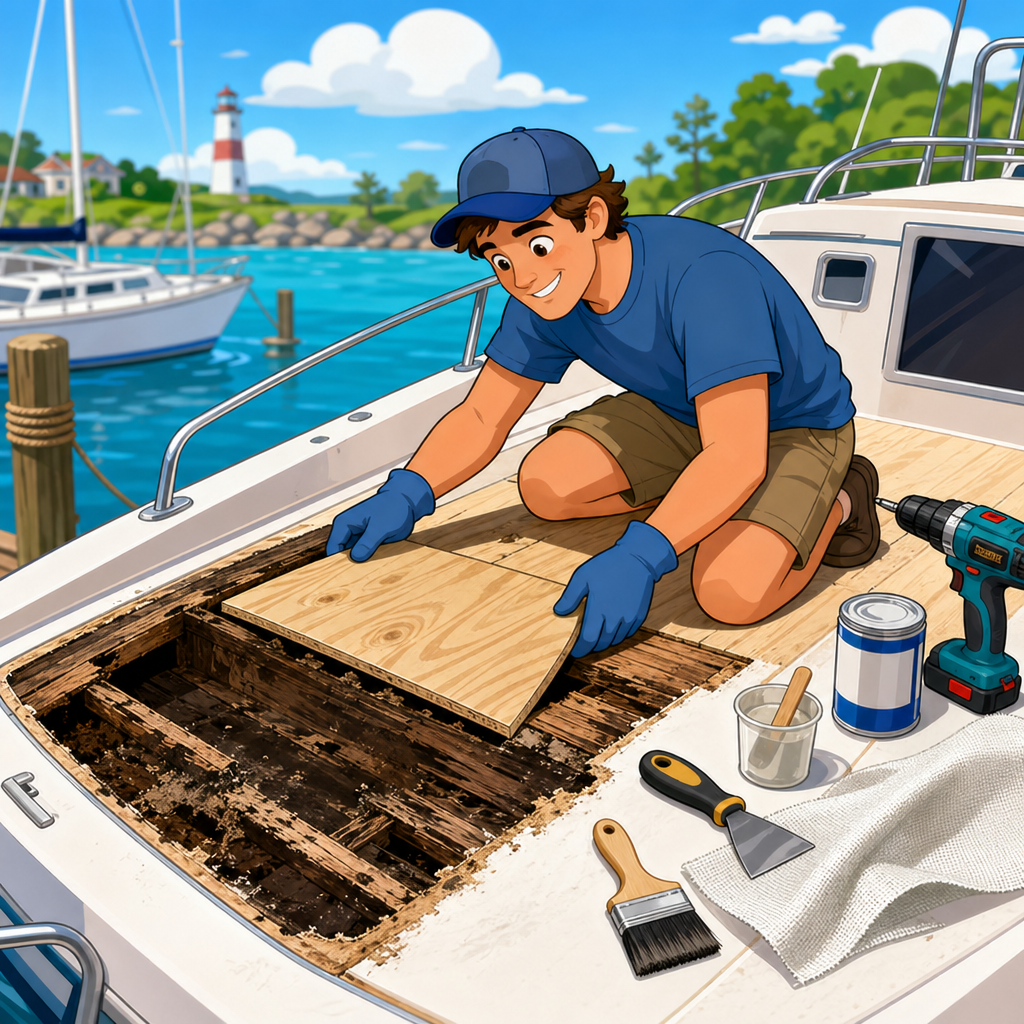
When I evaluate a deck, I start with substrate integrity before I think about surface appearance. If the deck has flex, moisture intrusion, spider cracks around hardware, or loose hatches, replacing the top layer alone is wasted money. On older boats, especially around pedestal seats, leaning posts, console bases, and transom doors, soft spots often indicate wet coring. Those need structural repair before any non-skid decking goes down. You should also assess drainage paths. A material that bridges scuppers, creates lips around hatches, or blocks inspection plates will create cleaning and safety problems later. For a sub-pillar hub on deck and upholstery maintenance, this is the key principle: surface products must support, not hide, the condition of the deck, seams, fasteners, cushions, and adjacent vinyl.
Tools, materials, and preparation steps that determine success
Most installation problems begin in preparation, not application. For painted systems, you typically need degreaser, wax remover, acetone or manufacturer-approved solvent, orbital sander, vacuum, lint-free rags, masking materials, primer if required, topcoat, and the specified non-skid media. For EVA or synthetic panels, you need templates, sharp knives, rollers, plastic squeegees, a heat gun used carefully, adhesive promoter where approved, and accurate measurements around hatch gaps and radiused corners. For all systems, moisture meter readings, deck fastener inspection, and weather timing matter more than many owners expect. Adhesives and coatings fail when the deck is chalky, contaminated, damp, or too hot during installation.
A clean substrate means more than a quick wash. Salt residue, oxidation, silicone from previous detailing products, and fuel film all interfere with bond strength. I usually wash first with a dedicated marine soap, then degrease high-traffic areas, then remove wax and polish residue, then sand to the correct profile. On fiberglass, a dull, even scratch pattern is what you want, not random shiny spots. On aluminum decks, compatibility and corrosion control become critical; use products approved for aluminum and isolate dissimilar metals at hardware. If the job includes nearby seating, backrests, coamings, or bolsters, cover upholstery completely. Solvents, sanding dust, and overspray stain vinyl and thread quickly, and deck and upholstery maintenance should always be planned together rather than treated as separate weekend tasks.
Installation methods by decking type
Painted non-skid is still one of the most dependable solutions for working boats and owners who want straightforward future repairs. After surface prep, repair chips or cracks with the proper filler, fair uneven spots, vacuum thoroughly, and apply primer if the system requires it. Mask boundaries carefully because ragged lines make even a high-end coating look amateur. Apply the first coat evenly, then broadcast or mix in the specified aggregate according to the product sheet. Interlux Interdeck, KiwiGrip, and Awlgrip non-skid systems all have different texture methods and film-build expectations, so follow the manufacturer rather than improvising. Allow full cure before foot traffic. Rushing cure time is one of the fastest ways to create gloss spots, contamination, and reduced traction.
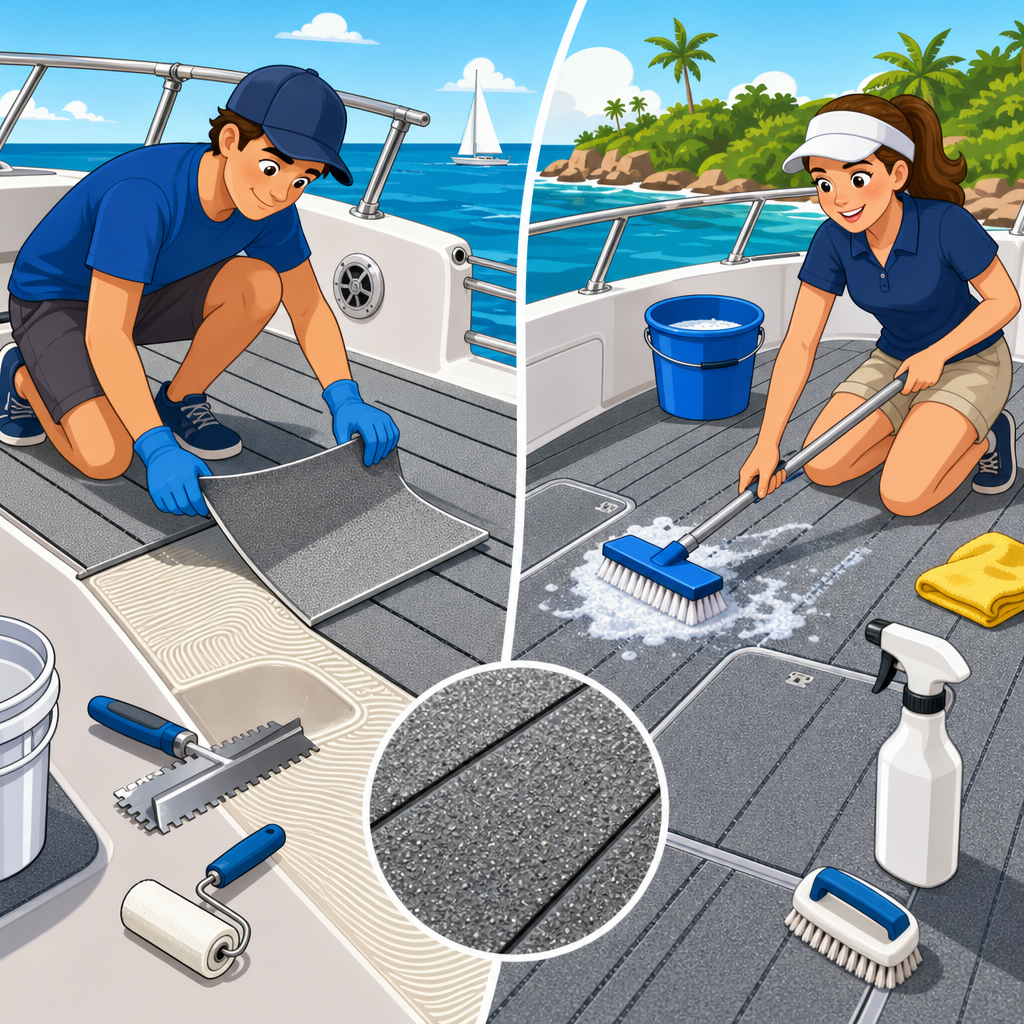
EVA foam and synthetic teak require a different discipline: templating accuracy. Make paper or Mylar templates for each section, label orientation, dry-fit every panel, and confirm hatch clearance before peeling any backing. Once pressure-sensitive adhesive touches a properly prepped deck, repositioning is limited. I install from one edge, smoothing progressively with a roller to avoid trapped air. Seam spacing must be consistent, and corners should be rounded where possible because sharp points lift first. Around livewell lids, fish boxes, and console doors, leave enough gap for expansion and cleaning. Do not bridge hardware bases if future service is likely. If a cleat, hatch latch, or seat base may need removal, pattern around it cleanly. Good deck and upholstery maintenance is easier when parts remain serviceable without destroying adjacent materials.
| Decking type | Main advantages | Main limitations | Best use case |
|---|---|---|---|
| Painted non-skid | Durable, repairable, factory-style appearance | Requires careful prep and cure control | Fiberglass decks on fishing and utility boats |
| EVA foam | Comfortable, quiet, easy to customize | Can stain, shrink, or lift in harsh conditions | Center consoles, pontoons, family boats |
| Synthetic teak | Premium look, good traction, routed aesthetics | Higher cost, patterning must be precise | Cruisers, yachts, retrofit appearance upgrades |
| Molded fiberglass | Long service life, integrated structure | Harder to match in repairs | Factory decks with localized restoration needs |
Maintenance routines for traction, appearance, and service life
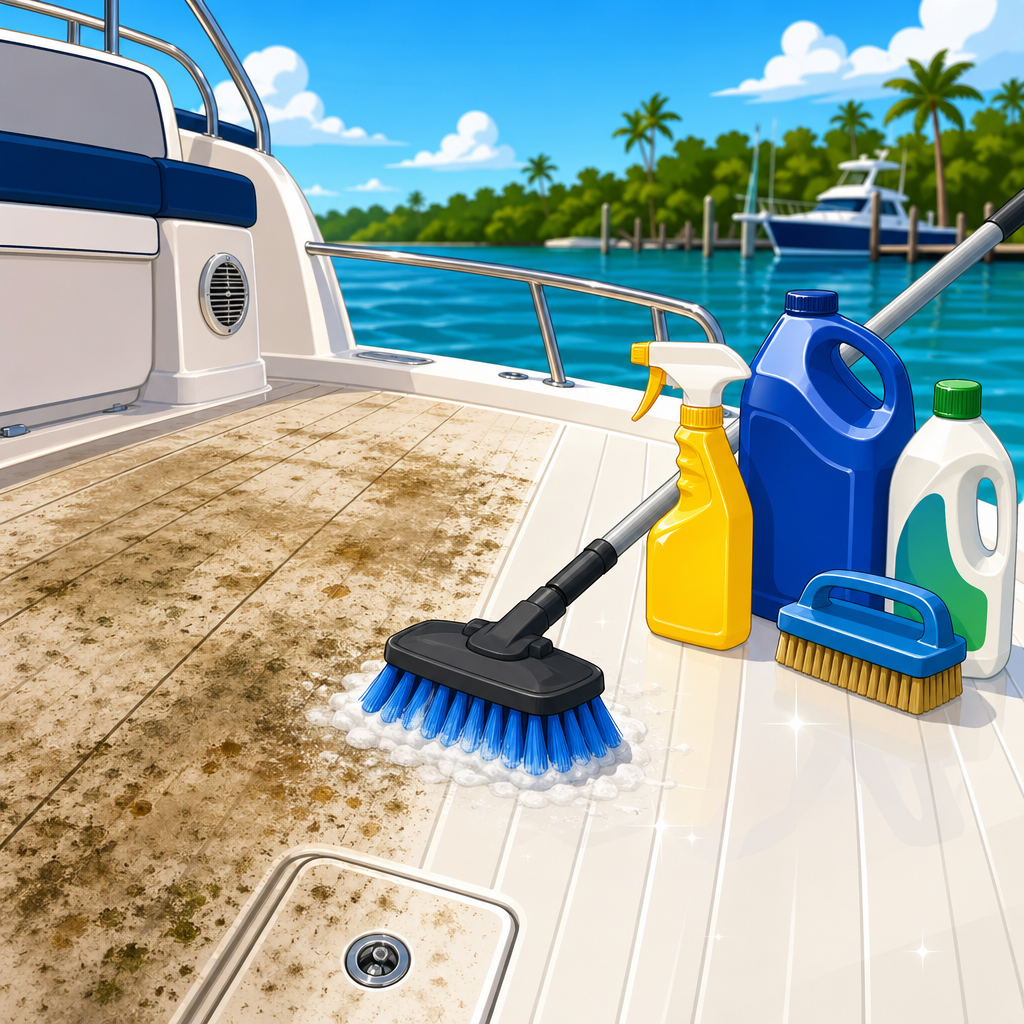
Routine maintenance is what separates a deck that lasts seven to ten seasons from one that looks tired after two. The basic schedule is simple: rinse after use, wash weekly or biweekly during the season, inspect monthly, and deep clean before storage and launch. Use pH-balanced marine soap for regular washing and a soft to medium deck brush matched to the texture. Avoid household bleach as a default cleaner. It can weaken stitching, dry surrounding vinyl, dull some coatings, and create runoff issues. For mildew, use a marine mildew remover approved for the deck material and test in a hidden area first. On EVA foam, aggressive solvents can swell or discolor the surface. On painted non-skid, stiff wire brushes polish down the texture and reduce grip.
Stain management should be immediate. Fish blood, rust drips, sunscreen, diesel soot, and tannin marks become harder to remove the longer they sit. I keep separate cleaning kits on service calls because rust removers, enzyme cleaners, and citrus degreasers each solve different problems. The mistake many owners make is scrubbing every stain with maximum force. That often embeds dirt deeper or damages the top layer. Instead, identify the contaminant, choose the mildest effective cleaner, allow proper dwell time, and rinse thoroughly. Protect surrounding upholstery while you work. Vinyl seat bolsters and coaming pads often collect runoff from deck cleaners, and thread discoloration around seams is common when harsh products are used carelessly. Deck and upholstery maintenance should share the same chemical compatibility checklist.
Common problems, repairs, and when replacement makes more sense
The most common non-skid decking problems are edge lifting, staining, texture wear, adhesive failure, seam opening, water intrusion around hardware, and hidden substrate deterioration. Edge lifting on foam products usually starts where installers left contamination near hatch corners or where water sits under cover. Small areas can sometimes be repaired with the manufacturer’s recommended adhesive after cleaning and drying completely, but widespread lifting usually means the original bond was compromised. Painted non-skid fails differently. You may see peeling around fasteners, glossy wear paths, or localized delamination where old wax remained under the coating. Spot repair works if the surrounding system is sound and color match is acceptable. If adhesion is failing in multiple zones, complete removal and reapplication is usually more efficient.
Replacement is the smarter choice when the deck surface is hiding larger issues. If moisture readings are elevated around pedestal mounts, console feet, T-top legs, or transom hardware, stop cosmetic work and investigate core condition. If synthetic teak seams are opening repeatedly, check whether the deck is flexing excessively. If mildew returns within days on cushions and the deck remains damp, review drainage, storage ventilation, and cover fit rather than buying stronger cleaners. In deck and upholstery maintenance, repeated cosmetic treatment without finding the source creates a cycle of labor and disappointment. I tell owners to document failures with photos by area, date, and weather conditions. Patterns appear quickly, and those records help determine whether the problem is installation error, environmental exposure, or a deeper structural defect.
Integrating decking care with upholstery, hardware, and seasonal boat maintenance
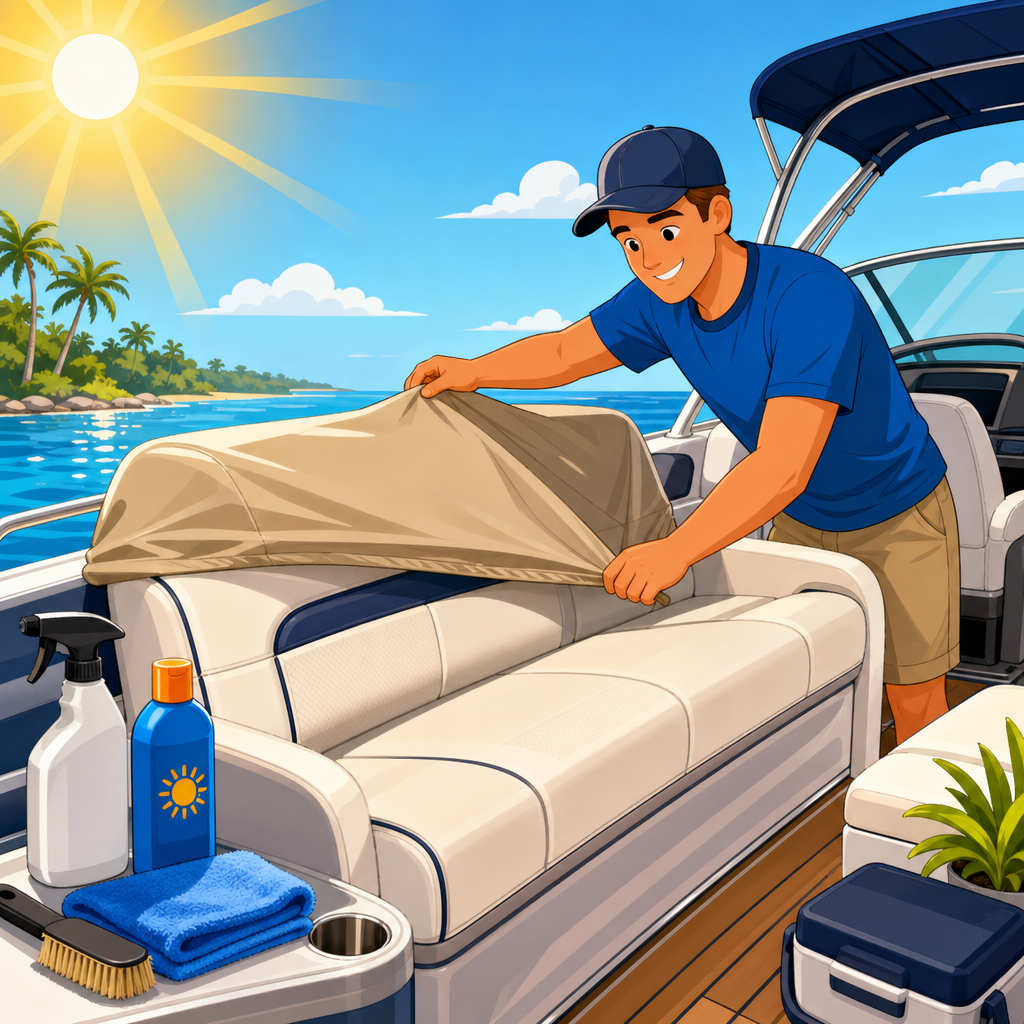
A clean, safe deck depends on more than the deck surface itself. Upholstery, caulking, hatch seals, drains, fasteners, and hardware bases all influence whether moisture stays controlled and grime is easy to remove. During seasonal maintenance, inspect seat bases, leaning post mounts, snap fasteners, and pedestal penetrations for loose bedding compound. Re-bed leaking hardware with a marine sealant suited to the substrate and future service needs. Check hatch gutters and scuppers for obstruction because standing water shortens the life of both decking and vinyl. Vacuum seams around cushions, wash vinyl with a dedicated marine vinyl cleaner, and apply a UV protectant that does not leave a slippery residue on adjacent walking areas. Products from 303, Star brite, and Meguiar’s Marine lines are common choices, but surface testing remains essential.
Storage practices also determine long-term results. Breathable covers, ventilation, and shade reduce heat load that ages foam decking and dries vinyl. In freezing climates, remove loose mats, clean thoroughly before layup, and avoid trapping organic residue under covers where mildew thrives. In tropical or high-UV regions, inspect more often for adhesive creep and seam shrinkage. If the boat is used commercially or heavily for charter fishing, schedule quarterly deep inspections rather than waiting for annual haul-out. The hub lesson for deck and upholstery maintenance is consistency: small interventions prevent expensive restoration. Create a checklist, use the right cleaners, keep water moving off the deck, and repair minor defects while they are still isolated. That approach preserves traction, appearance, comfort, and value better than any single premium product ever will.
Installing and maintaining marine non-skid decking is ultimately about safety, durability, and making the entire boat easier to own. Choose a decking system that matches your deck material, climate, and usage pattern. Prepare the surface meticulously, because adhesion and finish quality are decided before the product goes down. Maintain the deck with material-specific cleaners, quick stain response, and regular inspection of edges, seams, hardware, and drainage. Most importantly, treat deck and upholstery maintenance as one connected system. Water, UV exposure, dirt, and chemical damage do not respect category lines, and the best results come from caring for walking surfaces, cushions, hatch seals, and fittings together.
If you want your boat to stay safer underfoot, easier to clean, and more valuable over time, start with a documented maintenance routine and fix small issues before they spread. Inspect your deck this week, note any lifting edges, slick areas, stains, or leaking hardware, and plan the right repair or upgrade now rather than after peak season begins. A well-installed marine non-skid deck pays you back every trip with better traction, lower maintenance effort, and a cleaner, more professional-looking boat.
Frequently Asked Questions
What is marine non-skid decking, and which type is best for my boat?
Marine non-skid decking is any deck surface designed to improve traction, reduce slips, and protect the structure underneath from wear, moisture, and constant foot traffic. On boats, that can mean molded fiberglass non-skid patterns built into the deck, painted or rolled-on textured coatings with grit additives, adhesive-backed EVA foam pads, or synthetic teak systems that combine comfort and appearance with traction. The best option depends on how you use the boat, what the deck is made of, how much maintenance you are willing to do, and whether your priority is durability, comfort, cost, or appearance.
For example, molded fiberglass non-skid is extremely durable and common on production boats, but repairing worn or damaged sections takes more prep and technique if you want the repair to blend in. Painted non-skid coatings are a strong choice when you want to refresh an aging deck, improve grip, and keep costs reasonable. They can be customized with different grit levels, but surface prep is critical and the finish will eventually need recoating. EVA foam is popular because it is comfortable underfoot, easier on bare feet and knees, and relatively straightforward to install, but lower-quality products can shrink, stain, or peel in harsh sun and salt exposure. Synthetic teak gives a premium look and good traction while requiring less maintenance than real wood, though it is usually one of the more expensive options and still demands careful installation. In real-world boat use, the right answer is usually the system that matches the boat’s workload and your willingness to maintain it, not simply the one that looks best in a catalog.
How do I prepare a boat deck before installing non-skid decking?
Preparation is the part that determines whether the installation lasts for years or starts failing after one season. No matter which non-skid system you choose, the deck must be clean, dry, structurally sound, and free of contaminants such as wax, oil, silicone, loose paint, oxidation, and old adhesive residue. If you skip that step, even the best product will struggle to bond properly. Start by removing hardware if necessary, masking the work area carefully, and inspecting the deck for cracks, soft spots, water intrusion, delamination, or screw holes that need repair. There is no sense installing a new non-skid surface over a deck problem that should be fixed first.
After inspection, scrub and degrease the surface thoroughly using a cleaner appropriate for marine use. If there is existing wax or polish, remove it completely because adhesives and coatings do not bond well to slick residues. Sanding is often required to create a mechanical bond, especially for coatings and adhesive-backed products. The grit you use depends on the substrate and manufacturer recommendations, but the goal is usually to scuff the surface enough to promote adhesion without damaging the underlying deck. Vacuum the dust, wipe the surface with the proper solvent if the product instructions call for it, and allow the deck to dry fully. On fiberglass and painted decks, moisture trapped beneath a new covering can create bond failure, mildew issues, or blistering. Good prep also includes planning seams, drainage paths, hatch access, and hardware clearances before anything gets stuck down. On boats, careful layout is as important as clean sanding because curved surfaces, hatch lids, and irregular walkways can turn a simple install into a frustrating one if you do not dry-fit everything first.
What are the key steps to installing adhesive EVA foam, synthetic teak, or a painted non-skid coating correctly?
Each material has its own installation method, but all successful jobs share the same fundamentals: accurate measurements, proper surface prep, stable weather conditions, and patience during layout. For adhesive EVA foam panels, begin by templating the area if the shape is irregular. Dry-fit every piece before peeling the backing. Once you expose the adhesive, alignment matters because repositioning is limited and aggressive pulling can stretch the material or weaken the bond. Work from one edge across the panel, applying even pressure to avoid trapped air. Use a hand roller to seat the adhesive fully, paying extra attention to edges, corners, and cutouts around hatches or hardware. Temperature matters more than many people realize; if the deck is too cold, the adhesive may not grab well, and if the surface is too hot in direct sun, positioning becomes more difficult.
Synthetic teak requires even more discipline because seams, margins, and visual alignment are part of the finished look. Most installers use templates so the panels fit precisely around consoles, transoms, ladders, and hatch frames. Adhesive selection is critical, and cure times must be respected. During installation, the panels need consistent pressure and clean seam handling so they do not shift or telegraph imperfections underneath. Painted non-skid coatings involve a different process. After cleaning and sanding, you will typically prime if needed, then apply the coating by brush, roller, or spray depending on the product. Some systems have grit pre-mixed, while others require broadcasting aggregate into wet paint and then topcoating. The main goal is to create a uniform texture without overloading the surface or leaving thin patches that wear prematurely. In all cases, the manufacturer’s instructions should guide working time, temperature range, curing period, and foot traffic limits. The most common installation mistakes I see are rushing the prep, ignoring weather conditions, poor masking, and using the boat too soon before the adhesive or coating has fully cured.
How do I maintain marine non-skid decking so it stays safe, clean, and long-lasting?
Routine maintenance is what keeps non-skid decking doing its job. The surface needs to stay clean enough to provide traction, but not every cleaning method is safe for every material. In general, wash the deck regularly with mild boat soap, fresh water, and a medium-soft brush or deck brush that matches the surface type. Dirt, fish residue, sunscreen, fuel drips, bird waste, and salt buildup all reduce traction over time and can stain certain materials if left in place. A quick rinse after each outing and a more thorough cleaning on a regular schedule will do far more for longevity than harsh chemicals used occasionally.
For molded fiberglass and painted non-skid, avoid using overly aggressive pads or cleaners that can polish down the texture or strip protective coatings. For EVA foam and synthetic teak, avoid strong solvents, bleach-heavy mixtures unless specifically approved, and pressure washing at close range, which can lift edges or damage the surface texture. Check seams, corners, hatch edges, and high-traffic paths often because those areas show wear first. If you notice lifting edges, trapped moisture, cracks, or worn-down texture, address it early before the problem spreads. Maintenance also includes prevention: use deck mats in heavy-use work zones if appropriate, clean up spills quickly, and avoid dragging sharp gear, coolers, anchors, or metal hardware across the surface. On boats that live outdoors, UV exposure is a major factor, so keeping the vessel covered when possible helps preserve both the appearance and bond strength of many decking products. The practical lesson is simple: frequent light maintenance is far easier and cheaper than waiting until the entire deck surface needs replacement or major repair.
When should marine non-skid decking be repaired instead of replaced, and what signs of failure should I watch for?
Repair is usually the right choice when the problem is localized and the rest of the deck system is still sound. Small peeling sections of EVA foam, isolated gouges in synthetic teak, a worn patch in a painted non-skid area, or minor fiberglass non-skid damage around a hatch or hardware base can often be fixed without redoing the entire deck. The key is identifying whether the issue is cosmetic, adhesive-related, or structural. If the material itself is intact and the deck underneath is dry and solid, a targeted repair may restore both safety and appearance. If the bond has failed over a broad area, the surface is shrinking or cracking extensively, or water intrusion has damaged the substrate below, replacement is usually the smarter long-term move.
Watch for signs such as edges curling up, bubbling, soft spots underfoot, discoloration that does not clean out, loss of texture in walking lanes, cracking at seams, or water getting trapped beneath the decking. On painted non-skid, flaking, peeling, and polished-smooth traffic areas are common warning signs. On EVA and synthetic teak, shrinking panels, exposed seams, and adhesive bleed or failure often indicate aging material or poor original prep. On molded fiberglass, chips and repairs that continue to crack can suggest underlying deck movement. A good rule is that if traction is compromised, the deck needs attention immediately, even if the damage does not look severe. Boats are wet, moving environments, and a small non-skid problem can quickly become a safety issue. When in doubt, lift a suspect edge, inspect the substrate, and evaluate whether the deck beneath is still healthy. If the foundation is compromised, no surface repair will last until that underlying issue is corrected.