How to perform quick repairs at sea in an emergency starts with a simple truth: offshore problems rarely arrive one at a time. A split fuel line can lead to air in the system, a dead bilge pump can turn a minor leak into flooding, and a loose battery terminal can mimic a major engine failure. Emergency boat repairs are the fast, temporary actions that stabilize the vessel, protect the crew, and buy time to reach safe harbor. They are not substitutes for full yard work, but they are often the difference between inconvenience and distress. In years of maintaining cruising boats and assisting breakdowns on the water, I have found that the most effective quick fixes follow the same priorities every time: keep water out, keep power available, preserve propulsion or steering if possible, and prevent a small fault from cascading.
For most skippers, “quick repairs at sea” means using limited tools, spare parts, and improvisation under motion, spray, noise, and stress. That environment changes what works. A repair that is fine at the dock may fail when the hull pounds into a head sea. That is why emergency methods emphasize isolation, redundancy, and monitoring. Wooden plugs tied to every through-hull, self-amalgamating tape, hose clamps in multiple diameters, spare fuses, a multimeter, epoxy putty, rigging knife, mechanic’s wire, and a manual bilge pump are more than nice-to-have gear; they are core risk controls. Standards from the American Boat and Yacht Council, along with Coast Guard safety guidance, consistently reinforce the same principle: temporary repairs must reduce immediate hazard without creating a larger one, especially around fuel, electricity, and flooding.
This hub on emergency boat repairs and quick fixes covers the failures that matter most underway: leaks, electrical faults, engine cooling issues, fuel contamination, steering trouble, damaged hoses, torn sails, and broken fittings. It also explains when not to repair and when to call for assistance, issue a Pan-Pan, or escalate to a Mayday. If you want a practical framework for boat maintenance and repairs that works when conditions are bad and time is short, the goal is not perfection. The goal is a controlled, temporary solution that keeps the boat afloat, maneuverable, and safe long enough to make the next good decision.
Start with triage: stabilize the boat before touching tools
The first emergency repair step is not turning a wrench. It is triage. Ask four questions in order: Is the boat taking on water? Is anyone injured? Is there fire, fuel vapor, or electrical arcing? Do you still have propulsion, steering, communications, and position awareness? This sequence matters because crews often waste precious minutes chasing the visible symptom instead of the dangerous cause. I have seen operators tear apart an engine box over a temperature alarm while a failed raw-water hose filled the bilge below. If flooding, smoke, or fuel smell is present, control that first.
Assign roles clearly. One person drives or manages drift, one investigates, one prepares communications and safety gear. Put everyone in life jackets, clip in if offshore, and slow the boat if speed is worsening the damage. Head seas can increase slamming loads on compromised fittings; a small course change can protect a temporary patch. Then isolate systems. Shut the fuel valve if a line has split. Turn off the relevant breaker if a circuit is heating. Close the seacock feeding a failed hose. Temporary repairs hold far better when pressure, vibration, and flow are reduced before installation.
Good triage also means gathering evidence before disassembly. Check bilge water level, color, and odor. Saltwater points to hull, shaft, or plumbing leaks; freshwater may indicate domestic systems; diesel sheen suggests fuel contamination. Read gauges, note alarms, and take a quick photo with a phone. That record helps if the fault worsens later and supports a systematic diagnosis once you are back in harbor. In a real emergency, the best repair is usually the one that can be applied fastest, inspected easily, and reversed if it fails.
Stopping leaks and controlling flooding
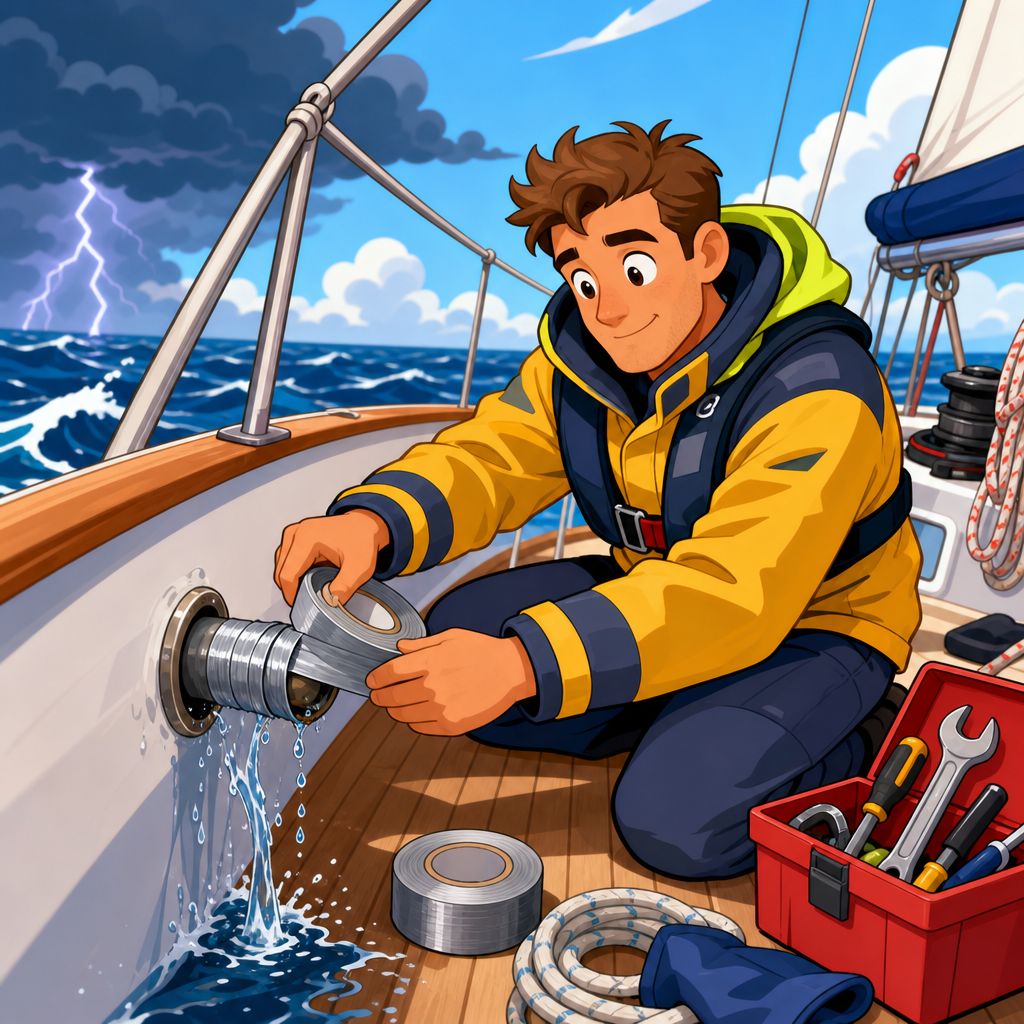
Flooding is the highest-priority repair problem because time works against you. The quickest leak response is always source control. Inspect seacocks, hose tails, stuffing boxes or shaft seals, transducers, and rudder posts. If a hose has split near a barb, cut back to sound material and reattach with two all-stainless hose clamps positioned 180 degrees apart. If there is not enough slack, bridge the break with a correctly sized joiner, copper pipe sleeve, or even a deep socket wrapped to improve fit, then clamp both sides firmly. This is a temporary measure, but on sanitation, bilge, and cooling lines it can get you home.
If a through-hull fitting or hose has failed completely, close the seacock immediately. If the valve itself breaks or cannot close, drive in a soft wooden plug. Tapered plugs tied beside each through-hull are standard practice for a reason: they work even with irregular openings. Wrap the plug with a rag if the fit is poor, hammer it gently, and support it so pounding does not shake it loose. For cracks in non-structural housings and low-pressure plumbing, epoxy putty can slow water ingress enough for pumps to keep up, but only if the surface is cleaned as well as conditions allow.
Collision damage above a few inches cannot be “fixed” conventionally at sea, but it can often be reduced. A collision mat, spare sail, bunk cushion, or heavy tarp can be passed under the hull and tensioned over the damaged area from both sides. Water pressure helps hold the patch against the opening. On smaller punctures from failed transducers or fasteners, I have used rubber sheet, a backing plate, and mechanical compression from inside to good effect. The key is understanding that pumps are part of the repair. Keep strainers clear, run all bilge pumps, and assign someone to monitor the waterline continuously.
| Emergency problem | Fast temporary fix | Best tools or materials | Critical caution |
|---|---|---|---|
| Split hose | Cut back and reclamp, or bridge with joiner | Knife, hose cutter, clamps, socket or pipe sleeve | Close seacock first if below waterline |
| Failed through-hull | Insert tapered plug | Wooden plug, mallet, rag | Support plug so vibration does not loosen it |
| Small hull puncture | Compression patch from inside or collision mat outside | Rubber sheet, backing plate, lines, tarp | Monitor for movement as sea state changes |
| Leaking shaft seal | Reduce shaft speed and adjust or cool seal | Wrenches, spare hose, flashlight | Do not overtighten packing and burn the shaft |
Electrical failures: restore only what you need
Many apparent mechanical failures are actually electrical. A diesel that “won’t start” may simply have low voltage at the starter due to a loose ground, corroded battery switch, or failed fuse in a control circuit. Quick electrical repairs begin with the smell test and heat test. If insulation is melting, a breaker is chattering, or a connection is too hot to touch, de-energize that circuit. Then work from the battery outward. Confirm battery switch position, inspect terminal tightness, and check voltage with a multimeter. A resting 12-volt battery around 12.6 volts is healthy; much below 12.2 suggests a low state of charge before cranking losses even begin.
Clean and tighten high-current connections first. In rough conditions, a ring terminal can loosen enough to interrupt power intermittently, causing maddening symptoms. I have restored a dead helm by tightening a negative bus connection that looked fine at a glance. For damaged wiring, make conservative repairs: cut back burnt copper, crimp a marine-grade butt connector if you have one, and seal it. If proper connectors are unavailable, a twisted-and-taped splice is strictly temporary and should be used only on low-current circuits needed to get home. Never improvise on fuel shutoff circuits, starter cables, or anything near fuel vapor without understanding the risk.
Prioritize loads ruthlessly. In an emergency, you need navigation lights if required, VHF, GPS or chartplotter if available, bilge pumps, and engine controls. Cabin refrigerators, inverters, water heaters, and stereo systems can stay off. If charging has failed, conserve battery capacity by switching electronics to standby and using handheld backups. Spare fuses should match the original rating; replacing a 10-amp fuse with a 20-amp “just to get by” is how harness fires start. Temporary power restoration is successful when the essential circuit works reliably and the repair can be inspected every few minutes.
Engine and fuel quick fixes that can save propulsion
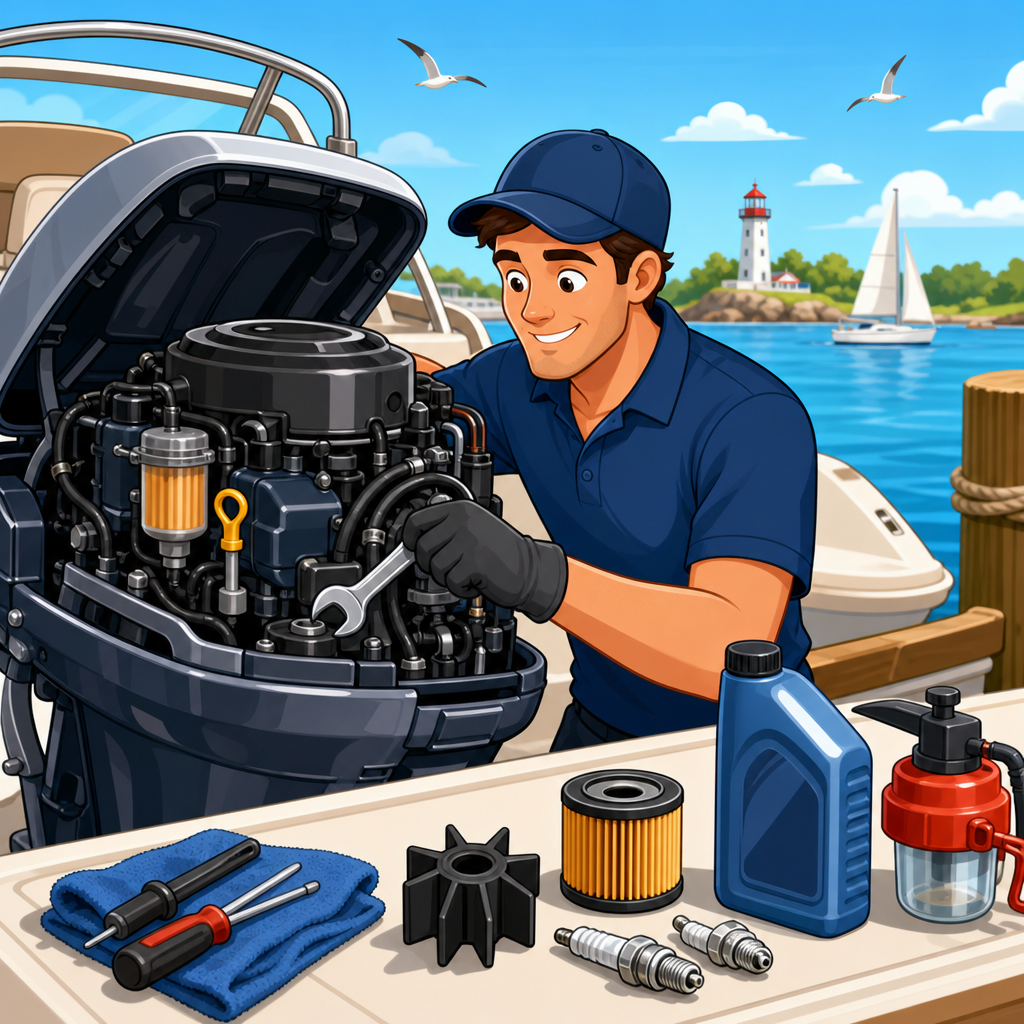
Loss of propulsion offshore is serious, but the underlying cause is often simple enough to manage. Start with the basics: fuel, air, cooling, and controls. On diesel boats, contaminated fuel and clogged filters are frequent culprits, especially after rough weather stirs tank sediment. If the engine loses rpm, hunts, or dies, check the primary fuel filter bowl for water or debris. Carrying a spare Racor element or equivalent can turn a breakdown into a short delay. Change the filter, prefill if appropriate for the system, and bleed air according to the engine manufacturer’s sequence, usually from filter head to injection pump.
Overheating deserves immediate attention. The most common causes underway are a blocked raw-water strainer, failed impeller, collapsed suction hose, or debris at the intake. Shut down before temperatures spike further. Clean the strainer, inspect the impeller if accessible, and verify discharge flow at the exhaust on restart. A missing impeller vane can lodge downstream in the heat exchanger, so a “new impeller, same overheat” situation is common. Temporary hose repairs on the cooling side can work well if clamped correctly, but any leak spraying saltwater on alternators or starter motors should be addressed quickly because secondary electrical failures often follow.
For gasoline engines, caution is stricter. Any fuel leak, strong vapor odor, or suspected backfire in the engine space requires ventilation and extreme care. Do not operate switches that may spark until vapors are cleared. Tightening a hose clamp or replacing a primer bulb may be straightforward, but a leaking carburetor, fuel pump, or cracked filter housing is not a candidate for casual improvisation. In those cases, isolating the fuel source and calling for assistance is the right seamanship move. Preserving life and the boat matters more than preserving the schedule.
Steering, rig, and deck hardware repairs underway
Steering failures are frightening because they remove control instantly, yet many boats have workable backups. On cable-steered powerboats, inspect the helm connection, drag link, and outboard tiller arm first. A missing cotter pin or loose nut can disconnect the system completely. Carry spare clevis pins, washers, and stainless seizing wire; they weigh almost nothing and can restore steering in minutes. On larger vessels with hydraulic steering, a burst hose or leaking ram may leave little fluid pressure. If you carry compatible hydraulic fluid and spare fittings, topping off and isolating the leak may restore limited control, but the repair must be monitored constantly.
Sailboats add rig emergencies. A torn sail can often be contained with sail repair tape, palm-and-needle stitching, or by re-reeving to reduce load on the damaged area. A parted halyard may be replaced with a spare line led externally. If standing rigging fails, the immediate objective is reducing mast loads: head downwind if necessary, lower sails, and secure anything flogging. I have twice prevented a dismasting by using spare sheets and a topping lift as temporary stabilizing stays long enough to motor in. That kind of fix is ugly but effective because it addresses load paths, not appearances.
Deck hardware failures also matter more than they seem. A broken anchor roller, loose stanchion base, or failed cleat can damage the hull or injure crew in heavy motion. Backing plates, large washers, and through-bolts are ideal, but underway you may need a temporary lashing, line strop, or load transfer to another fitting. The rule is simple: never trust a repaired fitting to its original full load until it has been rebuilt properly ashore.
Build an emergency repair kit and know when to stop
The best quick repairs happen before the emergency because the kit, labels, and spares were chosen in advance. A serious onboard repair kit should include tapered plugs, multiple hose sizes, double clamps, self-amalgamating tape, rescue tape, mechanic’s wire, cable ties, spare belts, raw-water impeller, fuel filter elements, fuses, terminals, crimpers, multimeter, headlamp, rigging knife, epoxy putty, underwater-curing patch material, thread sealant, spare fasteners, absorbent pads, and a manual transfer pump. Add the engine-specific items your boat actually uses: injector washers, a lift-pump diaphragm, serpentine belt tool, or proprietary sensor if failures are common in your model.
Preparation also means documentation. Keep wiring diagrams, engine part numbers, belt sizes, filter references, and seacock locations in a waterproof binder or offline tablet. Label shutoffs clearly. In a real breakdown, memory is unreliable, especially at night. Crew drills help more than most owners expect. Practice changing a fuel filter, plugging a through-hull, switching to emergency tiller, and isolating battery banks. The first time should not be in six-foot seas with cold hands.
Finally, know when a quick fix has reached its limit. If flooding is increasing, fumes persist, steering remains unreliable, or weather is worsening beyond your control margin, call early. Pan-Pan is appropriate for urgent situations that are not yet immediately life-threatening; Mayday is for grave and imminent danger. There is no prize for delaying help while a temporary repair unravels. The main benefit of mastering emergency boat repairs and quick fixes is not self-reliance for its own sake. It is buying safe options. Build the kit, learn the systems, and review your weak points before the next departure so the next emergency becomes a managed problem, not a crisis.
Frequently Asked Questions
What should I do first when something breaks at sea?
The first priority is to slow the situation down and protect life before you touch a tool. Reduce speed, come off plane if you are running fast, and put the boat in the safest heading for the conditions. If the issue affects steering, propulsion, flooding, fuel, or electrical systems, get everyone in life jackets and assign simple roles so the crew is helping rather than guessing. One person can monitor water ingress, another can gather repair supplies, and another can maintain communication readiness. A quick, calm assessment often prevents a small mechanical problem from turning into a navigation or safety emergency.
Next, identify the real failure rather than the symptom. An engine that suddenly dies may not be a destroyed motor at all; it could be a loose battery cable, contaminated fuel, an air leak in a fuel line, or a tripped breaker. Water in the bilge may not mean catastrophic hull damage; it could be a failed hose clamp, cracked livewell line, bad shaft seal, or dead bilge pump. Use a simple emergency sequence: aviate, navigate, communicate, then repair. Keep the vessel stable, maintain situational awareness, prepare to call for help if conditions worsen, and only then begin the quickest temporary fix that restores control or limits damage.
What emergency repair supplies should every boat carry for quick fixes offshore?
A practical emergency repair kit should focus on stabilizing the most common offshore failures: leaks, fuel problems, electrical faults, hose failures, and broken fittings. At minimum, carry multiple sizes of marine-grade hose clamps, self-amalgamating rescue tape, quality electrical tape, spare fuel hose, spare cooling hose, wooden plugs for through-hulls, a selection of fuses, crimp connectors, heat-shrink terminals, spare battery lugs, zip ties, mechanic’s wire, stainless fasteners, epoxy putty, underwater repair compound if appropriate for your vessel, rags, absorbent pads, and a compact but capable tool roll. Good hand tools matter: screwdrivers, nut drivers, pliers, locking pliers, adjustable wrenches, side cutters, a utility knife, a socket set, and a multimeter or at least a test light.
It is also smart to carry parts that match your specific boat rather than relying only on generic supplies. That may include a spare bilge pump float switch, emergency manual pump, spare impeller, extra fuel filters, spare belts, battery terminal hardware, a short jumper cable, backup navigation lights, and a few pre-cut lengths of wire with ring terminals already attached. For damage control, collision mats, soft patches, and bungs are invaluable. The best kit is organized, labeled, and accessible in rough weather. In an actual emergency, speed matters more than inventory size, so keep the most critical leak-control and electrical items where they can be reached immediately, not buried under cushions or deep in a locker.
How can I temporarily stop or slow a leak if the boat is taking on water?
Start by figuring out whether the leak is coming from plumbing, a fitting, or the hull itself. Check through-hulls, seacocks, hose connections, stuffing boxes or shaft seals, transducers, livewell and washdown lines, and any recent maintenance points. If a hose has split or come off, shutting the seacock, re-seating the hose, and double-clamping it may solve the problem quickly. If a through-hull fitting is compromised, drive in a correctly sized wooden plug or soft bung to slow the ingress. For cracks, small punctures, or failed fittings above or near the waterline, epoxy putty, rubber patch material, or tightly wrapped rescue tape can buy valuable time. If the opening is irregular, backing a patch with cloth, rubber, or even a cut section of heavy hose can help distribute pressure.
If the leak is from hull damage below the waterline, think in terms of controlling water rather than achieving a perfect seal. Use a collision mat, cushion, sail bag, board, or other flexible material from the outside if possible, or brace a patch from the inside with a board, pad, or tool handle. Keep the bilge pumps running, start any backup pump, and assign someone to monitor the rate of flooding continuously. If electrical pumps are weak or failing, switch to manual pumping immediately rather than waiting. At the same time, reduce weight and pounding if conditions allow by slowing down, changing heading, and avoiding slamming into seas. Temporary leak control is all about buying time to reach safe harbor or await assistance, not proving the repair is elegant.
What are the quickest emergency fixes for engine, fuel, or electrical problems offshore?
Many apparent engine failures offshore come down to a few repeat offenders: bad fuel delivery, overheating, low voltage, or a safety shutdown. If the engine dies or runs rough, check the simplest items first. Look for a loose battery terminal, corroded ground, empty fuel tank selection error, closed fuel valve, collapsed primer bulb, split fuel line, clogged fuel-water separator, or an emergency stop switch issue. Tighten terminals, clean contact points enough to restore connection, replace a filter if you carry one, and inspect fuel hoses for air leaks. A small crack in a suction-side fuel line can let air in without leaking fuel out visibly, and that can mimic a much larger engine problem.
For overheating, inspect the raw-water strainer, intake blockage, and impeller-related flow issues. Clear weed or debris if safe to do so, and verify cooling water discharge. For electrical faults, reset tripped breakers only after identifying what likely caused them, and never keep forcing a circuit back online if it immediately trips again. Use a multimeter or test light to confirm whether power is reaching the component. If a bilge pump or critical accessory fails because of a bad switch, you may be able to bypass the switch temporarily with a fused direct connection, but only if you understand the circuit and can do it safely. The goal is restoring minimum safe function, not improvising permanent wiring. If fuel odor, smoke, heat, or sparking is present, stop the repair and treat it as a fire risk first.
When should I stop trying to repair the boat and call for help?
You should shift from repair mode to distress or assistance mode the moment the problem outruns your ability to control it safely. That includes flooding that is increasing despite pumps and patching, fire or suspected fire inside a compartment, loss of steering in dangerous conditions or near hazards, medical emergencies, fuel leaks with ignition risk, or a complete loss of propulsion and communication in heavy weather or traffic. There is no prize for waiting too long. Early communication gives rescuers, towing services, or nearby vessels more time to reach you while you still have options. If the situation is deteriorating, make the call before your battery, radio, or crew capacity is compromised.
Use the appropriate communication method for the severity of the emergency. A pan-pan call may be suitable for urgent but not immediately life-threatening situations, while a mayday is appropriate when there is grave and imminent danger. Give your position, nature of the problem, number of people aboard, vessel description, and what actions you are taking. Keep signaling gear, EPIRB or PLB if equipped, flares, and a handheld VHF ready. Even after calling for help, continue temporary repairs if they improve safety, but do not let repair work distract from survival priorities. In offshore emergencies, the smartest captains are not the ones who fix everything alone; they are the ones who recognize when stabilization is enough and outside help is the safest next step.