Boating maintenance mistakes are rarely dramatic at first; they begin as small oversights that quietly shorten engine life, damage electrical systems, stain finishes, and turn reliable weekends on the water into expensive repair appointments. In practical terms, preventative boat maintenance means inspecting, cleaning, lubricating, adjusting, and replacing wear items before they fail. Longevity tips are the habits that reduce corrosion, moisture intrusion, UV damage, fuel contamination, and mechanical stress over time. I have seen the same pattern repeatedly in service yards and owner checklists: people focus on obvious breakdowns, but the real cost comes from neglecting routine tasks that preserve the hull, propulsion, batteries, plumbing, and onboard equipment. This matters because marine systems age faster than similar systems ashore. Salt, vibration, sun exposure, stagnant water, and inconsistent use all accelerate deterioration, and the mistakes owners make are usually preventable.
This hub article explains how to avoid the most common boating maintenance mistakes and how to build a maintenance routine that improves reliability, resale value, safety, and total ownership cost. It also serves as a central guide for broader boat maintenance and repairs planning, especially within preventative maintenance and longevity strategies. If you own a fishing boat, pontoon, center console, runabout, sailboat auxiliary, or cruiser, the core principles are the same: follow manufacturer service intervals, inspect high-risk components regularly, document all work, and fix small issues before they cascade. The sections below answer the questions owners ask most often, from engine flushing and battery care to winterization, bilge management, trailer upkeep, and storage practices that actually extend a boat’s usable life.
Skipping routine inspections and running without a maintenance schedule
The most common boating maintenance mistake is not having a repeatable inspection schedule. Many owners rely on memory, and memory fails when the season gets busy. A boat should be checked before launch, after every outing, monthly during active use, and at major seasonal points such as commissioning and layup. The goal is simple: find wear before failure. Start with belts, hoses, clamps, fluid levels, battery terminals, seacocks, steering movement, prop condition, bilge pump operation, navigation lights, fuel lines, and signs of leaks. On trailers, inspect tire pressure, tread, bearings, winch strap condition, brake function, and light wiring.
In my experience, owners who keep a written checklist catch the expensive problems early. A slight fuel odor may point to a cracked primer bulb or aging hose. White powder on battery terminals predicts charging issues. Rust trails under a clamp show moisture intrusion before a hose lets go underway. A simple schedule can prevent missed impeller replacements, overdue lower-unit gear oil changes, and neglected sacrificial anodes. Follow the maintenance intervals in the owner’s manual from brands such as Yamaha, Mercury, Honda Marine, Suzuki, Volvo Penta, or Indmar, then tighten the schedule if the boat operates in saltwater, sits unused for long periods, or logs high engine hours. Time-based service matters almost as much as hour-based service because seals dry out, fuel degrades, and corrosion progresses even when a boat is idle.
Ignoring engine basics: cooling, lubrication, and fuel quality
Engine neglect is where minor maintenance mistakes become major repair invoices. Outboards, inboards, and sterndrives all depend on clean fuel, proper lubrication, and healthy cooling flow. A frequent error is assuming an engine that starts easily is fully healthy. It may still be circulating contaminated oil, running with a partly blocked water intake, or holding ethanol-blended fuel that has absorbed moisture. To avoid premature wear, change engine oil and filters on schedule, replace fuel-water separating filters, inspect spark plugs, and monitor coolant or raw-water systems depending on engine design. For outboards and sterndrives used in saltwater, flushing after use is not optional; it is the simplest defense against internal salt buildup.
Another widespread mistake is delaying impeller service. A raw-water impeller can take a set when stored, lose vanes, or fail from age before obvious symptoms appear. When it fails, overheating can damage exhaust components, head gaskets, and manifolds. I recommend treating impeller replacement as preventive insurance, not as a response to a temperature alarm. Fuel management is equally important. Ethanol can separate from water in poorly stored gasoline, creating hard starts, corrosion, and injector issues. Keep tanks reasonably full during storage to limit condensation when appropriate for the manufacturer’s guidance, use a marine-grade stabilizer, and drain or replace old fuel if phase separation is suspected. For diesel boats, water in the fuel system and microbial growth can clog filters quickly, so tank housekeeping and filter changes matter even more.
Letting corrosion, moisture, and electrical faults build up
Marine electrical problems are often maintenance problems in disguise. The mistake is treating wiring as permanent when the environment is relentlessly destructive. Corrosion begins at terminals, grounds, fuse holders, and connectors, especially if automotive parts were used instead of tinned marine wire and heat-shrink sealed fittings. The American Boat and Yacht Council standards are the benchmark here: connections should be secure, circuits properly fused, batteries restrained, and wiring supported away from chafe and standing water. If you see green copper, swollen insulation, random accessory failures, or voltage drop under load, corrosion is already affecting reliability.
Battery neglect is part of the same pattern. Leaving batteries discharged shortens lifespan, while overcharging flooded, AGM, or lithium batteries with the wrong profile can do equal harm. Use a marine smart charger matched to the chemistry, inspect electrolyte levels where applicable, clean terminals, and verify that the charging system is producing correct voltage. Moisture control matters beyond wiring. A damp bilge accelerates corrosion, mold, pump cycling, and odor. Fix leaks at deck fittings, hatches, shaft seals, livewell plumbing, and scuppers promptly. If a bilge pump runs often, find the source rather than assuming the pump is the solution. Dry boats last longer because dry boats corrode less, smell better, and reveal problems sooner.
| Mistake | What Happens | Preventive Action |
|---|---|---|
| Missing scheduled inspections | Small faults become breakdowns | Use pre-trip, monthly, and seasonal checklists |
| Skipping engine flushing | Salt buildup and cooling restriction | Flush after saltwater use and inspect water flow |
| Ignoring old fuel | Hard starting, injector or carburetor issues | Stabilize fuel and replace contaminated fuel promptly |
| Poor battery care | Short battery life and electrical faults | Charge correctly, clean terminals, test regularly |
| Wet storage habits | Mold, corrosion, pump overuse | Keep bilges dry and repair leaks early |
| Neglecting trailer service | Roadside failure or launch problems | Service bearings, brakes, tires, and lights |
Using the wrong cleaning products and neglecting protective finishes
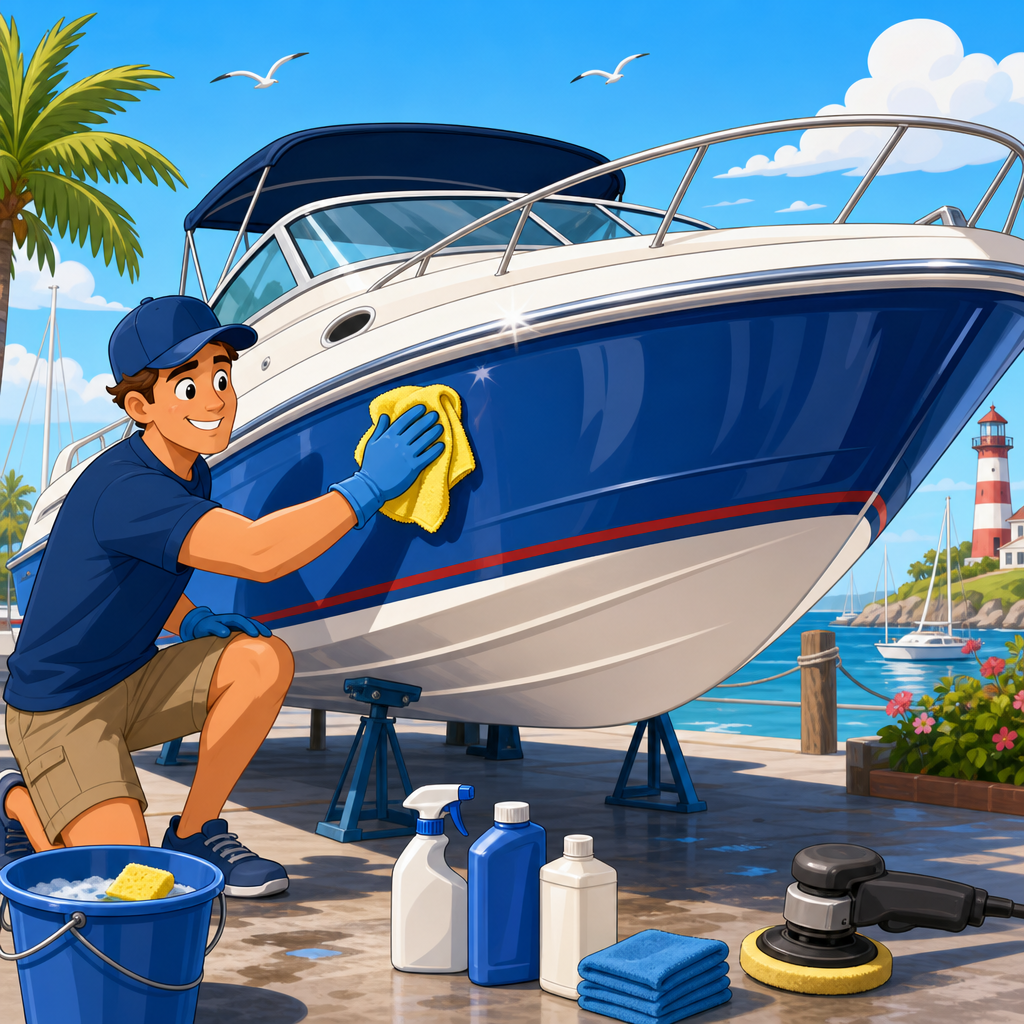
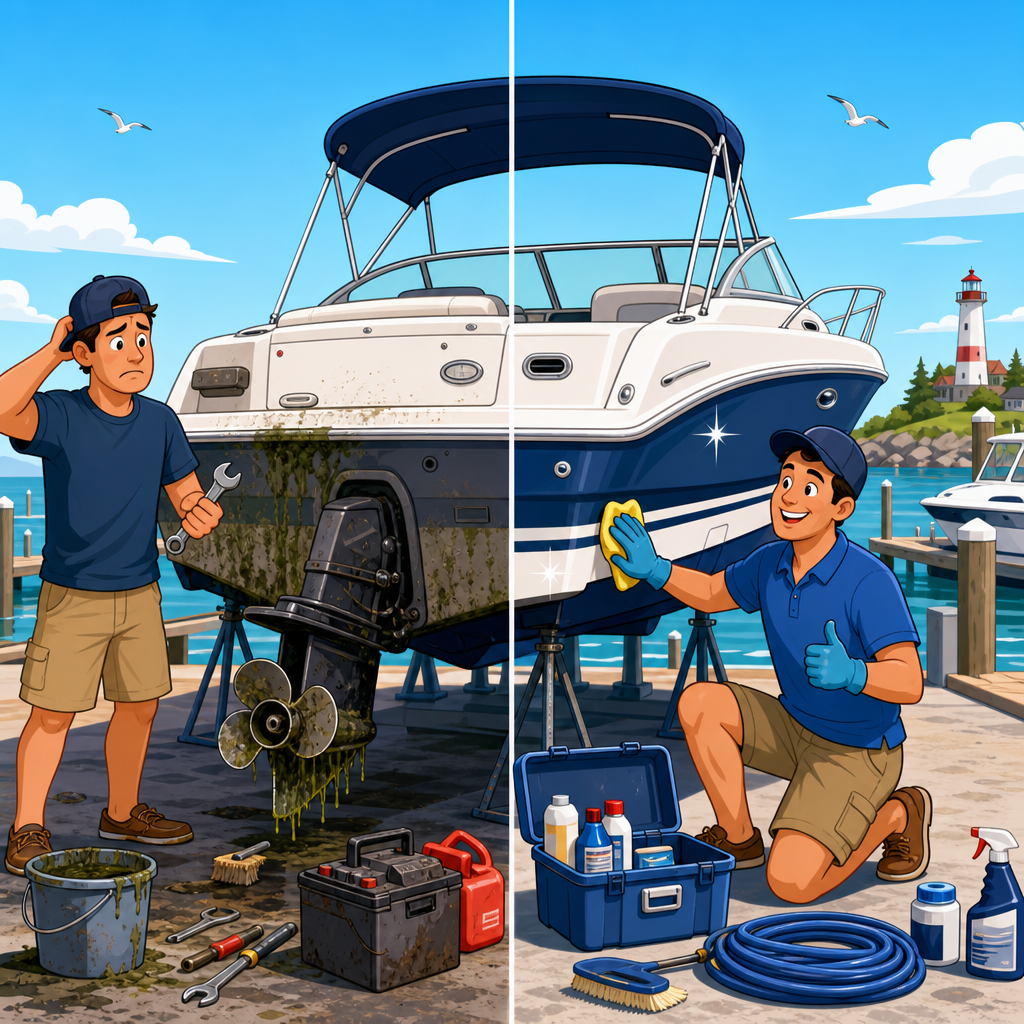
Cleaning mistakes shorten a boat’s life just as surely as mechanical neglect. Household cleaners, stiff brushes, and aggressive degreasers can strip wax, dull gelcoat, dry vinyl, haze plastic, and damage stitching. Boats need marine-specific products because the surfaces are different and the exposure is harsher. Gelcoat oxidizes under ultraviolet light, stainless tea-stains in salt air, isinglass scratches easily, and EVA foam decking can be permanently marked by strong solvents. A proper routine includes rinsing after use, washing with a pH-appropriate boat soap, drying metal hardware, applying wax or sealant to gelcoat, and using dedicated protectants on vinyl and clear enclosures.
One mistake I see often is owners polishing heavily oxidized gelcoat once, then abandoning protection for the rest of the season. Compounding without following with wax or a sealant leaves the surface exposed again. Another error is covering a dirty or wet boat. Moisture trapped under a cover promotes mildew and can abrade the finish when the cover moves. Canvas, zippers, snaps, and seams also deserve maintenance because failed canvas lets water reach the very areas owners are trying to protect. For bottom maintenance, antifouling paint is not simply cosmetic. If a boat lives in the water, the wrong paint choice, poor surface preparation, or overdue recoating can reduce speed, increase fuel burn, and invite osmosis-related concerns. Match the product to the hull material, local water conditions, and use pattern.
Overlooking the trailer, steering, and running gear
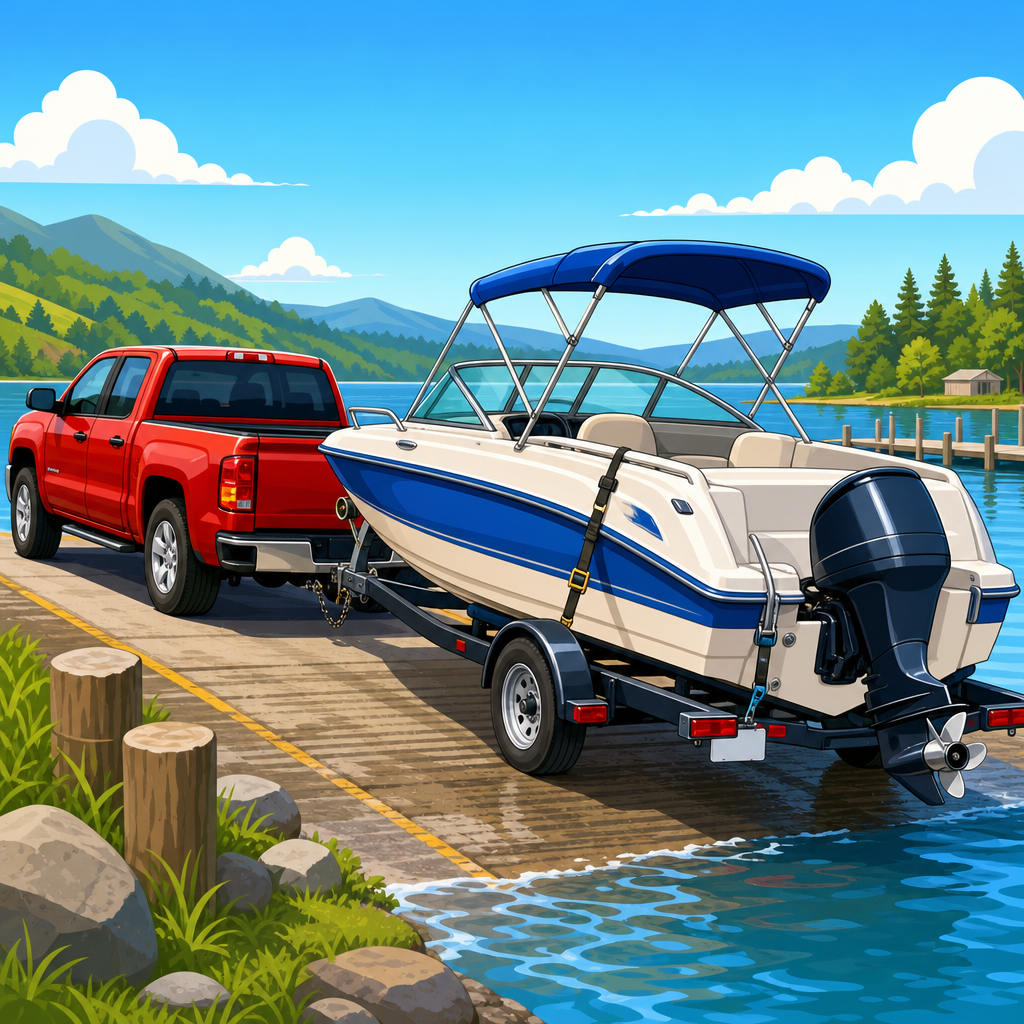
Owners sometimes think of the trailer as separate from boat maintenance, but a trailer failure can damage the boat before it ever reaches the ramp. Wheel bearings need periodic inspection, repacking, or replacement depending on design and usage. Trailer brakes corrode internally if they are not rinsed and serviced, especially after saltwater immersion. Tires age out before they wear out, and sidewall cracking is a serious warning sign. Check the date code, maintain pressure, and carry a spare that is actually serviceable. Lighting faults usually trace back to grounding and connector corrosion, both easy to prevent with dielectric protection and regular testing.
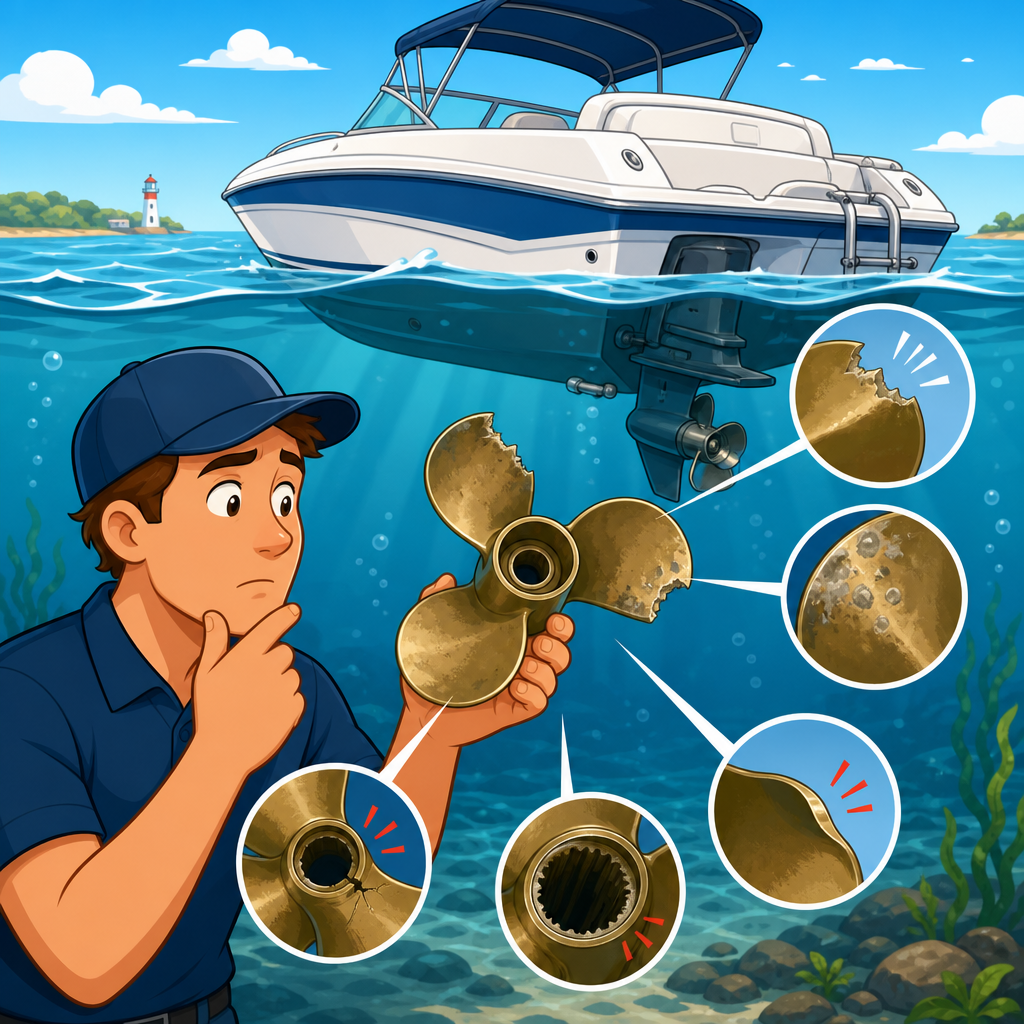
On the boat itself, steering and running gear deserve equal attention. Hydraulic steering leaks, stiff cable steering, worn shift cables, damaged propellers, and fishing line behind the prop hub are classic overlooked issues. A nicked prop increases vibration and can damage shaft seals or lower-unit bearings over time. Misdiagnosed vibration often turns out to be a bent prop, a spun hub, or marine growth on the running surface. If the boat pulls strangely, steers inconsistently, or vibrates through a narrow rpm range, inspect the running gear before assuming the engine is at fault. Greasing pivot points, checking trim-tab operation, and verifying torque on key hardware are small tasks that preserve both safety and performance.
Storing the boat incorrectly and treating winterization as optional
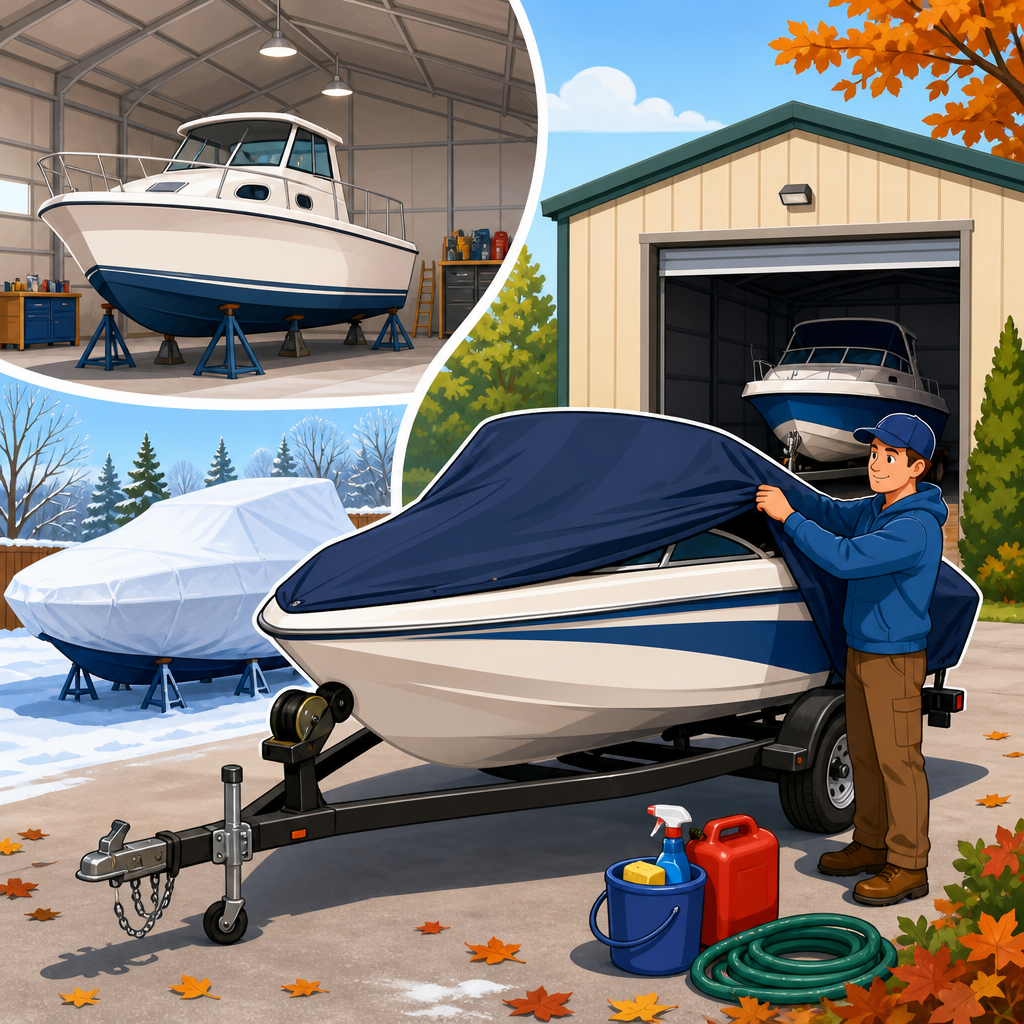
Improper storage creates some of the most expensive boating maintenance mistakes because damage accumulates unseen. Winterization is the clearest example. In freezing climates, trapped water can crack blocks, manifolds, pumps, and plumbing lines. Even in milder regions, storage without stabilization, ventilation, pest control, and moisture management leads to stale fuel, mold, dead batteries, and seized components. A correct winterization plan depends on the boat type but usually includes fuel treatment, fogging where recommended, draining or protecting water systems, changing contaminated fluids, removing perishables, charging batteries, and covering the boat so water sheds properly.
Bad storage habits continue during the off-season. A bow-up or bow-down attitude that traps water can saturate foam, rot wood-backed components, and stress bilge systems. Unsupported covers collect standing water that stretches fabric and leaks at seams. Boats stored under trees suffer from organic staining, blocked drains, and faster finish deterioration. If possible, store on a trailer or cradle that supports the hull correctly, ventilate enclosed spaces, and visit the boat periodically rather than abandoning it for months. Boats deteriorate fastest when they are ignored. Monthly off-season inspections often reveal rodent damage, low battery voltage, torn covers, or water intrusion before spring launch turns them into major repairs.
Failing to document service and delaying professional help when it matters
One of the most overlooked longevity tips is maintenance documentation. A simple log recording engine hours, service dates, parts used, fluid types, torque values, battery age, and observed issues creates continuity that memory cannot. It also improves resale because buyers trust documented care. I advise owners to save receipts, note serial numbers, and photograph repairs. That record helps when troubleshooting recurring problems. If an engine alarm returns six months later, knowing exactly when the thermostat, impeller, and fuel filter were replaced changes the diagnosis immediately.
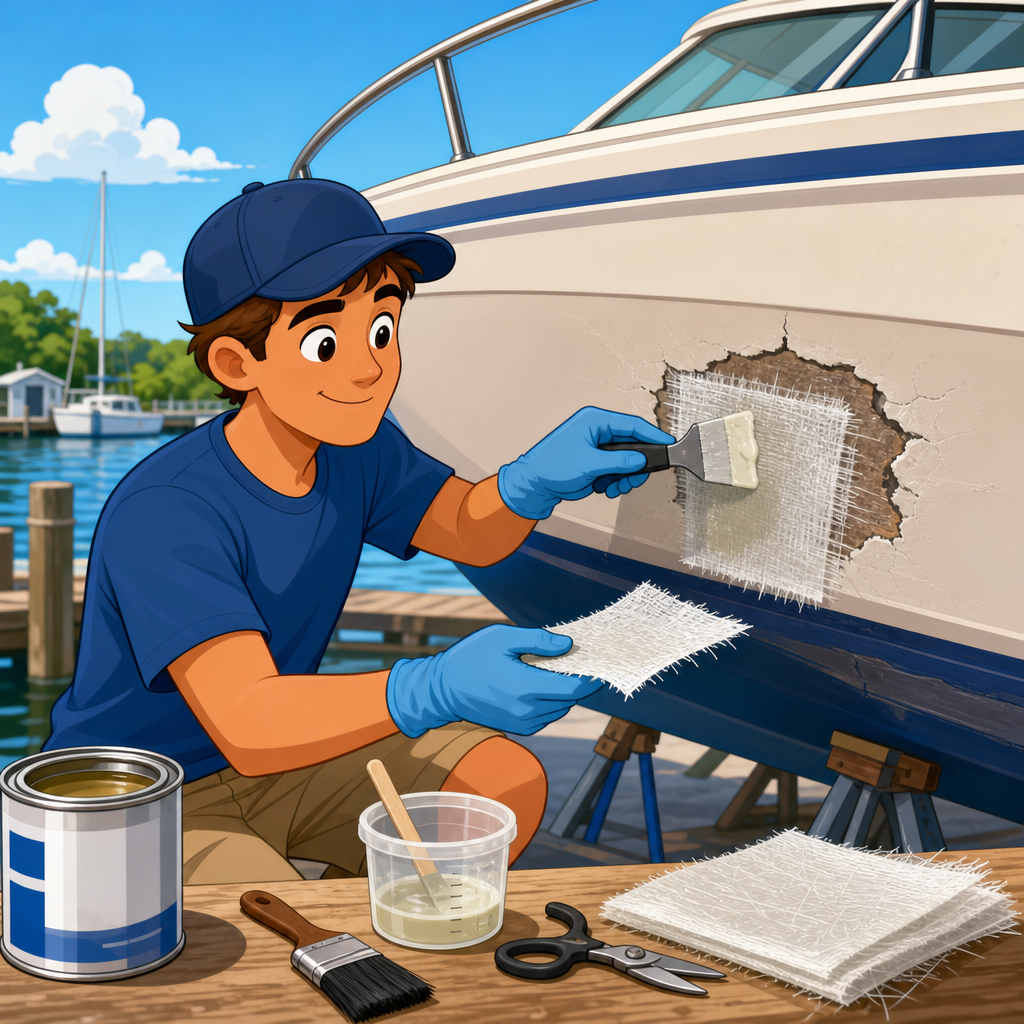
Documentation also helps owners recognize when a job should move from do-it-yourself maintenance to professional service. Many routine tasks are owner-friendly, but some mistakes come from overconfidence: improper torque on drain plugs, incorrect sealants on through-hulls, bad crimps in critical circuits, or using generic parts where OEM or ABYC-compliant components are required. Seek professional help for compression issues, persistent overheating, transom or stringer moisture concerns, steering leaks, fiberglass structural damage, and anything involving fuel system integrity. Preventative maintenance extends boat life only when the work is done correctly. The smartest owners are not the ones who do every job themselves; they are the ones who know which jobs to own, which jobs to monitor, and which jobs to hand to a qualified marine technician.
Avoiding common boating maintenance mistakes comes down to discipline, observation, and timely action. Boats last longer when owners inspect them routinely, protect engines from dirty fuel and cooling problems, keep electrical systems dry and corrosion-free, clean with the right products, service trailers and running gear, store carefully, and maintain accurate records. The main benefit is not just avoiding repair bills, though that matters. The bigger benefit is reliability: a boat that starts, runs, and returns without drama because its systems have been cared for methodically.
As the hub for preventative maintenance and longevity tips within boat maintenance and repairs, this guide gives you the framework to evaluate every system on your boat and prioritize care before damage spreads. Use it to build your seasonal checklist, connect it to deeper articles on engines, batteries, corrosion control, trailer care, cleaning, and winterization, and review your manufacturer’s service schedule today. If you want your boat to last, start with the next inspection, write it down, and fix the small issue before it becomes the expensive one.
Frequently Asked Questions
What are the most common boating maintenance mistakes owners make?
The most common boating maintenance mistakes are not usually major acts of neglect. More often, they are small routine tasks that get postponed until they create larger problems. Owners frequently skip regular inspections, ignore early warning signs such as unusual vibration or slow starting, and assume that because a boat ran well last weekend it does not need attention this weekend. That mindset often leads to premature engine wear, fuel system contamination, battery failure, corrosion, and cosmetic damage that could have been prevented with basic care.
Another frequent mistake is inconsistent cleaning. Salt, algae, dirt, and moisture do more damage than many boaters realize, especially when they are allowed to remain on hardware, wiring connections, upholstery, and painted or gelcoat surfaces. Failing to flush an engine after saltwater use, neglecting bilge cleanliness, and leaving standing water in compartments can accelerate corrosion and encourage mold, odors, and electrical issues. Even freshwater boats are not immune, because grime and moisture still contribute to staining, deterioration, and hidden wear.
Owners also commonly overlook wear items and service intervals. Belts, impellers, filters, hoses, clamps, sacrificial anodes, and lubricants all have service lives. Waiting until a part fails instead of replacing it on schedule often turns an inexpensive maintenance item into a much larger repair. In the same way, using the wrong fuel, incorrect oil, poor-quality replacement parts, or unsuitable cleaning chemicals can create problems that are easy to miss at first but expensive later. The best way to avoid these mistakes is to follow the manufacturer’s maintenance schedule, keep a written checklist, and treat every outing as an opportunity for a quick inspection rather than assuming everything is fine.
How often should I inspect my boat to prevent expensive repairs?
A boat should be inspected on several different schedules rather than according to one single timeline. The smartest approach is to perform a brief pre-trip inspection before every outing, a post-trip check after every use, a more detailed monthly review during active season, and a comprehensive seasonal inspection before storage or launch. This layered routine helps catch both fast-developing problems, such as a weak battery or loose hose clamp, and slow-developing issues, such as corrosion, UV damage, and water intrusion.
Before each trip, check the battery charge, fluid levels where applicable, fuel condition, bilge area, navigation lights, horn, steering response, and visible hoses, belts, and wiring. Look for leaks, cracked lines, frayed cables, and anything that appears loose or out of place. After the trip, rinse and clean the boat, flush the engine if required, inspect for any new drips or damage, and remove excess moisture from storage areas. Those simple habits go a long way toward preventing avoidable wear.
On a monthly basis, inspect the propeller, sacrificial anodes, electrical terminals, trailer components if applicable, pumps, seacocks, and safety gear. At the beginning and end of the season, go deeper by checking engine service items, lubricating moving parts, evaluating hull and topside condition, inspecting seals and caulking, and reviewing all maintenance records. Boats that operate in saltwater, humid climates, or high-UV environments typically need more frequent attention because corrosion and material breakdown happen faster. If you want to avoid expensive repairs, the key is consistency. A ten-minute inspection done regularly is far more effective than waiting for a full day of maintenance after months of neglect.
Why is moisture such a serious issue in boat maintenance?
Moisture is one of the most damaging and underestimated threats to a boat because it affects nearly every system on board. Water intrusion does not just create surface messes. It promotes corrosion in metal components, damages electrical connections, weakens wood cores, encourages mold and mildew, stains fabrics and finishes, and can gradually degrade adhesives, sealants, and insulation. In many cases, the damage develops quietly in compartments and behind panels, so by the time it is visible, repairs are already more extensive and costly.
Electrical systems are especially vulnerable. Damp terminals, wet wire connections, and poorly sealed fittings can lead to resistance, intermittent failures, blown fuses, battery drain, and component burnout. Moisture in the bilge or storage compartments can also create a musty environment that affects pumps, switches, and nearby hardware. If water repeatedly enters through worn seals, cracked caulking, loose deck fittings, or damaged hoses, the problem compounds over time and may eventually affect structural materials as well as onboard comfort and reliability.
To control moisture, owners should inspect seals, hatches, windows, hose connections, and through-hull fittings regularly. Keep the bilge clean and dry, use ventilation whenever possible, and remove wet gear rather than storing it on board. After washing or boating in rough or wet conditions, open compartments to dry them thoroughly. If the boat is stored under a cover, make sure the cover sheds water properly and still allows airflow. Moisture control is not just about keeping a boat looking clean. It is a core longevity practice that helps preserve the engine bay, electronics, interior materials, and structural integrity of the boat.
What maintenance habits help extend engine life and reduce breakdowns?
Engine longevity is largely the result of steady, preventative habits rather than occasional major service appointments. The most important habit is following the engine manufacturer’s service schedule for oil changes, filter replacement, cooling system maintenance, spark plugs, fuel system care, and inspections. Skipping these intervals because the engine still seems to run fine is a common mistake that often leads to reduced performance, hard starting, overheating, or internal wear that becomes expensive to correct.
Fuel management is another major factor. Old or contaminated fuel can cause rough operation, clogged filters, injector or carburetor issues, and corrosion within the fuel system. Use fresh fuel when possible, stabilize fuel during storage periods if recommended, keep tanks properly maintained, and replace fuel filters on schedule. It is also wise to check for water contamination and avoid letting maintenance lapses turn a clean fuel system into a recurring problem. Similarly, cooling system care is critical. Impellers, hoses, and passages should be inspected and serviced before they fail, because overheating can shorten engine life very quickly.
Owners should also pay close attention to start-up and shut-down habits. Listen for unusual sounds, monitor gauges, and never ignore subtle changes in temperature, oil pressure, idle quality, vibration, or exhaust output. Flush the engine after saltwater use when required, keep corrosion under control in the engine compartment, and inspect belts, clamps, and wiring regularly. One of the best habits is keeping a maintenance log with dates, engine hours, services performed, and any unusual observations. That record makes it much easier to spot patterns, stay on schedule, and address small concerns before they become breakdowns that ruin time on the water.
How can I create a simple maintenance routine that prevents common boating mistakes?
The easiest way to prevent common boating maintenance mistakes is to build a routine that is simple enough to repeat consistently. A practical system usually includes a pre-launch checklist, a post-trip cleanup routine, a monthly inspection list, and a seasonal service plan. By dividing maintenance into manageable stages, you reduce the chance of forgetting critical tasks and avoid the feeling that boat care is one overwhelming project. Consistency matters more than complexity.
Your pre-launch checklist should include basic but essential checks: battery status, engine oil where applicable, fuel level and condition, bilge condition, drain plug, safety equipment, lights, steering, and a quick look at hoses, clamps, belts, and visible wiring. After each trip, rinse the boat thoroughly, flush the engine if needed, wipe down surfaces, dry compartments, remove trash and wet gear, and note any new issues while they are still fresh in your mind. This is also the right time to spot stains, loose hardware, minor leaks, or early corrosion before they become harder to manage.
Each month, set aside time for a more detailed inspection. Check electrical connections for corrosion, inspect the propeller and lower unit or running gear, test pumps and switches, examine upholstery and finishes for UV or moisture damage, and verify that trailer tires, bearings, and lights are in good shape if you trailer the boat. At the start and end of the season, review manufacturer service recommendations and handle larger items such as fluid changes, filter replacements, lubrication, anode checks, and storage preparation. Many owners also find it helpful to keep supplies organized in one place, including approved cleaners, lubricants, spare fuses, spare bulbs, and replacement filters. A written checklist and maintenance log turn good intentions into repeatable habits, which is exactly how you avoid the small oversights that lead to major boating repair bills.