
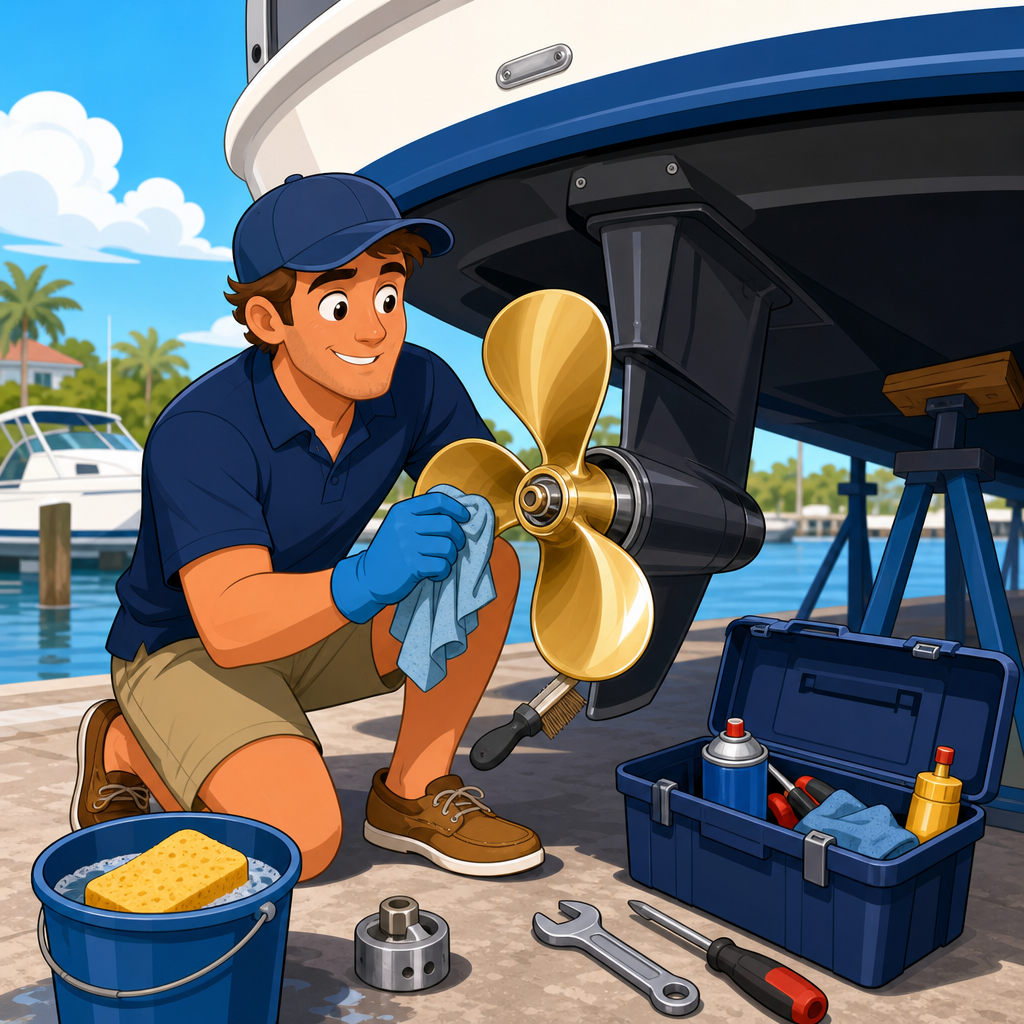
A boat’s propeller converts engine power into thrust, and the steering system turns that thrust into controlled movement, so maintaining both is essential for performance, fuel economy, safety, and component life. In practical terms, propeller and steering maintenance means inspecting blades, hubs, shafts, linkages, hydraulic components, cables, and mounting hardware on a regular schedule, then correcting wear or damage before it becomes a breakdown on the water. I have worked through enough vibration complaints, hard-over steering failures, and mysteriously rising fuel burn numbers to know that most expensive repairs begin as small, visible warning signs: a nicked blade, fishing line behind the prop, low hydraulic fluid, corrosion on a steering arm, or play at the helm that owners ignored for one more trip.
This topic matters because the propeller is not an isolated part. It affects engine load, cruising efficiency, acceleration, top speed, cavitation behavior, and even how well the boat tracks in reverse. Steering condition is just as important. Sloppy cable steering, aerated hydraulic fluid, seized pivot points, or worn tie bars can make docking harder, increase operator fatigue, and create real safety risks in rough water or crowded marinas. On trailer boats, center consoles, sterndrives, and twin-outboard setups, I have seen basic preventive maintenance avoid bent shafts, failed seals, transom bracket wear, and gearcase damage that cost far more than a planned inspection.
As a sub-pillar under boat maintenance and repairs, this guide covers propeller and steering maintenance as a complete hub. It explains what to inspect, how to spot damage, when to repair versus replace, which tools and measurements matter, and how different systems change the job. If you are asking how to maintain and repair a boat’s propeller, the short answer is simple: inspect often, remove and service the prop correctly, match pitch and diameter to the boat, fix vibration immediately, and treat the steering system as part of the same workflow because poor alignment, engine mounting issues, and neglected controls often show up first at the wheel and propeller.
Understand the propeller and steering system as one operating package
Boat owners often think of propeller care as a lower-unit task and steering care as a helm task, but on the water they operate together. The propeller creates load on the drivetrain and directional forces at the stern; steering components must manage those forces smoothly and predictably. A three-blade aluminum prop on a small outboard skiff, a stainless steel performance prop on a bass boat, and a four-blade prop on a heavy offshore hull each generate different handling characteristics. Steering feedback, torque at the wheel, trim sensitivity, and turning response all change with prop design, engine height, and hull setup.
The main propeller terms every owner should know are diameter, pitch, rake, cup, blade count, and slip. Diameter is the full circle the blades would make in rotation. Pitch is the theoretical distance the prop would move in one revolution with no slippage. Rake is the blade angle relative to the hub, and cup is the small curved lip near the trailing edge that helps grip water and reduce ventilation. Slip is the difference between theoretical and actual travel. In real-world setups, some slip is normal. Excessive slip, however, can point to ventilation, damage, wrong prop selection, or engine mounting issues.
Steering systems generally fall into cable, hydraulic, or electro-hydraulic categories. Cable steering is common on smaller single-engine boats and demands regular inspection for stiffness, corrosion, and free play. Hydraulic steering reduces effort and is widely used on larger outboards and offshore boats, but it needs fluid checks, leak inspections, and occasional bleeding. Electro-hydraulic and integrated digital steering systems add precision and compatibility with autopilot and joystick controls, yet they still rely on sound mechanical connections at the engine and tiller arm. Regardless of system type, any change in steering feel deserves attention before the next run.
Inspect the propeller routinely and remove it at least seasonally
The fastest way to prevent propeller-related damage is to inspect the prop before and after use, especially after grounding, striking debris, or operating in weedy water. Look for bent blades, cracks near the root, chipped edges, heavy pitting, missing paint, rubber hub slippage, and fishing line wrapped behind the propeller. Fishing line is one of the most common hidden problems I find. It can cut into prop-shaft seals, allowing gear lube leaks that later become gearcase failure. If line is present, remove the prop immediately and inspect the seal area closely.
Removing the propeller should be part of seasonal service, not a last resort. Start by securing the engine, disconnecting ignition where appropriate, and using the manufacturer’s procedure to prevent accidental starting. Remove the cotter pin or locking tab, loosen the prop nut, and slide the propeller off while keeping track of thrust washers, spacers, and hardware in the exact order. Clean the prop shaft, inspect for grooves or corrosion, and apply a suitable marine grease before reinstallation. That grease is not optional; it helps prevent the prop from seizing to the shaft, a problem that can turn a simple service job into a cutting job.
During inspection, spin the prop by hand while watching blade tips against a fixed reference. Any wobble suggests a bent blade or shaft issue. Measure damage honestly. Small edge nicks can often be repaired by a qualified prop shop, but cracks, severe bends, or repeated impact damage may justify replacement. Stainless steel props are stronger and hold shape better than aluminum, yet that strength can transfer impact forces to the drivetrain. Aluminum props are cheaper and often act as a sacrificial component. The right choice depends on hull type, horsepower, operating environment, and how much risk you accept around shallow water.
Diagnose common propeller problems before they damage the drivetrain
Propeller problems usually announce themselves through symptoms long before total failure. Vibration is the most obvious. If a boat that normally runs smoothly suddenly develops a buzz through the hull, steering wheel, or seat, suspect blade damage, imbalance, a spun hub, or line around the shaft. Do not keep running at speed to “test it.” Repeated vibration can damage gearcase bearings, loosen hardware, stress engine mounts, and fatigue nearby components. I always tell owners that vibration is a stop-and-check symptom, not a monitor-it-later symptom.
Loss of acceleration with high engine rpm often indicates ventilation, cavitation-related blade damage, or hub slippage. These terms get confused, so keep them distinct. Ventilation happens when surface air or exhaust gases reach the blades and reduce bite. Cavitation involves vapor bubbles forming on the blade because local pressure drops too low; repeated cavitation can erode metal surfaces. A spun hub, common on some propeller designs, means the inner hub slips inside the prop assembly, allowing the engine to rev without delivering normal thrust. Marking the hub and prop body with a paint line can help confirm slippage after a test run.
Steering pull, especially on single-outboard boats, can also point to propeller or setup issues. Prop torque, trim angle, motor height, anti-ventilation plate position, and trim tab adjustment all affect wheel effort. If steering suddenly changes after a prop swap, the new prop’s rake, cup, or blade area may be altering stern lift and torque. That does not automatically mean the prop is wrong, but it does mean you should evaluate the whole setup. Compare wide-open-throttle rpm against the engine manufacturer’s recommended range, because over-propping can lug the engine and under-propping can let it over-rev.
| Symptom | Likely cause | What to check first |
|---|---|---|
| Vibration through hull or helm | Bent blade, imbalance, wrapped line, bent shaft | Remove prop, inspect blades, seals, and shaft runout |
| High rpm with weak thrust | Spun hub, ventilation, wrong pitch | Hub marks, engine height, trim, prop specifications |
| Poor top speed and heavy fuel burn | Damaged prop, fouling, over-propped setup | Blade condition, hull bottom, wide-open-throttle rpm |
| Steering pull or torque | Prop design, trim setting, tab misadjustment | Trim tab, engine trim, recent propeller changes |
| Clicking or rough shifting after strike | Lower-unit damage, prop shaft issue | Prop impact signs, gear lube, professional inspection |
Repair, recondition, or replace the propeller with the right criteria
Not every damaged propeller needs replacement, but not every prop should be repaired either. A reputable propeller shop can restore minor bends, remove nicks, rebalance blades, tune cup, and verify pitch with far greater accuracy than most do-it-yourself methods. This matters because even small inconsistencies between blades affect vibration, efficiency, and load. When I send out a prop for repair, I want dynamic balance, pitch verification, crack inspection, and clear feedback on whether the metal has already been stressed too far for reliable continued service.
Replace a propeller when cracks extend from the blade root, when metal has been thinned too much by previous repairs, when the hub repeatedly fails, or when performance data shows the prop is fundamentally wrong for the boat’s operating profile. For example, a pontoon used for family cruising and towing often benefits from a lower-pitch, larger-blade-area prop than the one selected for light-load speed claims. An offshore center console carrying fuel, ice, and gear may need a four-blade stainless prop to improve grip in turns and midrange lift. Proper propeller selection is a repair decision when recurring symptoms come from mismatch, not damage.
If you keep a spare prop on board, match it thoughtfully. A spare should include the correct thrust washer, nut, cotter pin, and tools needed for installation on the water. Too many boaters carry only a loose prop, then discover at the sandbar that the hardware stayed in the garage. On boats that operate in remote areas, a serviceable aluminum spare is often smarter than an expensive duplicate stainless model because it is easier to justify using after a shallow-water strike. Either way, a tested spare is part of propeller maintenance, not an optional accessory.
Maintain cable, hydraulic, and engine-end steering components
Propeller and steering maintenance overlap most clearly at the engine. Start with the basics: inspect the steering tube, pivot points, tiller arm, drag link, mounting bolts, and transom bracket for corrosion, looseness, and binding. On cable steering, the engine should sweep lock to lock without grinding, sticking, or uneven effort. If the cable ram is dirty or rusted, clean it properly and inspect for pitting. Severely corroded steering cables should be replaced, not forced back into service. Stiff steering on cable systems often results from corrosion inside the tilt tube, a common issue on saltwater boats.
Hydraulic steering needs a different routine. Check the helm pump reservoir or fill point according to the system design, inspect hoses and fittings for weeping fluid, and look at the cylinder rod for damage. Any leak means air can enter the system, creating spongy response, inconsistent wheel turns, or drift under load. Bleeding hydraulic steering is straightforward with the correct kit and procedure from brands such as SeaStar Solutions, Uflex, or Optimus, but cleanliness matters. Contaminated fluid, mixed fluid types, or debris introduced during service can shorten seal life and damage internal components.
On multi-engine boats, steering geometry matters as much as fluid level. Tie bars, cylinder alignment, and synchronized engine position affect tracking and steering effort. After impact or transom work, confirm that engines center correctly and reach full steering travel evenly. Also inspect power-assist pumps, electronic steering fault codes, and autopilot pumps where installed. A helm that feels normal at the dock can still reveal problems at speed if torque loads increase. That is why every steering maintenance routine should end with a controlled sea trial that checks wheel effort, response time, centering, and full-range operation in both directions.
Build a service schedule that matches use, water type, and storage conditions
A good maintenance plan is calendar-based and condition-based. For boats used weekly, inspect the propeller visually before every outing and perform a hands-on check monthly during the season. Remove the propeller at least once a year, or more often in saltwater, shallow rivers, or areas with heavy fishing line and weed exposure. Steering checks should happen before every trip at the helm and engine, with a more detailed inspection every fifty to one hundred operating hours depending on system complexity and manufacturer guidance.
Saltwater accelerates corrosion, galvanic activity, and seizure at the prop shaft and steering hardware, so rinse thoroughly, maintain sacrificial anodes, and use marine-grade anti-corrosion products on approved surfaces. Trailered boats face a different issue: long idle periods allow grease to dry, seals to stiffen, and steering tubes to corrode unnoticed. Stored boats should still have the steering moved periodically and the prop inspected before launch. If your boat stays in the water, include underwater growth in the maintenance equation. Even light fouling on the prop or hull can reduce speed and increase fuel consumption noticeably.
Record what you find. A simple maintenance log with engine hours, prop model, pitch, repair history, wide-open-throttle rpm, steering fluid service dates, and observed symptoms makes troubleshooting much faster. It also helps when you work with a propeller shop or marine technician because you can describe trends instead of isolated impressions. Within the broader Boat Maintenance & Repairs topic, this hub should connect naturally to detailed guides on lower-unit service, hydraulic steering bleeding, corrosion control, trailer setup, and seasonal commissioning. Use this page as the operating overview, then apply those deeper procedures systematically.
Maintaining and repairing a boat’s propeller is really about protecting the entire propulsion and control system. Inspect blades and hubs regularly, remove the prop seasonally, grease the shaft, and treat any vibration, line entanglement, or performance drop as an immediate diagnostic clue. Match the propeller to the boat’s real workload, not just a catalog speed claim, and use a qualified prop shop when balance, pitch accuracy, or crack inspection matters. At the same time, keep steering cables, hydraulic cylinders, helm components, and engine-end linkages clean, tight, and properly serviced, because steering problems often develop alongside propeller issues.
The practical benefit is simple: a well-maintained propeller and steering system delivers smoother handling, better fuel economy, stronger acceleration, lower drivetrain stress, and safer control at the dock and offshore. It also reduces the chance that a cheap, visible issue turns into a lower-unit rebuild, seal failure, or steering loss. If you manage maintenance by schedule, inspect after every strike, and document your setup, you will solve problems earlier and spend more time boating instead of troubleshooting. Start with the next easy step: pull the prop, inspect the steering end to end, and build your service log today.
Frequently Asked Questions
How often should you inspect a boat’s propeller and steering system?
You should give the propeller and steering system a quick visual check before every outing and a more thorough inspection at regular service intervals throughout the season. Before launching, look for obvious propeller damage such as bent blades, cracks, missing material, fishing line around the shaft, or looseness at the hub. At the same time, turn the wheel or move the helm through its full range and make sure the steering feels smooth, predictable, and free of unusual resistance, play, or noise. These short checks take only a few minutes, but they can prevent vibration, poor handling, and expensive drivetrain damage.
On a more detailed schedule, inspect the propeller, prop shaft area, steering linkages, cables, hydraulic fittings, and mounting hardware every 50 to 100 operating hours or at least a few times during the boating season, depending on how often and where you run the boat. Boats used in shallow water, around sandbars, stumps, rock, or debris should be inspected more often because even light bottom strikes can deform a blade enough to affect balance and performance. At winterization and spring commissioning, it is smart to remove the propeller, inspect the shaft and seals, clean and grease the shaft as appropriate, and check for hidden issues that a quick dockside inspection might miss.
If you notice vibration, reduced top speed, rising fuel consumption, harder steering, wandering at speed, unusual noise, or uneven wake characteristics, do not wait for the next scheduled service. Those are signs that something in the propeller or steering system may already be worn, damaged, misaligned, or fouled. In real-world maintenance, catching small problems early is what protects component life and keeps a minor repair from turning into a breakdown on the water.
What are the most common signs that a boat propeller needs repair or replacement?
The most common signs are vibration, loss of performance, poor fuel economy, difficulty getting on plane, unusual cavitation, and visible blade damage. Even a small bend, nick, or cup distortion in one blade can upset the propeller’s balance enough to create noticeable vibration through the hull and drivetrain. Many boat owners assume only major impact damage matters, but minor blade deformation can still reduce thrust efficiency, increase engine load, and accelerate wear on bearings, seals, and shafts.
Visible damage is the clearest indicator. Look for bent blade tips, cracks at the blade root, pitting, chunks missing from the leading or trailing edge, corrosion, and spun or damaged hubs. Fishing line wrapped around the shaft is another common issue and can cut into seals, allowing water intrusion where it should not be. On aluminum props, impact damage may show up as obvious bends or gouges. On stainless props, the metal may hide the damage better, but the force of the strike can transfer more stress into the shaft or gearcase, so inspection is still critical after any impact.
Performance changes matter just as much as what you can see. If engine RPM suddenly rises without a matching increase in boat speed, the hub may be slipping. If top-end speed drops, hole shot becomes weaker, or steering torque feels different, the prop may no longer be running true. A propeller can often be repaired if the damage is limited to moderate bends, minor cracks, edge wear, or small missing sections, especially when handled by a reputable prop shop that can restore pitch, cup, balance, and blade tracking. Replacement is usually the safer choice if there are severe cracks, major missing material, repeated repair history, or damage that compromises structural integrity. When in doubt, treat a damaged propeller as both a performance issue and a safety issue.
Can you repair a damaged boat propeller yourself, or should it go to a professional?
Basic propeller maintenance is absolutely realistic for a careful boat owner, but true propeller repair usually belongs in a professional prop shop. It is reasonable to remove the propeller, clean it, inspect it closely, grease the shaft if your manufacturer recommends it, replace hardware like cotter pins and thrust washers as needed, and remove light fishing line or debris from the shaft area. You can also document blade damage and compare it to previous inspections so you can spot progressive wear. Those are worthwhile owner-level tasks that improve reliability and help you catch issues early.
What you should be cautious about is trying to reshape blades, grind away damage, weld cracks, or “straighten” a propeller without the correct tools and measurements. Propeller performance depends on blade geometry, pitch consistency, cup, rake, balance, and tracking. Removing too much material from one spot or changing the contour slightly can create more vibration than the original damage. In addition, cracks that appear small on the surface may extend farther into the metal than you can see. Professional prop shops use specialized equipment to measure runout, restore blade form, check hub condition, and dynamically evaluate whether the propeller can be returned to service safely.
A good rule is this: routine inspection and removal are do-it-yourself friendly, but any structural or geometry-related repair should be outsourced. If the boat struck bottom, a log, or submerged debris, have the shaft and lower-unit or running gear checked too, not just the prop. That is where experienced technicians add real value. They can confirm whether the damage stopped at the propeller or whether the impact also affected alignment, seals, bearings, or steering components. In practice, that professional check often saves far more money than it costs.
What steps should you follow when removing, inspecting, and reinstalling a boat propeller?
Start by making the boat safe and stable. The engine should be off, the ignition disabled if appropriate, and the boat secured on a trailer, lift, or haul-out setup where you can work safely around the propeller. Gather the correct wrench or socket, replacement cotter pin or locking hardware, marine grease if specified, gloves, a clean rag, and the manufacturer’s service information for your exact setup. Before removing anything, study the order of the hardware so the thrust washer, spacer, nut, and retainer all go back in the correct sequence. Taking a quick photo is a smart habit.
Once the propeller is off, inspect more than just the blades. Check the shaft for fishing line, scoring, corrosion, grooves, or signs of seal damage. Spin and sight along the shaft if possible to look for obvious wobble, though a precise bent-shaft diagnosis usually requires professional measurement. Inspect the propeller hub for cracks, heat discoloration, or slippage indicators. Clean the shaft and mating surfaces, and look carefully at the thrust washer because a worn or incorrect washer can cause fitment and performance problems. Also examine the blades for nicks, bent tips, pitting, and cracks at the root, where stress is concentrated.
When reinstalling, use the proper hardware in the correct order, apply grease only where recommended by the manufacturer, and tighten the prop nut to specification rather than guessing. Install a new cotter pin or locking device instead of reusing old hardware that may already be fatigued. After installation, rotate the propeller by hand to confirm it moves freely and seats correctly. Then, during the next sea trial, pay close attention to vibration, RPM, steering feel, acceleration, and any unusual noise. A careful remove-inspect-reinstall process is one of the simplest ways to protect the propeller, shaft, seals, and overall driveline.
How does propeller condition affect steering, fuel economy, and overall boat safety?
Propeller condition has a direct effect on how efficiently the boat converts engine power into forward motion, and that influences almost everything you feel at the helm. A clean, undamaged, properly matched propeller delivers balanced thrust, predictable acceleration, and steady handling. A damaged or fouled propeller, by contrast, can create uneven loading, vibration, cavitation, and inconsistent steering response. That matters because the steering system is not operating in isolation; it is constantly managing the thrust and hydrodynamic forces generated by the propeller. If the prop is not running correctly, steering precision often suffers with it.
Fuel economy is one of the first places propeller problems show up. When blades are bent, chipped, out of balance, or coated with marine growth, the propeller loses efficiency and the engine has to work harder to achieve the same boat speed. That can show up as higher fuel burn, slower cruise performance, reduced top speed, and engine RPM that no longer matches normal operating expectations. In severe cases, cavitation and ventilation can make the boat feel sluggish and unstable, especially during acceleration, turns, or rough-water maneuvering. Many boaters chase engine issues when the real cause is a propeller that is no longer transferring power effectively.
From a safety standpoint, neglected propeller damage can lead to escalating mechanical problems. Vibration can stress shafts, couplers, bearings, mounts, and gearcases or lower units over time. Fishing line on the shaft can damage seals and allow water intrusion. A compromised hub can slip unexpectedly. On the steering side, any extra vibration or abnormal thrust can magnify wear in linkages, hydraulic systems, or cable components. The result may be poor control exactly when you need precise handling around docks, traffic, or changing conditions. That is why routine propeller and steering maintenance is not just about preserving performance; it is a core part of safe,