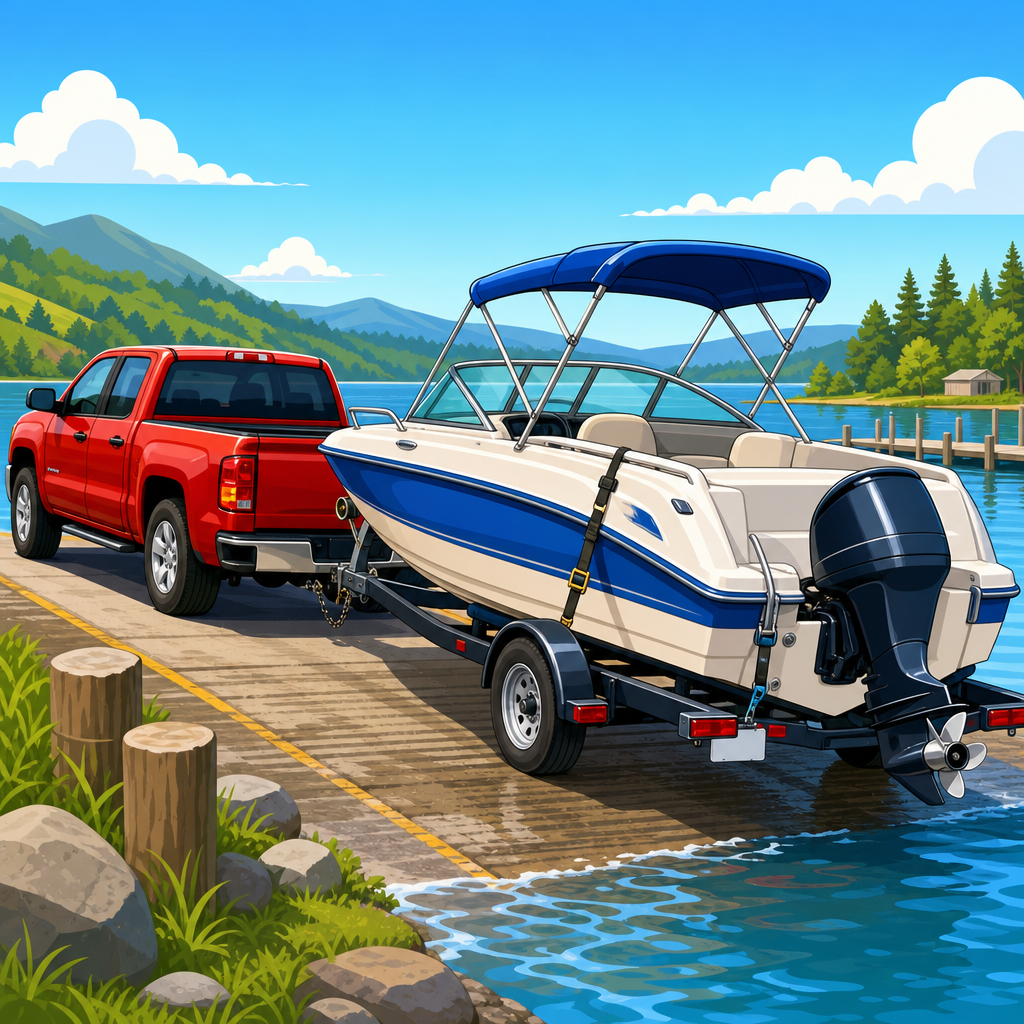
Towing a boat safely starts long before you leave the driveway. It begins with understanding how the trailer, tow vehicle, hitch, tires, brakes, lights, and load all work together as one system. New boaters often focus on launching, docking, or engine care, but trailer maintenance and towing discipline are just as important because a preventable roadside failure can damage the boat, injure other drivers, and end a trip before it begins. In practical terms, safe towing means matching the right vehicle to the right trailer, maintaining every wear item, securing the boat correctly, and driving with the limits of weight, speed, and stopping distance in mind.
For new boaters, a few key terms matter. Gross trailer weight is the total weight of the trailer plus the boat, fuel, gear, batteries, and water. Tongue weight is the downward force the coupler applies to the hitch ball, and for most boat trailers it should usually be about 5 to 7 percent of total trailer weight unless the manufacturer specifies otherwise. Gross combined weight rating is the maximum allowed weight of the loaded tow vehicle and loaded trailer together. Surge brakes use the trailer’s forward motion to activate braking, while electric brakes use a controller in the tow vehicle. Bearing protectors, bunks, rollers, transom straps, safety chains, breakaway cables, and winch straps are not just accessories; each one performs a safety-critical function.
This topic matters because towing errors are common and expensive. I have seen boat owners replace burned wheel bearings, shredded trailer tires, and bent props after simple oversights such as low tire pressure, loose tie-downs, or backing too sharply. The good news is that towing safely is teachable. Once you learn the routine, inspect the trailer before every trip, and respect the weight limits on your equipment, towing becomes predictable instead of stressful. This guide covers trailer maintenance and towing from the perspective of a hub page, giving new boaters the foundational practices they need before diving into more specialized articles on brakes, bearings, tire care, wiring, launching, and seasonal storage.
Start With the Right Tow Vehicle, Trailer Ratings, and Hitch Setup
The first rule of towing a boat safely is simple: the numbers must work. Check the tow vehicle’s maximum towing capacity, payload rating, receiver class, and gross combined weight rating on the door sticker and in the owner’s manual. Then compare those figures with the boat trailer’s gross vehicle weight rating and the boat’s real travel weight, not just dry weight from a brochure. Dry weight often excludes fuel, outboard or sterndrive equipment, batteries, safety gear, coolers, anchors, and fishing tackle. A 3,500-pound boat package can easily weigh several hundred pounds more on a trip day.
The hitch system also has to match the load. Use the correct ball diameter, usually 1 7/8 inch, 2 inch, or 2 5/16 inch, and confirm the ball mount and receiver are rated above the trailer’s fully loaded weight. The coupler must close fully and lock securely over the ball. Safety chains should cross under the tongue so they can cradle it if the coupler disconnects. The breakaway cable, if fitted on brake-equipped trailers, should attach to the vehicle independently of the chains. If your trailer sways at highway speed, the cause is usually incorrect loading, insufficient tongue weight, soft tires, worn suspension parts, or driving too fast, not a need to “power through” the movement.
Inspect the Trailer Before Every Trip
A consistent pre-trip inspection prevents most roadside problems. Walk around the trailer slowly and use a checklist. Confirm the coupler latch is locked and pinned. Check safety chains, breakaway cable, winch post hardware, transom straps, and the bow eye connection. Verify the jack is fully raised. Test running lights, brake lights, turn signals, and side markers. Look under the trailer for hanging wires, rusty brake lines, fluid leaks, or cracked spring hangers. Spin each wheel by hand when possible and listen for rough bearings or dragging brakes.
Tires deserve special attention because trailer tires age out before they wear out. Many experts recommend replacing trailer tires around five to six years from the DOT date code even if tread looks acceptable, because UV exposure, heat cycles, and long storage periods weaken the casing. Inflate tires to the pressure listed on the tire sidewall or trailer placard as appropriate for the load. Underinflation creates heat, and heat destroys trailer tires quickly. Inspect tread for uneven wear, sidewalls for cracking, and lug nuts for proper torque. After a few miles on the road, stop and feel the hubs cautiously. A hot hub often signals a failing bearing or brake issue.
| Inspection Item | What to Check | Why It Matters |
|---|---|---|
| Coupler and hitch ball | Correct size, locked latch, safety pin installed | Prevents trailer separation |
| Safety chains and breakaway cable | Chains crossed, no dragging, cable attached separately | Controls the trailer in an emergency |
| Tires and wheels | Pressure, tread, sidewall cracks, lug torque, spare condition | Reduces blowout and wheel-loss risk |
| Bearings and hubs | Grease condition, cap security, unusual heat or noise | Prevents hub failure on the highway |
| Lights and wiring | Brake lights, turn signals, markers, ground connection | Keeps the trailer visible and legal |
| Straps and winch | Bow winch strap tight, stern straps secure, hooks latched | Stops boat movement during braking |
Maintain Bearings, Brakes, Tires, and Lights on Schedule
Routine maintenance is what separates a reliable trailer from one that fails at the ramp or on the interstate. Wheel bearings are the most critical service item on many boat trailers because they are exposed to water and repeated heat cycling. On grease-packed hubs, repack bearings at the interval recommended by the trailer manufacturer or at least annually for many recreational users. On oil-bath hubs, inspect the oil level and condition regularly and replace seals immediately if you see leakage. If you dunk hot hubs in cold water after a long drive, let them cool briefly at the ramp when possible; that reduces the chance of drawing water past the seals.
Trailer brakes also need scheduled service. Surge brake actuators should slide smoothly, master cylinders must hold fluid, and brake lines should be free of corrosion. Disc brakes are generally preferred in marine use because they shed water better and resist fade more effectively than drum brakes. Electric-over-hydraulic systems offer stronger control on heavier rigs, but they add complexity and cost. Tires should be balanced where appropriate, rotated if wear patterns call for it, and replaced when age, cracking, or uneven wear appears. Lighting problems are usually grounding problems, especially on older trailers. Use heat-shrink marine connectors, protect harness routing, and apply dielectric grease to plugs to slow corrosion.
Load the Boat and Trailer for Stability
How you load the boat affects tracking, braking, and sway. Keep heavy gear low and centered. Store coolers, spare props, batteries, and tackle so weight is distributed evenly side to side. Too little tongue weight is a common cause of sway because the trailer becomes light at the hitch and starts steering the tow vehicle instead of following it. Too much tongue weight overloads the rear axle of the vehicle, reduces steering authority at the front tires, and can exceed the hitch rating. If the boat has movable gear, use a tongue scale or visit a public scale to verify setup rather than guessing.
Securement matters as much as weight distribution. The winch strap should pull the bow eye firmly into the bow stop, but the bow connection is not enough by itself. Use transom tie-down straps at the stern to keep the hull planted on the trailer over bumps and during hard braking. Remove or secure anything that can fly out, including seat cushions, canvas panels, electronics covers, and loose gear. If the outboard is trimmed for travel, use a proper support device approved for the engine and trailer combination rather than relying solely on the trim system. On long trips, stop after the first 10 to 15 miles and recheck every strap, latch, and tie point because new loads settle.
Drive Differently When Towing a Boat
Safe towing requires a different driving style. Accelerate gradually, leave much more following distance, and brake sooner than you would without a trailer. Boat trailers can push the tow vehicle under hard braking, especially on wet roads or downhill grades. If your trailer has brakes, test them gently at low speed before entering traffic. If it does not, be even more conservative with speed and spacing. Many trailer tire manufacturers limit speed to around 65 mph unless the tire is specifically rated higher. Even when legal limits are above that, speed is a major factor in sway, heat buildup, and tire failure.
Steering inputs should be smooth and deliberate. Sudden lane changes can start sway, and overcorrection makes it worse. If sway begins, ease off the accelerator and keep the steering wheel straight. Do not accelerate to try to pull through it. Do not slam on the brakes unless avoiding an immediate collision. With a brake controller on compatible systems, manual trailer brake input can help settle the trailer, but new boaters should practice this in a safe area first. Take turns wide, watch the trailer wheels in mirrors, and remember your stopping distance can double or more depending on weight and road conditions. Crosswinds, passing trucks, steep descents, and grooved pavement all demand extra attention.
Launch Ramp and Recovery Towing Habits Matter Too
Towing safety does not end when you reach the water. Many avoidable accidents happen at launch ramps and in staging areas. Before backing down, move to the prep lane and install the drain plug, remove rear tie-downs, load lines and fenders, and confirm the key, safety lanyard, and battery switch are ready. This keeps the ramp clear and reduces rushed mistakes. When reversing, place one hand at the bottom of the steering wheel; moving your hand left makes the trailer go left, and moving it right makes the trailer go right. Use small corrections and straighten early because boat trailers respond quickly.
On retrieval, avoid submerging the tow vehicle too deeply, especially on slippery algae-covered ramps. Four-wheel drive helps traction, but it does not improve braking on the ramp. After pulling out, stop in the rigging area, install transom straps, verify the bow eye is tight to the stop, and check that the outboard or sterndrive is in the correct travel position. If you use brakes in saltwater, flush them, the axle area, and the frame thoroughly as soon as possible. Salt is relentless on calipers, lines, connectors, and fasteners. A five-minute rinse after each launch can add years to trailer life and save expensive brake and wiring repairs.
Know the Most Common New-Boater Towing Mistakes
The same problems show up repeatedly with first-time owners. One is trusting brochure weights instead of weighing the real rig. Another is towing on old tires that still have tread but are past their safe service age. I also see new boaters forget the spare tire, jack, lug wrench, and bearing kit, which turns a minor roadside issue into a tow bill and lost weekend. Some rely only on the winch strap and skip stern straps, allowing the boat to bounce on rough roads. Others leave too much gear in the stern, creating low tongue weight and unstable handling.
Another common mistake is neglecting corrosion control. Boat trailers live a hard life: immersion, road spray, UV exposure, and long periods of storage. Wash the trailer, inspect the galvanized or painted frame for damage, touch up coatings where appropriate, and replace rusted hardware before it fails. Keep a maintenance log with dates for bearing service, brake inspections, tire age, lug torque checks, and light repairs. That simple record makes trailer maintenance systematic instead of reactive. As this hub expands, it should connect you to deeper guides on choosing trailer tires, servicing wheel bearings, diagnosing trailer lights, adjusting brakes, backing a trailer, and winterizing the trailer for storage.
Towing a boat safely comes down to preparation, maintenance, and restraint. Match the tow vehicle, hitch, and trailer ratings correctly. Inspect the trailer before every trip. Maintain bearings, brakes, tires, wiring, and straps on a schedule, not after a breakdown. Load the boat for proper tongue weight and secure it at the bow and stern. Then drive at a speed that respects stopping distance, tire limits, weather, and road surface. These habits are not complicated, but they are nonnegotiable if you want predictable towing and fewer roadside surprises.
For new boaters, the biggest benefit of learning trailer maintenance and towing fundamentals is confidence. When you know what to inspect, what each component does, and how the rig should feel on the road, you can catch problems early and travel with less stress. Use this article as your starting point for the entire Trailer Maintenance & Towing subtopic, then build your skills with focused guides on bearings, brakes, lighting, tires, launch procedures, and storage. Before your next trip, walk through a written checklist from coupler to taillights and make safe towing part of your normal boating routine.
Frequently Asked Questions
What should new boaters check before towing a boat for the first time?
Before towing a boat for the first time, new boaters should think of the tow vehicle, trailer, hitch, and boat as one connected system that must all work together safely. Start by confirming that your tow vehicle is rated to pull the total loaded trailer weight, not just the dry weight of the boat. Fuel, batteries, coolers, anchors, fishing gear, water toys, and other equipment can add significant weight. Next, verify that the hitch, ball mount, and coupler are all correctly matched and rated for the load. The coupler should fully seat on the hitch ball and lock securely, and the safety chains should be crossed under the tongue so they can help catch it if the coupler ever disconnects.
You should also inspect the trailer itself carefully. Check tire pressure when the tires are cold, examine the tread and sidewalls for cracking or dry rot, and make sure lug nuts are properly tightened. Test brake lights, turn signals, running lights, and trailer brakes if equipped. Wheel bearings should be properly lubricated, and the winch strap, bow eye connection, and transom tie-down straps should all be tight and in good condition. Make sure the drain plug is installed if you are heading to launch, and confirm that loose gear inside the boat is secured so it cannot shift during travel. Finally, take a short test drive in a low-traffic area to get a feel for acceleration, braking, wider turns, and trailer tracking before heading onto busy roads or highways.
How do I know if my vehicle can safely tow my boat and trailer?
The safest way to determine whether your vehicle can tow your boat is to compare real-world loaded weight against the manufacturer’s towing limits, rather than relying on estimates or assumptions. Many new boaters make the mistake of looking only at the boat’s advertised dry weight, but safe towing depends on the total package: boat, trailer, engine, fuel, batteries, water, gear, and accessories. Your vehicle’s owner’s manual will list its maximum tow rating, along with other important numbers such as gross vehicle weight rating, gross combined weight rating, tongue weight limits, and any towing equipment requirements. These numbers matter because even if the vehicle can technically pull the load, it must also be able to stop it, control it, and carry the hitch weight safely.
In practice, it is wise to leave a safety margin instead of towing right at the maximum limit. A vehicle that is overloaded or close to its limits may struggle during braking, sway more in crosswinds, accelerate poorly when merging, and wear out suspension and drivetrain components faster. Proper tongue weight is also critical, because too little can cause trailer sway and too much can overload the rear of the tow vehicle and reduce steering control. If the boat sits too far forward or too far back on the trailer, handling can become unstable. For the most accurate answer, many boaters weigh their loaded rig at a public scale. That gives you a clear picture of whether your setup is within safe operating limits and helps eliminate guesswork before a long trip.
What is the best way to load and secure a boat on the trailer for towing?
A boat should be loaded so that it sits centered on the trailer, supported properly by bunks or rollers, and balanced to provide stable tongue weight. The bow should be snug against the bow stop, with the winch strap attached securely to the bow eye and tightened enough to hold the boat firmly in place. However, the winch strap alone is not enough for highway travel. You should also use transom tie-down straps at the stern to secure the boat to the trailer and prevent bouncing or shifting over bumps. These straps should be in good condition, tightened correctly, and checked periodically during longer trips.
Weight distribution inside the boat matters as well. Heavy items should be stored low and secured so they cannot slide from side to side or toward the rear while driving. Loose gear can affect balance and become damaged during sudden stops. Covers should be tightly fastened and suitable for road travel, since a loose cover can flap, tear, or obscure lights. If the trailer has brakes, make sure they are operational and adjusted correctly, because a properly loaded boat still needs a trailer that can help control stopping distance. The goal is to create a stable, predictable setup that tracks straight behind the vehicle, resists sway, and keeps the boat firmly attached under all normal driving conditions.
How should I drive when towing a boat to stay safe on the road?
When towing a boat, safe driving starts with slowing down and giving yourself more time for everything. Acceleration will be slower, braking distances will be longer, and turns will need more room because the trailer tracks inside the path of the tow vehicle. New boaters should avoid sudden steering inputs, hard braking, and abrupt lane changes, all of which can upset the trailer and increase the risk of sway. Maintain a longer following distance than usual and plan stops early, especially in traffic, on hills, or in wet conditions. If your trailer begins to sway, stay calm, hold the steering wheel steady, ease off the accelerator, and avoid jerking the wheel or slamming on the brakes.
Speed control is one of the most important towing habits. Even if the posted speed limit is higher, towing at a moderate speed usually gives you better control and reduces stress on tires, bearings, suspension, and brakes. Be especially cautious in crosswinds, during storms, and when passing or being passed by large trucks, since wind pressure can move the trailer unexpectedly. Take wider turns to keep trailer tires off curbs, and watch overhead clearances if your boat has a tower, windshield, or other tall equipment. Backing up also takes practice, so use small steering corrections and move slowly. If possible, rehearse backing in an empty parking lot before your first launch day so you are not learning under pressure at a crowded ramp.
What trailer maintenance is most important for safe boat towing?
Trailer maintenance is one of the most overlooked parts of boating, but it is one of the biggest factors in towing safety. Tires should be checked often for proper inflation, tread wear, age, sidewall damage, and signs of dry rot. Trailer tires can fail even when they still have tread if they are old or underinflated, and a blowout can quickly lead to loss of control or damage to the boat. Wheel bearings are another major priority, especially on boat trailers that are repeatedly submerged. Bearings should be inspected, greased, and serviced on schedule, because a failed bearing can leave you stranded on the roadside and may damage the hub, spindle, or axle.
Brakes, lights, wiring, bunks, rollers, the winch, safety chains, tie-down points, and the coupler all deserve regular inspection. Trailer brakes should engage properly and not drag, while lights should work consistently despite exposure to water and corrosion. Look for rust, cracked welds, worn straps, damaged wiring, and loose hardware. It is also smart to carry a few essential spare items such as a jack rated for the trailer, a lug wrench, a spare tire in good condition, extra tie-downs, bearing grease, and basic tools. Routine maintenance does more than prevent inconvenience. It reduces the risk of a roadside emergency, protects your boat from unnecessary damage, and helps ensure that every trip begins and ends safely.