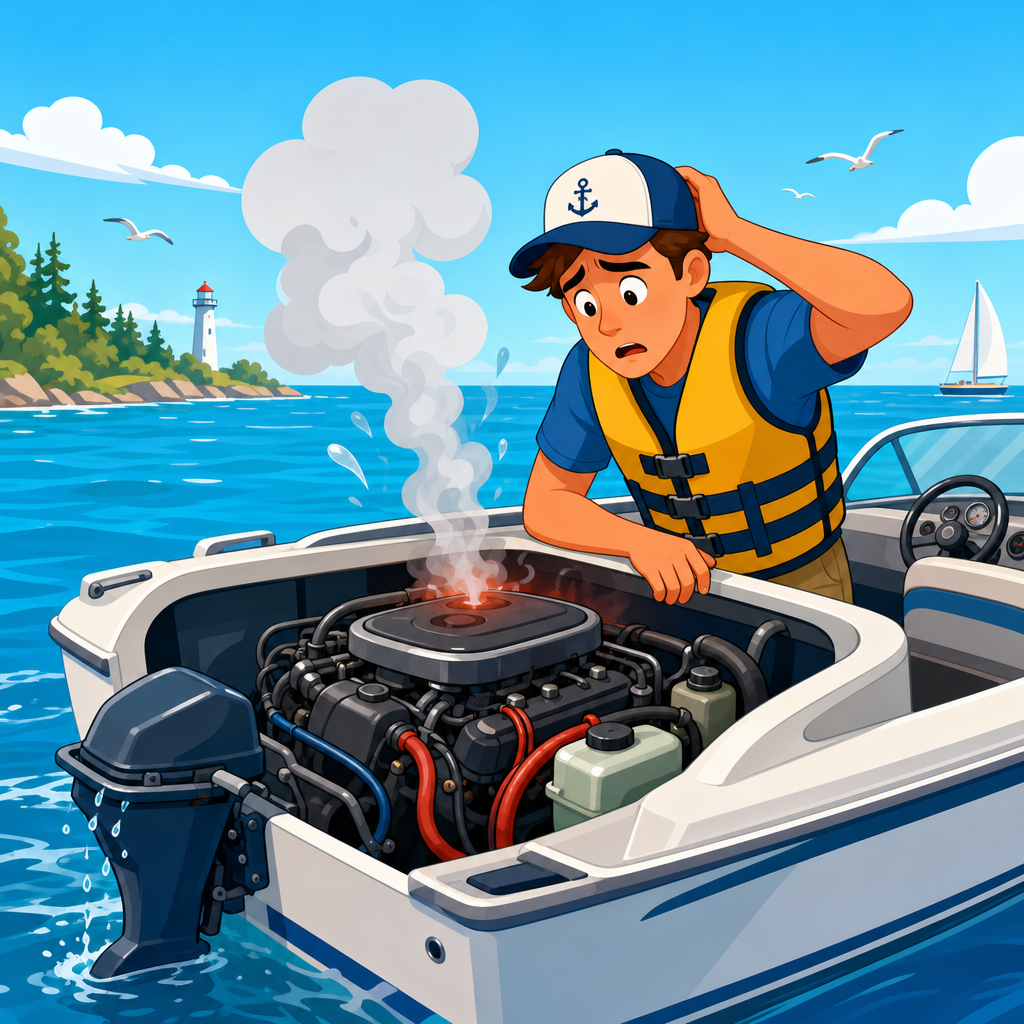
Boat engine overheating is one of the fastest ways to turn a normal day on the water into an expensive repair, and it usually starts with small warning signs that owners miss. In practical terms, overheating means the engine is running above its designed operating temperature because heat is not being removed quickly enough. On boats, that cooling job depends on raw water flow, closed-cooling components, exhaust routing, lubrication, and clean internal passages. I have seen engines survive hard use for years when owners monitored temperature trends and serviced impellers on schedule, and I have seen healthy motors damaged in a single outing after a clogged intake or collapsed hose restricted flow. Whether you run an outboard, sterndrive, or inboard, understanding why marine engines overheat matters because the consequences are severe: warped cylinder heads, scored pistons, blown head gaskets, damaged manifolds, ruined impellers, and in extreme cases complete engine failure.
Engine care and troubleshooting starts with knowing the cooling system architecture on your boat. Many outboards and sterndrives use raw water drawn from intake screens or lower-unit pickups, pushed by a rubber impeller through the powerhead, thermostat, and exhaust jacket before exiting with the telltale stream or exhaust discharge. Many inboards use either raw-water cooling or a closed-cooling system with coolant circulating through the engine and seawater passing through a heat exchanger. Key terms matter here. Raw water is the lake, river, or seawater used for cooling. An impeller is the flexible vaned pump component that moves that water. A thermostat regulates engine temperature by controlling coolant flow. A heat exchanger transfers heat from engine coolant to raw water. Manifolds, risers, and oil coolers are additional components that can trap scale, corrosion, weeds, or debris and raise temperatures. If you can identify these parts, you can troubleshoot logically instead of guessing.
This hub article covers the full engine care and troubleshooting picture for boat overheating: symptoms, causes, diagnostic steps, preventive maintenance, emergency response, and repair decisions. It is designed as the foundation page for a broader boat maintenance and repairs library, so each section answers a question owners commonly ask while pointing to the next maintenance topic you should master. If you want fewer breakdowns, more reliable starts, and lower repair bills, overheating is the right place to focus because cooling-system neglect often overlaps with fuel, electrical, exhaust, and winterization mistakes.
Common Signs Your Boat Engine Is Overheating
The clearest sign of an overheating boat engine is a high reading on the temperature gauge or an audible overheat alarm, but those are not the only clues. On outboards, a weak or absent telltale stream often signals low water flow. On sterndrives and inboards, steam from the exhaust, a hot engine room, a burning rubber smell, or reduced power under load can all point to overheating. Some engines enter guardian or limp mode to prevent damage, limiting RPM when sensors detect unsafe temperatures. If the alarm activates only at idle, suspect restricted intake flow, a worn impeller, or debris in passages. If it happens mainly at higher RPM, suspect a partially blocked pickup, collapsing hose, slipping belt on a circulation pump, or scaling inside a heat exchanger that cannot keep up under load.
Read the symptoms in context. A gauge climbing steadily after launch often means the cooling problem exists from startup. A temperature spike after running through weeds or shallow sand usually points to a blocked intake. An engine that runs cool at first and then overheats after twenty minutes may have a thermostat sticking closed as it warms, an exhaust elbow restricting discharge, or air entering the suction side of the raw-water circuit. Oil pressure changes, rough running, and coolant loss can accompany overheating, especially on closed systems. Because marine engines operate under sustained load unlike many car engines, a small cooling weakness becomes obvious faster on the water.
What Causes Boat Engine Overheating Most Often
The most common cause is restricted water flow. In service bays, the failures I have encountered most often are worn impellers, blocked intake grates, sand or shell debris in cooling passages, and thermostats fouled by corrosion. Rubber impellers are consumable parts; they harden with age, crack from dry starts, and lose vanes. Even a motor that is used lightly can overheat if the impeller sat compressed through an offseason. A thermostat can also fail either closed, causing rapid overheating, or partly open, causing unstable temperature regulation. On raw-water-cooled engines, mineral scale, rust flakes, and salt deposits narrow passages over time, especially in manifolds, risers, and cylinder jackets.
Other causes depend on engine type. Outboards may suffer from mud packed into lower-unit water pickups, salt crystals around the thermostat housing, or a damaged water tube grommet reducing flow. Sterndrives often overheat because of drive bellows leaks, power-steering coolers clogged with grass, or impeller housings scored by sand. Inboards with closed cooling can overheat from low coolant level, a bad pressure cap, air trapped after service, a failing circulation pump, or a heat exchanger blocked on either the raw-water side or coolant side. Less obvious causes include a collapsed suction hose, loose hose clamp pulling air, oil cooler obstruction, exhaust shutter failure, and incorrect ignition timing or lean fuel conditions that make the engine run hotter than normal even when water flow is adequate.
| Symptom | Likely Cause | Best First Check |
|---|---|---|
| No telltale stream on outboard | Blocked pickup or failed impeller | Inspect intake screens and water pump service history |
| Overheats at idle | Weak raw-water flow or stuck thermostat | Check impeller, thermostat, and discharge flow |
| Overheats only at high RPM | Partial blockage or collapsing hose | Inspect hoses, intake path, and heat exchanger restriction |
| Steam from exhaust | Exhaust cooling restriction | Check manifolds, risers, and raw-water routing |
| Coolant loss in closed system | Leak, bad cap, or head-gasket issue | Pressure test system and inspect for contamination |
How to Diagnose an Overheating Marine Engine
Start with the simple checks because they solve many cases quickly. Confirm the gauge reading against reality. An infrared thermometer aimed at the thermostat housing, cylinder head, exhaust elbow, or heat exchanger end cap helps verify whether the sender or gauge is lying. Then inspect water flow. On an outboard, look at the telltale and check the intake screens for weeds, plastic, or mud. On an inboard or sterndrive, trace the raw-water path from seacock or pickup through strainer, hose, pump, cooler, thermostat housing, and exhaust. Open the sea strainer and inspect the basket. Feel hoses carefully after shutdown; a cool suction hose and extremely hot downstream component often indicate a restriction before that point. Never open a pressurized cap on a hot closed-cooling system.
Next, isolate the component that is failing. Remove and test the thermostat in hot water with a thermometer to verify opening temperature. Inspect the raw-water pump cover for scoring and the impeller for missing vanes; if pieces are gone, find them downstream because they often lodge in oil coolers or heat exchanger tubes. Pressure-test a closed-cooling system if coolant loss is suspected. Check belt tension on circulation pumps. Examine engine oil for milky contamination and coolant for oil sheen if a head gasket or cracked component is possible. If you boat in saltwater, pull heat exchanger end caps and inspect for marine growth and mineral deposits. A systematic diagnosis prevents the common mistake of replacing the impeller when the real issue is a blocked cooler, failed sensor, or air leak ahead of the pump.
Immediate Actions When Overheating Happens on the Water
When the alarm sounds, reduce throttle immediately. High load creates more heat and can turn a manageable temperature rise into serious damage within minutes. Shift to neutral if safe, then assess water flow and engine response. If you recently ran through weeds, shut down and clear the intake if conditions allow. If the telltale disappears on an outboard, do not continue running in hopes it will recover. If you operate twin engines, shut down the overheated engine and return on the healthy one if possible. On single-engine boats, run only at the minimum speed necessary to protect the engine and only if you still have some cooling flow and the temperature drops. If the gauge continues rising, shut it down and call for assistance.
Avoid common emergency mistakes. Do not rev the engine in neutral to “push water through.” Do not pour cold water onto a hot engine block. Do not open a radiator-style pressure cap when hot. After the engine cools, check for obvious blockages, coolant level on closed systems, belt failure, and burnt rubber from an impeller that ran dry. Document what you saw: RPM, temperature reading, alarms, steam, and whether the issue appeared at idle or cruise. Those details save time later when diagnosing the root cause.
Preventive Maintenance That Stops Overheating Before It Starts
The best overheating fix is maintenance done before launch day. Replace impellers on the interval recommended by the manufacturer, but shorten that interval if you boat in sandy, silty, or shallow water. Many owners wait for symptoms; that is a mistake. An impeller can pump “well enough” on the hose and still fail under sustained load. Inspect thermostats, pump housings, wear plates, and gaskets during service rather than replacing only the rubber impeller. Flush outboards and sterndrives after saltwater use. On inboards, clean sea strainers regularly and inspect hoses for soft spots, internal delamination, and clamp corrosion. If your engine has manifolds and risers, treat them as wear items. In saltwater, they may need replacement in roughly five to seven years depending on material, use, and storage conditions.
Closed-cooling systems need equal attention. Check coolant concentration with a refractometer or hydrometer and use the manufacturer-specified formulation; the wrong coolant can reduce corrosion protection and damage seals. Replace pressure caps that no longer hold rated pressure. Service heat exchangers by removing end caps and cleaning tubes when deposits accumulate. Keep maintenance records with dates, engine hours, parts used, and observed temperatures at cruise. I advise owners to learn the boat’s normal baseline: for example, 160 to 175 degrees Fahrenheit at cruise on one engine package, or a steady telltale pulse on a specific outboard. Once you know normal, you notice drift early and fix a small issue before it strands you.
Engine Type Differences Every Boat Owner Should Understand
Outboards, sterndrives, and inboards all overheat, but the failure patterns differ. Outboards are compact and often expose trouble quickly through the telltale and guardian alarms. Their most common issues are impeller wear, blocked pickups, thermostat scaling, and salt buildup in narrow passages. Sterndrives combine automotive-style engine components with marine raw-water circuits, so owners must think about both the engine and the drive. Bellows condition, transom assembly water routing, coolers, and exhaust elbows all matter. Inboards vary the most because some are raw-water cooled while others are fully or partially closed cooled. Raw-water inboards are simpler but more vulnerable to internal corrosion and scale. Closed-cooling inboards protect the block better but add heat exchangers, pressure caps, coolant chemistry, and circulation pumps to the diagnostic list.
Diesel engines deserve a special note. Marine diesels often tolerate heavy work for long periods, but they are not immune to overheating. Restricted raw-water flow, aftercooler fouling, and heat exchanger blockage are common diesel issues. Because diesels may not show distress the same way gasoline engines do, owners sometimes miss the early rise in temperature. Gasoline engines, meanwhile, carry additional safety implications in enclosed engine spaces, where excessive heat can worsen vapor-related hazards if maintenance is poor. The right troubleshooting process depends on engine type, but the principle is the same: verify temperature, confirm flow, isolate restrictions, and correct root cause before running hard again.
When to Repair It Yourself and When to Call a Marine Technician
Some overheating fixes are reasonable do-it-yourself jobs: cleaning an intake screen, emptying a sea strainer, replacing an accessible thermostat, or servicing an outboard water pump if you have the manual, torque specs, and patience to do it correctly. Other jobs justify professional help. If the engine overheated badly enough to shut down, lost coolant repeatedly, mixed oil and coolant, or now runs rough, get a qualified marine technician involved. Compression testing, leak-down testing, exhaust backpressure checks, cooling-system pressure tests, and heat exchanger cleaning all require skill and proper tools. So does confirming whether a temperature sender, ECU sensor, or guardian system fault is causing false alarms.
Choose a technician who knows your engine family and follows the service literature from Mercury, Yamaha, Suzuki, Honda, Volvo Penta, Indmar, Ilmor, Crusader, PCM, Yanmar, Caterpillar, or Cummins as applicable. Ask what failed, why it failed, and what downstream components were checked for damage. For example, after an impeller sheds vanes, every downstream cooler and hose segment should be inspected. After a severe overheat, cylinder head flatness, manifold condition, and hose integrity may need evaluation. Good repair decisions are not just about replacing the failed part; they are about preventing the repeat failure that happens when the original blockage or underlying corrosion remains in the system.
Boat engine overheating is preventable more often than most owners realize. The cooling system is not mysterious once you break it into parts: intake, pump, thermostat, passages, heat exchanger or block, and exhaust discharge. If you monitor symptoms early, inspect water flow logically, and maintain wear items before they fail, you can avoid the major consequences of excess heat. The biggest lesson is simple: overheating is rarely a random event. There is almost always a traceable cause such as restricted flow, failed rubber, trapped debris, low coolant, scale, or a neglected component reaching the end of service life.
As the hub for engine care and troubleshooting within boat maintenance and repairs, this page gives you the framework to evaluate any overheating problem with confidence. Use it to guide seasonal inspections, build a service checklist, and decide which deeper topics to learn next, from impeller replacement and thermostat testing to heat exchanger cleaning, manifold inspection, coolant service, and alarm diagnosis. Start by checking your maintenance records today, compare them to your engine hours, and schedule the next cooling-system service before your next trip.
Frequently Asked Questions
What are the most common causes of a boat engine overheating?
Boat engines overheat when the cooling system cannot remove heat as fast as the engine creates it, and in marine applications that usually comes down to restricted water flow, failed cooling components, exhaust issues, or lubrication problems. The most common culprit is reduced raw water flow. That can happen because the intake is blocked by weeds, a plastic bag, mud, or shell growth, or because the sea strainer is clogged and starving the system of cooling water. A worn or damaged raw water pump impeller is another frequent cause. Even one missing vane can reduce flow enough to push temperatures higher, and broken impeller pieces can travel downstream and create additional blockages in hoses, coolers, or heat exchangers.
Beyond the raw water side, closed-cooling parts can also be responsible. A sticking thermostat may not open fully, preventing coolant from circulating the way it should. Heat exchangers can become fouled internally with scale, corrosion, or debris, especially if maintenance has been delayed. In saltwater use, internal passages in manifolds, risers, and coolers can slowly narrow over time until flow is severely restricted. Exhaust restrictions matter too, because marine engines depend on proper exhaust and water discharge routing to carry heat away. If elbows, manifolds, or risers are partially blocked, temperatures can rise quickly.
Low engine oil, degraded oil, a slipping belt on circulation pumps, collapsed hoses, air leaks on the suction side of the cooling system, and even running the engine too hard under heavy load can all contribute. The important point is that overheating is often not caused by one dramatic failure. More often, it starts with small issues that reduce cooling efficiency little by little until the engine crosses the safe operating range.
What warning signs usually appear before a boat engine overheats?
Most overheating events give warning signs before they turn into a full shutdown or major repair, but they are easy to overlook if you are focused on getting underway. One of the earliest clues is a gradual rise on the temperature gauge, even if it has not yet reached the red zone. Owners sometimes dismiss this because the engine still seems to run fine, but a temperature trend that is higher than normal is often the first sign that cooling flow is dropping. Another common indicator is reduced water discharge from the exhaust outlet. If the exhaust looks drier than usual, steamy, or uneven in its water flow, that deserves immediate attention.
You may also notice a change in engine performance. Overheating engines can lose power, idle roughly, or trigger alarm systems. Some engines enter a protective mode that limits RPM to prevent internal damage. Steam in the engine compartment, a hot smell, burning rubber from an overheating hose or slipping belt, or an unusually hot engine cover are all signs that should never be ignored. In closed-cooling systems, coolant loss or a higher-than-normal coolant pressure reading can point to trouble developing.
It is also worth paying attention to the smaller clues that happen before the alarm ever sounds. Intermittent temperature spikes at higher RPM, a sea strainer that seems to collect debris quickly, visible corrosion around cooling components, and a history of impeller or thermostat neglect are all strong warnings that an overheating problem may be forming. The best operators do not wait for a hard overheat. They treat rising temperatures and changing exhaust water flow as early intervention signals.
What should I do immediately if my boat engine starts overheating on the water?
The first priority is to reduce engine load and prevent damage. If you see the temperature rising rapidly or hear an overheat alarm, bring the throttle back immediately. In many cases, shifting to idle or shutting the engine down can prevent a manageable problem from becoming a warped head, damaged manifold, failed gasket, or scored internal components. Do not keep pushing for the marina or ramp at speed just because you are close. A few extra minutes saved on the water is not worth a major engine repair.
Once the engine is at idle or shut down, check for obvious causes if it is safe to do so. Look at the exhaust outlet to confirm whether cooling water is flowing. Inspect the sea strainer for blockage and make sure the raw water intake is not obstructed. If conditions allow, verify that the intake is not packed with weeds or debris. Open the engine compartment carefully and watch for steam, leaking coolant, belt issues, or signs of a failed hose. Be cautious around hot components, rotating belts, and pressurized cooling systems. Never remove a pressure cap from a hot engine.
If you find a simple issue like a clogged strainer and can safely clear it, restart the engine and monitor temperature closely at idle before applying any load. If the temperature does not normalize quickly, shut the engine down again. On twin-engine boats, it may be possible to return carefully on the unaffected engine. On single-engine boats, the safest move may be to call for assistance rather than risk catastrophic damage. The key is to treat overheating as an emergency maintenance event, not a minor inconvenience. Marine engines can survive a brief temperature spike, but prolonged overheating can ruin an otherwise healthy engine in a very short time.
Can I keep running a boat engine if it only overheats occasionally?
No, occasional overheating should never be considered normal. Intermittent overheating is often more dangerous than a constant issue because it encourages owners to postpone diagnosis. An engine that overheats only at higher speed, only after warming up, or only in certain water conditions is still telling you something is wrong. That pattern usually points to a developing restriction, a weak pump, a thermostat that is starting to stick, air entering the suction side of the raw water system, or a heat exchanger that can no longer keep up under load.
Continuing to operate an engine in that condition risks compounding the original problem. Repeated heat cycles above the designed operating range can degrade gaskets, shorten impeller life, damage exhaust components, cook oil, and stress cylinder heads and manifolds. In severe cases, what begins as a marginal cooling issue can turn into internal engine damage, including warped surfaces, cracked components, or head gasket failure. That is especially true if the engine is run hard while the cooling system is already compromised.
The smarter approach is to treat intermittent overheating as an early warning. Track when it happens: at idle, on plane, only at wide-open throttle, only in warm water, or only after long runs. Those details help narrow the cause and can save diagnostic time. But the main point is simple: if the engine overheats at any point, the system needs inspection and correction before regular use continues. Waiting almost always increases cost and reduces reliability.
How can I prevent boat engine overheating and avoid expensive repairs?
Prevention comes down to consistent inspection, routine service, and paying attention to small changes before they become major failures. Start with the raw water side of the system. Check the intake, sea strainer, and hoses regularly, especially if you operate in weedy, silty, or shallow water. Inspect the raw water pump impeller on the recommended schedule, and replace it proactively rather than waiting for it to fail. When an impeller does fail, make sure all missing pieces are found and removed from the system, because leftover fragments often create downstream restrictions that continue causing trouble.
On closed-cooling engines, maintain proper coolant levels and use the correct coolant type. Replace thermostats, pressure caps, and worn hoses at sensible intervals, not just after a failure. Clean and service heat exchangers, oil coolers, aftercoolers, and transmission coolers according to the manufacturer schedule and the conditions the boat operates in. In saltwater environments, be especially mindful of corrosion and mineral buildup in manifolds, risers, and internal cooling passages. Those parts can look acceptable from the outside while being heavily restricted inside.
Good operating habits matter too. Watch your gauges every trip, not just when an alarm sounds. Learn what normal temperature looks like for your engine at idle, cruise, and higher RPM. Notice changes in exhaust water discharge, smells, steam, or power delivery. Maintain the lubrication system with quality oil and timely changes, because oil also plays a role in carrying heat away from internal parts. Finally, treat annual or seasonal cooling-system service as cheap insurance. The cost of inspecting pumps, strainers, hoses, coolers, and exhaust components is minor compared with the price of rebuilding or replacing an overheated marine engine.