Fuel efficiency on a boat is not just about saving money at the dock; it is a direct measure of how well the vessel is maintained, how intelligently it is operated, and how long major components will last under real use. In practical terms, a fuel-efficient boat travels farther on each gallon, places less strain on the engine, and usually delivers more predictable performance across changing loads, weather, and water conditions. For owners focused on boat maintenance and repairs, improving fuel economy is one of the clearest ways to connect preventative maintenance with longevity, because nearly every upgrade that reduces fuel burn also reduces wear, heat, vibration, or unnecessary drag.
When I evaluate a boat for poor fuel economy, I start with three fundamentals: hull resistance, propulsion efficiency, and engine health. Hull resistance is the force the boat must overcome to move through the water. Propulsion efficiency covers the propeller, outboard or sterndrive setup, trim, and how effectively engine power becomes forward motion. Engine health includes ignition quality, fuel delivery, lubrication, cooling, and correct operating range. If any one of those areas is neglected, fuel consumption rises quickly. The owner may notice it first as shorter range, harder starts, sluggish acceleration, or the need to run higher RPM to maintain the same cruise speed.
This matters more now because fuel prices remain volatile, modern marine engines are expensive to replace, and many boaters are carrying more gear than ever, from trolling motors and batteries to coolers, wake gear, and electronics. The U.S. Department of Energy has long noted that drag, weight, and engine condition strongly affect fuel use in transportation, and the same principles apply on the water. A few simple upgrades, paired with disciplined preventative maintenance, can improve economy by meaningful margins while protecting the hull, lower unit, fuel system, and powerhead. This guide explains the practical upgrades that consistently work, the maintenance habits that support them, and how to treat this topic as the maintenance hub it should be for long-term boat ownership.
Start with Hull Condition and Bottom Cleanliness
The fastest fuel-efficiency upgrade on many boats is not mechanical at all; it is reducing drag from the hull. Even a light film of algae, slime, or mineral buildup increases surface friction. Barnacles, blistering, rough paint, and damaged chines or strakes make the problem worse. On trailered boats, owners often miss how much resistance comes from oxidation, staining, and poorly repaired gelcoat. On slipped boats, growth can become severe within weeks in warm water. In my experience, a fouled bottom can force an engine to run several hundred RPM higher just to hold normal cruise, which translates directly into more fuel burned per hour.
Clean the hull on a fixed schedule, not only when performance feels off. For boats kept in the water, use an antifouling coating suited to local salinity, temperature, and use pattern. Hard modified epoxy paints often work well on faster powerboats that are scrubbed periodically, while ablative paints are useful where fresh biocide release is needed over time. For trailered boats, wash after use, remove scum lines, and correct rough surfaces before they create permanent drag. If the hull has hook, rocker damage, or waterlogged laminate, repair matters as much as cleaning. A smooth running surface lowers engine load every minute the boat is underway, which is why bottom care belongs at the center of preventative maintenance and longevity planning.
Match the Propeller to the Boat’s Real Operating Load
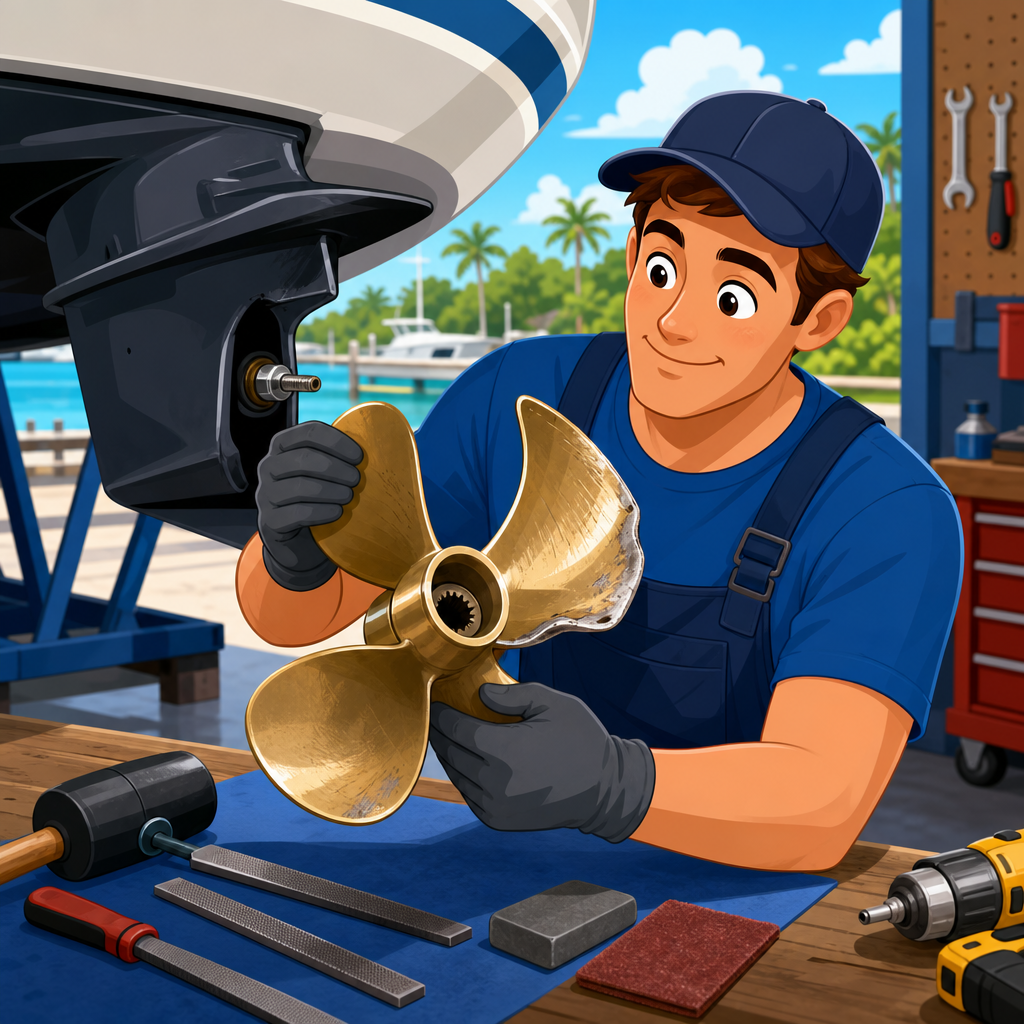
Propeller selection is one of the most influential and misunderstood fuel-efficiency upgrades. A prop that is too much pitch for the boat’s load can lug the engine, reduce acceleration, and keep the motor below its recommended wide-open-throttle range. Too little pitch can let the engine over-rev and waste fuel at cruise. Diameter, blade count, rake, cup, and material also matter. Aluminum props are common and affordable, but stainless steel props flex less under load, often improving grip and efficiency on heavier or faster boats. The right prop lets the engine reach the manufacturer’s specified WOT RPM with a typical onboard load, proper trim, and clean hull.
I usually tell owners to stop guessing and collect data. Run the boat with the fuel level, passengers, and gear you normally carry. Record GPS speed, engine RPM, and fuel flow if your multifunction display or engine gateway supports it. Then compare that with the engine maker’s WOT recommendation. Mercury, Yamaha, Suzuki, Honda, and Evinrude all publish operating ranges for their engines, and staying inside that range is not optional if you care about durability. If your boat struggles onto plane, ventilates in turns, or needs excessive trim to maintain speed, the prop may be wrong even if top speed looks acceptable.
| Upgrade or Check | What It Improves | Typical Fuel-Efficiency Benefit | Longevity Benefit |
|---|---|---|---|
| Clean hull and bottom paint maintenance | Reduces drag and required throttle | Often noticeable immediately; major gains on fouled hulls | Lowers sustained engine load and heat |
| Correct prop pitch and material | Keeps engine in proper RPM band | Improves cruise economy and planing efficiency | Prevents lugging and over-rev stress |
| Fresh fuel filters and clean injectors | Restores proper fuel delivery and combustion | Stabilizes burn rate and throttle response | Protects pumps, injectors, and pistons |
| Engine tune-up and cooling system service | Improves combustion and temperature control | Reduces wasted fuel from poor running conditions | Extends engine and exhaust component life |
| Weight reduction and balance correction | Lowers displacement and trim drag | Better economy at cruise and during acceleration | Reduces strain on transom and driveline |
As a rule, changing pitch by one inch alters engine speed by roughly 150 to 200 RPM, though hull design and gear ratio affect the result. That is why prop testing is worth the effort. A simple prop swap can save fuel every trip, especially on boats that are frequently loaded for fishing, watersports, or cruising. It also reduces long-term wear because the engine operates where it was engineered to run.
Protect the Fuel System Before Performance Falls Off
Fuel system maintenance is preventive by definition. By the time water contamination, phase-separated ethanol fuel, clogged filters, or dirty injectors create obvious symptoms, efficiency has already been compromised. On gasoline boats, install or replace a quality 10-micron water-separating fuel filter at the interval recommended by the engine manufacturer or at least annually. Racor and OEM filter systems are common standards because they remove both water and particulates before they reach sensitive components. On diesel boats, filtration is even more critical because injector tolerances are extremely tight and contamination can become costly fast.
Use fresh fuel and the octane specified by the manufacturer, not more and not less. Higher octane than required does not create extra power in a marine engine that is not calibrated for it. If ethanol-blended fuel is unavoidable, keep tanks as full as practical during storage to reduce condensation, use a marine fuel stabilizer when fuel will sit, and inspect hoses for compatibility if the boat is older. A soft, shedding fuel line can restrict flow and contaminate injectors or carburetor passages. For direct-injection and electronic fuel injection systems, periodic professional cleaning may be justified if fuel quality is inconsistent or idle quality has deteriorated.
Many owners ask whether additives improve fuel economy. Some stabilizers and cleaners help prevent varnish and deposit formation, which indirectly supports efficient running. Very few additives deliver dramatic savings on a healthy engine. The reliable path is clean fuel, correct filtration, sealed connections, and proper storage practices. That combination supports easier starts, smoother combustion, and lower repair risk over the long term.
Keep the Engine Tuned, Cooled, and Operating in Spec
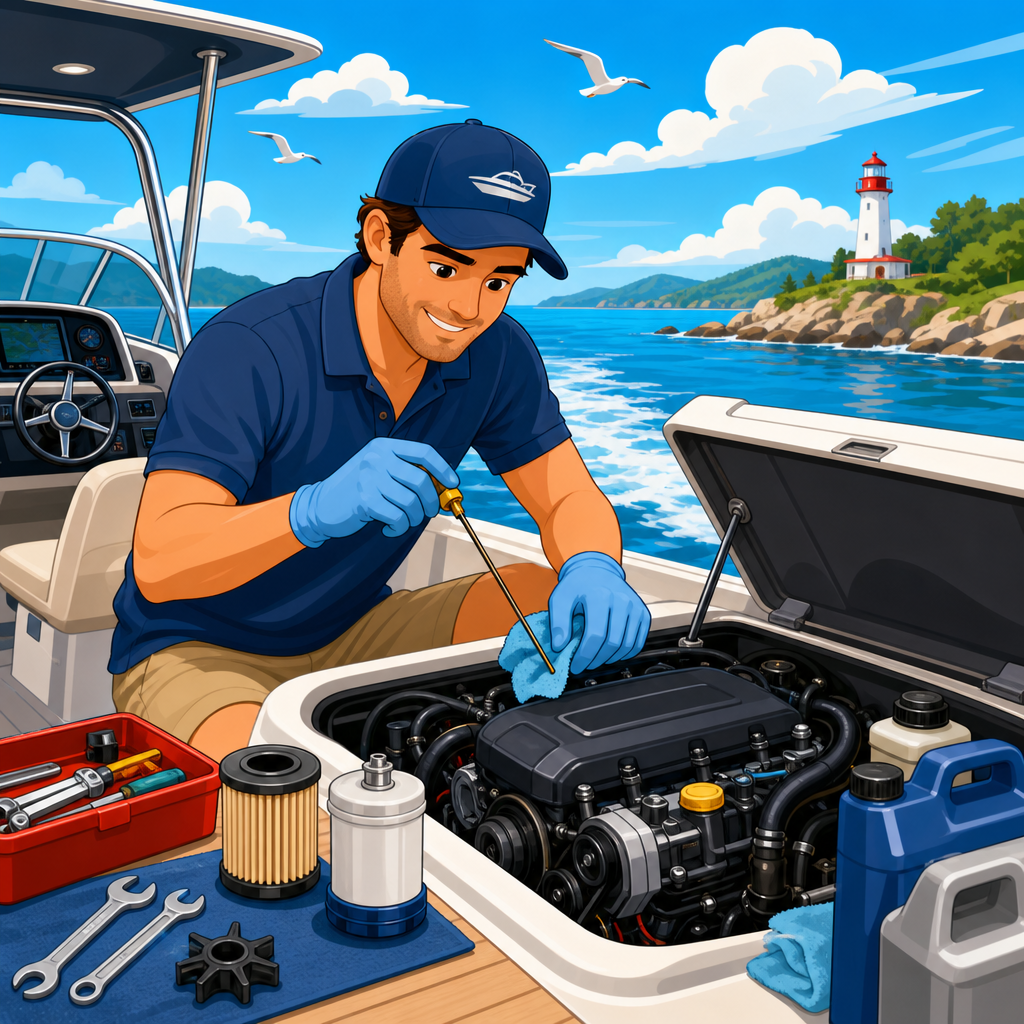
An engine that is slightly out of tune can still run well enough to mask growing inefficiency. On older carbureted outboards and sterndrives, misadjustment, dirty carburetors, and weak ignition components commonly increase fuel use. On modern EFI outboards and inboards, failing spark plugs, restricted air intake components, sensor drift, and cooling problems have similar effects. Follow the service schedule for plugs, engine oil, gear lube, timing belts where applicable, and valve inspections if the manufacturer specifies them. A marine engine under unnecessary thermal stress is almost never operating at peak efficiency.
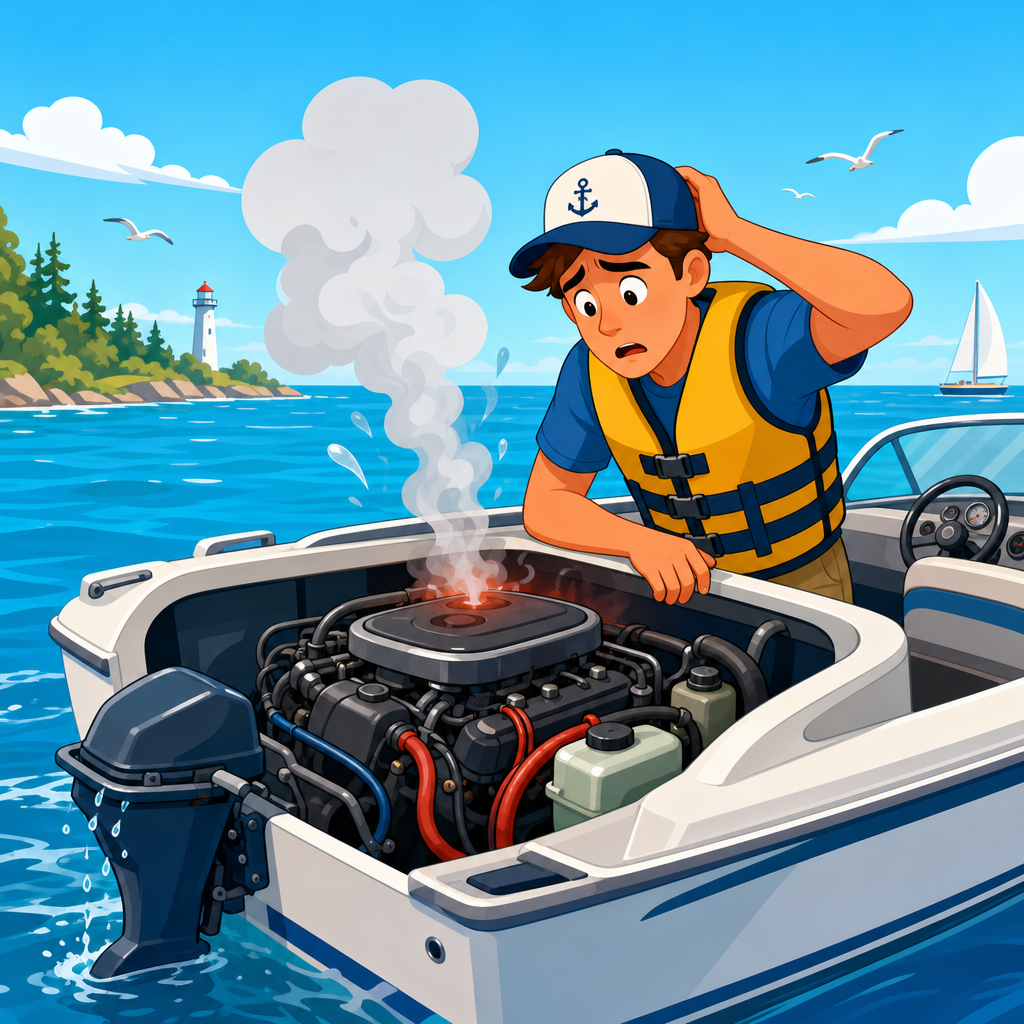
Cooling service deserves special attention because overheated engines often trigger protective timing or power reductions that lead operators to use more throttle. Replace impellers at the recommended interval, inspect thermostats, confirm unobstructed water flow, and check for scale or corrosion in passages on saltwater boats. On sterndrives, inspect bellows, gimbal bearings, and alignment as part of the same service mindset. Misalignment and driveline drag do not just threaten reliability; they waste power before it reaches the propeller.
Compression and leak-down testing are also useful when fuel economy has dropped with no obvious cause. They reveal ring, valve, or cylinder issues before catastrophic failure. That is why preventative maintenance and fuel efficiency belong together. You are not just lowering fuel burn; you are using efficiency as an early warning system for mechanical health.
Reduce Weight, Improve Balance, and Use Trim Intelligently
Extra weight costs fuel in every operating mode, but poor weight distribution is often the bigger problem. A boat with too much stern weight may struggle to plane and run bow-high, increasing wetted surface area and drag. Excess bow weight can create pounding, poor visibility, and inefficient trim response. Start by removing gear that no longer serves a purpose. Waterlogged foam-filled items, duplicate anchors, old tow gear, unnecessary tools, spare batteries, and saturated safety bags add up quickly. Weighing removed items surprises most owners.
Then consider where the remaining weight sits. Batteries, coolers, tackle, and passengers should be arranged so the hull runs level side to side and reaches an efficient running angle fore and aft. Trim tabs can help correct imbalance and lower bow rise, but they should not become a crutch for chronic overloading or poor storage habits. Engine trim is equally important. Trimming out too little keeps excess hull in the water. Trimming out too far causes porpoising, prop slip, and reduced control. The sweet spot is where RPM and speed improve without ventilation or instability. On boats equipped with fuel-flow data, the best trim point is easy to see as miles per gallon peaks at steady throttle.
If you run offshore, carry what safety and weather demand, but be deliberate. Every pound should justify itself. Weight discipline is one of the simplest upgrades because it costs little, works immediately, and reduces cumulative stress on hull structure, trailer components, and propulsion hardware.
Use Smart Add-Ons and Operating Habits That Extend Range
Some upgrades improve efficiency indirectly by making the boat easier to operate in its ideal range. A fuel-flow meter integrated into a Garmin, Simrad, Lowrance, or Raymarine display changes operator behavior quickly because it shows real-time gallons per hour and economy by speed. Owners stop relying on sound and guesswork and begin choosing the throttle setting that gives the best return. Hydrofoils, trim-tab systems, and automatic trim controllers can help certain underpowered, stern-heavy, or difficult-to-plane boats, but results depend heavily on hull design. They are not substitutes for correct propeller setup and load management.
Driving style matters more than many upgrades. Rapid throttle changes, long idle periods, and cruising just below planing threshold are common fuel-wasting habits. Many planing hulls are least efficient in the transition zone where the bow is high but the hull is not fully freed up. Either stay at displacement speed or accelerate cleanly onto plane and settle into an efficient cruise band. Route planning helps too. Favor protected water when practical, avoid running hard into steep chop, and account for current and tide. A well-maintained boat operated at its best cruise speed will usually beat a poorly managed boat with expensive accessories.
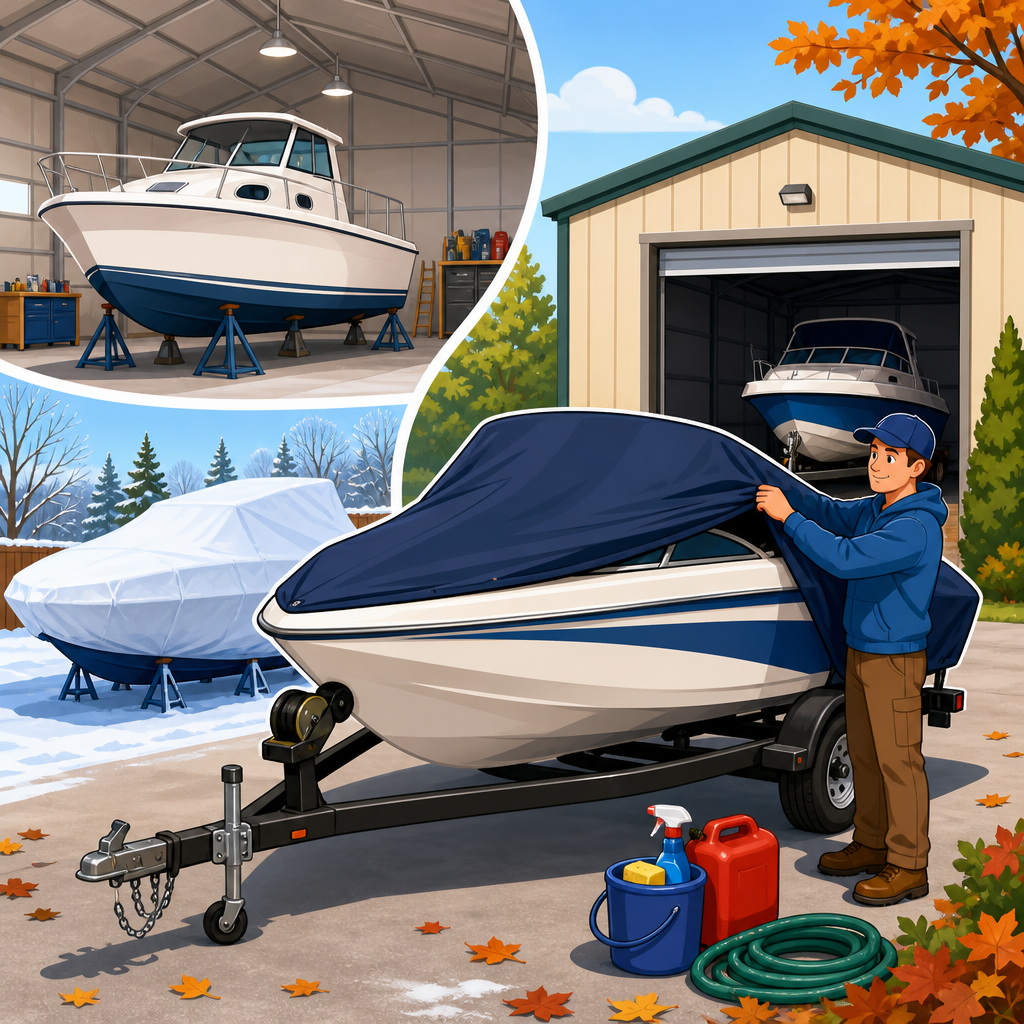
As the hub page for preventative maintenance and longevity tips, this topic connects naturally to related work every owner should schedule: seasonal service checklists, outboard maintenance intervals, sterndrive inspection routines, battery care, corrosion prevention, trailer maintenance, and winterization. Fuel efficiency improves when those systems are healthy because boating systems are interdependent. Better maintenance is not a side benefit of efficiency work; it is the reason the gains last.
Making your boat more fuel-efficient with simple upgrades starts with a clear principle: efficiency is a maintenance outcome before it is a gadget outcome. Clean hull surfaces, a correctly matched propeller, healthy fuel delivery, proper engine service, balanced loading, and disciplined trim create the biggest gains because they reduce the forces and faults that waste energy. Those same actions also reduce wear on the engine, lower the risk of overheating or fuel-system damage, and help the boat perform consistently season after season.
If you remember only a few priorities, make them these. First, keep the hull clean and smooth because drag is expensive. Second, verify that the prop allows the engine to reach its specified operating range under normal load. Third, treat fuel quality, filtration, and tune-up work as essential, not optional. Fourth, remove unnecessary weight and learn the trim settings that deliver the best miles per gallon at cruise. None of these steps is flashy, but together they can transform both operating cost and long-term reliability.
The main benefit is not only spending less on fuel. It is gaining more usable range, more dependable performance, and a longer service life from expensive marine components. Start with one baseline test run, note your current RPM, speed, and fuel burn, then work through these upgrades methodically. When each change is measured and maintained, your boat will run cleaner, farther, and with fewer repair surprises over time.
Frequently Asked Questions
What simple upgrades make the biggest difference in boat fuel efficiency?
The most effective upgrades are usually the ones that reduce drag, improve how efficiently the engine transfers power, and help the motor run at its intended operating range. For many boat owners, that starts with the propeller. A prop that is damaged, poorly pitched, or simply mismatched to the boat’s typical load can force the engine to work harder than necessary, increasing fuel burn and reducing performance. Upgrading to a properly sized propeller, or switching to a modern design with better blade geometry, can improve hole shot, cruise efficiency, and overall throttle response.
Another high-impact upgrade is keeping the hull bottom in top condition. If your boat sits in the water for long periods, fresh antifouling bottom paint can reduce marine growth and surface roughness, both of which create drag. Even on trailered boats, a clean and smooth hull matters. Small improvements in hull cleanliness can translate into meaningful fuel savings over time, especially at cruising speeds.
Trim aids can also provide a noticeable benefit. Trim tabs or hydrofoils can help the boat plane faster, run at a better attitude, and reduce wasted energy caused by excessive bow rise. In some cases, simply adding adjustable trim tabs gives the operator better control over load distribution and water conditions, making it easier to maintain an efficient running angle. On the engine side, replacing clogged fuel filters, worn spark plugs, aging injectors, or weak ignition components may not sound like “upgrades” in the flashy sense, but they often restore lost fuel economy that owners have gradually accepted as normal. The biggest gains usually come from combining a few practical improvements rather than relying on a single modification.
How does regular maintenance affect a boat’s fuel efficiency?
Regular maintenance has a direct and measurable effect on how much fuel a boat uses. A well-maintained engine burns fuel more cleanly, produces power more consistently, and operates with less internal resistance than one that has been neglected. When spark plugs are fouled, fuel filters are partially restricted, injectors are dirty, or carburetor settings are off, the engine has to work harder to deliver the same performance. That extra effort shows up as higher fuel consumption, rougher running, and often a shorter service life for major components.
Maintenance also affects everything surrounding the engine. A dirty hull, worn propeller, misaligned shaft, dragging bearings, underinflated trailer tires during transport-related setup issues, or marine growth on running gear can all make the boat less efficient on the water. Even something as simple as old engine oil or lower-unit lubricant can increase friction and reduce performance. Cooling system maintenance matters too. If the engine is not maintaining proper operating temperature because of blockages, worn impellers, or thermostat issues, fuel combustion may become less efficient and reliability can suffer.
From a practical standpoint, fuel efficiency is often one of the earliest signs of whether maintenance is being kept up properly. If a boat that once cruised comfortably at a certain RPM now needs more throttle to achieve the same speed, there is usually a maintenance issue behind it. Staying on top of routine service intervals, inspecting the prop and hull regularly, and addressing small performance changes early can preserve both fuel economy and long-term mechanical health. In that sense, maintenance is not separate from efficiency; it is the foundation of it.
Can changing the propeller really help my boat use less fuel?
Yes, absolutely. The propeller is one of the most important components in the entire fuel-efficiency equation because it determines how effectively engine power is converted into forward motion. If the propeller is the wrong pitch, diameter, or material for your boat’s size, engine type, and normal operating load, you can end up burning more fuel without gaining useful speed or control. A boat with an over-pitched prop may struggle to reach the recommended wide-open-throttle RPM range, causing the engine to lug under load. A boat with an under-pitched prop may rev too easily and operate inefficiently at cruise. In both cases, fuel economy suffers.
A well-matched propeller helps the engine run where it was designed to run. That means better acceleration onto plane, improved midrange efficiency, and less strain during normal use. Stainless steel props, for example, often hold their shape better under load than aluminum props, which can improve performance and responsiveness. Four-blade props may improve bite and handling in some applications, while three-blade props may offer stronger top-end efficiency in others. There is no universal “best” propeller; the right choice depends on how you use the boat, whether you carry heavy gear or passengers, and what kind of waters you typically run in.
If you are serious about reducing fuel use, prop selection should be approached methodically. Compare your current engine RPM at wide-open throttle against manufacturer specifications, note your normal cruising speed and fuel burn, and inspect the existing prop for damage. Even small dings, bends, or edge wear can reduce efficiency. In many cases, a professional prop shop or experienced marine technician can recommend a better setup based on real operating data. It is one of the few upgrades that can improve efficiency, drivability, and engine longevity all at once.
Do trim tabs and engine trim really improve fuel economy, or just performance?
They improve both, and the connection between the two is important. Fuel economy on a boat is heavily influenced by running attitude. If the bow rides too high, the hull pushes more water, creates more drag, and wastes energy. If the bow is forced too low, the boat may plow rather than glide efficiently. Proper engine trim and, where installed, trim tabs allow the operator to adjust the boat’s attitude so the hull moves through the water with less resistance. That reduced resistance means the engine does not need as much throttle to maintain speed, which directly lowers fuel consumption.
Engine trim is especially important once the boat is on plane. Trimming the engine out too little can keep too much hull in the water, while trimming out too far can cause prop slip, porpoising, or unstable handling. The most efficient setting is usually the point where steering feels light, speed improves, and the boat maintains plane without excess throttle. Trim tabs add another layer of control by correcting side-to-side imbalance, compensating for passengers or gear, and helping the boat plane faster at lower speeds. This is particularly useful in changing conditions, where a fixed setup may not be ideal from one trip to the next.
In real-world boating, the efficiency gains from trim are often significant because they show up every time you run the boat. Even the best propeller and cleanest hull cannot fully compensate for poor trim technique. Owners who learn to use engine trim actively, and who install trim tabs when needed, often see smoother rides, better visibility, less pounding in chop, and improved miles per gallon. It is one of the simplest ways to make a boat feel more refined while also reducing wear on the engine and driveline.
What operating habits help a fuel-efficient boat stay efficient over time?
Good operating habits are just as important as mechanical upgrades because they determine whether the boat actually benefits from its improved setup. One of the most effective habits is avoiding unnecessary high-RPM operation. Many boats burn fuel disproportionately fast at the upper end of the throttle range, so backing off slightly from maximum speed can produce major savings with only a small reduction in travel time. Finding the boat’s most efficient cruising RPM, where speed and fuel use are balanced well, is one of the smartest things an owner can do.
Load management also matters. Carrying excess gear, full tanks that are not needed for the trip, waterlogged equipment, or poorly distributed weight can keep the hull from running efficiently. A boat that is stern-heavy or unevenly loaded may require more trim correction and more throttle to perform normally. Planning routes with wind, tide, and current in mind can also reduce fuel use. Running into rough water or strong current at inefficient speeds often wastes fuel quickly, while adjusting timing and course can make the trip easier on both the engine and the budget.
Just as importantly, operators should pay attention to changes in performance. If fuel economy begins to decline, cruise RPM increases for the same speed, or the boat takes longer to plane, those are often early warnings of maintenance or setup issues. Keeping records of fuel use, engine hours, cruise speed, and service intervals helps identify trends before they become expensive repairs. In the long run, the most fuel-efficient boats are usually owned by people who combine clean, well-maintained equipment with disciplined operating habits. That combination saves money, reduces breakdown risk, and helps major components last longer under real-world use.