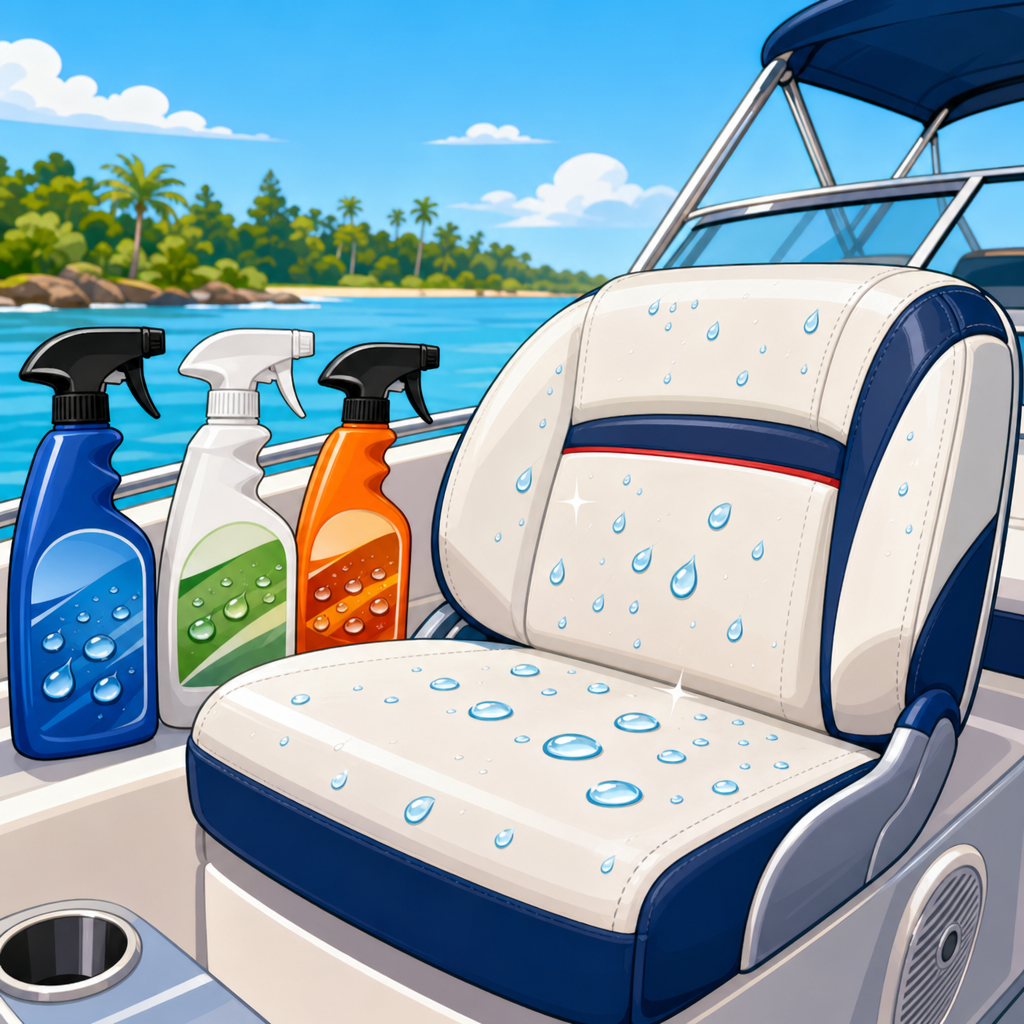
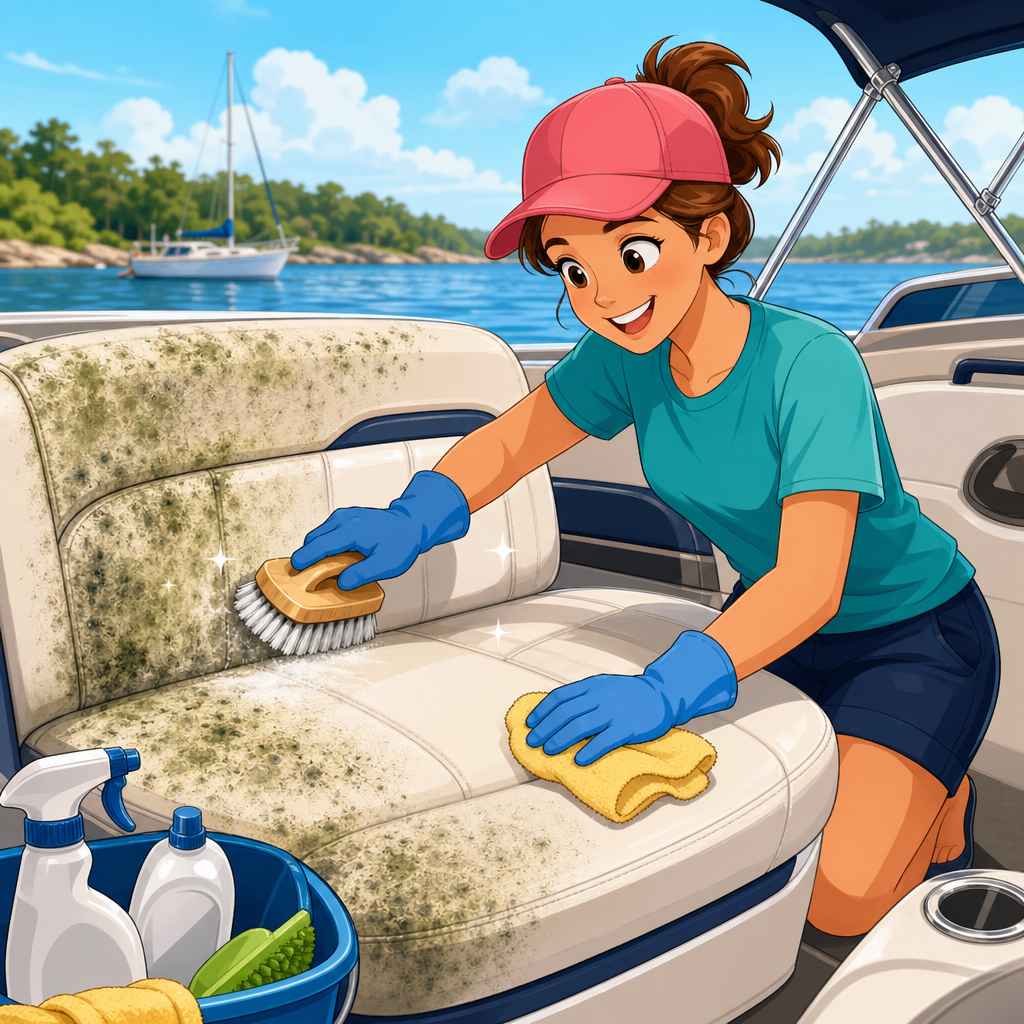
Boat upholstery faces a harsher environment than almost any furniture surface, and sun damage is usually the main reason vinyl cracks, fades, stiffens, and fails long before the rest of the boat wears out. In a practical DIY boat maintenance guide, protecting seats, bolsters, sun pads, coamings, and cushions from ultraviolet exposure is one of the highest-return tasks because replacement upholstery is expensive, labor intensive, and often unnecessary if you maintain the original material correctly. Boat upholstery usually means marine-grade vinyl stretched over foam and secured to backing boards or molded bases, but it can also include woven acrylic fabrics, canvas-backed cushions, and stitched accent panels. Sun damage is not just a cosmetic issue. UV radiation breaks down polymers, heat dries plasticizers out of vinyl, salt leaves abrasive residue, sunscreen stains weaken surfaces, and trapped moisture can accelerate seam failure and mildew. I have seen cockpit seating on otherwise well-kept boats become brittle in two seasons simply because the owner cleaned often but never used a protectant, shade cover, or ventilation strategy. Understanding how to prevent that decline matters for appearance, comfort, resale value, and total ownership cost. It also ties directly into broader boat maintenance and repairs, because upholstery protection overlaps with cleaning routines, storage practices, canvas care, hardware inspection, mold prevention, and seasonal commissioning. If you want a boat that looks newer, lasts longer, and demands fewer costly refurbishments, upholstery care belongs near the top of your checklist.
Why boat upholstery deteriorates faster in the sun
Direct sunlight damages upholstery through a combination of UV radiation, infrared heat, and oxidation. UV rays attack the top layer of vinyl, causing fading and surface chalking first, then brittleness and cracking. Heat compounds that process by driving off the plasticizers that keep vinyl supple. On many open boats, seat surfaces can become far hotter than ambient air, especially darker colors and horizontal pads that face midday sun. A white bench under full exposure may feel merely hot; a darker accent insert can become damagingly hot and age much faster. Saltwater boating adds another layer. Salt crystals remain after spray dries, and those crystals are abrasive when people slide across the seat. Inland boaters are not exempt either, because freshwater mildew, tree sap, insect residue, and sunscreen chemicals also shorten upholstery life.
Construction details matter. Marine vinyl is designed to resist weather, but not all vinyl is equal. Premium materials from suppliers such as Spradling or Morbern typically include UV inhibitors, mildew resistance, and protective topcoats. Lower-grade replacement vinyl often looks acceptable at installation but degrades earlier under sun and abrasion. Stitching is another weak point. Polyester thread performs reasonably well, while PTFE thread, used by many premium marine upholsterers, holds up far better under UV exposure. Foam, backing boards, and hidden staples also suffer when upholstery gets repeatedly wet and then bakes in the sun. Once water intrudes through a split seam or cracked panel, damage accelerates below the visible surface.
The core prevention routine every owner should follow
The most effective approach is simple: clean gently, shield from UV, reduce heat exposure, and keep moisture from lingering. In my experience, owners usually fail because they do one of these steps and ignore the others. Cleaning without protection leaves the surface bare. Covering without cleaning traps grime and mildew. Protectant without shade slows aging but does not solve heat buildup. A complete routine works because each step supports the next.
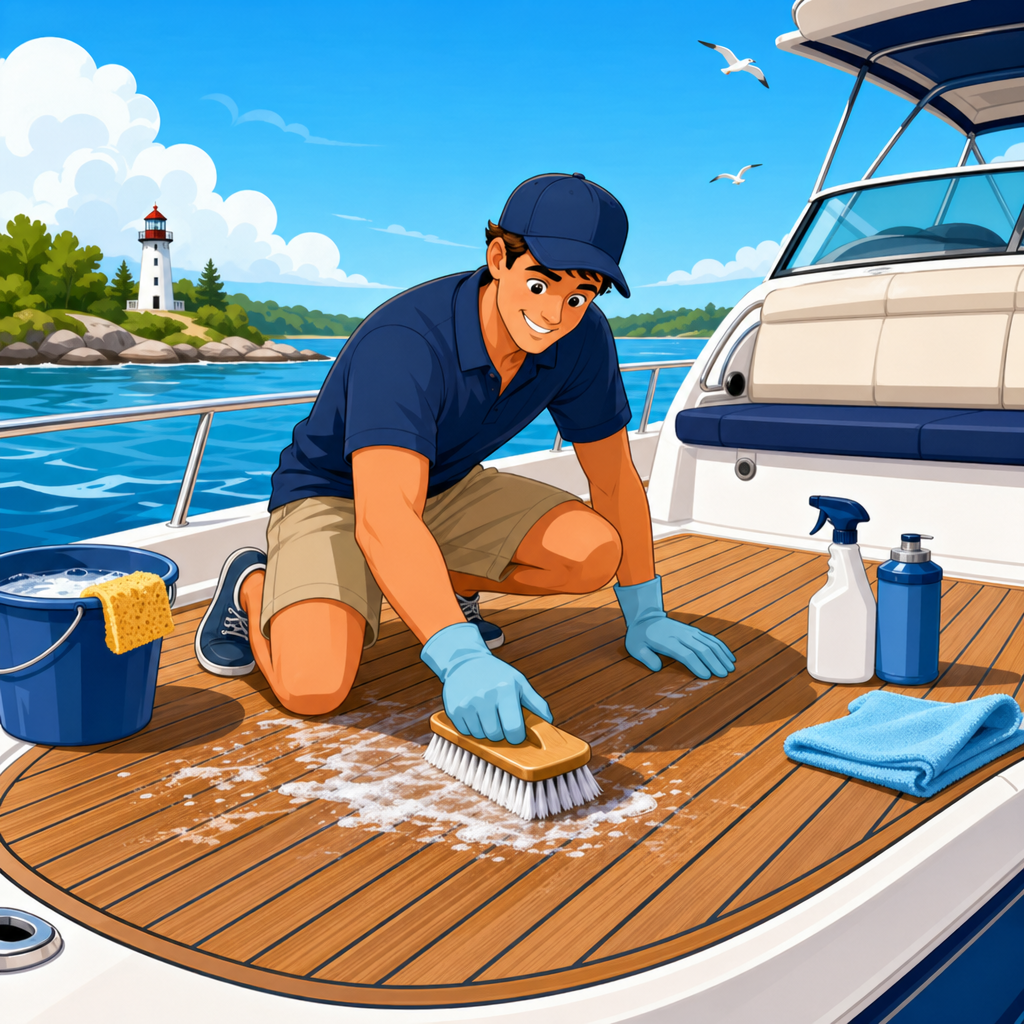
Start with a rinse after use, especially in saltwater. Use fresh water to remove salt, sand, spilled drinks, fish residue, and sunscreen before they set. Follow with a mild soap formulated for marine vinyl, not a household degreaser, bleach-heavy cleaner, or solvent. Products from 303, Star brite, and Meguiar’s Marine are commonly used because they clean without stripping the finish when applied correctly. Use a soft microfiber cloth or a soft-bristle brush only when needed for textured vinyl. Aggressive scrubbing can remove the factory topcoat and expose the material to faster UV degradation.
After cleaning and drying, apply a UV protectant designed for marine vinyl. A widely used benchmark is 303 Aerospace Protectant because it leaves a non-greasy finish and provides meaningful UV screening without making seats dangerously slick when buffed properly. Apply it to a cloth first, spread evenly, and wipe off excess. More product is not better. A thin, even film performs better and attracts less dust. On boats kept in direct sun, reapply roughly every three to five weeks during peak season. Covered or indoor-stored boats can usually go longer.
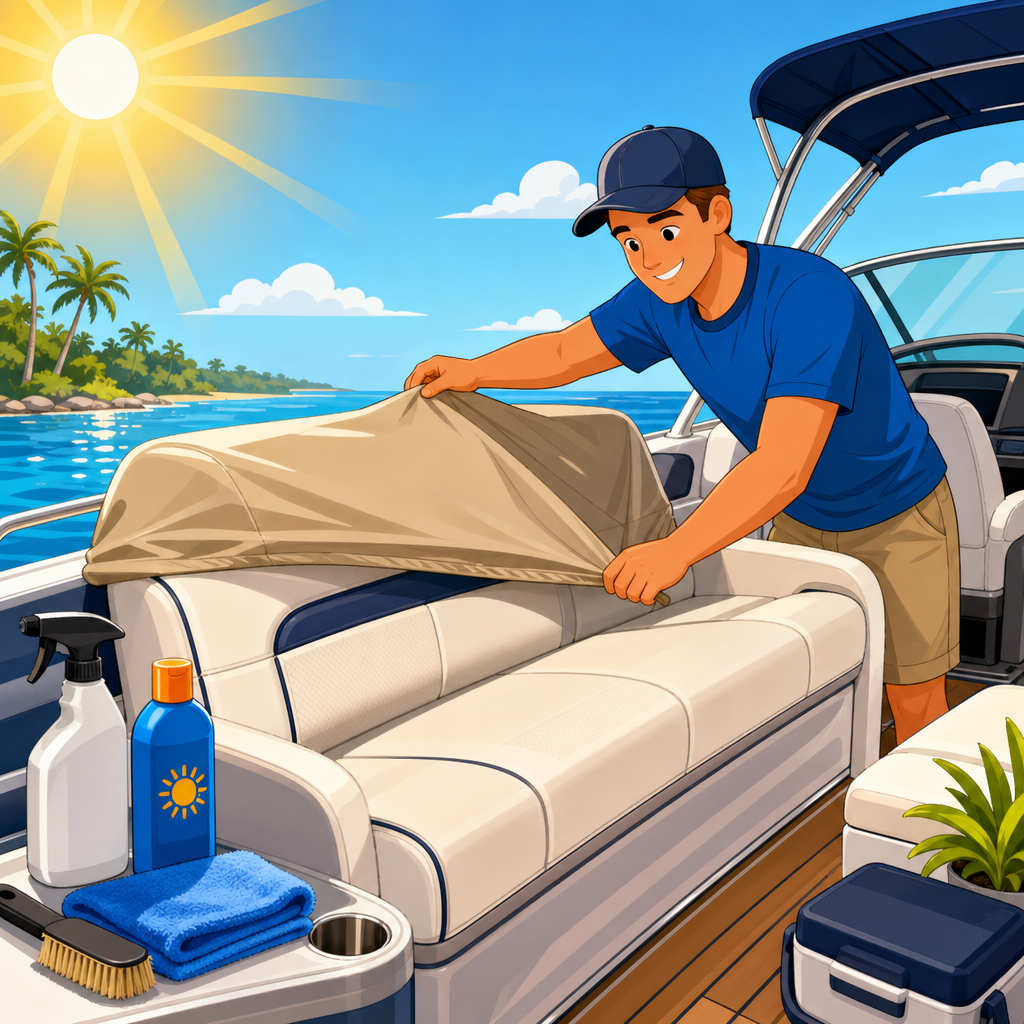
Shade is the next line of defense. Use a mooring cover, cockpit cover, tonneau, or at minimum seat covers whenever the boat is not in active use. If the boat stays in a slip, a properly fitted cover can reduce UV load dramatically, but ventilation is essential. A tight, non-breathable cover can trap heat and humidity, creating mildew and adhesive failure. Support poles or tension systems that prevent water pooling also protect upholstery indirectly, because standing water often leaks onto seat seams and backing panels.
Choosing the right protectants, cleaners, and covers
Not every product marketed for interiors belongs on a boat. Automotive vinyl dressings often leave oily residues that attract dirt, increase glare, and make seating slippery. Household cleaners containing ammonia, alcohol, citrus solvents, or bleach can strip coatings, dry material, and weaken stitching. Melamine foam pads, often sold as magic erasers, can remove stains, but they are mildly abrasive and should be treated as a last resort for isolated marks, not routine care. For mildew, use a marine mildew remover only if the label specifically states compatibility with vinyl and stitching, and test in an inconspicuous area first.
For physical protection, material selection matters as much as fit. Solution-dyed acrylic fabrics like Sunbrella are widely respected for UV resistance and breathability, while marine polyester covers can be lighter and less expensive but may have shorter service life in intense sun. A poor cover rubs on corners, traps moisture, and flaps in wind, causing both upholstery wear and gelcoat abrasion. A good cover has reinforcement at contact points, venting, secure tie-downs, and enough structure to shed water. If you trailer often, use a cover rated for towing; mooring covers and trailering covers are not always interchangeable.
| Protection Method | Best Use | Main Benefit | Key Limitation |
|---|---|---|---|
| UV protectant | Weekly to monthly surface care | Reduces fading and drying | Needs regular reapplication |
| Mooring or cockpit cover | Slip or dock storage | Blocks sun and debris | Poor ventilation can trap moisture |
| Seat covers | High-exposure cushions and loungers | Fast targeted protection | Protects only selected areas |
| Bimini or shade extension | While boating or at anchor | Lowers surface temperature | Does not protect when boat is stored uncovered |
| Indoor or enclosed storage | Seasonal layup or premium storage | Maximum UV reduction | Higher cost and limited availability |
DIY cleaning and maintenance steps that prevent permanent damage
A reliable DIY boat maintenance guide should turn upholstery care into a repeatable schedule, not an occasional rescue job. After each outing, rinse and dry the seating surfaces you used most. Weekly or biweekly, inspect seams, piping, snaps, hinges, and bases for early signs of trouble. Look for pinking, yellowing, thread fuzzing, hard spots, puckered seams, and tiny surface cracks near high-stress corners. Those are early warnings that UV and heat are winning. Catching them early lets you clean, condition, cover, or repair before full panel replacement is necessary.
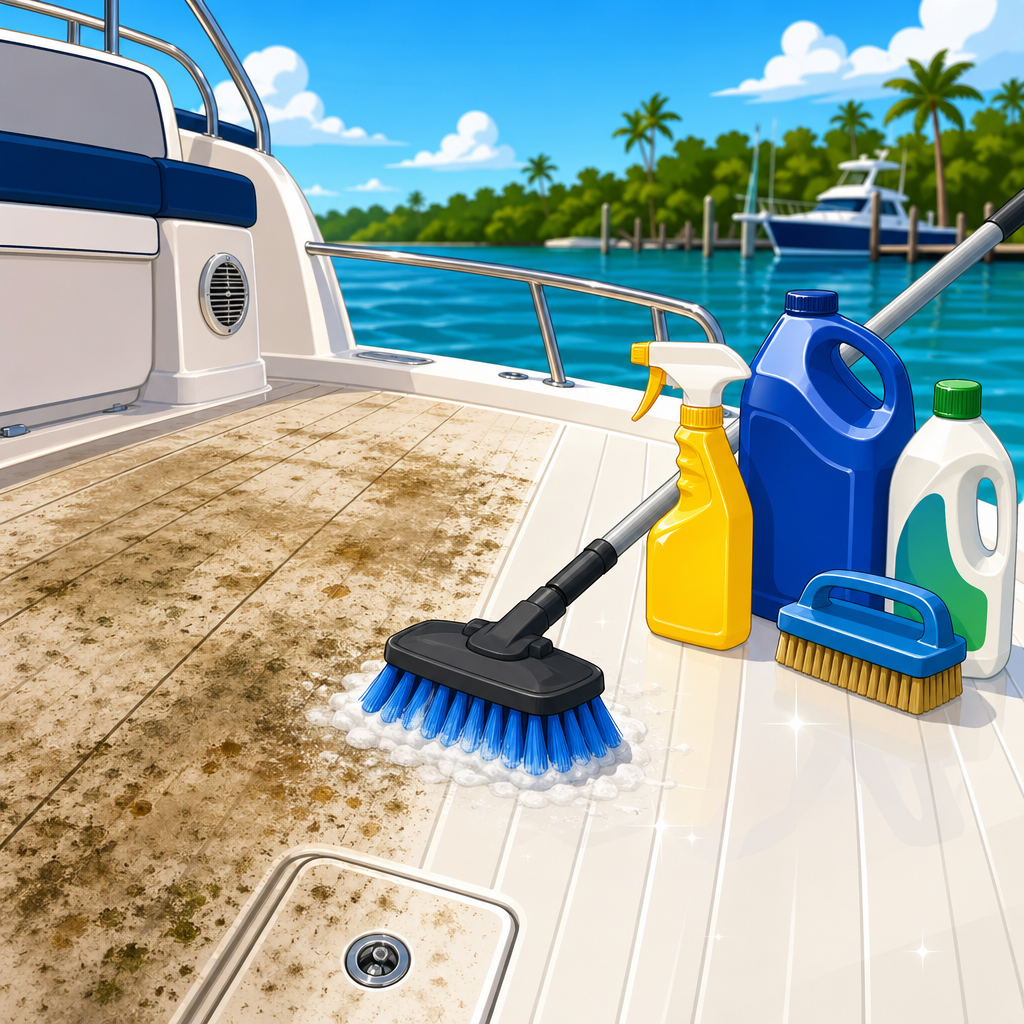
Once a month during boating season, perform a full upholstery maintenance session. Remove loose cushions if possible and clean all sides, including undersides that collect moisture and mold spores. Vacuum seams and crevices before wet cleaning so grit does not become an abrasive paste. Wash with a diluted marine vinyl cleaner, wipe with clean water, and let everything dry completely before reassembly. This is also the right time to inspect seat bases for wood swelling or corroded fasteners, because hidden structural failure often shows up as stretched vinyl or popped staples before the base itself is examined.
Stains need targeted treatment. Sunscreen, food grease, rust transfer from hardware, ink, and fish blood all behave differently. Use the mildest effective method first. For oily marks, a manufacturer-approved vinyl cleaner is safer than a household degreaser. For mildew spots, the source is usually trapped moisture, so treat the stain and correct the ventilation problem. If you repeatedly clean mildew off the same cushion without drying the foam or improving storage, it will return. For severe contamination, professional upholstery cleaning or panel replacement may be more economical than repeatedly attacking the material with harsh chemicals.
Storage, ventilation, and seasonal care
How you store the boat often matters more than how often you clean it. A boat left uncovered in a sunny slip takes constant UV punishment, but a boat sealed too tightly under a tarp can suffer almost as much from heat and condensation. The best setup combines shade, airflow, and water control. Use vented covers, support poles, and desiccant or passive vents in enclosed compartments when climate conditions justify them. If cushions are removable, store them vertically or slightly elevated so air can circulate. Do not sandwich damp cushions together in a locker and expect them to stay fresh.
Seasonal layup is the time to reset upholstery condition. Before winter or extended storage, deep-clean all seating, allow it to dry fully, apply protectant, and inspect every seam. Repair minor splits immediately. A one-inch opening can become a ruined panel after months of freeze-thaw cycles or summer heat exposure. In humid regions, remove portable cushions and store them indoors if possible. In arid climates, the bigger threat is drying and embrittlement, so UV shielding remains essential even when mildew pressure is low.
If your boat uses snap-in carpets, curtains, canvas enclosures, or helm covers, treat those items as part of the same maintenance system. A failed canvas panel can expose upholstery that was previously shaded. A leaking windshield gasket can direct water onto a seat back. Boat maintenance and repairs are interconnected, and upholstery should be inspected alongside gelcoat, seals, stainless hardware, and drainage paths rather than treated as an isolated cosmetic concern.
When repair, reupholstery, or replacement makes sense
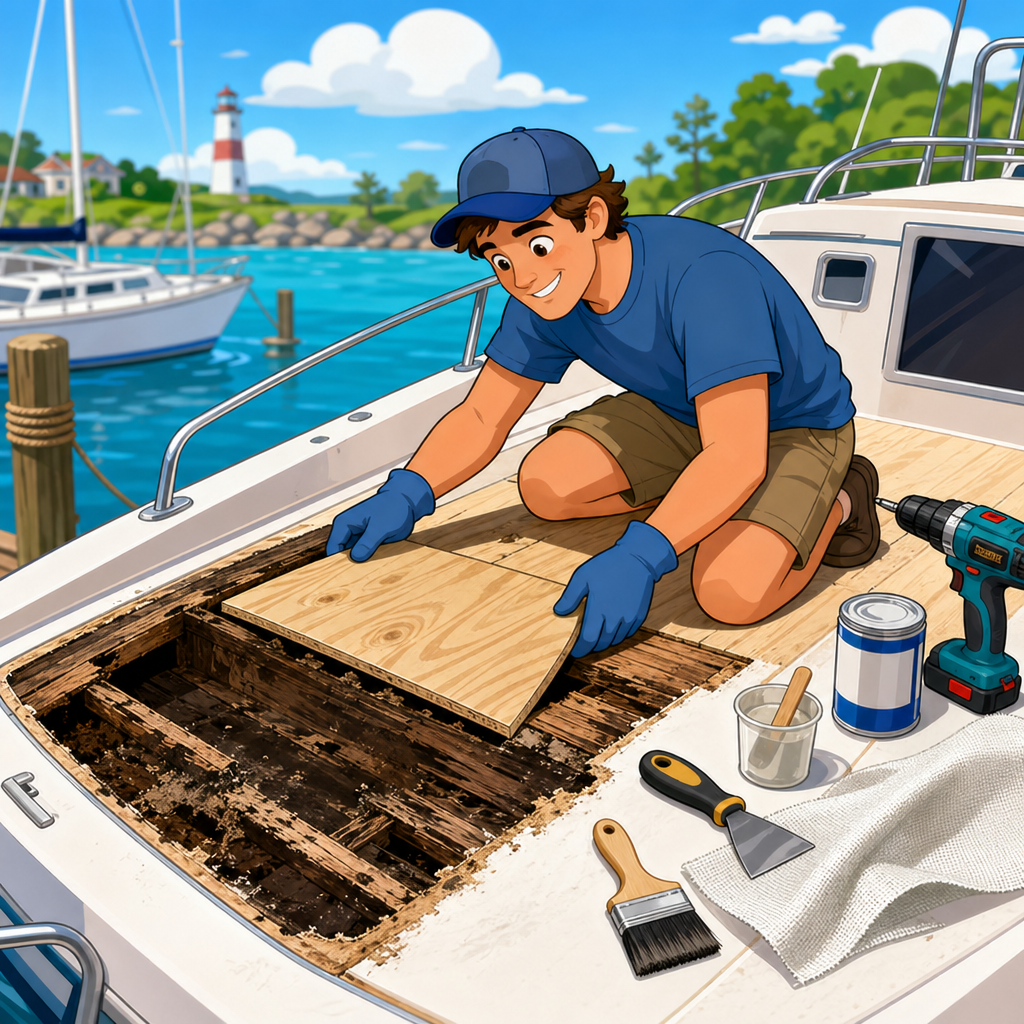
Protection is always cheaper than replacement, but some upholstery is already beyond preventive care. If vinyl has hardened, split through the top layer, or begun delaminating, no protectant will reverse it. Small seam failures can often be restitched if the surrounding material is still flexible. Localized cracks on removable pads may justify replacing a single panel. When foam is waterlogged, wood backing is rotten, or multiple sections have lost elasticity, full reupholstery is the better long-term fix. Ask whether the shop uses marine-grade vinyl with documented UV resistance, closed-cell or quick-dry foam where appropriate, stainless fasteners, and UV-stable thread such as PTFE.
Owners who plan ahead save money by replacing only the worst-exposed sections before adjacent pieces fail. I have seen boats where a sun pad was replaced in time to preserve matching side bolsters, and others where delaying one season turned a single-panel job into a full cockpit rebuild. If you are comparing quotes, ask about pattern matching, foam density, ventilation under cushions, and whether hidden substrate repairs are included. The best upholstery job is not just attractive on delivery; it is built to survive sun, water, and use for years.
Protecting your boat’s upholstery from sun damage comes down to disciplined routine, the right products, and storage choices that reduce both UV exposure and trapped moisture. Clean gently, use a proven marine UV protectant, cover the boat with breathable shade, and inspect seams and bases before small issues become expensive repairs. As part of a complete DIY boat maintenance guide, upholstery care connects directly to canvas upkeep, moisture control, structural inspection, and seasonal storage planning. The benefit is practical: better comfort, lower replacement cost, stronger resale appeal, and a boat that looks cared for every time you leave the dock. Start with one repeatable habit this week—rinse, dry, and protect the seats after your next outing—then build that into your regular Boat Maintenance & Repairs checklist.
Frequently Asked Questions
Why does boat upholstery get damaged by the sun so much faster than indoor or patio furniture?
Boat upholstery lives in one of the toughest environments any seating material can face. Unlike indoor furniture, marine vinyl is exposed to intense ultraviolet radiation, high heat, reflected sunlight off the water, salt, sunscreen, body oils, moisture, and repeated wet-dry cycles. Even compared with patio furniture, boat seats and cushions often receive stronger sun exposure because they sit in open areas with very little shade and absorb heat for long periods while the boat is docked, moored, trailered, or stored outside. UV rays gradually break down the plasticizers and protective topcoat in vinyl, which causes the surface to dry out, lose flexibility, fade, stiffen, and eventually crack. Once that process starts, it tends to accelerate because the material can no longer resist heat and contamination as effectively. The stitching, foam underneath, and plywood backing can also suffer when damaged upholstery allows water to penetrate. That is why sun protection is not just cosmetic maintenance. It directly affects the lifespan, comfort, appearance, and replacement cost of your boat’s seats, bolsters, sun pads, coamings, and removable cushions.
What is the best daily or weekly routine to protect boat seats and cushions from UV damage?
The most effective routine is simple, consistent, and centered on reducing exposure before damage starts. First, wipe upholstery down regularly with fresh water and a soft microfiber cloth to remove salt, grime, sunscreen residue, food spills, and airborne contaminants that can bake into the surface under the sun. If the vinyl needs more than a wipe-down, use a marine-safe soap or a cleaner specifically made for boat upholstery rather than harsh household products. Second, once the surface is clean and fully dry, apply a quality marine UV protectant according to the product directions. A protectant designed for marine vinyl helps reduce sun degradation, slows fading, and keeps the material more supple over time. Third, use shade and covers whenever the boat is not actively in use. A full boat cover, snap-on seat covers, cockpit cover, bimini, or even removable towels during short dock periods can dramatically cut UV exposure hours. Fourth, ventilate the covered boat properly so heat and trapped moisture do not create additional problems such as mildew. Finally, inspect seams, welting, corners, and high-contact areas every week or two during boating season. Early signs of chalkiness, stiffness, discoloration, or surface dryness are your warning to clean more carefully, reapply protectant, and improve cover use. In practical terms, the best routine is not an occasional deep treatment. It is frequent light maintenance combined with keeping the upholstery out of direct sun whenever possible.
Which products should I use on marine vinyl, and what should I avoid if I do not want to shorten its life?
Use products specifically labeled for marine vinyl or boat upholstery whenever possible. A good care system usually includes a gentle marine vinyl cleaner for routine washing and a separate UV protectant that leaves behind a non-greasy barrier against sunlight and surface drying. Soft microfiber towels, soft-bristle brushes, and non-abrasive sponges are ideal tools because they clean without scouring the protective finish. If you need mildew treatment, choose one approved for marine upholstery and test it in an inconspicuous area first. What you should avoid is just as important. Do not use bleach unless the vinyl manufacturer clearly allows it in a specific dilution, because it can weaken stitching and damage the surface finish. Avoid harsh degreasers, ammonia-based cleaners, abrasive pads, magic-eraser-style aggressive scrubbing, strong solvents, and household all-purpose cleaners that are not intended for marine upholstery. Also be careful with oily or silicone-heavy dressings that may create a slick feel, attract dirt, or interfere with the vinyl’s surface over time. Some products make seats look shiny for a day but do not actually provide meaningful UV protection. The safest approach is to use a reputable marine cleaner for cleaning, a dedicated UV blocker for protection, and a gentle touch during application. If you are unsure about a product, check your upholstery manufacturer’s care recommendations before using it on the entire boat.
Are covers really necessary if I already use a UV protectant on my boat’s upholstery?
Yes, absolutely. UV protectant helps, but it should be viewed as one layer of defense rather than a complete solution. The single best way to prevent sun damage is to reduce the number of hours the upholstery spends in direct sunlight. A protectant can slow degradation, but it cannot stop constant exposure to heat and UV day after day. Covers are especially important because they address the root problem: sunlight itself. A well-fitted boat cover, mooring cover, cockpit cover, or seat cover can significantly reduce fading, drying, and cracking by shielding the vinyl during the longest idle periods, which is when many boats accumulate the majority of their sun exposure. Covers also help keep the seats cleaner, which reduces the need for aggressive scrubbing and chemical use later. That said, the cover must fit well and breathe properly. A poor cover that traps moisture can create mildew, while a loose cover that flaps in the wind may wear on seams and surfaces. The best long-term strategy is to combine both methods: clean the upholstery, apply UV protection on schedule, and cover the boat whenever it is stored, trailered, docked, or sitting unused. If you want to extend upholstery life and avoid costly reupholstery, this combination delivers the highest return for the least effort.
What are the early signs of sun damage on boat upholstery, and can anything be done before replacement is necessary?
Early sun damage usually starts subtly, and catching it early can save a great deal of money. The first signs often include fading, loss of gloss, a slightly chalky look, stiffness in areas that used to feel supple, and a dry texture when you run your hand across the vinyl. High-exposure areas such as the tops of backrests, sun pads, helm seats, bow cushions, and coamings often show damage first. You may also notice color inconsistency between covered and uncovered sections, which is a strong clue that UV exposure is driving the wear. As damage progresses, the vinyl may shrink slightly, seams may begin to pull, and tiny surface cracks can appear, especially on corners, hinges, and panels that flex when people sit down. At the early stage, replacement is often not necessary. You can usually slow further deterioration by thoroughly but gently cleaning the upholstery, removing residue buildup, applying a quality UV protectant on a regular schedule, and dramatically improving how often the boat is covered or shaded. If stitching is beginning to weaken or a seam is opening, a marine upholstery shop may be able to restitch or repair that section before the surrounding material fails. What you generally cannot do is reverse severe UV damage once vinyl has become brittle or cracked through. At that point, surface treatments may improve appearance temporarily, but they will not restore lost flexibility or structural integrity. That is why regular inspection matters so much. The earlier you respond to fading, dryness, and stiffness, the better your chances of preserving the original upholstery for many more seasons.