A clean bilge is more than a cosmetic detail; it is a direct indicator of how well a boat’s electrical and plumbing systems are managed. The bilge, the lowest interior compartment of a hull, collects water, oil residue, fuel traces, soap runoff, rust particles, and organic debris from almost every onboard system. When that mixture sits, it creates odor, corrosion, pump failures, and hidden safety risks. I have inspected bilges that looked harmless from the hatch but concealed saturated wiring, split hose clamps, and stagnant water trapped under limber holes. In nearly every case, the smell was the least serious problem.
Keeping a boat’s bilge clean and odor-free matters because the bilge is where maintenance issues announce themselves first. A leaking stuffing box, a cracked livewell hose, a loose freshwater fitting, or a failing air-conditioning condensate drain will usually show up there before the fault becomes obvious elsewhere. That makes bilge care a core part of preventive boat maintenance, not a final wipe-down after a trip. Owners who routinely inspect and clean the bilge typically catch plumbing leaks earlier, preserve bilge pump reliability longer, and reduce the kind of moisture that accelerates electrical corrosion.
For a hub article under boat maintenance and repairs, the key point is this: bilge cleanliness sits at the intersection of electrical and plumbing systems. The plumbing side includes freshwater lines, drains, seacocks, sanitation hoses, raw-water circuits, baitwell plumbing, and air-conditioning drains. The electrical side includes bilge pumps, float switches, automatic pump wiring, battery connections, alarm circuits, and corrosion pathways created by persistent dampness. If you understand how those systems feed contamination into the bilge, you can stop odor at the source instead of masking it with deodorizer.
Odor-free does not mean perfumed. It means dry where possible, clean where not, and free of trapped organic growth. The most effective bilge care follows three principles: remove the source of contamination, clean residues completely, and keep pumps and drains working as designed. That approach protects equipment, improves onboard air quality, and supports every related maintenance task in the electrical and plumbing category.
What Makes a Boat Bilge Smell and Get Dirty
Most bilge odor comes from bacteria breaking down organic material in warm, low-oxygen water. Common sources include fish slime, food particles washed into cockpit drains, graywater leaks, mold growth, and decaying debris trapped below pumps or stringers. Add petroleum residue from an engine room or generator space, and the smell becomes heavier and harder to remove. On sailboats and trawlers, shaft seal drips and condensate can keep surfaces constantly damp. On center consoles and express cruisers, fish box plumbing, macerator lines, and washdown runoff are frequent contributors.
Dirty bilges usually result from one of four patterns. First, a system leak introduces a steady trickle of water. Second, residue from oil, diesel, coolant, or cleaners creates a film that traps dirt. Third, poor drainage leaves pockets of standing water that never reach the pump sump. Fourth, neglected cleaning allows sludge to build under hoses, wiring bundles, and pump brackets. In practice, odor is often strongest when these factors combine. For example, a small freshwater leak from a pressure pump fitting can keep dust and organic debris wet enough to support mildew for months.
It is important to distinguish normal moisture from abnormal accumulation. A little condensation in humid weather may be unavoidable. A bilge that cycles the automatic pump several times per hour in dry conditions is not normal. Repeated pump activity means water is entering somewhere, and that source should be identified before cleaning begins. Otherwise, the smell returns quickly and the electrical system absorbs unnecessary wear.
How Electrical Systems Affect Bilge Cleanliness
Bilge pumps are the most obvious electrical component in the bilge, but they are not the only one affected by contamination. The pump, float switch, fuse or breaker, wiring splices, alarm sensor, and battery feed all depend on a relatively clean, dry environment to work reliably. I have replaced many failed pumps that were not truly worn out; they were jammed by hair, zip-tie tails, sludge, or hardened residue. Float switches often fail for the same reason. A sticky switch can leave water standing long enough to cause odor, or worse, fail to activate during a real leak.
Corrosion is the next major issue. Damp bilges accelerate oxidation on terminals and can wick moisture into poorly sealed wire connections. Marine-grade tinned copper wire resists corrosion better than automotive wire, but it still needs adhesive-lined heat-shrink terminals and proper support. If you see household wire nuts, untinned wire, or unsupported splices lying in the bilge, treat that as a repair priority. The American Boat and Yacht Council standards for bilge pump circuits emphasize overcurrent protection, conductor support, and reliable automatic operation because water management is a safety system, not a convenience feature.
Battery compartments near the bilge deserve special attention. Acid residue, salt moisture, and poor ventilation can create corrosive conditions that spread quickly to nearby lugs and bus bars. Even on boats with sealed AGM or lithium batteries, wet bilge air can attack exposed copper and hardware. Cleaning the bilge reduces humidity and contamination around these components, but routing and mounting matter too. Wiring should be elevated, secured every several inches as appropriate to the run, and protected from abrasion where it crosses bulkheads or pump brackets.
Alarm systems are often overlooked until they fail. A high-water alarm with a separate float switch provides valuable warning before a pump is overwhelmed, yet many owners never test one. During bilge cleaning, manually raise the float, confirm the alarm sounds, and inspect the sensor for fouling. This simple habit links housekeeping directly to electrical reliability.
How Plumbing Systems Create Bilge Odor
Plumbing faults are the most common reason an otherwise clean bilge starts smelling. Freshwater systems can leak from pump strainers, accumulator fittings, water heater pressure relief valves, or push-fit connectors that were not fully seated. Sanitation systems are even more problematic. Permeated waste hose, a seeping joker valve, a loose hose clamp at the holding tank, or a vent line restriction can introduce odor that seems to come from the bilge when the real source is a nearby compartment. Raw-water circuits for air conditioning, bait tanks, heads, and engines can also drip saltwater, leaving mineral deposits and dampness that support mildew.
Drainage design matters. Shower sump boxes, icebox drains, sink hoses, cockpit scuppers, and air-conditioning condensate lines should move water to a dedicated sump or overboard discharge, not into the general bilge unless the boat was built that way. When owners modify plumbing casually, they often create new odor pathways. I have seen condensate lines terminate above a bilge shelf, where water ran down wiring looms, and sink drains patched with undersized hose that seeped only when the boat pitched underway. These are small faults with large consequences.
The best way to prevent plumbing-related bilge odor is to inspect the system in zones. Pressurize the freshwater pump and listen for cycling. Check all visible hose clamps for rust trails or salt crystals. Run each drain separately and verify where the water exits. Inspect sanitation hoses for brittleness, sweating, or odor transfer. Open shower sump boxes and clean strainers. If a bilge smells sour rather than oily, suspect trapped graywater or sanitation seepage before assuming the problem is just “bilge smell.”
A Practical Bilge Cleaning Process That Actually Works
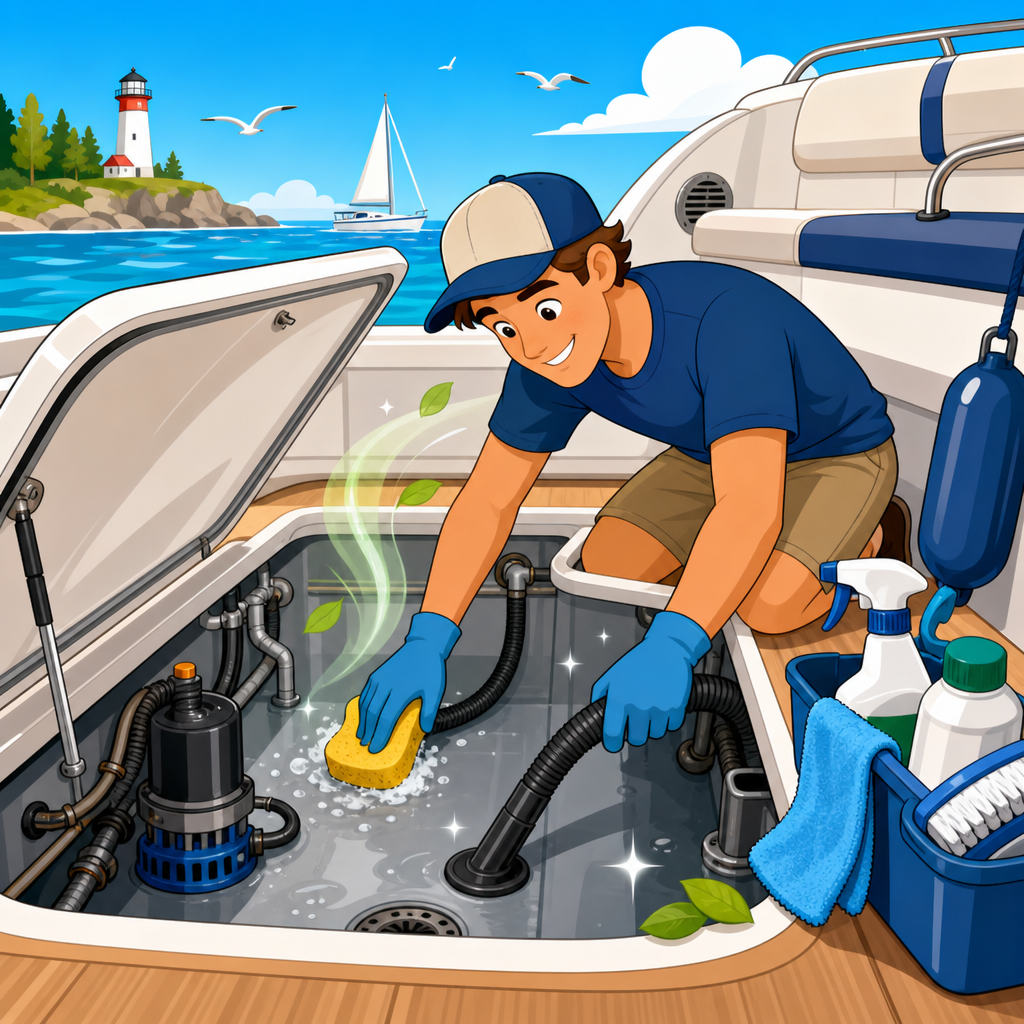
Effective bilge cleaning starts with containment and diagnosis. Before adding any cleaner, remove loose debris by hand or with a wet-dry vacuum rated for marine use. Absorb oil or fuel sheen with bilge pads, never detergent, because emulsifying petroleum and pumping it overboard is illegal and harmful. Once solids and hydrocarbons are removed, identify the compartments involved. Many boats have multiple bilge sections connected by limber holes, so cleaning only the visible sump leaves contamination upstream.
Use a cleaner appropriate to the residue. For general grime, a marine bilge cleaner or degreaser labeled for the purpose works well. For mildew, use a product suitable for enclosed marine spaces and follow ventilation guidance. Agitate with long-handled brushes, bottle brushes around hoses, and rags under wiring trays where sludge accumulates. Let the cleaner dwell as directed, then rinse sparingly. Excess rinse water simply redistributes dirt unless it can be fully pumped or vacuumed out.
The most successful cleanings I have done end with manual drying. Pumps leave a shallow layer of water that continues to smell, especially in warm weather. A sponge, microfiber towels, or a vacuum removes what the pump cannot. Then leave hatches open if conditions permit, or run ventilation to dry the area completely. Odor treatments should come last and should be secondary. If the bilge is still wet, no deodorizer will solve the underlying problem.
| Bilge issue | Likely source | Best first action | System to inspect next |
|---|---|---|---|
| Sour or musty odor | Standing freshwater, graywater, mildew | Vacuum water and clean sump areas | Shower drains, condensate lines, freshwater fittings |
| Oily film or rainbow sheen | Engine leak, fuel residue, greasy runoff | Use absorbent pads and trace leak | Engine pan, filters, hoses, shaft seal area |
| Pump cycling often | Active leak or backflow | Mark water level and isolate source | Check valves, discharge hose, seacocks, plumbing joints |
| Strong sewage smell | Sanitation hose permeation or seepage | Inspect hose runs and tank fittings | Head, vent filter, joker valve, clamps |
| Corroded wiring near sump | Persistent moisture and poor terminations | Dry area and replace damaged connectors | Pump circuit, battery feeds, alarm wiring |
Tools, Products, and Maintenance Intervals
You do not need a large kit, but the right tools make bilge maintenance faster and safer. Keep absorbent pads, nitrile gloves, a compact wet-dry vacuum, long-handled scrub brushes, microfiber cloths, a mirror, a headlamp, zip ties with marine-safe trimming, and a moisture-resistant label maker for circuit identification. For electrical work, add a multimeter, heat gun, adhesive-lined heat-shrink connectors, and marine-grade wire. For plumbing, keep spare hose clamps, sanitation-safe hose where applicable, thread sealant approved for the fitting type, and replacement sump strainers.
Product selection matters. Choose cleaners labeled for bilges and degreasers appropriate for fiberglass, painted surfaces, and metal components. Avoid harsh bleach use around metals and wiring because it can accelerate corrosion and damage some materials. Enzyme odor treatments can help after cleaning by digesting residual organic matter, but they are not substitutes for physical removal. In sanitation spaces, hose replacement may be the only permanent cure if odor has permeated the hose wall.
As for intervals, inspect the bilge visually after every outing on older boats and at least monthly on newer, tightly maintained boats. Test bilge pumps and float switches monthly. Deep-clean the bilge at the start and end of the season, and any time a leak, spill, or odor event occurs. In hot climates or on boats with enclosed engine spaces, increase the frequency because heat multiplies bacterial growth and accelerates wiring deterioration.
When Bilge Problems Signal a Bigger Repair
A dirty bilge sometimes points to issues that cleaning alone cannot solve. Recurrent water with no obvious source may indicate deck hardware leaks, hull-to-deck joint seepage, rudder post leaks, or a failing shaft seal. Persistent sewage odor may mean permeated sanitation hose or a cracked holding tank fitting. Frequent bilge pump cycling can also result from a poor discharge loop or a failed check valve arrangement that allows water to flow back into the bilge, though check valves themselves can reduce pump performance if misused. Electrical corrosion around the bilge may reveal undersized wire, overloaded circuits, or a charger installation that was never properly protected.
This is why a clean bilge is useful diagnostically. Once sludge and old residue are gone, new drips are easier to trace. Lay clean absorbent pads under suspect fittings, dust dry areas lightly with foot powder to reveal tracks from leaks, and inspect after operating each system separately. Run the freshwater pump, then the air conditioning, then the head, then washdown pumps. This controlled approach turns the bilge into a monitoring point rather than a mystery compartment. For a boat owner building a maintenance routine around electrical and plumbing systems, that is the real advantage.
Keeping your boat’s bilge clean and odor-free protects far more than cabin comfort. It preserves bilge pump performance, reduces corrosion in critical wiring, exposes plumbing leaks early, and helps you spot developing repairs before they become failures on the water. The process is straightforward: remove debris and hydrocarbons correctly, clean and dry every compartment fully, inspect pumps and float switches, and trace any recurring moisture back to its source. Most bad bilge odors are symptoms, not isolated problems.
As a hub within boat maintenance and repairs, bilge care connects directly to every major electrical and plumbing task on board. When you maintain drains, sanitation hoses, freshwater fittings, pump circuits, alarms, and wiring terminations, the bilge stays cleaner almost automatically. When you ignore those systems, the bilge becomes the place where small faults collect and multiply. Start with a full inspection this week, note every hose, pump, and wire run that enters the bilge, and build your maintenance checklist from there. A cleaner bilge means a safer, more reliable boat.
Frequently Asked Questions
Why is bilge cleanliness so important beyond just reducing bad smells?
A clean bilge is one of the clearest signs that a boat’s systems are being monitored properly. The bilge sits at the lowest point of the hull, so it becomes the collection area for runoff and leaks from plumbing, shaft seals, stuffing boxes, air-conditioning condensate, fuel systems, engines, batteries, and deck drains. When water mixes with oil residue, soap, rust particles, and organic debris, it does more than create odor. It accelerates corrosion, shortens the life of pumps and float switches, contaminates hoses, and can hide active leaks that should be corrected early. In many cases, what appears to be a minor smell problem is actually the first warning sign of a failing hose clamp, a slow fuel seep, deteriorating wiring insulation, or a neglected pump cycling issue. Keeping the bilge clean makes inspections easier, helps you spot new problems quickly, and reduces the chance that standing contaminated water will damage electrical connections or create a fire and safety hazard.
What is the best way to clean a dirty bilge without damaging equipment or sending pollutants overboard?
The right approach is to clean the bilge in stages and treat it like a contained maintenance area, not something to simply flush out. Start by turning off relevant electrical circuits if needed and making sure the boat is stable and well ventilated. Remove loose debris by hand first, including leaves, sludge, zip ties, rust flakes, and any trash that can clog a pump or float switch. If there is oily water in the bilge, absorb it with oil pads or absorbent socks before introducing any cleaner. That step matters because pumping oily water overboard is both environmentally harmful and illegal in many situations. Once free oil and debris are removed, apply a bilge-safe cleaner or degreaser according to the manufacturer’s instructions. Let it work long enough to break down residue, then scrub accessible surfaces with brushes sized for tight spaces. Use rags or a wet vacuum to remove the loosened contamination rather than relying on the bilge pump to discharge it. After cleaning, wipe down pumps, strainers, hoses, and nearby wiring runs so you can inspect them clearly. The goal is not just a fresh smell. It is a dry, visible, inspectable bilge where leaks, corrosion, and system faults can no longer hide.
How often should I inspect and clean my boat’s bilge?
Inspection should be frequent, while deep cleaning can follow a more regular schedule based on how the boat is used. On an actively used boat, a quick bilge check every trip or at least every few outings is ideal. You are looking for changes: rising water level, unusual sheen, dark residue, new smells, pump cycling frequency, or wet wiring and hose runs. These small observations often reveal developing problems before they become expensive repairs. A more thorough cleaning may be needed monthly during heavy use, seasonally for moderate use, and always before and after storage periods. Boats used in saltwater, humid climates, or warm temperatures usually require more frequent attention because heat and moisture accelerate odor, microbial growth, and corrosion. If you notice the bilge pump running more often than usual, if the bilge never seems fully dry, or if odors return quickly after cleaning, increase the inspection frequency immediately. The best maintenance routine combines quick visual checks with scheduled cleanings, because a bilge that is inspected often is far less likely to develop hidden issues.
What causes persistent bilge odor even after cleaning, and how do I fix it?
Persistent bilge odor usually means the source has not been fully removed or an underlying system issue is still feeding contamination into the area. Residual odor often comes from oil soaked into porous surfaces, stagnant water trapped in inaccessible low spots, bacteria growing in organic sludge, graywater leaks, decaying debris under equipment, or old absorbent material left in place too long. In some cases, the smell blamed on the bilge actually originates from sanitation hoses, sump boxes, shower drains, air-conditioning condensate pans, or a slow leak around a tank fitting. The fix begins with identifying the type of odor and tracing where moisture is coming from. A fuel-like smell points toward fuel system inspection. A rotten or sour smell may indicate organic buildup or stagnant water. A musty smell can signal chronic dampness and poor ventilation. Once the source is identified, remove contaminated pads, clean hidden compartments, dry the bilge completely, and correct the leak or drainage problem that keeps reintroducing moisture. It also helps to improve airflow and keep the bilge as dry as practical between uses. Odor control products can be useful, but they should be treated as a finishing step, not the main solution. If the source remains, the smell will come back.
What preventive steps keep a bilge clean and odor-free long term?
Long-term bilge cleanliness comes from controlling what enters the space and catching problems early. Begin by addressing leaks at the source rather than accepting routine water accumulation as normal. Check hose clamps, shaft seals, stuffing boxes, raw-water plumbing, freshwater fittings, pumps, tank connections, and deck drainage paths. Keep engine spaces clean so oil and grime do not wash down into the bilge. Use drip pans where appropriate, secure wiring above the bilge where possible, and replace deteriorated hoses or insulation before they shed material into the compartment. Clean strainers and test bilge pumps and float switches regularly so water does not sit longer than necessary. Absorbent pads can help capture trace oil, but they should be replaced before they become saturated and smelly. It is also smart to reduce debris entry by keeping lockers, sole panels, and maintenance areas tidy. After every washdown or plumbing repair, check that runoff is going where it should. Finally, make bilge inspection part of your routine maintenance checklist. A dry, clean bilge does not happen by accident. It reflects disciplined attention to the systems above it, and that attention is what prevents odor, corrosion, and surprise failures over time.