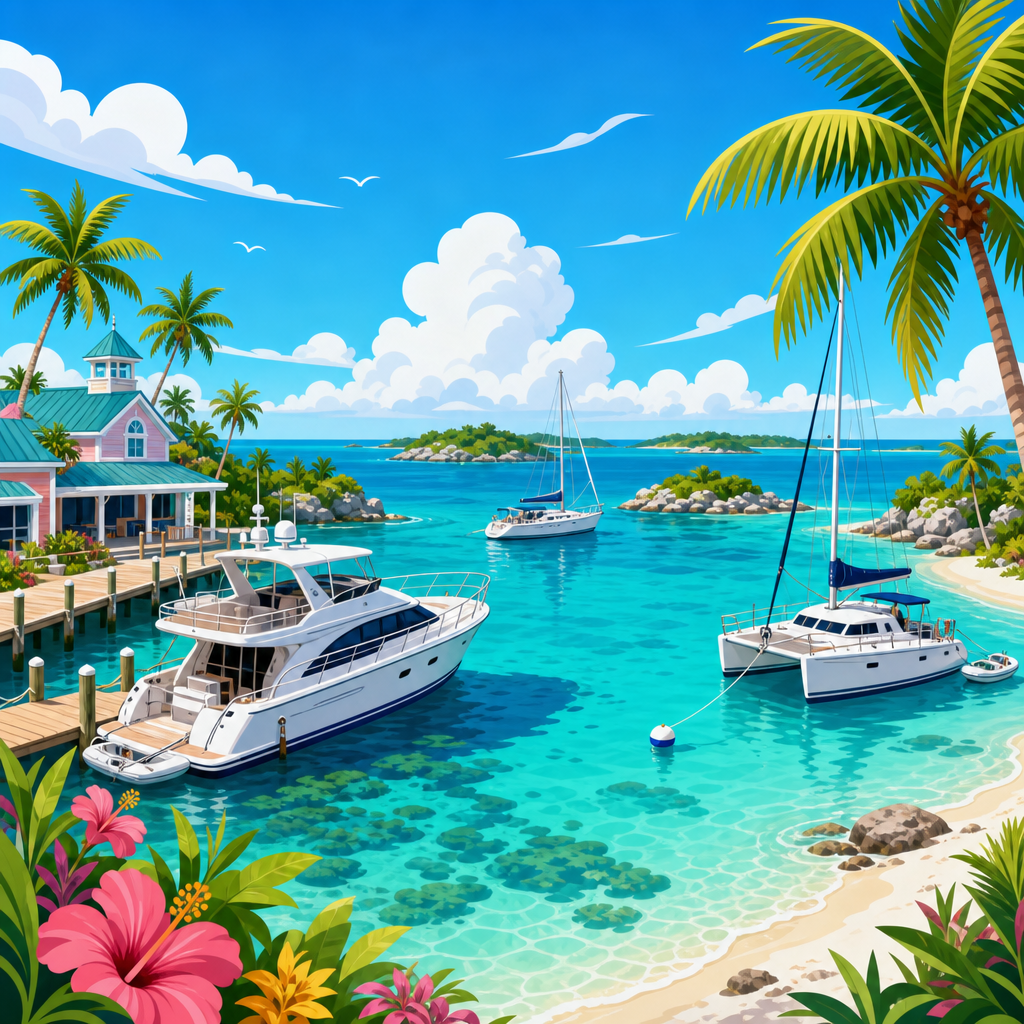
Boating in the Bahamas combines short bluewater passages, line-of-sight island hopping, and some of the clearest anchorages anywhere in the Atlantic, which is why it remains a defining destination for coastal cruising. For boaters planning a Bahamas itinerary, the practical question is not whether the islands are worth visiting, but which marinas and anchorages best fit a vessel, season, draft, and cruising style. In this guide, I cover the core hubs for cruising the Bahamas, explain how to choose between marina berths and open anchorages, and outline the route logic that experienced captains use when moving through the archipelago. The Bahamas stretches across more than 700 islands and cays, but most visiting cruisers focus on a proven chain: Bimini and the Berry Islands for first landfall, Nassau and Paradise Island for services, the Exumas for classic island hopping, Eleuthera and Harbour Island for pink-sand cruising, and the Abacos for protected sailing grounds. Understanding those zones matters because weather windows, fuel availability, customs procedures, and anchoring conditions vary significantly from one bank to another.
Key terms are worth defining upfront. A marina offers slips, fuel, shore power, water, repairs, and often customs help, making it the operational backbone of a Bahamas cruise. An anchorage is a sheltered area where you secure the boat on its own ground tackle, usually chosen for protection from wind and swell, holding quality, and dinghy access. Coastal cruising in the Bahamas means moving in relatively short stages, reading the banks and cuts carefully, and matching daily runs to tides, visibility, and fronts rather than forcing a rigid schedule. This matters because the Bahamas rewards flexibility and punishes assumptions. I have planned routes here around winter cold fronts, watched a comfortable lee anchorage turn exposed overnight, and learned that the best trip is the one built around safe margins, not just postcard stops. A strong hub strategy starts with the places that reliably provide shelter, provisions, repairs, and onward routing options.
How to Plan a Bahamas Island-Hopping Route
The best Bahamas cruising routes are built around entry point, vessel draft, fuel range, and time available. For most boats arriving from South Florida, Bimini is the easiest first stop because the Gulf Stream crossing from Miami or Fort Lauderdale is comparatively short, customs is straightforward, and marinas such as Resorts World Bimini give immediate dockage and fuel. From there, many crews decide between two broad directions. One path runs east and southeast toward Nassau, the Exumas, and eventually Long Island or the southern islands. The other moves north and east toward Grand Bahama and the Abacos. These are different cruising grounds. The Exumas deliver dramatic anchorages and remote cays, while the Abacos offer more all-weather routing, denser settlement patterns, and easier day-hop logistics.
Timing is critical. The prime Bahamas boating season generally runs from late November through April, when humidity is lower and hurricane risk is minimal, but winter also brings frequent cold fronts. Those fronts rotate wind from east to south, west, and then north, which changes anchorage suitability fast. A marina reservation near a front boundary can be more valuable than a perfect anchorage review. I typically advise crews to treat marinas as strategic reset points: enter, fuel, refill water, reprovision, review weather, then continue. In the Bahamas, especially on the banks, bright overhead sun is not just pleasant; it is a navigation aid. Reading water color to avoid coral heads and shallow patches is materially easier between late morning and early afternoon with the sun behind you.
Charts and local references should be layered, not singular. Serious cruisers use updated electronic charts from Navionics or Garmin, official notices, Explorer Chartbooks for the Bahamas, and active route reports from marina operators and fellow cruisers. Depth can shift, markers can disappear, and storm impacts can change approaches. Mobile coverage is often decent near settled islands, but not universal, so downloaded charts matter. If you are building a subtopic plan for broader coastal cruising and island hopping, the Bahamas is the ideal case study because it teaches the fundamentals clearly: stage your passages, know your bailouts, respect weather windows, and never confuse a famous stop with a safe stop under current conditions.
Best Bahamas Marinas for Fuel, Repairs, and Logistics
The best marinas in the Bahamas are not all luxury resorts; the strongest choices are the ones that solve operational problems. In Bimini, Resorts World Bimini Marina is a common arrival base because it offers customs access, fuel, and a straightforward start after a stream crossing. In Nassau, Nassau Harbour Club Marina and Hurricane Hole Superyacht Marina at Paradise Landing are major service centers. Nassau matters because it is one of the easiest places in the country to restock parts, arrange technicians, top up provisions, and regroup before heading into thinner-service cruising grounds. For larger yachts, Atlantis Marina on Paradise Island provides premium berths and strong resort amenities, but many cruising boaters choose function over spectacle and use Nassau primarily for logistics.
Farther south, Highbourne Cay Marina is one of the most useful gateways to the Exumas. It sits at the north end of the Exuma chain, has reliable fuel, a well-stocked market by island standards, and easy access to nearby anchorages if slips are full. Staniel Cay Yacht Club is another iconic stop, not because it is the cheapest option, but because it places you in the middle of one of the most active cruising zones in the country, close to Thunderball Grotto, Big Major Cay, and multiple protected anchorages. Warderick Wells does not function like a conventional marina, but Exuma Cays Land and Sea Park moorings there should be treated with the same advance-planning seriousness because availability is limited and demand is high.
In Eleuthera and Harbour Island, Romora Bay Resort & Marina and Valentine’s Marina are practical bases for exploring nearby cuts and beaches while still having dock support. In the Abacos, Marsh Harbour Marina, Boat Harbour Marina, and Green Turtle Club are central names because the Sea of Abaco supports true island hopping with shorter, more protected runs. Since Hurricane Dorian, conditions and available services have evolved, but the region remains one of the best cruising grounds in the hemisphere. Choosing among marinas comes down to purpose, and the comparison below reflects how experienced crews evaluate them.
| Marina | Area | Best For | Key Advantage |
|---|---|---|---|
| Resorts World Bimini | Bimini | First landfall | Easy arrival after Florida crossing |
| Hurricane Hole | Nassau | Repairs and reprovisioning | Strong service access in a major hub |
| Highbourne Cay | North Exumas | Fuel before island hopping | Excellent staging point into the Exumas |
| Staniel Cay Yacht Club | Central Exumas | Mid-cruise base | Close to major attractions and anchorages |
| Valentine’s Marina | Harbour Island | Comfort with nearby exploration | Good access to Eleuthera and island amenities |
| Marsh Harbour Marina | Abacos | Protected cruising network | Central location in the Sea of Abaco |
One caution from experience: reserve early in peak season and confirm fuel availability directly. Bahamas fuel docks can face delivery delays or weather interruptions. Ask about depth at mean low water, beam limits, power specifications, and whether customs or immigration assistance is available on site. Those details prevent the most common arrival-day mistakes.
Top Anchorages in the Bahamas for Scenic, Safe Stops
The best Bahamas anchorages combine three things: protection from the prevailing wind, good holding in sand, and a reason to go ashore or launch the dinghy. Near Nassau, anchoring options can be crowded and traffic-heavy, so many boaters move on quickly. Once in the Exumas, however, the anchorages become the trip. Highbourne Cay has useful nearby spots for waiting on weather or enjoying a first quiet night after the crossing from New Providence. Shroud Cay offers winding creeks and remarkable water clarity, but it is not simply a scenic stop; it is a tidal environment where dinghy exploration works best when timed correctly. Norman’s Cay remains popular for its beach, history, and the wrecked aircraft in shallow water, though it can be rolly in the wrong conditions.
Warderick Wells is one of the most celebrated stops in the entire Bahamas because the mooring field sits inside a dramatic horseshoe anchorage with high protection and direct access to trails and park waters. It rewards early booking and careful instructions from the park staff. Staniel Cay’s surrounding anchorages are convenient and social, but they also bring traffic, tour boats, and surge near popular sites. Big Major Spot, often called Pig Beach, is famous, yet many experienced cruisers prefer using it as a short visit rather than an overnight if conditions are unsettled. Compass Cay and nearby cuts can be beautiful and manageable, but current awareness is essential.
Outside the Exumas, Spanish Wells and nearby Eleuthera anchorages are valued for easier provisioning and good access to fishing grounds. Harbour Island offers attractive stops, though space and surge can be limiting. In the Abacos, anchorages around Hope Town, Manjack Cay, Great Guana Cay, and Green Turtle Cay provide the kind of short-hop variety that suits families and mixed-experience crews. What makes these places strong anchoring grounds is not only beauty but repeatable practicality. You can move ten to twenty miles, drop in sand, swim in clear water, and still reach supplies or a marina if weather shifts. That combination is what makes the Bahamas the benchmark for island hopping under power or sail.
Regional Cruising Highlights: Bimini, Exumas, Eleuthera, and Abacos
Each Bahamas cruising region has a distinct character, and matching the area to your boat and goals improves the entire trip. Bimini is fast-access cruising. It is ideal for a first Bahamas run, a long weekend crossing, or a shakedown before committing deeper into the islands. The water is vivid, the fishing is excellent, and the logistics are simple, but it does not provide the broad cruising depth of the larger island groups. The Exumas are the signature itinerary because they deliver dozens of cays, anchorages, beaches, snorkeling sites, and national park waters over a manageable linear route. If a crew asks me where to spend ten to fourteen days for maximum scenery and classic Bahamas atmosphere, I usually say Nassau to the central Exumas.
Eleuthera and Harbour Island are better for boaters who want a mix of island culture, marinas, beaches, and easier access to settlements. The cuts along Eleuthera require attention because current can run hard, but the reward is variety: Atlantic beaches, bankside anchorages, fishing communities, and high-quality dining in a relatively compact area. Spanish Wells is especially useful for practical cruising because local marine services, groceries, and fuel support longer stays. The Abacos, by contrast, are often the most forgiving area for pure coastal cruising. The Sea of Abaco creates a broad protected cruising ground where day trips between cays are short, making it easier to manage weather and less stressful for less experienced crews.
For sailors, the Abacos frequently feel more relaxed than the exposed legs required elsewhere. For powerboaters, the Exumas can be more visually dramatic and rewarding if fuel planning is solid. For families, the mix of easy beaches, calm anchorages, and walkable settlements in both the central Exumas and Abacos is hard to beat. The broader lesson for coastal cruising and island hopping is that no single route is objectively best. The best route is the one whose marina network, anchorage spacing, and weather protection align with your vessel and your crew’s tolerance for motion, complexity, and remoteness.
Navigation, Weather, and Safety for Bahamas Boaters
Safe boating in the Bahamas depends on conservative decision-making more than advanced equipment. Draft matters everywhere, but especially on banks routes and when entering lesser-marked anchorages. If your boat draws more than five feet, route selection becomes more exacting, and tide planning grows more important. Good light is essential for eyeball navigation over coral heads and sand bores. Departing too early can be less safe than waiting for the sun to rise high enough to reveal color changes. I have delayed departures for exactly that reason, and every time it proved wise. Electronics help, but in the Bahamas they are supplements, not substitutes, for visual confirmation.
Weather deserves equal respect. The Gulf Stream crossing should be attempted only with favorable wind against current conditions, ideally light southerly components or calm periods, not strong northerlies. Within the islands, winter fronts are the main trip disruptor. Before every move, check NOAA marine forecasts, Windy, PredictWind, and local marina guidance, then ask a simple question: if the wind backs north tonight, is this anchorage still acceptable? If the answer is no, change the plan while daylight and options remain. Ground tackle should be sized appropriately, snubbers rigged correctly, and swing room evaluated realistically. Sand usually provides excellent holding, but grass and rock patches can reduce set quality. Diving the anchor in clear water is often possible and worth doing. Finally, clear in properly, carry cruising permits and fishing permits as required, respect no-take park rules, and treat local guidance as operationally valuable. In the Bahamas, local knowledge routinely saves time, money, and avoidable risk.
Boating in the Bahamas is best when approached as a sequence of smart staging points rather than a checklist of famous names. Strong marinas in Bimini, Nassau, Highbourne Cay, Staniel Cay, Eleuthera, and the Abacos give you fuel, repairs, shelter, and planning time. Well-chosen anchorages in the Exumas, around Eleuthera, and across the Sea of Abaco provide the scenery and freedom that make island hopping unforgettable. The core principles are consistent throughout the country: pick routes that match your draft and range, move in good light, respect fronts and cuts, and use marinas strategically instead of reactively.
For anyone building a broader coastal cruising plan, the Bahamas is the ideal hub because it teaches route discipline while rewarding exploration at every stage. You can cross from Florida, clear in efficiently, and shape a trip around protected day hops, remote beaches, fishing stops, resort nights, or long stays at anchor. That flexibility is the main benefit. Whether you want a first international run or a multiweek cruise through classic turquoise shallows, the right combination of marinas and anchorages turns the Bahamas from a dream destination into a manageable, repeatable cruising ground. Start with a realistic route, reserve key slips early, watch the weather hard, and let the islands set the pace.
Frequently Asked Questions
What are the best marinas in the Bahamas for cruising boaters who want convenience, services, and easy access to the islands?
The best marina depends on where you plan to cruise, your boat’s draft and beam, and whether you prioritize full-service amenities or a strategic jumping-off point. For many boaters arriving from Florida, Nassau and Paradise Island marinas often serve as a practical first major stop because they offer fuel, provisioning, repairs, customs access nearby, and good transportation links. These marinas are useful for crews who want to reset after the Gulf Stream crossing, top off tanks, and make any final itinerary decisions before heading into the Exumas or farther south.
In the Exumas, marinas such as those around Highbourne Cay, Staniel Cay, and Emerald Bay are popular because they place you close to some of the most sought-after cruising grounds in the country. Highbourne works especially well as a northern Exumas gateway, while Staniel Cay is ideal for boaters who want a blend of dockage, social atmosphere, fuel, basic supplies, and access to famous nearby anchorages and attractions. Emerald Bay, in Great Exuma, appeals to crews looking for a more resort-style marina experience with robust facilities and better support for larger yachts.
Farther afield, Marsh Harbour in the Abacos remains one of the key marina hubs for boaters exploring that island chain, thanks to its provisioning options, marine services, and access to protected cruising routes. Across the Bahamas, the strongest marina choices typically share the same traits: reliable depths at approach, weather protection, fuel availability, dockage appropriate to your vessel size, and proximity to grocery stores, laundry, repairs, and transport. In short, the “best” marinas are usually the ones that fit your route and reduce logistical friction, not simply the most luxurious ones.
How do I choose between staying in a marina and anchoring out in the Bahamas?
Choosing between a marina and an anchorage comes down to weather, boat systems, crew preferences, and the kind of trip you want to have. Marinas are the better choice when you need fuel, water, shore power, secure dock access, maintenance help, easy provisioning, or a stable base during a frontal passage or strong wind event. They are also appealing for families, newer cruisers, and crews on tighter schedules because they simplify everyday logistics and can make arrivals and departures less stressful.
Anchoring, on the other hand, is one of the great rewards of boating in the Bahamas. The country is famous for clear water, good sand holding in many locations, and spectacular natural settings that marinas simply cannot match. If your boat is set up for self-sufficient cruising and your crew is comfortable monitoring weather, tides, swing room, and anchor holding, anchoring can give you more freedom, privacy, and access to beaches, reefs, and remote cays. It is often the preferred choice for cruisers who value quiet nights, lower daily costs, and the ability to shape their itinerary around sea conditions rather than reservations.
In practice, most experienced Bahamas cruisers do both. They use marinas strategically for arrival days, resupply, bad-weather windows, and occasional comfort, then anchor whenever conditions are favorable. That hybrid approach usually delivers the best experience: marina support when you need it, and anchorage freedom when you do not. The key is to make each decision based on forecast exposure, bottom type, tidal range, nearby traffic, and your crew’s confidence level rather than habit alone.
What are the best anchorages in the Bahamas, and what makes a good anchorage here?
The best anchorages in the Bahamas are typically those with good protection from the prevailing wind direction, clear approach paths, sand bottoms with reliable holding, and enough room to swing safely with changing tides and shifts. In the Exumas, many boaters gravitate toward anchorages near Highbourne Cay, Warderick Wells, Staniel Cay, Black Point, and Great Guana Cay because these areas combine natural beauty with practical cruising advantages. Some offer excellent shelter and easy dinghy access, while others are prized for beaches, snorkeling, nearby settlements, or access to cuts and banks routes.
In the Abacos, boaters often look for protected anchorages near cays and harbors that allow relatively easy movement between settlements, provisioning stops, and reef areas. What makes these areas especially attractive is the line-of-sight cruising and the ability to choose between more social anchorages and quieter out-of-the-way spots depending on conditions. Across the Bahamas, the clearest and most visually stunning anchorage is not always the safest overnight choice, so it is important to separate postcard appeal from practical shelter.
A good Bahamian anchorage should first be evaluated for exposure. Wind direction, fetch, current, tidal flow, and any nearby cuts can dramatically affect comfort and holding. Water clarity helps with eyeball navigation, but it can also lure boaters into shallower water than their draft safely allows, especially at low tide. Bottom composition matters as well; clean sand is usually preferred, while grass, rock, or marl can be less predictable. The best anchorages are the ones where your vessel lies securely, your exit plan is clear, and the weather trend supports a restful night rather than a beautiful but anxious one.
How do draft, tides, and weather affect marina and anchorage choices in the Bahamas?
Draft, tides, and weather are three of the biggest factors in planning a Bahamas itinerary because they directly influence where you can enter, where you can safely anchor, and how comfortably you will spend the night. The Bahamas has many shallow banks, narrow cuts, shifting sand areas, and marina entrances that may be straightforward for a moderate-draft vessel but limiting for a deeper boat. If your draft is on the higher side, route planning becomes much more selective, and you will often need to time arrivals for tide and daylight while ruling out otherwise attractive stops.
Tides in the Bahamas are not extreme compared with some cruising regions, but they still matter. A foot or two can make the difference between an easy entry and an uncomfortable or unsafe one, particularly in skinny anchorages, at fuel docks, or on secondary routes between cays. Tidal current can also be significant near cuts and passes, affecting both anchoring behavior and docking conditions. For that reason, many prudent captains prefer to approach unfamiliar marinas and anchorages in good overhead light, with the sun behind them when possible, and with current and tide factored into the plan rather than treated as an afterthought.
Weather is equally important because many Bahamian anchorages are highly directional. A spot that is calm and idyllic in settled easterlies may become untenable with a northerly component or when a front passes through. Marina selection can also hinge on weather protection, especially in winter, when fronts can move through regularly. The most effective approach is to match your stop to the current pattern and the likely forecast over the next 12 to 48 hours. That means thinking beyond arrival conditions and asking a simple question: will this marina or anchorage still make sense if the wind clocks, strengthens, or builds a swell overnight?
When is the best time to go boating in the Bahamas, and how far ahead should I plan marinas and anchorages?
For most cruising boaters, the best time to explore the Bahamas is from late fall through spring, when temperatures are more comfortable and the hurricane season is not a factor. That said, “best” does not mean uniformly easy. Winter brings the prime cruising season, but it also brings cold fronts, shifting winds, and greater competition for slips in popular marinas. Spring often offers a very attractive balance of pleasant weather, good visibility, and a cruising rhythm that many boaters find ideal, especially in the Exumas and Abacos.
Advance planning matters most for marinas in well-known hubs, during holiday periods, and when traveling with a larger yacht or deeper-draft vessel that has fewer suitable options. If a stop is central to your route for fuel, water, customs convenience, or weather refuge, it is smart to reserve early rather than assume space will be available. For anchorages, planning is less about reservations and more about having several weather-appropriate alternatives. Good cruisers do not build an itinerary around a single perfect anchorage; they create a flexible sequence of primary, secondary, and fallback options based on exposure and depth.
The strongest Bahamas itineraries are intentionally adaptable. You may plan around marquee locations, but your actual day-to-day success usually comes from leaving room for forecast changes, marina availability, sea state, and your crew’s energy level. In other words, plan the framework early, especially for key marina stops, but keep the execution flexible. The boaters who enjoy the Bahamas most are usually the ones who prepare thoroughly, move in daylight, and let conditions guide the final choice between dock, mooring, and anchor.