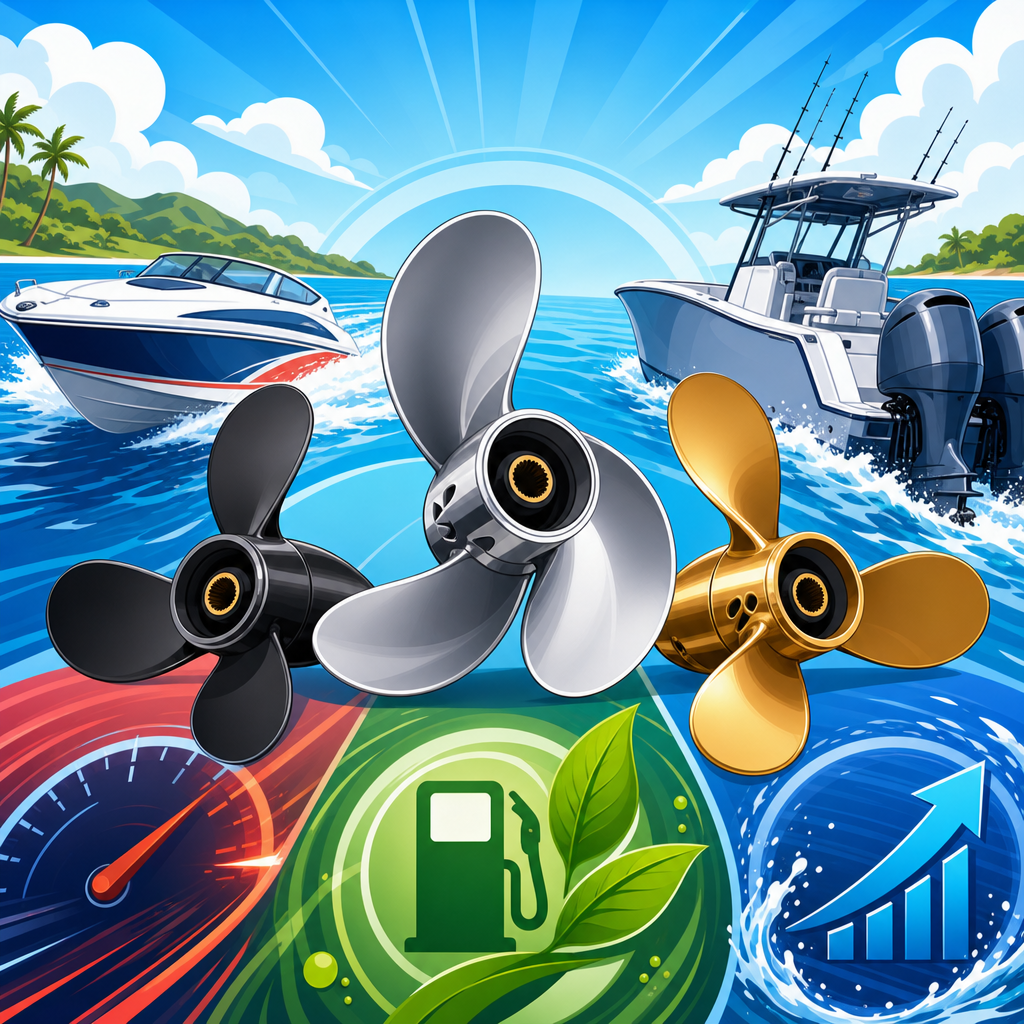
Choosing the best propellers for speed, fuel efficiency, and performance starts with understanding how propeller and steering maintenance affect every mile on the water. A boat propeller converts engine power into thrust, while the steering system translates helm input into direction and control. In practice, these two systems work as one. A perfectly matched stainless steel prop can still underperform if hydraulic steering has play, cable steering binds, or the lower unit is misaligned. I have seen boats gain two knots and improve fuel burn simply by correcting propeller pitch selection, balancing blades, and removing steering slop that forced constant course corrections. For owners, this topic matters because the right propeller improves acceleration, top-end speed, cruising economy, and handling, while disciplined maintenance prevents vibration, cavitation damage, gearcase strain, and unsafe steering response. This hub page explains the key propeller types, the measurements that matter, common maintenance tasks, steering system care, troubleshooting methods, and the replacement decisions that have the biggest real-world effect on performance.
Propeller terminology is straightforward once you use it in context. Diameter is the width of the circle the blades make in rotation. Pitch is the theoretical forward travel in one revolution with no slip. Rake describes how far blades angle aft, which influences bow lift and grip. Cup is the curled lip at the blade edge that helps reduce ventilation and can effectively add pitch. Slip is the difference between theoretical and actual travel through water, and some slip is normal. On the steering side, common systems include mechanical cable steering, hydraulic steering, and power-assisted hydraulic setups on larger or high-horsepower boats. A maintenance-first approach connects all of these terms to outcomes: faster planing, steadier tracking, lower rpm at cruise, better reverse control around docks, and longer service life for expensive driveline parts.
How propeller design changes speed, efficiency, and handling
The best boat propeller is not a universal model; it is the prop that lets your engine reach the manufacturer’s recommended wide-open-throttle range while delivering the handling traits your hull needs. Aluminum propellers are common on pontoons, smaller fishing boats, and general-purpose runabouts because they are affordable and absorb impact better in light strikes. Stainless steel propellers cost more, but they flex less under load, usually hold pitch more accurately at higher speeds, and often improve acceleration and grip in turns. On bass boats, bay boats, and offshore center consoles, that stiffness is often worth the price because it translates into cleaner holeshot, stronger midrange, and better top speed. Three-blade propellers typically favor top-end speed and lighter steering feel, while four-blade propellers often improve stern lift, rough-water bite, planing consistency, and low-speed control, though they can reduce peak speed depending on setup.
Blade geometry matters as much as material. High-rake designs can help lift the bow on performance hulls, reducing wetted surface and increasing speed. More cup can reduce ventilation when trimming up or running in choppy water. Larger diameter often helps heavier boats carry load, especially when combined with lower pitch. For example, a loaded offshore boat with a hardtop, full fuel, and three anglers may perform better on a slightly lower-pitch four-blade stainless prop than on the higher-pitch three-blade that worked during a light-load test run. Conversely, a light flats boat chasing maximum speed may benefit from a three-blade stainless prop with aggressive rake. In every case, propeller choice must match engine output, gear ratio, hull design, and the boat’s normal load. That is why prop testing is standard practice among experienced owners and dealers rather than guesswork.
How to choose the right propeller size and material
The fastest way to choose correctly is to start with factory data and verify on the water. Check the engine maker’s recommended full-throttle rpm range in the owner’s manual. If an outboard is rated for 5,500 to 6,000 rpm and your current prop only allows 5,200 with a normal load, the prop is overpitched, the engine is lugging, and both acceleration and efficiency can suffer. As a rule of thumb, changing pitch by one inch often changes engine speed by about 150 to 200 rpm, though gear ratio, hull type, and prop design can shift that number. If rpm is too high, increase pitch; if too low, decrease pitch. Diameter changes are more nuanced and are often tied to the specific prop family. This is why it is better to compare tested models from Mercury, Yamaha, Suzuki, Honda, Solas, or PowerTech rather than assuming all 19-pitch props behave the same.
Material choice depends on use. Aluminum is practical for modest horsepower, inland lakes, rental fleets, and owners who prioritize lower replacement cost. Stainless steel is usually the better long-term performance option for larger outboards and sterndrives because it resists deflection and damage from exhaust heat and sustained load. In my experience, many owners notice the biggest improvement when moving from a stock aluminum prop to a well-matched stainless model rather than when making small pitch changes within the same basic design. However, stainless transfers impact energy more directly to the driveline, so operating in shallow, rocky water may justify staying with aluminum or carrying a spare. Composite and modular-hub systems also have value for specific applications where easy field repair matters.
| Propeller option | Best use case | Main advantage | Main tradeoff |
|---|---|---|---|
| 3-blade aluminum | Small runabouts, pontoons, budget replacement | Low cost and acceptable all-around performance | More flex, less grip at speed |
| 3-blade stainless steel | Bass boats, bay boats, performance hulls | Strong top speed and efficient power transfer | Higher price, harsher impact loads |
| 4-blade stainless steel | Heavy loads, towing, offshore chop | Better bite, midrange, and handling stability | May reduce peak speed slightly |
| Large-diameter lower-pitch prop | Workboats, heavy pontoons, cruising loads | Improved thrust and easier planing | Lower top-end rpm and speed potential |
Propeller maintenance tasks that protect performance
Propeller maintenance should be routine, not occasional. Remove the propeller several times each season or at minimum during annual service. Inspect for fishing line behind the hub because line can cut the prop shaft seal, letting water enter the gearcase. I have pulled seemingly clean props and found tightly wound monofilament already staining the grease. Check blades for nicks, bent edges, cracks, pitting, and missing cup. Even minor damage increases vibration, reduces fuel efficiency, and can accelerate wear in bearings and gears. A prop shop can often repair stainless steel blades to precise tolerances, including pitch and balance correction, while damaged aluminum is sometimes cheaper to replace than to rebuild depending on severity.
Grease the prop shaft with a marine-grade waterproof grease before reinstalling the propeller, and always use the correct thrust washer, spacer, tab washer, and cotter pin or locking hardware specified by the manufacturer. Incorrect hardware can cause poor seating, vibration, or hub issues. If your prop uses a rubber hub or replaceable hub kit, inspect for signs of hub slip such as sudden rpm increase without matching boat speed, especially after impact or hard acceleration. During haul-out, clean marine growth from blades and the gearcase. Barnacles and heavy fouling dramatically increase drag and can change balance enough to feel through the helm. For trailered boats, this is easy prevention; for slipped boats, regular diving service can protect both propeller performance and steering response.
Steering maintenance and why it belongs in the same conversation
Propeller and steering maintenance belong together because inefficiency in one often masks faults in the other. Mechanical cable steering requires periodic inspection for corrosion, kinks, stiff travel, and inadequate lubrication at manufacturer-approved points. If the wheel has tight spots or the engine resists turning at the dock, do not ignore it. Cable seizure is common on older outboards and can turn a simple day on the water into a towing job. Hydraulic steering needs checks for fluid level, leaks at fittings and seals, air in the system, and ram corrosion. Any spongy helm feel, uneven steering effort, or drifting under way suggests bleeding, seal service, or alignment checks are due. On high-speed boats, steering slop is not just annoying; it reduces confidence, causes overcorrection, and can hide chine-walk setup issues that owners incorrectly blame on the propeller alone.
Torque steer is another crossover issue. Some right-hand rotating propellers create steering pull, especially on single-outboard boats with cable steering. Trim angle, engine height, and prop design all influence it. Often the cure is not a new steering system but a combination of proper trim tab anode adjustment, engine setup verification, and selecting a propeller with characteristics better suited to the hull. Still, many owners moving to hydraulic steering report a dramatic improvement in control and reduced fatigue, particularly on boats above 150 horsepower. The maintenance standard is simple: no leaks, no binding, no excessive free play, and immediate correction of any change in helm feel.
Troubleshooting common propeller and steering problems
When a boat loses speed or economy, start with a controlled baseline. Record GPS speed, engine rpm, fuel burn if available from NMEA 2000 data or engine instrumentation, trim setting, water conditions, passenger load, and fuel level. If wide-open rpm drops over time, check for hull fouling, waterlogged gear in the boat, hot-weather density effects, damaged blades, and engine health issues before buying another propeller. Vibration usually points to blade damage, imbalance, spun hub symptoms, bent prop shaft, or fouling. Ventilation feels like the propeller suddenly loses bite in turns or in chop; causes include engine mounted too high, damaged cup, excessive trim out, or a prop design unsuited to the hull. Cavitation, properly speaking, is vapor bubble formation on the blade surface from pressure changes and often leads to erosion; many owners use the term when they actually mean ventilation.
Steering symptoms also have patterns. Helm turns but engine response lags: inspect cable connection points or hydraulic air intrusion. Wheel effort increases after storage: check for corrosion at the tilt tube or cable end. Boat wanders constantly at cruise: inspect steering play, engine mounting bolts, trim tab anode position, and propeller balance. Pull to one side only during acceleration may be normal prop torque, but severe pull deserves setup review. A systematic troubleshooting process saves money because it separates setup problems from component failure. Many expensive prop swaps fail simply because the root problem was marine growth, poor engine height, or worn steering hardware.
When to repair, upgrade, or replace components
Repair is sensible when the underlying design still fits the boat. A quality stainless steel prop with minor edge damage, bent cup, or small balance issues is usually worth professional repair by a reputable prop shop using pitch blocks and computerized balancing. Replacement makes more sense when the prop is cracked, heavily thinned by repeated repairs, wrong for the engine rpm range, or consistently poor for your actual use. Upgrade decisions should be tied to measurable goals. If you want lower cruise rpm and better fuel efficiency on a lightly loaded dual-console, test a prop that keeps the engine in range at full throttle while reducing slip at your normal cruise speed. If you tow skiers or carry heavy family loads, prioritize holeshot and grip over one or two mph of top speed.
For steering, replace aging cable systems when stiffness returns after service, corrosion is advanced, or power levels exceed what the current system comfortably manages. Upgrade to hydraulic steering for higher horsepower, offshore use, and any application where precise low-effort control is a safety and comfort priority. Preventive replacement of seals, hoses, and worn linkages is cheaper than emergency failure. The main benefit of this hub topic is simple: well-chosen propellers and well-maintained steering turn the same engine into a better boat. Use this page as your starting point, then inspect your current setup, compare real performance numbers, and schedule the propeller and steering maintenance that will deliver safer handling, lower operating cost, and more confident days on the water.
Frequently Asked Questions
How do I choose the best propeller for speed, fuel efficiency, and overall performance?
Choosing the right propeller starts with matching the prop to your specific boat, engine, load, and how you actually use the boat. There is no single “best” prop for every setup because speed, fuel economy, hole shot, cruising comfort, and handling all depend on the balance between pitch, diameter, blade count, blade design, material, and engine operating range. A propeller that produces excellent top-end speed on a light bass boat may be completely wrong for a heavier center console, pontoon, or offshore fishing rig.
The first thing to confirm is your manufacturer’s recommended wide-open-throttle RPM range. A properly matched prop should allow the engine to reach that target range under normal load conditions. If the engine cannot reach the proper RPM, the prop is likely over-pitched, which can hurt acceleration, strain the engine, and reduce efficiency. If the engine over-revs too easily, the prop may be under-pitched, which can sacrifice speed and control. In simple terms, pitch affects how far the boat tries to move forward per revolution, while diameter and blade shape influence lift, grip, and load-carrying ability.
Material also matters. Aluminum props are affordable, practical, and fine for many recreational boaters, but stainless steel props generally deliver better performance because they flex less under load. That means more precise blade shape, better bite in turns, stronger acceleration, and often improved top speed. For boaters focused on maximizing speed and handling, stainless steel is usually the benchmark. For those prioritizing budget, occasional use, or easier replacement after impact, aluminum can still be a smart choice.
You also need to think about your boating priorities. If top speed is the goal, a performance-oriented stainless prop with the right pitch may be ideal. If fuel efficiency and smooth midrange cruising matter most, a prop designed for reduced slip and stable cruise RPM can be a better fit. If you carry heavy loads, pull skiers, or need strong low-speed thrust, a lower-pitch prop or a four-blade design may improve hole shot and handling. The smartest approach is to prop the boat for its real-world mission, not just one number on a GPS screen.
Finally, propeller performance cannot be separated from the condition of the boat’s steering and drivetrain. Even the best prop will underperform if hydraulic steering has play, cable steering is stiff, trim is inconsistent, or the lower unit is not aligned properly. Prop selection works best when the entire control system is in good order, because thrust and steering response are closely connected on the water.
What is the difference between 3-blade and 4-blade propellers, and which is better?
A 3-blade propeller is the traditional choice for many boats because it often delivers a strong balance of speed, efficiency, and all-around usability. In many applications, a 3-blade prop provides the best top-end performance because it creates less drag than a comparable 4-blade design. That makes it especially popular for boaters who prioritize maximum speed and solid cruising efficiency on lighter hulls or boats that already plane easily.
A 4-blade propeller, by contrast, usually offers better grip in the water, smoother operation, improved holding power in turns, and stronger performance under heavy load. Many boaters notice quicker planing, better low-speed control, reduced ventilation, and more predictable handling in rough water when switching to a 4-blade. These props are often favored on boats that tow water sports, run offshore, carry multiple passengers, or need improved stern lift and midrange bite.
The tradeoff is that a 4-blade prop sometimes gives up a little top speed compared with a properly matched 3-blade, although modern prop designs have narrowed that gap significantly. In real-world use, many owners are willing to sacrifice 1 to 3 mph at the top end in exchange for better acceleration, stronger cruise manners, and improved handling confidence. If your boat struggles to stay hooked up in turns, feels sluggish getting on plane, or needs better control at varying trim settings, a 4-blade may be the better performer overall even if it is not the absolute fastest option.
The best choice comes down to use case. A 3-blade is often ideal for speed-focused recreational boating where load is moderate and conditions are predictable. A 4-blade makes more sense when you want better traction, towing performance, rough-water control, or consistent handling with heavier loads. The only reliable way to know which is better for your setup is to compare tested props on your exact boat with the steering system, engine height, and load condition all dialed in correctly.
How much do steering and lower unit condition affect propeller performance?
They affect it far more than many boat owners realize. A propeller does not work in isolation. It converts engine power into thrust, but the quality of that thrust depends heavily on how stable, aligned, and controllable the entire system is. If the steering has excessive play, if hydraulic steering is spongy, if cable steering binds, or if the lower unit is damaged or misaligned, the propeller cannot deliver its intended performance consistently. What feels like a propeller problem is often partly a steering or rigging problem.
For example, steering slack can make the boat feel vague or unstable at speed, especially with higher-performance stainless props that generate stronger steering feedback. Binding in the steering system can make trim response feel inconsistent and can mask how the prop is really carrying the hull. A lower unit with alignment issues, damaged skeg geometry, or worn components can disturb water flow into the propeller and reduce efficiency, bite, and directional stability. That can lead to symptoms such as blowout in turns, poor tracking, uneven steering feel, and disappointing top-end speed.
Even small mechanical issues matter. A nicked prop blade, bent shaft, loose engine mounts, or worn steering linkage can introduce vibration, slip, and inefficiency that show up as lost RPM, increased fuel burn, and reduced confidence at cruise or wide-open throttle. If a boat owner changes props repeatedly without first verifying steering integrity and lower unit condition, they may never get accurate results from prop testing. The prop may be capable of better performance, but the rest of the system is preventing it.
That is why serious propeller tuning should always include a full inspection of steering components, engine mounting, trim function, prop shaft condition, and lower unit health. When the helm input is precise and the gearcase is clean and properly aligned, the prop can maintain a cleaner bite, the hull can respond more predictably, and speed and efficiency numbers become more meaningful. In short, steering and lower unit condition are not side issues; they are foundational to propeller performance.
Is stainless steel really better than aluminum for propeller performance?
In most performance-focused situations, yes. Stainless steel propellers are generally superior to aluminum when the goal is maximizing speed, efficiency, durability, and handling precision. The biggest reason is strength. Stainless steel is much stiffer than aluminum, so the blades maintain their intended shape under load rather than flexing as engine power rises. That preserved blade geometry allows the propeller to bite the water more effectively, convert power more efficiently, and maintain more consistent performance through acceleration, cruising, and turns.
Because stainless blades flex less, they are also better suited to advanced blade designs, thinner profiles, aggressive cupping, and performance-tuned geometries. Those design advantages often translate into stronger hole shot, better midrange, sharper cornering grip, reduced slip, and higher top speed. On many boats, switching from aluminum to stainless results in a more responsive and planted feel, especially when trimming up or operating in rougher water. The difference can be dramatic on heavier boats or rigs with more horsepower.
That said, aluminum still has a place. It is less expensive, widely available, and perfectly suitable for many casual boaters. It can also be more forgiving in some impact situations because it may deform before transmitting as much force to the drivetrain, though any prop strike should be inspected carefully regardless of material. For smaller engines, modest-speed applications, and budget-conscious owners, aluminum can deliver solid service. The key is understanding that aluminum often represents a value solution, while stainless is usually the higher-performance solution.
The decision should be based on boating style, engine output, and expectations. If you want the sharpest performance, the most accurate prop tuning, and better long-term resistance to blade deformation, stainless steel is usually worth the investment. If cost control matters more and your boat sees lighter-duty use, aluminum may be entirely adequate. Just remember that the benefits of stainless are most noticeable when the rest of the system, including steering, engine height, and lower unit condition, is also in proper shape.
What are the most common signs that I need a different propeller or propeller maintenance?
Several clear symptoms suggest that your current propeller is not the right match or that it needs inspection, repair, or replacement. One of the most common is incorrect engine RPM at wide-open throttle. If the engine cannot reach its recommended RPM range, the prop may have too much pitch, too much load, or hidden damage reducing performance. If it exceeds the recommended range too easily, the prop may be under-pitched or losing bite