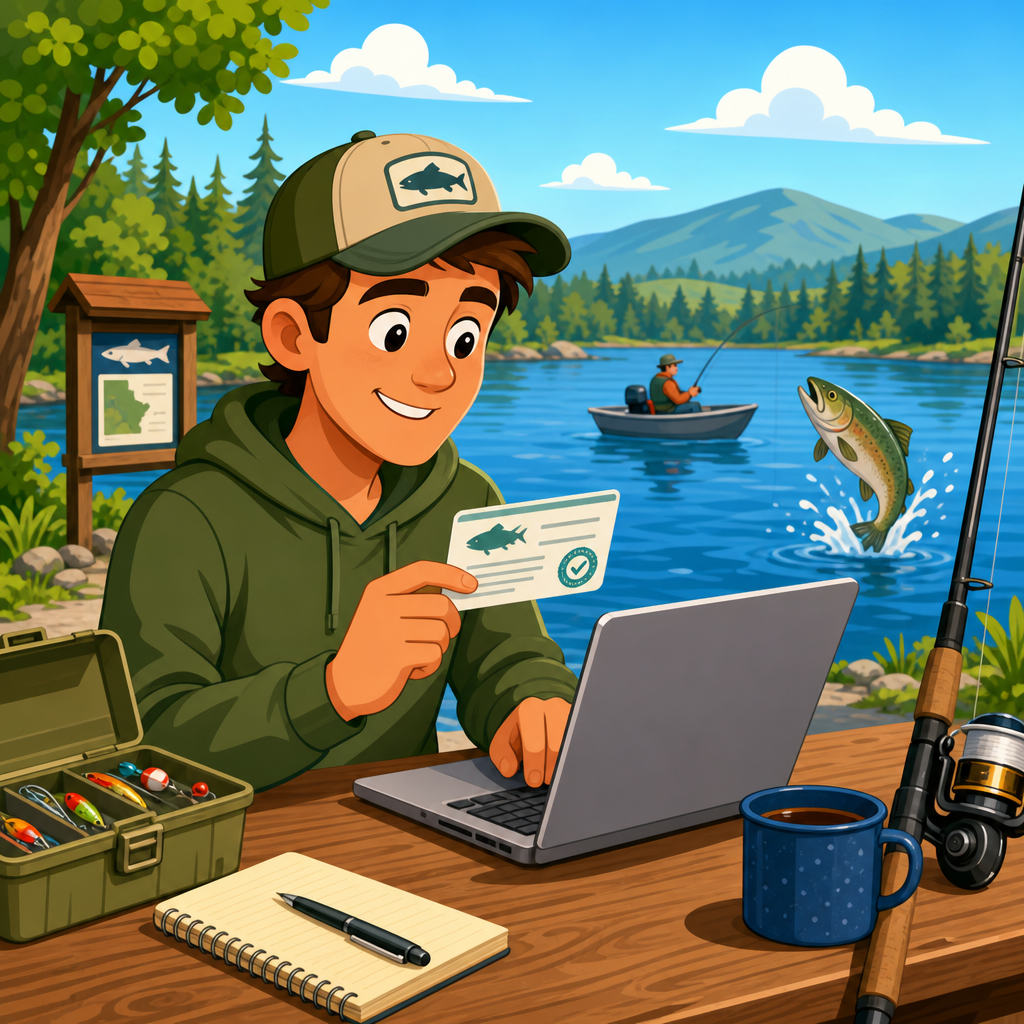
Applying for a fishing license in your state is the first legal step toward recreational angling, and it is also one of the easiest rules to get wrong if you assume every state handles licensing the same way. A fishing license is a state-issued authorization that allows a person to catch fish or other aquatic species under defined conditions, while fishing regulations are the broader rules covering seasons, size limits, catch limits, approved gear, protected waters, and species-specific restrictions. In practice, the license grants permission to participate, but the regulations determine exactly how, when, and where you may fish. I have helped boaters and anglers sort out compliance questions for years, and the confusion usually starts with one false assumption: if you bought a license before, you already know the process. In reality, states update fees, digital licensing systems, residency rules, and reporting requirements regularly.
This topic matters because fishing without the correct license can lead to citations, fines, gear confiscation, and in some cases suspension of hunting or fishing privileges through interstate wildlife violator compacts. It also matters because license revenue directly funds conservation, hatchery programs, boating access sites, habitat restoration, invasive species control, and wildlife enforcement. The U.S. Fish and Wildlife Service and state fish and wildlife agencies rely on license sales and excise-tax supported funding under the Sport Fish Restoration framework to maintain public fisheries. For anglers, understanding fishing regulations and licensing reduces legal risk and improves trip planning. For families, traveling anglers, and boat owners, this hub explains how to apply for a fishing license in your state, what documents you may need, how to choose the right license type, and which regulatory details to confirm before you launch or cast.
Know Which Agency Issues Licenses and Why State Rules Differ
The first step is identifying the correct issuing authority. In most states, fishing licenses are managed by a department of natural resources, fish and wildlife agency, wildlife commission, or parks and wildlife department. Texas uses Texas Parks and Wildlife, Florida uses the Florida Fish and Wildlife Conservation Commission, California uses the California Department of Fish and Wildlife, and New York uses the Department of Environmental Conservation. The exact agency name matters because unofficial sites often appear in search results and may charge extra processing fees. Always apply through the state agency portal or an authorized vendor listed by that agency.
Rules differ by state because fish and wildlife management is primarily a state responsibility. Each state sets its own license categories, residency standards, fee schedules, exemptions, and reporting rules. Some states require a separate freshwater and saltwater license, while others combine them or include species permits for trout, salmon, lobster, crab, or sturgeon. Some states offer automatic electronic tagging or harvest reporting, while others still require paper harvest cards for certain species. Border waters add another layer. On interstate rivers or shared lakes, reciprocal agreements may allow fishing under one state’s license in defined zones, but those agreements are narrow and should never be assumed.
From a compliance standpoint, the safest approach is simple: treat every state as a unique system. Even if you know how to get a fishing license in one state, repeat the process from the beginning when you fish elsewhere. Check the agency website, verify current regulations, and confirm whether your target waterbody has special rules beyond statewide defaults. That habit prevents most licensing mistakes.
Choose the Correct Fishing License Type Before You Apply
Most licensing problems happen because the angler bought a valid license that was still the wrong one. States typically divide licenses by residency, age, duration, fishing environment, and sometimes species or method. A resident annual fishing license is usually the standard option for in-state anglers, but many states define residency with precision. You may need to live in the state for a minimum period, hold a state driver’s license, register to vote there, or avoid claiming residency elsewhere. Students, active-duty military members, and nonresident property owners often fall into special categories with separate eligibility rules.
Duration options usually include annual, short-term, one-day, three-day, seven-day, and lifetime licenses. For visitors, short-term licenses can be cost-effective, especially when a nonresident annual license is priced substantially higher than a temporary permit. States also commonly issue combination licenses covering hunting and fishing, youth licenses, senior licenses, disability licenses, and free or reduced-fee licenses for veterans or mobility-impaired residents. In marine states, you may also need a shore-based saltwater registration, a vessel-based saltwater permit, or a no-fee registry for certain coastal fisheries.
Target species matters too. Trout stamps, salmon punch cards, migratory fish validations, and harvest record cards are common. If you plan to fish from a boat on a reservoir in the morning for bass and a stocked tailwater in the afternoon for trout, one general license may not cover both activities. I regularly advise anglers to read the fee page and the regulation digest side by side. The fee page tells you what to buy; the digest tells you whether additional validations are required for specific waters or species.
| License Question | What to Verify | Common Example |
|---|---|---|
| Residency | Minimum time in state and proof accepted | Resident annual license requires state ID |
| Duration | One-day, multi-day, annual, or lifetime options | Nonresident chooses seven-day trip license |
| Water Type | Freshwater, saltwater, or both | Coastal angler needs saltwater permit |
| Species Add-on | Stamp, tag, card, or report requirement | Trout stamp required on stocked streams |
| Exemptions | Age, disability, veteran, or free-fishing days | Youth under a set age may not need a license |
Gather the Information and Documents Needed for a State Fishing License
Once you know the correct license type, collect the information the state system will request. Most online applications ask for your full legal name, date of birth, physical address, email address, phone number, and a government-issued identification number such as a driver’s license. Residents may need additional proof, especially if the system flags a mismatch between your address and identification records. Some states assign a customer identification number the first time you register; keep it, because future renewals become much easier.
If you qualify for discounted licensing, expect documentation requirements. Seniors may need proof of age. Disabled applicants may need certification meeting the state’s statutory definition. Active-duty military members may need deployment orders or military identification. Veterans seeking reduced-fee licenses may need discharge documentation such as DD Form 214, depending on the program. For youth anglers, a parent or guardian may need to create the account or complete the transaction.
Payment methods also matter more than people expect. State portals usually accept major credit or debit cards, and some accept digital wallets. Authorized vendors may take cash, but they can have different hours, stock limits for specialty tags, or separate convenience fees. If you are applying before an early morning trip, do not assume a rural bait shop will be open or connected. Buy the license the night before and save both a digital copy and a screenshot. Cell service at ramps, mountain lakes, and marshes is unreliable, and wardens will still expect you to produce proof when required.
Apply Online, In Person, by Phone, or Through an Authorized Vendor
Online application is now the default in most states because it is fast, searchable, and available around the clock. You create an account, confirm residency and eligibility, select license type, add any necessary stamps or report cards, pay, and receive an electronic record. In many states, the license is valid immediately after purchase. Some states let you display it through an official app, while others email a printable PDF. Read the delivery instructions carefully, because a harvest card or physical tag may still need to be mailed.
In-person application remains useful for anglers who need help choosing the right product or who are buying licenses at the same time they purchase tackle, bait, or boat permits. Common vendors include sporting goods stores, bait and tackle shops, marinas, big-box outdoor retailers, and county offices. The advantage is practical guidance from someone familiar with local waters. The disadvantage is that vendor staff are not legal advisors, and they sometimes focus on transaction processing rather than special regulation details. I have seen anglers leave with a valid annual license but no trout validation because they did not mention where they planned to fish.
Some states still offer telephone sales, usually with a temporary authorization number. This can help when internet access is limited, but you should verify whether the temporary number is enough for immediate use or whether you must carry a printed follow-up document. Regardless of method, review every line before checkout. A wrong residency selection or omitted validation can turn a routine day on the water into a citation.
Read the Fishing Regulations That Apply After the License Is Issued
Getting licensed is not the final step. The most important compliance work begins after purchase, when you match your trip plan to current fishing regulations. Start with statewide rules covering seasons, daily bag limits, possession limits, minimum and maximum lengths, legal methods of take, and protected species. Then check waterbody-specific regulations. Many states maintain special regulation zones for urban lakes, tailwaters, trout streams, spawning areas, and conservation-managed reservoirs.
Pay close attention to definitions. A bag limit is the number you may harvest in one day; a possession limit can include fish in your cooler, freezer, vehicle, or lodging depending on state law. Slot limits protect fish within a certain size range, allowing harvest only below or above the slot. Gear rules can prohibit certain hooks, require circle hooks in reef fisheries, limit the number of rods, or ban live bait transport to reduce invasive species risk. In some waters, catch-and-release is mandatory or only artificial lures are legal.
Many states now issue annual regulation summaries in print and digital formats, but in-season emergency orders can override those summaries. Harmful algal blooms, low flows, disease outbreaks, or weak spawning runs can trigger temporary closures or reduced limits. Before traveling, check current advisories on the agency website. For serious trip planning, especially if you are boating to a destination fishery, verify rules twice: once when you buy the license and again the day before departure.
Understand Special Cases: Youth, Seniors, Nonresidents, Charter Trips, and Border Waters
Several common situations deserve separate attention because they cause repeated confusion. Youth exemptions are widespread, but the cutoff age varies. One state may exempt anglers under sixteen, another under twelve, and another may require a no-fee youth permit. Seniors often qualify for discounted or lifetime licenses, but the age threshold and residency requirements differ. Nonresidents should expect higher fees and fewer discount categories, although some states offer tourist packages designed for weekend or vacation anglers.
Charter and guide trips create another exception. In some saltwater states, a licensed charter vessel, party boat, or guide permit can cover paying clients while they are on board. That does not mean the same client is covered when fishing from shore, from a rented skiff, or on a different day. Ask the operator directly whether the vessel license covers passengers, what species permits are included, and whether personal harvest reporting remains the angler’s responsibility.
Border waters are especially technical. Lakes like Texoma, reservoirs on state lines, and river systems with reciprocal agreements may allow cross-border fishing under a shared or recognized license, but only in designated portions of the water. Boat ramps, tributaries, shoreline access, and attached creeks can fall outside the agreement. If your route moves between jurisdictions, carry maps, read the reciprocal language carefully, and stay conservative. Enforcement officers do not excuse assumptions based on boat location alone.
Avoid Common Mistakes and Build a Simple Compliance Routine
The most common mistakes are predictable: buying the wrong residency category, forgetting a stamp or harvest card, relying on outdated regulations, assuming a guide license covers all situations, and failing to carry proof of purchase. Another frequent error is misunderstanding renewal timing. Some states use a calendar year, some use a rolling twelve-month term, and others expire licenses on a fixed date such as March 31 or the end of February. If you fish around the renewal boundary, confirm the exact effective dates.
A practical compliance routine solves nearly all of this. First, identify the waterbody and target species. Second, confirm the responsible state agency. Third, buy the correct license and every required add-on. Fourth, save digital proof and print a backup if you will be in remote areas. Fifth, review statewide regulations and any special area rules. Sixth, check emergency orders or closures within twenty-four hours of the trip. Finally, if you are boating, make sure your vessel registration, safety equipment, and access permits are also current, because fishing compliance often intersects with broader boating laws and regulations.
This hub should serve as your starting point for every question in fishing regulations and licensing. Use it to navigate resident versus nonresident rules, freshwater and saltwater licensing, species validations, short-term permits, and state-specific regulation checks before each trip. The main benefit is straightforward: when you understand how to apply for a fishing license in your state and how to verify the rules attached to it, you protect yourself from fines, support fisheries conservation, and spend more time fishing with confidence. Before your next outing, visit your state fish and wildlife agency website, review the current regulation digest, and secure the exact license your trip requires.
Frequently Asked Questions
1. How do I apply for a fishing license in my state?
In most states, applying for a fishing license is a straightforward process, but the exact steps depend on where you live or where you plan to fish. The easiest starting point is your state wildlife agency, department of natural resources, fish and game department, or a similarly named official agency website. Most states allow online applications, and many also offer in-person purchases through sporting goods stores, bait shops, marinas, tax offices, county clerks, or licensing agents. Some states also provide phone-based purchasing options.
To apply, you usually need basic personal information such as your full name, date of birth, address, and sometimes identifying details like a driver’s license number or the last four digits of a Social Security number. Residents may need to show proof of residency, especially if they want lower resident pricing. After you select the correct license type, pay the required fee, and confirm your information, you will often receive a digital copy immediately or a printable temporary license until the official version arrives. Because each state sets its own rules, anglers should never assume that a license from one state is valid in another unless there is a specific reciprocal agreement in place.
2. What kind of fishing license do I need, and how do I know which one to choose?
The right fishing license depends on several factors, including your age, residency status, where you will fish, how long you will fish, and what species you plan to target. States commonly offer resident and nonresident licenses, annual licenses, short-term licenses such as one-day or seven-day permits, and specialty licenses for freshwater, saltwater, trout, salmon, shellfish, or combination hunting-and-fishing privileges. In some states, a basic fishing license covers general angling, but certain species or waters require an additional stamp, endorsement, permit, or report card.
The safest approach is to read the official license descriptions on your state’s wildlife agency website before purchasing. Pay close attention to whether the license is for inland waters, coastal waters, or both. If you plan to fish for regulated species such as trout, sturgeon, lobster, crabs, or certain migratory fish, check whether additional harvest tags or species permits are required. Also review whether youth, seniors, veterans, active-duty military members, or disabled anglers qualify for discounted or free licenses. Choosing the right license is not just about paying the correct fee; it is about making sure your fishing activity is legal in the waters and for the species you intend to pursue.
3. Do fishing license rules and fishing regulations mean the same thing?
No. A fishing license and fishing regulations are related, but they are not the same thing. A fishing license is the legal authorization that allows you to fish under state law. Fishing regulations are the detailed rules that control how, when, where, and what you may fish. Even if you have a valid license, you can still receive citations or penalties if you violate regulations involving season dates, daily catch limits, possession limits, minimum or maximum size restrictions, protected species, gear restrictions, bait rules, or closed waters.
This distinction matters because many anglers make the mistake of thinking that once they buy a license, they are fully covered. In reality, the license is only the first step. You must also follow current regulations for the exact body of water and species involved. For example, one lake may allow year-round fishing with artificial lures only, while a nearby river may have seasonal closures, barbless hook requirements, or a reduced creel limit for trout. Regulations can also change from year to year or even during the same season, so it is important to review the most current state guide, emergency rule updates, and any local notices before heading out.
4. What documents or information do I need when applying for a fishing license?
Most states require only basic identification details, but the exact documentation depends on whether you are applying as a resident, nonresident, adult, minor, or applicant for a discounted category. In general, expect to provide your full legal name, address, date of birth, and a government-issued ID or identifying number. If you are claiming resident status, you may need to show proof such as a state driver’s license, state ID card, voter registration, utility bill, lease, or other approved residency documentation, depending on the state’s rules.
Applicants seeking reduced-cost or exempt licenses may need extra paperwork. For example, seniors may need proof of age, veterans may need service documentation, and disabled anglers may need approved disability certification. If you are buying online, be prepared to upload documents or enter information exactly as it appears on your identification. It is also wise to save digital copies of your license and any confirmations after purchase. Small mistakes, such as selecting the wrong residency category or entering outdated personal information, can create problems if you are checked by a conservation officer in the field.
5. Can I fish without a license in any situation, or are there exceptions?
Possibly, but exceptions vary widely by state, and they should never be assumed. Many states provide exemptions for young children, certain senior age groups, landowners fishing on their own private property, or anglers participating in officially designated free fishing days. Some states exempt people fishing in private ponds that are not connected to public waters, while others require registration or still apply certain conservation rules even when no license is needed. There may also be exceptions for individuals with qualifying disabilities, tribal fishing rights, or military leave, depending on state law.
Even when a license exemption applies, fishing regulations usually still do. That means limits on species, size, seasons, methods, and protected waters may remain fully enforceable. This is why the best practice is to verify any claimed exemption directly through your state’s official fish and wildlife agency before fishing. If you are unsure whether your situation qualifies, it is safer to buy the license than to risk fines, confiscation of equipment, or other penalties. A fishing license is usually inexpensive compared with the cost of violating state conservation laws, and having the correct license helps ensure your trip starts on solid legal ground.