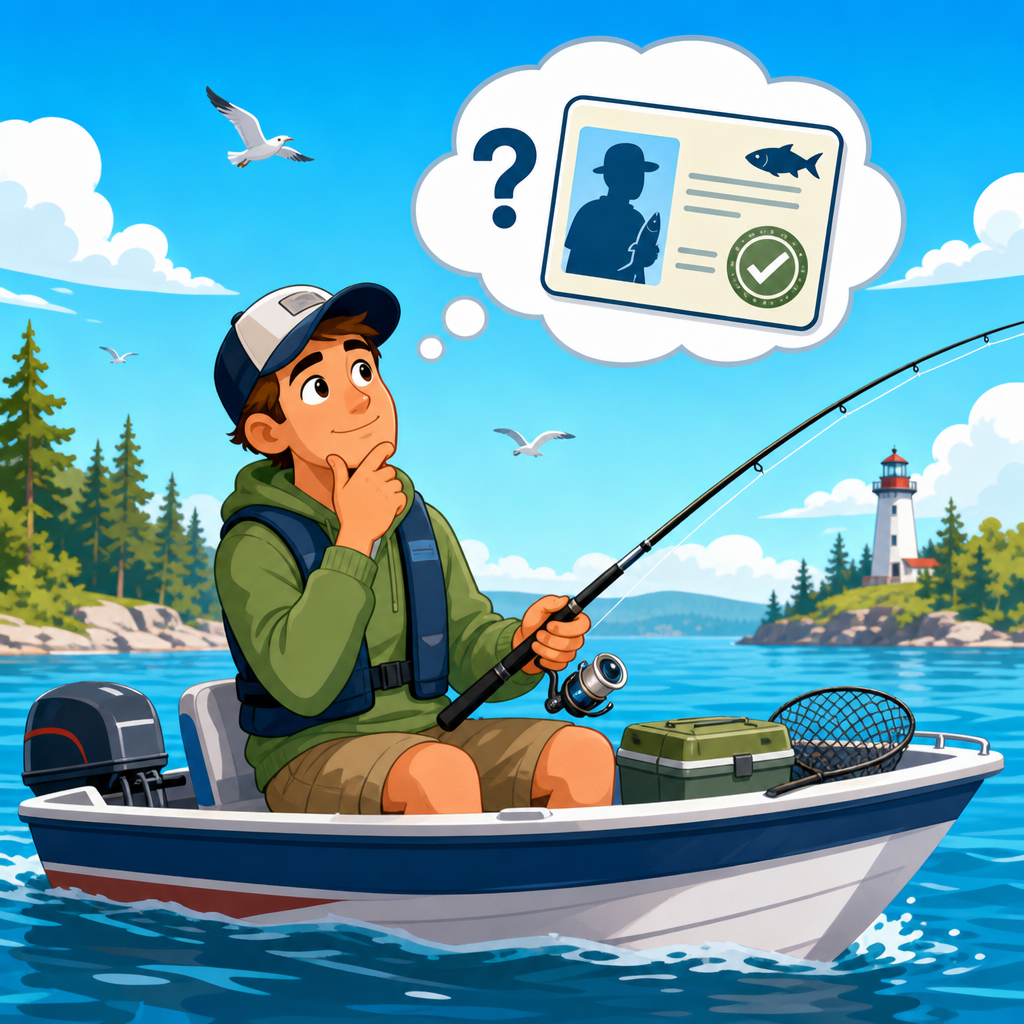
Do you need a license to fish from a boat? In most cases, yes, but the exact answer depends on where you fish, what species you target, your age, whether the boat is privately owned or a licensed charter, and whether you are on inland waters, coastal waters, or a boundary river. Fishing regulations and licensing rules are designed to protect fish populations, fund conservation, and create clear enforcement standards, so understanding them is essential before you launch. I have worked through these rules across freshwater lakes, tidal estuaries, and guided trips, and the biggest mistake boaters make is assuming the boat itself covers everyone on board. Usually, fishing licenses are issued to people, not boats, though some states offer vessel licenses, short-term permits, or charter exemptions. This article serves as a practical hub for fishing regulations and licensing within boating laws and regulations, explaining the core rules, common exceptions, species-specific requirements, interstate complications, and the documents you should carry so you can fish legally and avoid fines, confiscation, or an interrupted trip.
How Fishing Licenses Work on Boats
A fishing license is legal authorization issued by a state or other governing authority that allows a person to take fish or shellfish under defined conditions. Those conditions usually include location, dates, species, harvest limits, approved gear, and reporting obligations. When you are fishing from a boat, the critical point is that the act of fishing triggers licensing requirements, not simply being aboard the vessel. If one passenger is operating the trolling motor while another person casts, the angler generally needs the license, while the nonfishing passenger may not.
Across the United States, state fish and wildlife agencies control most recreational fishing licensing. Freshwater licenses and saltwater registrations are often separate, even within the same state. Florida, for example, divides many rules between freshwater and saltwater privileges, and several coastal states require free or paid marine registries to support NOAA data collection. If you launch on a reservoir in one state, drift into another jurisdiction, or fish a river that forms a border, the governing rules can change mid-trip. That is why experienced boaters check both the launch state and the water body’s specific regulations before departure.
Private boat fishing usually requires each angler to hold an individual license unless a listed exemption applies. Charter boats are different. In some states, a licensed guide, party boat, or charter vessel can hold a blanket permit that covers paying clients for certain waters and species. I have seen anglers assume that any guided trip includes licensing, only to learn at the dock that they still needed a separate salmon stamp or federal migratory permit. A charter captain’s license to operate the vessel is not automatically the same as a fishing license for passengers.
When a Boat Fishing License Is Required and When It Is Not
The simplest rule is this: if you are actively fishing from a boat on public waters, plan on needing a valid license unless an official exception clearly says otherwise. Common exceptions include children under a certain age, seniors who qualify for reduced-fee or lifetime licenses, veterans or disabled anglers under state programs, and participants fishing on designated free fishing days. Some states also recognize private pond exemptions, but those rarely apply to navigable waters accessed by boat.
Another common exception involves boat-based blanket licenses. A few states and provinces issue vessel fishing licenses that cover everyone aboard a qualifying boat, usually only in specific fisheries. These programs are narrower than many people expect. They may apply only to inland waters, only to residents, only to day use, or only up to a passenger limit. Read the wording carefully. If the rule says “anglers fishing from a licensed party boat,” it does not mean every recreational boat owner can buy one permit and cover the family forever.
Free fishing days deserve special mention because they create confusion. On those dates, the basic fishing license fee may be waived, but species tags, harvest cards, parking permits, invasive species decals, or local boat access fees can still apply. The same is true for salmon punch cards, lobster report cards, trout stamps, and federal duck stamps when relevant to combined activities. A waived license requirement is not a waiver of every other regulation tied to the trip.
Enforcement officers typically inspect three things first: your fishing authorization, your catch, and your safety compliance. On boat patrols, they often ask to see digital or paper licenses, photo identification, and any required tags. Many states now accept app-based licenses, but battery failure, dead service areas, and cracked screens are still real issues on the water. I always advise carrying a screenshot or printed backup, especially on offshore or all-day trips.
Freshwater, Saltwater, and Species-Specific Rules
Not all fishing licenses are interchangeable. A freshwater license may not cover saltwater fishing from a boat in bays, sounds, or nearshore coastal waters. Likewise, a marine registry may not authorize inland trout fishing after you trailer the boat to a lake. Agencies divide waters for biological and administrative reasons, and crossing those boundaries changes what you need. This is one of the most overlooked boating law issues because anglers focus on the boat ramp rather than the legal classification of the water.
Species-specific requirements add another layer. In many states, targeting salmon, steelhead, sturgeon, lobster, crab, or big game species such as tuna may require an additional tag, permit, endorsement, or harvest report. Highly migratory species in federal waters can trigger NOAA permits, and reef fish in the Gulf may involve vessel permits or electronic reporting in some sectors. Even if recreational anglers are exempt from a broader permit held by the boat, they still must obey size limits, bag limits, season dates, and retention rules.
Because this article is a hub for fishing regulations and licensing, it helps to view the system as stacked layers rather than one document. The base layer is your general fishing license. Above that are water-type permissions such as freshwater or saltwater. Above that are species endorsements and catch-reporting obligations. Above those are location-specific rules such as marine protected areas, tribal waters, border waters, or federal zones. Missing any layer can make an otherwise legal trip unlawful.
| Regulatory layer | What it usually covers | Example from boat fishing |
|---|---|---|
| General license | Basic authority for recreational fishing | Annual resident angling license |
| Water-type privilege | Freshwater, saltwater, or both | Saltwater registry for fishing in a bay |
| Species endorsement | Extra authorization for protected or managed species | Salmon stamp or lobster permit |
| Harvest reporting | Catch cards, tags, or electronic reporting | Sturgeon report card kept on board |
| Area-specific rule | Special closures, tribal, federal, or border regulations | No-take zone near an inlet or reef |
State, Federal, and Boundary Water Complications
Most anglers think fishing law stops at the state line, but boat fishing often involves overlapping authority. States regulate inland fisheries and nearshore saltwater activity, while federal rules can govern migratory species, offshore waters, marine sanctuaries, and protected habitats. On the Great Lakes, major rivers, and interstate reservoirs, reciprocal agreements may exist, but they are never universal. One license may be honored only in a mapped segment, only for shoreline fishing, or only if you launched from a participating state.
Boundary waters produce some of the most expensive mistakes. Consider the Columbia River, Lake Texoma, or portions of the Mississippi where adjacent states coordinate some regulations but maintain separate licensing structures in others. The words “valid on border waters” may sound broad, yet the details often limit species, methods, or access points. I have planned multi-state boating trips where the route looked simple on a chart but required separate licenses because one tributary mouth changed jurisdiction. Assume nothing and verify the exact water body in the current regulations digest.
Federal waters generally begin three nautical miles from shore on the Atlantic and Pacific coasts, and farther on much of the Gulf coast, but licensing responsibilities do not simply disappear at that line. Federal species permits, HMS rules, reef fish regulations, and reporting systems may apply based on species and boat category. Recreational anglers pursuing tuna, billfish, or swordfish from private boats should always review NOAA Fisheries requirements in addition to state rules. Offshore enforcement can be strict, and ignorance is not a defense.
Charter Boats, Guides, Rentals, and Shared Responsibility
Fishing from a charter boat changes the licensing picture, but it does not eliminate responsibility. A charter operator may hold a vessel license covering clients, a guide license authorizing the business to conduct trips, and a captain’s credential for vessel operation. Those are three different things. Clients should ask, before paying a deposit, whether the trip price includes fishing license coverage, whether species tags are extra, and whether all intended fishing areas are covered by the operator’s permits.
Boat rentals create another frequent gray area. Some marina renters believe the rental contract includes fishing authority. Usually it does not. The rental company provides the boat; the angler still needs the required license unless the company is specifically operating under a legal vessel permit program. If the business advertises “fully licensed fishing boat rentals,” confirm whether that refers to boat registration and commercial operation, or to customer fishing authorization. Those phrases are not interchangeable.
Shared responsibility matters because citations can reach multiple parties. The unlicensed angler may be fined, but the captain or boat owner can also face penalties if they knowingly facilitate unlawful harvest, exceed vessel limits, or transport over-limit catch. Guides are generally held to a higher standard because they are presumed to understand the regulations. In practice, the safest approach is to treat documentation checks like pre-departure safety checks: verify every angler, every endorsement, every retention rule, every cooler.
What Documents to Carry and How to Stay Compliant
For legal and practical reasons, every boat fishing trip should begin with a document check. Carry your fishing license, government-issued identification if required by your jurisdiction, species tags or report cards, vessel registration, and any boating safety credentials required for operation. If the trip is on a charter, save the reservation confirmation that states license coverage. If using digital licenses, download them offline. Cell coverage is unreliable on many lakes, marshes, and offshore runs.
Compliance also means understanding harvest rules, not just buying the right license. Measure fish with a legal measuring device, know whether the limit is per person or per vessel, and identify restricted species accurately. Regulations often define whether a fish can be filleted at sea, whether skin must remain attached for identification, and whether certain species must be released without removing them from the water. Those details matter during inspections because officers need to verify lawful retention from what is physically on board.
The most reliable sources are the current regulations digest from the state wildlife agency, official emergency rule updates, NOAA Fisheries pages for federal species, and the direct help lines many agencies maintain. Third-party blogs, tackle shop handouts, and marina bulletin boards can be useful starting points, but they should never be your final authority. Rules change often, especially for salmon runs, shellfish health closures, red tide events, and quota-managed species.
Penalties, Conservation, and Why These Rules Matter
Fishing without the proper license from a boat can result in warnings, fines, misdemeanor charges, court costs, gear seizure, catch confiscation, and in serious cases suspension of future hunting and fishing privileges through interstate violator compacts. Penalties escalate quickly when violations involve protected species, overlimits, falsified tags, or commercial activity disguised as recreation. For boaters, an enforcement stop can also expand into safety checks for life jackets, fire extinguishers, navigation lights, and registration compliance.
These rules are not just revenue tools. License fees fund hatcheries, habitat restoration, boat ramps, fisheries surveys, invasive species response, and conservation officers. Reporting systems help biologists estimate effort, harvest pressure, and stock health. Seasons and endorsements are management tools that spread effort and protect vulnerable spawning cycles. When anglers follow licensing and reporting rules, agencies get better data and fisheries stay productive longer. That directly benefits responsible boat owners who want consistent access and sustainable fishing opportunities.
As a hub within boating laws and regulations, the answer is clear: most people do need a license to fish from a boat, but the real issue is determining which license, which add-ons, and which local rules apply to your exact trip. Check the governing agency for the state and water body, confirm whether freshwater or saltwater rules apply, add any species permits, and verify charter coverage instead of assuming it. Do that before every launch, keep your documents accessible, and you will spend your day fishing instead of explaining avoidable mistakes to an officer.
Frequently Asked Questions
Do you need a fishing license to fish from a boat?
In most situations, yes, you do need a fishing license to fish from a boat. The key point is that being on a boat does not automatically exempt you from standard fishing license requirements. In many states, anyone who is actively fishing, holding a rod, setting lines, or harvesting fish from a private boat must carry a valid license that matches the water you are fishing on, such as freshwater, saltwater, or a combination license. The exact rule depends on the state, whether you are on inland lakes and rivers, coastal waters, or shared boundary waters, and sometimes on the species you are targeting.
There are also important exceptions. Some states allow exemptions for children, certain seniors, disabled anglers, military members on leave, or participants on designated free fishing days. In other cases, anglers fishing from a licensed charter or party boat may be covered under the vessel’s permit rather than needing an individual license, although this varies by jurisdiction and by the type of trip. Because enforcement officers generally focus on where you are fishing and what activity you are engaged in, the safest approach is to check the current regulations for the exact launch area and waterbody before you go. If you are unsure, assume a license is required until you verify otherwise.
Does it matter whether the boat is privately owned or a licensed charter boat?
Yes, it can matter a great deal. If you are fishing from your own boat, a friend’s boat, a rental skiff, kayak, or any other privately operated vessel, the normal rule is that each person fishing must have their own valid fishing license unless a specific exemption applies. The ownership of the boat usually does not change the licensing requirement. What matters more is whether the person is fishing and whether the state requires an individual license for that type of water and species.
Licensed charter boats and party boats can be different. In some states, a properly licensed charter captain or for-hire vessel holds a permit that covers paying passengers while they are fishing on that trip. In those cases, passengers may not need to buy separate licenses. However, that is not universal. Some charter trips cover only saltwater, not freshwater. Some cover only certain species. Others require the captain to register the vessel under a no-fee saltwater registry rather than providing a true blanket exemption. There can also be reporting, harvest tag, or stamp requirements that still apply to the individual angler even when the vessel license covers general fishing access.
It is always smart to ask the charter operator specific questions before booking or boarding. Ask whether the trip includes licensing coverage, whether any species stamps or harvest permits are still required, and whether there are age-related exceptions or catch-reporting rules you must handle yourself. A reputable captain should be able to explain this clearly. Never assume that “charter boat” automatically means “no license needed.”
Do fishing license rules change based on freshwater, saltwater, or boundary waters?
Absolutely. One of the most common sources of confusion is that license requirements often change depending on the type of water you are fishing. Freshwater lakes, reservoirs, ponds, and inland rivers are often governed by one set of licenses and rules, while coastal bays, estuaries, sounds, and offshore waters may fall under another. Some states issue separate freshwater and saltwater licenses, while others offer a unified fishing license or require a no-cost saltwater registry in addition to a standard permit.
Boundary waters add another layer of complexity. If you are fishing on a river, lake, or reservoir that forms a border between two states, or between a state and another jurisdiction, the rules may depend on exactly where the boat is positioned, which side you launched from, and whether the states have a reciprocal agreement. In some places, a license from either bordering state is acceptable in shared waters. In others, crossing an invisible boundary line in the middle of the river can put you under a different set of regulations. This becomes especially important if you drift while fishing, troll across a line, or move between tributaries and the main channel.
Species rules can also differ by water type. You may be legal to fish for panfish or bass in freshwater under one license, but need a different permit, endorsement, or reporting registration to target striped bass, red drum, salmon, lobster, or highly migratory species in marine waters. The practical takeaway is simple: always check regulations for the exact body of water, not just the state as a whole. The launch ramp, marina, or charter office may be in one regulatory zone while the fishing grounds are in another.
Who may be exempt from needing a fishing license on a boat?
Exemptions exist, but they are highly specific and should never be assumed. The most common exempt groups include young children below a certain age, seniors above a certain age, and anglers fishing on officially designated free fishing days. Some states also provide exemptions or reduced-cost licenses for disabled residents, active-duty military personnel, veterans, or people fishing on certain private waters. In a few places, landowners and their immediate family may qualify for exemptions on qualifying property, although those rules usually do not transfer broadly to public waters just because they are using a boat nearby.
There are also boat-specific exemptions in some jurisdictions. For example, passengers aboard a properly licensed charter vessel may be covered by the operator’s permit. In a few cases, all anglers on a vessel may be covered under a boat license or vessel registration program, but this is far less common than many people think and often limited to certain waters or fishing methods. Some states exempt anglers who are not actively fishing, which matters if one person is driving the boat while another person is fishing. But if that driver picks up a rod, handles set lines, or assists in a way that qualifies as fishing under local law, they may need their own license too.
The most important thing to understand is that exemptions often come with conditions. Age exemptions may require proof of age. Senior exemptions may apply only to residents, not visitors. Free fishing day exemptions may waive the license requirement but not species tags, harvest permits, or boating access fees. Because penalties can include citations, fines, and confiscation of catch or gear, it is worth taking a few minutes to confirm that an exemption truly applies to you before heading out.
What happens if you fish from a boat without the proper license, and how can you make sure you are legal?
Fishing from a boat without the proper license can lead to more than just a small inconvenience. Depending on the state and the circumstances, penalties may include fines, court costs, loss of fishing privileges, seizure of unlawfully caught fish, and in some cases confiscation of equipment. If the violation involves protected species, over-limit harvest, fishing in closed waters, or intentional evasion, the consequences can become much more serious. Enforcement officers routinely check anglers at boat ramps, marinas, fuel docks, and while on the water, so this is not an area where guesswork is a good strategy.
The best way to make sure you are legal is to verify four things before the trip. First, confirm what license is required for the exact waterbody: freshwater, saltwater, inland, coastal, or boundary water. Second, make sure every person who will actively fish is covered, whether by an individual license or a legitimate vessel or charter exemption. Third, check whether you need extra stamps, tags, report cards, harvest cards, or species-specific permits for fish such as trout, salmon, sturgeon, lobster, crab, or migratory game fish. Fourth, review any local rules on size limits, bag limits, seasons, bait, and gear restrictions, because having a license does not make all methods or species legal.
A practical checklist helps. Buy the license directly from the state wildlife or marine agency website, save a digital copy on your phone, and carry a paper backup if possible. If you are crossing state lines or fishing near a border, review reciprocity rules in advance. If you are on a charter, ask the captain to explain exactly what is covered. Taking these steps is easy, protects you from avoidable violations, and helps support the conservation programs that keep fisheries healthy for future seasons.