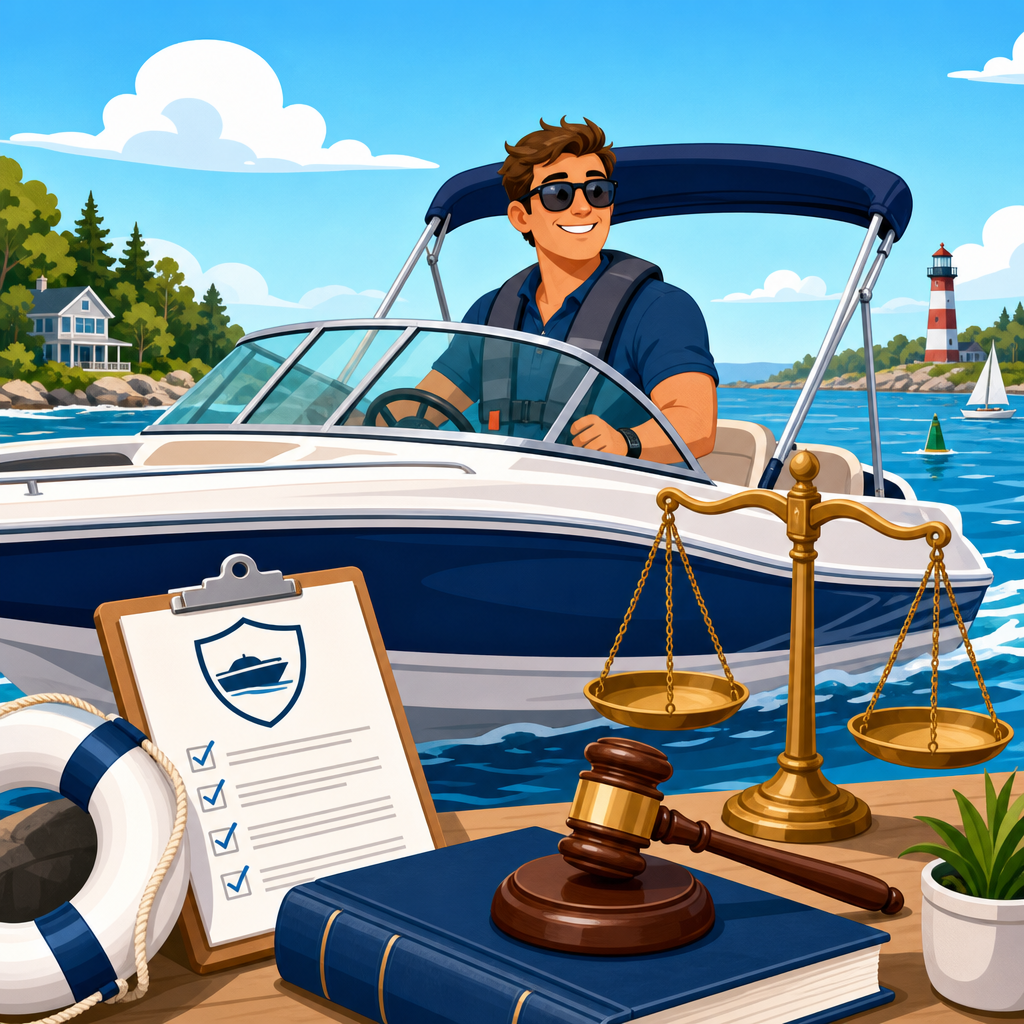
Boating license age requirements across the U.S. vary widely, and that variation creates confusion for families, first-time operators, rental customers, and even experienced boat owners who cross state lines. In one state, a 12-year-old may legally operate a small motorboat after completing an approved safety course; in another, the minimum age is 16 for unsupervised operation; in still another, the law focuses less on age and more on whether the operator carries a boater education card. That patchwork matters because boating rules are enforced at the state level, yet people routinely trailer boats, rent pontoons on vacation, and navigate shared waterways that run through multiple jurisdictions.
When people say “boating license,” they usually mean a state-issued certificate proving completion of a boater education course, not a driver-style plastic license issued after a road test. A few states use terms such as boater card, boating safety certificate, personal watercraft certificate, or operator permit. The legal meaning also differs. Some states require every motorized boat operator above a certain age to complete approved education. Others only require education for younger operators or people born after a specific date. In practice, the key question is not just “How old do you have to be to get a boating license?” but “At what age can you legally operate this type of vessel in this state, with or without supervision, and what proof must you carry?”
This hub article explains those rules at a practical level and frames the broader “Boating Licenses & Permits” topic so you can quickly identify what applies to your situation. I have worked through these questions with new owners registering small fishing boats, parents buying PWCs for teenagers, and travelers trying to confirm whether an out-of-state education card will be honored at a marina. The same pattern appears every season: people assume boating law is uniform, then discover that age thresholds, course requirements, supervision rules, and rental policies can differ sharply from one launch ramp to the next. Understanding the structure of these laws helps you stay compliant, avoid citations, protect insurance coverage, and make safer decisions on the water.
How boating license age requirements are structured
Most state boating laws combine four variables: operator age, vessel type, education status, and supervision. Age is the starting point, but it is rarely the only factor. A state may allow a 13-year-old to operate a motorboat only if a state-approved boater safety course has been completed. Another state may prohibit anyone under 16 from operating a personal watercraft, even with education, unless a qualified adult is on board. Horsepower can matter too. Some jurisdictions set different rules for engines above 10 horsepower, while others apply the law to all motorized vessels, including trolling-motor boats. If you are building an internal compliance checklist for your family or business, these four categories should always be reviewed together.
The reason personal watercraft receive separate treatment is straightforward: they accelerate quickly, turn differently than conventional boats, and are overrepresented in accident reports involving younger operators. Many states therefore set stricter minimum ages for Jet Ski, WaveRunner, and Sea-Doo operation than for runabouts or fishing boats. Education course providers such as NASBLA-approved platforms, including Boat-Ed and Aceboater, mirror these distinctions in their state-specific materials. State wildlife agencies, marine patrol units, and departments of natural resources also publish operator guides that spell out whether supervision must be “on board,” “within visual range,” or performed by someone meeting a minimum age such as 18 or 21.
Another structural feature is grandfathering by date of birth. States often phase in boater education requirements over time by requiring completion only for people born on or after a specified date. That means two adults on the same boat may be subject to different rules even though both are legally old enough to operate. This system is common because it expands safety training without forcing every long-time boater back into a classroom immediately. It also means online summaries can be misleading if they only state a minimum age without mentioning birth-year triggers, which is one reason official state agency pages should always be the final authority.
What the rules look like across the states
There is no single national boating license age. The U.S. Coast Guard sets broad navigation and equipment rules, but operator age and education requirements are primarily state matters. Broadly, states fall into three patterns. First, some allow younger operators, often ages 12 to 14, to run certain motorboats if they pass an approved course. Second, many states permit operation at younger ages only under direct adult supervision and reserve unsupervised use for ages 14 to 16. Third, some states impose very strict rules on personal watercraft, commonly setting a minimum operator age of 14, 16, or higher regardless of general motorboat rules.
| Rule pattern | Common age range | Typical condition | Example effect |
|---|---|---|---|
| Course-based youth operation | 12–14 | Approved boater education required | Teen may operate a small motorboat alone after certification |
| Supervised youth operation | 10–15 | Adult must be on board or directly supervising | Child can drive briefly while parent remains legally responsible |
| Stricter personal watercraft limits | 14–16+ | Separate PWC minimum age and education rule | Teen allowed on a fishing boat may still be barred from a Jet Ski |
| Birth-date education requirement | Varies | Applies to operators born after a certain date | Adult visitor may need a card even if older companions do not |
Florida is a useful example because people often assume age alone controls the rule. In reality, anyone born on or after January 1, 1988, must have a boating safety education identification card plus photo ID to operate a motorboat of 10 horsepower or more. A temporary certificate may satisfy short-term needs. Florida also prohibits anyone under 14 from operating a personal watercraft. That means an older teen may legally operate a family boat with the proper card but still face separate restrictions if switching to a rented PWC. The state’s Fish and Wildlife Conservation Commission is explicit about these distinctions, and marinas often rely on that language when screening customers.
California demonstrates another model. The California Boater Card is being phased in by age and now applies broadly to operators of motorized vessels, regardless of age, as the rollout has matured. The card itself is not an age waiver; younger operators still need to satisfy any separate restrictions that apply. Texas, by contrast, allows operation by younger individuals under supervision in some circumstances but requires boater education for anyone born on or after September 1, 1993, operating certain vessels, including personal watercraft. New York has expanded boater education significantly under Brianna’s Law, moving toward universal education for motorboat operators. These examples show why a simple “minimum boating license age” answer is often incomplete.
Licenses, permits, certificates, and reciprocal recognition
For most boaters, the credential question comes down to whether a state accepts your home-state proof of education. Many states recognize NASBLA-approved boater education certificates issued elsewhere, especially for visiting operators. That is practical because reciprocity supports interstate travel and seasonal tourism. However, reciprocal recognition is not unlimited. A state may honor your education certificate while still enforcing its own age restrictions, rental rules, life-jacket laws, and personal watercraft limitations. In other words, reciprocity usually helps with the education requirement, not with every operational rule.
Permits can also mean something different from a boating license. Some states or local authorities require permits for invasive-species compliance, lake access, mooring, commercial use, or special events. Rental companies may add contractual age minimums above the legal minimum because of insurance underwriting or fleet risk policy. I have seen families surprised when a 16-year-old was legal to operate under state law but could not rent because the marina required renters and primary operators to be 21 or 25. The law set the floor, but the business set a stricter access rule. That distinction is especially important for vacation planning.
Another point people miss is carry-on-board proof. Some states require the operator to have the education card, temporary certificate, or digital proof in possession while underway. Others allow agency verification if the record is already on file. Conservation officers typically ask for registration, identification, and boater education proof during a stop, and failing to produce the credential can lead to a citation even when the course was completed. Keeping a laminated card in the boat and a digital copy on your phone is a simple best practice, though you should verify whether your state accepts electronic display.
How families, new owners, and renters should evaluate compliance
If you are buying a boat for family use, start with the youngest likely operator and the highest-risk vessel type in the fleet. A 13-foot aluminum boat with a 9.9 horsepower outboard may trigger one set of rules; a 19-foot bowrider with a 150 horsepower engine triggers another; a personal watercraft almost certainly has its own standard. Review your state’s wildlife or boating agency page, then confirm whether neighboring states on your travel list apply different age or education rules. If your child or teen will operate at all, enroll them in a state-approved boater safety course before launch season. The cost is low, the completion record is portable, and the training materially improves judgment around speed, lookout, navigation markers, and emergency response.
New owners should also align boating law with insurance and liability realities. Even if a younger operator is technically legal, insurers may expect that only trained household members use the vessel. After an accident, questions about age, certification, supervision, and owner permission become central. I recommend maintaining a written family operating policy: who may drive, under what conditions, on which waters, with what weather limits, and whether night operation is allowed. This may sound formal, but it prevents the casual handoff of controls to someone who meets the minimum legal threshold but lacks practical competence.
Renters need one additional layer of diligence. Before paying a deposit, ask three direct questions: What is the minimum age to rent? What is the minimum age to operate? What proof of boater education do you accept? Some operators issue temporary local certificates after a short test, while others require a preexisting state-approved course completion. If alcohol policies, passenger limits, or towing restrictions are unclear, get the answer in writing. Rental disputes often arise not from hidden fees, but from misunderstandings about who is legally allowed to take the helm once the vessel leaves the dock.
Best practices for staying current and avoiding mistakes
Because boating laws change, the safest habit is to verify requirements annually through official state resources. Legislative updates commonly expand education mandates, adjust birth-date thresholds, or tighten personal watercraft rules after high-profile accidents. The National Association of State Boating Law Administrators is useful for locating approved courses, but the controlling rules still come from each state’s enforcement agency. When reviewing a rule, check the effective date, vessel definitions, supervision language, and any exceptions for private ponds, racing events, or government operations. Small wording differences matter. “Operate” can include idling away from a dock, not just running at speed.
The main takeaway is simple: boating license age requirements across the U.S. are not one rule but a matrix of age, education, vessel type, and supervision. Treat this page as your hub for boating licenses and permits, then drill down into the state-specific and vessel-specific guidance that fits your trip, purchase, or family plan. If you operate across multiple states, carry proof, confirm reciprocity, and assume the stricter rule may control. Start with your state boating agency today, verify the exact requirement for your age and vessel, and complete an approved safety course before your next day on the water.
Frequently Asked Questions
What is the minimum age to get a boating license or legally operate a boat in the U.S.?
There is no single nationwide minimum age for getting a boating license or operating a recreational boat in the United States. Boating laws are set primarily at the state level, which means the legal age requirement can change dramatically depending on where you are. In some states, younger operators may legally run certain motorboats after completing an approved boater education course, while other states require operators to be older before they can operate a vessel alone. Some states also distinguish between different types of boats, such as personal watercraft, motorboats above a certain horsepower, or vessels used on specific waters.
Another important point is that many states do not actually issue a “boating license” in the same way they issue a driver’s license. Instead, they require a boater education certificate, boater safety card, or proof of course completion. In practical terms, families and first-time boaters often use the term “license,” but the legal requirement may be an education credential rather than a traditional license. Because of this, the minimum age may relate to when someone can take the course, when they can operate unsupervised, or when they can operate a specific vessel type.
The safest approach is to check the current rules in the state where the boat will be operated, not just the state where the operator lives. Age thresholds, supervision rules, and education requirements can all apply at the same time, and understanding those details is essential before getting on the water.
Do all states require a boating license or boater education card?
No, not all states apply the requirement in exactly the same way, but most states do have some form of boater education rule for at least certain operators. In many states, the law applies based on the operator’s age, meaning younger boaters must complete an approved course while older boaters may be exempt. In other states, the requirement applies to anyone operating a motorized vessel, sometimes regardless of age. There are also states that phase in the requirement by date of birth, so a person born after a certain year may need a boater education card even if someone older operating the same boat does not.
This is one of the biggest sources of confusion for boat owners and renters. A person may have grown up boating in a state with minimal documentation requirements and assume those same rules apply everywhere. In reality, one state may emphasize age-based operation limits, while another may focus heavily on carrying a boater education certificate on board. A state may also treat personal watercraft, such as Jet Skis, more strictly than standard motorboats because of their speed and handling characteristics.
It is also important to understand that “no license required” does not necessarily mean “no rules apply.” States without a traditional boating license requirement may still impose operator age limits, adult supervision rules, horsepower restrictions, or local waterway regulations. For that reason, boaters should always review current state agency guidance before operating any vessel, even if they believe they are exempt from formal licensing requirements.
Can a child or teenager operate a boat legally if they have completed a boating safety course?
In many states, yes, but the answer depends on the operator’s age, the type of vessel, and whether adult supervision is required. Some states allow younger operators to drive a motorboat if they have successfully completed a state-approved boating safety course and carry proof of completion. Others allow operation only if a parent, guardian, or another qualified adult is on board. Still others prohibit unsupervised operation below a certain age no matter how much training the young operator has completed.
The distinction between supervised and unsupervised operation is especially important. A teen who legally operates a boat with an adult present may not be allowed to operate the same boat alone. In addition, the rules may be stricter for personal watercraft than for ordinary motorboats. For example, a state might allow a younger teenager to operate a small motorboat after taking a course, but require the operator to be older before riding a personal watercraft independently.
Parents should also remember that completing a course is only one part of safe and legal boating. A course may satisfy a legal requirement, but practical judgment, knowledge of navigation rules, emergency preparedness, and familiarity with the specific boat matter just as much. Before allowing a child or teenager to operate a boat, families should confirm the legal requirements in that state, review supervision rules carefully, and make sure the young operator understands local speed limits, life jacket requirements, no-wake zones, and right-of-way rules.
What happens if you boat in another state and your home state has different age or education rules?
When you cross state lines with a boat, the laws of the state where you are operating usually control what is required. That means your home state’s age limits or education standards may not be enough by themselves. Many states recognize approved boater education credentials from other states, especially if the course meets national standards, but recognition is not the same as full exemption from local laws. A boater may have a valid education card from home and still need to comply with the destination state’s minimum age, supervision rules, equipment laws, and vessel-specific restrictions.
This issue commonly affects vacationing families, seasonal boaters, and rental customers. A teenager who is legally allowed to operate a boat in one state may not be allowed to do so in another, even if they have boating education credentials. Likewise, a state may honor an out-of-state boater card but still prohibit younger operators from running certain boats alone. Rental companies may impose their own stricter standards as well, especially for liability and insurance reasons.
Before boating in a different state, it is wise to review that state’s boating agency website, confirm whether your boater education certificate is accepted, and look for special rules involving age, horsepower, engine type, or personal watercraft. Doing a little research ahead of time can prevent citations, interrupted trips, denied rentals, and unsafe assumptions on the water.
How can families and first-time boaters find the correct boating age and licensing rules for their state?
The most reliable source is the official boating authority in the state where the boat will be used. That may be the state parks agency, department of natural resources, wildlife agency, marine patrol, or another boating law enforcement body. These agencies typically publish current information on operator age rules, boater education requirements, vessel classifications, and whether out-of-state certificates are accepted. Because laws can change, official state resources are far more dependable than relying on forum posts, outdated articles, or advice from friends.
Families should look for several details, not just the headline minimum age. They should confirm whether the state requires a boater education card, whether the rule applies to all operators or only those born after a certain date, whether adult supervision is required, and whether separate rules exist for personal watercraft or higher-horsepower boats. It is also smart to verify whether the operator must carry the education certificate on board and whether temporary or rental-specific provisions apply.
For first-time boaters, a state-approved safety course is often the best starting point even if the law may not strictly require it for every operator. These courses explain navigation basics, required safety equipment, emergency procedures, and state-specific responsibilities. In other words, they help boaters do more than simply meet the minimum legal standard. They build confidence and reduce the risk of accidents, misunderstandings, and costly violations. When in doubt, check the official state rulebook, contact the responsible agency directly, and treat age and education compliance as essential parts of trip planning.