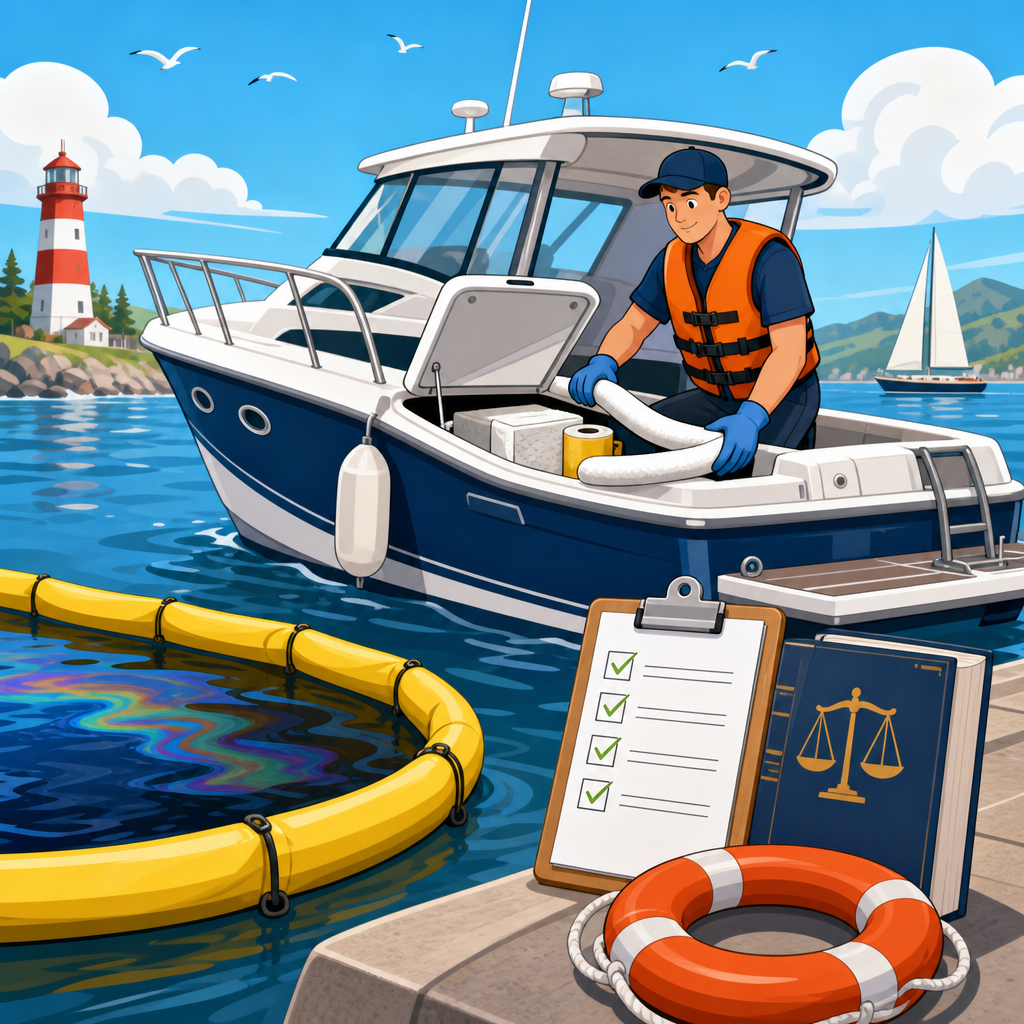
Oil spill prevention on boats is a legal obligation, an environmental duty, and a core part of responsible seamanship. In the context of boating laws and regulations, oil spill prevention means the steps vessel owners, operators, marinas, and crew must take to stop petroleum products from entering the water during fueling, maintenance, storage, transfer, and emergency response. On recreational and commercial boats alike, the relevant pollutants include gasoline, diesel, engine oil, hydraulic fluid, oily bilge waste, transmission fluid, and fuel additives. Even a small sheen on the water can trigger reporting duties, cleanup costs, civil penalties, and reputational damage that far exceed the cost of prevention.
I have worked with marina compliance checklists, spill kits, fueling procedures, and inspection protocols, and the same pattern appears everywhere: most boat-related oil discharges are preventable. They usually happen because of overfilling, cracked fuel lines, neglected bilges, poor hose clamps, improvised maintenance, or operators who do not understand the law. The legal framework is broader than many boaters realize. It includes federal pollution statutes, U.S. Coast Guard rules, Environmental Protection Agency requirements, state clean-water laws, marina policies, and local harbor rules. Insurance carriers and lenders also often require documented pollution controls as a condition of coverage or financing.
This matters because oil behaves aggressively in the marine environment. A small release spreads quickly across the surface, harms birds and fish, contaminates shorelines, creates fire risk, and can close harbors or launch ramps. The law reflects that risk. In the United States, boat owners cannot legally discharge oil that causes a visible sheen, sludge, or emulsion on the water. They must maintain equipment, handle fuel carefully, report certain spills promptly, and dispose of oily waste through approved facilities. For anyone navigating environmental laws and clean boating rules, understanding these legal requirements is the foundation for compliance and for protecting the waters everyone uses.
Federal rules that govern oil spill prevention on boats
The main federal rule starts with the prohibition on discharging oil into navigable waters or adjoining shorelines in quantities that violate the visible sheen standard. This principle comes from the Clean Water Act and related federal regulations enforced by the EPA and the U.S. Coast Guard. In plain terms, if oil from your boat creates a sheen, discoloration, sludge, or emulsion on the water, the discharge is unlawful. The rule applies whether the source is a fuel tank vent, a leaking engine seal, a bilge pump pushing oily water overboard, or a spill during fueling at the dock.
For recreational boats, this often surprises owners who assume only large tankers face pollution law. They do not. While major response planning rules apply mostly to larger commercial facilities and vessels, smaller boats still fall under oil discharge prohibitions, reporting obligations, and waste-handling rules. The Federal Water Pollution Control Act, the Oil Pollution Act of 1990, and Coast Guard pollution prevention regulations together create the baseline standard: prevent discharge, contain any release, report when required, and cooperate with cleanup. Marinas may add stricter house rules, but they cannot waive federal law.
Another important federal requirement involves garbage and hazardous waste management practices that indirectly reduce spill risk. Used oil, oily absorbents, contaminated rags, and oil filters cannot simply be tossed in ordinary trash if state or local hazardous waste rules require special handling. Many marinas participate in used-oil recycling programs, and boaters should use those systems. The legal expectation is not merely to avoid pouring oil into the water. It is to manage petroleum products across their full lifecycle on the vessel and ashore.
What boat owners and operators are legally required to do
Boat owners and operators are expected to take reasonable preventive measures before a spill occurs. That means maintaining fuel tanks, fuel fills, vents, hoses, hose clamps, filters, and engines in sound condition. A cracked primer bulb, corroded aluminum tank, loose deck fill cap, or saturated bilge pad is not just a maintenance issue. If it results in a discharge, regulators may view the failure to repair it as negligence. In inspections I have seen, simple deficiencies such as deteriorated fuel lines or unsecured portable tanks were treated seriously because they are obvious spill risks.
During fueling, the legal and practical duties are straightforward. Secure the boat, shut off engines and ignition sources, close hatches when appropriate, listen to the tank while filling, keep the nozzle attended at all times, and stop before the tank reaches maximum capacity. Boaters should leave expansion space because fuel expands with temperature. Topping off is one of the most common causes of dock spills and vent-line discharges. Operators should place an absorbent pad around the fill and under the vent outlet when feasible, then inspect the water immediately afterward. If any sheen appears, they must stop operations and begin response steps.
Bilge management is another major compliance area. It is illegal to pump oily bilge water overboard if it creates a sheen. The lawful approach is to prevent oil from reaching the bilge in the first place by fixing leaks, using drip pans under engines, changing oil with extraction pumps, and placing absorbent pads in bilge spaces where incidental drips occur. Bilge cleaners are not a legal shortcut. Emulsifying oil so it is less visible does not make discharge lawful and can worsen environmental harm. The correct standard is removal, containment, and shore-side disposal through approved waste systems.
Reporting duties, emergency response, and penalties
One of the most important legal requirements is spill reporting. If a boat causes an oil discharge that produces a sheen, sludge, or emulsion on the water, the person in charge must notify the National Response Center as soon as they have knowledge of the discharge. The federal reporting number is 1-800-424-8802. States may require separate reporting to environmental agencies, harbor authorities, or emergency management offices. Reporting is not an admission of fault; it is a legal duty, and failure to report can become a separate violation with additional penalties.
Immediate response should focus on safety and containment. Stop the source if it can be done safely, deploy absorbent socks or pads, protect nearby drains and scuppers, and notify marina staff if at a dock. Do not use detergents or dish soap to disperse the oil. Federal rules prohibit adding chemicals to hide a sheen or sink oil without proper authorization, because that can spread contamination and complicate cleanup. Small boat spill kits should include oil-only absorbent pads, socks, disposal bags, gloves, and basic instructions. On larger vessels or at marinas, spill response plans should identify contacts, storage locations, and escalation steps.
Penalties vary by the size of the spill, the degree of negligence, cleanup costs, and whether the discharge reached sensitive waters or shorelines. Civil fines can be substantial, and the spiller is generally responsible for removal costs and natural resource damages where applicable. Marinas can recover cleanup expenses from the vessel owner. Insurance may cover some costs, but policies often exclude intentional acts or deny coverage if the owner ignored known defects. The practical lesson is clear: documented prevention is cheaper than response, and prompt reporting reduces legal exposure.
Common risk points on recreational boats and how the law applies
Most recreational boat oil spills come from a small set of predictable failures. Portable fuel tanks may tip during transport or vent into enclosed spaces. Inboard fuel systems can leak at fittings, anti-siphon valves, or aging hoses that no longer meet current fire-resistance standards. Stern drive and outboard boats may drip engine oil into bilges during service. Diesel-powered boats often release fuel from worn return lines or from overfilled tanks when thermal expansion pushes fuel out of the vent. Each of these scenarios can trigger the same legal outcome if oil reaches the water: prohibited discharge, mandatory cleanup, and possible reporting.
The law also reaches maintenance practices. If you change oil at the slip and spill into the bilge or over the side, you are responsible. If a contractor services your engine, the contractor may share liability, but the boat owner still faces immediate operational consequences. That is why many marinas require designated maintenance areas, proof of contractor insurance, and spill-control materials on site. In my experience, the cleanest operations use closed-system oil extractors, labeled waste containers, and post-service bilge inspections before the boat leaves the dock.
| Risk point | Typical cause | Legal concern | Best preventive measure |
|---|---|---|---|
| Fuel fill | Overfilling or inattentive fueling | Sheen discharge during transfer | Attend nozzle, use absorbent pad, leave expansion space |
| Tank vent | Topping off and thermal expansion | Fuel released directly to water | Stop early and monitor vent outlet |
| Bilge | Engine or hydraulic leaks | Illegal oily discharge from bilge pump | Fix leaks, use drip pans, replace absorbents |
| Oil change | Open-container transfer | Spill during maintenance | Use extraction pump and sealed waste container |
| Hoses and fittings | Aging rubber, corrosion, loose clamps | Chronic leaks leading to discharge | Inspect to ABYC standards and replace on schedule |
State laws, marina rules, and clean boating standards
Federal law is only the floor. States often impose stricter environmental laws and clean boating requirements, especially in estuaries, no-discharge zones, drinking-water reservoirs, and marine protected areas. Some states require marinas to maintain spill equipment, train staff, post reporting contacts, and document waste collection. Others regulate aboveground storage tanks, used-oil storage, and stormwater runoff in ways that affect where and how boat maintenance can occur. Boaters should always check state boating agencies, environmental departments, and marina rules before assuming federal compliance is enough.
Industry standards also matter because they define what a careful operator should have done. The American Boat and Yacht Council, or ABYC, publishes widely used technical standards for fuel systems, electrical systems, ventilation, and safety labeling. While ABYC standards are not statutes by themselves in every context, surveyors, insurers, manufacturers, and courts often rely on them when evaluating whether a boat was properly maintained. Following ABYC fuel system guidance, using U.S. Coast Guard approved components where required, and documenting inspections create strong evidence of responsible operation.
Marina policies deserve serious attention because they are enforceable through contracts, slip agreements, and access rules. A marina may require absorbent pads during fueling, ban owner-performed oil changes on the dock, mandate immediate reporting of any spill to the harbormaster, or require proof that a vessel has no active leak before launch. These rules are common in facilities participating in Clean Marina programs, which promote best practices for fueling, waste handling, stormwater control, and habitat protection. For boaters, these policies are not red tape. They are practical compliance tools that reduce legal risk.
Building a compliant spill prevention routine
The strongest oil spill prevention program on a boat is simple, written, and repeatable. Start with a pre-departure inspection of the bilge, engine compartment, fuel smell, hose condition, and deck fill cap. Before fueling, brief everyone on the boat about who handles lines, who watches the vent, and where absorbents are stored. After fueling, inspect the water surface, the bilge, and the transom area. After maintenance, confirm that all fluids are capped, labeled, and removed to shore disposal points. Written checklists matter because they turn good intentions into consistent actions.
Recordkeeping is an underrated legal safeguard. Keep receipts for used-oil disposal, service invoices, hose replacement dates, spill-kit purchases, and any incident reports. If a question later arises about whether you acted responsibly, these documents help establish that you maintained the vessel and followed accepted procedures. On larger yachts and commercial craft, formal maintenance logs are standard practice. Recreational owners benefit from the same discipline, especially where vessels have generators, hydraulic systems, or multiple tanks that increase pollution risk.
Training is the final piece. Every regular operator should know how to shut off fuel, isolate battery switches when appropriate, identify the source of a leak, and make a spill report. New boat owners often spend time learning navigation rules and docking techniques but neglect pollution response. That is a mistake. Environmental laws and clean boating compliance are part of competent command. Review your state rules, marina agreement, and onboard procedures now, stock a proper spill kit, and inspect your fuel and bilge systems before your next trip.
The legal requirements for oil spill prevention on boats come down to a clear standard: do not let oil reach the water, and if a release occurs, respond and report correctly. Federal law prohibits discharges that create a sheen, sludge, or emulsion. State agencies and marinas may add stricter obligations. Owners and operators must maintain fuel systems, manage oily bilges lawfully, handle fueling with care, dispose of waste through approved channels, and keep basic spill-response materials onboard. These are not optional best practices. They are the operating rules of clean, lawful boating.
The benefit of understanding these requirements is practical as much as legal. A well-maintained boat is safer, cheaper to operate, easier to insure, and less likely to suffer breakdowns, fires, or environmental claims. Prevention also protects launch ramps, marinas, fisheries, and shorelines that boaters depend on. Small habits such as leaving room in the tank, replacing old hoses, checking the bilge before starting, and keeping absorbents near the fuel fill prevent most incidents I have seen in real marinas and service yards.
As the hub page for environmental laws and clean boating within boating laws and regulations, this topic connects directly to fueling rules, waste disposal, bilge discharge, sewage restrictions, hazardous material handling, and marina compliance. Use this article as your foundation, then review the related rules that apply to your boat, your state, and your home marina. Start with an onboard inspection today, correct any leak you find, and make spill prevention part of every trip.
Frequently Asked Questions
What laws require boat owners and operators to prevent oil spills?
Boat owners and operators are subject to a mix of federal, state, and local laws that prohibit the discharge of oil and fuel into the water. In the United States, the Clean Water Act and the Oil Pollution Act are central legal frameworks. These laws make it illegal to discharge oil or oily mixtures that create a visible sheen, sludge, or discoloration on the surface of the water or along shorelines. That rule applies whether the spill comes from a recreational boat, a commercial vessel, fueling activity, engine maintenance, bilge discharge, or a transfer of petroleum products.
In practical terms, legal compliance means more than simply “not spilling.” Operators are expected to use proper fueling procedures, maintain engines and fuel systems, store petroleum products safely, control bilge contamination, and respond appropriately if a release occurs. Marinas and harbormasters may also impose site-specific operating rules, spill reporting requirements, and fueling protocols. Commercial operators can face additional obligations under vessel inspection rules, pollution prevention plans, and workplace safety standards.
Because boating laws vary by jurisdiction, owners should also check state environmental agencies and local marina regulations for added requirements involving spill kits, waste oil disposal, signage, reporting contacts, and transfer procedures. The key legal principle is consistent across jurisdictions: if oil enters the water, even in a small amount that causes a sheen, liability can follow. Penalties may include fines, cleanup costs, civil enforcement, and, in serious cases, criminal consequences. For that reason, oil spill prevention is treated as a core compliance responsibility, not just a best practice.
What counts as an oil spill on a boat, and does a small amount really matter?
Yes, even a small amount matters. Legally, an oil spill is not limited to a dramatic fuel tank rupture or a major commercial accident. On boats, a spill can include gasoline drips at the fuel fill, diesel overflow during topping off, engine oil leaking into the bilge and then being pumped overboard, hydraulic fluid escaping from steering or mechanical systems, or waste oil being mishandled during maintenance. If petroleum enters the water and produces a visible sheen, sludge, film, or discoloration, it can trigger reporting duties and enforcement action.
This is one of the most misunderstood parts of boating pollution law. Some operators assume a “little rainbow” on the water is too minor to count. In fact, that visible sheen is often exactly what regulators use as evidence of an unlawful discharge. Recreational boaters are not exempt just because the source is small or unintentional. The standard is based on the effect of the discharge, not whether the operator meant to cause it.
Small spills also matter because they are preventable and cumulative. A few ounces of fuel spilled repeatedly during refueling, chronic oil drips from neglected engines, or oily bilge water discharged over time can cause significant environmental harm in enclosed marinas, inland waterways, and sensitive coastal areas. Fish habitat, birds, and shoreline ecosystems can all be affected. From a compliance standpoint, treating every drop seriously is the safest approach. If a product is petroleum-based and could reach the water, it should be handled as a regulated pollution risk.
What are the legal requirements during fueling, maintenance, and storage to prevent oil from entering the water?
During fueling, operators are expected to follow careful procedures designed to prevent overfills, splashback, and vent discharge. That usually means securing the vessel, shutting off engines and ignition sources, closing hatches where appropriate, keeping absorbent pads or rings at the fill point, monitoring the nozzle the entire time, and avoiding topping off the tank. Listening for a change in tank sound and allowing room for fuel expansion are both important. Fuel should never be left unattended while pumping. If the marina has specific fueling rules, those rules are part of the operator’s compliance responsibilities as well.
During maintenance, the legal expectation is that oil, fuel, filters, contaminated rags, and oily water will be contained and disposed of properly rather than released into the bilge, dock area, or surrounding water. That means changing fluids with catch pans, using absorbents, fixing leaks promptly, and storing used oil in sealed containers for approved disposal or recycling. Bilges must be kept as oil-free as possible. It is not lawful to use detergents or emulsifiers to hide an oily sheen so that contaminated bilge water can be pumped overboard. That can worsen liability because it masks pollution rather than preventing it.
For storage, tanks, portable fuel containers, lubricants, and hydraulic fluids should be secured, clearly labeled, and protected from tipping, corrosion, heat, and accidental release. Hoses, clamps, vents, and fittings should be inspected regularly for wear or deterioration. Secondary containment may be advisable or required in some commercial or marina settings. Safe storage is not just about avoiding dramatic spills; it is also about preventing the slow leaks and handling mistakes that often lead to violations. A well-maintained vessel with documented inspection and fueling habits is in a much stronger position if regulators ever review its practices after an incident.
What should a boat operator do if oil or fuel is spilled into the water?
If oil or fuel is spilled into the water, the operator should act immediately to stop the source, contain the spill if it can be done safely, and report it as required by law. The first priority is safety: eliminate ignition sources if fuel is involved, protect passengers and crew, and stabilize the situation. Then shut off pumps, close valves, upright containers, or isolate the leaking equipment if possible. Absorbent pads, socks, or booms may be used to limit spread, but only if they can be deployed safely and effectively.
Equally important is knowing what not to do. Do not use dish soap, detergent, or other dispersants to break up the sheen. That does not solve the problem and may violate pollution laws by pushing contaminants into the water column. Do not hose the spill away or attempt to hide it. Improper cleanup efforts can increase environmental damage and regulatory penalties.
Reporting obligations depend on the size, type, and location of the spill, but in the United States any discharge of oil that causes a sheen on navigable waters generally must be reported to the National Response Center, and there may also be state or local notification requirements. Marina management may need to be notified immediately as well. Operators should document what happened, including time, location, estimated quantity, source, and response actions taken. Quick, honest reporting and prompt containment often help reduce damage and demonstrate responsible conduct. Waiting, minimizing, or concealing the event usually makes the legal situation worse.
What penalties can apply for failing to prevent or report an oil spill from a boat?
Penalties can be substantial, and they often extend far beyond the value of the lost fuel or oil. A boat owner or operator may be held responsible for cleanup costs, disposal expenses, environmental damage claims, civil fines, and administrative penalties. If a marina, contractor, or commercial operator is involved, liability can spread among multiple parties depending on who controlled the activity and who failed to follow required procedures. In serious cases involving negligence, repeated violations, false statements, or intentional discharge, criminal enforcement may also be possible.
Failure to report a spill can be treated as a separate violation from the spill itself. That is an important point. Even when the discharge is relatively small, ignoring the incident, attempting to wash it away, or failing to notify the proper authorities can significantly increase enforcement exposure. Regulators tend to look closely at whether the operator had absorbents available, followed fueling protocols, maintained the vessel properly, and responded responsibly once the problem was discovered.
There are also indirect consequences that matter in the real world. Insurance disputes may arise if poor maintenance or unlawful conduct contributed to the spill. Commercial vessels may face operational delays, contract issues, license concerns, or reputational damage. Recreational boaters may face marina sanctions, removal from facilities, or higher insurance costs. The broader lesson is straightforward: prevention is always cheaper and easier than enforcement and cleanup. By treating oil spill prevention as a legal duty built into everyday seamanship, vessel operators can protect the environment and greatly reduce their own financial and legal risk.