U.S. Coast Guard boating regulations shape how recreational vessels operate across American waters, and understanding them is essential for safety, legal compliance, and confident trip planning. For boat owners, renters, anglers, paddlers, and family passengers, these rules are not abstract policy; they determine what equipment must be on board, who may operate a boat, how navigation works after dark, and what happens during inspections or emergencies. In practical terms, federal boating regulations set nationwide baselines, while state boating laws add local operating requirements, registration systems, education rules, and enforcement details.
The key distinction is simple. The U.S. Coast Guard regulates matters tied to vessel safety, navigation, equipment carriage, accident reporting, and federal waterway conduct. States regulate vessel titling and registration, age restrictions, boater education cards, many towing and wake rules, local speed zones, and additional safety provisions. On the water, these systems overlap. A 19-foot runabout on a Texas lake, a center console in Florida coastal waters, and a pontoon on a Minnesota reservoir may all be subject to federal life jacket, sound signal, and navigation light requirements, while also needing state registration decals, an operator certificate, and compliance with local no-wake ordinances.
I have seen many boaters assume that registration alone makes them legal. It does not. A boat can be properly registered and still violate federal law if it lacks wearable life jackets, a compliant fire extinguisher, or current visual distress signals where required. The reverse is also true: a fully equipped vessel can still be cited if the operator ignores state education requirements or carries outdated registration numbers. That is why a complete guide must explain both layers together rather than treating them as separate subjects.
This hub article provides that framework. It explains what the Coast Guard controls, where state law fills in the gaps, which carriage requirements apply by vessel type and size, how navigation and right-of-way rules work, what operators should expect from inspections and enforcement, and which topics deserve deeper state-specific research before launch day. If you want one reference point for U.S. Coast Guard and state boating laws, start here, then use it as the foundation for your more detailed checklist.
Federal authority: what the U.S. Coast Guard regulates
The Coast Guard is the primary federal agency for recreational boating safety. Its authority comes from federal statutes and regulations, especially titles within the Code of Federal Regulations that cover navigation rules, safety equipment, vessel documentation, and accident reporting. For most recreational boaters, the Coast Guard’s role is visible in five areas: required equipment, navigation rules, boating under the influence enforcement, marine casualty reporting, and safety standards for boats and associated equipment.
Required equipment rules are the most widely encountered. Federal law specifies carriage standards for personal flotation devices, fire extinguishers, backfire flame arrestors on certain gasoline engines, ventilation for enclosed engine spaces, navigation lights, sound-producing devices, and visual distress signals in applicable waters. These are not optional recommendations. During a safety inspection or boarding, they are among the first compliance points checked.
The Coast Guard also enforces the Navigation Rules, often called the Rules of the Road. These govern lookout duties, safe speed, risk of collision, crossing situations, overtaking, head-on encounters, light displays, and sound signals. They apply broadly, whether a boater is in a crowded harbor or on an inland river. In collision cases, violations of these rules often become central evidence.
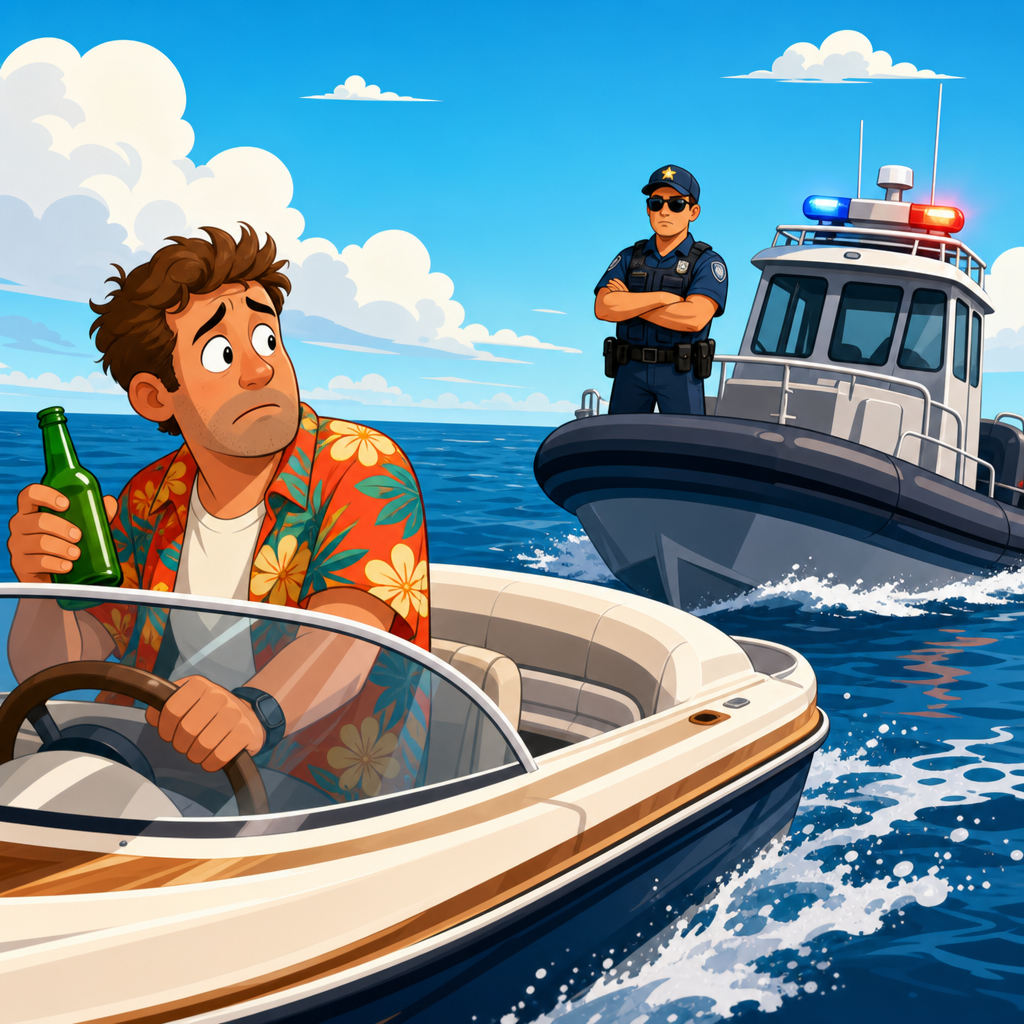
Another major federal area is boating under the influence. Every state prohibits impaired operation, but federal officers can also enforce impairment laws on waters under federal jurisdiction. In real enforcement practice, local marine patrol units and federal officers frequently coordinate, especially in holiday boating periods.
How state boating laws fit with federal rules
State boating laws matter because states control many of the rules boaters encounter before they even leave the ramp. Registration, titles, numbering, operator age restrictions, mandatory education, and many towing rules are state-based. States also create local operating zones such as slow-speed areas, manatee protection zones, water-ski restrictions, and seasonal closures. These laws cannot conflict with federal requirements, but they can be stricter.
A useful rule of thumb is that federal law supplies the nationwide minimum safety baseline, while state law customizes operation for local waterways and local policy priorities. For example, federal law requires one wearable life jacket for each person aboard a recreational vessel. A state may add child life jacket wear rules, requiring children under a certain age to wear the jacket at all times while underway. Both requirements apply simultaneously.
Boater education is one of the clearest examples of state variation. Some states require anyone born after a certain date to complete an approved boating safety course. Others impose horsepower-based education requirements, age-based restrictions, or temporary certification rules for renters. The National Association of State Boating Law Administrators approves many courses used to satisfy these mandates, but the legal obligation itself comes from state law.
Because this page serves as a hub, the operational takeaway is straightforward: check federal carriage requirements first, then verify the launch state, destination state, and any local authority rules. Crossing a state line by water can change legal obligations even when the boat, crew, and activity stay exactly the same.
Required safety equipment every recreational boat should carry
Safety equipment rules depend on vessel length, propulsion, fuel system design, and operating area, but some basics apply almost everywhere. Wearable life jackets must be Coast Guard approved, in serviceable condition, properly sized, and readily accessible. Boats 16 feet and longer, except canoes and kayaks, must also carry one throwable device. Children’s wear requirements are usually set by state law, but every operator should treat child life jacket use as standard practice whenever the boat is underway.
Fire extinguisher rules changed in recent years to reflect newer equipment classifications, but the principle remains constant: boats with enclosed compartments, fuel systems, or engines creating fire risk must carry the correct type and quantity. The best practice is to verify the label, charge status, mounting condition, and expiration or replacement indicators before each season. I have found neglected extinguishers on otherwise well-maintained boats more often than owners expect.
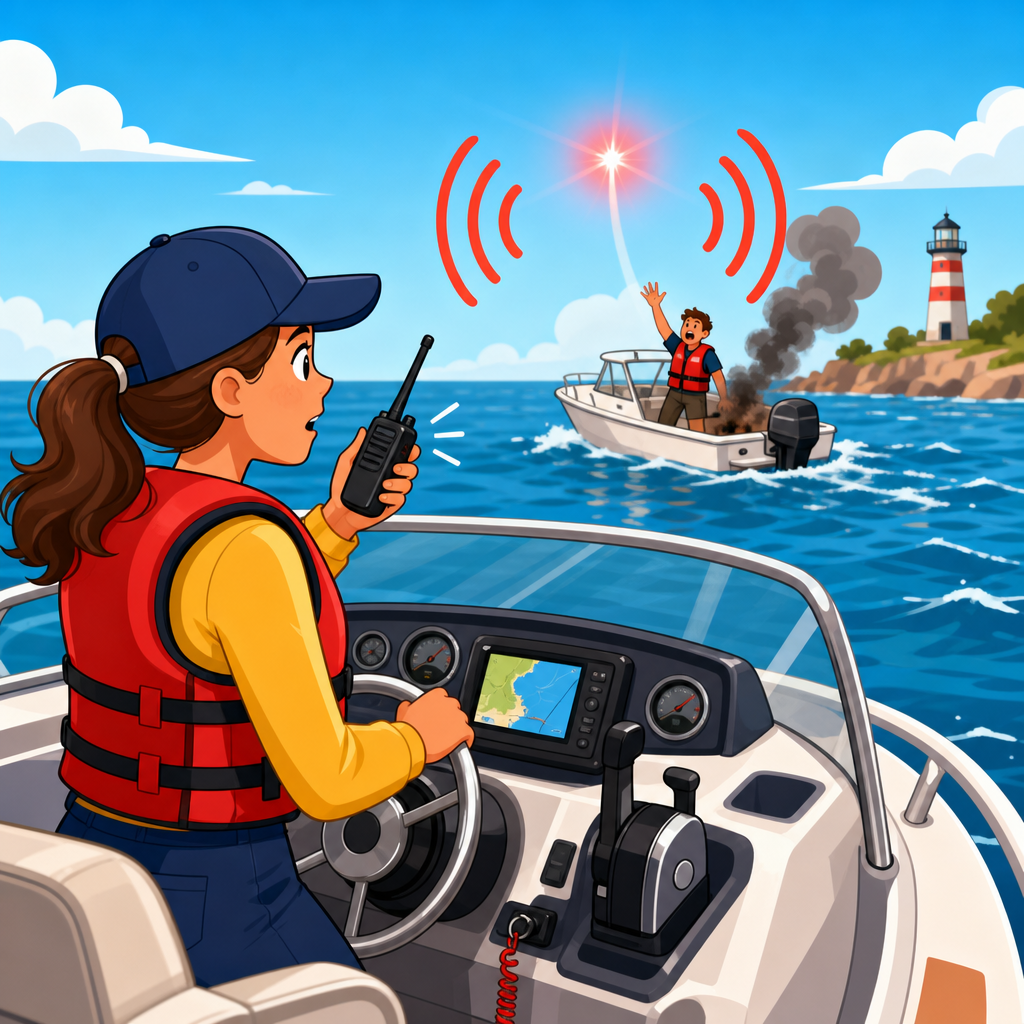
Navigation lights are required from sunset to sunrise and during restricted visibility. Their color, arc, and placement depend on vessel type and length. A common violation is installing aftermarket lights that look bright but do not meet visibility or placement standards. Sound-producing devices are also mandatory: smaller boats generally need a whistle or horn, while larger recreational vessels may need both a whistle and bell. Visual distress signals are required on coastal waters, the Great Lakes, territorial seas, and connected waters wide enough for ocean navigation. Many inland-only boaters are surprised to learn that these requirements can change when a trip reaches coastal bays or tidal rivers.
| Equipment | Typical Federal Baseline | Common State Add-On |
|---|---|---|
| Life jackets | One approved wearable per person; throwable on most boats 16 feet and over | Children must wear while underway |
| Fire extinguisher | Required based on vessel design, length, and fire risk spaces | Additional inspection emphasis by local officers |
| Navigation lights | Required at night and in reduced visibility | Local rules for anchored boats in special areas |
| Sound device | Whistle or horn depending on vessel length | Noise restrictions on use near shoreline communities |
| Visual distress signals | Required on coastal waters and certain connected waters | Rarely expanded, but often checked closely in saltwater states |
Registration, numbering, documentation, and education requirements
Most recreational boats with mechanical propulsion must be state registered and display state-issued numbers and validation decals. The display format is not cosmetic; spacing, block letter style, and placement standards matter. A faded decal or improperly spaced registration number can lead to a stop even when the vessel is otherwise compliant. Titling requirements vary by state and may depend on vessel age, size, propulsion, or lien status.
Some larger recreational vessels may be federally documented instead of state titled, particularly those used in coastal cruising or financing arrangements. Federal documentation does not always eliminate state obligations. Many states still require documented vessels to register for state use decals or excise tax purposes. Owners should read both the Coast Guard documentation rules and the home-state boating agency requirements carefully.
Operator education is increasingly important because many states have phased in mandatory training over time. Approved courses cover navigation rules, markers, emergency procedures, life jacket selection, fueling safety, and legal responsibilities. Completion cards are often accepted across states, but not universally in every scenario. Rental operators, personal watercraft users, and minors often face additional rules. If a family plans to boat in multiple states during one season, carrying physical or digital proof of course completion is a smart habit.
Operating rules: speed, right of way, alcohol, and accident reporting
Operating legally means more than carrying the right gear. The operator must maintain a proper lookout, proceed at a safe speed, avoid careless or reckless operation, and understand right-of-way situations. In plain terms, boats do not have an unrestricted “lane.” A crossing vessel, a sailboat under sail alone, a vessel constrained by draft, and a fishing vessel actively engaged in fishing may each trigger different duties under the navigation rules. Personal watercraft operators are especially prone to citations for weaving, wake jumping too closely, or operating after dark where prohibited by state law.
Speed rules are usually local or state-based, but they tie directly to federal safe speed obligations. A posted no-wake zone is enforceable as local law; even without a posted sign, a boat can still be operated at an unsafe speed for conditions. Conditions include traffic density, visibility, wind, current, proximity to docks, and maneuverability. I have worked with operators who assumed “no posted limit” meant full throttle. On the water, that assumption fails quickly when visibility drops or channel traffic builds.
Alcohol and drug impairment laws are aggressively enforced. Most states use a blood alcohol concentration threshold of 0.08 percent for boating under the influence, mirroring highway standards, but impairment can be charged below that level based on observed operation. Penalties may include fines, jail exposure, course requirements, and impacts on driving privileges. Refusal rules and testing procedures vary by jurisdiction.
Accident reporting is another area where federal and state law intersect. Serious incidents involving death, disappearance, significant injury, or substantial property damage generally must be reported to the proper authority within defined timelines. Operators should know the reporting agency for their state before an incident occurs, because confusion after a collision wastes critical time.
Enforcement, inspections, and building a practical compliance checklist
Enforcement on the water can come from Coast Guard units, county marine patrols, harbor police, state wildlife officers, or other authorized agencies. Officers may stop a recreational vessel for observed violations, safety inspections, registration checks, or boarding authority recognized under federal law. A courteous, organized operator usually shortens the encounter. Keep registration papers accessible, know where required equipment is stored, and make sure passengers understand basic safety procedures.
One of the best preventive tools is a voluntary vessel safety check conducted by the U.S. Coast Guard Auxiliary or United States Power Squadrons. These checks are educational, not punitive. Examiners review visible compliance items such as life jackets, fire extinguishers, ventilation, navigation lights, registration display, and pollution placards where required. Passing does not immunize a boat from later enforcement, but it is an excellent way to catch problems before a holiday weekend launch.
A practical compliance checklist should include: registration and decals current; operator education proof on board where required; correct number and size of approved life jackets; throwable device if applicable; charged fire extinguishers; working lights; horn or whistle; distress signals for applicable waters; anchor and line suited to the boat; throwable rescue plan; accident reporting knowledge; and a review of local speed, wake, and environmental restrictions. Also check fuel system odor, battery security, drain plug status, weather forecast, and float plan. Regulations matter most when they are translated into repeatable habits.
For boaters using this page as a hub, the next step is to pair this federal overview with state-specific guidance for your launch area and vessel type. Review your state boating agency handbook, verify whether your course card is recognized, inspect every required item before departure, and schedule a voluntary safety check if you have not had one recently. Boating laws are easiest to follow when they are built into your routine. Make compliance part of your pre-departure checklist, and every trip will start safer, smoother, and with fewer surprises on the water.
Frequently Asked Questions
1. What boating equipment does the U.S. Coast Guard require recreational vessels to carry?
The U.S. Coast Guard requires recreational boats to carry specific safety equipment, and the exact list depends on the vessel’s size, type, and where it is being operated. At a minimum, most boats must have properly sized U.S. Coast Guard-approved life jackets for each person on board, and children may also be subject to stricter state life jacket wear rules. In many cases, boats 16 feet and longer must also carry a throwable flotation device. Recreational vessels generally need a sound-producing device such as a whistle or horn, and boats operated between sunset and sunrise or in reduced visibility must display the correct navigation lights. Fire extinguishers may be required depending on whether the boat has enclosed spaces, fuel systems, or certain engine arrangements. Many boats also need visual distress signals when operating on coastal waters, the Great Lakes, territorial seas, and connected bodies of water where those requirements apply.
Beyond the federal minimums, smart boaters should think in terms of practical readiness, not just technical compliance. A well-prepared vessel should also carry a first-aid kit, anchor and line, extra dock lines, paddle or oar when appropriate, flashlight, marine radio, emergency engine cutoff switch where required, and current registration documents. Keep in mind that state boating agencies may impose additional equipment or carriage rules beyond Coast Guard standards, especially for personal watercraft, paddlers, and youth passengers. The safest approach is to review both federal and state requirements before every season and to inspect equipment regularly so that it is accessible, in serviceable condition, and not expired.
2. Do U.S. Coast Guard boating regulations apply to small boats, kayaks, canoes, and rented watercraft?
Yes, Coast Guard boating regulations can apply to a wide range of recreational vessels, not just large motorboats. In federal boating law, many human-powered craft and smaller recreational boats still count as vessels, which means certain rules apply even if the craft seems simple or low-risk. For example, kayaks, canoes, paddleboards in some circumstances, and small jon boats may still be required to carry wearable life jackets for each person on board. If these craft are used at night or in limited visibility, lighting requirements may also come into play. The basic principle is that size does not eliminate responsibility. If a craft is operating on public waters and is capable of transportation on water, safety and navigation rules often still matter.
Rental boats are not exempt either. While rental companies often provide safety gear and operating instructions, the person using the vessel remains responsible for following the rules on the water. That includes obeying no-wake zones, carrying required safety equipment, avoiding negligent operation, and following age or boater education requirements imposed by state law. Renters should never assume the company has handled every legal detail. Before leaving the dock, it is wise to confirm where life jackets are stored, whether a fire extinguisher is aboard if required, how navigation lights operate, what the local speed and distance rules are, and whether the operator must meet any licensing or education standards. Coast Guard rules establish an important baseline, but state and local laws frequently determine how those rules are applied in everyday recreational boating.
3. Who is legally allowed to operate a recreational boat, and is a boating license required?
The U.S. Coast Guard does not issue a universal recreational boating license for all private operators in the way people often imagine, but that does not mean anyone can simply take the helm without restrictions. Operator eligibility is shaped by a combination of federal rules, state boating laws, and, in some cases, local regulations. Many states require boaters of certain ages, or anyone operating certain classes of motorized vessels, to complete an approved boating safety education course. Personal watercraft operators are especially likely to face age and training rules. In addition, boat operators must be physically and mentally capable of operating safely, and they may not operate under the influence of alcohol or drugs. Boating under the influence is enforced seriously and can lead to fines, arrest, loss of operating privileges, and criminal penalties.
In practical terms, the “who can operate” question is less about one federal boating license and more about legal competency and state compliance. If you own, borrow, or rent a boat, you should verify the education card, age minimums, and identification requirements that apply where you are launching. Some states recognize approved courses from other jurisdictions, while others have more specific standards. If the vessel is being used commercially, entirely different credentialing rules may apply under Coast Guard licensing frameworks, but those are separate from ordinary recreational use. For families and occasional boaters, the best rule of thumb is simple: the operator should be sober, trained, familiar with navigation rules, and legally qualified under the state where the boat is being used.
4. What are the most important navigation and right-of-way rules boaters need to understand?
Navigation rules are one of the most important parts of Coast Guard boating compliance because they help prevent collisions, especially in congested waterways, channels, and low-visibility conditions. Recreational boaters should understand that there are recognized “rules of the road” on the water covering head-on situations, crossing paths, overtaking, safe speed, lookout responsibilities, and operation in narrow channels. In general, every vessel must maintain a proper lookout by sight and hearing and proceed at a safe speed based on conditions such as traffic, weather, visibility, wake impact, and stopping distance. Operators must also know how to interpret navigation aids like buoys and markers, and they must use correct navigation lights after dark so other boaters can identify their direction and status.
Just as important, right-of-way is not a license to hold course recklessly. Even when one vessel is technically the stand-on vessel, every operator has a duty to avoid a collision if danger develops. Boats overtaking another vessel must keep clear, and crossing situations require close attention to which vessel should give way. Sailboats, powerboats, paddlers, and larger commercial vessels can all have different practical limitations, so good judgment is essential. Recreational operators should also be especially cautious around ferries, tug and tow traffic, dredging operations, and large ships that cannot maneuver easily or stop quickly. Learning the navigation rules before boating at night, in fog, or on unfamiliar water is one of the clearest ways to improve safety and stay compliant with Coast Guard expectations.
5. What happens during a U.S. Coast Guard boarding or safety inspection, and what should boaters do?
A U.S. Coast Guard boarding or safety inspection is typically a lawful safety and compliance check, not something boaters should automatically view as punitive. Coast Guard personnel may stop recreational vessels to verify compliance with federal boating laws, inspect required safety equipment, confirm registration or documentation, and evaluate whether the vessel appears to be operated safely. They may check for life jackets, fire extinguishers, navigation lights, sound devices, visual distress signals where required, ventilation systems, marine sanitation compliance, and other legally required items. They may also look for obvious signs of intoxication or dangerous operation. In some situations, state or local marine law enforcement officers conduct similar inspections under their own authority.
The best way to handle an inspection is to stay calm, cooperate, and be organized. Slow down safely, follow directions, keep your hands visible, and avoid sudden movements. Have registration, identification, and any other required documents readily available. If you know where all safety gear is stored and can present it quickly, the process is usually smoother and faster. If violations are found, the outcome can range from a warning to citations, fines, voyage termination in serious cases, or further enforcement action if impairment or major safety issues are involved. Boaters should treat inspections as a strong reminder that compliance begins before launch. A clean, well-maintained vessel with current equipment, knowledgeable operators, and clear emergency readiness is not only more likely to pass inspection but also far safer for everyone on board.