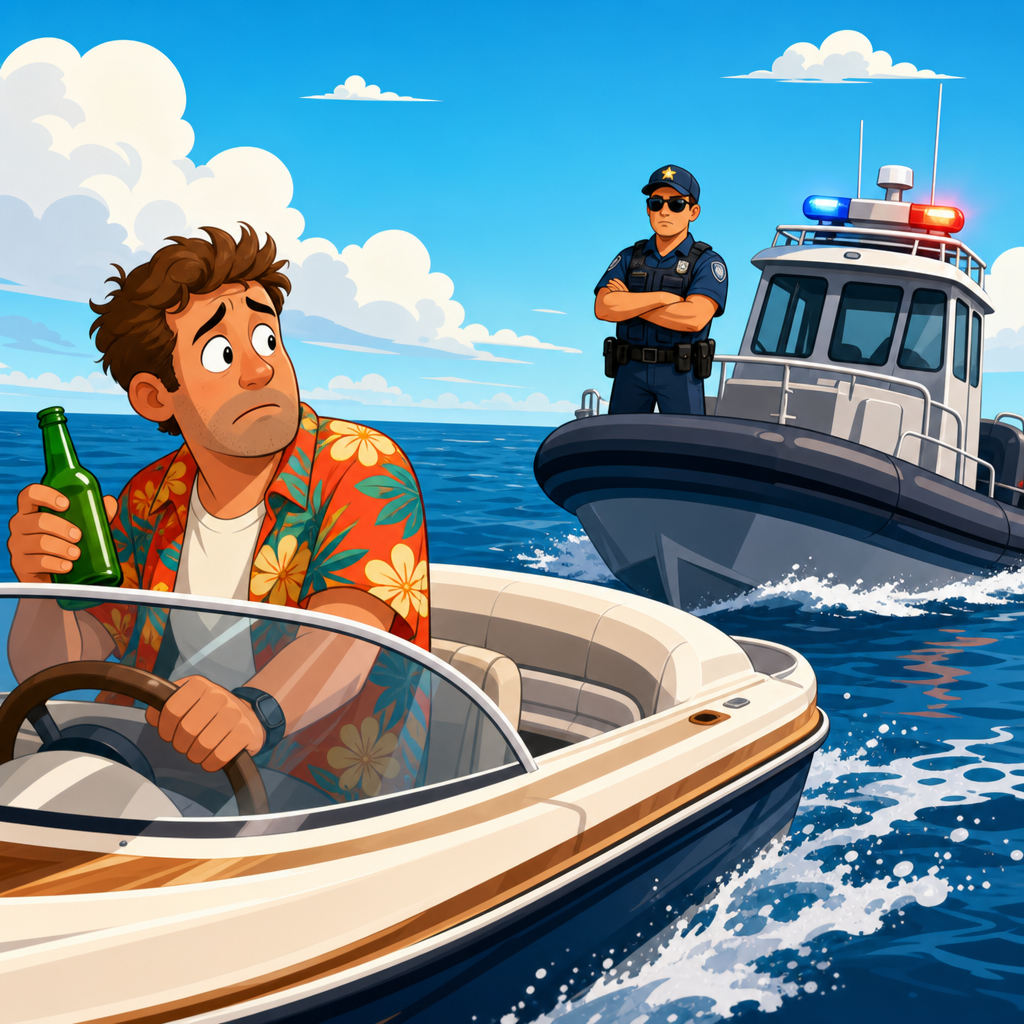
Can you be arrested for boating under the influence in international waters? Yes, you can, but the answer depends on which nation’s laws apply, which vessel you are operating, who boards you, and where enforcement jurisdiction begins and ends. In practice, mariners often assume that leaving coastal waters places them beyond the reach of boating under the influence laws. That assumption is wrong. I have worked with boating compliance issues long enough to see the same mistake repeated by recreational operators, charter guests, and even experienced captains: they treat “international waters” as a legal void. It is not.
Boating under the influence, commonly called BUI, means operating a vessel while impaired by alcohol, drugs, or a combination of substances. In the United States, BUI laws generally mirror drunk driving rules in one important respect: impairment can be proved either by observed behavior or by a blood alcohol concentration at or above a statutory threshold, often 0.08% for recreational operators. On the water, however, enforcement is more complex than on land because authority may come from federal law, state law, flag-state law, port-state control, or the law of the country where the voyage began or will end. Commercial vessels also face additional obligations under maritime safety regimes that treat intoxication as a serious navigational risk.
This matters because alcohol remains a major factor in fatal boating incidents. The U.S. Coast Guard’s Recreational Boating Statistics reports consistently identify alcohol as a leading known contributing factor in deaths on recreational vessels. Impairment on the water is often more dangerous than people expect because sun, wind, vibration, dehydration, motion, and fatigue intensify alcohol’s effects. A boater who feels merely relaxed may already have delayed reaction time, poor lookout discipline, and degraded judgment. Those are exactly the failures that cause collisions, groundings, falls overboard, and propeller strikes.
For readers researching boating laws and regulations, this article serves as the central guide to BUI laws. It explains how jurisdiction works offshore, when an arrest is possible, what authorities can do, how tests are administered, what penalties may follow, and where common myths break down. It also clarifies a crucial point: “international waters” usually means waters beyond any nation’s territorial sea, but legal authority does not disappear there. The controlling question is not simply location. The controlling question is which sovereign has lawful authority over the vessel and operator at that moment.
How BUI laws apply on the water
BUI laws prohibit operating or being in actual physical control of a vessel while impaired. “Operating” is interpreted broadly. On many boats, the person at the helm is not the only person exposed. If someone is directing navigation, controlling engines, handling throttle and steering, or otherwise exercising command, that person may be treated as the operator. Law enforcement officers and marine investigators look at conduct, not job titles. I have seen cases where a boat owner claimed a friend was “just helping” with steering, yet the evidence showed that friend was the operator for enforcement purposes.
Most BUI enforcement begins with observed facts. Officers look for excessive speed in a no-wake zone, failure to maintain a proper lookout, unsafe passing, erratic course changes, delayed response to commands, poor docking control, and physical signs such as bloodshot eyes, slurred speech, and the odor of alcohol. Standardized field sobriety tests may be adapted for marine conditions, but they are not always practical on a moving vessel. As a result, officers often rely heavily on totality-of-circumstances evidence, portable breath testing, chemical tests conducted ashore, and witness statements from passengers or nearby boaters.
For recreational operators in U.S. waters, the Federal Boat Safety Act and parallel state statutes create overlapping enforcement structures. States usually enforce BUI within their territorial waters and inland waters. The Coast Guard can enforce federal safety laws on waters subject to U.S. jurisdiction, including the high seas in many circumstances involving U.S.-flagged vessels or persons subject to U.S. law. Commercial mariners face even stricter standards under Coast Guard regulations, including drug and alcohol testing rules after serious marine incidents under 46 CFR Part 4 and testing programs under 46 CFR Part 16. Those frameworks show that intoxication offshore is treated as a safety and licensing issue, not merely a local boating ticket.
What “international waters” actually means
International waters usually refers to the high seas, meaning waters beyond any country’s territorial sea. Under the United Nations Convention on the Law of the Sea, the territorial sea generally extends up to 12 nautical miles from a coastal baseline. Beyond that, a coastal state may still exercise limited rights in a contiguous zone, typically up to 24 nautical miles, and sovereign rights over resources in its exclusive economic zone, which can extend to 200 nautical miles. Those zones matter because people often confuse resource rights with criminal enforcement power. They are not the same thing.
On the high seas, the default rule is flag-state jurisdiction. A vessel is ordinarily subject to the laws of the nation whose flag it flies or where it is registered. If a U.S.-registered recreational boat is 40 nautical miles offshore, U.S. law may still apply to conduct aboard that vessel. If a Bahamian-flagged yacht is in the same location, Bahamian law may be the primary legal framework. Stateless vessels are a different problem entirely and can face boarding by multiple authorities under broader enforcement theories. The point is simple: offshore location changes the jurisdictional analysis, but it does not erase it.
Jurisdiction also depends on the nationality of the people involved, the nature of the offense, whether the vessel will enter a port, and whether there is an immediate safety threat. If impairment causes a collision, injury, pollution event, or distress situation, multiple legal regimes can come into play at once. A captain may later face action from the flag state, the coastal state where the vessel lands, insurers, licensing authorities, and civil plaintiffs. Arrest at sea is only one part of the legal exposure.
Can you actually be arrested in international waters?
Yes. Arrest can occur in at least three practical ways: by the flag state’s enforcement authority, by a coastal state when the vessel enters its jurisdiction, or by another authorized authority under a treaty, boarding agreement, or recognized enforcement exception. In real-world boating cases, the most common scenario is not a dramatic offshore seizure. It is detection offshore followed by detention, escort, or later arrest once the vessel reaches port. If you are impaired on a U.S.-flagged boat, crossing the 12-nautical-mile line does not create immunity from U.S. consequences.
The Coast Guard has broad boarding authority over U.S. vessels on the high seas to conduct safety and documentation inspections. If officers observe clear signs of intoxication affecting safe operation, they do not have to ignore it simply because the vessel is outside state waters. They can investigate, secure the vessel, require a sober operator, direct the vessel to port, and support criminal or civil enforcement. In severe cases involving danger to life or property, immediate intervention is expected. Maritime law prioritizes safety of navigation over a boater’s mistaken belief in offshore freedom.
Arrest authority is especially clear when the vessel later enters a port or territorial sea. A person who committed BUI on the high seas may be arrested when the boat returns to a marina, enters a harbor, or docks in a country with jurisdiction over the offense or its consequences. Evidence gathered offshore can support that arrest. This is similar to how crimes committed during a voyage are often processed once the vessel is in a place where courts, detention facilities, and chemical testing infrastructure are available.
| Situation | Likely legal authority | What may happen |
|---|---|---|
| U.S.-flagged recreational boat 30 nautical miles offshore | U.S. federal authority, especially Coast Guard | Boarding, investigation, escort to port, later arrest or citation |
| Foreign-flagged yacht on the high seas | Primarily flag state, unless another valid basis exists | Possible report to flag state, port consequences on arrival |
| Impaired operator causes collision near another country’s coast | Coastal state plus flag state | Detention, criminal case, civil claims, insurance fallout |
| Boat detected offshore, returns to state marina | State or federal officers based on gathered evidence | Arrest ashore, chemical testing, license and boating sanctions |
Who can enforce BUI laws offshore
In U.S. practice, the Coast Guard is the agency most people associate with offshore enforcement, and for good reason. It can board U.S. vessels on the high seas without the same probable-cause framework that typically governs car stops on land because maritime safety inspections have long been treated differently. During a lawful boarding, evidence of intoxication can become a BUI case quickly. State marine patrol officers usually have less offshore reach, but they often coordinate with federal authorities or take over once the vessel returns to state waters.
Foreign coast guards, naval forces, customs services, and water police may also act depending on the vessel’s location and nationality. Many countries criminalize intoxicated vessel operation, especially for commercial navigation, ferries, and charter operations. Port states can impose detention, fines, and reporting requirements even where the offense began outside territorial waters. Commercial operators should also remember that classification societies, safety management systems, and employer policies can trigger separate consequences independent of any criminal charge.
One underappreciated issue is evidence sharing. Offshore investigations rarely stay offshore. Boarding reports, body camera footage, navigation data, AIS tracks, VHF recordings, passenger interviews, and accident reconstruction findings can move between agencies. I have seen operators focus only on whether they were “arrested right there” and miss the larger problem that the file was already being built for later action. In maritime enforcement, delay does not mean abandonment.
Testing, evidence, and penalties
BUI cases rise or fall on evidence. Breath testing is common, but marine environments complicate timing and reliability arguments. A person may be tested well after initial contact if the priority offshore was stabilizing the vessel, transferring passengers, or getting to safe harbor. Prosecutors then use observed impairment, admissions, open containers, witness testimony, GPS data showing erratic operation, and post-incident reconstruction to support the case. Refusal to submit to chemical testing can carry its own consequences under implied-consent laws in many jurisdictions, including fines, adverse inferences, or administrative penalties.
Penalties vary widely. For a first recreational offense, consequences may include fines, jail exposure, probation, mandatory boating safety courses, community service, and suspension or restriction of boating privileges. Aggravating factors increase risk substantially: high blood alcohol levels, minors on board, excessive speed, nighttime operation, prior DUI or BUI history, injuries, or fatalities. Commercial mariners face credential action, employer discipline, reportable marine casualty consequences, and disqualification risks. Insurance coverage can also be jeopardized if policy terms exclude losses caused by illegal intoxicated operation.
The practical consequences often outlast the criminal case. A BUI arrest can affect charter eligibility, marina relationships, vessel financing covenants, employment screenings, immigration travel, and civil lawsuits after an accident. If someone is injured, an intoxicated operator may face punitive exposure or a devastating negligence claim. That is why treating BUI as “just like having drinks on the boat” is one of the most expensive mistakes in recreational boating.
Common myths about BUI in international waters
The biggest myth is that international waters are lawless. They are not. The second myth is that only the country nearest to you matters. Usually, the flag state matters more on the high seas. The third myth is that if officers do not test you immediately, they cannot prove impairment. In fact, maritime cases often proceed on layered evidence collected over time. The fourth myth is that passengers can drink freely, so the operator can too. Passenger consumption is not the issue; operator impairment is.
Another dangerous misconception is that experienced boaters “handle alcohol better” offshore. Maritime accident data and human factors research say otherwise. Motion, glare, heat, and fatigue reduce performance before a person recognizes the decline. The National Association of State Boating Law Administrators and Coast Guard safety materials have long warned that environmental stressors accelerate impairment. Experience does not cancel physiology.
Finally, some boaters believe BUI only applies to motorboats. That is false in many jurisdictions. Sailboats, personal watercraft, dinghies with outboards, and sometimes other watercraft fall within vessel-operation statutes. The exact definitions vary, but assuming your craft is exempt without checking the governing law is a serious error.
How boaters should reduce risk and stay compliant
The safest rule is simple: designate a sober operator before departure and keep that plan in place for the entire voyage, including the return to port. If the designated operator changes, make the handoff deliberate and early, not after impairment begins. Keep hydration, sun protection, and rest in mind because they affect judgment even when alcohol is limited. For longer passages, apply the same discipline used in watchstanding: document who has command responsibility and when.
Boat owners should also know the law that follows the vessel. Check registration status, flag documentation, charter terms, and destination-country rules. If you run a U.S.-flagged boat, learn both federal requirements and the state BUI laws most likely to apply when you depart and return. Commercial operators should align onboard policy with Coast Guard regulations, company manuals, and insurance conditions. If an enforcement encounter occurs, comply with lawful orders, avoid making damaging guesses about what you consumed, and contact qualified maritime counsel as soon as possible.
For anyone building a broader understanding of boating laws and regulations, BUI laws deserve close attention because they connect to accident liability, operator duties, navigation rules, marine insurance, and criminal procedure. The key takeaway is direct: yes, you can be arrested for boating under the influence in international waters, and you can certainly face enforcement for it. Offshore distance is not a shield. Jurisdiction follows the vessel, the flag, the voyage, and the safety interests of the states involved. If you operate a boat, make sobriety part of seamanship, review the laws that govern your route, and treat every departure as a legal as well as navigational responsibility.
Frequently Asked Questions
Can you actually be arrested for boating under the influence in international waters?
Yes, you can. The idea that international waters create a law-free zone is one of the most common and most dangerous misunderstandings among recreational boaters. Whether you can be arrested for boating under the influence in international waters depends on several factors, including the vessel’s nationality, the operator’s nationality, the laws of the flag state, and which enforcement agency has legal authority to stop, board, inspect, or detain the vessel. In many cases, a boat remains subject to the laws of the country where it is registered, even after it leaves that country’s territorial waters. That means a boater operating a U.S.-flagged vessel, for example, may still face enforcement action under U.S. law even outside the 12-nautical-mile territorial sea.
It is also important to understand that “arrest” may not always happen in the dramatic way people imagine. In real-world enforcement, officers may board the vessel, conduct safety and documentation checks, observe signs of impairment, perform field sobriety-style assessments when practical, gather statements, and then detain the operator or direct the vessel to port. Depending on the circumstances, the operator may be formally arrested immediately, cited and required to appear later, or turned over to another authority with clearer jurisdiction. So while the exact procedure varies, the legal risk is absolutely real. International waters do not automatically shield an impaired operator from criminal, civil, or administrative consequences.
Who has jurisdiction over a boat in international waters if the operator is suspected of being under the influence?
Jurisdiction in international waters is not determined by a single simple rule. Instead, it usually begins with the flag state, meaning the country where the vessel is registered. A vessel on the high seas is generally subject to the laws of its flag state, and that country may assert authority over conduct aboard the vessel, including intoxicated operation. For many boaters, this is the most important point: crossing out of coastal waters does not remove the boat from legal control; it often just shifts the analysis to which nation’s law follows the vessel.
Beyond the flag state, jurisdiction can also arise from the nationality of the operator or passengers, treaties between nations, law enforcement authority involving customs, immigration, narcotics, safety, or piracy concerns, and the vessel’s location relative to special maritime zones. Some countries authorize their coast guards or naval forces to board certain classes of vessels in broader areas than boaters expect, particularly when the vessel is stateless, engaged in suspicious conduct, or subject to bilateral maritime enforcement agreements. In addition, if a vessel eventually enters a port or territorial sea, local authorities may act based on evidence gathered earlier. That means an impaired operator may not avoid legal exposure merely because the alleged conduct occurred outside territorial waters. The practical takeaway is that jurisdiction at sea can overlap, and boaters should never assume that distance from shore eliminates enforcement authority.
Does it matter whether the boat is privately owned, commercially operated, or registered in a different country?
Yes, it matters a great deal. The type of vessel and its registration can significantly affect which laws apply and which authorities can enforce them. A privately owned recreational vessel may be treated differently from a commercial fishing boat, charter vessel, passenger vessel, or cargo ship. Commercial operators are often held to strict licensing, training, and safety standards, and alcohol-related violations may trigger not only criminal charges but also professional discipline, certificate suspension, insurance consequences, and employer reporting requirements. On some commercial vessels, even being under the influence while on duty can create major regulatory problems regardless of whether the vessel is near shore or offshore.
Registration is equally important. A vessel registered in one country generally carries that country’s legal identity on the water. If a U.S. citizen is operating a boat registered in the Bahamas, Panama, Canada, or another nation, the flag state may have primary legal authority over conduct aboard the vessel while in international waters. At the same time, that does not necessarily prevent another nation from taking action later, especially if the vessel enters its waters, docks in its port, or if a treaty or other legal basis supports enforcement. If the vessel is undocumented, improperly registered, or considered stateless, the legal situation can become even more serious, because stateless vessels often receive less protection from exclusive flag-state control and may be more vulnerable to boarding and enforcement by multiple authorities. In short, ownership, use, registration, and status at sea all shape the legal analysis in a boating under the influence case.
Can the Coast Guard or another maritime authority board your boat in international waters and investigate impairment?
Yes, in many situations maritime authorities can board a vessel in international waters, although the exact scope of that authority depends on the nation involved, the vessel’s status, and the legal reason for the boarding. For example, some coast guard agencies have broad authority to stop and board vessels flying their nation’s flag for documentation, safety, and law-enforcement purposes. During a lawful boarding, officers who observe slurred speech, unsteady movement, open containers, poor vessel handling, the odor of alcohol, or other signs of intoxication may expand the encounter into an impairment investigation. What starts as a routine safety inspection can quickly become a serious legal event.
At sea, impairment investigations are not always conducted the same way they are on land. Officers may rely on vessel operation patterns, witness statements, visible signs of intoxication, admissions by the operator, chemical testing if available and authorized, and practical field assessments adapted to marine conditions. They may also inspect logs, communications, safety compliance, and the operator’s credentials. If the boarding authority is valid and the evidence supports probable cause or the applicable legal standard, enforcement can include detention, seizure of the vessel in extreme cases, escort to port, formal charges, or referral to another jurisdiction. Boaters should understand that a boarding in international waters is not automatically improper simply because it happens far from shore. If the vessel is within the lawful reach of the boarding agency, officers may investigate suspected boating under the influence just as seriously offshore as they would near the coast.
What penalties can result from boating under the influence in international waters?
The penalties can be severe, and they are often broader than people expect. If the applicable law allows prosecution, the operator may face criminal charges, jail time, fines, probation, mandatory substance education or treatment, and a permanent or long-lasting record. In addition, boating under the influence can trigger administrative consequences such as suspension or revocation of boating privileges, loss of captain’s credentials, reporting obligations to licensing agencies, vessel insurance problems, and difficulty obtaining future marine employment or charter authority. In commercial settings, the collateral consequences may be even more damaging than the criminal case itself.
Penalties can increase sharply if aggravating facts are present. Examples include causing a collision, injuring a passenger, operating recklessly, refusing lawful chemical testing where refusal penalties apply, carrying children aboard, damaging protected waters or infrastructure, or combining intoxication with other offenses such as undocumented operation or customs violations. There is also a practical reality many boaters overlook: even if the legal fight over jurisdiction is complex, the immediate consequences can still be costly and disruptive. A vessel may be delayed, searched, escorted, impounded, or stranded far from its intended destination. Passengers may need alternate transportation. Travel plans can collapse. So while the legal details depend on the country, the vessel, and the enforcement authority involved, the safest and most accurate answer is that boating under the influence in international waters can absolutely lead to arrest, prosecution, and serious long-term consequences.