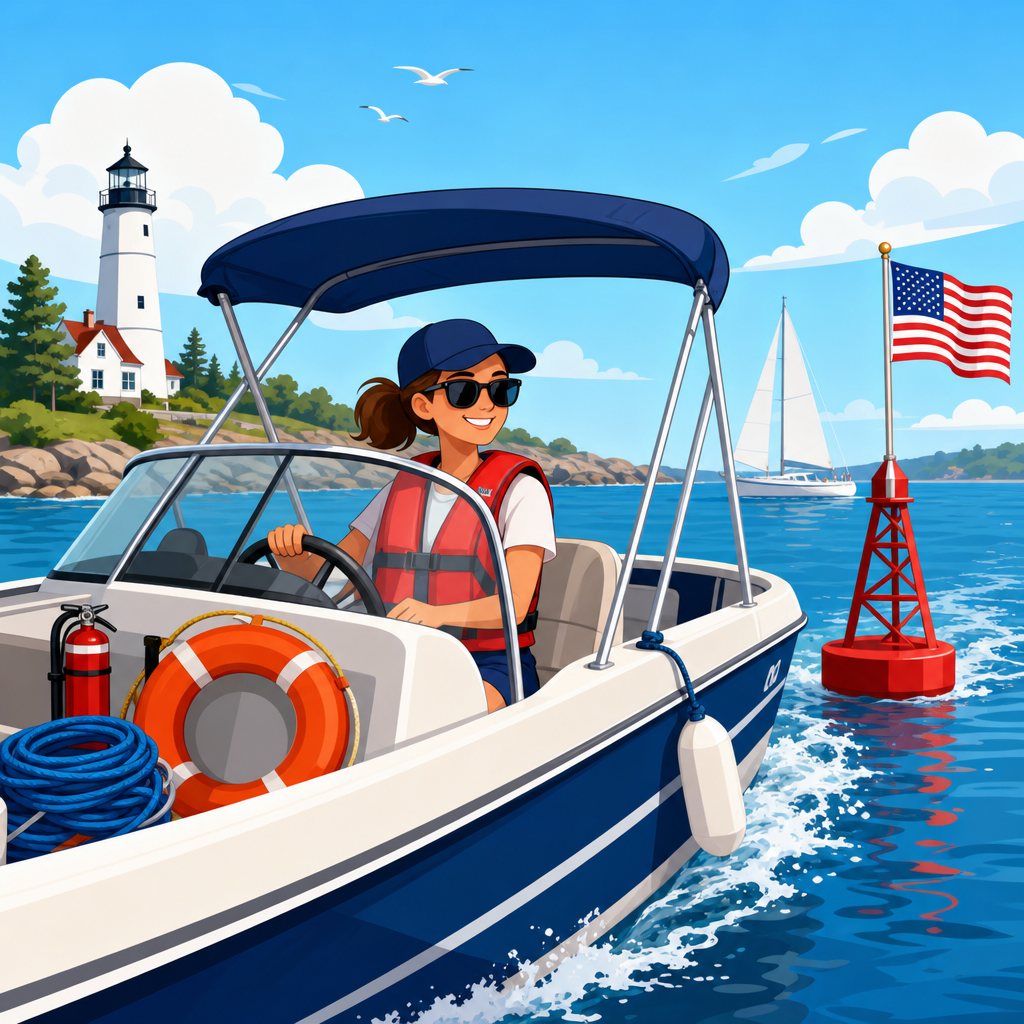
Operating a boat legally in U.S. waters means complying with a layered system of federal rules, state boating laws, local ordinances, and practical safety requirements that apply before departure, while underway, and after an enforcement stop or accident. In plain terms, the U.S. Coast Guard sets many baseline standards for equipment, navigation, documentation, and operator conduct, while each state adds its own registration rules, boater education mandates, age limits, titling procedures, and enforcement penalties. That combination matters because a legal issue on the water rarely starts as a paperwork problem alone. In my experience helping boat owners sort out compliance questions, the most expensive mistakes usually begin with something small: expired registration decals, missing life jackets for a child passenger, an unreported grounding, or towing after dark with improper lights.
This hub explains how to legally operate a boat in U.S. waters by connecting the major legal areas into one practical framework. Key terms are worth defining at the start. A vessel is any watercraft used as transportation on water. Numbering usually means state registration numbers displayed on the bow. Documentation is a federal certificate issued by the U.S. Coast Guard’s National Vessel Documentation Center for eligible vessels, often larger recreational boats. Navigation Rules are the right-of-way and operating rules sometimes called the nautical rules of the road. Personal watercraft, or PWC, include Jet Skis and similar craft, and they often face stricter age and education rules than runabouts or pontoons.
The reason this topic deserves a full hub article is simple: legal operation is not one single permit. It is a checklist of obligations that change based on boat type, propulsion, horsepower, state of principal use, and where you navigate. Coastal waters can trigger federal carriage requirements, invasive species rules may apply when crossing state lines, and certain lakes impose no-wake zones or engine restrictions. If you understand the structure of U.S. Coast Guard and state boating laws, you can prevent citations, avoid insurance disputes, and reduce accident risk. More important, you can make lawful decisions quickly when conditions change, which is exactly what safe and compliant boating demands.
Understand the Federal and State Split
The fastest way to understand boating laws in the United States is to separate federal authority from state authority, then remember that both can apply at the same time. The U.S. Coast Guard regulates core safety and navigation matters on navigable waters, including carriage of life jackets, visual distress signals where required, sound-producing devices, ventilation, backfire flame control, accident reporting obligations, and compliance with the Navigation Rules. Federal law also governs documented vessels, pollution prevention, reckless or negligent operation, and boating under the influence under certain circumstances. On federally controlled waters, Coast Guard boarding authority is broad, and officers do not need the same suspicion threshold motorists expect during a road stop.
States, by contrast, usually control registration, titling, boater education cards, age minimums, dealer processing, and many day-to-day operating restrictions. A state may require anyone born after a certain date to complete an approved boating safety course, while another state may require education for all PWC operators regardless of age. States also define local speed zones, towing rules for skiers, waste discharge rules on inland waters, and accident reporting forms. The practical point is that federal law does not cancel state law. If your center console is properly equipped under Coast Guard rules but your registration expired last month, you are still operating illegally. If your paperwork is perfect but you violate right-of-way rules in a narrow channel, you can still face enforcement action.
Registration, Titling, and Federal Documentation
Most recreational boats with propulsion must be registered in the state where they are principally used, and many states also title motorized boats and larger sailboats. Registration generally requires proof of ownership, hull identification number verification, payment of fees, and display of state-issued registration numbers plus current decals. The numbers must be affixed on the forward half of the vessel, usually in block letters and contrasting color, with spacing and format specified by state law. I routinely see owners cited because the decals are correct but the spacing or readability of the number is not. Enforcement officers notice those details immediately during a dockside or underway check.
Federal documentation is different from state registration. Eligible vessels of at least five net tons can be documented with the Coast Guard, and many lenders prefer documentation for financed coastal boats because it records preferred ship mortgages. A documented recreational vessel typically does not display state bow numbers, but it may still need state use decals or state registration in limited situations depending on local law. The vessel must carry an official number and hailing port in the required format. If you buy a used documented vessel, verify the chain of title, endorsements, and abstract of title before closing. Documentation errors can create financing, insurance, and resale problems that are harder to fix than an expired trailer tag.
For a compliance snapshot, use this framework before launch:
| Legal Area | Typical Requirement | Common Mistake |
|---|---|---|
| State registration | Current numbers and decals displayed correctly | Expired decal or unreadable bow numbers |
| Title or ownership proof | State title, bill of sale, or assigned ownership documents | Operating before transfer is completed |
| Federal documentation | Certificate onboard and markings compliant | Assuming documentation replaces all state obligations |
| HIN | Valid hull identification number matching paperwork | Mismatched HIN after repair or fraudulent sale |
Operator Education, Age Limits, and Licensing Questions
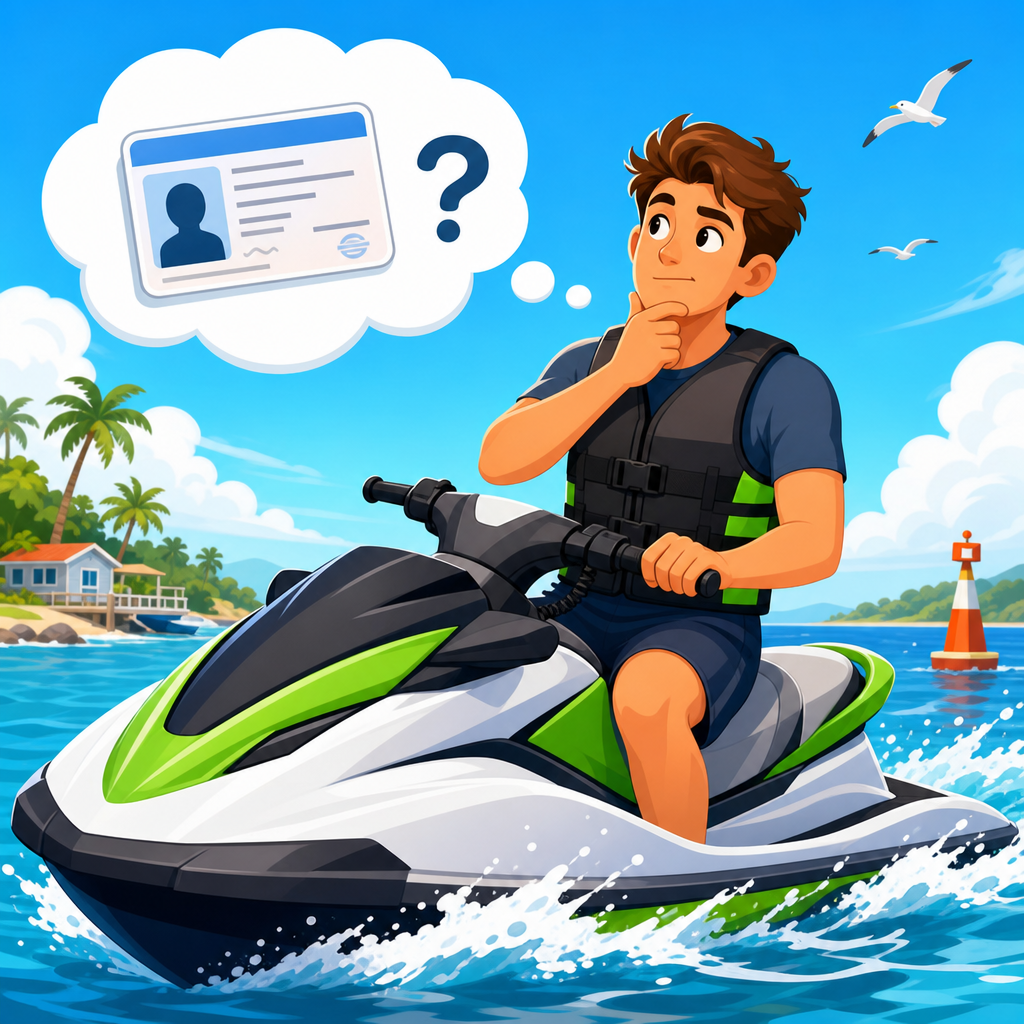
One of the most common questions is whether you need a boating license. In most states, recreational operators do not hold a license in the same sense as a driver’s license. Instead, they may need a boater education certificate from a course approved by the National Association of State Boating Law Administrators or the state agency that enforces boating law. Many states phase these requirements by age or date of birth. For example, a state may require all operators born after January 1 of a certain year to carry proof of course completion, while exempting older operators, renters under supervision, or nonresidents meeting equivalent home-state standards.
Age restrictions matter most on personal watercraft and high-horsepower boats. Some states prohibit children below a minimum age from operating a PWC at all, while others allow operation only with a supervising adult onboard or nearby. Rental operators often apply stricter rules than the statute requires because their insurers demand it. When I review rental agreements, I often find mandatory instruction, sober-operation clauses, geographic limits, and acknowledgment of local no-wake areas built directly into the contract. Those terms do not replace statutory law, but they can affect liability if an accident happens.
Commercial operation is a separate issue. If you carry passengers for hire, guide fishing trips for compensation in certain contexts, or operate inspected vessels, federal credentialing through a Merchant Mariner Credential may apply. Recreational boaters should not assume that occasional paid trips are legally casual. Once money changes hands, licensing, inspection, and insurance rules can shift dramatically.
Required Safety Equipment and Pre-Departure Compliance
To legally operate a boat, required safety equipment must be onboard, serviceable, and appropriately sized for the vessel and passengers. Coast Guard carriage requirements depend on vessel length, propulsion, construction date, and operating area. Almost every recreational vessel must carry wearable U.S. Coast Guard–approved life jackets in the correct size for each person onboard. Children often must wear them under state law, especially underway or on open decks. Boats of certain lengths also need a throwable flotation device. Fire extinguishers are required on many motorboats, especially where enclosed fuel or engine spaces create fire risk, and newer classification standards should be checked carefully because extinguisher labeling changed under updated rules.
Beyond life jackets and extinguishers, legal equipment may include navigation lights, a whistle or horn, visual distress signals for coastal waters and the Great Lakes, ventilation, backfire flame arrestor or equivalent engine protection, and a marine sanitation device if the vessel has an installed toilet. A sound-producing device is not optional on most boats; it is a legal signaling tool under the Navigation Rules. I advise owners to treat a pre-departure safety check like an aviation walkaround: verify drain plug, battery switch, blower operation, fuel odor, extinguisher charge, light function, registration card, and the physical condition of every life jacket. A citation is annoying, but a missing extinguisher discovered after an engine compartment fire is far worse.
Navigation Rules, Speed Restrictions, and Reckless Operation
Legal boat operation is not just about carrying gear. It is also about how you handle the vessel. The Navigation Rules establish right-of-way, lookout, safe speed, overtaking, crossing, head-on encounters, responsibilities in narrow channels, and lighting and shapes. Every operator must maintain a proper lookout by sight and hearing, proceed at a safe speed for conditions, and avoid collisions regardless of stand-on or give-way status. In practice, this means you cannot insist on theoretical right-of-way while ignoring congestion, weather, or a less experienced operator making a bad move.
States and local authorities add no-wake zones, manatee or habitat protection zones in some regions, slow-speed areas near marinas, and distance-off restrictions around swimmers, docks, and emergency vessels. Reckless or negligent operation statutes usually cover weaving through traffic, excessive speed in limited visibility, wake jumping close to other boats, operating too close to anglers or paddlecraft, and allowing passengers to ride on prohibited areas such as bow decks or transoms on some vessels while underway. Boating under the influence is aggressively enforced nationwide; the legal blood alcohol threshold is generally 0.08, but impairment can be charged below that level, and officers often use field sobriety tasks adapted for the marine environment. Refusing a chemical test can carry separate consequences depending on jurisdiction.
Environmental Rules, Reporting Duties, and Enforcement Stops
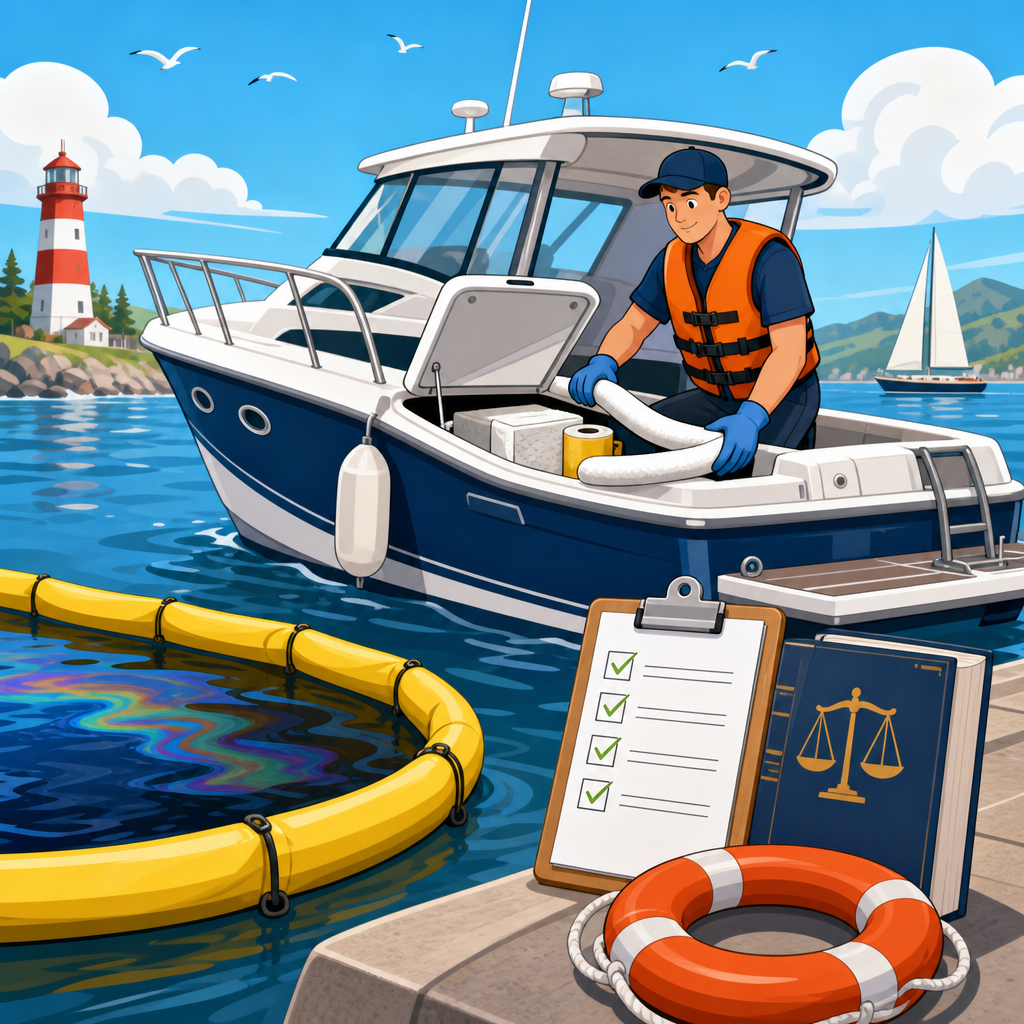
Pollution laws are a major part of legal boating. Federal rules prohibit the discharge of oil or oily waste that creates a sheen, and garbage restrictions are especially strict in coastal waters. Sewage discharge is regulated through marine sanitation device rules and no-discharge zones. Many states also regulate aquatic invasive species through inspection stations, decontamination programs, and mandatory drain-plug removal when trailering away from a launch. Western states in particular can impose significant penalties for moving mussels or contaminated water between lakes. Those programs are not secondary regulations; they are enforced operational rules.
Accident reporting is another area boaters overlook. A serious collision, injury, death, disappearance, or substantial property damage usually triggers a written report to the state reporting authority within a specific deadline. Federal casualty reporting can also apply in some circumstances. Do not leave the scene of a boating accident without rendering aid when safe to do so, exchanging identification, and notifying law enforcement where required. During an enforcement stop or boarding, stay calm, keep hands visible, follow instructions, and present registration or documentation, identification if requested under state practice, and required safety gear. A cooperative attitude does not waive your rights, but it usually keeps a routine safety inspection from becoming a prolonged investigation.
How to Stay Compliant Across States and Seasons
The best way to stay legal is to build a repeatable compliance system. Keep digital and paper copies of registration, title, documentation, insurance, and boater education cards. Review the boating handbook for your home state and any destination state before travel, especially if you operate on border waters. Confirm reciprocity rules for education certificates, check local wake maps, and inspect trailer, tow-vehicle, and launch permits as part of the same process. Each season, replace expired flares, inspect fire extinguishers, test navigation lights, and verify that registration decals and validation stickers are current. If you modify fuel systems, add enclosed compartments, install toilets, or change engine configuration, reassess equipment requirements rather than assuming last year’s checklist still works.
Legal operation in U.S. waters comes down to disciplined preparation and informed seamanship. Understand where federal rules govern, where state boating laws add obligations, and where local restrictions tighten both. Keep your registration or documentation current, carry the right safety equipment, follow the Navigation Rules, avoid impaired or reckless operation, and know your reporting duties after an incident. Those steps do more than prevent fines. They protect passengers, preserve insurance coverage, and make every launch less stressful. Use this hub as your starting point, then review the specific state, equipment, and right-of-way topics linked under your broader boating laws and regulations research so your next trip begins fully compliant.
Frequently Asked Questions
1. What laws do I need to follow to legally operate a boat in U.S. waters?
To legally operate a boat in U.S. waters, you usually need to comply with several layers of law at the same time: federal regulations, state boating laws, and sometimes county, city, or waterway-specific rules. Federal requirements often come from the U.S. Coast Guard and cover core issues such as required safety equipment, navigation lights, sound-producing devices, accident reporting, reckless or negligent operation, and rules of the road on the water. If your vessel is federally documented, additional documentation rules may apply as well.
State law adds another major layer. In most cases, your state determines whether the boat must be registered, whether it must be titled, whether the operator must complete a boater safety course, what age restrictions apply, and how validation decals or registration numbers must be displayed. Some states also impose special rules for towing skiers or tubers, personal watercraft operation, nighttime operation by minors, engine cutoff switch use, invasive species compliance, and alcohol limits tied to boating under the influence enforcement.
Local rules can matter too. Certain lakes, rivers, reservoirs, and harbors may have no-wake zones, horsepower limits, seasonal restrictions, special anchoring rules, or protected wildlife areas where boating is limited. That means a legal trip often requires checking not just your home state’s laws, but also the laws of the state and locality where you will actually be boating. The safest approach is to think of legal operation as a checklist: proper registration or documentation, legally required onboard equipment, qualified operator status, lawful vessel condition, and compliance with navigation and local operating rules once you leave the dock.
2. Do I need to register my boat, title it, or have it federally documented?
In many cases, yes, but the exact requirement depends on the vessel’s size, propulsion method, ownership status, and where it is principally used. Most states require motorized boats to be registered, and many also require titling. Registration generally produces a certificate and registration numbers that must be displayed on the bow in the format required by state law, along with current registration decals. Titling establishes ownership in a way similar to a vehicle title. If you buy a used boat, making sure the title and registration transfer correctly is an important legal step before operation.
Federal documentation is different from state registration. It is a national form of vessel registration managed at the federal level and is commonly used for certain larger recreational boats, commercial vessels, and boats involved in financing or coastwise activities. A documented vessel may still need to comply with state use taxes and other state-level requirements even if it does not display state registration numbers in the usual way. Documentation is not a substitute for understanding local boating rules.
As a practical matter, before operating, you should confirm whether your boat requires registration, title, or documentation; whether those records are current; whether ownership records match the current operator or owner; and whether proof of registration or documentation is onboard if required. If you are using a rented, borrowed, or newly purchased vessel, do not assume the paperwork is automatically in order. Operating an unregistered or improperly titled vessel can lead to citations, delays, or difficulty proving lawful ownership after an enforcement stop or accident.
3. What safety equipment is legally required on board?
Required equipment varies based on the boat’s length, type, propulsion, and where it is being operated, but some categories are common across many recreational vessels. Life jackets are one of the most important legal requirements. In general, a properly sized, Coast Guard-approved wearable life jacket must be available for each person on board, and many vessels must also carry a throwable flotation device. Children may be subject to stricter wear requirements under state law, and some states require life jackets to be worn in specific situations such as on personal watercraft or while being towed.
Other commonly required items include a sound-producing device such as a whistle or horn, proper navigation lights for operation during periods of reduced visibility or at night, fire extinguishers for many motorized vessels, ventilation systems for certain enclosed engine or fuel compartments, flame arrestors where required, and visual distress signals for boats operating on coastal waters or certain large bodies of water. Marine sanitation device requirements may apply if the vessel has an installed toilet. Some states also require an engine cutoff switch and lanyard use on certain boats, especially when operating on plane or using personal watercraft.
Legal compliance is not just about having the equipment somewhere on board. The gear must usually be accessible, serviceable, properly mounted or stored, and appropriate for the vessel. A fire extinguisher that is expired, a life jacket buried under heavy gear, or navigation lights that do not work can still result in a violation. A smart pre-departure routine is to inspect every required item before each trip, verify expiration dates where relevant, test lights and electronics, and make sure passengers know where emergency equipment is located. That routine not only helps you stay legal, it significantly improves safety if something goes wrong.
4. Do I need a boating license or boater education certificate to operate legally?
Possibly, and in many states the answer is effectively yes for at least some operators. The United States does not have one single nationwide boating license that covers every recreational boater in all circumstances. Instead, states usually decide whether operators must complete a boater education course, carry a boater education card, meet minimum age requirements, or satisfy special rules for operating personal watercraft. Because of this state-based system, whether you can legally operate often depends on your age, your date of birth, the type of vessel, the horsepower involved, and whether you are a resident or nonresident.
Many states require younger operators, and increasingly all operators in certain age categories, to complete a state-approved or NASBLA-approved boating safety course. Some states recognize equivalent credentials from other states, but not always in every situation. If you are traveling, renting a boat, or operating in a different state than your home state, it is important to verify reciprocity rules in advance. Rental operators may also impose their own training or checklist requirements even when the law does not strictly require a formal certificate.
To stay clearly on the right side of the law, you should confirm whether your state or destination state requires boater education, whether a temporary certificate is acceptable, whether you must carry proof while underway, and whether there are separate rules for personal watercraft. Even if your state does not require a course for your age group, completing one is still a wise move. It helps you understand navigation rules, right-of-way, emergency procedures, legal responsibilities after an accident, and how law enforcement officers evaluate safe and lawful vessel operation.
5. What should I do if I am stopped by marine law enforcement or involved in a boating accident?
If you are stopped by marine law enforcement, remain calm, cooperative, and attentive. Officers from the Coast Guard or state and local marine patrol units generally have authority to stop vessels to check registration, documentation, safety equipment, and compliance with boating laws. You should follow instructions promptly, keep your hands visible when appropriate, reduce speed safely, and provide requested documents such as registration certificates, identification, boater education credentials, or proof of documentation if applicable. A courteous, organized response tends to make the inspection smoother and helps show that you take compliance seriously.
After a stop, the legal issues often center on whether your paperwork is current, whether required gear is onboard and usable, whether the operator is impaired, and whether the vessel is being operated negligently or recklessly. If the officer identifies a violation, pay close attention to the details of the citation or warning and the deadline for correcting or responding to it. Some issues may be fix-it type violations, while others can carry fines or more serious consequences.
If you are involved in a boating accident, your legal duties become even more important. First, stop and render aid if it is safe and practical to do so. Then exchange identifying information as required and notify law enforcement when the accident meets reporting thresholds, which often involve death, disappearance, injury requiring treatment beyond first aid, or significant property damage. Both federal and state rules may require a formal written accident report within a set period. Failing to report a qualifying accident can create separate legal trouble beyond the accident itself.
It is also wise to document the scene carefully. Record the time, location, weather, identities of people involved, vessel information, photographs of damage, and contact information for witnesses. Do not make assumptions about fault at the scene, and do not leave before fulfilling your legal obligations. If the incident involves injury, major damage, alcohol allegations, or possible criminal exposure, speaking with a qualified attorney may be prudent. From a legal standpoint, what you do in the minutes and hours after a stop or accident can be just as important as how you operated the boat beforehand.