If you’re stopped by the Coast Guard, the right response is simple: stay calm, slow down safely, follow instructions, and be ready to show required safety equipment and documents. For recreational boaters, a Coast Guard boarding can feel stressful, but it is a routine law-enforcement and safety function on U.S. waters. Understanding how U.S. Coast Guard authority works, how state boating laws fit into the picture, and what officers typically check will help you handle the stop confidently and avoid turning a basic inspection into a citation or a dangerous situation.
In practice, this topic sits at the center of boating compliance. The U.S. Coast Guard enforces federal laws on navigable waters, including requirements tied to registration, navigation rules, life jackets, visual distress signals, sound-producing devices, and boating under the influence. State marine patrol agencies, sheriff units, harbor police, and wildlife officers also enforce their own boating laws, and many of those rules overlap with federal standards. I’ve worked with boaters preparing for inspections and post-citation reviews, and the same pattern shows up repeatedly: problems usually start with poor preparation, missing gear, expired documentation, or a confrontational attitude during a stop.
That is why a hub article on U.S. Coast Guard and state boating laws matters. Boating laws are not just technical rules buried in a handbook. They directly affect whether you can leave the dock legally, whether your passengers are protected in an emergency, and whether a routine contact ends in ten minutes or escalates into fines, vessel termination, or an arrest. This guide explains what happens during a Coast Guard stop, what officers can inspect, what documents you need, how federal and state rules interact, what violations are most common, and what to do after the encounter. Use it as your starting point for every related article in the broader boating laws and regulations category.
Why the Coast Guard Can Stop Your Boat
The Coast Guard has broad authority to stop and board vessels subject to U.S. jurisdiction. On navigable waters, officers do not need the same level of suspicion that drivers often expect from traffic stops on land. They may conduct safety inspections, documentation checks, fisheries enforcement, customs enforcement, environmental compliance reviews, and investigations of obvious operational violations. That authority comes from federal law and has been upheld in maritime enforcement for decades because vessels move through public waterways with significant safety and homeland security implications.
For recreational boaters, the most common boarding is a safety and compliance check. Officers may approach because your navigation lights are not visible, your registration numbers look incorrect, your wake is unsafe in a marked zone, a passenger appears to be riding on the bow improperly, or simply because they are conducting random safety boardings in the area. If alcohol, reckless operation, or a report from another mariner is involved, the stop may become more serious very quickly. The key point is that being stopped does not automatically mean you are suspected of a crime, but your conduct during the stop can affect the outcome.
What To Do Immediately When You Are Stopped
As soon as you realize the Coast Guard wants to stop your vessel, acknowledge them and make a controlled transition to compliance. Slow to idle unless directed otherwise, keep your hands visible, and avoid sudden course changes. If you are underway at speed, bring the boat down safely rather than cutting power abruptly in rough conditions. Assign one calm adult to manage passengers. Children should stay seated. Nobody should reach into compartments, throw items overboard, or move around unnecessarily, because those actions raise officer safety concerns and can make the boarding team suspect you are hiding contraband or creating a hazard.
When officers come alongside, answer plainly and follow commands exactly. In most boardings, they will identify themselves, explain the purpose of the stop, and tell you whether they intend to come aboard. Do not argue about jurisdiction on the water. Do not joke about weapons, drugs, or alcohol. Tell the boarding officer if there are firearms on board and where they are located, and leave them untouched unless specifically instructed. If you have pets, advise the officer so they can avoid being bitten or distracted. Good seamanship matters here too: fenders ready, engine in neutral when directed, and a stable boarding point if requested.
The fastest way through a routine stop is organization. Keep registration, documentation papers, personal identification, and safety equipment where you can access them without digging through every locker. I recommend boaters create a single inspection folder in a dry pouch and a labeled gear map for passengers. That small step cuts down boarding time and shows that the operator takes compliance seriously.
What Officers Usually Check During a Boarding
A Coast Guard or state marine enforcement inspection typically focuses on operator qualification, vessel identification, carriage requirements, and obvious operational safety issues. The exact checklist depends on vessel type, length, propulsion, where you are operating, and whether the boat is federally documented or state registered. Officers are looking both for legal compliance and for signs that the vessel is unsafe to continue operating.
| Inspection Area | What Is Usually Checked | Why It Matters |
|---|---|---|
| Registration or documentation | Current state registration, decals, or Certificate of Documentation | Confirms lawful operation and vessel identity |
| Operator credentials | Photo ID, state boater education card where required | Verifies age, identity, and training compliance |
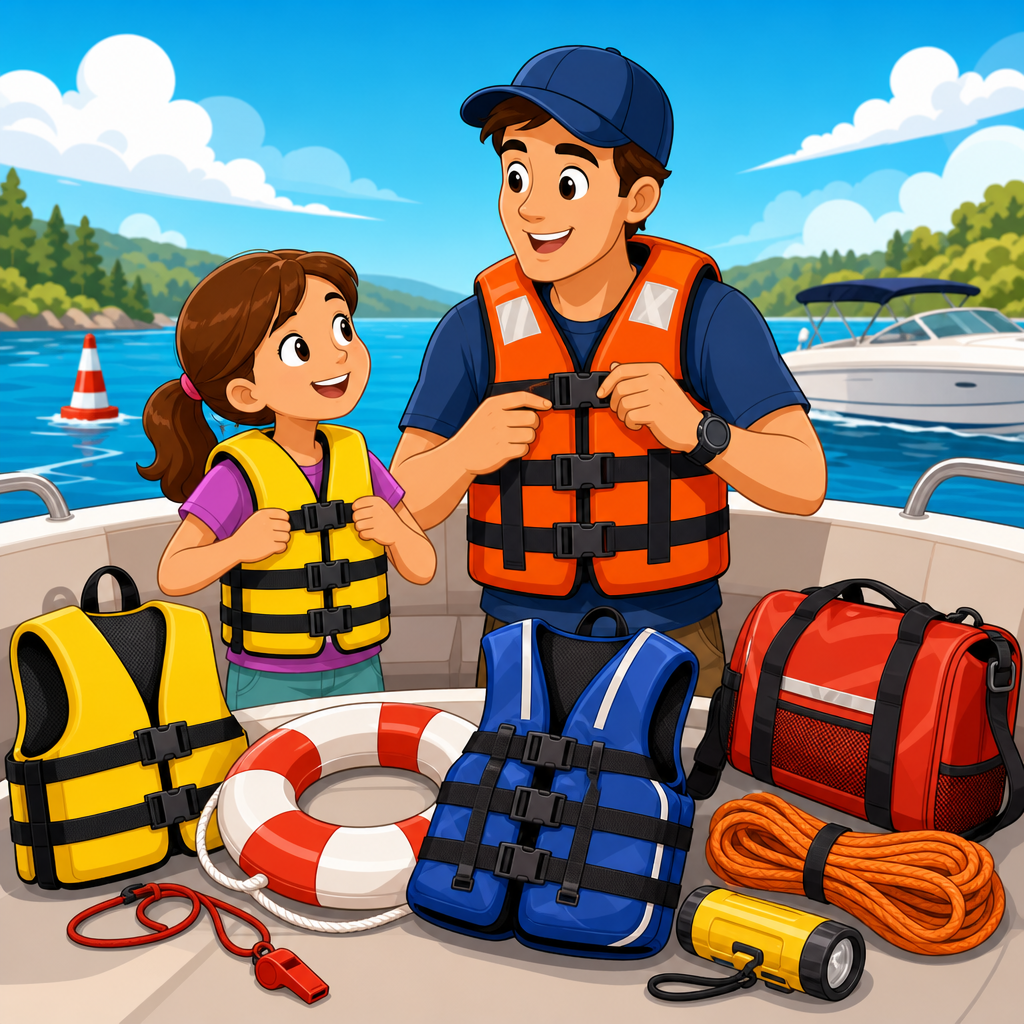
| Life jackets | Correct number, proper size, serviceable condition, accessible storage | Federal carriage rules and immediate survival needs |
| Throwable device | Type IV device when required on certain recreational vessels | Critical for man-overboard response |
| Fire extinguishers | Required quantity, correct type, valid condition indicators | Engine and fuel fires spread rapidly on boats |
| Visual distress signals | Unexpired flares or approved alternatives where required | Needed to signal for help on coastal and certain inland waters |
| Sound device and lights | Horn, whistle, bell where applicable, navigation lights | Essential for collision avoidance under navigation rules |
| Ventilation and backfire flame control | Required systems on gasoline-powered inboard compartments | Reduces explosion risk |
| Sanitation and pollution | Marine sanitation device, oil discharge compliance, garbage rules | Protects waterways and avoids federal penalties |
| Overall operation | Overloading, unsafe seating, reckless speed, impairment indicators | Determines whether voyage may continue |
One frequent misunderstanding is that possessing equipment is enough. It is not. A life jacket buried under gear may be treated as not readily accessible. Expired flares can trigger a citation. A fire extinguisher with a failed indicator or obvious corrosion may not count. Navigation lights that worked last month but fail during the stop are still a problem. Enforcement is based on current condition, not intent.
Federal Rules and State Boating Laws: How They Work Together
Federal boating law sets a national baseline, but state boating laws add major layers that recreational operators cannot ignore. The Coast Guard regulates vessel safety standards, navigation rules, and many carriage requirements. States regulate registration, numbering, titling, education requirements, age restrictions, towing sports rules, local speed zones, no-wake areas, and many life-jacket wear provisions. On shared waters, a boater may need to satisfy both systems at the same time.
For example, federal law may require one wearable life jacket for each person on board and a throwable device on certain vessels, while a state may also require children under a specific age to wear a life jacket whenever the vessel is underway. Florida, Texas, California, and New York all have state-specific provisions on education, local operation, and youth safety that go beyond the broad federal baseline. Likewise, federal navigation rules apply widely, but local authorities may impose additional restrictions around marinas, manatee zones, swim areas, or wildfire-related closures.
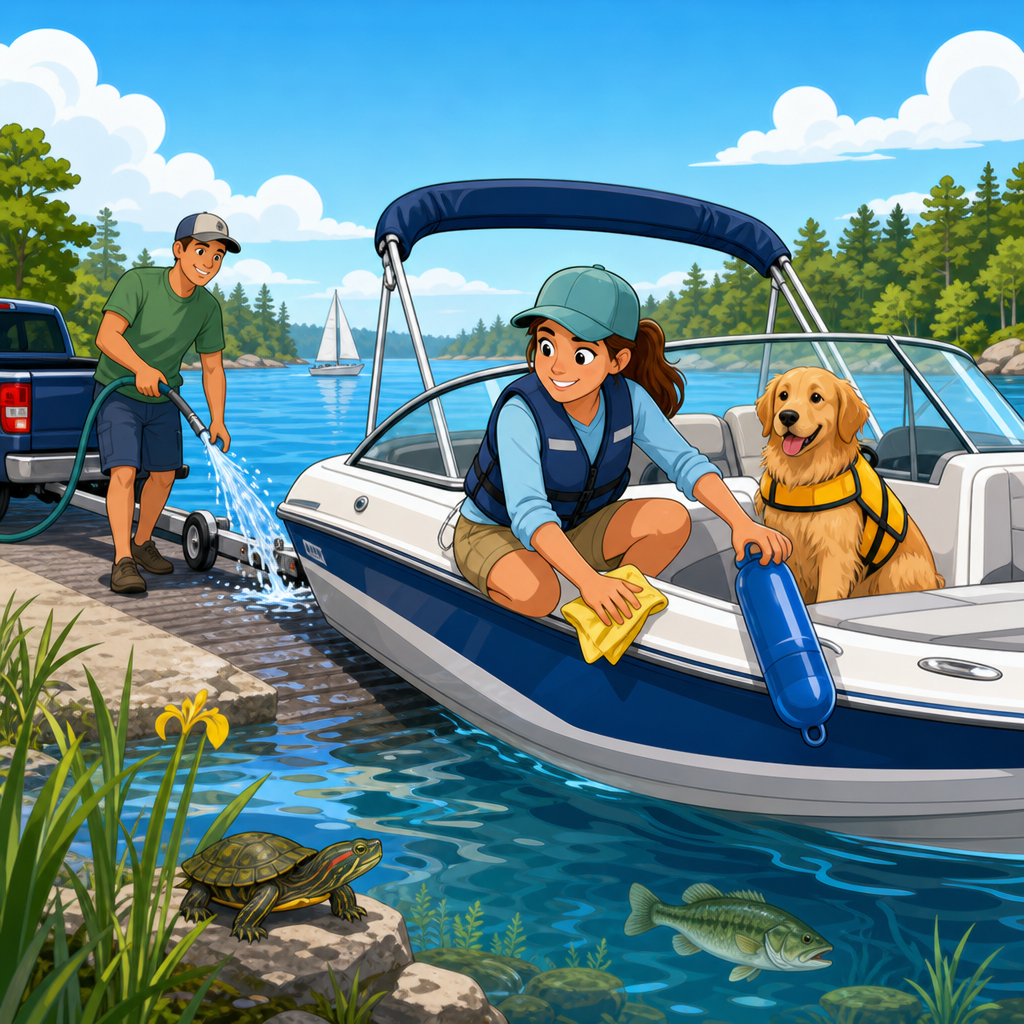
The practical rule is this: comply with the stricter requirement that applies where you are boating. If state law requires onboard proof of a boater safety course for operators born after a certain date, bring it even if your federal documentation is perfect. If a lake authority enforces clean-drain-dry procedures for invasive species, follow them in addition to standard boating equipment rules. A Coast Guard stop can easily expose unrelated state violations once officers begin reviewing the vessel and operator status.
Common Violations That Lead to Tickets or Further Action
The most common boating violations are not dramatic. They are basic equipment and operation failures that boaters often treat casually. Missing or undersized life jackets are at the top of the list. So are expired registration decals, missing boater education credentials, inoperative navigation lights, no sound-producing device, and expired visual distress signals. On gasoline-powered boats, fire extinguisher and ventilation deficiencies are frequent. Many operators also underestimate how often officers cite improper display of registration numbers or failure to carry documentation in an acceptable form.
Operational violations create greater risk. Excessive wake in a no-wake zone, allowing passengers to ride on the bow when unsafe, towing a skier without an observer where state law requires one, and operating too closely to swimmers or anchored boats all draw enforcement attention. Boating under the influence is especially serious. Every state prohibits operating a vessel while impaired, and federal officers can investigate impairment on waters under their authority. Alcohol hits harder on the water because of sun, wind, dehydration, vibration, and fatigue, a combination safety agencies often call stressor effects. A boater who seems merely relaxed at the dock may be legally and functionally impaired offshore.
If officers find severe safety deficiencies, they may terminate the voyage. That means the boat cannot continue until the issue is corrected or the vessel is otherwise secured. Voyage termination commonly occurs when there are insufficient life jackets, serious fuel or fire hazards, intoxicated operation, or conditions that make the vessel manifestly unsafe. That result is far more disruptive than a simple citation and can create towing, marina, and insurance complications.
Documentation, Education Cards, and Proof You Should Carry
Every boater should know whether the vessel is state registered, federally documented, or both in a limited administrative sense. Most recreational boats display state registration numbers and decals. Federally documented vessels carry a Certificate of Documentation and must mark the vessel according to documentation rules rather than state bow numbers in most cases. Carry the current paper or approved proof required by your state and vessel category. Do not assume a phone photo is sufficient unless your state specifically allows digital proof.
Operator paperwork matters too. Many states require boater education for operators born after a certain date, for personal watercraft users, or for younger operators. Some states recognize NASBLA-approved courses from other jurisdictions, while others require a specific certificate format. Keep that card or certificate accessible with your ID. If the boat is borrowed, carry written permission if possible, especially when traveling across state lines or operating a documented vessel. Charter situations raise separate rules, and bareboat charters can blur responsibility if the renter is acting as operator in command.
I advise owners to maintain a compliance packet with registration or documentation, insurance information, emergency contacts, boating education cards, and a simple equipment checklist dated before each trip. Insurance is not always legally required, but it becomes essential after a collision, grounding, or injury investigation. Having organized records often shortens the stop and improves credibility if there is any dispute later.
What Happens After the Stop and How To Avoid Problems Next Time
Once the boarding ends, officers may issue no action, a warning, a written notice of violation, a citation, or a termination order. Read every document before leaving the scene if possible. Ask polite, specific questions: What regulation applies, what correction is required, and by what deadline? If you receive a fix-it notice, complete it immediately and keep proof. If you believe a citation is wrong, contest it through the stated procedure rather than arguing on the water. Notes, photographs, and dated receipts for replacement gear can help later.
The best way to avoid future trouble is to treat compliance as part of pre-departure planning, not as a last-minute scramble. Use a departure checklist. Test lights, horn, bilge blower, and electronics before leaving the ramp. Confirm life jacket sizes for actual passengers, not your usual crew. Check extinguisher indicators, flare dates, registration expiration, and whether your state requires an engine cut-off switch lanyard to be worn. Many operators also benefit from a free Vessel Safety Check through the U.S. Coast Guard Auxiliary or United States Power Squadrons. Those courtesy inspections are educational, not punitive, and they catch deficiencies before an enforcement boarding does.
If you’re stopped by the Coast Guard, your goal is not to win an argument. It is to demonstrate safe command of the vessel, comply with lawful instructions, and keep everyone aboard protected. Federal and state boating laws work together to set that standard. Learn the rules that apply to your boat, your passengers, and your waters, then build a repeatable checklist around them. Review your gear before every trip, keep your documents organized, and use this boating laws and regulations hub to explore the related topics that affect your next day on the water.
Frequently Asked Questions
What should I do immediately if the Coast Guard signals me to stop?
If the Coast Guard signals your boat to stop, the best response is to stay calm, reduce speed gradually, and acknowledge the officers right away. You should bring the vessel to a safe, controlled stop without making sudden turns or abrupt throttle changes that could create a hazard. If you are underway, follow any directions about where to idle, which side to approach, or whether to remain in place. Assigning one person to handle communications while the operator focuses on safe maneuvering can help keep everyone calm and organized.
Once stopped, keep your hands visible, avoid unnecessary movement, and listen carefully to instructions. Tell passengers to remain seated and quiet unless officers ask them questions directly. Do not argue, joke about weapons or contraband, or make sudden attempts to reach into compartments. A Coast Guard stop is generally a routine safety and law-enforcement boarding, and your cooperation helps the process go faster and more smoothly. In most cases, officers will explain what they need, whether that is a document check, a safety inspection, or a response to a navigation or operational concern.
Can the Coast Guard board my recreational boat without a warrant or probable cause?
Yes. The U.S. Coast Guard has broad federal authority to stop, board, and inspect vessels on U.S. waters for safety, documentation, and law-enforcement purposes. For recreational boaters, this can be surprising, especially if you are used to roadside stops on land requiring a specific reason. On the water, however, the rules are different. The Coast Guard may conduct routine boardings to verify compliance with federal boating laws and safety requirements, even when there is no obvious violation.
That authority does not mean officers can act without limits, but it does mean a boarding itself is often lawful even if you were operating normally. Depending on the location, state and local marine officers may also have overlapping authority under state boating laws, and in some situations they work alongside the Coast Guard. As a practical matter, the safest and smartest approach is to cooperate, provide the requested items, and avoid escalating the encounter. If you later believe your rights were violated or the stop was mishandled, that is usually something to address afterward through legal channels rather than during the boarding itself.
What documents and safety equipment will the Coast Guard usually ask to see?
During a routine boarding, officers commonly ask for your vessel registration or federal documentation, personal identification, and any other required paperwork that applies to the boat and its operation. Depending on your vessel and location, they may also ask about proof of ownership, fishing permits, or boating education credentials if state law requires them. It helps to keep all documents together in a dry, easy-to-reach place so you are not searching through bags or compartments while officers wait.
On the safety side, the Coast Guard often checks for properly sized and accessible life jackets, wearable personal flotation devices for all required persons on board, and any throwable flotation device required for your vessel type and length. They may also inspect fire extinguishers, visual distress signals, sound-producing devices such as a horn or whistle, navigation lights, ventilation, backfire flame control where applicable, and overall vessel condition. They may ask to see that bilge areas are reasonably safe, that fuel systems do not present obvious hazards, and that your boat displays registration numbers and validation stickers correctly. Having equipment technically on board is not always enough; it generally must also be serviceable, accessible, and compliant with current legal requirements.
How should I handle passengers, questions, and any concerns about saying the wrong thing?
The operator should remain polite, direct, and focused on the officers’ questions. Passengers should usually stay seated, remain calm, and avoid interrupting unless they are addressed. If an officer asks who is operating the vessel, where you are coming from, or whether there are safety issues on board, answer honestly and briefly. The goal is not to deliver a long explanation but to provide clear information and allow the boarding team to complete its work efficiently. If you need to reach for a document or open a compartment, tell the officer what you are doing before you move.
If you are unsure how to answer a question, it is better to say that you do not know than to guess. If officers raise concerns about alcohol use, negligent operation, or a possible violation, stay respectful and do not become confrontational. Recreational boaters sometimes make a stressful stop worse by arguing, volunteering unnecessary details, or letting passengers speak over one another. A calm, orderly interaction is almost always in your best interest. If the situation becomes serious and you are worried about legal consequences, you can still remain cooperative while avoiding unnecessary discussion beyond basic identifying and operational information.
What happens if the Coast Guard finds a violation during the stop?
If the Coast Guard discovers a violation, the outcome depends on the nature and seriousness of the issue. Minor safety deficiencies may lead to a warning, verbal instruction, or written notice to correct the problem. For example, expired flares, missing life jackets, or an improperly mounted fire extinguisher might result in documentation of the deficiency and guidance on how to fix it. In other situations, officers may issue a citation, assess civil penalties, terminate the voyage, or prevent the vessel from continuing until an unsafe condition is corrected.
More serious issues, such as boating under the influence, reckless operation, false distress signals, environmental violations, or serious equipment failures that threaten safety, can carry much more significant consequences. The Coast Guard may coordinate with state officers or other agencies depending on the violation and where the stop occurs. If you receive a warning or citation, read it carefully and follow any instructions about correction, response deadlines, or hearings. Even if you disagree with the officer’s conclusion, the time to contest it is after the stop, not during it. The most effective way to avoid complications is to keep your vessel compliant before you leave the dock, know both federal and state boating requirements, and treat every stop as a routine inspection that you are prepared to handle.