An Emergency Position Indicating Radio Beacon, usually called an EPIRB, is a dedicated maritime distress device designed to summon rescue services when a vessel is in grave and imminent danger. For anyone operating offshore, on coastal passages, or even on large inland waters, knowing when to use an EPIRB is not a minor technical detail. It is a core seamanship decision tied directly to survival, search and rescue efficiency, and compliance with boating laws and regulations. I have worked with crews preparing passage plans, safety drills, and equipment checks, and the same question comes up repeatedly: should the beacon be activated now, or is the situation still manageable through routine communication?
The short answer is clear. Use an EPIRB when there is a real distress situation involving serious risk to life or loss of the vessel, especially when immediate assistance is needed and other communication methods may fail, be delayed, or not accurately convey your position. That includes sinking, fire, capsize, collision, man overboard with vessel abandonment likely, uncontrolled flooding, medical emergencies far from help, and dismasting or engine failure when those failures place the boat and people aboard in imminent danger. An EPIRB is not for mechanical inconvenience, weather anxiety alone, or non-urgent tow requests.
Understanding that threshold matters because maritime distress communication has layers. VHF radio distress calls, Digital Selective Calling, MF/HF radio, flares, signal mirrors, radar reflectors, satellite messengers, AIS distress functions, and Personal Locator Beacons all serve related but different roles. This article is the hub for that wider subject. It explains how EPIRBs fit into maritime distress signals and communication, when activation is legally and practically justified, how rescue authorities treat the alert, what mistakes boaters make, and how to build a distress communication plan that works under pressure. If you only remember one principle, make it this: activate an EPIRB when delaying could cost lives.
What an EPIRB Does and Why It Is Different
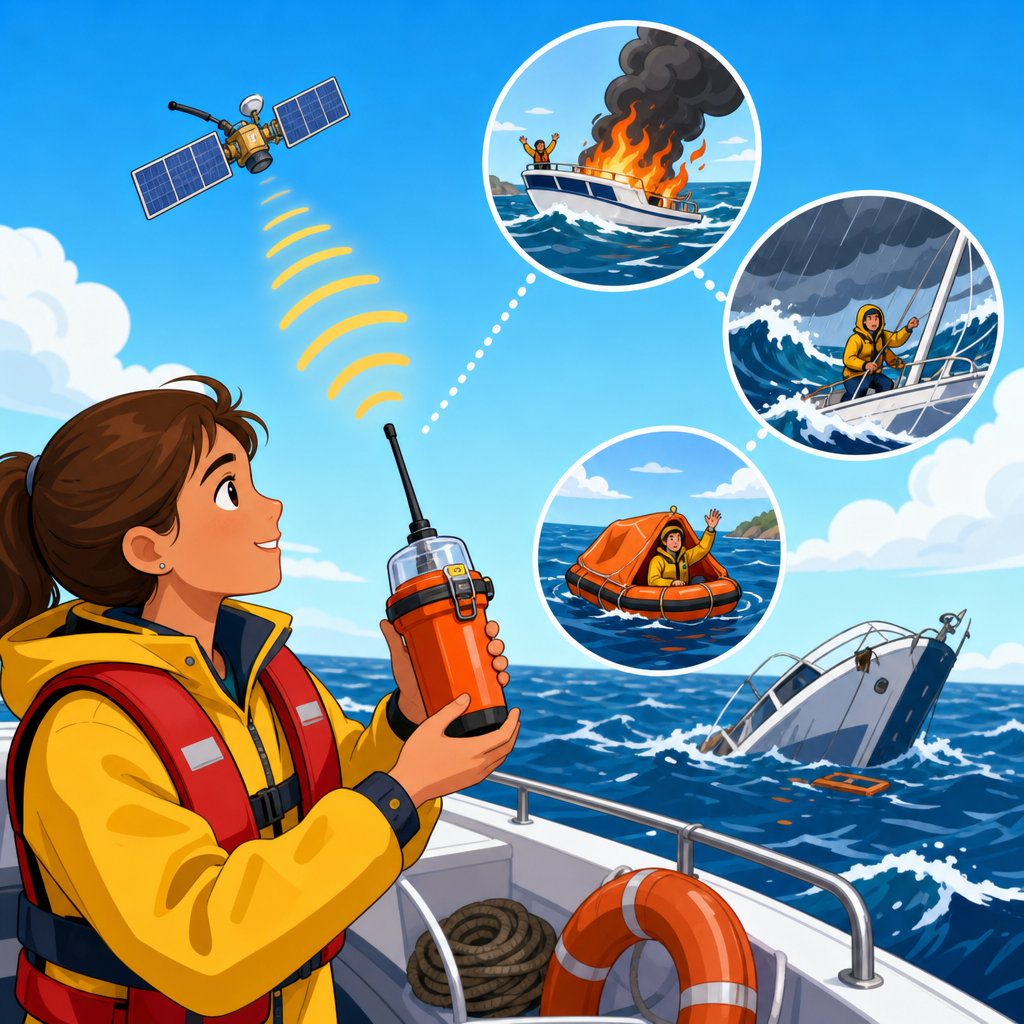
An EPIRB is not just another radio. Modern beacons transmit a 406 MHz distress signal detected by the international Cospas-Sarsat satellite system. Most current units also transmit a 121.5 MHz homing signal so rescue aircraft or vessels can locate you precisely once they arrive in the search area, and many include an internal GNSS receiver to encode latitude and longitude in the alert. In practical terms, that means an EPIRB can identify the vessel, alert rescue coordination centers, and dramatically narrow the search area, even if the crew cannot speak, the boat loses power, or weather prevents normal communication.
That capability is why EPIRBs are treated differently from routine marine electronics. A VHF radio lets you explain the problem. An EPIRB tells rescue authorities that the problem is already serious enough to justify immediate action. I have seen this distinction become critical during heavy-weather training and post-incident reviews. Crews often assume a mayday call alone is enough, but radios fail, batteries die, antennas break, and a vessel can sink faster than expected. A registered EPIRB gives search and rescue teams a reliable, standardized distress path that does not depend on the operator staying conscious or the vessel remaining afloat.
There are also different beacon categories. Category I EPIRBs are commonly mounted in a hydrostatic release bracket and are designed to deploy automatically if the vessel sinks. Category II units are usually manually deployed. Personal Locator Beacons are registered to an individual and are useful for crew overboard scenarios or small craft, but they are not a substitute for carrying the right equipment for the vessel and voyage. For boaters researching maritime distress signals and communication, that distinction is fundamental because legal carriage requirements, battery standards, float-free capability, and intended use all differ.
When to Activate an EPIRB
The correct time to activate an EPIRB is when the vessel or anyone aboard faces grave and imminent danger and immediate outside assistance is required. Those words are consistent with long-standing maritime distress practice and align with the practical threshold used by rescue agencies worldwide. Grave means the threat is severe. Imminent means the danger is happening now or is likely to worsen before ordinary help can arrive. If you are deciding whether the situation has crossed that line, ask whether a prudent skipper would believe lives may be lost without prompt rescue.
Typical situations include a vessel taking on water that cannot be controlled, a fire that cannot be extinguished quickly, a collision that compromises hull integrity, grounding in surf with breaking seas, capsize, abandonment to a liferaft, or a medical emergency far offshore where delay puts the patient at serious risk. Severe weather alone is not always enough, but severe weather combined with loss of propulsion near a lee shore absolutely can be. I have advised operators after incidents where they waited too long because they were embarrassed to declare distress. That hesitation is one of the most dangerous habits in boating.
Use the beacon early enough that rescue assets can be mobilized while you still have options. That does not mean reckless activation for every problem. It means recognizing escalation. An engine failure twenty miles offshore in calm weather with a working VHF, tow coverage, and no drift hazard is usually not EPIRB territory. The same failure at night in rising seas, with a storm front advancing and the boat drifting toward rocks, may justify immediate activation. Context determines urgency. The beacon should be used when ordinary troubleshooting and routine communications no longer provide a safe margin.
How EPIRBs Fit with Other Maritime Distress Signals and Communication
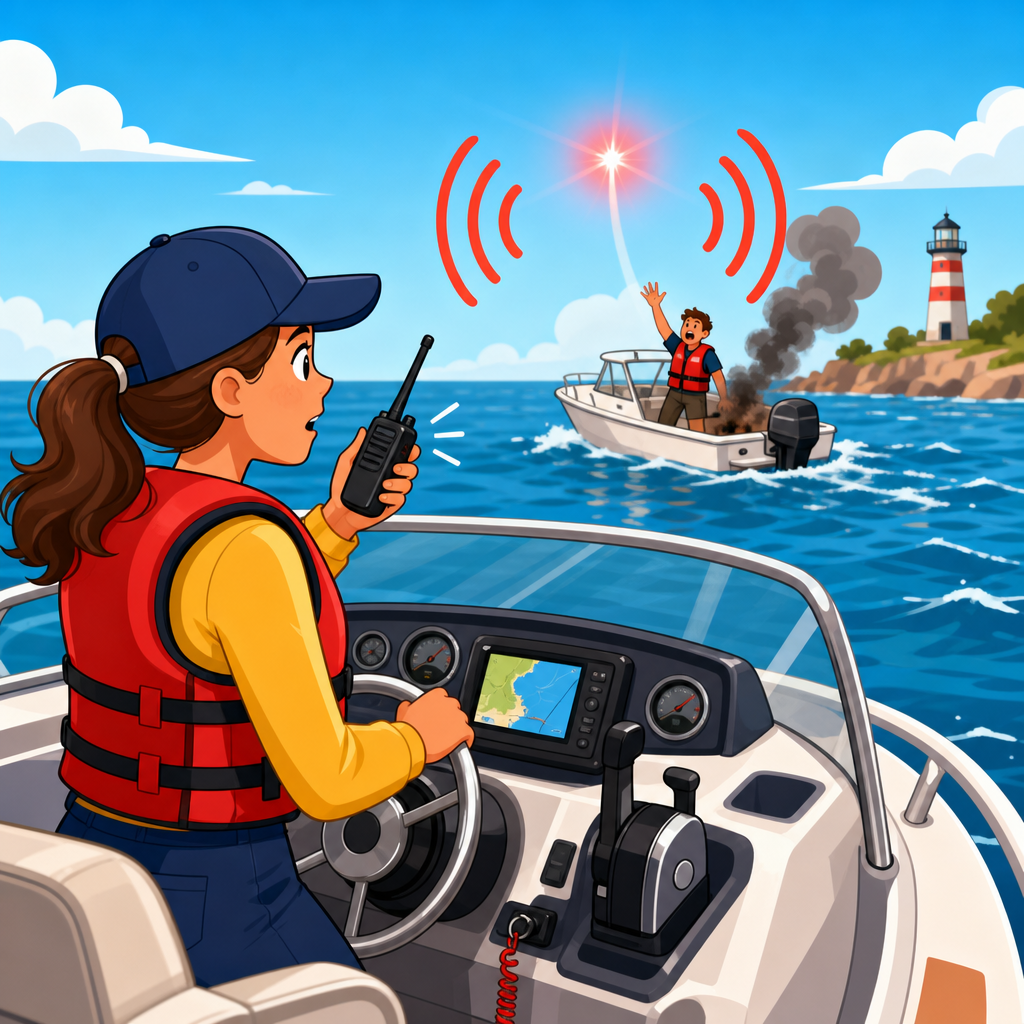
EPIRBs are part of a system, not a standalone solution. In a real emergency, the best practice is usually to combine methods. If possible, send a mayday by VHF Channel 16, trigger Digital Selective Calling if your radio has it, and activate the EPIRB. The voice mayday gives rescuers details such as the nature of distress, persons aboard, vessel description, and immediate hazards. The EPIRB provides persistent satellite alerting and location data even if the radio call is incomplete. If you have AIS MOB or AIS SART equipment, those devices can further help nearby vessels pinpoint your position.
Flares, orange smoke, signal mirrors, whistles, horns, strobe lights, and radar transponders remain relevant because the last mile of rescue is often visual. I have seen excellent electronic alerts still require old-school pyrotechnics to guide a helicopter or rescue boat through poor visibility and wave clutter. Communication planning should therefore be layered. Think of satellite alerting as the global alarm, radio as tactical coordination, and visual signals as terminal guidance. Redundancy saves lives because no single tool works best in every condition.
Boaters studying this subtopic should understand the communication hierarchy clearly. Routine issues use standard calls or service channels. Urgent safety concerns that are serious but not yet life threatening may justify a pan-pan call. Grave and imminent danger calls for mayday and, when rescue is needed without delay, EPIRB activation. Distress signaling is not about dramatic language. It is about matching the method to the severity and making sure your message reaches the people who can act.
Common Scenarios and the Right Response
Many boaters want examples more than definitions, because emergencies rarely arrive in textbook form. The table below shows how experienced operators and rescue authorities generally evaluate common scenarios. Exact decisions depend on weather, distance from help, crew condition, and available communications, but the pattern is reliable.
| Scenario | Typical Communication Response | EPIRB Use? |
|---|---|---|
| Engine failure in calm weather near traffic and tow service | VHF call, phone, towing assistance | Usually no |
| Engine failure drifting toward rocks in strong wind | Mayday, DSC, visual signals | Yes if immediate danger exists |
| Uncontrolled flooding | Mayday, prepare life jackets and raft | Yes |
| Fire spreading beyond initial suppression | Mayday, abandon if required | Yes |
| Serious offshore medical emergency | Mayday or medevac request, coordinate by radio | Yes if life threatened and rescue urgently needed |
| Grounding without hull damage in stable conditions | Assess, request assistance | Usually no |
| Capsize or abandonment to liferaft | Any available distress signal | Yes immediately |
These examples show the core rule: the beacon is for distress, not inconvenience. Still, inconvenience can become distress quickly. A disabled boat in a narrow inlet before a weather change may be more dangerous than a damaged boat anchored safely in daylight. Judgment improves when crews rehearse conditions, not just procedures. During drills, I ask skippers to state the trigger point aloud: “If flooding reaches the sole and pumps cannot keep up, we activate.” Predefined thresholds reduce delay when stress narrows attention.
Legal Requirements, Registration, and False Alert Risks
EPIRB carriage rules vary by country, vessel type, and area of operation, so every operator should verify the requirements that apply locally and offshore. Commercial vessels often face stricter carriage and inspection standards under national regulations and SOLAS-related frameworks, while recreational requirements may depend on length, route, or whether the boat operates beyond sheltered waters. Even where an EPIRB is not legally required, carrying one on offshore voyages is a strong risk-control measure because response times and communication coverage degrade rapidly as distance increases.
Registration is not optional in any practical sense. In the United States, 406 MHz beacons are registered through NOAA, and many other nations maintain equivalent databases. Registration links the beacon’s hex ID to vessel details, emergency contacts, trip patterns, and identifying features. That information helps rescue coordination centers assess the alert and launch the right assets faster. An unregistered beacon can still trigger rescue action, but it strips away context that may save critical time. Updating registration after ownership changes, phone number changes, or a new paint scheme is part of responsible operation.
False alerts create unnecessary search costs and can divert rescue resources, but fear of a false alert should not stop a legitimate activation. The right approach is prevention and discipline. Store the beacon correctly, inspect the bracket, understand self-test procedures, replace the battery within the manufacturer interval, and train everyone aboard. If accidental activation occurs, notify the appropriate rescue authority immediately and give the beacon ID, vessel name, time, and position. Deliberate misuse can carry substantial penalties, but proper distress use is exactly what the system exists for.
Best Practices Before, During, and After Activation
The most effective EPIRB use begins long before an emergency. Mount it where it is accessible, protected from casual damage, and installed exactly as the manufacturer specifies. Check battery expiration dates, hydrostatic release dates if fitted, lanyard condition, and registration status. During pre-departure safety briefs, show passengers where the beacon is, who may activate it, and what other signals will be used. Pair that briefing with float plan habits, VHF radio checks, and life jacket readiness. Distress communication succeeds when equipment, people, and procedures are aligned.
If an emergency occurs, activate the beacon decisively once the threshold is met. If time allows, send a mayday first or immediately after activation, provide position and nature of distress, and conserve handheld power for follow-up. Keep the EPIRB with you, attached according to instructions, and ensure it has the best practical exposure to the sky and is not shielded by metal structures. In a liferaft, secure it so it remains with survivors but does not foul lines or puncture equipment. Small handling details matter because a distress alert is only the first step; survivability until pickup remains the larger challenge.
After rescue or recovery, report the incident, arrange beacon inspection if needed, and replace any used or expired components. More importantly, debrief the crew honestly. Was the beacon easy to access? Did anyone hesitate? Did the radio operator know the mayday format? Every incident, drill, or near miss should refine your communication plan. The main benefit of understanding when to use an Emergency Position Indicating Radio Beacon is simple and profound: you shorten the path between danger and rescue. Review your equipment, train your crew, and set clear activation thresholds before your next voyage.
Frequently Asked Questions
When should you activate an EPIRB?
You should activate an EPIRB only when your vessel and the people on board are in grave and imminent danger and immediate outside assistance is needed. In practical terms, that means situations such as sinking, fire that cannot be controlled, capsizing, collision with serious flooding, abandonment to a life raft, dismasting or disabling damage in severe weather, or a medical emergency where survival depends on urgent rescue and no faster reliable communication option will solve the problem. An EPIRB is not for routine breakdowns, minor mechanical trouble, fuel shortages, or circumstances where you are inconvenienced but not in life-threatening danger. The reason this distinction matters is that EPIRB activation starts a full search and rescue response, often involving rescue coordination centers, aircraft, and vessels. If your situation has crossed the line from serious problem to genuine distress, do not delay. Activating early in a true emergency can save critical time, especially offshore where conditions can deteriorate quickly and your ability to communicate may disappear without warning.
Is an EPIRB only for offshore emergencies, or can it be used closer to shore and on inland waters?
An EPIRB is most commonly associated with offshore boating because it is specifically designed for maritime distress alerting over long distances, but the need for one is not limited strictly to bluewater passages. If you are operating on coastal routes, crossing exposed bars, fishing far from immediate help, cruising in cold water, traveling at night, or boating on large inland lakes where weather can turn dangerous and rescue may still take time, an EPIRB can be entirely appropriate. The key question is not simply how many miles offshore you are, but whether a sudden emergency could leave you beyond quick self-rescue and beyond reliable assistance from nearby boats or shore stations. On smaller inland waters with constant traffic and strong mobile coverage, an EPIRB may be less central than other distress methods, but on large reservoirs, Great Lakes-type environments, remote waterways, or anywhere help may be delayed, it can still be a valuable last-resort device. In short, use is driven by risk, exposure, and rescue complexity, not just geography.
Should you try other distress communications before using an EPIRB?
If time and conditions allow, yes, you should generally use all appropriate distress communications available to you, not because the EPIRB is a backup of little importance, but because layered distress alerting improves your chances of a fast and accurate rescue. A mayday call on VHF marine radio, especially on Channel 16 with Digital Selective Calling if equipped, can provide immediate voice contact with nearby vessels and rescue authorities. A satellite communicator, AIS distress device, or emergency phone call may also help responders understand the nature of the emergency in more detail. That said, if the situation is rapidly worsening, if the vessel may be lost, if power is failing, or if you are preparing to abandon ship, activate the EPIRB without hesitation. It is not an either-or choice in a real emergency. Best practice is often to issue a mayday and activate the EPIRB as part of the same distress response. The EPIRB’s major advantage is that it continues transmitting your distress alert and location even if your radio contact is lost, you enter the water, or the crew becomes unable to keep communicating.
What kinds of situations do not justify EPIRB activation?
An EPIRB should not be activated for non-distress situations, even if the event is frustrating, expensive, or inconvenient. Examples include being out of fuel in calm conditions, engine failure with no immediate threat to life, a dead battery while safely at anchor, running late and being out of mobile phone range, minor grounding without danger from surf or flooding, or requesting a tow when the vessel remains secure and the crew is safe. In those cases, use routine assistance channels such as marine radio calls for non-emergency help, a towing service, marina assistance, or local law enforcement where appropriate. False or unnecessary EPIRB activations can divert rescue resources away from people in real danger and may also lead to investigation, penalties, or enforcement action depending on the jurisdiction. The important seamanship judgment is this: ask whether the people on board face a genuine and immediate threat to life or whether the problem is manageable while awaiting ordinary assistance. If it is the latter, do not use the EPIRB.
What should you do after activating an EPIRB?
Once you activate an EPIRB, treat it as the beginning of the rescue phase, not the end of your emergency procedures. First, keep the beacon on and with you if you abandon the vessel, following the manufacturer’s instructions for proper placement and operation. Do not switch it off unless directed by rescue authorities or unless the activation was clearly accidental and you are immediately reporting that fact through the proper channels. If possible, continue sending mayday calls by VHF or other communications and provide details about the nature of the distress, number of persons on board, safety equipment carried, injuries, and whether you are in the water or in a life raft. Prepare visual signaling devices such as flares, strobes, signal mirrors, and radar reflectors to help rescuers find you once they arrive in the area. Account for everyone on board, don life jackets or immersion protection as needed, and stay together. If still aboard the vessel and it remains safer than the water or raft, remain with it unless circumstances clearly require abandonment. A registered EPIRB greatly improves rescue efficiency because authorities can match the beacon to your vessel and emergency contacts, so keeping registration current is an essential part of what happens after activation as well.