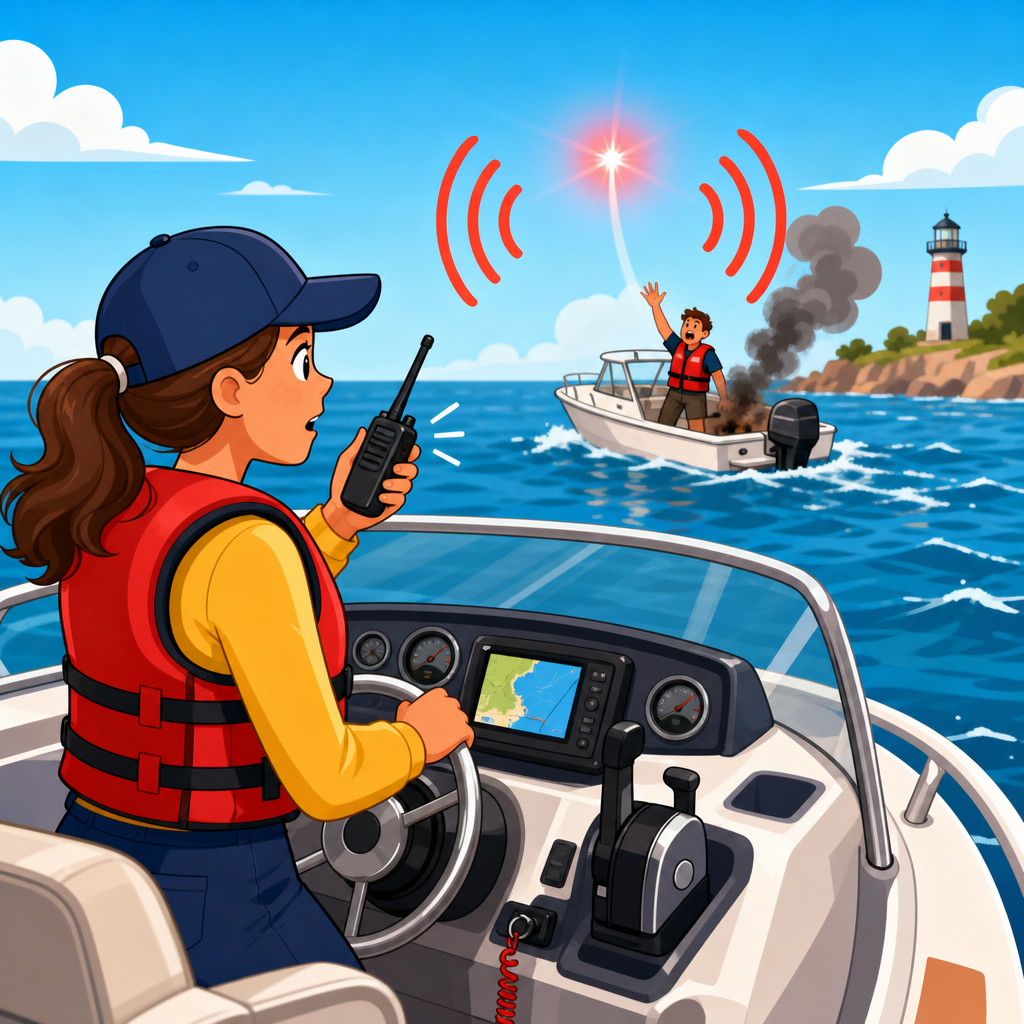
What to do if you receive a distress call while boating starts with one rule: treat every distress message as real until clearly proven otherwise. A distress call is any communication indicating grave and imminent danger to a vessel, aircraft, or person, and that immediate assistance is required. On the water, minutes matter because weather, exposure, fire, flooding, grounding, collision damage, and medical emergencies can escalate faster than most boaters expect. I have monitored VHF traffic during busy holiday weekends and during offshore crossings, and the pattern is always the same: the crews who respond calmly, record details correctly, and coordinate with the Coast Guard or other authorities give rescuers the best chance of success.
This topic matters because recreational boaters are often the closest capable units when a mayday is transmitted. Federal law and long-standing maritime practice expect mariners to render assistance when they can do so without serious danger to their own vessel or people aboard. Distress communication also follows a specific hierarchy. “Mayday” signals immediate peril. “Pan-Pan” indicates urgency, such as a mechanical failure or medical concern that is serious but not yet life threatening. “Sécurité” is a safety broadcast used for navigational or weather hazards. Knowing the difference helps you prioritize your response, avoid clogging the radio, and relay information in a way rescuers can act on quickly.
Maritime distress signals and communication include more than voice calls on VHF channel 16. They include Digital Selective Calling alerts, Emergency Position Indicating Radio Beacons, flares, signal flags, air horns, strobe lights, radar transponders, and messages passed through other vessels or shore stations. A strong hub page on this subject needs to connect the legal duty to assist, practical radio procedure, search-and-rescue coordination, and the limits of what a small recreational boat should attempt. If you understand how to acknowledge a distress call, gather the essential facts, alert the proper authority, approach safely, and document what happened, you can help without becoming a second emergency.
Recognize the distress call and capture the critical details immediately
The first priority is to listen without interrupting. A proper mayday usually includes the word “Mayday” spoken three times, the vessel name and call sign repeated, position, nature of distress, number of people aboard, and any description useful for identification. In reality, distress calls are often incomplete. The speaker may be panicked, injured, or losing power. Write down exactly what you hear: vessel name, location, compass bearing from a landmark, latitude and longitude if given, the emergency type, visible conditions, and the channel being used. If your radio has a distress log or DSC display, preserve that information. Even one correct detail, such as “two miles east of red buoy 4,” can narrow a search area significantly.
If the distress message is weak or broken, remain silent for a moment so the caller can continue or another station can answer. Recreational operators often make the mistake of transmitting too quickly and stepping on crucial follow-up traffic. If no shore station or Coast Guard unit responds within a short interval and you are in a position to help, acknowledge the call clearly. State the distressed vessel’s name, your vessel’s name, your position, and that you received the mayday. Ask only for missing essentials. Do not begin a long conversation. The radio goal is to confirm receipt, stabilize communication, and free the channel for rescue coordination.
Distress calls do not always come by textbook mayday. You may hear frantic plain-language transmissions such as “we are sinking,” “man overboard,” or “we hit something and are taking on water.” Treat those as distress even if the caller never says mayday. The U.S. Coast Guard, Royal Yachting Association training materials, and standard marine radio instruction all emphasize substance over wording: the emergency condition determines priority. Likewise, a DSC distress alert without voice follow-up must be taken seriously. If your radio displays a Maritime Mobile Service Identity and position, copy both. A silent digital alert may mean the crew had only seconds to push the distress button before abandoning ship or losing electrical power.
Contact the Coast Guard or local rescue authority and relay the message accurately
Once the distress call is identified, notify the appropriate authority unless they are already actively handling the incident. In U.S. waters, that usually means the Coast Guard on VHF channel 16. On some inland lakes or reservoirs, state marine patrol, harbor police, or local sheriff marine units may also be part of the response chain, but channel 16 remains the correct starting point for most boaters. Relay only verified information. Say that you are relaying a mayday, identify the vessel in distress, provide the last known position, describe the nature of the emergency, and report how many people may be aboard if known. If you are receiving the distressed vessel better than the Coast Guard can, say so.
Accuracy matters because rescue planning is built around last known position, drift, vessel type, weather, daylight, and survivability. Search-and-rescue controllers use those details to determine what assets to launch, whether to issue an urgent marine information broadcast, and how large a search pattern must be. A mistaken position by even one nautical mile can push a small target outside the first search leg. If the emergency involves fire, report whether fuel tanks are threatened. If it involves flooding, say whether pumps are working. If a person is overboard, report clothing color, time in water, and whether a flotation device was seen. Those details influence tactics immediately.
If you cannot reach the Coast Guard by voice but have a mobile signal, call 911 or the regional emergency number and specify that this is a marine distress case. Give the caller the same concise data you would provide by radio. If your vessel has DSC capability, make sure your MMSI is registered and the radio is connected to GPS; that setup lets you transmit your own distress or position reports properly and helps authorities identify stations involved. I have seen avoidable confusion when boaters owned modern radios but never completed MMSI registration, leaving rescuers with anonymous digital alerts and no callback path.
Decide whether you can assist directly without creating a second emergency
Mariners are expected to render assistance if they can do so without serious danger to their own vessel or passengers. That phrase is the practical and legal center of the decision. Before diverting, assess sea state, wind, visibility, fuel, daylight, crew capability, first-aid supplies, towing equipment, dewatering capacity, and whether your boat can safely recover people from the water. A twenty-foot bowrider with children aboard should not charge into breaking inlet seas at night because another vessel is taking on water offshore. A well-found cabin boat nearby with competent crew, lifejackets ready, and direct communication with rescue authorities may be the ideal first responder.
Distance and time are also part of the calculation. If you are fifteen minutes away and the nearest rescue boat is forty minutes out, your role may be to arrive first, provide flotation, and stand by. If you are two hours away, your better contribution may be relaying radio traffic while staying clear. Mechanical limits matter too. Small outboards are vulnerable to fouled propellers in debris fields around collisions or sinkings. Sailing vessels under canvas may have limited maneuverability during close approach. Towing another boat in rough conditions can swamp or capsize an underpowered helper. Good seamanship means knowing when your presence helps and when it complicates the rescue.
| Situation | Best Immediate Action | Primary Risk to Avoid |
|---|---|---|
| Taking on water but afloat | Relay position, bring pumps or flotation, stand by upwind | Collision during rushed close approach |
| Engine fire on vessel | Keep distance, recover people from water, report fuel hazards | Explosion or fire spread to your boat |
| Man overboard | Mark position, maintain visual contact, deploy flotation | Losing sight of the person in waves or glare |
| Grounding in surf or current | Call authorities, keep clear unless specially equipped | Becoming grounded or broached yourself |
| Medical emergency onboard another boat | Relay symptoms, ETA, and request medevac guidance | Delays caused by vague patient information |
Approach, communicate, and assist using controlled rescue tactics
If you decide to assist, approach deliberately. Come from downcurrent or downwind only when that gives you control; in many recovery situations, holding position upwind or upcurrent is safer because it lets you drift away rather than into the casualty. Reduce speed early, assign one person to radio duties and another to visual lookout, and have lifejackets, heaving lines, throwable flotation, first-aid kit, and boat hook ready. Turn on navigation lights if appropriate and avoid blinding the other crew with spotlights unless needed for identification. If people are in the water, your first objective is flotation and visibility, not immediate physical pickup at any cost.
For people in the water, throw flotation first, then maneuver for recovery with propeller safety in mind. Engines in neutral during close-side recovery prevent severe injury. Many recreational boats have high freeboard, making it difficult to lift a cold or injured adult aboard; a boarding ladder, looped line, or tackle can be more effective than brute strength. For a vessel not yet abandoned, ask what help is actually needed: pump, fire extinguisher, tow line, medical kit, or standby presence until rescue units arrive. Passing equipment may solve the problem faster than taking people aboard, especially if their boat remains stable and rescuers are close.
Keep the radio updated with concise reports. Say when you have the vessel or persons in sight, when you arrive on scene, what you observe, and any change in condition. Rescue authorities need facts, not commentary. Report “three adults in water, all wearing lifejackets, one unresponsive” rather than “it looks really bad.” If the distressed vessel’s position differs from the original report, transmit the corrected coordinates immediately. If you begin towing, say so and identify destination and speed. If conditions deteriorate and you must disengage, state that clearly. Good communication prevents duplication, shortens search time, and protects you from unintentionally interfering with coordinated rescue operations.
Understand distress signals, legal obligations, and common communication failures
Maritime distress signals work best when boaters recognize all of them, not just mayday. Red parachute flares and handheld red flares indicate distress; orange smoke is highly visible by day and excellent for pinpointing a position. Repeated blasts on a horn, continuous sounding with a fog signal device, an SOS by light or sound, and square flags over or under a ball are classic visual signals. Modern alerts include EPIRBs and personal locator beacons linked through the Cospas-Sarsat system, which relay distress data to rescue coordination centers worldwide. A DSC distress alert on VHF channel 70 is now one of the fastest ways to send identity and position when the radio is properly configured.
The legal framework is equally important. Under U.S. law, a master is generally required, so far as they can do so without serious danger, to render assistance to individuals affected by a marine casualty and to provide identifying information after collisions. False distress calls are criminal acts that can lead to severe fines, cost recovery, and imprisonment because they divert rescue assets from real emergencies. Improper radio conduct is a quieter but common problem. Channel 16 should be kept clear for hailing, distress, urgency, and safety traffic. Long casual exchanges, repeated unnecessary relays, and simultaneous talking by multiple “helpful” boaters can block the one message rescuers need.
The most common failures I have seen are preventable: operators do not know their location, radios are mounted but not connected to GPS, crews never practice man-overboard recovery, and nobody writes down the distress details. Another frequent issue is overcommitting. A helper arrives, throws a tow line to a larger disabled boat in rough water, then loses steering or starts taking spray over the transom. Training and preparation solve much of this. Every boating crew should know how to make a mayday, send a DSC distress alert, read coordinates from the chartplotter, use a heaving line, and brief passengers on lifejacket locations. Those simple habits turn panic into procedure.
Build a distress response plan before you ever hear a call for help
The best response to a distress call begins long before the radio crackles. Equip the boat properly, maintain the communication gear, and assign roles before leaving the dock. A fixed-mount VHF with DSC, registered MMSI, and GPS input is markedly better than relying on a handheld alone. Keep a waterproof notepad at the helm for copying positions and vessel names. Store visual distress signals that meet carriage requirements and replace them before expiration. Add a loud whistle, spotlight, throwable flotation, recovery ladder, first-aid kit, and dewatering pump. On larger cruising boats, consider AIS, radar reflector, and an EPIRB for offshore passages. Equipment does not replace judgment, but it expands your safe options when another crew runs out of theirs.
Practice matters just as much as gear. Run radio drills with your crew so everyone can state your position from the chartplotter, make a concise mayday relay, and switch between channel 16 and a working channel if instructed. Rehearse person-overboard recovery under power and sail. Time how long it takes to deploy a throwable, rig a lifting line, or access the medical kit. Review local boating laws and navigation rules because distress scenes often occur in congested channels, no-wake zones, or near commercial traffic where maneuvering mistakes carry added risk. A prepared skipper is not the loudest voice on the radio; it is the one passing accurate information and making measured decisions under pressure.
When you receive a distress call while boating, your job is simple in principle and demanding in practice: listen carefully, record the facts, alert rescuers, help if you safely can, and communicate clearly until the emergency ends. That approach protects lives, supports lawful and orderly rescue operations, and keeps one emergency from becoming two. Distress communication is the backbone of on-water survival because it turns isolated trouble into coordinated response. Make your boat part of that system. Check your radio setup, review your emergency procedures, and train your crew before your next trip so that if a mayday comes, you are ready to answer well.
Frequently Asked Questions
What should you do first if you receive a distress call while boating?
The first thing to do is assume the distress call is real and listen carefully without interrupting. A true distress message means someone may be facing grave and imminent danger, and delays can make the situation worse very quickly. Try to capture the most important details: the vessel’s name or description, position, nature of distress, number of people on board, and any immediate hazards such as fire, flooding, injury, or grounding. If the call came over VHF radio, keep your radio on and monitor Channel 16 unless the Coast Guard or another authority directs traffic to a working channel. If no one acknowledges the distress call and you are in a position to help, respond clearly, identify your vessel, and state that you have received the message. Your next step is to contact the Coast Guard or relay the distress information if it appears the original call was not heard clearly by rescue authorities. At the same time, assess your own location, fuel, crew readiness, weather, sea state, and whether you can safely assist without creating a second emergency. The goal is to help quickly, but in a controlled and informed way.
How can you tell whether a distress call is genuine, and should you ever ignore one?
You should treat every distress call as genuine unless it is clearly confirmed otherwise by the caller, the Coast Guard, or another reliable authority. On the water, a weak transmission, confused speech, or incomplete information does not mean the emergency is fake. In fact, many real distress calls are broken, rushed, or difficult to understand because the people involved are under stress, injured, losing power, dealing with flooding, or fighting noise from wind and engines. A distress call generally involves immediate danger to a vessel, aircraft, or person, and may include terms such as “Mayday,” descriptions of sinking, fire, collision, medical emergency, or a person overboard. Even if the message sounds uncertain, your role is not to dismiss it. Your role is to listen, document what you can, and help ensure it reaches rescuers. The only time you would stop treating it as real is when competent authorities determine the alert was accidental, hoax, or resolved. Ignoring a real distress call because it sounded unclear can cost lives. In practical terms, careful attention and prompt relaying of information are far more responsible than making assumptions from incomplete radio traffic.
Should you respond directly to the vessel in distress or contact the Coast Guard first?
In many situations, you may do both, but the order depends on what you hear and whether rescue authorities have already responded. If the distress call is unanswered, it is appropriate to answer the vessel directly, identify yourself, and let them know their message was heard. This can reassure the people in trouble and may help you gather missing information such as exact position, number of people on board, and the nature of the emergency. However, distress traffic also needs to reach the Coast Guard or the appropriate rescue coordination authority as quickly as possible. If you hear no official response, relay the call immediately and as accurately as possible. If the Coast Guard is already handling the situation, avoid clogging the channel with unnecessary transmissions and follow any instructions given. If you are close enough to safely assist, advise rescuers of your position and capabilities. The key point is that radio discipline matters. Speak clearly, keep transmissions brief and factual, and avoid speculation. You want the distressed party to know help is being organized while also making sure professional rescue resources are alerted without delay.
What information should you write down or repeat when relaying a distress call?
When relaying a distress call, accuracy matters as much as speed. Write down or repeat the vessel’s name, call sign if given, type and size of vessel, exact or approximate position, nature of the distress, number of people on board, and any distinguishing details such as hull color, nearby landmarks, direction of drift, or whether life jackets, flares, or a life raft are involved. If the caller gives latitude and longitude, repeat those numbers slowly and carefully to avoid errors. If the position is relative, such as “two miles east of the inlet” or “near red buoy 6,” include that wording exactly as heard. Also note the time you heard the call, the radio channel used, and whether communication was strong, weak, broken, or lost. If medical issues are mentioned, repeat the basics without embellishment, such as “one person unconscious” or “serious bleeding.” Do not guess at facts you did not hear. If something is unclear, say it is unclear rather than filling in the blanks. A clean, factual relay gives rescuers the best chance to respond quickly and search in the right area.
Is it safe to go help a boat in distress yourself, and what precautions should you take?
You should help if you can do so safely, but you should never rush in without evaluating the risks. A second disabled or injured vessel makes the emergency worse. Before heading toward the distressed boat, consider weather, visibility, current, sea state, navigational hazards, your fuel level, your crew’s experience, and whether your boat is equipped for towing, recovery, first aid, or firefighting. Let the Coast Guard or local marine authorities know your location, intentions, and estimated arrival time if you are proceeding to assist. As you approach, slow down, maintain a safe distance at first, and look for hazards such as people in the water, lines in the water, fire, fuel spills, rocks, shoals, or a vessel that may drift unpredictably. If the emergency involves fire, flooding, or possible explosion, you may need to stand off and assist by maintaining communications, marking the location, or recovering people from the water rather than coming alongside. If someone is injured, use good judgment and basic first aid, but avoid actions beyond your training. The right mindset is to provide effective aid while protecting your own crew. Calm decision-making, clear communication, and respect for safety limits are what make you genuinely useful in a marine emergency.