
Zero-tolerance BUI laws change the legal landscape for boaters by making intoxication offenses easier to prove, more broadly enforceable, and more serious than many people realize. BUI means boating under the influence: operating or being in actual physical control of a vessel while impaired by alcohol, drugs, or a combination of both. In practice, BUI statutes resemble DUI laws, but the boating context adds unique risks, including passenger ejections, propeller strikes, capsizing, and delayed emergency response on open water. I have worked with boating compliance content and state enforcement materials long enough to see a recurring pattern: many boaters assume the water is less regulated than the road, when the opposite is often true during holiday patrols and accident investigations.
The phrase zero-tolerance BUI laws usually refers to statutes or enforcement rules that impose stricter standards on specific groups, especially minors, commercial operators, and sometimes anyone operating under heightened safety conditions. In many states, adults are presumed impaired at a blood alcohol concentration of 0.08%, mirroring roadway thresholds. Zero-tolerance provisions commonly set a much lower threshold for operators under 21, often 0.02% or any measurable alcohol. Some states also give officers broad authority to remove operators whose faculties appear affected even below a per se threshold. That matters because BUI enforcement is not limited to obvious drunken boating; it includes prescription medication impairment, cannabis intoxication, and refusal consequences under implied consent rules.
This topic matters because boating fatalities remain closely linked to alcohol use. The U.S. Coast Guard’s Recreational Boating Statistics repeatedly identifies alcohol as a leading known contributing factor in fatal boating accidents. Penalties can include arrest, vessel impoundment, fines, jail, mandatory safety courses, probation, ignition-interlock-like monitoring in related driving cases, and long-term impacts on insurance, employment, and professional licensing. For anyone researching boating under the influence laws, the key question is not just which states have BUI laws, because all states do, but which states enforce the strictest versions, who is covered by zero-tolerance rules, and how those rules operate in real enforcement settings.
What Zero-Tolerance BUI Laws Mean in Practice
Strict BUI regulation generally takes three forms. First, a state may impose a reduced alcohol threshold for operators under 21, usually 0.02%, which effectively functions as a zero-tolerance rule because that level can reflect minimal consumption. Second, a state may classify refusal to submit to chemical testing as a separate violation or trigger swift administrative consequences, making enforcement more certain. Third, a state may define operation broadly enough that sitting at the helm with keys, steering, or directing vessel movement can qualify as control. Together, those features lower the state’s burden compared with proving classic visible intoxication alone.
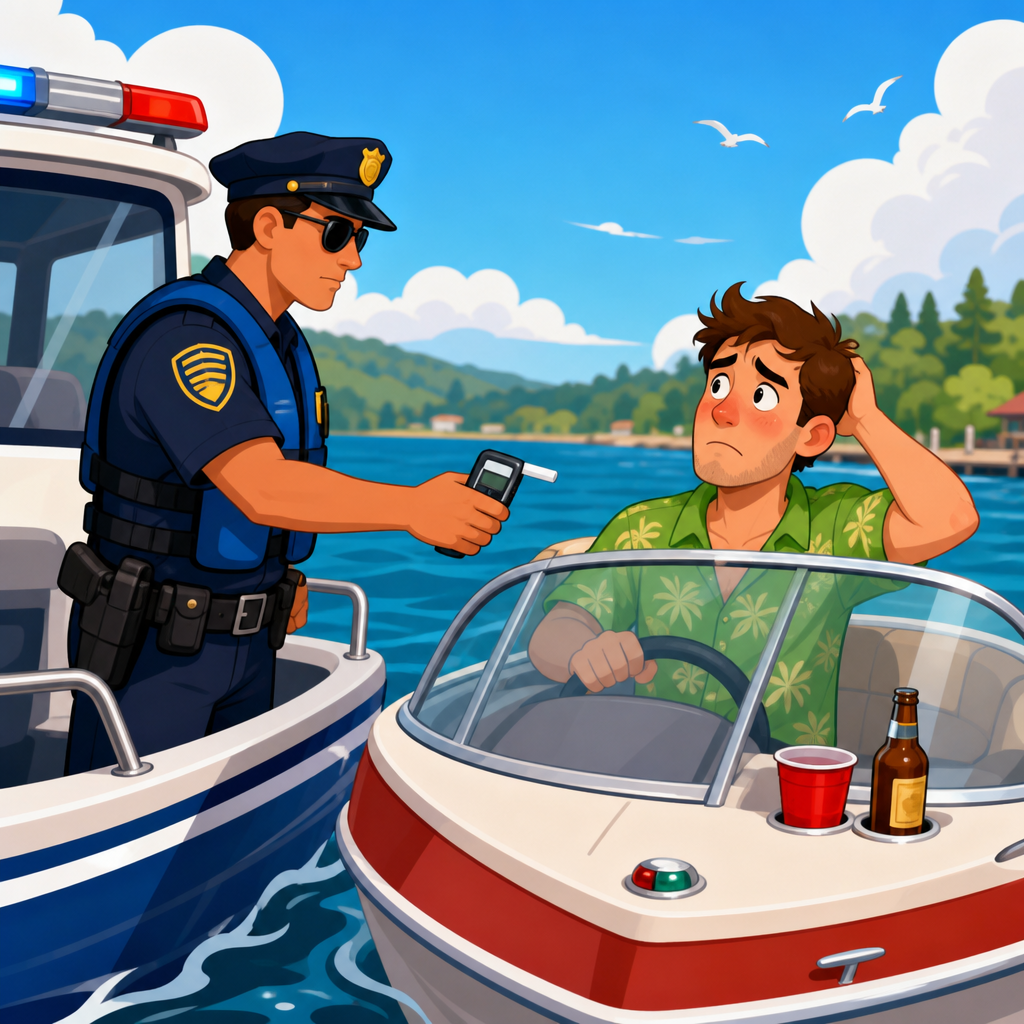
Officers enforce boating under the influence laws through safety inspections, accident response, observed violations, and saturation patrols. On the water, indicators differ from roadside DUI stops. Sun, wind, vibration, and motion can mimic intoxication symptoms, so trained officers rely on totality of circumstances, field sobriety methods adapted for marine settings, witness statements, and chemical tests administered ashore or on approved devices. The National Association of State Boating Law Administrators and state marine patrol agencies emphasize that environmental stress can intensify alcohol’s effects, which is one reason boating alcohol enforcement is often aggressive during peak recreation periods.
Another practical point is that “strict” does not always mean the lowest number on paper. A state with a standard 0.08% adult threshold may still be severe if it combines strong implied consent rules, mandatory jail for repeat offenders, felony treatment for injury cases, and separate sanctions for minors. Conversely, a state may advertise zero tolerance for young operators while devoting less visible enforcement capacity. Readers comparing states should therefore look at thresholds, age-specific rules, testing consequences, penalty escalators, and local marine patrol activity rather than a single label.
Which States Enforce the Strictest BUI Regulations
Every state prohibits boating under the influence, but the strictest systems typically appear in states with active boating populations, specialized marine patrol units, and express underage alcohol limits. Florida, California, Texas, New York, and North Carolina are frequently cited because they combine high boating traffic with detailed statutes and regular enforcement campaigns. Florida treats BUI similarly to DUI, uses a 0.08% standard for adults, imposes enhanced penalties for high BAC and minors onboard, and pursues serious sanctions when property damage, injury, or death occurs. California prohibits operating a vessel under the influence of alcohol, drugs, or combined influence and applies separate rules for recreational and certain commercial contexts.
States known for under-21 zero-tolerance approaches include many that mirror their motor vehicle alcohol frameworks. In these jurisdictions, a young boat operator can face penalties at 0.02% BAC or for any measurable alcohol presence. That standard is intentionally low to deter all alcohol use before operation. Texas, for example, is notable because boating under the influence by a minor can be charged under alcohol-related offenses even when adult BWI standards differ. North Carolina has long maintained a reputation for robust boating enforcement, including clear operation standards and active wildlife or marine officers on inland and coastal waters.
Strict regulation also appears in states where refusal carries real consequences. New York, for instance, treats intoxicated boating seriously and has substantial penalties depending on priors and harm caused. In practice, northeastern states with dense summer boating traffic often coordinate local sheriff marine units, state police, and environmental conservation officers. Western states with large lakes and reservoir systems do the same. The result is that “which states enforce strict regulations” includes not only the largest coastal jurisdictions but also inland states where boating accidents have pushed legislatures toward tougher anti-impaired-operation laws.
| State pattern | Common strict feature | Why it matters |
|---|---|---|
| High-traffic boating states | Frequent patrols and holiday saturation enforcement | Raises likelihood of stops, testing, and arrest |
| Under-21 zero-tolerance states | 0.02% BAC or any measurable alcohol for minors | Minimal drinking can trigger liability |
| Strong implied consent states | Refusal penalties or evidentiary consequences | Limits the tactical value of declining a test |
| Enhanced penalty states | Higher sanctions for injury, death, or child passengers | Turns a basic BUI into a major criminal case |
Underage Boating and Zero-Tolerance Standards
Underage boating laws are where zero-tolerance language is most consistently enforced. If a state sets the minor threshold at 0.02%, legislators are not signaling that two-hundredths is safe; they are creating a practical enforcement floor to account for test variance while banning meaningful alcohol use by young operators. In day-to-day enforcement, that means a teenager driving a ski boat after one drink at a marina party may be chargeable even without dramatic signs of impairment. Parents are often surprised by this because they understand underage drinking rules generally, but not how specifically they attach to vessel operation.
These laws matter because younger operators may lack hazard perception, emergency judgment, and experience handling wakes, night navigation, weather changes, and passenger movement. Add alcohol and the risk compounds quickly. Marine officers often focus on underage operators during summer weekends, especially on personal watercraft, runabouts, and tow-sport boats. States also may impose collateral consequences such as mandatory education, community service, driver’s license effects, or court supervision. Even when an underage offense is framed as civil or administrative rather than criminal, it can still carry lasting consequences and serve as a predicate for future sentencing enhancement.
For families and boating businesses, the compliance rule is simple: if the operator is under 21, assume any alcohol use creates legal exposure. The safest policy is complete abstinence, documented supervision, and clear handoff procedures when multiple young people use the same vessel. Marinas, rental operators, and camps that ignore this risk can face civil liability after a crash, particularly if staff observed alcohol use and still allowed departure.
How BUI Penalties Escalate Beyond the Basic Offense
A first-offense boating under the influence charge is serious, but strict states become much tougher when aggravating factors are present. Common enhancers include a high BAC, prior DUI or BUI convictions, an accident causing property damage, bodily injury, death, leaving the scene, child passengers, or operating a commercial vessel. Florida, for example, enhances penalties for BAC levels of 0.15% or higher and when minors are onboard. Many states convert serious injury or fatality cases into felony-level offenses, sometimes under homicide or manslaughter statutes specific to vessels.
Drug impairment is another area where people underestimate exposure. BUI laws generally prohibit operation while affected by controlled substances, cannabis, unlawfully used prescription drugs, or a combination of alcohol and drugs. Unlike per se alcohol cases, drug cases often rely more heavily on observations, admissions, toxicology, and expert interpretation. That can make them factually complex, but not weak. I have seen enforcement summaries where operators insisted they were safe because they had not been drinking, only to face charges after combining THC, benzodiazepines, or pain medication with long hours in heat and sun.
Insurance and civil claims can be as damaging as criminal penalties. After a BUI-related crash, insurers may dispute coverage, injured passengers may sue, and rental agreements may trigger indemnity disputes. Courts and investigators often treat alcohol involvement as evidence of negligence, and juries respond strongly to boating injury cases involving children or recreational outings that went wrong. In other words, strict BUI regulation is not just about arrest risk. It affects the full legal and financial aftermath of a marine accident.
Enforcement, Testing, and Common Boater Questions
Boaters often ask whether police can stop a vessel without seeing erratic operation. In many jurisdictions, yes. Officers may conduct safety inspections, registration checks, and equipment compliance stops under authorities that differ from ordinary roadway stops. If signs of impairment emerge, the encounter can expand into a BUI investigation. Another common question is whether field sobriety tests work on water. Officers generally try to move testing to stable ground when feasible, although observational evidence begins on the vessel and during docking.
People also ask whether refusing a breath, blood, or urine test helps. Usually, no. Implied consent laws often apply to vessel operators just as they do to drivers. Refusal can trigger separate penalties, admissible evidence issues, or license-related consequences depending on state law. A further question is whether sleeping on a boat after drinking avoids liability. Not necessarily. If you are in actual physical control, at the helm, or able to direct movement, some states may still consider you an operator. Anchored houseboat cases and marina scenarios can be highly fact specific.
The practical compliance answer is straightforward. Do not operate a boat after drinking or using impairing drugs. Designate a sober operator before departure, not after the first round. Keep medications in original containers and review warnings for drowsiness or machinery operation. Train everyone aboard on emergency procedures, because intoxication slows rescue response when someone falls overboard. For readers exploring related boating laws and regulations, this BUI hub should connect naturally with topics like life jacket requirements, reckless operation, accident reporting, vessel registration, and age-based operator education, since enforcement events often involve several violations at once.
Choosing the Safe Standard and Staying Current
The clearest takeaway is that zero-tolerance BUI laws are not limited to one or two states, and strict enforcement is wider than many boaters expect. All states prohibit boating under the influence, many apply near-zero thresholds to underage operators, and several aggressively prosecute refusal, injury, and repeat-offense cases. The states most often viewed as strict are those pairing detailed statutes with visible patrol activity, especially Florida, California, Texas, New York, and North Carolina, but comparable rules exist across the country. Because statutes change, boaters should always confirm current language with the state boating agency, marine patrol, wildlife commission, or legislative code before heading out.
From a risk-management standpoint, the best interpretation of boating under the influence laws is the simplest one: if you will be operating, do not drink and do not rely on guesswork about BAC. Alcohol, heat, fatigue, glare, and wave action impair judgment faster on water than many people expect. A single arrest can lead to criminal penalties, civil liability, insurance problems, and irreversible injury. If you manage a marina, rental fleet, fishing charter, or family boat, build a sober-operator policy and make it nonnegotiable.
Use this page as your starting point for the broader BUI laws topic, then review state-specific guides, underage boating rules, implied consent provisions, and accident penalty articles for the waters where you actually boat. The law rewards preparation and punishes assumptions. Choose a sober captain, know your state’s standards, and make every trip legally safe before you cast off.
Frequently Asked Questions
What does “zero-tolerance” mean in the context of BUI laws?
In boating-under-the-influence cases, “zero-tolerance” usually refers to laws that allow enforcement at very low alcohol thresholds or that impose especially strict rules on certain operators, such as minors, commercial vessel operators, or people supervising boats. In practical terms, these laws make it easier for prosecutors and marine patrol officers to act before a boater reaches the same level many people associate with ordinary DUI cases. Depending on the state, zero-tolerance rules may apply to any measurable alcohol concentration above a minimal limit, to underage operators with a blood alcohol content as low as 0.02%, or to circumstances where impairment can be shown even without a chemical test result at the standard 0.08% threshold.
The key point is that BUI enforcement is not limited to obvious drunkenness. Officers can rely on physical observations, erratic operation, unsafe speed, failure to keep a proper lookout, poor balance, slurred speech, admissions of drinking, failed field sobriety exercises, and chemical testing when available. On the water, the legal analysis is often broader because weather, wake, current, and poor visibility can turn even moderate impairment into a serious safety threat. That is why zero-tolerance boating laws are designed to deter risky behavior early, not just punish extreme intoxication after a crash or injury has occurred.
Which states are known for enforcing especially strict BUI regulations?
There is no single national list of “zero-tolerance BUI states” because boating laws vary in wording and enforcement structure, but several states are widely recognized for taking an aggressive approach to BUI enforcement. States with heavy recreational boating traffic, large coastlines, major lakes, or year-round boating seasons often have more visible marine patrol operations and stricter application of intoxication laws. Florida, Texas, California, Georgia, North Carolina, and states around the Great Lakes are frequently cited for active BUI enforcement, especially during holiday weekends and seasonal safety campaigns. In addition, many states impose lower or effectively zero-tolerance alcohol limits for underage operators, which broadens the meaning of “strict” even if the standard adult BUI threshold remains 0.08%.
What matters most is not just the state name, but the details of that state’s statute. Some states define “operation” very broadly. Others criminalize being in “actual physical control” of the vessel, which can create liability even when the boat is not moving fast or is temporarily stopped. Many also combine BUI statutes with enhanced penalties for accidents involving injury, death, property damage, child passengers, or refusal to submit to testing. Because the law can change through legislation and court decisions, boaters should always verify the current rules in the state where they plan to operate, rather than assuming the law mirrors nearby DUI standards or rules from another jurisdiction.
How are BUI laws different from regular DUI laws?
BUI laws often mirror DUI laws in their basic structure, but boating cases involve several important differences. First, officers may encounter operators in environments where balance, coordination, red eyes, sun exposure, fatigue, and dehydration can complicate field observations. That means marine law enforcement is trained to consider how boating conditions affect apparent impairment while still looking for signs that alcohol or drugs have reduced a person’s ability to operate safely. Second, the idea of “operation” or “actual physical control” can be broader on the water than people expect. A person may face scrutiny not only while actively steering at speed, but also while controlling navigation, engine function, or vessel movement in a way that affects safety.
Another major difference is the risk profile. Boating incidents can lead to overboard falls, propeller injuries, collisions with fixed objects, nighttime visibility failures, and delayed rescue response times. Unlike a roadway stop, a marine stop may occur far from immediate medical care, and an impaired judgment call can quickly become fatal. In addition, some states require life jacket access, navigation light compliance, and other safety measures that become especially important when alcohol is involved. As a result, a BUI charge can carry serious criminal, financial, and boating-privilege consequences even if the operator believed they were “safer than driving” because they were on the water instead of on the road.
Can you be arrested for BUI if your blood alcohol level is below 0.08%?
Yes. A blood alcohol concentration below 0.08% does not automatically prevent a BUI arrest or conviction. In many states, prosecutors can pursue a BUI case based on actual impairment, meaning the question is whether alcohol, drugs, or a combination of substances affected the operator’s normal faculties, judgment, reaction time, or ability to control the vessel safely. This becomes especially important in boating because waves, wind, congestion, darkness, and navigational hazards demand constant attention. A boater who appears marginally affected on land may present a much greater danger once they are handling a vessel in open water or crowded channels.
Zero-tolerance rules make this even more significant for younger operators and other restricted categories. For example, an underage boater may face legal consequences at a much lower alcohol concentration than an adult. Drug impairment can also support a BUI charge even when alcohol is not the main issue. Prescription medications, cannabis, illegal substances, and mixed-substance use are common factors in boating arrests. In short, 0.08% is not a guaranteed safe harbor. If an officer has evidence that a person’s ability to operate the vessel was impaired, or if the state applies a lower threshold to that operator, an arrest may still follow.
What penalties can result from violating a zero-tolerance BUI law?
Penalties vary by state, but they can be more severe than many boaters expect. A first offense may involve fines, court costs, probation, mandatory substance abuse education, community service, and possible jail time. Some states also suspend or restrict boating privileges, and in certain situations a BUI can affect a person’s driver’s license status as well. If the case involves an accident, serious bodily injury, death, a very high alcohol concentration, a child passenger, or prior alcohol-related convictions, the penalties can increase sharply. Repeat offenders may face enhanced fines, longer incarceration, vessel impoundment consequences, or felony-level prosecution depending on the jurisdiction and facts of the case.
Beyond the criminal sentence, the practical fallout can be extensive. A BUI arrest may trigger higher insurance costs, employment issues, professional licensing concerns, and civil liability if someone was injured or property was damaged. If a crash occurred, the operator may also be sued for medical bills, lost income, and wrongful death damages. In fatal or catastrophic injury cases, investigators often examine not just intoxication but also speed, lookout failures, life jacket availability, lighting, and operator training. That broader review is one reason zero-tolerance enforcement has such serious real-world consequences: it can transform what seemed like casual drinking on a boat into a criminal case with lasting financial and personal impact.