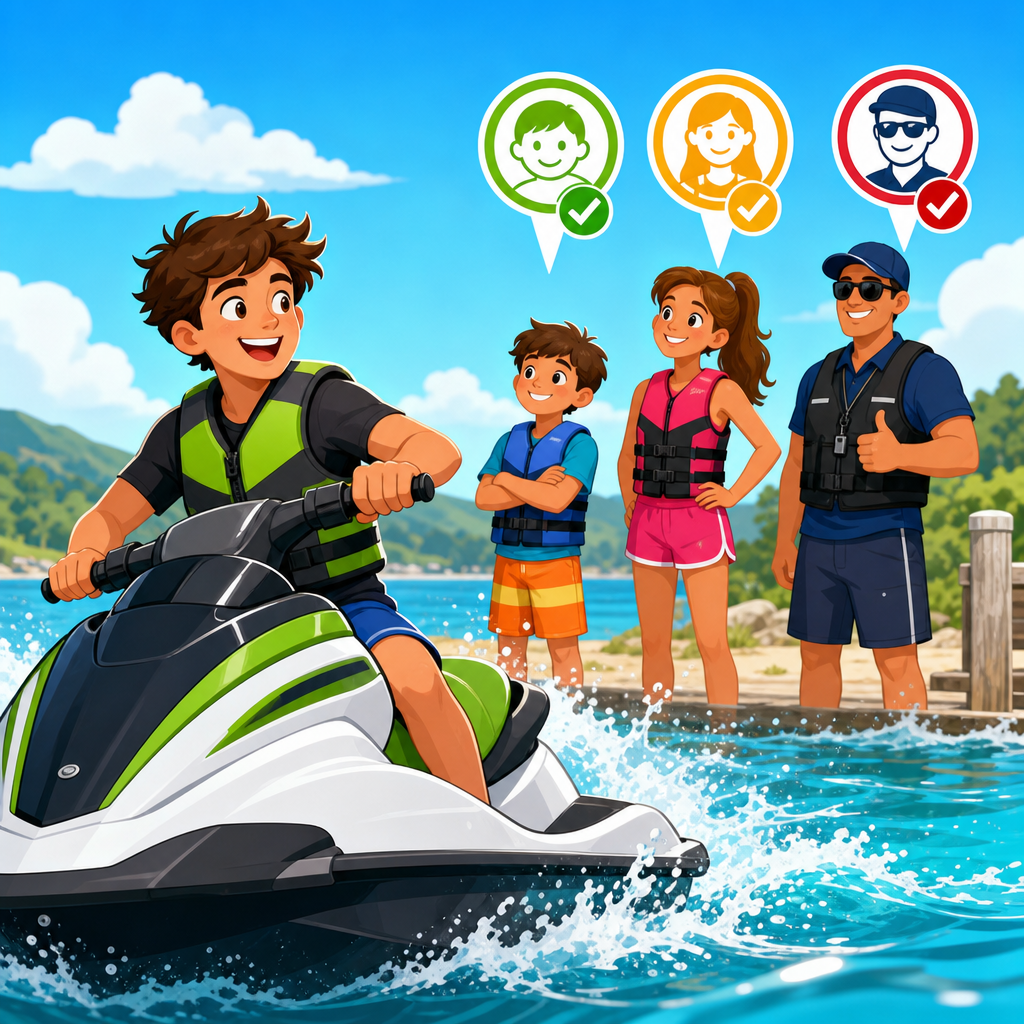
Reckless jet ski operation can turn a fun day on the water into an expensive citation, a criminal charge, or a serious injury case, which is why every personal watercraft owner needs to understand the rules before leaving the dock. In boating law, a personal watercraft, or PWC, is a small vessel powered by an inboard motor driving a water jet pump, designed to be operated by a person sitting, standing, or kneeling on the craft rather than inside it. “Jet Ski” is Kawasaki’s brand name, but the term is commonly used for all PWCs, including Sea-Doo and WaveRunner models. Regulators usually treat these craft as vessels, which means the same navigation rules, registration standards, and enforcement powers that apply to boats often apply to PWCs too, with extra restrictions added because PWCs accelerate fast, turn sharply, and are involved in a disproportionate share of operator-error incidents.
I have worked with marina operators, boating educators, and compliance checklists for rental fleets, and the pattern is consistent: most fines come from preventable mistakes, not from obscure legal traps. Operators get cited for speed in no-wake zones, riding too close to docks or swimmers, lacking required safety gear, towing without an observer, operating after dark, and letting an underage or unqualified person take the handlebars. In many states, penalties start around fifty to several hundred dollars per violation, but costs rise quickly when officers stack charges or when reckless operation causes property damage, injury, or an emergency response. Insurance deductibles, impound fees, court costs, and civil liability often hurt more than the ticket itself.
This hub article explains how to avoid fines for reckless jet ski operation by covering the core legal rules that apply across the United States, the state-by-state variations you must verify locally, the equipment and licensing issues that trigger citations, and the practical riding habits that officers view as safe and lawful. It also serves as the central guide for the broader Personal Watercraft and Jet Ski Regulations topic within Boating Laws and Regulations, so it answers the key questions searchers usually have first: what counts as reckless, who can operate a PWC, what equipment is required, where can you ride, when is operation prohibited, and how do you prove compliance during a stop. If you master these fundamentals, you reduce the risk of fines and make every ride safer for yourself and everyone around you.
What Counts as Reckless Jet Ski Operation
Reckless operation means handling a PWC in a way that endangers people, property, or navigation. The exact statutory wording varies, but enforcement officers usually look for conduct that shows disregard for safety rather than a simple technical mistake. Common examples include weaving through congested traffic, jumping wakes within an unsafe distance of other vessels, operating at high speed near shore, spraying swimmers or anchored boats, and cutting directly across another vessel’s path so closely that the other operator must change course or speed. Repeated circles near anglers, beachgoers, or docks also attract attention because they create unpredictable movement and unnecessary risk.
Many states separately define careless, negligent, and reckless operation, and that distinction matters. Careless operation may involve inattention, such as failing to maintain a proper lookout. Reckless operation usually requires a higher level of danger, such as intentionally ignoring no-wake markers or playing “chicken” with another craft. Officers and courts often rely on the Inland Navigation Rules and state boating codes to decide whether your riding pattern violated the duty to proceed at a safe speed, maintain control, avoid collision, and protect life. In practice, if your maneuver would make a prudent operator nearby feel forced to react suddenly, you are probably close to a citable offense.
A useful rule from training courses is the one-hundred-foot mindset, even though exact distances differ by state and waterway. If you are within a short distance of another vessel, a pier, a launch ramp, a swim area, or a shoreline residence, slow down, hold a predictable line, and avoid aggressive turns. PWCs can pivot and stop differently from propeller-driven boats, but they still need thrust for steering. That technical detail is important because operators who chop the throttle and lose steering near traffic often create the very hazard that leads to a reckless operation citation.
Licensing, Age Limits, and Boater Education Requirements
One of the fastest ways to get fined is to overlook operator eligibility. States set their own minimum ages for solo PWC operation, passenger carriage, and rental use. Some allow young teenagers to operate only if they have completed an approved boater education course, while others require direct adult supervision or prohibit operation below a set age entirely. Many states now recognize NASBLA-approved boating safety courses, and officers regularly ask for the certificate or card during a stop. If the person operating your jet ski does not meet the age or education requirement, both the operator and the owner may face penalties.
Boater education is not just a bureaucratic box. The best courses cover navigation rules, aids to navigation, emergency engine cutoff switch use, environmental restrictions, and towing rules that PWC riders routinely misunderstand. Rental businesses often add a temporary safety briefing, but that briefing does not always substitute for a state-required certificate. I have seen renters assume a waiver at the dock made them legal, only to learn later that local law required a boater card regardless of rental status. Always verify whether your state, and any state you are visiting, requires proof of completion before operation.
Reciprocity also creates confusion. A boater card from your home state may be accepted elsewhere, but not universally, and age restrictions almost always follow the law where you are riding, not where you live. If you trailer your PWC across state lines, check the marine patrol or state boating agency website before launch day. This hub’s role is to give the framework: confirm minimum age, education, supervision rules, and rental-specific restrictions every time you ride in a new jurisdiction.
Required Equipment and Documents Officers Check First
During a PWC stop, officers usually begin with visible compliance items because they are easy to verify and frequently missing. You should expect them to check registration numbers, registration certificate, validation decals, and, where required, proof of title or ownership. They also look for a properly fitting U.S. Coast Guard-approved life jacket for each person aboard. On PWCs, wearing the life jacket is often mandatory while underway, not merely carrying it. In many states, the emergency engine cutoff lanyard must be attached to the operator, and failing to use it can become both a safety violation and evidence of careless operation after an incident.
Sound-producing devices are another common issue. Federal carriage requirements generally call for an efficient sound signal device, and many modern PWCs include a horn. Fire extinguisher requirements depend on the craft’s design and federal equipment rules, but state enforcement may still check compliance carefully, especially on larger or modified units. If you tow skiers, tubes, or wakeboards, some states require an observer in addition to the operator unless the craft has an approved rearview mirror meeting state standards. Missing any of these items can produce separate citations even before an officer addresses your riding behavior.
| Compliance Item | Why It Matters | Typical Citation Trigger |
|---|---|---|
| Registration numbers and decals | Shows lawful registration and vessel identification | Expired decal, unreadable numbers, no certificate onboard |
| U.S. Coast Guard-approved life jacket | Required wearable flotation for each rider, often must be worn on PWCs | Improper type, wrong fit, not worn while underway |
| Engine cutoff lanyard | Stops craft if operator falls off, preventing runaway vessel hazards | Lanyard not attached to operator |
| Sound signal device | Allows warning in traffic or low-visibility situations | No working horn or whistle where required |
| Observer or mirror for towing | Helps monitor person being towed safely | Towing with no observer and no compliant mirror |
Keep documents in a waterproof pouch and inspect equipment before every launch. That habit matters because an otherwise courteous operator can still leave with multiple fines if a decal has expired, a lanyard clip is broken, or a borrowed life jacket is the wrong size. Compliance starts on shore, not after the patrol boat approaches.
Navigation Rules, Speed Zones, and Distance Requirements
The core boating rules apply to PWCs exactly because they are fast and maneuverable. You must maintain a proper lookout, travel at a safe speed for conditions, and follow right-of-way rules when meeting, crossing, or overtaking other vessels. A PWC operator crossing a channel at speed while focusing on wake jumping instead of traffic can quickly end up cited for unsafe operation. Officers commonly enforce no-wake and slow-speed zones around marinas, launch ramps, fuel docks, bridges, narrow channels, and swimming beaches. The posted sign controls, but even without a sign, safe-speed obligations still apply where congestion or visibility makes higher speed unreasonable.
Distance rules are among the most important local variations. States often prohibit operation within a certain number of feet of another vessel, a dock, a swimmer, a diver-down flag, or the shoreline above idle speed. Some also ban wake jumping within a specified distance behind a vessel because the overtaken operator may not see the PWC approaching in the blind spot. In coastal areas, additional restrictions may protect manatee zones, seagrass beds, or designated habitat. On reservoirs, local water districts may impose stricter shoreline buffers than state law.
The practical compliance strategy is simple. Treat every marked zone as strictly enforceable, reduce speed early rather than at the last second, and avoid sharp turns near anyone who is not part of your ride. If you are unsure whether you have enough distance, you probably do not. Conservative spacing prevents both collisions and the officer’s conclusion that you were operating with disregard for safety.
Time-of-Day, Alcohol, and Rental-Specific Restrictions
Many operators are surprised to learn that PWCs are often barred from operation between sunset and sunrise, even when other recreational boats may legally run with navigation lights. Legislators adopted these restrictions because PWCs are small, quick, and hard to see at night, and because many were not originally designed for night navigation. If you continue riding after legal daylight hours end, the violation can be straightforward and expensive. Check local definitions of sunset, sunrise, and legal hours because some states use fixed time windows while others rely on official sunrise and sunset tables.
Alcohol enforcement on the water is also stricter than many riders expect. Boating under the influence laws generally mirror driving-under-the-influence standards, including blood alcohol thresholds, probable-cause stops after unsafe maneuvers, and penalties that escalate with injuries or minors onboard. Sun, wind, dehydration, and motion impair judgment faster than people assume. I have seen operators who felt “fine” misjudge a no-wake zone entry or cut too close to a moored sailboat, creating obvious probable cause for further investigation. The safest legal standard is simple: if you are operating the PWC, do not drink.
Rentals add another layer. Rental agreements often impose stricter age limits, geofenced riding areas, passenger rules, and weather cutoffs than state law. Violating those terms may trigger both a citation and a contractual damage charge. Take the briefing seriously, photograph the pre-rental condition, and ask what local rules most often result in penalties for tourists.
What to Do During an Enforcement Stop or After a Citation
If a marine officer signals you to stop, reduce speed smoothly, keep your hands visible, attach or keep attached your engine cutoff lanyard until instructed otherwise, and follow directions without argument on the water. Produce registration and boater education documents promptly. Most stops end more efficiently when the operator is calm, honest, and organized. Do not make sudden turns to avoid the patrol craft; evasive behavior can turn a routine check into a more serious matter.
If you receive a citation, read it closely for the statute number, court date, correction options, and whether the charge is civil, criminal, or subject to mandatory appearance. Document the conditions immediately after returning to shore: weather, traffic density, location markers, witness names, and photographs of signs or distances if relevant. Some tickets are defensible because signage was missing, the measured distance was disputed, or the officer cited the wrong equipment rule for that model year. Others are best resolved by paying promptly or completing a safety course if the jurisdiction offers mitigation.
The bigger lesson is prevention. Build a launch routine that covers documents, life jackets, lanyard, horn, fuel, weather, and local restrictions. Review state-specific PWC rules whenever you ride new water. If you own a jet ski, bookmark your state boating agency, the U.S. Coast Guard Boating Safety Division, and any reservoir or county marine authority that governs your launch area. Avoiding fines for reckless jet ski operation is not about gaming enforcement; it is about operating predictably, legally, and with enough margin that your ride never looks dangerous to the people sharing the water. Learn your local rules, make a pre-launch checklist, and ride in a way that leaves no doubt you are the safest operator in the cove.
Frequently Asked Questions
What is considered reckless jet ski operation, and how can it lead to fines?
Reckless jet ski operation generally means operating a personal watercraft in a way that puts people, property, or other vessels at unnecessary risk. While exact definitions vary by state, law enforcement and marine patrol officers often look for behaviors such as excessive speed in crowded areas, weaving through traffic, jumping wakes too closely behind another boat, following another vessel at an unsafe distance, operating too close to swimmers or docks, ignoring no-wake zones, and making abrupt turns that endanger passengers or nearby boaters. Many jurisdictions also treat riding under the influence of alcohol or drugs as a serious reckless operation offense.
Fines happen because PWC operators are subject to boating laws just like other vessel operators, and in some areas they face additional rules because personal watercraft are highly maneuverable and more frequently involved in close-quarters accidents. A single careless act can result in a citation, but repeated violations or conduct that causes injury may trigger much steeper penalties, including misdemeanor charges, vessel impoundment, suspension of operating privileges, or liability in a civil injury claim. The best way to avoid fines is to treat your jet ski like any other motorized vessel: maintain a safe speed, keep a proper lookout, follow posted markers, respect local distance requirements, and avoid any stunt-like behavior unless it is clearly lawful and safe in that location.
What are the most common mistakes that get jet ski riders fined?
Some of the most common violations are surprisingly basic. Operators are often cited for speeding in no-wake or slow-speed zones, riding too close to shore, swimmers, fishermen, docks, or anchored boats, and failing to carry required safety equipment such as life jackets, a whistle, fire extinguisher if required, registration documents, or engine cutoff lanyard. Another frequent issue is allowing an underage or untrained person to operate the craft without meeting the state’s education or supervision rules. In many states, marine officers also issue citations for overloaded PWCs, improper nighttime operation where prohibited, and careless wake jumping near other vessels.
Many riders also get fined because they assume open water means unrestricted freedom. In reality, local ordinances, state boating statutes, and federal navigation rules can all apply at once. That means even a rider who believes they are “just having fun” may still be violating distance requirements, right-of-way rules, environmental restrictions, or designated operation hours. To avoid these mistakes, review your state’s boating handbook, inspect your PWC before launch, verify age and education requirements, and learn the specific rules for the lake, river, bay, or coastal area where you plan to ride. A few minutes of preparation can prevent a costly ticket and reduce the chance of a collision or injury.
Do jet ski laws differ by state, and what should riders check before going out on the water?
Yes, jet ski laws differ significantly by state, and local rules may add another layer of regulation. Although most jurisdictions classify a jet ski as a personal watercraft and apply core boating safety principles, the details can vary on operator age, mandatory boater education, life jacket standards, tow-sports rules, hours of lawful operation, speed restrictions, and required distances from other vessels, docks, and shorelines. Some states prohibit PWC use after sunset, some require all riders to wear a U.S. Coast Guard-approved personal flotation device at all times, and some impose stricter rules on novice operators or renters.
Before heading out, riders should check at least five things: first, whether the operator meets the minimum age and boater safety certification requirements; second, whether the craft is properly registered and displaying current decals; third, what equipment must be on board; fourth, whether there are local no-wake zones, protected wildlife areas, or restricted swimming zones; and fifth, whether there are any weather advisories or temporary enforcement restrictions in effect. If you are traveling with your PWC across state lines, do not assume your home-state habits are automatically lawful elsewhere. Reading the local boating authority’s current guidance is one of the simplest and most effective ways to avoid preventable fines.
Can a jet ski operator be fined or charged even if no accident happens?
Absolutely. A citation for reckless or careless operation does not require an actual crash, injury, or property damage. Boating officers can issue fines based on observed conduct alone if the operation creates a dangerous situation or violates a safety rule. For example, if an officer sees a rider cutting sharply across another vessel’s path, racing through a marked swim area, ignoring navigational markers, operating too fast for conditions, or riding without required safety gear, that can be enough for enforcement action. In the same way that dangerous driving on a road can lead to a traffic ticket before a collision occurs, dangerous PWC operation can lead to penalties before anyone gets hurt.
In more serious situations, the consequences go beyond a simple fine. If the conduct suggests willful disregard for safety, or if the operator is intoxicated, flees law enforcement, or has prior violations, criminal charges may be possible depending on the jurisdiction. Even without an accident, a reckless operation citation can affect insurance costs and may be used against the operator later if a pattern of unsafe conduct becomes relevant. The practical takeaway is simple: do not measure legality by whether you “got away with it” before. Measure it by whether the conduct is safe, compliant, and defensible if a marine patrol officer is watching.
What are the best practical steps to avoid fines for reckless jet ski operation?
The best approach is to build good habits before you ever start the engine. Begin by taking a boating safety course, even if your state does not strictly require one, because it helps you understand right-of-way rules, emergency procedures, speed management, and local enforcement priorities. Next, do a pre-ride checklist: confirm registration is current, attach the engine cutoff lanyard, make sure all riders have properly fitted life jackets, inspect fuel and steering systems, and verify that any legally required gear is on board. Study the waterway map if available, and identify no-wake zones, marinas, launch areas, swimming beaches, and environmentally protected zones in advance.
Once on the water, operate defensively. Keep a generous buffer from other vessels, avoid showing off near crowded areas, slow down well before entering restricted zones, and always account for visibility, weather, waves, and traffic density. Never assume another boater sees you, and never ride under the influence. If you are unsure whether a maneuver is too close, too fast, or too aggressive, it probably is. Finally, remember that respectful operation helps with more than fine avoidance. It protects passengers, reduces legal exposure, preserves insurance coverage, and makes it much easier to enjoy your jet ski without turning a recreational outing into a legal problem.