Best apps for checking local fishing regulations save anglers from a common problem: rules change by state, season, species, waterbody, and method, and guessing wrong can lead to fines, confiscated gear, or closed access. In boating and fishing compliance work, I have seen well-prepared anglers miss legal details because they relied on memory, a bait-shop conversation, or a screenshot from last year. A modern fishing regulations app solves that by putting current rules, licensing links, location tools, and species guidance on a phone that stays with you on the dock, in the skiff, or on the bank.
Local fishing regulations include bag limits, size limits, open seasons, area closures, gear restrictions, protected species rules, and license requirements issued by state, provincial, tribal, or federal authorities. They also intersect with boating laws and regulations when anglers fish from registered vessels, cross jurisdictional boundaries, or enter managed waters such as marine protected areas, reservoirs, and navigable rivers. That is why a hub page on fishing regulations and licensing must do more than list apps. It should explain what each app does well, where it falls short, and how to verify the rule that actually applies where you are standing.
This topic matters because enforcement is increasingly precise. Officers can check harvest, vessel location, and license validity quickly, while agencies now publish emergency closures for heat stress, invasive species control, low-flow protection, and spawning protection with little notice. The best fishing regulation apps reduce risk by combining official data, GPS awareness, downloadable rules, and direct license purchase paths. They also help traveling anglers who may fish one county reservoir on Saturday, a coastal inlet on Sunday, and a border river the next week.
For this sub-pillar on Fishing Regulations & Licensing, the core question is simple: which apps are best for checking local fishing regulations, and how should anglers use them responsibly? The short answer is that the most reliable choice is usually the official app from the relevant wildlife agency, backed by mapping tools and conservation apps for context. Third-party fishing apps can be excellent for trip planning and species records, but they should support—not replace—the primary source rulebook. Understanding that distinction is the difference between convenience and compliance.
What the best fishing regulation apps must do
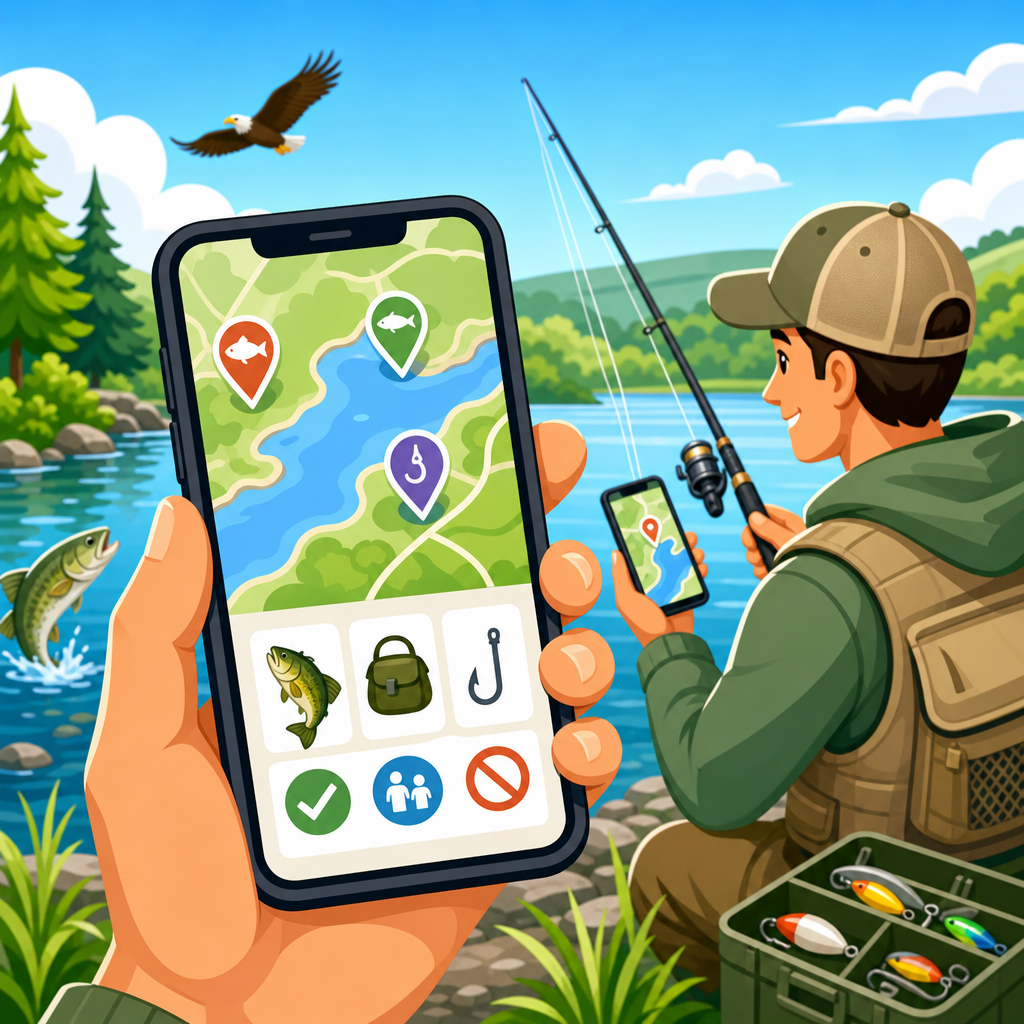
A useful fishing regulations app must answer five questions fast. Do I have the right license? Can I fish here today? What species can I keep? What are the size and bag limits? Are there special gear, vessel, or reporting rules? If an app cannot answer those questions clearly, it is not a true compliance tool.
In practice, the strongest apps share a predictable feature set. First, they are tied directly to an agency or official licensing vendor, such as a state department of natural resources, fish and wildlife department, or parks and wildlife agency. Second, they use location data to narrow rules by waterbody, management zone, or marine area. Third, they support offline access, because ramps, mountain lakes, and coastal marshes often have weak service. Fourth, they update quickly when emergency orders change harvest or access.
The best apps also separate regulation content from general fishing content. Catch logging, weather overlays, sonar integration, and social posting may be helpful, but none of those features matter if an app buries a special trout regulation in a deep menu. Clear compliance design matters more than glossy graphics. Good apps label exceptions, link to legal definitions, and explain confusing terms such as slot limit, aggregate bag, possession limit, snagging prohibition, or artificial-lure-only water.
Another essential capability is licensing integration. Many states now use digital licenses that can be stored in-app, displayed to officers, and renewed without printing. Some apps also handle harvest reporting for species such as salmon, sturgeon, lobster, crabs, or migratory fish. That matters because lawful fishing increasingly includes post-catch reporting, not just purchase of a license. If you target species with tags, endorsements, stamps, or report cards, the app should make those obligations obvious before you launch.
Official state wildlife apps are usually the best first stop
If you want the safest answer to “What are the local fishing regulations here?” start with the official app or mobile site from the state agency that manages the water. Agencies such as Texas Parks and Wildlife, the Florida Fish and Wildlife Conservation Commission, the California Department of Fish and Wildlife, and the Minnesota Department of Natural Resources publish current rules, license portals, and emergency notices directly. Those sources are not just convenient; they are operationally closest to the legal text and enforcement updates.
I recommend official apps first because jurisdiction matters. A private app may summarize “state regulations,” but a specific lake may have a special harvest slot, an in-season closure, or a trout-stocked designation with unique bait rules. Official agency tools are more likely to surface those exceptions. In marine fisheries, they are also more likely to reflect quota-driven changes, temporary reef closures, and species identification bulletins that update midseason.
Official apps tend to be strongest in three areas: license purchase and display, regulation lookup by species or waterbody, and alerts. Their weaker points are usability and cross-state planning. Some state apps feel dated, and travelers crossing several jurisdictions may need multiple apps. That inconvenience is still preferable to relying on an attractive third-party summary that lags a rule change by a week.
| App type | Best use | Main strength | Main limitation |
|---|---|---|---|
| Official state wildlife app | Checking legal rules where you are fishing | Direct access to current regulations, licenses, and alerts | Usually limited to one jurisdiction |
| Official licensing vendor app | Buying and storing licenses or permits | Reliable credential management and renewal | May not explain special local rules well |
| Third-party fishing app | Trip planning, maps, catches, and species notes | Better interface and broader coverage | Regulation summaries may be incomplete or delayed |
| Marine navigation or map app | Boundary awareness and area closures on the water | Excellent spatial context for zones and access | Not a substitute for fish and wildlife legal text |
Third-party fishing apps that help with regulations
Several well-known fishing apps can support regulation checks even when they are not the legal authority. Fishbrain, onX Fish, and similar platforms are useful for discovering access points, mapping waterways, reviewing species presence, and understanding local fishing pressure. For an angler trying to answer, “What might I catch here, and what rules should I verify before I go?” these apps can save time.
Fishbrain is popular because it combines catch data, community reports, and map-based discovery. That makes it good for identifying likely target species in unfamiliar water. If users report walleye, smallmouth, and pike in a specific river reach, you immediately know which regulations to verify in the state rulebook. The limitation is obvious: community intelligence is not law. A post saying “five fish limit” may reflect last year’s rule, a neighboring reach, or a misunderstood exception.
onX Fish, where available, adds strong mapping value. Boundary confidence matters more than many anglers realize. I have worked with cases where anglers crossed from one management area into another by a few hundred yards and triggered different harvest rules. Good map layers help prevent that. Similar logic applies in coastal systems where inland waters, federal waters, and special managed areas can sit close together.
Navigation apps such as Navionics and broader marine chart platforms also deserve mention in this hub because fishing regulations and licensing do not exist in isolation. Boaters need to know whether they are within a park boundary, restricted area, or closed shellfish zone. A chart app will not tell you the legal red drum slot or trout stamp requirement, but it may show the line that determines which rulebook applies. Used alongside an official regulations app, that is a practical compliance workflow.
How to choose the right app for freshwater, saltwater, and travel
The best app depends on where and how you fish. Freshwater anglers often need fine-grained waterbody rules. A single state can manage general inland waters one way and carve out dozens of exceptions for trout streams, muskellunge lakes, urban ponds, and border rivers. In those cases, choose an app with searchable waterbody names, county filters, and downloadable PDF regulations in case service drops.
Saltwater anglers need stronger focus on dynamic rules. Marine seasons and bag limits can change quickly because of quota monitoring, spawning protection, and emergency conservation action. If you fish coastal bays, nearshore reefs, and offshore waters, prioritize apps that push alerts and distinguish state waters from federal waters. NOAA Fisheries pages, state marine resources apps, and charting tools together often provide the clearest picture.
Traveling anglers should think in layers. First, install the official app for each destination state. Second, keep a broader map or fishing app for planning and access. Third, save licenses and regulation pages offline before departure. Border waters deserve special caution. The Mississippi River, Columbia River, Great Lakes tributaries, and many western reservoirs involve shared management, reciprocal licensing rules, or split enforcement authority. Your “local” rule may depend on bank side, vessel position, target species, and launch location.
Families and casual anglers need simplicity. If you fish only a few weekends each year, the right app is not the one with the most features; it is the one that surfaces plain-language answers quickly. Search by species, check legal size, confirm your license, and review any local exceptions. Complexity creates mistakes, especially when children, borrowed gear, or rental boats are involved.
Key fishing regulations and licensing details anglers must verify
No app is useful unless you know what to verify. Start with the license itself: resident or nonresident status, annual or short-term duration, age exemptions, and required endorsements. Many states require extra stamps or validations for trout, salmon, steelhead, shellfish, or migratory species. Missing an endorsement is still a violation even if you bought a general fishing license.
Next, confirm harvest rules. Bag limit is how many fish you may keep in a day. Possession limit is how many you may have in total, including stored fish in some jurisdictions. Size limits may be minimum, maximum, or slot-based, where only fish within or outside a protected range may be kept. Species-specific rules matter because similar fish are often regulated differently. A striped bass rule may not match a white bass rule, and misidentification is not a reliable defense.
Then review method and area restrictions. Some waters prohibit live bait, treble hooks, felt soles, lead tackle, or multiple lines. Others ban chumming, snagging, cast nets, or fishing after dark. Seasonal closures may protect spawning runs or low-water refuges. Access restrictions can also matter as much as harvest law. A reservoir may allow fishing but prohibit launch at certain ramps, shoreline access in habitat zones, or motor use in protected arms.
Finally, check reporting obligations and invasive species rules. Western states often require aquatic invasive species permits or inspections for trailered boats. Some species require immediate tagging or same-day harvest reporting. In shellfish and reef fisheries, health closures and contamination advisories can override general open seasons. The best apps put these exceptions near the top instead of hiding them in long legal text.
Common mistakes when using fishing regulation apps
The biggest mistake is assuming an app is official because it looks polished. Always identify the publisher. If the app comes from a recognized fish and wildlife agency or its licensing contractor, confidence is higher. If it is a community platform, treat regulation information as a prompt to verify, not the final answer.
The second mistake is checking only statewide rules. Local exceptions are where most enforcement issues happen. I regularly advise anglers to search by exact waterbody, zone, or management area, then read the exceptions line by line. Rivers, tailwaters, municipal lakes, and stocked trout waters are especially likely to have special rules.
Another common failure is not updating before the trip. Emergency orders can change overnight. Save regulations offline, but refresh them while you still have service. Also confirm your phone battery plan. A dead phone at inspection time is avoidable. Keep screenshots, downloaded PDFs, or a printed backup when regulations are complicated.
Finally, do not confuse access permission with fishing legality. An app may show a public launch, but that does not mean the season is open, the species is legal to retain, or your license covers that method. Compliance is a chain. If one link fails, the trip can still end with a citation.
How this hub connects the wider Fishing Regulations & Licensing topic
This page serves as the hub for the broader Fishing Regulations & Licensing subject within Boating Laws & Regulations. From here, the natural supporting articles include how to buy a fishing license online, freshwater versus saltwater license differences, state-by-state age exemptions, trout stamps and species endorsements, how reciprocal licenses work on border waters, and what to know about catch reporting and harvest tags. Additional supporting content should cover marine protected areas, invasive species inspection rules for boats, and how local access ordinances interact with state fishing law.
The unifying principle across those subtopics is simple: the best app is the one that gets you to the governing rule fast, shows whether your credential is valid, and helps you prove compliance on the water. Everything else is secondary. A social feed may help you find fish, but only current legal information helps you keep them lawfully.
Choose official wildlife agency apps first, use third-party fishing and navigation tools as support, and verify licenses, species limits, seasons, methods, and location-based exceptions every trip. That approach reduces tickets, protects fisheries, and makes boating days less stressful. If you manage fishing content for your crew, club, or marina, start by bookmarking the agencies you use most and building your own simple compliance checklist before the next launch.
Frequently Asked Questions
What should I look for in the best app for checking local fishing regulations?
The best fishing regulations app should do more than show a generic rulebook. It should help you find the exact regulations that apply to where you are fishing, what species you are targeting, and how you are fishing. That means strong location-based features, up-to-date state or provincial regulations, species-specific limits, seasonal closures, and special waterbody rules. A quality app should also make it easy to see bag limits, size limits, gear restrictions, bait rules, protected species information, and any emergency closures that may be in effect.
It is also worth paying attention to how the information is organized. The most useful apps reduce confusion by letting you search by current GPS location, waterbody name, or target species instead of forcing you to dig through long PDF regulation booklets. Built-in licensing links are another major advantage because they let anglers confirm legal requirements and buy or renew permits without switching tools. Offline access can be especially important if you fish in remote areas with weak cell service, and saved favorites for commonly visited lakes, rivers, or coastal zones can save time on repeat trips.
Finally, accuracy and update frequency matter more than flashy design. Regulations can change during the season because of stock concerns, public safety issues, invasive species management, or temporary closures. An app that clearly states its data source and update schedule is usually a safer choice than one that simply republishes old information. The best apps are the ones that help anglers verify current rules quickly and confidently before they launch, cast, or keep a fish.
Are fishing regulation apps accurate enough to rely on by themselves?
A good fishing regulation app can be extremely helpful, but it should be treated as a compliance tool, not a substitute for judgment. The strongest apps pull directly from official state wildlife agencies, fisheries departments, or licensing systems, and those can be very reliable when maintained properly. However, no app is perfect. Delays in syncing updates, errors in location mapping, missing special regulations, or confusion between nearby management zones can still happen. That is why experienced anglers use apps as a primary reference but still verify important details when regulations are complicated or unusually restrictive.
This is especially important on waters with overlapping jurisdictions, boundary lines, tribal waters, marine zones, special catch-and-release sections, or species that look similar but have different harvest rules. For example, one lake may have a statewide bass limit, while a connected river section has a different slot limit or seasonal closure. If the app does not clearly distinguish those areas, an angler could unintentionally break the law even while trying to do the right thing. In compliance work, that kind of mistake is common because many people rely on memory, an old screenshot, or secondhand advice instead of checking the latest official source.
The safest approach is to use the app as your first stop, then confirm anything that seems unclear through the relevant fish and wildlife agency, official regulation page, or licensing portal. If an app links directly to the governing agency and shows the last update date, that is a strong sign it takes accuracy seriously. In short, yes, regulation apps can be accurate enough to be highly valuable, but responsible anglers still cross-check when the stakes are high.
Can a fishing regulations app help me avoid fines and other legal problems?
Yes, that is one of the biggest reasons these apps are worth using. Many fishing violations do not happen because someone intended to ignore the law. They happen because local rules are far more detailed than people expect. Regulations can vary by state, county, waterbody, season, species, fishing method, boat access point, and even time of day. A modern app helps reduce that risk by giving anglers quick access to the rules that apply to their exact trip instead of forcing them to interpret a broad regulation summary from memory.
A solid app can help you avoid common mistakes such as keeping fish outside a slot limit, fishing in a closed spawning area, using prohibited bait, exceeding possession limits, harvesting the wrong species, or missing permit requirements. Some apps also flag protected species and emergency closures, which is useful because those can change rapidly and may not be obvious from signs at the launch or shoreline. If you travel between different lakes, rivers, or coastal zones, a regulations app becomes even more valuable because it helps you adjust to local requirements without having to study multiple agency websites every time.
That said, an app is only effective if you actually use it before and during your trip. Check the rules before leaving home, verify your location once you arrive, and review species-specific details before keeping anything. If the app offers saved locations, alerts, or offline downloads, use those features. They can make the difference between a smooth day on the water and a citation, confiscated gear, or loss of access. In practical terms, the right app does not just add convenience; it helps build habits that keep anglers legal and informed.
Do I still need to check local agency websites if I already have a fishing regulations app?
In many cases, yes, especially when you are dealing with unusual rules or planning a trip to unfamiliar water. The best apps are often built around official information, but the official fish and wildlife agency remains the final authority. Agency websites may publish emergency rule changes, temporary closures, harmful algae advisories, invasive species restrictions, access notices, and local updates before those changes appear in third-party tools. That is why careful anglers use apps for speed and convenience, then go to the agency source when they need confirmation.
This matters most when regulations are highly localized. Special trout streams, salmon runs, marine conservation zones, border waters, and urban fisheries often have exceptions that are easy to miss. The agency site may also provide maps, legal definitions, species identification guides, and enforcement notices that give more context than an app summary. If you are unsure about whether a creek counts as part of a regulated system, whether a boat ramp enters a restricted zone, or whether a certain lure setup is legal, the agency website usually gives you the clearest answer.
Think of it this way: the app is often the fastest and easiest way to find the right rule set, while the official site is the best place to resolve edge cases. Using both is not overkill. It is a smart routine, especially for anglers who fish across multiple jurisdictions or target species with strict harvest rules. If an app directly connects you to the official regulation page for your location, that is often the best-case scenario because it combines convenience with verification.
Are free fishing regulation apps good enough, or is a paid app worth it?
Free fishing regulation apps can be very good, particularly if they are offered by state agencies, licensing systems, or companies that pull directly from official sources. For many anglers, a free app is enough if the core need is checking bag limits, seasons, licensing requirements, and local waterbody restrictions. If the app is accurate, easy to search, and updated regularly, price matters less than trustworthiness and usability. A simple free app that clearly shows the current rule for your location is often more useful than a paid app loaded with extra features but weaker compliance information.
Paid apps may be worth considering if they add tools that improve real-world decision-making. Examples include advanced GPS mapping, boundary overlays, offline regulation downloads, saved trip areas, weather integration, catch logging, species identification, and push alerts for rule changes. These features can be especially useful for traveling anglers, guides, boaters, or people who fish remote waters where service is unreliable. In those situations, the value of a paid app is less about the regulations themselves and more about how efficiently the app helps you stay compliant across changing locations and conditions.
The smartest approach is to evaluate the app based on the risk it helps you reduce. If you mostly fish one local lake with straightforward rules, a reliable free app may be all you need. If you regularly cross state lines, fish multiple seasons, target different species, or boat through waters with special zones and changing restrictions, a paid app with better mapping and update features may easily justify its cost. Either way, the most important question is not whether the app is free or paid. It is whether the information is current, location-specific, and easy to verify before you make a decision on the water.