Bringing a vessel back into the United States after cruising abroad sounds simple until you face the actual U.S. customs rules for bringing your boat back from abroad. I have helped owners return from the Bahamas, Canada, Mexico, and the Caribbean, and the pattern is always the same: the skippers who prepare early clear faster, avoid penalties, and protect their travel plans. This hub explains the core legal framework, the documents U.S. Customs and Border Protection expects, the reporting timelines that matter, and the related international boating laws and travel requirements that affect recreational boaters. If you understand arrival reporting, passenger documentation, foreign clearance practices, restricted items, and the distinction between immigration, customs, agriculture, and state boating rules, you can reenter with far less risk.
In practical terms, “reentering” means arriving in U.S. waters, contacting the appropriate federal authorities, presenting the vessel and everyone on board for inspection if directed, and declaring goods acquired abroad. For pleasure boats, the primary federal agency is U.S. Customs and Border Protection, usually called CBP. Depending on your voyage, the U.S. Coast Guard, the Centers for Disease Control and Prevention, the Department of Agriculture, and state wildlife or marine agencies may also influence what happens next. International boating laws and travel requirements also include the rules of the country you departed from, because an improper foreign clearance can complicate your U.S. arrival. That is why this article serves as the main reference point for the broader topic: every outbound and return trip connects vessel registration, passports, customs reporting, safety compliance, and local port procedures.
The reason this topic matters is straightforward. Failure to report arrival can trigger substantial civil penalties. Inaccurate declarations can lead to seizure issues, delays, or intensive inspections. Missing identity documents can create immigration problems for passengers even when the boat itself is properly documented. Small oversights also cause large headaches: one undeclared agricultural item can extend an inspection, one expired passport can strand a guest, and one misunderstood cruising permit can affect future entries. For boat owners, captains, and families making cross-border passages, a working knowledge of these rules is not optional. It is part of prudent voyage planning, alongside weather, fuel range, charts, and safety gear.
What U.S. Customs Requires When Your Boat Returns
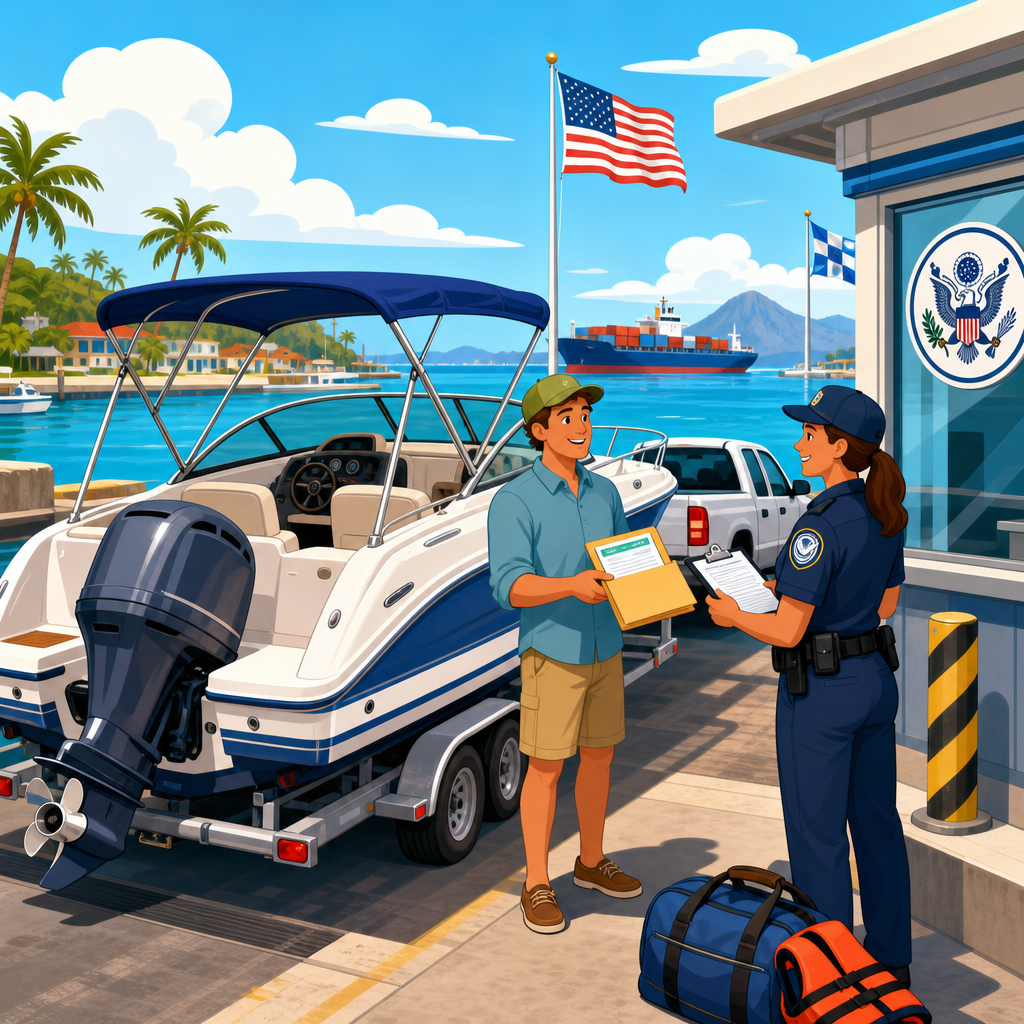
The core rule is that the person in charge of the vessel must report arrival to CBP immediately upon first landing or arrival in the United States from a foreign port or place. “Immediately” is interpreted strictly enough that waiting until after unloading gear, dropping guests at a marina restaurant, or driving home can create problems. In most pleasure-boating scenarios, the skipper should proceed directly to an authorized reporting location or use the reporting method CBP instructs for that area. Many returning boaters now use the CBP ROAM mobile application, which allows eligible pleasure boaters to submit arrival information electronically, upload travel details, and in some cases complete a video inspection. ROAM has become the practical first stop because it aligns with current CBP processing in many coastal and Great Lakes regions.
That said, ROAM is not a blanket substitute for every requirement everywhere. Local port practices still matter. Some ports want boaters to call a specific number on arrival. Some require in-person reporting unless the traveler holds a recognized trusted traveler credential and receives remote clearance. Some remote areas have reporting sites with limited hours. I have seen experienced cruisers lose half a day because they assumed an app approval in one region worked the same in another. Before departure from the United States, verify the reentry process for the exact port or coastline where you expect to return, plus one backup port in case weather changes your plan.
Expect CBP to ask for vessel identification, arrival location, last foreign port, names and dates of birth for everyone aboard, citizenship, passport information, customs declarations, and ownership details. If your vessel is federally documented, have the Certificate of Documentation available. If it is state registered, carry the current registration and numbers. Keep proof of ownership accessible, especially if the operator is not the titled owner. Charter, borrowed, or financed vessels attract extra attention because officers need to confirm lawful control and commercial status.
Documents Every Returning Recreational Boater Should Carry
For people on board, passports remain the safest baseline. While some voyages involving U.S. citizens may fit narrower Western Hemisphere Travel Initiative document options, passports simplify unexpected diversions and reduce arguments at the dock. Children need the correct documents too, and non-U.S. citizens may need visas, permanent resident cards, or other immigration evidence. A boater should never assume that because entry by private boat feels informal, document standards are relaxed. They are not.
For the vessel, carry registration or documentation, proof of insurance, radio station paperwork if applicable for foreign cruising, and any foreign cruising permits or zarpe records you received abroad. Keep receipts for significant purchases, repairs, and equipment installed outside the United States. Customs duty treatment depends on the item, its origin, and whether it was previously in the United States, but without receipts you make the inspection harder and often slower. I advise clients to maintain a simple return folder, digital and printed, with passports, vessel papers, marina receipts, fuel receipts, repair invoices, foreign entry stamps, and a typed crew list.
Trusted traveler memberships can help. Programs such as Global Entry, NEXUS, and SENTRI may support streamlined processing in certain cases, and some local boating communities still refer to legacy reporting concepts that have evolved into current CBP systems. The important point is not the program name; it is confirming whether every eligible traveler is enrolled, whether the enrollment is current, and whether the arrival port accepts that process for pleasure vessels on the date you return.
How Return Procedures Differ by Cruising Region
Not all foreign departures create the same paperwork trail. A weekend hop from Florida to the Bahamas is operationally different from a seasonal cruise between Washington and British Columbia or a winter passage between Texas and Mexico. Canada-U.S. returns often involve customs systems that are efficient on both sides, but boaters still must manage firearms restrictions, food declarations, and local marine sanitation or invasive species rules. Bahamas returns often involve clear cruising documentation abroad and close attention to fishing catch limits, alcohol, and purchases made in island marinas. Mexico voyages can involve temporary import issues, fishing licenses, and port captain paperwork that should be preserved until you are fully home.
Distance also affects practical compliance. A nearshore return lets you target a designated port of entry precisely. An offshore return may force weather-driven landfall at a different inlet or harbor. In those situations, the reporting obligation does not disappear; if anything, your first call becomes more important because officers need to understand why your arrival point changed. The best captains log position, time, weather, and communications carefully. Those details matter if your timeline is later questioned.
| Cruising region | Common return issues | Best preparation step |
|---|---|---|
| Canada | Firearms, food items, variable local reporting practices, NEXUS eligibility | Confirm reporting location and carry a precise inventory of regulated items |
| Bahamas | Fishing catch, alcohol, receipts for purchases, passport checks | Keep marina and customs receipts organized before departure |
| Mexico | Temporary import documentation, fishing licenses, repair invoices | Retain all port captain and vessel permit records until after U.S. clearance |
| Caribbean islands | Multiple foreign clearances, crew changes, agricultural declarations | Update the crew list at every island and save each exit document |
What You Must Declare to CBP
Every returning boater should assume that goods acquired abroad are declarable unless clearly exempt. That includes alcohol, tobacco, gifts, marine electronics, spare parts, clothing, and items purchased for use on the boat. Repairs and alterations performed abroad can matter even when you did not physically buy a boxed product. If you had engine work completed in another country or installed a new chartplotter before departure, keep the invoice and be ready to explain the work. Customs treatment is highly fact specific, but nondeclaration is the bigger mistake than overdisclosure.
Food deserves special caution. Fresh produce, meats, eggs, and certain animal products may be restricted or prohibited because agriculture enforcement protects U.S. farms and ecosystems from pests and disease. I have watched straightforward entries become lengthy inspections because a cruiser forgot about fruit in the galley and bait in a cooler. Declare all food and let the officer decide what can remain aboard. The same conservative approach applies to pets. Dogs and cats may need vaccination records or other health documentation, and disease-control rules can change quickly. Check the latest federal guidance before departure, not while tied to the dock on return day.
Cash reporting can also apply. If you or your group transports currency or certain monetary instruments over the federal reporting threshold, file the required report. Many recreational boaters overlook this because they think of customs as luggage and souvenirs, not financial compliance. Yet private vessels are still international arrival vehicles.
Inspection, Enforcement, and Penalties
CBP has broad authority to board and inspect arriving vessels. A routine inspection may cover identity verification, customs declarations, restricted items, concealed compartments, and vessel ownership. Officers may inspect lockers, bilges, refrigerators, and electronics. Calm, organized cooperation helps. When I prepare skippers for first returns, I tell them to have documents ready, assign passengers to remain available, and avoid the temptation to tidy stories instead of facts. Inconsistent answers from guests about where the vessel traveled or what was purchased create avoidable suspicion.
Penalties vary by violation. Failure to report arrival can lead to substantial fines. False statements and smuggling-related conduct can escalate sharply and may involve seizure or criminal exposure. Immigration violations involving noncitizen passengers can trigger separate consequences. Even when a case ends with a warning, the delay can cost marina reservations, weather windows, and connecting travel. The larger lesson is that enforcement risk is not limited to dramatic misconduct; ordinary recreational boaters get into trouble through assumptions, haste, and incomplete records.
There is also a difference between federal clearance and permission to resume ordinary boating activity. Some states require separate compliance steps for invasive species prevention, fishing catch possession, or local anchoring restrictions. Federal customs clearance does not wipe away those obligations. Returning boaters should treat reentry as a layered process: first federal arrival reporting, then any state or local rules that apply where the vessel will continue operating.
Best Practices for Seamless Reentry and Broader International Compliance
The most reliable way to handle U.S. customs rules for bringing your boat back from abroad is to build compliance into the voyage plan from the start. Before leaving the United States, identify the likely return port, download and test CBP ROAM if appropriate, verify passport validity for all travelers, and create a live crew manifest. While abroad, save every clearance, fuel receipt, marina invoice, and repair bill. Log each port and date. Before making landfall in the United States, brief everyone aboard on the arrival process, inventory declarable goods, and make sure no one leaves the vessel until cleared unless officers direct otherwise.
As the hub for international boating laws and travel requirements, this page connects the bigger picture. Safe and lawful cross-border boating depends on outbound country clearance, immigration status, customs declarations, biosecurity awareness, catch and firearms restrictions, and vessel identification that matches official records. The captains who handle international cruising well are not necessarily the most adventurous; they are the most methodical. Treat customs reporting the way you treat navigation in a reef pass: use current information, verify your position, and do not improvise when precision matters.
The key takeaway is simple. Returning to the United States by boat is manageable when you know the rules, carry the right documents, declare honestly, and report immediately. That discipline protects your time, your passengers, and your vessel. If you cruise internationally or plan to start, use this hub as your foundation, then review the specific destination and return-port guidance for your next voyage before you cast off.
Frequently Asked Questions
What do I need to do as soon as my boat returns to the United States from abroad?
The first priority is to report your arrival to U.S. Customs and Border Protection, often called CBP, as soon as you reach a U.S. port of entry or other designated reporting location. For most returning recreational boaters, the rule is straightforward: arrival must be reported immediately upon entering U.S. waters from a foreign country, and before passengers or goods are freely landed unless CBP authorizes otherwise. In practical terms, that means you should have your paperwork ready, know your intended arrival port, and understand whether your return will be handled through in-person inspection, the CBP ROAM app, the Local Boater Option, or another reporting method recognized in your area. Procedures can vary by port, so checking local instructions before departure from the foreign country is one of the smartest steps you can take.
You should also be prepared to provide basic voyage details, including the boat’s registration or documentation number, the last foreign port visited, the names and citizenship of everyone aboard, and any items acquired abroad that may be subject to declaration. If officers direct you to remain at the dock or keep everyone aboard until cleared, follow those instructions exactly. One of the most common mistakes returning boat owners make is assuming that because they are U.S. citizens on a U.S.-flagged vessel, clearance is automatic. It is not. The vessel, the people aboard, and the goods on board may each trigger separate customs or immigration questions. Timely reporting, accurate declarations, and strict compliance with officer instructions are what keep the reentry process smooth and help you avoid delays, fines, or more serious enforcement issues.
Which documents should I have ready for my boat, crew, and passengers when clearing U.S. customs?
At a minimum, you should expect CBP to want proof of the vessel’s identity and nationality, along with valid travel documents for every person aboard. For the boat, that typically means either a state registration or a U.S. Coast Guard Certificate of Documentation, depending on how the vessel is titled and enrolled. If you are operating under a cruising permit, temporary import status, or any special authorization related to the vessel, keep those records accessible as well. It is also wise to have proof of ownership, insurance information, and a written float plan or cruising itinerary showing where you have been. While not every officer will ask for every document, having a complete packet ready demonstrates organization and can shorten the inspection.
For individuals on board, passports are the safest and most universally accepted document for international vessel arrivals. Depending on nationality and immigration status, some travelers may also need visas, lawful permanent resident cards, or other entry documentation. If minors are aboard, especially if they are traveling with only one parent or with non-parent guardians, carry consent letters and any custody-related documentation that explains the travel arrangement. Beyond identity papers, be ready with a crew and passenger list that includes full legal names, dates of birth, citizenship, and document numbers. Many experienced captains prepare both digital and printed copies because connectivity can be unreliable at marinas and remote reporting sites. The goal is simple: when CBP asks who the vessel is, who is aboard, and where you have been, you should be able to answer immediately and document every answer.
Do I have to declare purchases, repairs, parts, or other items brought back on the boat?
Yes. One of the most important parts of U.S. customs compliance is the duty to declare merchandise, vessel purchases, foreign repairs, replacement equipment, and other items acquired abroad. Many boat owners focus only on passports and arrival reporting, but customs issues often arise from undeclared goods rather than from the reporting call itself. If you bought marine electronics in the Bahamas, loaded spare parts in Mexico, had work completed in a Caribbean yard, or returned with alcohol, tobacco, souvenirs, fishing gear, or expensive personal items purchased overseas, those things may need to be declared. The fact that the items are on your own boat does not automatically make them exempt.
The exact duty treatment depends on what the item is, who owns it, where it was acquired, and whether any exemptions apply. Vessel repairs can be especially important in some situations because CBP may ask detailed questions about work performed outside the United States, replacement components, and invoices from foreign shipyards or mechanics. Keep receipts, repair orders, and proof of payment organized. If you are unsure whether something is dutiable, declare it anyway and let CBP decide. That is almost always safer than failing to mention it. Undervaluing purchases, describing foreign repair work vaguely, or assuming that used boat parts do not matter can create unnecessary problems. A clear, honest declaration backed by receipts is the best way to reduce the risk of penalties and keep the focus on routine clearance rather than enforcement.
How do reporting timelines and clearance procedures work if I am returning from places like the Bahamas, Canada, Mexico, or the Caribbean?
The reporting obligation begins when you arrive in the United States from a foreign place, but how the process plays out can differ depending on where you land and what reporting tools are accepted at that location. In many areas, recreational boaters may be able to use the CBP ROAM app to submit arrival information remotely and request inspection clearance. In other situations, especially where local policy or voyage specifics require it, you may need to report by phone and then appear in person at a designated port of entry. Some boaters who frequently cross between U.S. and nearby foreign waters may also use trusted traveler or boater programs if they are eligible, but those programs do not eliminate the obligation to report arrival or answer CBP questions truthfully and promptly.
The practical lesson is that there is no single universal dockside routine for every return. A trip back from the Bahamas into Florida may be handled differently from a small-vessel return from Canada into the Great Lakes or from Mexico into Southern California. Weather, time of arrival, port staffing, vessel nationality, passenger citizenship, and whether you have pets, firearms, restricted food items, or foreign repairs can all affect the next steps. That is why experienced skippers contact the relevant port or review the current CBP guidance before they cast off for home. You want to know where to report, whether everyone must remain aboard, which marina or inspection site is approved, and what backup plan applies if app-based reporting fails. Good timing matters too. If you arrive late at night, on a holiday, or outside normal staffing patterns, you still must report properly. Preparation is what prevents a straightforward landfall from turning into hours of confusion at the dock.
What are the most common mistakes that lead to delays or penalties when bringing a boat back into the United States?
The biggest problems usually come from preventable errors: failing to report arrival immediately, relying on outdated local procedures, carrying incomplete travel documents, making inaccurate declarations, or letting passengers go ashore before clearance is granted. Another frequent mistake is assuming that prior boating experience means the process will be identical every time. CBP procedures evolve, ports handle small-vessel arrivals differently, and one additional factor, such as a foreign guest on board, newly purchased equipment, or a foreign shipyard invoice, can change the inspection entirely. Owners also get into trouble when they delegate reporting to someone unfamiliar with the trip details. The person handling customs must know the itinerary, the people aboard, the vessel identifiers, and everything acquired outside the United States.
To avoid issues, build a return checklist before you leave the United States in the first place. Include vessel registration or documentation, passports, crew list, receipts, repair records, pet paperwork if applicable, and the reporting instructions for your intended reentry port. Confirm whether your chosen app, boater program, or local reporting line is still active and accepted. Keep everyone aboard until CBP says otherwise. Declare goods completely and accurately. If something changed during the cruise, such as a crew swap, emergency repair, or diversion to an unexpected foreign port, mention it clearly instead of hoping it will not matter. CBP officers tend to resolve well-prepared arrivals faster because the facts are organized and easy to verify. In contrast, confusion, omissions, and inconsistent answers can trigger extended questioning, physical inspection, and possible civil penalties. The skippers who clear fastest are rarely the lucky ones; they are the ones who prepared for the return long before they crossed back into U.S. waters.