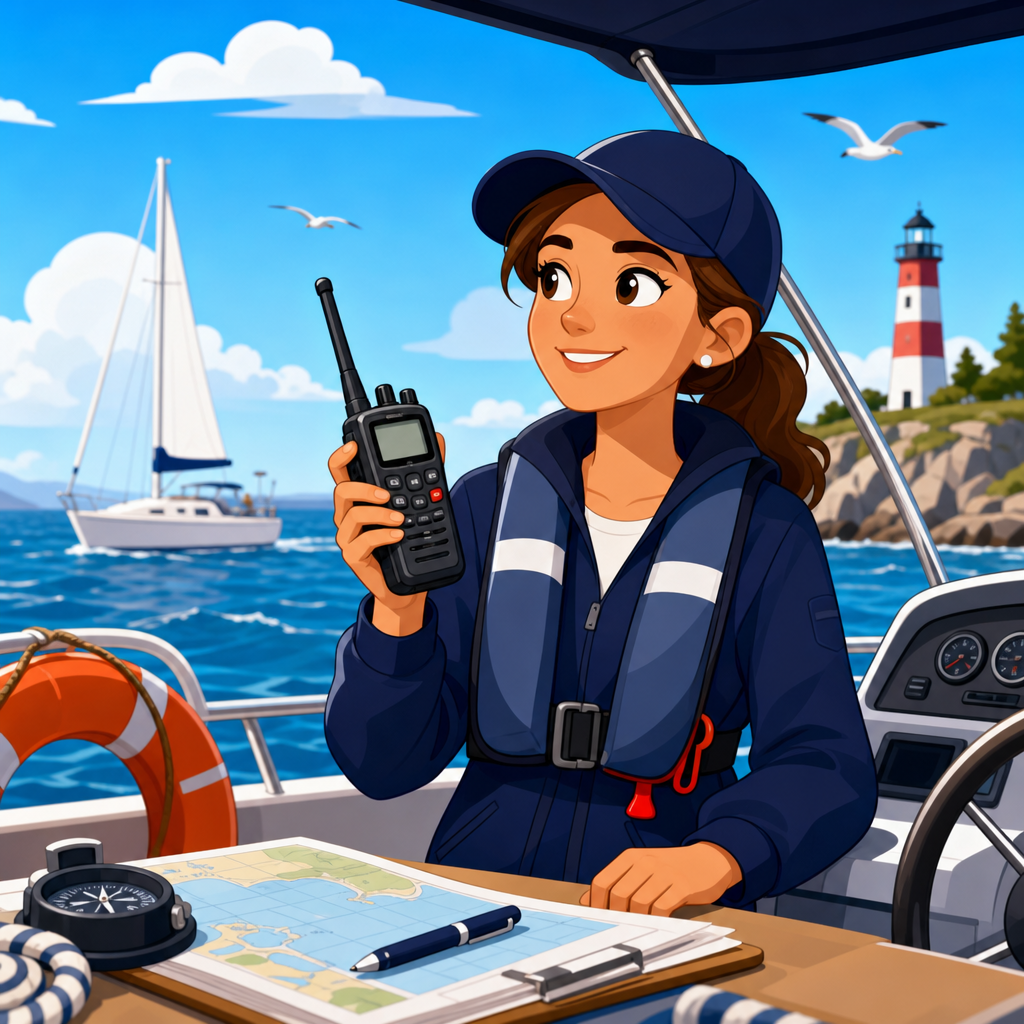
The legal requirements for carrying a VHF radio on board vary by vessel type, operating area, and voyage purpose, but every skipper should understand one core rule: when marine radio carriage is mandated, compliance involves more than simply having a handset in a locker. It includes approved equipment, proper installation, operator qualifications, licensing where required, correct watchkeeping, and disciplined use during routine and emergency communication. For recreational boaters, this subject sits at the center of maritime distress signals and communication because VHF radio is the primary short-range safety system used to call for help, receive urgent navigation warnings, coordinate with bridges and harbormasters, and communicate with nearby traffic. I have seen many owners assume a mobile phone is an acceptable substitute. Legally and operationally, it is not. Phones are point-to-point devices, dependent on cellular coverage, while marine VHF is designed for one-to-many distress alerting on internationally recognized channels monitored by vessels and coast authorities. That distinction matters in bad weather, in crowded waterways, and during sudden onboard emergencies.
In practical terms, a VHF radio is a marine Very High Frequency transceiver operating on allocated maritime channels. A fixed-mount set is typically connected to the vessel’s power supply and an external antenna, which gives better range than a handheld unit. Digital Selective Calling, often abbreviated as DSC, is a standardized alerting feature that can transmit a distress message with vessel identity and, when linked to GPS, position data. Carriage requirements may arise from international conventions, national law, inland navigation rules, commercial inspection standards, fishing regulations, passenger vessel rules, or event-specific permit conditions. Even when carriage is not strictly mandatory for a private pleasure craft, regulators strongly recommend it because the radio supports collision avoidance and emergency response. This article explains when a VHF radio is legally required, what equipment and operator standards usually apply, how the rules differ between recreational and commercial boating, and how this communication tool fits into the wider framework of maritime distress signals and communication.
When a VHF Radio Is Legally Required
The first question boaters ask is simple: do I legally need a VHF radio on board? The answer depends on jurisdiction, tonnage, passenger capacity, route, and whether the vessel is used commercially. Large seagoing ships are typically subject to the Safety of Life at Sea Convention, commonly called SOLAS, which imposes carriage requirements for radiocommunication equipment including VHF installations. In the United States, many uninspected recreational boats are not universally required by federal law to carry a VHF radio, but specific classes of vessels are. Passenger vessels carrying more than a threshold number of people for hire, commercial fishing vessels in certain trades, towing vessels, and inspected vessels commonly fall under mandatory radio carriage rules enforced by the Coast Guard and the Federal Communications Commission. Inland requirements can also apply on regulated waterways where bridge-to-bridge radiotelephone rules govern traffic.
Bridge-to-bridge communication rules are a common source of confusion. Under U.S. rules, certain vessels such as power-driven ships of 20 meters or more, towing vessels of specified size, and passenger vessels carrying more than six passengers for hire on navigable waters generally must carry a radiotelephone capable of operating on the designated bridge-to-bridge frequency. Similar operational rules exist in other countries through port regulations and inland waterway systems. On the Great Lakes, major rivers, busy harbor approaches, and vessel traffic service areas, radio communication may be effectively indispensable even where owners assume their boat category is exempt. A marina launch carrying fare-paying passengers, for example, may trigger carriage requirements that a similarly sized private runabout does not. The legal analysis always starts with the vessel’s service, not just its length.
International voyages add another layer. A vessel traveling beyond domestic waters may encounter foreign licensing requirements, port state control inspections, and GMDSS-related expectations. GMDSS, the Global Maritime Distress and Safety System, is the internationally recognized framework for maritime emergency communications. For smaller pleasure craft, full GMDSS carriage may not apply, but if the vessel is documented, travels internationally, or carries a marine radio station license, compliance obligations expand. In practice, I advise owners to review not only national boating law but also the exact route, including crossing borders, offshore passages, and entry into managed traffic zones. Legal carriage is determined by the strictest applicable rule along the voyage, not the most convenient assumption made at the dock.
Equipment Standards, Installation, and What Compliance Actually Means
Carrying a VHF radio legally means carrying suitable equipment in serviceable condition. Regulators do not treat a dead handheld with a corroded battery as meaningful compliance. A fixed-mount marine VHF set should be type-approved or certified under the applicable technical standard, correctly connected to power, and paired with an antenna installed for reliable transmission range. If DSC capability is required or expected, the radio must be programmed with the vessel’s Maritime Mobile Service Identity, or MMSI. If the unit includes a distress button but no MMSI or GPS position input, one of its most valuable safety functions is compromised. During safety audits, this is one of the first deficiencies I look for.
Range and redundancy matter. A handheld VHF can be an excellent backup, dinghy radio, or abandon-ship communication tool, but it is usually not a complete substitute for a required fixed set because handheld output power and antenna height are limited. A proper installation considers cable loss, antenna placement, interference, waterproofing, and access from the helm. On commercial or inspected vessels, regulators may also require emergency power arrangements, reserve batteries, or periodic testing and maintenance records. Even on recreational boats, prudent compliance includes checking transmit and receive quality, confirming GPS position feeds to DSC radios, and verifying that channel labels and distress procedures are understood by anyone who may stand watch.
| Requirement Area | What the Law or Standard Usually Expects | Common Compliance Mistake |
|---|---|---|
| Radio type | Marine VHF approved for maritime use | Using a non-marine handheld or expired equipment |
| Installation | Operational power supply and effective antenna | Loose wiring, poor antenna placement, no range test |
| DSC setup | MMSI programmed and GPS connected when fitted | Distress button active but no identity or position data |
| Operator readiness | Qualified user who knows channels and procedures | Owner has radio but crew cannot make a distress call |
| Documentation | License or station authorization where required | Assuming recreational status removes all paperwork duties |
Another key point is that carriage rules often connect to inspection and survey regimes. Passenger vessels, charter boats, and coded workboats may need radio checks integrated into annual inspections. In the United Kingdom, for example, coded commercial vessels commonly must carry specified communication gear under Maritime and Coastguard Agency standards. In Australia, state marine safety rules and commercial vessel standards can impose radio obligations tied to operational area categories. The legal requirement is therefore not just “have a VHF,” but “have the right VHF, installed correctly, maintained properly, and usable immediately during an emergency.” That is the standard enforcement officers and accident investigators apply after an incident.
Licensing, Operator Certificates, and Radio Use Rules
Many boaters are surprised to learn that radio law regulates both the station and the operator. In some countries, a domestic recreational boat using VHF only within national waters may not need an individual ship station license, while international operation usually does. In the United States, the FCC generally exempts voluntary recreational vessels operating domestically from ship station licensing, but a station license is required for international voyages, certain larger vessels, and specific regulated services. Other administrations require licenses more broadly. Likewise, an operator permit may be necessary, especially for DSC or international operation. The Short Range Certificate in many European systems is the common credential for using marine VHF with DSC.
Operator qualifications are not bureaucratic trivia. They directly affect safety. A trained operator knows the difference between distress, urgency, and safety traffic; understands when to use Mayday, Pan-Pan, and Sécurité; can shift from Channel 16 after contact; and can avoid unlawful chatter on protected frequencies. Misuse of Channel 16, false distress alerts, and transmission of nonessential traffic on working channels can all lead to penalties. More important, poor radio discipline clogs the spectrum during critical moments. I have listened to emergency evolutions where one calm, properly formatted transmission produced a fast response, while another incident was delayed because the caller rambled, omitted position, and never stated the nature of distress.
Watchkeeping can also be a legal duty. Vessels under radio carriage obligations may be required to maintain a listening watch on Channel 16, a DSC watch, or a designated traffic channel depending on their trade and location. In vessel traffic service zones, instructions may require continuous monitoring of assigned frequencies. This matters because compliance is judged in operation, not only at boarding. A vessel with a switched-off radio, muted speaker, or untrained crew may be treated as noncompliant even if the hardware is present. For boaters building good habits, the rule is straightforward: know the channels, know the call formats, monitor required frequencies, and ensure at least one person aboard can use the equipment under stress without improvising.
How VHF Fits Into Maritime Distress Signals and Communication
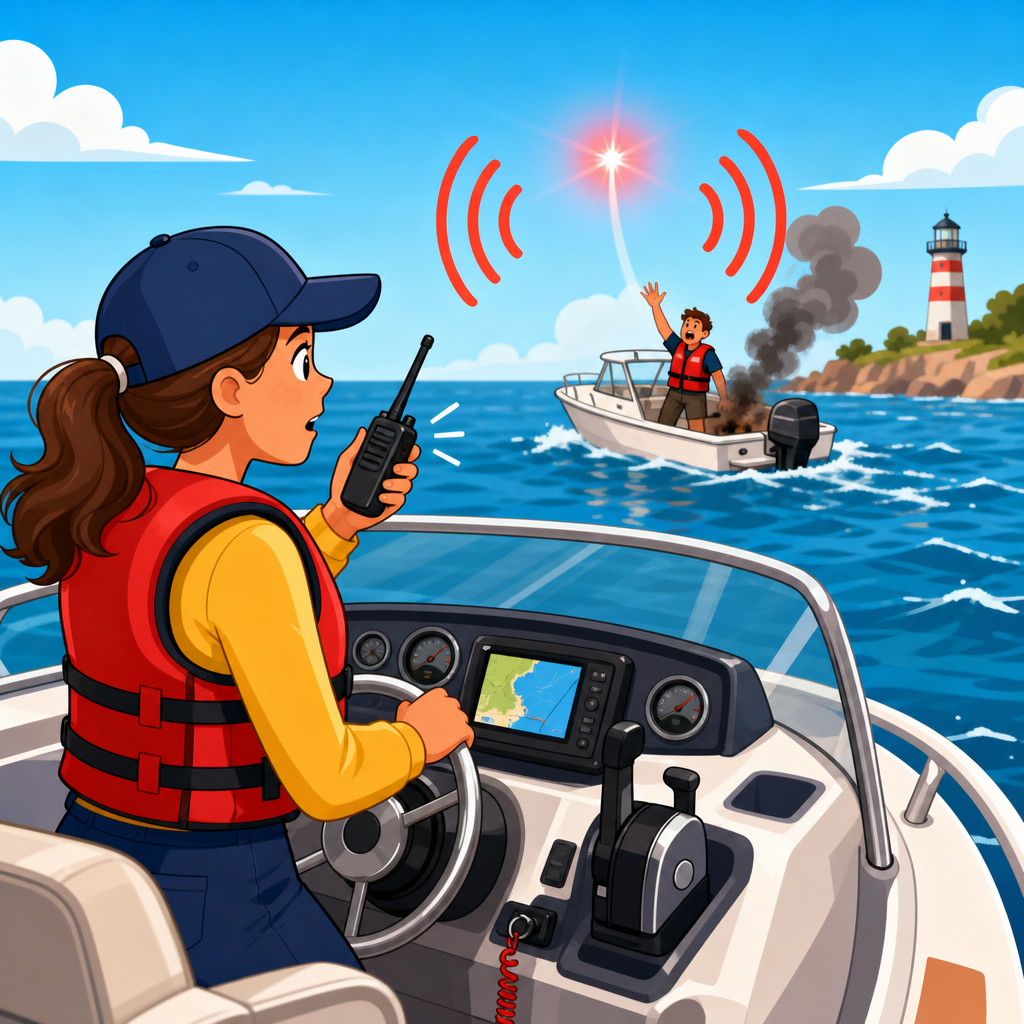
VHF radio is the hub of short-range maritime communication because it connects routine operations with emergency signaling. Distress communication begins with a Mayday call sent on Channel 16 or by DSC distress alert, followed by clear voice information: vessel name, call sign or MMSI, position, nature of distress, assistance required, persons aboard, and any abandonment or survival details. Urgency traffic uses Pan-Pan when safety is threatened but immediate loss of life is not yet occurring. Safety messages use Sécurité for navigation warnings or important weather information. These signal words are not tradition for tradition’s sake; they create legal and operational priority recognized worldwide.
VHF does not stand alone. It works alongside EPIRBs, PLBs, visual distress signals, AIS, radar, NAVTEX, satellite devices, and mobile phones. Each tool serves a different communication problem. An EPIRB alerts over long range and supports search and rescue through satellite networks, but it does not let you coordinate a tow with a nearby vessel or advise a ferry of your loss of steering in a channel. Flares are highly visible but limited in duration and useless over the horizon. A phone can call emergency services if coverage exists, but it does not broadcast to all vessels in the area. VHF fills the immediate coordination gap better than any other onboard device, which is why lawmakers and investigators continue to treat it as foundational equipment.
As the hub page for maritime distress signals and communication, this topic links naturally to more detailed guidance on distress call procedures, DSC setup, MMSI registration, EPIRB rules, visual distress signal carriage, AIS carriage requirements, and emergency communication drills for crew. The practical lesson across all those subtopics is consistent: safety equipment must be integrated, not collected piecemeal. A boater who installs a DSC radio, connects GPS, registers MMSI details correctly, practices a Mayday script, carries compliant flares, and understands local traffic channels is far better prepared than someone who buys devices without learning the system they belong to.
Common Enforcement Issues, Special Cases, and Best Practices
The most common enforcement problems are mundane. Radios are installed but not registered, MMSI numbers are obtained from the wrong authority for international use, antennas are damaged, batteries are flat, or crew members do not know how to switch from low to high power. Charter operators sometimes assume a handheld meets commercial carriage standards when the certificate requires a fixed set. Anglers running offshore may carry a radio but never connect the GPS feed, defeating DSC distress functionality. Another recurring problem involves imported radios programmed for channels not authorized in the operating country. Compliance is technical, administrative, and operational at the same time.
Special cases deserve attention. Personal watercraft, kayaks, and small open boats may not be legally required to carry VHF, yet offshore race organizers, harbor authorities, and local regulations sometimes impose event-based or area-based radio mandates. Bareboat charters may shift operating responsibility to the renter, but the vessel owner still has duties concerning equipment condition and legal fit-out. Commercial guides, sailing schools, and club launches often move between recreational and for-hire categories, and that change can alter the communication rules immediately. When classification is ambiguous, the safe approach is to read the inspection standard, insurance terms, and port requirements together rather than relying on informal dockside advice.
The best practice is to treat VHF compliance as part of voyage planning. Confirm whether your boat’s category and route trigger mandatory carriage, verify licensing and operator qualifications, test the set before departure, maintain a channel card at the helm, and train crew to send a distress alert and voice Mayday. Review companion articles in this boating laws and regulations series, then compare your current setup against the standards that apply where you operate. A legal, functional VHF radio is not paperwork for its own sake. It is the fastest way to be heard when minutes matter, and that benefit alone justifies getting compliance right.
Frequently Asked Questions
When is a VHF radio legally required on board a boat?
A VHF radio is legally required in specific situations that depend on the type of vessel, where it operates, and the purpose of the voyage. Commercial vessels, passenger-carrying boats, fishing vessels, and craft operating under particular national or international safety regimes are more likely to fall under mandatory carriage rules than private recreational boats used close to shore. In many jurisdictions, requirements also become stricter for offshore passages, nighttime operations, or voyages in regulated waters where communication with coast stations, harbormasters, bridges, locks, or vessel traffic services is expected.
For recreational boaters, the answer is often less straightforward. A private pleasure craft may not always be legally compelled to carry a VHF set for every trip, but that does not mean the issue can be ignored. Local navigation rules, equipment regulations, charter requirements, marina policies, race rules, and insurance terms may effectively make a radio necessary. In some areas, once a boat is equipped with a VHF, there are also legal expectations about how it is used, including distress procedures, monitoring channels, and avoiding improper transmissions.
The safest approach is to avoid assumptions based on boat size alone. Legal carriage obligations can turn on details such as whether the vessel is inspected, how many people it carries, whether it crosses borders, and whether it operates in waters subject to inland, coastal, or international communication rules. Skippers should check the rules issued by the national maritime authority, coast guard, communications regulator, and any local port authority before departure. The key point is that legal compliance starts with determining whether carriage is mandatory for your exact operation, not just whether a radio seems like a good idea.
If a VHF radio is required, is simply having a handheld radio on board enough?
Usually not. One of the most common misunderstandings is that legal compliance is satisfied by carrying any working radio, especially a portable handheld unit stored in a drawer or locker. In many regulated cases, the law requires more than mere possession. It may require an approved marine VHF set of a specified type, proper installation, a reliable power source, an effective antenna arrangement, digital selective calling capability where mandated, and readiness for immediate use from the normal operating position of the vessel.
Handheld VHFs can be extremely useful as backup equipment and, for some small recreational boats, may be acceptable in situations where no fixed installation is specifically required. But where carriage rules apply to commercial operations, offshore voyages, or vessels subject to formal safety standards, a handheld often does not meet the full legal requirement on its own. Battery dependency, lower transmitter power, shorter antenna height, and reduced range are all reasons why regulators may require a fixed-mount set. In addition, some rules call for equipment to be connected to the vessel’s GPS or integrated with distress alerting functions, which a basic handheld may not provide.
Compliance also includes condition and accessibility. A radio that is uncharged, unregistered where registration is required, missing its antenna, or packed away where it cannot be used immediately in an emergency may fail to satisfy the intent of carriage regulations. If your vessel falls into a category where VHF carriage is mandated, assume that the radio must be suitable, installed or carried as required, operational at all times, and capable of performing both routine and emergency communication effectively.
Do I need a license to operate a marine VHF radio, and does the vessel need one too?
In many cases, yes. Marine radio regulation often involves two separate legal questions: whether the operator needs a certificate and whether the vessel or radio installation needs a station license or registration. These are related but not identical. Operator certification is designed to ensure that the person using the radio understands proper procedures, distress formats, channel use, priority of communications, phonetic alphabet conventions, and the legal limits on transmitting. On boats where radio carriage is mandatory, operator qualifications are especially important because misuse can compromise both safety and compliance.
Whether a skipper of a recreational boat needs an operator certificate depends on the country, the waters being used, and whether the voyage is domestic or international. Some jurisdictions are more relaxed for purely domestic pleasure use, while others require a marine radio operator certificate for anyone transmitting on VHF. International travel generally increases the likelihood that formal operator credentials and vessel licensing will be required. If the radio includes Digital Selective Calling, there may also be added expectations about programming the vessel’s identity number correctly and ensuring the operator understands DSC distress and routine calling functions.
As for the vessel, many countries require a station license, call sign assignment, MMSI registration, or equivalent radio authorization, especially for fixed VHF installations, DSC-equipped sets, and boats traveling internationally. Even where a station license is not required for certain domestic pleasure craft, registration details may still be necessary for lawful and effective use of safety features. The practical rule is simple: do not assume that buying a radio is the end of the legal process. Check both operator qualification rules and vessel licensing requirements before using the equipment on the water.
What does the law expect from skippers once a VHF radio is carried on board?
Once a VHF radio is carried, especially when required by law, the skipper’s obligations extend well beyond ownership. The radio must be used properly, kept available for immediate operation, and handled in accordance with communication rules. That includes maintaining any required watch on designated channels, responding appropriately to distress traffic, using the correct channels for calling and working communications, and avoiding unnecessary, false, or abusive transmissions. Regulators treat marine radio as a safety system, not a convenience device, so operational discipline matters.
The law may also expect the equipment to be maintained in good working order. That means ensuring the set powers on reliably, the antenna and connections are intact, batteries are charged if portable units are part of the setup, and any distress or DSC functions are correctly configured. On vessels where inspections apply, authorities may check not just whether a radio is present, but whether it is approved, functional, correctly installed, and supported by relevant documentation. A radio that cannot transmit clearly, receive traffic, or send a proper distress alert may be viewed as noncompliant even if it is physically on board.
Skippers are also expected to understand communication procedure. Routine calls should be concise and made on the proper channels. Distress, urgency, and safety messages each have distinct formats and legal significance. Deliberate interference, prank calls, false distress alerts, and casual chatter on protected channels can lead to serious penalties. In short, carrying a VHF radio brings operational responsibilities: keep it legal, keep it ready, keep watch as required, and use it in a way that supports safety for your vessel and everyone sharing the waterway.
What can happen if a boat fails to meet VHF radio carriage requirements?
The consequences can range from administrative penalties to serious safety exposure. At the legal level, noncompliance may result in fines, detention, failed safety inspections, licensing problems, voyage delays, or enforcement action by maritime or communications authorities. For commercial vessels and inspected craft, deficiencies related to radio carriage can have immediate operational consequences, including prohibition from sailing until the deficiency is corrected. Even recreational skippers may face penalties if they operate where required equipment is missing, improperly installed, or used unlawfully.
There can also be insurance and liability implications. If an accident, collision, grounding, or onboard emergency occurs and the vessel was operating without required communication equipment or qualified radio operation, insurers and investigators may examine that failure closely. A missing or nonfunctional VHF set can be portrayed as a lapse in seamanship and statutory compliance, especially if the inability to call for help, receive warnings, or coordinate with rescue services worsened the outcome. In some cases, noncompliance can influence civil liability or complicate claims handling after an incident.
Most importantly, the real-world risk is not the fine but the lost margin of safety. A compliant marine VHF setup allows a skipper to send distress calls quickly, receive navigational warnings, contact nearby vessels, coordinate with coast guard services, and communicate in crowded or restricted waters. That is why the legal requirement is framed as a system of readiness, not a box-ticking exercise. If VHF carriage applies to your vessel, meeting the full requirement protects not only your legal position but also your crew, passengers, and chances of getting timely help when it matters most.