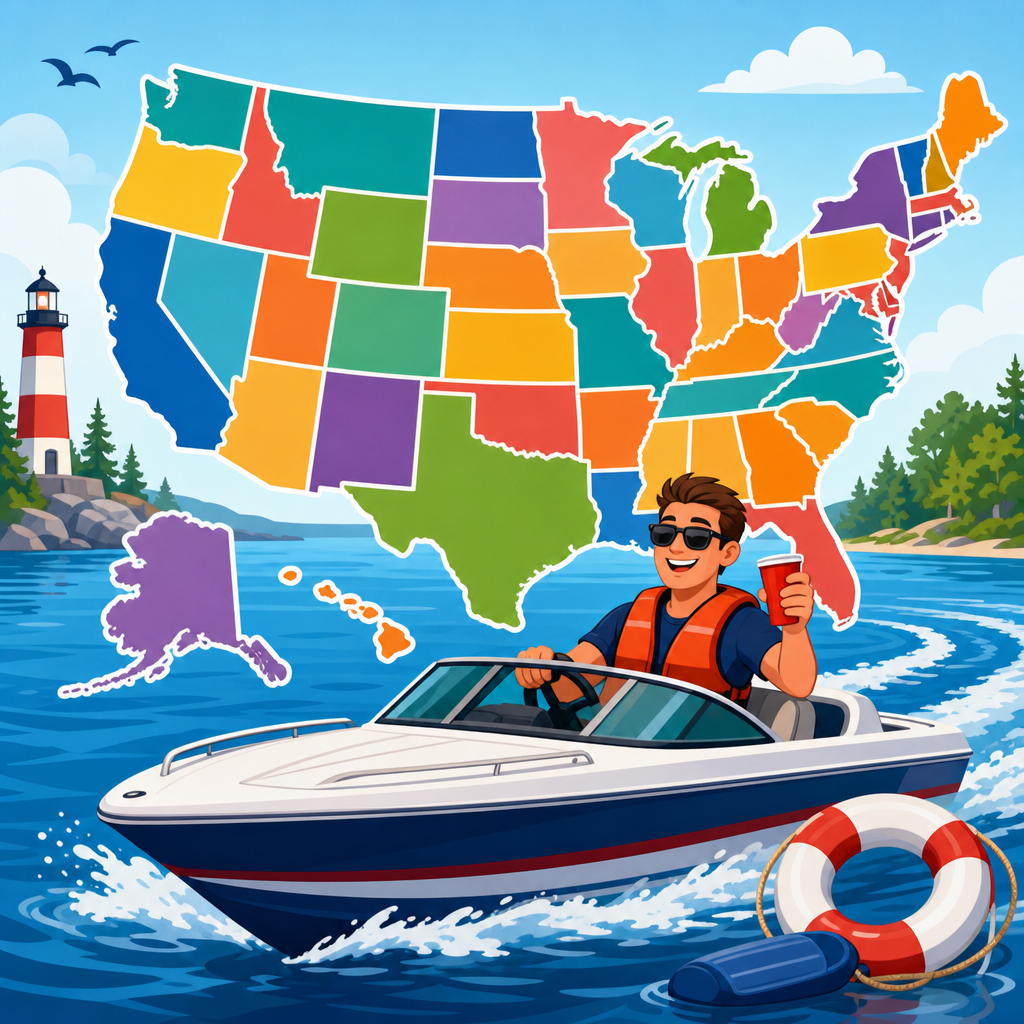
Boating education certificate rules vary widely across the United States, and understanding them is essential for anyone who plans to operate a powerboat, personal watercraft, or sailboat with an engine. In plain terms, a boating education certificate is proof that a person completed an approved safety course covering navigation rules, required equipment, emergency procedures, state law, and responsible vessel operation. Many people casually call it a boating license, but in most states it is not a true license issued after a driving-style test. It is usually a certificate, card, endorsement, or boater education ID recognized by the state where you boat. Knowing which states require boating education certificates matters because noncompliance can lead to citations, insurance problems, denied rentals, and, most importantly, avoidable accidents on the water.
I have worked with boat registration offices, state boating handbooks, and rental operators long enough to see the same confusion repeat every season: boaters assume rules are the same everywhere, then discover age thresholds, horsepower triggers, and grandfather clauses differ from one state to the next. A 17-year-old operating a jet ski in one state may need a course certificate, while a 45-year-old visiting another state may be exempt because of birth year or temporary visitor rules. The National Association of State Boating Law Administrators, the U.S. Coast Guard, and individual state wildlife or natural resources agencies all influence how these programs are structured, but the actual requirement is set at the state level. That means there is no single national boating license for recreational boaters.
This article serves as a hub for boating licenses and permits within boating laws and regulations. It explains which states require boater education, how the rules are typically framed, what documents count, when out-of-state certificates are accepted, and where permits still enter the picture for rental operations, titling, registration, or specialty use. If you want the short answer, the trend is clear: most states now require some form of approved boating education for at least certain operators, especially younger boaters and personal watercraft users, and several states are phasing in broad requirements that eventually cover nearly all motorized vessel operators. The details, however, are where compliance is won or lost.
What counts as a boating education certificate
A boating education certificate is generally a wallet card, printable completion certificate, digital record, or state-issued endorsement showing that the operator passed an approved safe boating course. Approved usually means the course is accepted by the relevant state agency and often meets standards recognized by NASBLA. Common providers include Boat-Ed, Aceboater, BOATsmart, and state agency classroom programs, while some states also accept a U.S. Power Squadrons or Coast Guard Auxiliary course if it aligns with state standards. The core curriculum is remarkably consistent: navigation lights and shapes, right-of-way rules, aid to navigation markers, alcohol restrictions, life jacket requirements, anchoring, emergency signaling, fueling safety, and environmental rules such as no-discharge zones.
In practice, states use different names for the same concept. New York issues a boating safety certificate. Florida refers to a boater education identification card for certain operators. California uses a California Boater Card. Connecticut has a Safe Boating Certificate and separate personal watercraft considerations. Those naming differences matter because boaters searching for a “boating license” often miss the exact document they need. They also matter for enforcement: an officer may ask for the specific card, not just proof that you once took a course online. As a working rule, keep the completion record and confirm whether your state mails a permanent card, accepts a digital copy, or requires a temporary certificate while the official credential is processed.
Which states require boating education certificates
The practical answer is that a large majority of states require boating education certificates for at least some operators, but only the state’s current statute or agency guidance gives the final answer. States commonly apply the requirement based on age, vessel type, engine power, or date-of-birth phase-in. Alabama, Arkansas, California, Florida, Georgia, Illinois, Indiana, Kentucky, Maryland, Michigan, Missouri, Nevada, New Jersey, New York, North Carolina, Ohio, Texas, Utah, Virginia, Washington, and Wisconsin are examples of states where boater education rules apply in meaningful ways to broad categories of operators, though the exact thresholds differ. Many coastal and inland states also impose distinct rules for personal watercraft, often with stricter age and education standards than for ordinary motorboats.
Several states have moved toward universal or near-universal education requirements through phased implementation. California is the best-known example: the California Boater Card requirement has expanded by age over time and now applies broadly to operators of motorized vessels, regardless of age. New York also completed a phased expansion under Brianna’s Law, requiring all motorboat operators to hold a boating safety certificate. These phased laws are important because they show the national direction of travel. Legislators and boating safety administrators increasingly prefer education requirements that cover everyone rather than only teens, because accident data repeatedly show operator inattention, inexperience, and lack of training are not limited to younger boaters.
| State pattern | How the requirement usually works | Common example |
|---|---|---|
| Age-based | Only operators under a certain age must carry a certificate | Teen or young adult motorboat operators |
| PWC-specific | Personal watercraft riders face separate education rules | Jet ski operators needing a course card |
| Horsepower-based | The rule applies when the engine exceeds a stated HP threshold | Vessels over 10 horsepower |
| Date-of-birth phase-in | People born after a certain date must complete education | Statewide requirement that expands over time |
| Universal card | Nearly all operators of motorized vessels need the credential | California or New York style framework |
States with fewer broad certificate requirements still may regulate operation through supervised use, minimum age restrictions, or PWC-specific mandates. Alaska, Arizona, Idaho, South Dakota, and Wyoming are often cited by boaters as states with comparatively lighter general education mandates, but even there, local conditions, rental contracts, park rules, and insurance conditions can effectively create a training expectation. Because laws change regularly, the best approach is to treat every trip as jurisdiction-specific. Before launching, confirm the current rule with the state boating agency, not a forum post or a marina rumor.
How state boating license and permit rules are usually structured
Most boating education laws follow one of four structures. First is the age-based model, where operators born after a certain date or under a set age must pass an approved course. Second is vessel-specific regulation, especially for personal watercraft, which lawmakers see as higher-risk because of speed, maneuverability, and rider behavior. Third is horsepower or motorized-vessel triggers, where any engine above a threshold activates the education requirement. Fourth is universal card systems that apply to nearly every operator of a motorized recreational vessel. Once you recognize these patterns, state rules become much easier to decode.
The phrase boating licenses and permits can be misleading because the certificate itself is only one compliance layer. Separate legal requirements may include vessel registration numbers, title documents for larger or newer boats, invasive species permits in some western states, launch permits on certain reservoirs, and commercial permits for captains carrying passengers for hire. A recreational boater may therefore need no “license” in the driver’s-license sense, yet still need a safety certificate, registration decal, proof of ownership, and local launch authorization. As a hub topic, it helps to separate operator credentials from vessel paperwork. The person operating the boat may need education, while the boat itself may need registration and other permits.
Out-of-state certificates, renters, and temporary operators
One of the most common questions is whether a certificate from one state works in another. In many cases, yes. States usually recognize NASBLA-approved courses completed elsewhere, particularly for visitors operating recreational boats temporarily. That reciprocity is practical and widely used, but it is not unlimited. Some states require residents to obtain the home-state credential after moving, and some states have extra rules for personal watercraft, liveries, or time-limited operation by nonresidents. Rental companies also add their own compliance layer. Even when state law allows an out-of-state certificate, a marina may require a copy in advance, a dockside orientation, or a signed skills checklist before handing over the keys.
I have seen renters turned away not because they lacked boating experience, but because they arrived with the wrong document or no accessible proof on their phone. Temporary certificates can solve this issue if the state or course provider issues one immediately after passing the exam. Florida is a useful example because some visitors can obtain a temporary certificate option to meet legal education requirements for rental use when they do not already hold an accepted card. That does not replace local safety briefings, and it does not override age limits or no-wake-zone enforcement. It simply satisfies the education piece for the period allowed.
Exemptions, grandfather clauses, and common mistakes
Exemptions are where many boaters get tripped up. A state may exempt people born before a certain date, holders of merchant mariner credentials, active supervised learners, or operators on private waters not open to public navigation. Some laws exempt non-motorized craft such as kayaks and canoes, while others still regulate them through life jacket and lighting rules even without an education certificate mandate. Grandfather clauses are especially common in states transitioning to broader requirements. They do not mean everyone older is permanently exempt from all boating law; they simply mean the education certificate requirement may not apply to that person under that specific statute.
The most frequent mistakes I see are assuming a driver’s license counts, assuming a one-time rental waiver replaces a state certificate, failing to carry the certificate while underway, and ignoring personal watercraft rules because “it’s just a jet ski.” Another recurring problem is taking a course that is not approved in the state where the boat will be operated. Approval status matters. A boating safety course can be well designed and still not satisfy a state law if the agency has not accepted it. Always verify approval before enrolling, especially if you boat across state lines or want one course that will support reciprocity elsewhere.
How to stay compliant and where this hub leads next
The simplest way to stay compliant is to follow a five-step checklist. First, identify the state where you will operate, not just where you live. Second, confirm whether the rule applies by age, vessel type, horsepower, or universal requirement. Third, choose a state-approved course and keep both the temporary proof and permanent card. Fourth, verify whether your out-of-state certificate is recognized if you travel. Fifth, check the separate vessel paperwork: registration, title, decals, and any launch or local permits. This process takes less time than dealing with a citation at the ramp or losing a rental reservation on vacation morning.
As the hub for boating licenses and permits, this page points you toward the next compliance questions every boater eventually asks: Do I need a boating license in my state, or only a safety certificate? Does a personal watercraft require a different credential? Are there age limits for passengers or operators? What permits apply to launch access, invasive species control, or commercial use? Start with your state boating agency and an approved course provider, then review the specific rules for registration and local waters before your next trip. A valid certificate is more than paperwork; it is the fastest route to safer, more confident boating.
Frequently Asked Questions
Which states require a boating education certificate?
There is no single nationwide rule because boating education requirements are set by each state. In practice, many states require some form of approved boating safety education for at least certain operators, but the details vary widely. Some states require a certificate for all operators of motorized boats above a certain age, while others apply the rule only to younger boaters, people born after a specific date, operators of personal watercraft, or anyone running a vessel above a certain horsepower. A few states have broad education laws that cover most powerboat operators, while others are more limited and focus primarily on youth operators or renters.
That is why the most accurate answer is that boating education certificate rules exist in many states, but the age cutoffs, vessel types, exemptions, and accepted course providers are different from one jurisdiction to another. If you plan to operate a powerboat, jet ski, or sailboat with an engine, you should check the official boating agency in the state where you will be on the water. Even if your home state does not require a certificate for every operator, the state you are visiting may have its own rules. Understanding those differences helps you stay legal, avoid citations, and operate more safely.
Is a boating education certificate the same thing as a boating license?
Not exactly. People often use the term “boating license” in everyday conversation, but in most states a boating education certificate is not a traditional license in the same sense as a driver’s license. Instead, it is proof that you completed an approved boating safety course and met the state’s education requirement for operating certain vessels. The certificate usually shows that you learned core topics such as navigation rules, life jacket requirements, emergency response, legal responsibilities, environmental awareness, and safe operation practices.
This distinction matters because a certificate generally does not grant unlimited boating privileges everywhere under one national system. It simply shows successful completion of an approved course, and each state decides when that proof is required and what forms of proof it accepts. Some states issue a wallet card, some allow digital proof, and some recognize certificates from organizations such as NASBLA-approved course providers. So while many boaters casually say they “have a boating license,” what they usually mean is that they earned a boating education certificate or boater education card.
Who usually has to carry a boating education certificate on the water?
In states that require boating education, the people most commonly affected are operators of powerboats and personal watercraft, especially younger operators or anyone born after a certain year. Many states use age-based or date-of-birth-based rules. For example, a state may require all operators born on or after a particular date to complete an approved course before operating a motorboat. Other states focus on younger boaters, such as teens, and may place additional restrictions on supervision or engine size. Personal watercraft operators are also frequently subject to stricter education rules because of the speed and handling characteristics of those vessels.
In many cases, yes, you are expected to carry proof of your certificate while operating the vessel. That proof may be a physical card, a temporary certificate, or a digital version if the state allows electronic documentation. Enforcement officers may ask to see it during a safety inspection or stop. Even when a state offers broad reciprocity for out-of-state visitors, operators may still need to carry their home-state certificate or other accepted proof of course completion. Because rules differ so much, it is wise to verify not only whether you need the certificate, but also what documents you must have with you on board.
Do out-of-state boaters need a certificate when boating in another state?
Often they do, but the exact answer depends on the state being visited and the boater’s home-state credentials. Many states recognize approved boating education certificates from other states, especially if the course meets accepted national standards such as NASBLA approval. That means an out-of-state visitor who already completed an approved course may usually operate legally without taking a second course just for a short trip. However, reciprocity is not automatic in every situation, and some states have additional conditions based on age, rental status, or vessel type.
This is especially important for travelers, seasonal residents, and vacationers renting boats or personal watercraft. A boater may assume that home-state rules follow them everywhere, but that is not always true. Some states have temporary visitor exemptions, while others require renters or younger operators to meet specific local rules regardless of where they live. Before boating across state lines, check the destination state’s official boating authority for current reciprocity rules, proof requirements, and any special restrictions that apply to nonresidents. Taking a few minutes to confirm the law can prevent fines, delays, or being denied a rental.
How can I find out whether my state requires a boating education certificate and how do I get one?
The best place to start is the official state agency that regulates boating, which is often the state wildlife department, natural resources department, parks agency, or marine law enforcement office. Those agencies publish the most current rules on who needs a certificate, which vessels are covered, what age groups are affected, and whether out-of-state certificates are accepted. You should look specifically for details about powerboats, personal watercraft, sailboats with motors, temporary certificates, and any exemptions for supervised youth, commercial operators, or short-term visitors.
To get a certificate, most boaters complete an approved boating safety course, either online or in person. The course generally covers navigation rules, required safety equipment, right-of-way, weather awareness, emergency procedures, alcohol laws, accident reporting, and responsible vessel operation. After passing the final exam or course requirements, you typically receive proof of completion and then a permanent education card or certificate from the provider or state. When choosing a course, make sure it is approved by your state or recognized under that state’s rules. That step is essential because not every course is accepted everywhere. If you are unsure, verify approval before enrolling so your time and money count toward the legal requirement.