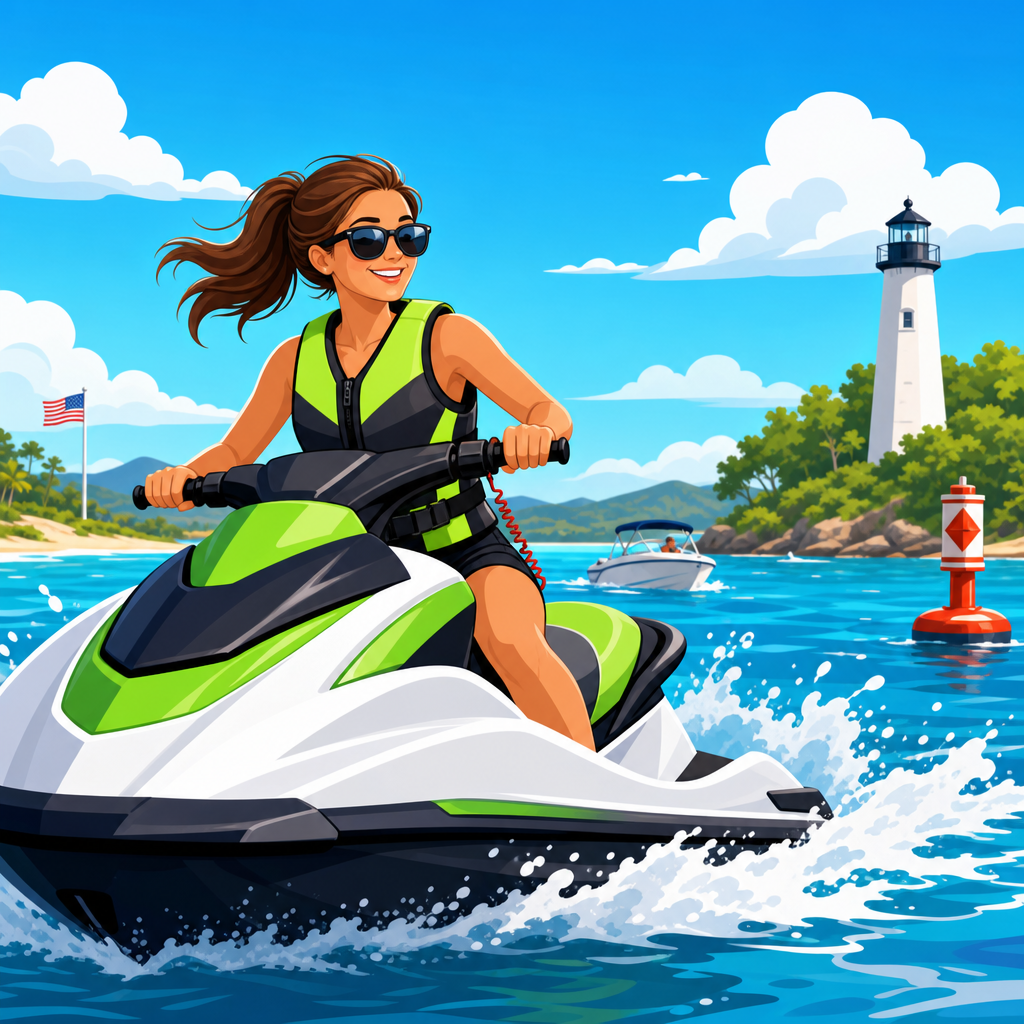
Towing a tube or wakeboarder behind a jet ski is legal in many places, but only when the personal watercraft, operator, observer, equipment, and riding area all meet specific safety and regulatory standards. In boating law, a jet ski is usually classified as a personal watercraft, or PWC, a small vessel powered by an inboard motor driving a water jet pump. That classification matters because most states and provinces regulate PWCs more strictly than larger boats, especially when they are used to tow a person on water skis, a wakeboard, or an inflatable tube.
I have worked through these rules with rental operators, marina managers, and private owners, and the same confusion comes up every season: people assume that if a jet ski has enough power to pull a rider, towing must automatically be allowed. It is not that simple. The legal answer depends on age restrictions, boater education, passenger count, observer requirements, tow rope visibility, time-of-day limits, local waterway rules, and whether the craft is rated by the manufacturer for the number of people on board. In some jurisdictions, a two-seat PWC cannot legally tow a tube at all, because one person must operate, one must observe, and the rider counts separately behind the craft.
This article explains how to legally tow a tube or wakeboarder behind a jet ski and serves as a hub for personal watercraft and jet ski regulations within boating laws and regulations. You will learn the core towing rules, the equipment that is usually required, the common state-by-state variations, and the practical mistakes that lead to citations or accidents. You will also see how towing rules connect to registration, required safety gear, education cards, no-wake zones, reckless operation standards, and rental restrictions. If you understand those links, you can make legal decisions before launching instead of trying to interpret rules from the dock.
The most important concept is that towing law is built around duty of care. The operator must maintain control of the PWC, keep a safe speed, avoid congestion, watch weather and visibility, and protect the person being towed from collisions and propulsive hazards. Because a PWC turns differently from a conventional runabout and has less room for crew and gear, lawmakers often impose conditions that are easy to overlook. The details vary, but the pattern is consistent: legal towing requires enough seats, the right people, the right flag or mirror where allowed, approved life jackets, and operation only in approved areas and hours.
What the law usually requires before a jet ski can tow a rider
In most jurisdictions, a PWC may tow a person only if the craft is designed to carry at least three people. That rule exists because the boat needs an operator and, in many states, a dedicated observer who can watch the person being towed. A two-person jet ski often fails this test even if the owner adds a rear platform or aftermarket tow point. Manufacturer capacity labels matter. If the label says two persons, enforcement officers generally treat that as a hard limit for legal towing analysis.
Operator qualifications also matter. Many states require the driver to carry a boating safety education certificate, especially if born after a certain date. Some jurisdictions set minimum ages for PWC operation, and stricter minimum ages for towing. For example, a teenager may be allowed to ride a jet ski under supervision but may not legally tow a wakeboarder. Rental fleets often add tighter internal rules because their insurance carriers demand them.
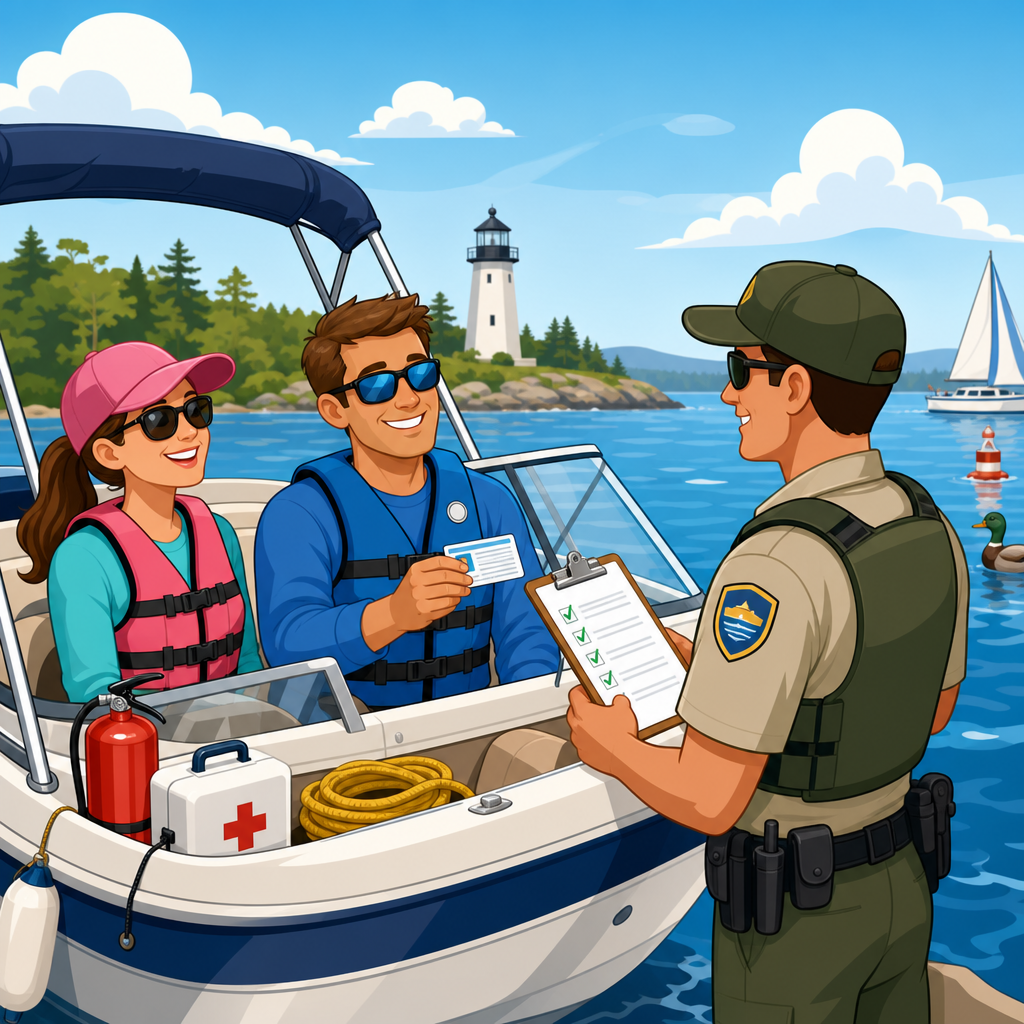
Personal flotation devices are not optional. The operator, observer, and rider being towed typically must wear a U.S. Coast Guard-approved life jacket of a suitable type and size. Inflatable belt packs usually do not satisfy PWC requirements. Riders on tubes and wakeboards need secure, inherently buoyant vests designed for towed watersports. In practice, enforcement officers look first at fit, approval label, and whether everyone is wearing the device rather than storing it on board.
Most towing laws also restrict operation to daylight or from sunrise to sunset. PWCs are commonly barred from nighttime use entirely because they are maneuverable, small, and harder to see. If your area prohibits PWC operation after sunset, you cannot legally continue towing a rider during dusk just because visibility seems acceptable. The legal standard is the published operating window, not your personal comfort level.
Observer, mirror, and flag rules that trip up owners
The single most common legal issue I see is misunderstanding the observer rule. Many states require a competent person, separate from the operator, to watch the skier, wakeboarder, or tuber at all times. The reason is straightforward: the operator must watch ahead for traffic, shallow water, docks, and hazards, while the observer monitors the rider, tow line, falls, and hand signals. On a PWC, that requirement usually means the craft must seat three people. If you only have operator and rider positions, you likely cannot comply.
Some jurisdictions allow a wide-angle rearview mirror instead of an onboard observer, but that exception is not universal and often does not apply to PWCs the same way it applies to motorboats. Even where mirrors are allowed, they must provide a practical rear field of view and cannot interfere with safe control. A small aftermarket mirror mounted for convenience may not satisfy the legal intent if it does not let the operator keep reliable visual contact with the rider’s position.
When a rider falls, many states require display of a bright skier-down flag, often orange or red, to alert nearby boaters. On larger towboats, the observer typically raises the flag immediately and keeps it displayed until the rider is back up or recovered. On a jet ski, this can be awkward, which is exactly why some states insist on a third person on board. If your state requires a flag, carrying one folded in storage is not enough; it must be used correctly when the rider is in the water.
Hand signals are not just etiquette. They are a risk-control system that supports legal operation by reducing misunderstandings. Standard signals include thumbs up for faster, thumbs down for slower, patting the head for return to dock, and side-to-side hand motion for stop. I recommend reviewing signals before every tow because a beginner rider may freeze after a fall or wave ambiguously, and that uncertainty creates avoidable hazards in crowded water.
Equipment, setup, and capacity rules for tubes and wakeboards
Legal towing starts with legal equipment. Use a tow point approved by the PWC manufacturer or supplied in a dedicated tow package. Clipping a rope to a grab handle, reboarding strap, or improvised transom point can fail under load and may be treated as reckless operation if it creates danger. The rope should match the activity: wakeboard ropes are shorter and less elastic for control, while tube ropes are heavier, brightly colored, and rated for the number of riders and towing force involved.
Capacity and spacing are just as important as horsepower. A tube labeled for one rider cannot legally or safely carry two children simply because their combined weight seems low. Manufacturers publish maximum rider counts, inflation guidance, and tow speed recommendations for a reason. If an inflatable fails because it was overloaded or underinflated, the operator may face negligence claims even if no boating citation is issued at the scene.
| Requirement | Typical legal expectation | Why it matters |
|---|---|---|
| PWC capacity | Usually at least 3 persons for towing | Allows operator plus observer while rider is behind |
| Life jackets | Approved vests worn by all participants | Mandatory for PWC use and tow sports in most areas |
| Observer or mirror | Observer required in many states; mirror sometimes allowed | Maintains watch on rider without distracting operator |
| Tow point and rope | Manufacturer-approved attachment and rated line | Prevents equipment failure and loss of control |
| Time of operation | Daylight only in most jurisdictions | PWCs are commonly restricted after sunset |
| Flag use | Skier-down flag required in some states | Warns nearby traffic when rider is in water |
Wakeboards add another layer because bindings and board control increase fall force at speed. Beginners should start slowly in open water with gradual turns. Tubes create different risks: they can whip sideways in turns, skip in chop, and strike wakes unpredictably. That is why some local ordinances limit towing in congested lakes or near swimming zones even when state law generally permits it. The equipment itself may be legal, but the location and manner of use can still make the tow unlawful.
Operating rules on the water: speed, distance, and restricted areas
Even where towing is allowed, it must be done under general navigation and reckless operation laws. That means maintaining a safe speed for conditions, keeping proper lookout, and avoiding maneuvers that endanger others. Most states and local agencies impose no-wake or slow-speed buffers around docks, marinas, swimmers, anchored boats, fishing piers, and shorelines. A rider on a tube extends your risk footprint well beyond the stern of the PWC, so the operator must leave extra room for sweeping turns and a longer stopping distance.
Distance rules vary, but common restrictions prohibit operating within a set number of feet of swimmers, marked bathing areas, or other vessels at more than idle speed. In practice, if you cannot make a wide, predictable path without crossing close behind another boat or through a paddlecraft lane, the area is not suitable for towing. This is especially important on narrow rivers and busy weekend lakes where PWCs are often cited for weaving through traffic.
Right-of-way rules still apply while towing. A jet ski pulling a wakeboarder does not gain special privileges. You must honor channel markers, maintain separation in crossing situations, and avoid repeated circles that trap other traffic. I have seen operators assume that because they are in open water, they can make aggressive S-turns to entertain a tuber. Those maneuvers quickly become reckless when they throw the tube toward docks, rocky shorelines, or the wake of larger boats.
Weather is another legal and practical factor. Sudden wind can turn a legal tow into an unsafe one by creating whitecaps, reducing visibility, and pushing a downed rider away from the craft. If thunderstorms are in the area, stop early. Enforcement does not need a storm-specific statute to act; general careless operation standards are broad enough to cover towing decisions that ignore obvious environmental hazards.
State variations, rental limits, and the wider PWC regulation hub
Personal watercraft towing law is highly local, so state statutes, provincial rules, and municipal ordinances all matter. One state may allow towing with a mirror, while the neighboring state requires an observer. Another may permit PWC operation only during daylight and prohibit towing in designated coves or reservoirs. Wildlife management areas, drinking water reservoirs, and federally managed recreation sites often have their own posted restrictions. The safest approach is to verify three layers before you ride: state boating law, local waterbody rules, and manufacturer requirements.
This is also where broader PWC and jet ski regulations connect. Registration and validation decals must be current. Some waters require invasive species permits or local launch passes. Sound and muffler rules can affect modified PWCs. Age-based supervision rules, boater education card requirements, and lanyard engine cut-off switch laws are commonly enforced together during safety checks. If an officer stops you for towing without an observer, do not be surprised if the inspection expands to registration numbers, life jackets, extinguisher requirements where applicable, and proof of education.
Rental operations often follow a stricter standard than the law because insurers and franchise policies are conservative. Many rental companies ban towing entirely, even on three-seat models, due to injury exposure and staffing limits. Others allow only guided wakeboarding in marked areas with radios, trained spotters, and signed waivers. Private owners sometimes see this and assume the rentals are being overly cautious. In reality, the restrictions reflect how difficult it is to supervise legal, safe towing from a small craft in mixed traffic.
As a hub within boating laws and regulations, this page points to the full PWC compliance picture: operator age and licensing rules, PWC registration and titling, required safety equipment, life jacket standards, no-wake and shoreline buffer laws, reckless operation and accident-reporting duties, passenger limits, rental restrictions, and local rules for lakes, rivers, and coastal waters. Towing a tube or wakeboarder sits at the center of all of them because it combines speed, passengers, special equipment, and heightened duty of care in one activity.
To legally tow a tube or wakeboarder behind a jet ski, start with the nonnegotiables: confirm that towing is allowed on your waterway, use a PWC rated for at least three people unless your jurisdiction clearly allows otherwise, make sure the operator meets age and education requirements, and equip every participant with a properly fitted approved life jacket. Then verify whether your state requires an observer, allows a mirror, mandates a skier-down flag, or limits towing to certain hours or areas. Those details determine whether a launch is lawful before the rope ever touches the water.
The safest operators treat towing law as an operating system, not a checklist. They inspect the tow point, rope, tube, and wakeboard; review hand signals; choose uncrowded daylight conditions; respect no-wake zones and shoreline buffers; and stop the session when wind, traffic, or visibility deteriorates. They also understand that local and state rules can differ sharply. A practice that was legal on one lake last summer may draw a citation on another waterbody this weekend.
If you want fewer surprises on the water, build your PWC compliance habits around the full regulations hub, not just the towing rule. Check registration, education cards, passenger limits, required gear, and local ordinances every season, especially if you ride in multiple states or use rented equipment. A few minutes of research protects your passengers, your rider, and your liability exposure.
Before your next outing, look up the current rules for your state and the specific lake, river, or coastal zone where you plan to ride, and match them against your jet ski’s capacity label and towing setup. That simple step is the fastest way to tow legally, ride confidently, and keep the day focused on fun rather than fines or injuries.
Frequently Asked Questions
Is it legal to tow a tube or wakeboarder behind a jet ski?
Yes, in many jurisdictions it is legal to tow a tube, wakeboarder, skier, or similar rider behind a jet ski, but only if the personal watercraft is allowed to do so under local boating laws and is equipped and operated correctly. A jet ski is typically classified as a personal watercraft, or PWC, and that classification often brings stricter rules than those applied to larger recreational boats. In some states or provinces, towing behind a PWC is specifically permitted if the craft is designed for enough passengers, has a proper tow point, and carries an observer in addition to the operator. In other places, towing may be limited, heavily regulated, or prohibited on certain waterways. The legality usually depends on several factors at once: the minimum seating capacity of the PWC, whether a rearview mirror can legally substitute for an observer, whether the tow rope and equipment meet safety standards, whether the rider is wearing an approved life jacket, and whether the activity is taking place during legal daylight hours in an approved area. Because these rules vary by state, province, and even local waterway authority, the safest approach is to check the current boating regulations where you plan to ride before towing anyone.
What equipment does a jet ski need in order to legally tow someone?
To legally tow a rider in many areas, the jet ski must be properly rated, properly equipped, and suitable for towing under the manufacturer’s guidelines. First, the PWC usually needs enough seating capacity for the operator, the person being towed, and either a dedicated observer or the equivalent safety system required by local law. In practical terms, that often means a three-person personal watercraft rather than a smaller model. Most jurisdictions also require a secure tow attachment point that is designed for towing sports, not an improvised connection. A proper tow rope made for tubing or wakeboarding is also important because it is engineered for load, visibility, and water use. Safety equipment is equally important: U.S. Coast Guard-approved or otherwise locally approved life jackets for everyone involved, a functioning engine cutoff lanyard for the operator, and any legally required sound-signaling device or fire extinguisher depending on the craft and local regulations. Some areas may also require a wide-angle rearview mirror if it is recognized by law, though in many places a human observer is still mandatory. Beyond legal compliance, the equipment should match the activity. A tow rope rated for wake sports, a towable or board in good condition, and clear hand signals agreed upon before launching all help reduce risk and support compliance with general reckless-operation laws.
Do I need an observer when towing a tube or wakeboarder behind a PWC?
In many places, yes. One of the most common legal requirements for towing a person behind a boat or PWC is that someone other than the operator must watch the rider at all times. This observer, sometimes called a spotter, allows the driver to focus on navigation, traffic, speed, and hazards while another responsible person monitors the person being towed. On a jet ski, this requirement can be more complicated because the craft is small and may have limited seating. That is why many jurisdictions effectively require a three-seat PWC for towing: one seat for the operator, one for the observer, and one representing the capacity needed to safely conduct towing activity. Some states allow a properly installed rearview mirror in place of an observer, but that is not universal, and even where mirrors are permitted, the operator still must maintain safe control at all times. It is important not to assume that a mirror automatically makes towing legal. You should verify whether your local law requires an actual person to observe the rider. If an observer is required, that person should be old enough and attentive enough to communicate clearly, monitor falls immediately, and help the operator respond safely. Even where not strictly required, having an observer is still a strong safety practice.
Are there restrictions on where and when you can tow someone behind a jet ski?
Absolutely. Even if towing is otherwise legal, there are usually important restrictions on where and when it can be done. Most boating authorities limit towing activities to daylight hours, often from sunrise to sunset, because visibility is essential for monitoring the rider, spotting hazards, and avoiding other vessels. Towing is also commonly restricted in narrow channels, swimming areas, no-wake zones, marinas, congested traffic areas, environmentally sensitive zones, and waterways marked with local prohibitions. Many jurisdictions require the operator to keep a specific distance from docks, shorelines, swimmers, anchored boats, and other watercraft, and those distance rules can differ significantly from one location to another. There may also be speed-related restrictions, not just posted speed limits but broader reckless-operation rules that prohibit sharp turns, crossing wakes too closely, or towing in areas where there is not enough open water for safe maneuvering. Local rules can be especially strict on lakes with heavy recreational use or in coastal areas where PWCs share space with fishing boats, paddlecraft, and swimmers. Before towing, it is wise to review both the general state or provincial boating code and any site-specific rules for the lake, reservoir, river, or coastal launch area you will use.
What operator and rider safety rules usually apply when towing behind a jet ski?
Legal towing does not depend only on the craft itself; it also depends on the qualifications and behavior of the operator and the basic safety compliance of the rider. In many jurisdictions, the operator must meet minimum age requirements and may need to hold a boater education certificate or PWC safety credential. The operator should also follow all general navigation rules, including maintaining a safe speed, keeping proper lookout, yielding when required, and avoiding careless or reckless operation. The rider being towed is typically required to wear an approved life jacket, and in some areas there may be additional age restrictions or equipment requirements for wakeboarding or tubing. The tow rope should be used only in open water with enough space for starts, turns, and recovery after a fall. Before beginning, the operator, observer, and rider should agree on hand signals for speed up, slow down, stop, and distress. Falls must be handled carefully, with the operator circling back slowly and keeping the rider visible at all times. It is also important to remember that alcohol and drug impairment rules apply on the water just as seriously as on the road. Even if every piece of equipment is technically legal, unsafe operation can still lead to citations, liability, and serious injury. Following both the written law and accepted towing safety practices is the best way to stay compliant and protect everyone involved.