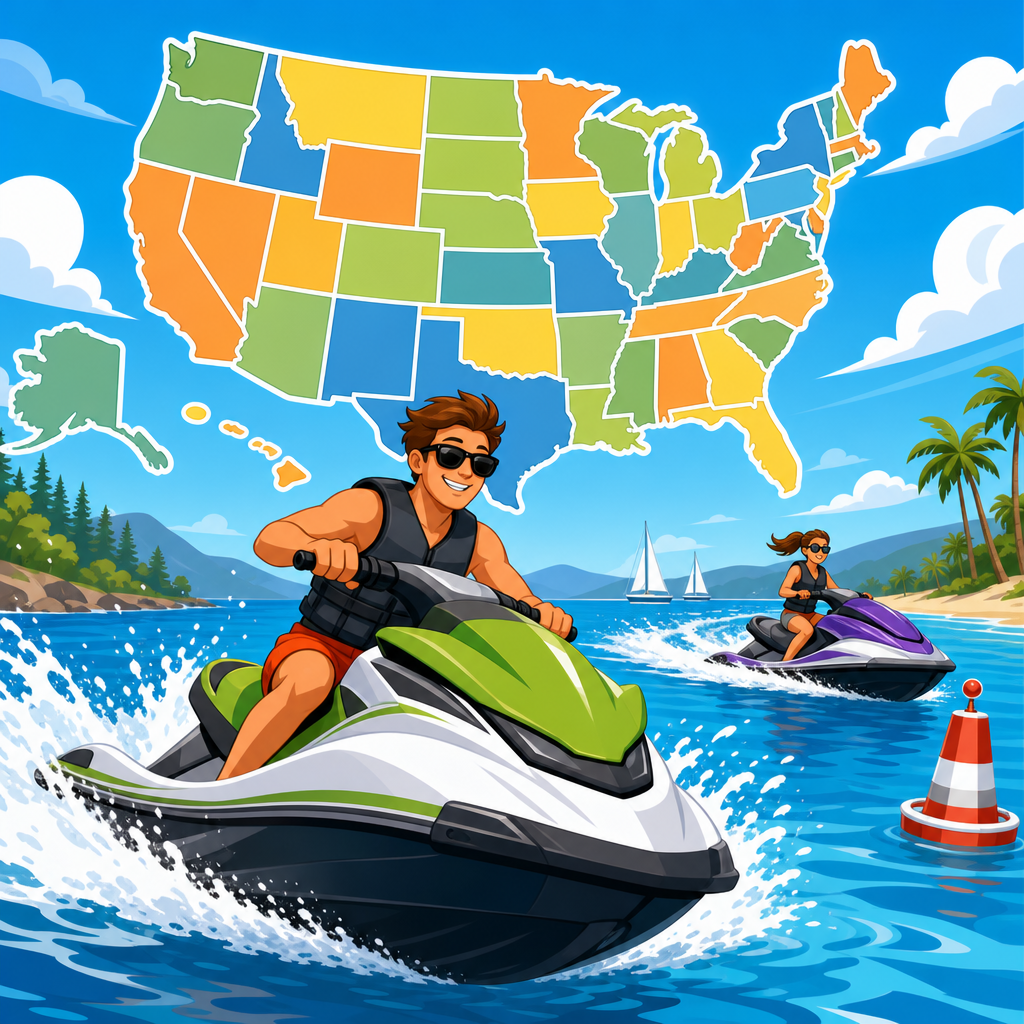
Jet ski speed limits are not governed by one national rule, but by a patchwork of state boating laws, local ordinances, and on-water conditions that every personal watercraft operator must understand before throttling up. In practice, “jet ski” usually refers to a personal watercraft, or PWC, a small vessel powered by an inboard motor driving a water jet pump, with riders seated, standing, or kneeling on top rather than inside a hull. Because PWCs accelerate quickly, turn sharply, and often operate close to shore, regulators treat them differently from larger motorboats. Speed rules are therefore tied not only to posted limits, but also to age restrictions, lanyard requirements, time-of-day rules, no-wake zones, reckless operation standards, and mandatory education cards.
I have worked through marina compliance checklists, rental operator briefings, and state boating code summaries, and the recurring issue is simple: riders assume the number on the dashboard matters more than the legal context around it. In reality, a jet ski can be traveling at a lawful speed in open water one minute and become illegal the next when it crosses into a slow-speed zone, approaches a swimmer, enters a manatee area, or operates after sunset. That is why a state-by-state understanding matters. Penalties range from warnings to citations, impoundment, civil liability, and in serious injury cases, criminal charges tied to negligent or reckless vessel operation.
This hub explains how speed limits for jet skis work across the United States, what patterns appear from state to state, and where riders most often get into trouble. It also serves as a central guide to personal watercraft regulations more broadly, because speed cannot be separated from registration, operator education, life jacket rules, observer requirements for towing, and distance-from-shore restrictions. If you ride your own craft, rent on vacation, manage a fleet, or publish boating compliance content, this page gives you the structure needed to navigate the rules with confidence and connect to deeper guidance on each state and PWC regulation topic.
How Jet Ski Speed Limits Are Regulated in the United States
Most states do not set one blanket maximum speed for all jet skis in all waters. Instead, they regulate speed using three layers. First, statewide boating statutes prohibit unsafe speed, excessive wake, or reckless operation. Second, designated areas such as marinas, channels, swimming beaches, springs, wildlife zones, and waterfront developments often carry specific no-wake or slow-speed restrictions. Third, local authorities, harbor masters, water management districts, and park agencies may post additional limits tailored to traffic density and environmental sensitivity.
The legal phrase you will see repeatedly is “safe speed.” That standard comes from traditional navigation principles reflected in state boating codes and, in many situations, the Inland Navigation Rules. A safe speed depends on visibility, traffic, wind, wave action, proximity to docks, and stopping distance. For PWCs, stopping distance is especially misunderstood because these craft need throttle to steer effectively. Riders who chop the throttle in a panic may lose directional control while still moving fast enough to strike another vessel or fixed object.
Another common statewide rule is no-wake speed within a specified distance of shore, docks, moored vessels, or people in the water. Depending on the jurisdiction, that distance may be 100 feet, 150 feet, 200 feet, or more. A rider can therefore violate speed regulations without exceeding a posted numeric limit. The issue is wake, proximity, and prudence, not top-end miles per hour.
Federal law also matters indirectly. The U.S. Coast Guard defines PWCs, requires carriage of a wearable U.S. Coast Guard-approved life jacket, and supports state boating safety programs. Manufacturers follow voluntary and technical standards through groups such as the National Marine Manufacturers Association and ABYC, but equipment capability never overrides local law. A modern Sea-Doo, Yamaha WaveRunner, or Kawasaki Jet Ski may be able to exceed 60 mph, yet lawful operation may be idle speed in the area where you launch.
State-by-State Patterns Riders Need to Know
Although every state writes its boating code differently, jet ski speed rules tend to fall into recognizable regional patterns. Florida is a leading example of a state where PWC regulation is less about a universal maximum speed and more about operating context. Florida generally bars PWC operation from sunset to sunrise, requires riders born on or after January 1, 1988 to complete an approved boating education course, and aggressively enforces manatee zones, idle-speed areas, and reckless operation rules. On many Florida waterways, the practical speed limit is set by signage and habitat protection, not by the machine’s capability.
California takes a similar contextual approach but adds strong local control. State law prohibits unsafe speed and reckless operation, while counties, reservoirs, and harbors post their own rules. Many California lakes set 5 mph in marina basins and no-wake areas, then allow much higher speeds in open sections during daylight. Some western reservoirs also create distinct zones for water skiing, fishing, and PWC use, reducing conflict between user groups.
In Texas, operators often encounter broad open-water freedom combined with strict enforcement near ramps, docks, and congested shorelines. Texas Parks and Wildlife rules prohibit reckless or negligent operation and commonly require slow, no-wake travel within 50 feet of another vessel, person, or shoreline structure in many practical scenarios. Texas also restricts how PWCs may be maneuvered, including weaving through traffic or jumping wakes too close to other vessels.
Northeastern states frequently layer speed limits onto densely used lakes and rivers. New York, New Jersey, and Pennsylvania all rely heavily on no-wake zones, local postings, and education requirements. New Jersey is notably strict on PWC oversight, requiring a boating safety certificate and often demanding close attention to local tidal waters where channels, bridges, and mixed traffic compress available operating space. On small inland lakes in the Northeast, a posted 45 mph cap may be less important than the reality that half the shoreline is ringed with 100-foot no-wake buffers.
Midwestern states such as Michigan, Minnesota, Wisconsin, and Ohio combine robust lake culture with detailed local ordinances. Michigan riders commonly face county and township rules, especially on inland lakes with heavy summer traffic. Minnesota and Wisconsin emphasize no-wake operation near shore and strong enforcement against careless operation. In these states, shoreline development and angling pressure make aggressive acceleration near docks one of the fastest ways to receive a citation.
Southern coastal states, including South Carolina, Georgia, Alabama, and Louisiana, often focus on congestion, tidal creeks, wildlife areas, and rental compliance. Many riders on vacation assume a guided safety talk replaces legal research; it does not. Rental operators usually cover life jackets, lanyards, and area boundaries, but the operator remains responsible for obeying posted speed zones and no-wake markers.
Western mountain and desert states such as Arizona, Nevada, Utah, and Colorado present another pattern: high-speed recreation is common on large reservoirs, but launch coves, marinas, dam approaches, and narrow arms are tightly controlled. Elevation, afternoon wind, and crowded holiday conditions can turn a nominally legal speed into an unsafe one quickly.
Common PWC Speed Rules by Regulatory Situation
| Regulatory situation | Typical rule | Why it matters for jet skis |
|---|---|---|
| No-wake zone | Idle speed or slowest speed needed for steerage | PWC acceleration creates wake fast, so brief throttle bursts can still trigger citations |
| Near shore, docks, or swimmers | Distance buffer such as 100–200 feet | Most state complaints arise from close passes, spray, and abrupt turns |
| Open water daylight operation | No fixed maximum, but safe speed required | High speed may be legal until traffic, visibility, or chop make it unsafe |
| Sunset to sunrise | PWC operation prohibited in many states | Even moderate speed becomes unlawful if the craft is being operated at all |
| Wildlife or habitat zones | Posted idle, slow, or exclusion area | Manatee and nesting areas are heavily enforced, especially in coastal states |
| Rental operating area | Contract boundary plus state law | Leaving the allowed area can place riders in restricted channels or patrol zones |
The takeaway is that riders should think in situations rather than top speed numbers. If you can identify the zone you are in, you can usually identify the lawful speed range immediately.
When Speed Becomes Reckless Operation
Reckless operation is the backstop that allows officers to cite dangerous behavior even when no numeric speed limit is posted. In enforcement practice, jet ski cases often involve rapid weaving through anchored boats, wake jumping within close range of another vessel, circling swimmers, operating too close to paddlecraft, or making high-speed passes near docks. States use slightly different wording—reckless, careless, negligent, or imprudent—but the legal effect is similar: if your speed endangers life, limb, or property, it is unlawful.
This matters because many PWC riders judge legality by whether they remained in open water. Officers and courts look at foreseeability. Could the operator reasonably anticipate a collision risk, loss of control, obstructed view, or inability to stop? If yes, high speed becomes evidence of poor seamanship. A rider traveling 50 mph across a busy cove packed with pontoons, kayaks, and beginner operators is in a far weaker legal position than a rider traveling the same speed in a clear, designated recreation area.
Accident reports repeatedly show the same pattern: excessive speed combines with inattention and unfamiliarity. Rental riders oversteer, target-fixate on hazards, release throttle, and still strike what they were trying to avoid. Private owners overestimate local knowledge, especially on holiday weekends when traffic doubles. The safest habit is to treat speed as a privilege earned by visibility, spacing, and clear escape routes.
Related Jet Ski Regulations That Affect Legal Speed
Several PWC rules indirectly control how fast you may ride because they determine whether operation is lawful at all. The first is age and education. Many states require younger operators to complete a NASBLA-approved boating safety course, and rental companies often impose stricter minimum ages than state law. An underage or uncertified operator may be cited regardless of actual speed.
Second is required equipment. Every operator and passenger must wear a properly fitted life jacket approved for that use, and most states require the engine cutoff switch lanyard to be attached to the operator. If you fall at speed, the lanyard stops the craft from continuing riderless across the water, a scenario that has caused serious injuries.
Third is time-of-day operation. Many states prohibit PWC use between sunset and sunrise because these craft are not designed for ordinary nighttime navigation in the same way as larger vessels. Riders sometimes believe adding lights solves the issue. It usually does not; the prohibition is operational, not merely equipment-based.
Fourth is towing rules. If you tow a skier, tube, or wakeboarder behind a PWC where allowed, many states require an observer in addition to the operator or a wide-angle rearview mirror approved by state law. Towing also increases stopping distance and narrows safe turning margins, so lawful speed may be lower than during solo riding.
Finally, environmental and local access rules matter. Some reservoirs restrict PWC use entirely in certain coves or near dam structures. Some spring-fed systems ban high-speed operation to protect habitat or visibility. A rider who misses the sign can still be cited.
How to Check the Exact Rule Before You Ride
The best source is the current state boating agency or natural resources department, followed by local lake authorities, park managers, and sheriff marine units. I advise riders to verify five items before launch: statewide PWC laws, local no-wake maps, sunrise and sunset limits, education card requirements, and any wildlife or seasonal closures. Printed launch-ramp boards help, but they are not always comprehensive or current after emergency orders, water-level changes, or construction near marinas.
Use official resources first: state statutes, administrative codes, boating handbooks, and agency maps. Then confirm practical enforcement details with the marina, harbor patrol, or rental concessionaire. Apps and crowdsourced forums can be useful for navigation, but they are not authoritative legal sources. If a county marine deputy says the cove ahead is posted slow speed due to a swim event, that instruction overrides what an outdated online map suggested.
For a hub under boating laws and regulations, the most useful next step is to build out state-specific guides, rental-law explainers, age requirement pages, no-wake zone articles, and PWC accident liability resources. Those connected pages strengthen compliance because riders rarely have only one question. Someone searching for jet ski speed limits usually also needs to know whether nighttime riding is legal, whether a boating license is required, and how far from shore they must stay.
Jet ski speed limits are best understood as a system, not a single number. Across the United States, states regulate personal watercraft through safe-speed standards, no-wake zones, local postings, wildlife protections, education requirements, and operational restrictions such as daylight-only use. The practical rule is straightforward: open water may permit speed, but proximity, congestion, visibility, and posted zones control legality moment by moment. That is why skilled riders scan for signs, know shoreline buffers, and slow down well before they reach docks, swimmers, fishing boats, or marina entrances.
The main benefit of learning these rules is not merely avoiding a ticket. It is reducing collision risk, protecting passengers, respecting shoreline communities, and operating your PWC like a responsible boater rather than a throttle-first tourist. If this page is your starting point, use it as your hub: review your state’s boating code, check local waterway restrictions before every ride, and continue to the related guides on age limits, no-wake laws, registration, and rental regulations so every trip starts legal and stays safe.
Frequently Asked Questions
Is there a national speed limit for jet skis in the United States?
No. There is no single nationwide speed limit that applies to jet skis, more formally called personal watercraft or PWCs, across all U.S. waters. Instead, speed rules are shaped by a combination of state boating laws, local county or city ordinances, marina and park regulations, and general safe-operation requirements enforced by marine patrols and other boating authorities. That means a speed that may be lawful on one lake or river could be prohibited just a few miles away in a different jurisdiction.
In many states, the law does not always post one universal maximum miles-per-hour limit for every waterway. Rather, regulators often use zones and conditions to control speed. For example, “slow speed,” “idle speed,” “no wake,” and “minimum wake” areas are common near docks, marinas, swimmers, moored boats, boat ramps, narrow channels, bridges, and environmentally sensitive shorelines. Outside those areas, operators are still expected to maintain a safe and reasonable speed based on visibility, traffic, weather, congestion, and water depth. So even where no exact number is posted, going too fast for conditions can still lead to a citation.
For that reason, the best way to understand jet ski speed limits is not to look for one federal rule, but to verify the specific rules for the state and waterbody where you plan to ride. State wildlife agencies, boating law administrators, park departments, and local marine law-enforcement offices are usually the most reliable sources.
How do state and local regulations usually control jet ski speed if there is no single rule everywhere?
Most jurisdictions regulate PWC speed through operational zones, distance requirements, and broad “reckless” or “careless operation” standards rather than one blanket top-speed number. A common example is the no-wake zone. In these areas, a jet ski must move slowly enough to avoid creating a damaging wake, which typically means near-idle or just-above-idle speed. These zones are often marked with buoys or shoreline signs and are frequently enforced around harbors, launch ramps, waterfront homes, fuel docks, anchored vessels, and designated swimming areas.
States also commonly require operators to reduce speed when they are within a certain distance of shore, docks, other boats, divers, or people in the water. Some states set specific buffer distances, while others leave more discretion to officers evaluating whether the operator maintained a safe speed. Time-of-day restrictions can matter too. Many states limit or prohibit PWC use after sunset, before sunrise, or during periods of restricted visibility, which effectively controls speed because operation itself may be unlawful at those times.
Local rules add another layer. Counties, municipalities, water management districts, and reservoir authorities may adopt stricter speed restrictions for heavily used recreational waters. So the same state may have different practical speed rules depending on whether you are on a coastal bay, an inland lake, a river corridor, or a managed reservoir. The bottom line is that operators need to read posted markers on the water, review launch-site notices, and check both state law and local rules before riding.
What do terms like “no wake,” “idle speed,” and “safe speed” mean for jet ski operators?
These terms are critical because they often function as the real speed limit for PWCs in many locations. “No wake” generally means operating at the slowest speed necessary to maintain steerage and headway without producing a significant wake. For a jet ski, that usually translates to very low throttle and careful handling, especially because PWCs are highly responsive and can accelerate quickly. “Idle speed” is typically even more restrictive, meaning the craft should move only as fast as necessary for control, usually just above neutral-thrust movement if the model allows it.
“Safe speed” is broader and more flexible, but it is just as important. A safe speed depends on the surrounding conditions: boat traffic, wave height, weather, visibility, shoreline activity, floating debris, water depth, and the presence of swimmers or anglers. A speed that feels manageable on open water in clear weather may be unsafe and illegal in fog, chop, narrow channels, or crowded holiday conditions. Operators sometimes assume that if they are outside a posted zone, they can run at full throttle. That is not how most boating laws work. If your speed prevents you from avoiding a collision or creates danger for others, law enforcement can still treat it as negligent or reckless operation.
Because PWCs turn and stop differently than cars, understanding these terms is especially important. Jet skis need throttle to steer effectively, and abrupt maneuvers at high speed can create hazards for riders and nearby boaters. Reading regulatory markers, slowing early, and giving yourself room to react are key parts of complying with these on-water speed standards.
Where can I find the exact speed rules for the state or waterway where I plan to ride?
Start with the official boating authority for the state where you will be operating. In most states, that is the agency responsible for natural resources, fish and wildlife, parks, or state boating law administration. Their websites often publish boating handbooks, PWC guides, and summaries of navigation and speed-zone rules. If you are riding on a specific lake, river system, or coastal area, also check the managing entity for that waterbody, such as a state park, county sheriff marine unit, reservoir district, port authority, or municipal government.
On the water itself, posted regulatory markers are essential. Buoys and signs can establish local speed zones that may not be obvious from a general state-law summary. Launch ramps, marina offices, rental operators, and harbormasters are also useful sources because they know the local enforcement patterns and common trouble spots. If you are renting a jet ski, ask the outfitter to identify all nearby no-wake zones, shoreline setbacks, restricted channels, and areas where riders are frequently cited.
It is also smart to confirm whether there are temporary restrictions in place. Water levels, wildlife protections, construction, event zones, or seasonal boating traffic measures can change normal operation rules. The most reliable approach is to use primary sources: state statutes, administrative codes, official boating guides, and posted local regulations. Avoid relying solely on forum comments or old travel articles, since speed rules can change and local enforcement can be stricter than casual online advice suggests.
What happens if I exceed a posted speed limit or ride too fast for conditions on a jet ski?
The consequences can range from a warning to significant penalties, depending on the jurisdiction and the seriousness of the conduct. In many states, violating a posted speed zone, ignoring a no-wake requirement, or operating at an unsafe speed can result in fines, court costs, and in some cases mandatory boating-safety education. If the behavior is considered reckless, aggressive, or endangering others, penalties can become much more serious and may include misdemeanor charges, higher fines, or restrictions on future operation.
There are also practical risks beyond the ticket. Excessive speed reduces reaction time and increases the chance of collision with other vessels, docks, submerged objects, or people in the water. Because PWCs accelerate rapidly and require operator skill to maneuver safely, speeding in congested or shallow areas can quickly turn into a crash scenario. Riders may also face civil liability if their operation damages property, creates hazardous wake, or injures passengers, swimmers, or nearby boaters.
From a safety and compliance standpoint, the smartest approach is simple: treat posted markers as mandatory, slow down well before entering regulated zones, and assume that “safe speed” is always the governing rule, even where no exact number is posted. If you are unsure, reduce speed and ask local authorities or the launch operator. On the water, conservative judgment is usually the best defense against both accidents and enforcement problems.