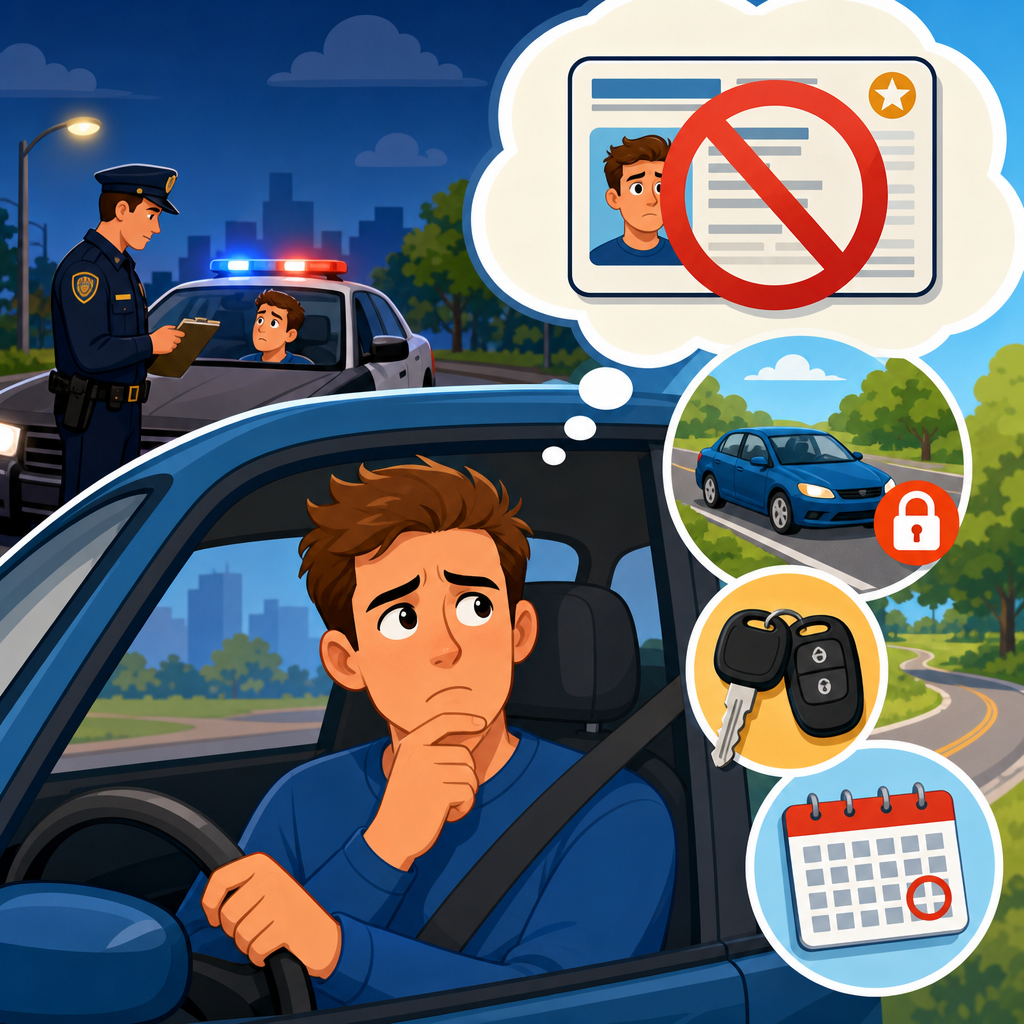
A BUI conviction can affect your driver’s license in ways many boaters do not expect, because boating under the influence laws often connect waterway safety rules with state motor vehicle penalties. A BUI, or boating under the influence, generally means operating a vessel while impaired by alcohol, drugs, or a combination of substances. Although the exact blood alcohol concentration threshold, enforcement process, and license consequences vary by state, the core principle is consistent: lawmakers treat impaired boat operation as a serious public safety risk. In practice, that means a BUI arrest may trigger fines, jail exposure, mandatory education, higher insurance costs, and in some jurisdictions suspension or restriction of your driver’s license even though the conduct happened on the water rather than on a road.
This matters because many people assume boating law is separate from traffic law. After working with impaired operation cases and reviewing state statutes across coastal and inland jurisdictions, I have seen that assumption create expensive mistakes. A weekend on a lake can lead to consequences that follow a person for years, affecting commuting, employment, professional licensing, background checks, and recreational privileges. The issue becomes even more important in states that classify BUI similarly to DUI, report convictions to motor vehicle agencies, or enhance penalties for repeat offenses. Understanding how BUI laws work as a system helps boaters make better decisions before they launch, and helps defendants respond quickly if an arrest occurs.
As a hub topic within boating laws and regulations, this guide covers the essentials: what BUI laws prohibit, when a BUI can affect your driver’s license, how states differ, what aggravating factors increase penalties, what happens after an arrest, and what practical steps protect your rights. If you want a clear answer upfront, here it is: yes, a BUI conviction can affect your driver’s license, but whether it does depends on state law, your age, prior record, the facts of the incident, and whether the offense involved refusal, injury, or a high blood alcohol level.
What Boating Under the Influence Laws Prohibit
Boating under the influence laws prohibit operating or being in actual physical control of a vessel while impaired. In most states, the legal standard mirrors drunk driving rules: a blood alcohol concentration of 0.08 percent or higher for adults operating recreational boats. Some states apply lower thresholds for commercial operators, and nearly all states prohibit operation while impaired by controlled substances, prescription medications, cannabis where applicable, or a combination of alcohol and drugs. The term vessel is broad. It can include motorboats, personal watercraft such as Jet Skis, sailboats, and sometimes any watercraft capable of transportation on water.
Enforcement usually comes from marine patrol officers, sheriff’s deputies, state wildlife agencies, or coast guard personnel depending on the waterway. Officers look for speed changes, unsafe wake behavior, near collisions, poor navigation, or failure to display lights or safety equipment. Unlike roadside stops, marine environments naturally involve some balance issues, slurred speech from wind exposure, and bloodshot eyes from sun and spray. That makes field sobriety testing more complex, which is why prosecutors often rely heavily on chemical tests, officer observations, passenger statements, and video footage. If alcohol is found in coolers and the operator admits drinking, that evidence often becomes central.
The national policy goal is straightforward: alcohol is a major contributor to fatal boating accidents. The U.S. Coast Guard’s Recreational Boating Statistics reports regularly identify alcohol use as a leading known contributing factor in fatal incidents. That data is one reason states continue tightening BUI enforcement and aligning penalties with impaired driving policy.
Can a BUI Suspend Your Driver’s License?
Yes, in some states a BUI conviction can suspend your driver’s license directly, while in others it may not cause an automatic suspension but still appears on your record or triggers related consequences. The answer depends on how the state’s boating code interacts with its motor vehicle code. There are three common models.
First, some states expressly authorize driver’s license suspension for BUI convictions or test refusals. In these states, the motor vehicle agency treats the boating offense as a public safety matter closely related to DUI. Second, some states do not impose a standard driver’s license suspension for a first BUI, but they can suspend boating privileges, impose criminal penalties, and enhance future DUI or BUI sentencing. Third, some states create license consequences only for minors, repeat offenders, or cases involving serious bodily injury, death, or exceptionally high blood alcohol levels.
That variation is why state-specific analysis matters. A Florida boater, a Texas lake operator, and a Minnesota fishing guide can face very different outcomes from similar facts. It is also why people should not rely on dock talk or general internet advice. The statute controls, and so do administrative rules from the state department of motor vehicles or public safety agency.
How States Commonly Link BUI and Driver’s License Penalties
States use several legal mechanisms to connect a BUI with driver’s license consequences. The most direct method is explicit statutory suspension after conviction. Another common approach is implied consent. Under implied consent laws, a person operating a vessel is deemed to have consented to chemical testing if lawfully arrested on suspicion of BUI. Refusing the test can trigger administrative sanctions, which may include suspension of boating privileges, driver’s license consequences, or both. Administrative penalties often move faster than criminal court cases, so someone can lose privileges before the criminal charge is resolved.
States also use prior offense counting rules. A BUI may count as a prior impaired operation offense if the person is later charged with DUI, and a DUI may count as a prior if the person later gets a BUI. That cross-enhancement can increase jail exposure, fine ranges, treatment requirements, and license revocation periods. In practical terms, even if your first BUI does not immediately suspend your driver’s license, it may make a later roadside DUI much more serious.
| Legal mechanism | How it works | Possible license effect |
|---|---|---|
| Direct conviction penalty | Statute ties BUI conviction to motor vehicle sanctions | Suspension, restriction, or revocation of driver’s license |
| Implied consent refusal | Refusal of breath, blood, or urine test after lawful BUI arrest | Administrative suspension in some states |
| Cross-enhancement | BUI counts as prior offense for later DUI, or vice versa | Longer future suspension periods and harsher penalties |
| Minor operator rules | Underage alcohol offenses trigger youth licensing sanctions | Delay, suspension, or restriction of driver’s license |
| Injury or fatality cases | Aggravated BUI leads to felony-level punishment | Revocation and long-term reinstatement barriers |
Key Factors That Make License Consequences More Likely
Several factors make it more likely that a BUI will affect your driver’s license. The first is your state’s statutory framework, which is the threshold issue. Beyond that, prior record matters greatly. Repeat impaired operation offenses almost always draw harsher treatment, and many states stop distinguishing sharply between offenses committed on water and those committed on roads when calculating repeat status.
Age is another major factor. Underage operators often face zero-tolerance rules, meaning a lower alcohol concentration can trigger sanctions. Many states also impose collateral consequences on youth driving privileges for alcohol-related conduct even when the conduct did not involve a car. High blood alcohol concentration is a common aggravator as well. A reading of 0.15 or 0.20 may increase penalties, lengthen required education, and support mandatory treatment. If there was an accident, property damage, serious bodily injury, or death, the chances of license revocation increase substantially.
Refusing testing can be just as damaging as failing it. I have seen people assume refusal avoids evidence, but in many jurisdictions refusal becomes its own problem. Prosecutors may argue consciousness of guilt, and administrative agencies may impose immediate sanctions. Finally, commercial licensing status matters. A person with a commercial driver’s license can face employment fallout even if the BUI did not occur in a commercial vehicle, because employers, insurers, and licensing bodies review alcohol-related convictions broadly.
What Happens After a BUI Arrest
After a BUI arrest, the case often splits into two tracks: the criminal case and the administrative process. The criminal case determines guilt and court-imposed penalties such as fines, probation, jail, treatment, community service, and boating safety courses. The administrative process, where available, determines whether your boating privileges or driver’s license will be suspended independently of the court outcome. Deadlines are usually short. In many states, you must request a hearing within days or weeks to challenge an immediate suspension.
Evidence collection in BUI cases can differ from DUI cases. Officers may rely on horizontal gaze nystagmus, seated coordination tests adapted for boats, portable breath testing, post-arrest breath instruments, blood draws, witness reports, GPS or radar evidence, and body camera footage. Environmental conditions matter. Heat, glare, waves, fatigue, dehydration, and motion can affect a person’s appearance and performance. A good defense attorney examines those conditions closely, along with probable cause, vessel operation evidence, calibration records, chain of custody, and whether the stop complied with state and federal authority rules on the water.
For licensing consequences, timing matters more than most people realize. Waiting to respond can turn a contestable case into an automatic suspension. Anyone arrested for BUI should obtain the citation, testing paperwork, temporary permit if issued, and hearing instructions immediately.
Criminal Penalties Beyond License Suspension
Driver’s license consequences are only one part of the picture. A BUI conviction can bring fines ranging from hundreds to thousands of dollars, jail sentences that increase for repeat offenses, probation terms, mandatory substance abuse evaluation, alcohol treatment, victim impact programs, and court costs that often exceed the base fine. Judges may also restrict boating privileges, require ignition interlock equivalents in related motor vehicle cases, or prohibit alcohol use during probation.
The collateral consequences can be severe. Insurance rates may rise, even when the offense happened on water, because insurers price alcohol-related risk across behavior patterns. Employment consequences are common for delivery workers, tradespeople, military personnel, healthcare workers, and licensed professionals. International travel can be affected in some countries by alcohol-related criminal records. If the BUI involved an accident, civil lawsuits may follow for medical bills, lost wages, property loss, or wrongful death. For many defendants, those downstream effects are more disruptive than the initial sentence.
How BUI Differs From DUI, and Why the Difference Still Matters
BUI and DUI are not identical, even when penalties overlap. The statutes may define operation differently, enforcement settings are different, and constitutional issues can vary because safety inspections and vessel stops follow a different legal tradition than traffic stops. Boats also lack lane markers, traffic signals, and many standardized roadside indicators. That can make the proof of impairment more fact-specific. At the same time, courts and legislatures increasingly view BUI and DUI as part of one impaired operation framework. That is why a boating case can affect a driver’s license, future sentencing, or employment screening.
The practical takeaway is simple: do not assume a BUI is a lesser version of DUI. On the defense side, there may be unique arguments based on marine conditions and officer training. On the penalty side, there may be broader consequences than people expect because alcohol-related offenses are treated as indicators of public risk.
How to Protect Your Rights and Reduce Damage
The best protection is prevention: designate a sober operator, track alcohol intake, wear life jackets, and remember that sun, wind, dehydration, and vibration can intensify impairment. If an arrest occurs, act fast. Read the citation, note all hearing deadlines, preserve receipts, photos, passenger names, marina records, and weather conditions, and consult a lawyer who handles both BUI and driver’s license matters. That combination matters because some criminal attorneys do not focus on administrative suspension practice, and some traffic lawyers do not understand marine enforcement.
Ask direct questions: Does this state suspend a driver’s license for BUI? Does refusal trigger administrative penalties? Will this count as a prior DUI-related offense later? Can a plea be structured to avoid or reduce licensing damage? Is expungement, sealing, or record relief available after the case ends? Those answers shape strategy from the first court date.
A BUI conviction can affect your driver’s license, but the exact result turns on state law, procedural deadlines, and case facts. The broad lesson is that boating under the influence laws are not isolated lake rules; they are part of a larger impaired operation system with criminal, administrative, financial, and personal consequences. Boaters who understand that system are better equipped to avoid arrest, evaluate risk realistically, and respond effectively if charged. If you operate a boat or personal watercraft, review your state’s BUI laws before the season starts and get legal advice immediately after any alcohol-related arrest on the water.
Frequently Asked Questions
Can a BUI conviction really affect my driver’s license even though I was operating a boat, not a car?
Yes, in many states a BUI conviction can affect your driver’s license even though the offense happened on the water rather than on a public road. That surprises many people, but it happens because state lawmakers often treat impaired boating as part of a broader public safety system aimed at preventing alcohol- and drug-related operation of any vehicle or vessel. In other words, the legal consequences for boating under the influence do not always stay limited to boating privileges. Depending on the state, a BUI conviction may trigger a driver’s license suspension, restriction, administrative review, points against your driving record, or enhanced penalties if you later face a DUI charge.
The key issue is that boating laws and motor vehicle laws are often connected by statute. Some states specifically authorize courts or licensing agencies to suspend driving privileges after certain BUI offenses, especially when there is a high blood alcohol concentration, a repeat offense, refusal to submit to testing, an accident, or injuries. Even where a direct suspension does not automatically follow, a BUI may still appear in court records, affect insurance, or count as a prior alcohol-related offense that increases penalties in a later driving case. Because the exact consequences depend heavily on state law, the safest assumption is that a BUI is not “just a boating matter” and should be taken seriously from both a criminal and licensing standpoint.
What kinds of driver’s license penalties can result from a BUI conviction?
The possible driver’s license penalties vary by state, but they can be significant. In some jurisdictions, a BUI conviction can lead to a suspension of your standard driver’s license for a set period of time. In others, the court may report the conviction to the state licensing agency, which can then impose its own penalties through an administrative process. Some states may also apply points to your driving record, require alcohol education or substance abuse treatment, or impose conditions before full driving privileges are restored.
The severity of the penalty usually depends on several factors. First, whether this is a first offense or a repeat offense matters a great deal. Second, the presence of aggravating circumstances can increase consequences. Examples include a high blood alcohol content, a boating accident, property damage, bodily injury, minors onboard, or refusal to take a chemical test if the state has an implied consent law for boat operators. Third, the laws of the specific state control whether the license penalty is mandatory, discretionary, administrative, or tied to a criminal sentence. In more serious cases, a BUI may also create long-term practical problems, such as higher auto insurance rates, difficulty obtaining certain professional licenses, and greater exposure to harsher penalties if you are later accused of DUI in a motor vehicle.
Does a BUI count the same as a DUI for license and penalty purposes?
Not always, but in some states it can be treated similarly enough to create major consequences. A BUI and a DUI are separate offenses because one involves operating a vessel and the other involves operating a motor vehicle. However, lawmakers often use similar standards for impairment, including unlawful blood alcohol concentration limits and rules against operating while impaired by alcohol, drugs, or a combination of substances. Because of that overlap, some states allow a BUI to count as a prior alcohol-related offense when determining penalties for future DUI charges, and some states authorize driver’s license action based on a BUI conviction itself.
That does not mean every state treats BUI exactly like DUI. The procedures, evidentiary rules, testing requirements, and penalties can differ substantially. For example, one state may suspend your driver’s license for a BUI conviction, while another may only suspend your boating privileges. Another state may not impose a direct suspension for a first BUI but may use the conviction later to enhance sentencing if you are convicted of DUI. That is why it is important not to rely on assumptions or what happened in another state. The practical takeaway is simple: even if BUI is not legally identical to DUI where you live, it can still produce many of the same real-world consequences, especially when it comes to prior-offense treatment, public safety classifications, and license-related penalties.
If I was arrested for BUI while visiting another state, can it still affect my home-state driver’s license?
Yes, that is possible. An out-of-state BUI arrest or conviction can still affect your home-state driver’s license, depending on how the states share information and how your home state classifies alcohol- or drug-related offenses. Many states exchange conviction data through interstate reporting systems or administrative channels, especially when the offense involves public safety concerns. Once your home state learns of the BUI, it may review the case under its own laws to decide whether any driver’s license penalty applies.
This becomes especially important when your home state has broad laws covering impaired operation of vehicles or vessels, or when it treats substantially similar out-of-state offenses as if they occurred locally. In practice, that can mean a boater assumes the matter is limited to the vacation state, only to later receive notice from the home-state motor vehicle agency about a suspension, hearing, or other licensing action. The exact result depends on the wording of both states’ laws, whether the offense resulted in a conviction, and whether there are aggravating circumstances. If your BUI happened outside your home state, it is wise to address both the court case and the possible licensing fallout quickly, because delays can make reinstatement or defense more difficult.
What should I do if I am facing a BUI charge and I am worried about losing my driver’s license?
The most important step is to treat the matter seriously from the beginning and find out exactly what your state’s BUI laws say about driver’s license consequences. Many people focus only on criminal fines or boating restrictions and do not realize that separate administrative penalties may be triggered by a conviction, a test refusal, or even the way the case is reported to the licensing agency. You should review the charging documents carefully, note any deadlines for hearings, and determine whether there are immediate actions required to protect your driving privileges.
It is also important to understand that the outcome of the criminal case can strongly influence what happens to your license. A reduction in charges, a dismissal, or a successful challenge to the stop, testing procedure, or evidence may affect whether the motor vehicle agency can impose penalties at all. In addition, if there are aggravating facts such as an accident, injuries, high alcohol concentration, or prior offenses, the risk to your driver’s license may be higher and the case may require a more strategic defense. Because BUI laws vary widely by state and often interact with separate administrative rules, getting legal guidance early is usually the best way to understand your exposure, preserve deadlines, and work toward minimizing both boating and driving consequences.