Catch limits and size restrictions are the backbone of fishing regulations and licensing, and every angler who launches a skiff, wades a river, or drops a line from a public pier needs to understand them before the first cast. These rules determine how many fish you may keep, what minimum or maximum length a fish must meet, when certain species are open or closed to harvest, and what license or permit is required in a given waterbody. In practical terms, they shape daily decisions on the boat: whether a redfish goes in the cooler, whether a bass must be released, and whether a mixed bag is legal after crossing an invisible state boundary on the water. I have seen more avoidable citations come from misunderstanding these basic limits than from any other issue in recreational boating law. The reason is simple: regulations change often, species look similar, and many anglers rely on memory instead of checking the current rules before a trip.
Within boating laws and regulations, fishing rules matter because they protect fish populations, allocate public resources fairly, and keep anglers from expensive penalties. State fish and wildlife agencies and federal managers use creel surveys, stock assessments, spawning data, and habitat trends to set harvest controls. A bag limit caps the number of fish an angler may retain in a day. A possession limit controls how many can be held at one time, including fish at camp, in a freezer, or on a vessel, depending on the jurisdiction. A size limit may be minimum, maximum, or a slot, which allows harvest only within or outside a protected range. These tools are not arbitrary. They are designed to preserve breeding stock, reduce harvest pressure on weak year classes, and spread opportunity across the season. If you fish freshwater, saltwater, tidal rivers, reservoirs, or offshore reefs, this hub explains the core rules you must know and the questions to ask before every trip.
How catch limits, possession limits, and size restrictions work
The first thing anglers must know is that catch limits are not all the same. A daily bag limit is the number of fish of a species you may lawfully keep in one calendar day. A possession limit is usually broader. In many states it is double the daily limit, but not always, and special waters may set different standards. On guided trips and multi-day outings, I tell anglers to read both limits carefully because confusion happens fast once fish are cleaned, iced, or split among passengers. For example, if the daily bag for crappie is 25 but the possession limit is 50, an angler staying at a lakeside cabin for three days may still violate the law by storing fish without documenting harvest dates where required.
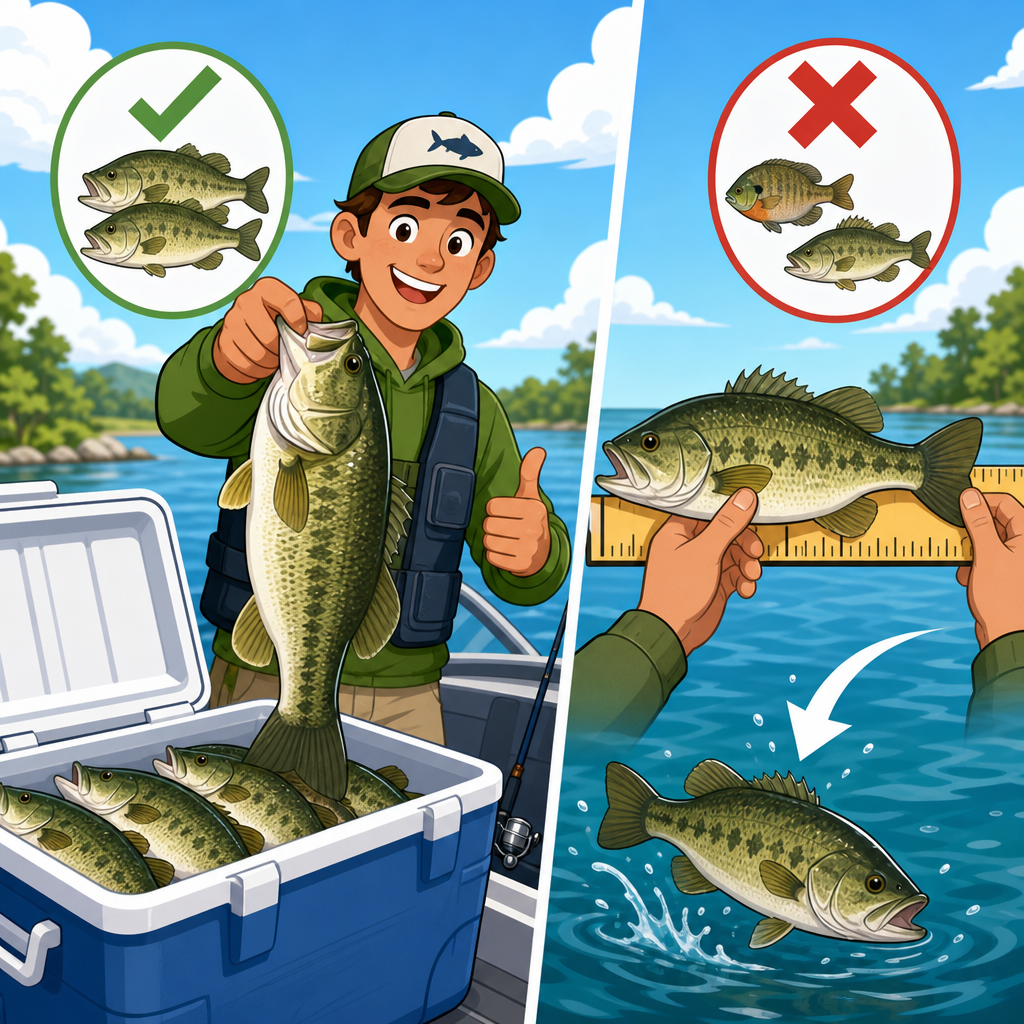
Size restrictions add another layer. Minimum size rules protect juveniles until they spawn at least once. Maximum size rules protect older, highly productive breeders. Slot limits protect a middle or upper range and may require harvest only below or above the slot, depending on management goals. Red drum, walleye, trout, and largemouth bass often have water-specific slot rules. The legal method for measuring fish also matters. Agencies commonly require total length measured with the mouth closed and tail pinched or naturally compressed, but some species use fork length. A fish that looks legal on a flexible ruler can be short on an official measuring board. If a species is close, measure it on a rigid bump board before it goes into the livewell.
Harvest limits can also be species specific, area specific, and season specific. A river stretch below a dam may have reduced creel limits to protect stocked trout. A coastal bay may close harvest of spotted seatrout after a winter kill. Offshore reef fish such as red snapper may open for a narrow federal season while adjacent state waters follow different dates. That is why anglers should never assume a statewide summary tells the whole story. The actual rule is often tied to a management zone, county line, marine district, refuge boundary, or even GPS coordinates published by the agency.
Why fishing regulations and licensing exist
Fishing regulations and licensing exist to balance access with conservation. Fish are a public trust resource, and agencies are legally obligated to manage them for long-term sustainability rather than short-term harvest. License revenue funds hatcheries, access ramps, law enforcement, habitat restoration, aquatic invasive species programs, and biological monitoring. Federal excise taxes under the Sport Fish Restoration program, commonly called Dingell-Johnson funding, amplify that support by channeling money from fishing tackle and motorboat fuel back to the states. When anglers buy licenses and follow limits, they are directly supporting the fisheries they use.
The biological rationale is straightforward. Fish populations fluctuate with recruitment, forage, weather, water quality, and fishing pressure. Regulations help smooth those swings. A low daily bag can slow harvest during a weak spawn year. A protected slot can increase the number of mature breeders in the system. Seasonal closures can shield fish during spawning aggregations when they are unusually vulnerable. Managers may also use emergency orders when drought, low dissolved oxygen, disease outbreaks, or storm damage sharply reduce survival. Those sudden changes frustrate anglers, but they are often necessary to prevent a temporary problem from becoming a stock collapse.
There is also a fairness component. Without limits, a small number of highly effective anglers could remove an outsized share of the resource. Bag and size rules distribute opportunity and reduce conflict among bank anglers, boaters, guides, tournament participants, and subsistence users. In my experience, compliance improves when anglers understand that these laws are not merely restrictive; they are the mechanism that keeps a fishery productive enough for future weekends, future seasons, and future generations.
Licenses, permits, stamps, and endorsements anglers need
A fishing license is the legal authorization to fish, but many trips require more than a basic annual permit. States commonly separate freshwater and saltwater privileges, and some require additional trout stamps, salmon cards, invasive species validations, or harvest report cards for species such as sturgeon, halibut, lobster, or crab. Migratory and highly regulated species may also fall under federal permits, charter vessel reporting requirements, or reef fish endorsements. Youth anglers, seniors, disabled residents, active-duty military members, and landowners may qualify for exemptions or reduced fees, but exemptions vary sharply by state.
Cross-border fishing is where many boaters get tripped up. Border waters may honor either state’s license under reciprocal agreements, but those agreements rarely apply everywhere. Some waters require the license from the state where the fish are landed. Others depend on where the boat launched, where the line was set, or which side of the channel marker the vessel occupied. On tidal systems, it is common for one side of a bay or river mouth to be under a different season or size regime than the other. Before fishing interstate reservoirs, Great Lakes waters, or coastal areas near state lines, read the reciprocity language itself instead of relying on dock talk.
Digital licensing has made compliance easier. Most agencies now allow mobile licenses, electronic harvest tags, and app-based regulation lookups. Even so, I recommend carrying a screenshot or paper backup in areas with poor cell coverage. Enforcement officers usually expect immediate proof of licensing and species compliance. A dead phone, weak signal, or forgotten password is a preventable problem and not a strong defense during a dockside inspection.
How anglers should verify current rules before every trip
The safest habit is to verify regulations the night before and again at the ramp. Printed regulation booklets are useful summaries, but they can become outdated if the agency issues emergency changes. The controlling authority is usually the current regulation text, emergency order, or online update published by the responsible agency. For saltwater anglers, that may include both the state marine agency and the federal fishery manager, such as NOAA Fisheries or a regional council notice. For inland anglers, check the state wildlife agency page for special waterbody regulations, bait rules, and invasive species restrictions.
Use a simple checklist before departure. Confirm the license type for every person fishing. Confirm open seasons, daily bag, possession limit, and legal size for each target species. Confirm whether your waterbody has special regulations that override statewide defaults. Confirm measuring method, cleaning and transport rules, and whether fish must remain whole until landed ashore or reach a final residence. Finally, confirm boating access rules, because some waters pair fishing restrictions with no-wake zones, aquatic plant protections, or inspection requirements for mussels and other invasive species.
| Question to verify | Why it matters | Example |
|---|---|---|
| What license is required? | Fishing without the correct privilege can lead to a citation even if harvest is legal. | Annual freshwater license needed, plus trout stamp on stocked streams. |
| What is the daily bag and possession limit? | Keeping too many fish is one of the most common violations. | Five black bass per day, but only ten in possession at camp. |
| What size rule applies? | Fish can be illegal even if under the bag limit. | Redfish must be 18 to 27 inches total length. |
| Is there a seasonal or area closure? | Rules may change by date, county, or management zone. | Striped bass harvest closed in spawning reach from April 1 to May 15. |
| How must fish be transported? | Cleaning rules affect proof of species and length. | Fillets prohibited on the water; skin patch required until landing. |
Common violations, penalties, and how enforcement works
The most frequent violations are straightforward: no valid license, over-limit harvest, undersized fish, fishing in a closed season, and using prohibited gear or bait. Officers also cite anglers for exceeding vessel limits, failing to record harvest on mandatory cards, or transporting fish in a way that prevents identification. In marine fisheries, a fillet bag without skin attached can become a legal issue because the officer cannot verify minimum size or species. On some trout and salmon waters, using barbed hooks where only artificial lures or single barbless hooks are allowed can trigger a ticket even when no fish are retained.
Penalties vary from warnings to civil fines, misdemeanor charges, gear seizure, boat seizure in extreme poaching cases, and suspension of fishing privileges. Many states participate in the Interstate Wildlife Violator Compact, which means losing privileges in one member state can affect your ability to fish legally in another. Restitution for trophy-class or protected fish can be substantial. A single oversized sturgeon, tarpon, or unlawfully kept reef fish may cost far more than the original citation once replacement value and court costs are added.
Enforcement officers generally inspect licenses, coolers, livewells, measuring devices, and required safety gear during a stop. They may ask where you launched, where you fished, and when the fish were caught, especially if possession limits or boundary lines are involved. Courtesy helps, but the real protection is organization. Keep licenses accessible, know your target species, and measure every questionable fish immediately. When I have helped anglers prepare for heavily patrolled waters, the best outcome has always come from a simple routine: check rules, carry proof, document harvest, and do not guess.
Best practices for responsible harvest and long-term success
Following the letter of the law is essential, but strong anglers also adopt practices that reduce accidental mortality and preserve high-quality fisheries. Use a rigid measuring board, not an estimate against the gunwale. Learn species identification for look-alikes such as juvenile black drum and redfish, sauger and walleye, or various snapper species. If you plan selective harvest, ice fish promptly and release non-keepers quickly with wet hands or rubber-coated nets. Venting tools and descending devices are required or strongly recommended in many reef fisheries because barotrauma can kill released fish from deep water.
Harvest strategy matters too. Keeping a legal limit is not always the best choice when water temperatures are high, a fishery is under stress, or you already have enough for a meal. Many accomplished anglers voluntarily harvest fewer large breeders and focus on modest-sized fish that provide better table quality. That approach aligns with the biological logic behind many slot limits. It also protects the age structure that supports resilient populations. In freshwater lakes, selective harvest of smaller panfish or invasive species may help the fishery, while removing too many top-end bass can reduce quality over time.
As the hub for fishing regulations and licensing within boating laws and regulations, this article points to the questions every related topic should answer: who needs a license, how seasons work, what gear is lawful, how transport rules apply, and how state and federal authority overlap. Catch limits and size restrictions sit at the center of all of it. Learn the definitions, verify the local rule set before every trip, measure fish correctly, and document what you keep. Those habits protect your wallet, your boating access, and the fisheries themselves. Before your next outing, open the current regulations for your exact waterbody and build your trip plan around them.
Frequently Asked Questions
What are catch limits and size restrictions, and why do they matter so much for anglers?
Catch limits and size restrictions are core fishing regulations that control how many fish an angler may keep and what size those fish must be to be legally harvested. A catch limit may include a daily bag limit, which is the number of fish you can retain in a single day, and sometimes a possession limit, which is the total number you may have in your control at one time. Size restrictions set minimum lengths, maximum lengths, or protected slot limits that allow only certain fish within a specific size range to be kept. Together, these rules are designed to protect fish populations, support successful spawning, reduce overharvest, and maintain quality fishing opportunities over time.
For anglers, these rules are not just technical details in a regulation booklet. They directly affect what happens once a fish is landed. Before placing a fish in the cooler, you need to know whether the species is currently open to harvest, whether it falls within the legal size range, and whether you still have room under the applicable bag limit. Following these rules helps conserve fisheries and keeps you compliant with the law. Ignoring them can lead to fines, confiscation of catch or gear, and in some cases suspension of fishing privileges. In short, catch limits and size restrictions are essential because they guide ethical harvest and help ensure healthy fisheries for future seasons.
How do I know whether a fish is legal to keep in the waterbody where I am fishing?
The most reliable approach is to check the current regulations for the exact state, province, or managing authority and then narrow that information to the specific waterbody and species you plan to target. Rules often vary by region, river system, lake, estuary, coastal zone, or even by a particular management area within the same state. A fish that is legal to keep in one bay may be protected in another. Regulations may also change during the year based on spawning seasons, conservation closures, emergency orders, or quota updates, so relying on memory alone is risky.
Start by confirming the species, because many violations happen when anglers misidentify fish that look similar but have very different rules. Next, verify whether the season is open, what the daily bag limit is, and whether there is a minimum length, maximum length, or slot limit. Use a legal measuring device and follow the measuring method required by the local agency, since some jurisdictions require total length while others may specify fork length or another standard. Also confirm whether special permits, stamps, or endorsements are required for that species or location. If you fish from a skiff, wade a river, or cast from a public pier, the same principle applies: know the specific rules before you keep anything. The safest habit is to review the current regulations before every trip and keep them accessible on your phone or in printed form.
What is the difference between a bag limit, possession limit, and slot limit?
These terms are related, but they are not interchangeable, and understanding the distinctions is important for legal compliance. A bag limit usually refers to the number of fish of a particular species that an angler may keep in a single day. For example, if the bag limit is five, retaining a sixth fish of that species would be a violation, even if all six are legal size. A possession limit is the total number of fish you may have in your possession at one time, whether they are on your boat, at your campsite, in your vehicle, or stored back at your lodging, depending on how the local regulations define possession. This matters on multi-day trips, where anglers sometimes unknowingly exceed legal limits by keeping a full daily bag each day without understanding the overall possession cap.
A slot limit works differently. Instead of allowing harvest based only on a minimum size, it protects fish either inside or outside a specified length range. In many fisheries, a protected slot means fish within a certain size range must be released because those fish are especially valuable for reproduction. In other cases, only fish within a narrow slot may be kept while smaller and larger fish must be released. Slot limits are often used to maintain healthy age structure and breeding stock within a fish population. Because these regulations can be very specific, anglers should read the wording carefully and not assume a fish is legal just because it is above the minimum length. A fish can exceed a minimum and still be illegal to keep if it falls inside a protected slot or above a maximum size limit.
How should I measure fish correctly to avoid accidental violations?
Accurate measurement is one of the most practical skills an angler can develop, because a fish that looks legal at a glance may fall short when measured properly. The first step is to know which measurement method your fishery uses. Some regulations require total length, typically measured from the tip of the closed mouth to the end of the tail, often with the tail pinched or compressed depending on the rule. Other regulations use fork length, measured to the center of the tail fork, or may specify another standard. If you use the wrong method, your result may be off enough to turn a legal fish into an illegal one.
Use a rigid measuring board or a clearly marked legal ruler rather than estimating by eye or relying on boat graphics. Lay the fish flat, position the nose exactly at the zero mark, and measure according to the required tail position. It is wise to recheck borderline fish and release any fish that is even slightly questionable. Many experienced anglers build in a small safety margin instead of keeping fish that are right on the threshold. Also remember that regulations may prohibit removing certain species from the water unless they are clearly legal to retain, especially for protected fish. In those cases, having the right tools ready matters. A measuring device, updated regulations, and familiarity with species identification can prevent mistakes and make release decisions fast and responsible.
Do catch limits and size restrictions affect licensing, seasons, and what I can do during a fishing trip?
Yes, absolutely. Catch limits and size restrictions do not exist in isolation; they are part of a larger regulatory system that includes licenses, permits, harvest seasons, gear rules, and area-specific closures. Before you fish, you may need a general fishing license, and depending on the species or location, you might also need additional permits, tags, report cards, stamps, or endorsements. Some waters have separate rules for freshwater and saltwater anglers, and some public piers, stocked waters, or special management areas may have unique exceptions or added requirements. Even if you are familiar with one location, another nearby waterbody may operate under a different set of rules.
On the water, these regulations shape everyday decisions. They determine whether you should target a species at all, whether a fish must be released immediately, whether your cooler is already full under the daily bag limit, and whether a seasonal closure means catch-and-release only or no targeting at all. They also influence trip planning, especially if you are traveling, fishing across jurisdictional boundaries, or harvesting multiple species with different limits. The smartest approach is to treat regulation checks as part of pre-trip preparation, just like checking weather, fuel, tackle, and safety gear. When anglers understand the full framework of licensing, seasons, catch limits, and size restrictions, they fish more confidently, avoid preventable violations, and contribute to the long-term health of the resource.