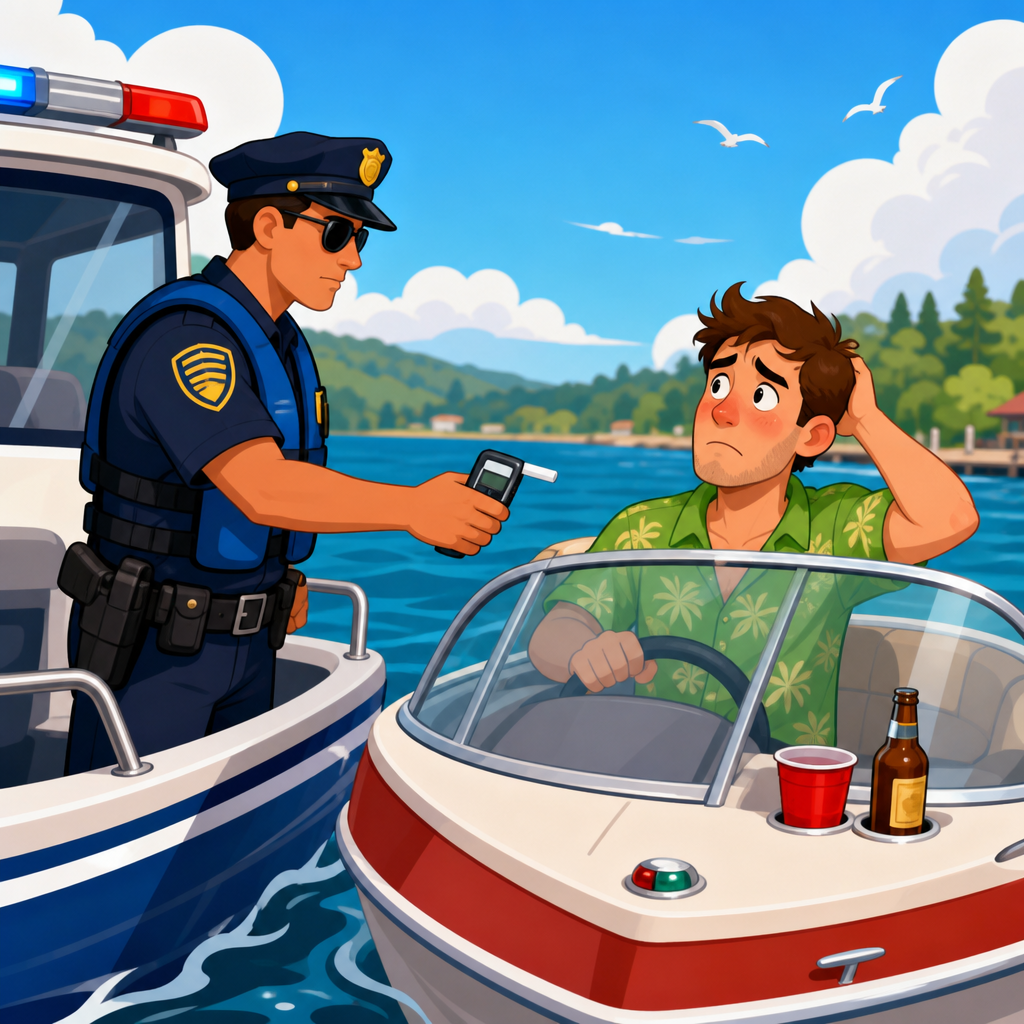
Boating under the influence, usually shortened to BUI, means operating or being in actual physical control of a vessel while impaired by alcohol, drugs, or a combination of substances, and the consequences can be as serious as a drunk driving case on land. For boaters, the issue matters because waterways feel open and informal, yet state marine patrols, sheriff units, the Coast Guard, and park officers enforce impairment laws aggressively, especially on weekends and holidays. In practice, I have seen boaters underestimate the risk because they associate a day on the water with recreation rather than transportation, but the law focuses on judgment, reaction time, and public safety, not the setting.
BUI laws exist in every state, although the exact name, penalties, and procedures vary. Most states use a blood alcohol concentration threshold of 0.08% for adults operating recreational boats, mirroring road DUI rules, and many also prohibit operation while impaired by controlled substances, prescription medications, cannabis, or inhalants. For minors, commercial operators, and repeat offenders, lower limits or stricter standards may apply. The legal definition of a vessel is broad too. It can include powerboats, personal watercraft such as Jet Skis, sailboats, and sometimes any watercraft with a motor attached, whether moving fast or idling at a dock.
What happens if you are caught boating under the influence depends on several factors: where you are, your BAC, whether an accident occurred, whether anyone was injured, whether children were onboard, and whether you refused chemical testing. Still, the overall process is consistent. Officers observe signs of impairment, stop the vessel, conduct a safety and investigative check, request field sobriety tasks or preliminary testing, make an arrest if probable cause exists, and then prosecutors decide whether to file a misdemeanor or felony charge. Beyond fines, a BUI arrest can trigger jail time, probation, boating restrictions, mandatory education, higher insurance costs, and sometimes driver’s license consequences.
This hub article explains the full landscape of boating under the influence laws so you can understand the stop, the arrest, the penalties, and the long-term impact. It also answers the practical questions people ask after a citation: Can you refuse a breath test? Is BUI the same as DUI? Can your driver’s license be suspended? What if you were on a rented boat or prescription medication? By covering the core rules and real-world outcomes in plain language, this guide gives you a reliable starting point for the broader boating laws and regulations topic.
How officers detect and investigate boating under the influence
Most BUI cases begin with a lawful vessel stop. Unlike a traffic stop on a road, marine officers often have wider authority to conduct safety inspections without needing the same level of individualized suspicion required for a car stop. During those contacts, they check registration, required equipment, navigation lights, life jackets, fire extinguishers, and operator conduct. If they smell alcohol, see open containers, notice slurred speech, bloodshot eyes, poor balance, delayed responses, or unsafe operation such as excessive wake, abrupt turns, or near collisions, the encounter quickly shifts from a safety inspection to a criminal investigation.
On the water, impairment can look different from land-based DUI because fatigue, sun exposure, dehydration, heat, and wave motion affect coordination. Good officers know that and document more than one clue. They may ask where you are coming from, whether you have been drinking, who owns the vessel, and whether anyone else can operate safely. They also evaluate divided attention, situational awareness, and the operator’s ability to follow basic instructions. Marine enforcement agencies often use seated sobriety tests adapted for boat conditions, while some departments wait until the suspect is brought ashore for standardized field sobriety tests recognized by the National Highway Traffic Safety Administration.
Chemical testing is the next major stage. Depending on the state, an officer may request a breath, blood, or urine sample. Breath testing is common after arrest because portable breath devices on the water are less precise than approved evidentiary instruments used at shore facilities or detention centers. Blood testing is more likely when drugs are suspected, when there is an injury accident, or when officers seek a more defensible toxicology result. Refusal can create separate penalties under implied consent laws, and prosecutors routinely argue that refusal shows consciousness of guilt, even where the refusal itself is not a standalone crime.
BUI penalties: fines, jail, probation, and enhanced charges
The penalties for boating under the influence range from administrative sanctions to life-altering criminal consequences. A first offense is commonly charged as a misdemeanor, but that does not mean minor. Courts may impose fines that run from a few hundred dollars into the thousands, probation for six months to several years, mandatory alcohol education, community service, and jail. In many jurisdictions, judges can order up to six months in jail for a first offense, and some states authorize longer terms when aggravating factors are present. A conviction also creates a criminal record, which can affect professional licensing, security clearances, and employment background checks.
Aggravating factors raise the stakes quickly. A high BAC, commonly 0.15% or above, can increase fines and mandatory minimum jail time. Having a minor passenger onboard often triggers enhanced penalties. Causing property damage, serious bodily injury, or death can elevate the case from misdemeanor BUI to felony BUI, vehicular homicide by vessel, manslaughter, or another serious offense depending on state law. In fatality cases, investigators frequently reconstruct the incident using GPS tracks, witness statements, wake patterns, impact marks, and toxicology timelines, and prosecutors pursue prison sentences measured in years rather than days.
Repeat offenses are treated especially harshly. Courts usually consider prior DUI or BUI convictions when sentencing, even if the prior case involved a car rather than a boat. Some states classify a third offense within a defined lookback period as a felony. Others impose mandatory ignition interlock on motor vehicles after a BUI-related driver’s license suspension, showing how a boating case can spill into daily life on land. Judges also have wide discretion to require substance abuse evaluation and treatment when the facts suggest dependency rather than isolated poor judgment.
| Factor | Typical legal effect | Practical consequence |
|---|---|---|
| First BUI offense | Misdemeanor charge, fines, probation, possible jail | Criminal record, court costs, required classes |
| High BAC | Sentence enhancement or mandatory minimums | Higher fines and tougher plea negotiations |
| Accident with injury | Potential felony filing | Exposure to prison and civil lawsuits |
| Refusal of testing | Implied consent penalties, adverse inference issues | Harder defense strategy and license risks |
| Prior DUI or BUI | Enhanced sentencing, possible felony level | More jail exposure and stricter supervision |
Does BUI affect your driver’s license and boating privileges?
One of the most misunderstood questions in boating under the influence laws is whether a boat offense can affect your driver’s license. The answer is yes, in many states, though not all. Some states treat BUI almost identically to DUI for licensing purposes and allow suspension of driving privileges after conviction or refusal. Others separate road and marine enforcement more clearly, limiting sanctions to vessel operation. Because license consequences are statutory and highly state-specific, a person should never assume that a boating arrest stays on the water. I have handled matters where clients were surprised to learn that a weekend lake arrest jeopardized commuting to work months later.
Separate from a driver’s license, courts or agencies can restrict boating privileges directly. A judge may prohibit operation of a vessel during probation, require supervision by a sober licensed operator, or order completion of a boating safety course before privileges are restored. State wildlife or marine agencies may also maintain their own records and suspensions. If the incident involved a rented boat, the rental company may blacklist the operator, and the insurer may deny future coverage or impose substantial premium increases. For commercial captains and marina employees, the employment fallout can be immediate.
Federal waters add another layer. The U.S. Coast Guard can enforce BUI laws and may take action against credentialed mariners under federal regulations. That means a person with a Merchant Mariner Credential, charter operation, or other regulated maritime role can face professional discipline independent of the state criminal case. Even recreational operators should understand that an arrest report can move between agencies, especially when the incident involves navigable waters, a collision, or a rescue response documented by multiple authorities.
BUI vs. DUI: similarities, differences, and common defenses
Boating under the influence and driving under the influence share the same public safety logic: impaired operators make dangerous decisions, react slowly, and put others at risk. Both offenses rely on observations, field testing, chemical evidence, and statutory impairment standards. Both can lead to arrest, booking, bail, prosecution, plea negotiations, trial, and sentencing. However, the boating environment creates important differences. Water movement affects balance testing, open containers are not always illegal the way they are in vehicles, and vessel stops may be justified by routine safety inspections rather than lane violations or traffic infractions.
Those differences matter when building a defense. A strong BUI defense often begins with the legality and scope of the stop, the officer’s training, the testing conditions, and whether the state can prove actual operation or control. On crowded boats, identifying who was operating at the relevant moment can be contested. In drug-related cases, a toxicology result does not automatically prove impairment; prosecutors still need to connect the substance level and timing to diminished operation. Prescription medications are another frequent issue. Lawful use is not a defense if the medication impaired operation, but poor labeling, mixed medical conditions, and lack of expert context can complicate the state’s case.
Accident cases create both stronger prosecution leverage and more defense opportunities. If an officer arrives after the fact, the timeline of drinking becomes critical. Was alcohol consumed before operating, or after the vessel was secured following a collision? Witness reliability, video from marina docks, fuel receipts, phone data, and electronic chartplotter records can all matter. In my experience, the best outcomes usually come from early evidence preservation, not courtroom surprises months later. That means requesting reports, body camera footage, dispatch audio, maintenance logs, and toxicology documentation as soon as possible.
What to do after a BUI arrest and how to reduce future risk
If you are arrested for boating under the influence, the first priority is to protect your legal position. Do not argue on scene, do not guess about how much you drank, and do not make explanatory statements designed to sound harmless. Basic identifying information is required, but detailed narratives usually help the prosecution. After release, document everything you remember while it is fresh: where the stop happened, water conditions, what the officer said, what tests were requested, who was onboard, and what you consumed and when. Save receipts, rental agreements, GPS data, and photos of the vessel. Then speak with a defense lawyer experienced in both DUI-style litigation and marine enforcement, because BUI procedure has nuances many general practitioners miss.
It is also important to address deadlines quickly. Some states impose short windows to challenge license suspensions or administrative findings linked to chemical test refusals. Missing those deadlines can forfeit rights before the criminal court date even arrives. If the case involved injury or property damage, notify your insurer promptly but carefully, and do not provide detailed recorded statements without legal advice. Civil exposure can exceed criminal fines, especially when multiple passengers, another boat, or dock infrastructure were involved.
The best prevention strategy is simple and nonnegotiable: designate a sober operator before leaving the dock. Alcohol affects boaters faster because sun, wind, vibration, and dehydration intensify fatigue and reduce judgment. The Coast Guard has long warned about “boater’s fatigue,” and accident data consistently show alcohol as a leading contributing factor in fatal recreational boating incidents. Pack water, monitor medications for drowsiness warnings, rotate responsibilities without transferring control to an impaired person, and end the trip early if conditions deteriorate. If you use this boating under the influence laws hub as your starting point, continue into related articles on implied consent, field sobriety testing, accident liability, and state-by-state BUI penalties so you can make safer decisions before your next day on the water.
Frequently Asked Questions
What exactly counts as boating under the influence?
Boating under the influence, or BUI, generally means operating a boat or being in actual physical control of a vessel while impaired by alcohol, illegal drugs, prescription medication, or any combination of substances that affects your ability to operate safely. In many states, the legal blood alcohol concentration limit is similar to a DUI on the road, often 0.08% for adult operators, but the legal definition does not always depend on a specific number alone. An officer may still make an arrest if your behavior, coordination, judgment, or reaction time shows impairment. “Actual physical control” can also be broader than people expect. You do not necessarily have to be speeding across the water to face a charge. If you are at the helm, managing navigation, controlling throttle or steering, or otherwise in charge of the vessel while impaired, that may be enough. Because boating environments involve sun, wind, motion, and dehydration, alcohol can affect people more quickly and more severely on the water, which is one reason enforcement agencies treat BUI as a major safety issue.
What happens if you are stopped and suspected of BUI?
If an officer suspects you are boating under the influence, the encounter can move quickly from a routine safety stop to a criminal investigation. Marine patrol officers, sheriff deputies, wildlife officers, park rangers, and the Coast Guard often stop vessels for equipment checks, registration issues, reckless operation, no-wake violations, or visible safety concerns. During that contact, they may look for common signs of impairment such as the odor of alcohol, slurred speech, bloodshot eyes, poor balance, open containers, confusion, or unsafe operation. You may be asked to perform field sobriety-style exercises adapted for marine conditions, and you may be asked to submit to a breath, blood, or urine test depending on state law and the circumstances. If the officer believes there is probable cause, you can be detained, arrested, removed from the vessel, and booked just like a driver arrested for DUI. The boat may be impounded, released to a sober passenger if legally allowed, or secured by law enforcement. In more serious situations, especially if there was a crash, injuries, property damage, or a child on board, the case can escalate significantly and evidence collection becomes much more intensive.
What penalties can you face for a BUI conviction?
The penalties for a BUI conviction can be severe and often surprise people who assume boating offenses are treated more casually than roadway offenses. Depending on the state, a first offense may carry fines, court costs, probation, mandatory alcohol education or substance abuse treatment, community service, and possible jail time. Some jurisdictions impose enhanced penalties if your alcohol level was especially high, if there was a boating accident, if someone was injured or killed, if a minor was on board, or if you refused chemical testing where refusal laws apply. Repeat offenses usually bring steeper fines, longer license-related consequences, and a greater risk of incarceration. In some cases, a BUI can also affect your driver’s license, even though the incident occurred on the water, because certain states tie boating impairment offenses into broader impaired operation laws. Beyond the direct criminal penalties, a conviction can lead to higher insurance costs, a permanent criminal record, employment complications, professional licensing issues, and serious financial exposure if anyone was harmed. When a BUI involves an accident, the consequences can extend far beyond the criminal court and into civil lawsuits and long-term personal liability.
Can you refuse a breath or chemical test in a BUI case?
Whether you can refuse testing and what happens if you do depends heavily on state law, but refusal is rarely consequence-free. Many states have implied consent laws for boat operators, meaning that by operating a vessel on public waters, you are deemed to have consented to chemical testing under certain lawful circumstances. If you refuse, officers may still arrest you based on other evidence of impairment, and the refusal itself can trigger separate penalties. Those consequences may include fines, suspension or restriction of boating privileges, possible effects on your driving privileges in some jurisdictions, and the use of the refusal as evidence against you in court. In certain situations, especially after a serious crash involving injuries or death, law enforcement may seek a warrant for a blood draw. It is important to understand that refusing a test does not automatically prevent a case from being filed. Prosecutors frequently rely on witness statements, officer observations, video, navigation evidence, accident reconstruction, and other facts to prove impairment. Because refusal issues can become a major legal battleground, anyone facing a BUI investigation should get legal advice as early as possible.
What should you do if you are charged with boating under the influence?
If you are charged with BUI, the most important step is to take it seriously from the start. Do not assume it will be treated like a minor boating citation. A BUI is often a criminal offense with consequences that can affect your freedom, finances, record, and future opportunities. Be polite with officers during the encounter, avoid making unnecessary statements, and do not try to talk your way out of the charge after an arrest has been made. Once you are released, document everything you remember as soon as possible, including where you were, how long you were on the water, what you ate or drank, who was present, weather and wave conditions, and what testing was requested. Preserve receipts, photos, GPS records, marina records, and names of passengers or witnesses. Then contact a defense lawyer who handles BUI or DUI-related cases in the state where the arrest occurred. A lawyer may review whether the stop was lawful, whether the officer had probable cause, whether field tests were reliable in marine conditions, whether chemical testing procedures were valid, and whether your rights were respected. Early action can make a real difference because deadlines for hearings, evidence requests, and license or privilege challenges may come quickly.