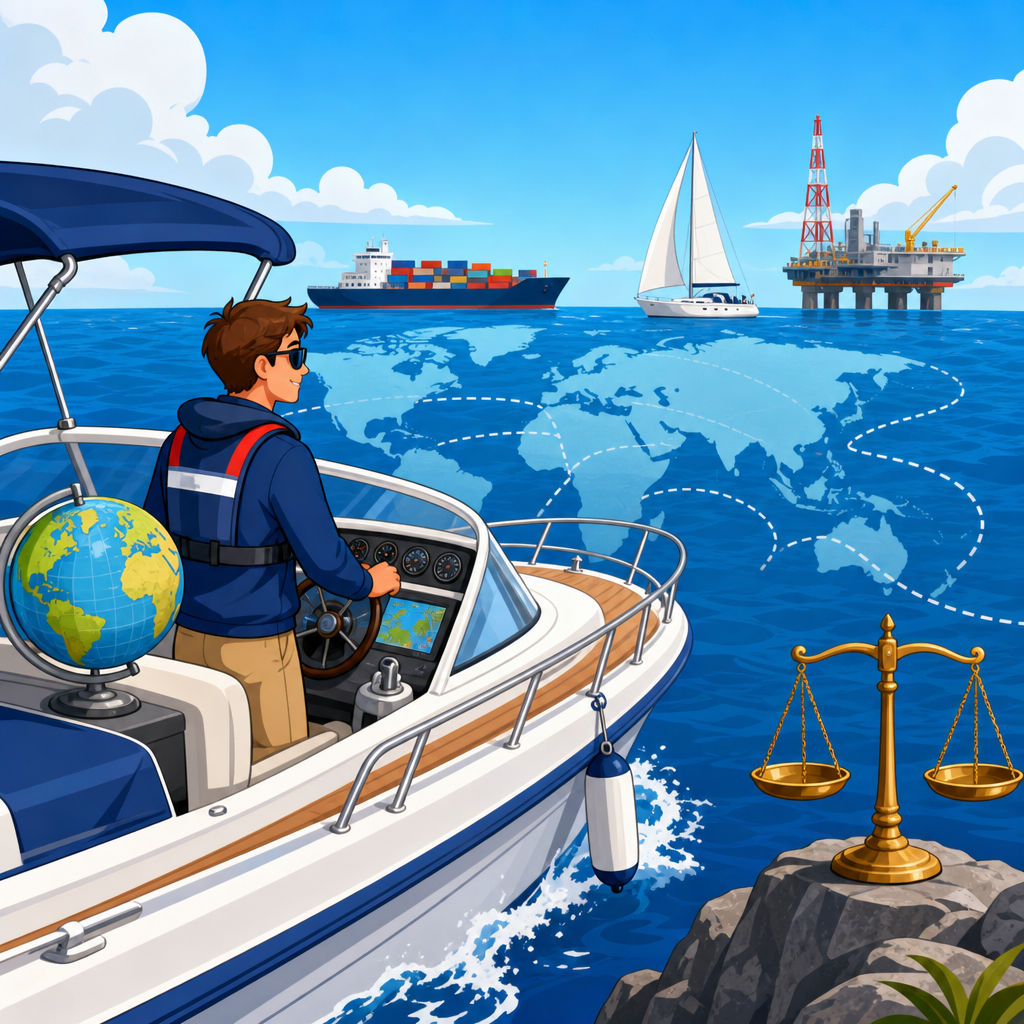
Boating in international waters sounds simple until a skipper crosses a maritime boundary, enters a foreign port, or is stopped by a coast guard vessel asking for registration, crew identification, customs declarations, and proof of safety compliance. In maritime law, “international waters” generally refers to the high seas beyond any nation’s territorial sea, while “foreign waters” means waters under another country’s jurisdiction, including internal waters, ports, and territorial seas. That distinction matters because the laws that apply to your boat can change several times on a single voyage. I have planned and audited offshore passages where crews focused on charts and weather but overlooked immigration rules, waste discharge limits, radio licensing, or insurance endorsements, and those paperwork errors created more risk than rough seas. This guide explains which laws govern recreational boating beyond domestic waters, what documents you need, how enforcement works, and how to prepare for legal compliance before departure. As a hub page under boating laws and regulations, it also frames the wider issues behind customs clearance, vessel registration, crew visas, safety standards, and environmental obligations. If you understand the legal layers before leaving the dock, you reduce delays, fines, vessel detention, and the chance of being denied entry at your destination.
Which laws apply when a boat leaves national waters
The short answer is that more than one legal system can apply at the same time. First, your vessel remains subject to the laws of its flag state, meaning the country where the boat is registered or documented. That state governs core matters such as vessel nationality, registration validity, equipment rules, radio licensing, and often minimum safety carriage requirements. A U.S.-documented yacht offshore, for example, still carries U.S. nationality and remains answerable to U.S. rules on documentation, citizenship requirements for coastwise trade, and many federal boating and customs obligations.
Second, once you enter another country’s territorial sea, usually extending up to 12 nautical miles from the baseline under the United Nations Convention on the Law of the Sea, that coastal state gains jurisdiction over many activities aboard your vessel. You may retain a right of innocent passage if you transit continuously and do not fish, pollute, conduct research, launch aircraft, or engage in commercial activity. But if you anchor, call at a marina, discharge waste, bring restricted goods ashore, or embark passengers, local law fully matters. Countries can also enforce customs, fiscal, immigration, sanitary, and navigation laws in contiguous zones extending beyond the territorial sea.
Third, ports and internal waters trigger the most intensive regulation. The moment you clear into a foreign country, local customs, immigration, biosecurity, and port state rules apply. I have seen private boats delayed for carrying undeclared firearms, excess alcohol, fresh produce, pets without veterinary paperwork, or drones prohibited by local security rules. The legal issue is rarely abstract sovereignty. It is usually practical compliance with a checklist enforced by officials at the dock.
Flag state rules, coastal state powers, and port entry requirements
For recreational skippers, the most useful way to think about international boating laws is by jurisdictional layers: the flag state travels with the boat, the coastal state controls its waters, and the port state controls entry conditions. Flag state obligations are the baseline. Keep registration current, display numbers or documentation as required, carry your certificate of registry, and ensure radio equipment is licensed if your country requires station and operator authorizations. If your boat has an EPIRB, AIS transponder, radar, or VHF with Digital Selective Calling, those devices may need proper registration tied to your maritime mobile service identity.
Coastal states can regulate pilotage zones, marine parks, fishing restrictions, speed limits near protected habitats, weapons carriage, and reporting rules. Some countries require advance notice of arrival through online portals or local agents. Others demand proof of onward travel, cruising permits, or payment of light dues and environmental fees. The Bahamas, French Polynesia, Mexico, and New Zealand all illustrate different approaches: one may emphasize cruising permits and immigration limits, another biosecurity inspections, another temporary import rules for the vessel.
Port entry requirements are where many boaters make preventable mistakes, so keep a simple matrix onboard.
| Legal layer | Who enforces it | Typical requirements | Common mistake |
|---|---|---|---|
| Flag state | Registration authority, coast guard | Registry certificate, radio license, required safety gear | Expired documentation or missing MMSI records |
| Coastal state | Navy, coast guard, marine police | Innocent passage compliance, no fishing, reporting rules | Stopping to snorkel or fish during transit |
| Port state | Customs, immigration, harbor master, health officers | Passports, crew list, clearance papers, declarations, fees | Going ashore before formal clearance |
Documents every skipper should carry for international boating
A compliant international cruising file should be organized before departure and duplicated digitally. At minimum, carry vessel registration or documentation, proof of ownership, passports for all persons onboard, visas where required, a crew list, proof of insurance, radio licenses, and prior clearance papers from your last port. If the boat is financed, leased, or owned by an entity, carry written authority showing the operator may take it abroad. Charter boats need special care because some contracts restrict foreign cruising or prohibit customs entry in another country without owner consent.
Many countries ask for an zarpe or outward clearance from the last port, although terminology varies. Some require an international certificate of competence or another operator qualification, even for private pleasure craft. The International Certificate for Operators of Pleasure Craft is recognized in parts of Europe, but not universally. The International Certificate of Competence is often accepted in Europe and the Mediterranean, yet acceptance depends on local law and vessel type. If your boat carries pets, obtain veterinary certificates, vaccination records, and any microchip documentation well in advance. Firearms, flare inventories, drones, satellite communicators, and prescription medications can all trigger declaration requirements.
Insurance deserves special attention. Many policies limit navigation territory, exclude named storm seasons, or require prior approval before entering specific regions. I have reviewed claims where hull insurance existed but did not apply because the yacht entered a Caribbean box during hurricane season or cruised to Cuba, Venezuela, or another sanctioned or excluded destination. Always confirm territorial limits, wreck removal liability, pollution liability, and salvage coverage before crossing borders.
Safety, radio, and environmental compliance beyond domestic waters
Safety laws offshore do not disappear because no one is visibly watching. In practice, recognized international standards shape expectations for prudent seamanship and enforcement after an incident. The International Regulations for Preventing Collisions at Sea, known as COLREGs, apply on the high seas and connected navigable waters. They govern lights, sound signals, lookout duties, safe speed, narrow channel conduct, and crossing and overtaking responsibilities. If there is a collision, investigators and insurers will examine COLREG compliance first.
Radio and distress obligations are equally important. SOLAS does not fully apply to most small private pleasure craft in the same way it applies to commercial shipping, but many of its safety principles influence equipment expectations, especially offshore. A fixed VHF with DSC, registered EPIRB, AIS, life raft sized for all persons aboard, pyrotechnics within expiry, and approved lifejackets are not legally universal, yet they are often treated as baseline best practice for offshore passages. Search and rescue authorities also expect accurate emergency contact registration and clear float plans.
Environmental rules become stricter, not looser, as range increases. MARPOL conventions restrict discharges of oil, garbage, sewage, and air pollutants, and many coastal states impose tougher local standards in marine parks and sensitive reef areas. Plastic discharge at sea is broadly prohibited. Oily bilge discharge rules are complex and differ by vessel type and equipment, but the safe rule for recreational skippers is simple: discharge nothing overboard unless you know it is lawful where you are. Garbage logs may not be mandatory for your yacht, yet keeping one demonstrates diligence if questioned after an inspection.
Customs, immigration, visas, and temporary import rules
Crossing a maritime border is also a border crossing for people and goods. On arrival in a foreign country, the skipper normally must proceed directly to an authorized port of entry, fly the courtesy flag and often the Q flag until cleared, keep crew aboard unless officials permit otherwise, and complete customs and immigration formalities before any leisure activity. Violating this sequence can lead to fines even if nothing illicit occurred. In several island states, going ashore for dinner before clearance is enough for a penalty.
Visa rules are often misunderstood because boaters assume private arrival is more flexible than air travel. It usually is not. Crew nationality determines entry requirements, length of stay, and whether visas must be obtained in advance. Schengen limits in Europe, for instance, affect non-EU cruisers moving between Mediterranean ports, while the vessel may be allowed to remain longer under temporary import rules than the people onboard. That mismatch creates common problems. A yacht can lawfully stay, but the crew cannot.
Temporary importation governs how long a foreign boat may remain without local duties or value-added tax. In the European Union, private non-EU yachts may qualify for temporary admission, but time limits, residency status, and use restrictions matter. Similar concepts appear in Turkey, Mexico, and many Caribbean jurisdictions. If you overstay, sell the vessel locally, or let resident persons use it improperly, tax exposure can become severe. Keep arrival stamps, cruising permits, receipts, and extension approvals in a dedicated binder.
Enforcement, penalties, and practical passage planning
Enforcement at sea is real, even for private cruising boats. Coast guards, navies, customs patrols, and marine police may board for documentation checks, fisheries enforcement, narcotics interdiction, pollution investigations, or safety concerns. The legal basis depends on where you are and your flag, but the practical advice is consistent: maintain respectful communications, keep original documents accessible, log positions accurately, and avoid any mismatch between your stated itinerary and your paperwork. A tidy logbook and complete crew manifest resolve many inspections quickly.
Penalties range from modest administrative fees to vessel detention, deportation, seizure of prohibited goods, tax assessments, and criminal charges. Illegal chartering is a frequent trap. Some owners offset cruising costs by taking “contributions” from guests, but if authorities view the trip as paid carriage without proper licensing, commercial regulations apply and penalties can escalate fast. Fishing is another major enforcement area. Trolling a line during what you think is harmless transit can violate local licensing laws or innocent passage rules.
The best risk control is pre-departure legal planning alongside weather routing and maintenance. Check official customs, immigration, and maritime agency websites for each destination; verify whether your boat registration, operator certificate, and insurance are accepted; confirm pet, medication, and firearms rules; and prepare multiple printed crew lists. Keep scanned copies in secure cloud storage. Before every landfall, answer four questions: where can I legally enter, who must be notified, what can remain onboard, and when may crew go ashore? Use this article as your starting point, then build destination-specific checklists for every voyage. Good preparation turns international boating law from a source of anxiety into a manageable part of safe offshore cruising.
Boating in international waters is governed by a layered system, not a single rulebook. Your flag state governs the vessel’s nationality and baseline compliance. Coastal states control conduct in their territorial sea and contiguous zones. Port states set the customs, immigration, health, and harbor procedures that determine whether your arrival is routine or disruptive. For most recreational skippers, the biggest legal risks are not dramatic confrontations on the high seas but ordinary oversights: expired registration, unclear insurance territory, missing radio paperwork, undeclared goods, visa misunderstandings, and failure to follow entry procedures in the right order.
The core takeaway is practical. Treat international boating laws and travel requirements as part of voyage planning, not as paperwork to handle after departure. Build a compliance file, confirm destination rules directly with official sources, and review crew status separately from vessel status because those timelines often differ. Follow COLREGs rigorously, assume environmental rules are strict, and never count on informal marina advice when customs or immigration consequences are involved. Regulations change, and local enforcement culture varies, but disciplined preparation works in every region.
As the hub page for international boating laws and travel requirements, this guide gives you the framework to understand registration, clearance, visas, temporary importation, safety standards, and enforcement before you move into destination-specific details. Use it to audit your next offshore passage, update your document binder, and create a country-by-country checklist before casting off.
Frequently Asked Questions
What laws apply when a boat is in international waters?
When a boat is in international waters, the primary legal system that applies is the law of the vessel’s flag state, meaning the country where the boat is registered or documented. On the high seas, no single country has general sovereignty in the same way it does within its territorial sea, so the vessel is usually governed by the rules of its registration for matters such as safety equipment, licensing, crew requirements, pollution compliance, and onboard conduct. This is why documentation, registration, and proof of nationality are so important for any skipper traveling offshore. If authorities from another country stop the vessel under a lawful basis, they will often begin by verifying what country’s laws govern the boat.
That said, “international waters” does not mean “lawless waters.” International conventions still matter. Depending on the voyage, boats may be affected by global maritime rules covering collision avoidance, search and rescue obligations, radio communications, environmental protection, and in some cases customs, fisheries, or anti-trafficking enforcement. In addition, some countries can exercise limited enforcement rights beyond their territorial waters in specific situations, such as piracy, unauthorized broadcasting, drug interdiction under treaty arrangements, or hot pursuit begun in their own waters. As a practical matter, skippers should understand that once they leave domestic waters, they remain accountable to their home registration rules and may also be subject to internationally recognized maritime obligations.
What is the difference between international waters and foreign waters?
This distinction is one of the most important concepts in offshore boating. “International waters” generally refers to the high seas, meaning waters beyond any nation’s territorial sea. By contrast, “foreign waters” are waters under another country’s jurisdiction. That includes a foreign country’s territorial sea, contiguous zone in some enforcement contexts, internal waters, anchorages, marinas, and ports. A boat may feel equally “far from home” in both places, but legally they are very different environments. In international waters, the flag state usually remains the main source of onboard legal authority. In foreign waters, the coastal state’s laws become highly relevant and often control entry, navigation, fishing, customs, immigration, sanitation, and local safety requirements.
For boaters, this means crossing into foreign waters can trigger immediate compliance obligations even if the boat never ties up at a dock. A country may require you to report in, fly the proper courtesy flag, use designated ports of entry, declare firearms, pets, food, or restricted goods, and present passports, crew lists, vessel registration, and proof of insurance or seaworthiness. Local laws may also regulate where you can anchor, whether you may fish, whether marine parks are off-limits, and how waste discharge is handled. In short, international waters are outside national sovereignty, while foreign waters are part of another nation’s legal system, and that difference can determine everything from documentation requirements to whether you are allowed to step ashore.
Do I need to clear customs and immigration if I am only boating near or through another country’s waters?
In many cases, yes, or at least you may need to follow that country’s entry and reporting rules. The exact requirement depends on what you do and where you go. If you enter another country’s territorial sea only for lawful transit and do not stop, anchor, fish, take on supplies, disembark passengers, or otherwise interact with the country, you may fall under the concept of innocent passage. Under that principle, continuous and expeditious transit is generally allowed so long as the passage is not prejudicial to the peace, good order, or security of the coastal state. However, innocent passage is narrower than many boaters assume. Activities such as fishing, weapons exercises, intelligence gathering, customs evasion, pollution, unauthorized research, launching aircraft, or prolonged anchoring can remove that protection.
The moment a vessel enters a foreign port, anchors where reporting is required, picks up or drops off people, or otherwise engages with the coastal state, customs and immigration rules often apply. Some countries require advance notice before arrival, electronic submission of crew information, or check-in at a specific port of entry before anyone may go ashore. Failing to clear in properly can lead to fines, detention, seizure of goods, or even vessel impoundment in serious cases. The safest approach is to research the destination country’s arrival procedures before departure, confirm whether temporary import rules apply to the vessel, and carry organized records including passports, registration, insurance, radio license if applicable, and a current crew list. For offshore cruising, administrative compliance is just as important as seamanship.
Can a coast guard or naval vessel stop and inspect my boat in international waters?
Potentially, yes, but the answer depends on who is stopping the vessel, what flag the vessel is flying, and the legal basis for the boarding. On the high seas, a vessel is generally subject to the exclusive jurisdiction of its flag state, which means foreign government vessels do not have unlimited authority to board at will. However, there are recognized exceptions under international law and treaty practice. Warships or authorized government vessels may approach and question a vessel to verify nationality where there is doubt about its status. They may also have authority in cases involving piracy, slave trading, unauthorized broadcasting, stateless vessels, or specific treaty-based enforcement areas such as narcotics interdiction, fisheries enforcement, or sanctions compliance.
In real-world practice, boarding authority can also arise from bilateral agreements between countries, consent from the flag state, or suspicion that a vessel is without nationality or falsely claiming a flag. If a boat is stopped, the skipper should remain calm, comply with lawful instructions, and be ready to present registration, identification, voyage details, and safety information. Hostile or evasive behavior can escalate an encounter quickly. It is also wise to understand that entering a foreign territorial sea greatly increases the coastal state’s enforcement authority. Once under a nation’s jurisdiction, that country’s coast guard, customs, immigration, environmental, and port authorities may inspect the vessel under domestic law. The practical lesson is simple: keep documents accessible, maintain proper flag and registration status, and assume that offshore travel may involve official scrutiny.
What documents and legal preparations should boaters have before heading offshore or toward another country?
At a minimum, boaters should carry current vessel registration or documentation, government-issued identification for everyone aboard, and passports if there is any chance of entering foreign waters or making an unscheduled foreign port call. A well-prepared skipper should also have a crew list, proof of insurance, radio station license and operator permit where required, any required cruising permits or visas, and records showing compliance with safety equipment rules under the vessel’s flag state. Depending on the route, it may also be important to have customs paperwork, vaccination or pet import documents, proof of ownership, lienholder authorization for financed boats, and serial number information for tenders and engines. These records should be stored in both paper and digital form, with backups available in case originals are damaged offshore.
Legal preparation goes beyond paperwork. Skippers should confirm where territorial seas begin along the route, identify ports of entry, understand local rules on fishing, firearms, drones, medications, and protected marine areas, and review whether the vessel’s insurance covers international voyages and salvage. They should also ensure that mandatory safety equipment is onboard and serviceable, because safety deficiencies can become legal problems during inspections or after an incident. If the trip may involve crossing multiple jurisdictions, it is smart to prepare a voyage plan, maintain a log, and know the reporting requirements for arrival and departure in each country. Offshore boating becomes much easier when legal compliance is treated as part of trip planning rather than an afterthought once a patrol boat appears on the horizon.