No-wake zones are regulated waterways where boat operators must travel at idle speed and create no appreciable wake, and violating one can trigger fines, liability for damage, points against boating privileges, and, in serious cases, criminal charges. In practice, “no wake” does not simply mean slowing down a little. It means operating slowly enough that your vessel does not throw a wave capable of rocking nearby boats, eroding shorelines, or endangering swimmers, anglers, paddlers, and people on docks. I have reviewed incident reports, marina rules, and state boating codes for years, and the pattern is consistent: operators who misunderstand speed restrictions often assume the rule is about courtesy when it is really about safety, property protection, and legal compliance.
This topic matters because no-wake zones sit at the center of boating laws and regulations in crowded, high-risk areas. They appear near marinas, launch ramps, fuel docks, bridges, narrow channels, mooring fields, swimming beaches, construction zones, environmentally sensitive shorelines, and areas with reduced visibility. They also connect directly to broader rules on speed limits and restricted areas. If you understand how no-wake zones work, you are far less likely to receive a citation, damage another vessel, injure someone, or face an insurance dispute after an avoidable incident. This article serves as a hub for the wider “Speed Limits, No-Wake Zones & Restricted Area” subject by explaining what the rule means, what happens after a violation, how enforcement works, and how to operate legally in common real-world scenarios.
Key terms are important because states use slightly different wording. “Idle speed” usually means the slowest speed that allows you to maintain steerage. “No-wake speed” means a speed that creates no appreciable wake. “Slow-no-wake” often means the same thing, though some jurisdictions distinguish between “slow speed” and true “no wake.” “Restricted area” generally refers to a place where access, speed, or vessel activity is limited by law, markers, local ordinance, or temporary control. A posted speed limit may allow planing in one section of water, while a no-wake zone absolutely does not. That distinction is where many violations begin.
What counts as a no-wake zone violation
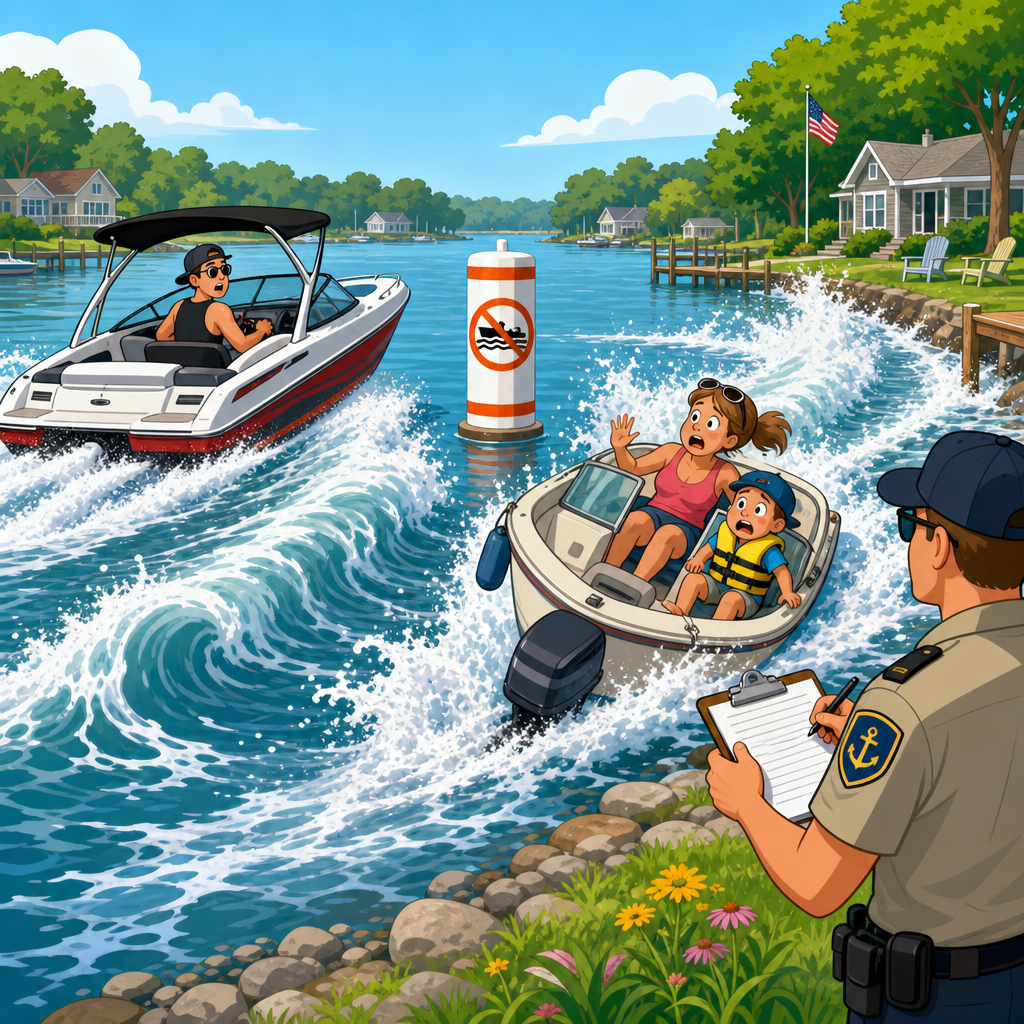
A no-wake zone violation occurs when a vessel is operated faster than the posted or legally required speed, or when it creates a wake that is unsafe or damaging within a controlled area. In many states, officers do not need radar to prove the violation. They can cite an operator based on visible wake, vessel attitude, distance from shore, conditions, and witness statements. If your bow is elevated, your stern is digging in, and you are throwing a rolling wave into moored boats, you are not at lawful no-wake speed even if your speedometer shows a modest number.
Common violations include accelerating too early after leaving a marina, failing to slow before entering a marked zone, passing close to kayaks or fishing boats while still on plane, and assuming a personal watercraft can “feather” through at semi-speed without consequence. Another frequent mistake is treating unposted areas as unrestricted. Many waterways impose no-wake requirements within a specified distance of docks, swimmers, anchored vessels, or shoreline structures even when no sign is directly visible. Operators are expected to know those baseline rules before getting underway.
Restricted area violations often overlap. For example, entering a swim area marked by buoys, crossing a safety perimeter around a dam, or operating too fast through a manatee protection zone can bring separate penalties beyond the wake offense itself. That matters because one pass through the wrong location can lead to multiple citations from a single stop.
Penalties: fines, points, liability, and possible criminal exposure
The immediate consequence of violating a no-wake zone is usually a civil citation and fine, but the full picture is broader. Penalty amounts vary sharply by state, county, and waterway authority. Some jurisdictions assess modest first-offense fines under one hundred dollars, while others add court costs, local surcharges, or enhanced penalties in protected areas that push the total much higher. Repeated violations may bring escalating fines, mandatory court appearances, or temporary restrictions on boating privileges.
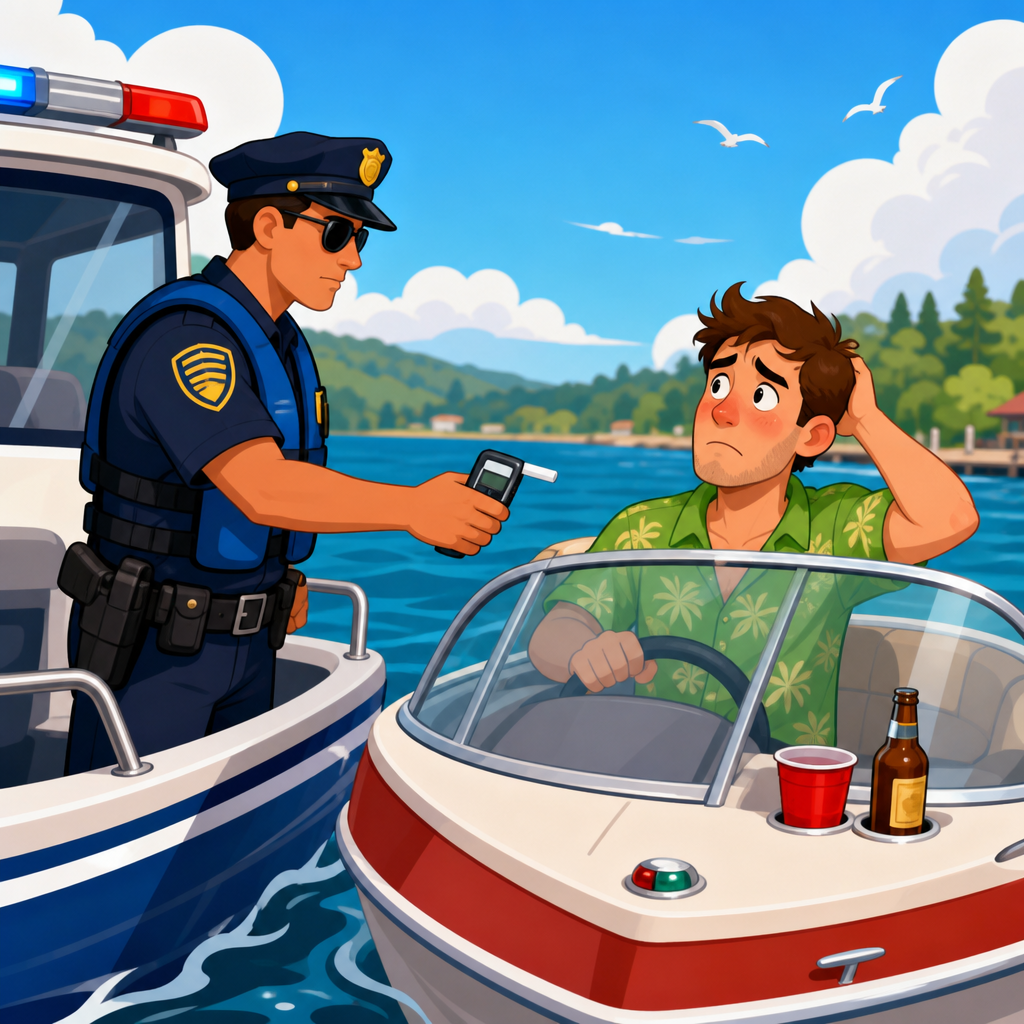
In several states, boating offenses can also affect your record through point systems or mandatory safety education. If alcohol, reckless operation, or injury is involved, the issue can move beyond a standard infraction. An operator who speeds through a no-wake zone, throws a wake that ejects a passenger from another vessel, and ignores officers can face reckless boating charges or misdemeanor prosecution. If the conduct causes serious bodily injury or death, felony exposure is possible depending on the jurisdiction and surrounding facts.
Financial liability is often more painful than the ticket. Wake damage claims can include cracked hull gelcoat at docks, snapped mooring lines, injuries from falls on board, damaged seawalls, and losses tied to swamped small craft. Insurance carriers routinely examine whether the operator violated navigation rules or posted restrictions before deciding how to handle coverage and subrogation. A relatively small operational mistake can therefore become a costly property-damage case.
| Violation scenario | Likely legal consequence | Practical impact |
|---|---|---|
| Running on plane through a marked marina no-wake zone | Citation, fine, possible safety course | Insurance scrutiny, marina complaint, repeat-offense risk |
| Throwing wake that damages a docked boat | Citation plus civil liability claim | Repair costs, deductible issues, possible lawsuit |
| Speeding in a restricted swim or habitat area | Multiple citations, higher protected-area penalties | Heavier fines, court appearance, access restrictions |
| No-wake violation linked to injury | Reckless operation or criminal charge possible | Major legal expense, license consequences, claim exposure |
How officers enforce speed limits, no-wake zones, and restricted areas
Enforcement on the water is more practical than many new operators expect. Marine patrol officers, sheriff units, harbor police, coast guard auxiliaries, and conservation agencies watch for vessel behavior, not just numbers on a display. They look at posted regulatory markers, traffic density, shoreline risk, and whether your wake affects other users. In a true no-wake zone, the decisive question is simple: did your boat create a substantial wake? If yes, your exact miles per hour may be secondary.
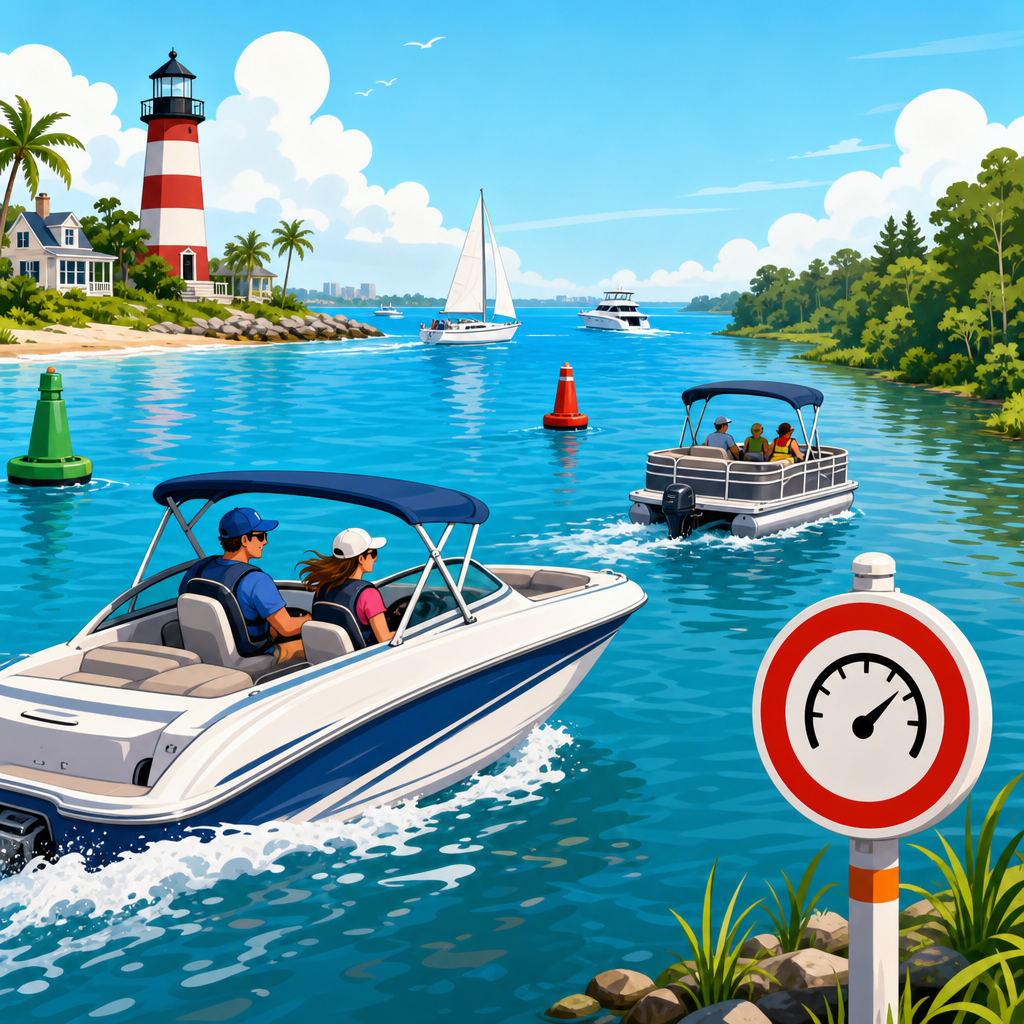
Markers usually follow the U.S. Aids to Navigation framework, with regulatory buoys using orange symbols on white backgrounds. A diamond may warn of danger, a crossed diamond indicates exclusion, and a circle typically communicates a controlled operation such as speed restriction. States and local authorities may add signs on pilings, bridge abutments, seawalls, or marina entrances. Temporary restricted areas can be established for dredging, regattas, fireworks, emergency response, or wildlife management. Operators who say they did not see the sign rarely get much sympathy if the markers were reasonably visible.
From experience, the best operators treat every congested approach as a likely no-wake situation before they read the sign. That habit matters because stopping distance on water is long, and throttle reductions take time to flatten a wake. If you wait until the bow passes the marker to come off plane, your wake has already entered the zone behind you. Officers know that, and many citations are written for late deceleration rather than sustained speeding.
Why no-wake rules exist: safety, shoreline protection, and navigation control
No-wake zones exist because wake energy causes predictable harm in confined or sensitive areas. Around marinas and launch ramps, a rolling wake can pin a small boat against a dock, knock someone off a trailer, or make fueling more dangerous. Near anglers, paddlecraft, and sailboats with limited maneuverability, even a moderate wake can trigger capsize or loss of balance. In narrow channels, excessive speed reduces reaction time and magnifies the consequences of steering error or sudden traffic conflict.
Environmental protection is also a major reason. Repeated wake action contributes to shoreline erosion, damages aquatic vegetation, undercuts banks, and disturbs nesting habitat. In lake communities and tidal creeks, local governments often create no-wake corridors specifically because residents and engineers can document damage to seawalls, marsh edges, and moored infrastructure. This is why the rule is not just about your hull speed. It is about the force your vessel transfers into the surrounding water.
Navigation control is the third function. Regulators use speed limits, no-wake zones, and restricted areas together to separate conflicting uses. Open water may permit faster transit. Approaches to bridges or ferry crossings may require reduced speed. Swim beaches, dams, intake structures, and certain wildlife areas may prohibit entry altogether. Understanding that hierarchy helps boaters make better decisions quickly and lawfully.
Common situations where boaters get cited
The most common citation setting is the marina entrance. Operators leave a slip, idle briefly, then accelerate before fully clearing the marked zone. The second is the waterfront residential canal, where people see a straight stretch of water and assume it is safe to get on plane. The third is passing too close to anchored or drifting boats while still creating wake. Many states impose distance-based duties around other vessels, and even where the statute does not specify exact feet, general careless or reckless operation rules still apply.
Personal watercraft riders are cited often because they can move quickly in short spaces and some riders mistake agility for legal permission. Wake surf and wake boat operators also face scrutiny where ballast-enhanced wakes are used near shorelines or in narrow water bodies. Several lake associations now work directly with marine patrol because large artificial wakes have been tied to dock strain, shoreline erosion, and unsafe interaction with paddlers. On rivers, fast transits under bridges and through no-wake bends create another enforcement hotspot because visibility and escape room are limited.
Night operation adds risk. A boat moving too fast in a no-wake zone after dark may not just receive a speed citation; it may trigger questions about lookout, navigation lights, impairment, and overall safe operation. One poor choice often exposes several others.
How to operate legally in speed-limited and restricted waters
The simplest rule is to slow early and stay slow until you are fully clear of the regulated area. Bring the boat completely off plane before the marker, then reduce to idle speed that maintains steerage without producing a noticeable rolling wave. Watch your stern, not just your dashboard. A boat at the wrong trim angle can throw a surprising wake even at low speed, especially in shallow water where squat increases displacement effect.
Use charts, local boating guides, marina maps, and state agency summaries before you launch. Many restricted areas are permanent and published. Others are seasonal, such as manatee zones, spawning closures, or temporary hazard controls. If you are renting, ask specifically about local no-wake corridors, distance-from-shore rules, and any county ordinances that differ from the broader state code. Rental briefings are often rushed, and operators who fail to ask clear questions miss the details that later matter most.
When in doubt, treat the area as more restricted than less. If you see swimmers, paddleboards, moored boats, fuel docks, service barges, or heavy cross traffic, idle through. This is one of the few boating habits that is almost never criticized by officers, insurers, or experienced captains. Slow looks competent.
What to do if you are stopped or cited
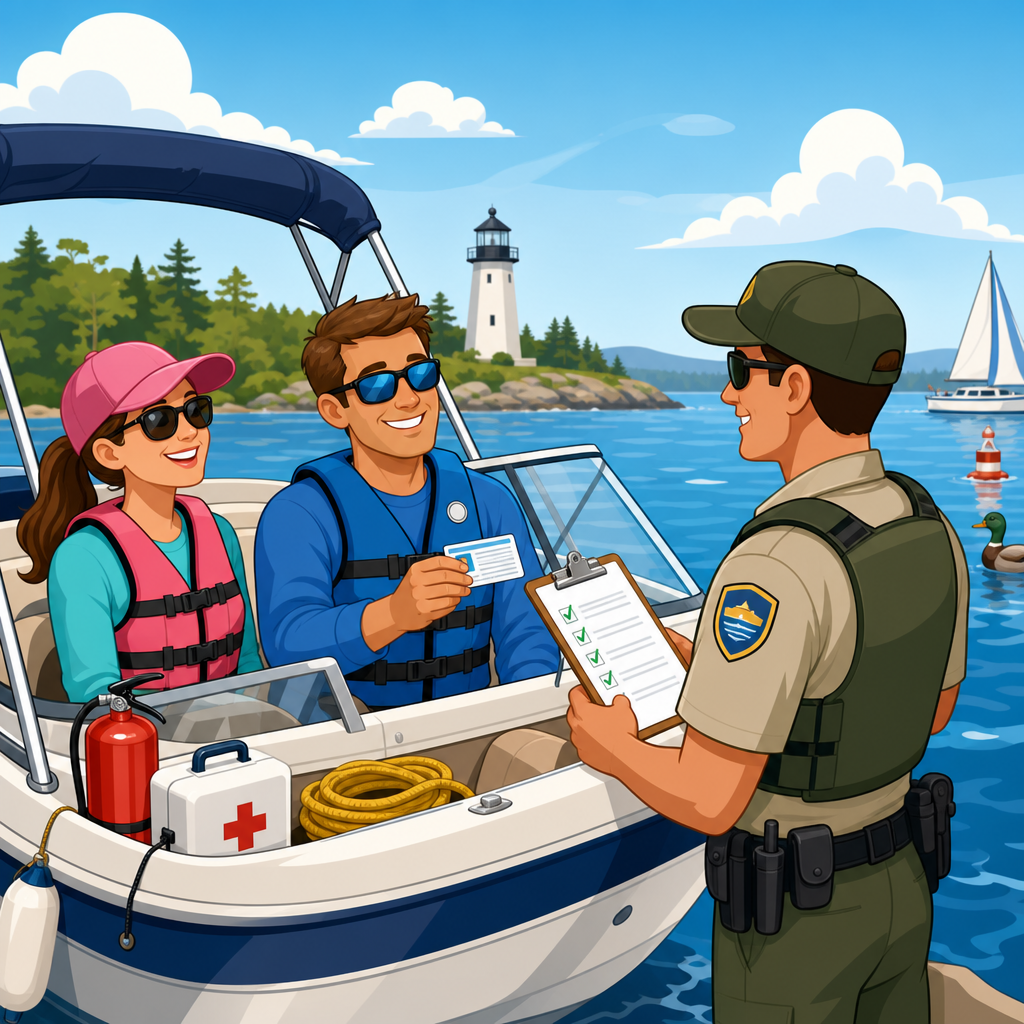
If an officer stops you for a no-wake violation, reduce speed safely, follow instructions, and keep your hands visible. Provide registration, identification if required, and safety equipment information when asked. Do not argue on the water about whether your wake was “too big.” That debate never goes well during the stop and can escalate a routine contact. If you believe the citation is wrong, document the location, weather, traffic, marker placement, and your route after the encounter.
Read the citation carefully because boating tickets can carry response deadlines, court dates, or options for mitigation classes. If there was property damage, notify your insurer promptly and avoid making broad admissions before you understand the facts. If the case involves injury, substantial damage, or allegations of reckless operation, legal advice is worth getting early. Marine cases turn on details such as marker visibility, local ordinance wording, witness positioning, and whether the area was clearly designated under applicable law.
Many operators can avoid repeat problems by taking a state-approved boating safety course even when it is not mandatory. In my experience, the course material on markers, right-of-way, and safe speed fills exactly the gap that produces most no-wake citations.
Violating a no-wake zone can lead to a simple fine, but it can also cascade into civil liability, insurance problems, mandatory education, or criminal charges when injury, damage, or reckless conduct is involved. The core rule is straightforward: in a no-wake zone, operate at idle speed and produce no appreciable wake. That standard connects directly to broader boating laws on speed limits and restricted areas, which together are designed to protect people, property, shorelines, and navigation safety.
For boaters, the practical takeaway is equally straightforward. Know the local rules before departure, read regulatory markers early, come off plane before entering controlled water, and stay slow until you are fully clear. If an area feels crowded, narrow, environmentally sensitive, or hazard-prone, assume higher caution is required. That mindset prevents citations and avoids the much bigger costs that come from wake damage or injury.
Use this page as your starting point for the wider “Boating Laws & Regulations” subtopic on speed limits, no-wake zones, and restricted areas, then review your state boating handbook and local waterway ordinances before your next trip. A few minutes of preparation can save money, protect others, and make every run through regulated water safer.
Frequently Asked Questions
What exactly counts as a no-wake zone violation?
A no-wake zone violation typically happens when a boat operator travels faster than idle speed or produces a wake large enough to disturb the surrounding area where slow, controlled operation is legally required. Many people assume “no wake” just means reducing speed somewhat, but that is not how these rules are usually enforced. In most waterways, no wake means operating as slowly as necessary to maintain steerage while creating no appreciable wave behind the vessel. If your boat throws a rolling wake that rocks docks, pushes other boats around, erodes the shoreline, or creates risk for swimmers, anglers, paddlecraft, or people near the water, you may be in violation even if you believe you were going “slow.”
No-wake zones are commonly posted around marinas, boat ramps, bridges, narrow channels, residential shorelines, swimming areas, and environmentally sensitive habitats. Officers often look at the actual effect of your vessel on the water, not just your speedometer reading. That means a larger or more powerful boat can violate a no-wake rule at a lower speed if it still generates a noticeable wake. Repeated failure to reduce wake, ignoring posted markers, or accelerating before fully exiting the restricted area can all support a citation. The safest approach is to throttle down to idle, stay alert to your boat’s wake pattern, and wait until you are completely outside the zone before increasing speed.
What penalties can you face for violating a no-wake zone?
The consequences for violating a no-wake zone can range from a simple citation to much more serious penalties, depending on where the incident occurred and whether anyone was put at risk. In many cases, the most immediate penalty is a fine. Some jurisdictions set fixed civil penalties, while others increase the amount based on prior offenses, the seriousness of the conduct, or whether property damage or injuries resulted. A first-time violation may seem minor, but fines can still be significant, especially in heavily regulated waterways or areas with strict local ordinances.
Beyond a monetary penalty, a violation can also affect your boating record. Some states assign points or similar administrative marks against boating privileges, which may lead to warnings, mandatory safety courses, suspension of operating privileges, or difficulty renewing registrations or licenses where applicable. If the conduct is reckless rather than merely careless, authorities may pursue harsher enforcement. For example, speeding through a crowded no-wake area, operating under the influence, or causing a collision can elevate the matter into a more serious civil or criminal case. In short, the legal outcome depends on the facts, but violating a no-wake zone is not just a technical mistake—it can carry lasting financial and legal consequences.
Can you be held liable if your wake causes damage or injury?
Yes. Even if the initial offense starts as a boating citation, a wake-related incident can quickly become a liability issue if your vessel’s movement causes damage or someone gets hurt. Boat operators have a duty to operate safely and reasonably under the conditions. If your wake slams another vessel into a dock, throws a passenger off balance, damages moored boats, floods smaller craft, injures a swimmer, or contributes to shoreline erosion, you may be financially responsible for the losses. That can include repair costs, medical expenses, lost income, cleanup costs, and other damages tied to the incident.
Liability often turns on whether a reasonable operator would have slowed further under the circumstances. In a posted no-wake zone, that standard can be easier to prove because the area itself puts operators on notice that special care is required. Witness statements, video, marine patrol observations, and photos of the wake or resulting damage may all be used as evidence. In more serious cases, an injured person or property owner may file an insurance claim or lawsuit. If the facts show that the operator ignored signs, maintained excessive speed, or created a clearly dangerous wake near vulnerable people or property, the case against the operator becomes stronger. That is why no-wake compliance is not only about avoiding a ticket—it is also about preventing expensive claims and protecting other people on the water.
Can a no-wake zone violation ever lead to criminal charges?
Yes, it can, particularly when the violation involves reckless conduct, intoxication, injury, or willful disregard for safety rules. A basic no-wake citation is often handled as a civil or low-level boating offense, but the situation changes if an operator blasts through a marked zone in a way that endangers others. For example, creating a strong wake near swimmers, kayakers, anglers, docked boats, or congested marina traffic can support allegations that the operator acted recklessly. If that conduct causes a collision or serious bodily harm, prosecutors may pursue misdemeanor or even felony-level charges under applicable boating or criminal laws.
Criminal exposure also becomes more likely when aggravating factors are present, such as boating under the influence, fleeing marine law enforcement, repeated violations, or ignoring direct warnings from officers. In those situations, a no-wake violation may be part of a broader case rather than the only charge. Penalties can include larger fines, probation, mandatory education, loss of boating privileges, and in severe cases, jail time. The key point is that no-wake rules exist to protect real people in high-risk areas. When an operator treats those rules casually and someone is endangered or harmed, enforcement can escalate well beyond an ordinary ticket.
What should you do if you receive a ticket for violating a no-wake zone?
If you are cited for a no-wake zone violation, start by reading the ticket carefully and noting the deadline to respond. Do not ignore it. A missed response date can lead to added penalties, default findings, or problems with boating privileges. Gather the basic facts as soon as possible, including where the stop happened, what signs or markers were posted, the weather and water conditions, whether there were witnesses, and what the officer said the violation was. If you have GPS data, photos, video, or chart information that may help explain the situation, preserve it immediately.
In some cases, paying the ticket may be the simplest option, especially for a minor first offense. But if the citation is costly, if you believe the area was not properly marked, if your vessel was operating at idle with minimal wake, or if the alleged violation is connected to an accident or injury claim, it may be worth contesting the citation or speaking with a boating law attorney. That is especially true if points, license consequences, insurance issues, or potential civil liability are on the table. A lawyer or qualified local advisor can help you understand whether the charge is merely administrative or whether it could affect a broader damage claim. Whatever you decide, use the experience as a reminder that “no wake” means more than just slowing down—it means operating with enough care that your vessel does not create a wave capable of causing harm.