Boating compliance in the United States means following a layered system of federal rules, state statutes, local waterway restrictions, and equipment standards that apply to recreational vessels, personal watercraft, and in many cases rented boats. I have worked with boat owners preparing for inspections, registration renewals, and on-water safety checks, and the same problem appears every season: people assume that buying life jackets and carrying registration papers is enough. It is not. To stay compliant with federal and state boating laws, operators must understand which authority governs the vessel, what equipment must be carried, how the boat must be titled and numbered, who may operate it, and which operating behaviors trigger citations, liability, or criminal penalties.
At the federal level, the U.S. Coast Guard sets baseline safety requirements for recreational boats, including carriage of personal flotation devices, navigation lights, visual distress signals in applicable waters, ventilation, backfire flame arrestors in certain gasoline engine installations, marine sanitation rules, and accident reporting standards. States add their own boating laws on registration, education certificates, age restrictions, towing sports, invasive species controls, and local speed or wake zones. A boater on one lake may only need registration decals and wearable life jackets, while a boater crossing coastal waters may also need flares, sound-producing devices, and documented compliance with navigation rules. The details change by vessel type, length, propulsion, and location.
This matters because boating violations are rarely isolated paperwork issues. A missing throwable device can become a failed safety inspection. An expired registration can complicate an accident claim. Operating without the required boater education credential can lead to fines and expose an owner after a crash. More seriously, failing to follow navigation rules, life jacket requirements, or boating under the influence laws can cause injuries, deaths, and substantial civil exposure. The National Association of State Boating Law Administrators and the U.S. Coast Guard have spent decades aligning safety guidance because compliance directly reduces preventable casualties. For boaters, the practical goal is simple: know the federal baseline, verify the state-specific overlay, and review both before every season and every interstate trip.
Understand the split between federal and state boating authority
The first compliance rule is knowing who regulates what. Federal law generally covers vessel manufacturing standards, carriage requirements, navigation rules, marine pollution, and certain accident reporting duties. State law usually governs registration, titling, numbering display, operator education, age limits, and many day-to-day operating restrictions on inland waters. Local governments or waterway managers may also impose no-wake zones, reservoir-specific access rules, aquatic invasive species inspection requirements, and time-of-day restrictions.
In practice, these layers overlap. I often explain it to boat owners this way: the Coast Guard sets the floor, and the state can add obligations as long as they do not conflict with federal law. For example, a 16-foot recreational powerboat on an inland lake must still meet federal equipment standards for life jackets and sound signaling, but the state may also require registration decals, a boater safety card for operators born after a certain date, and a fire extinguisher rule that mirrors federal language. If that same boat enters coastal waters, additional federal equipment obligations may apply based on where and how it operates.
The safest approach is to treat compliance as jurisdiction-by-jurisdiction. Check the state boating agency, fish and wildlife department, natural resources agency, or parks division for local operating rules. Then compare those rules with the current Coast Guard recreational boating safety requirements. Boat operators who travel across state lines with trailers should review destination rules before launching, because age thresholds, education mandates, and towing regulations vary significantly.
Meet U.S. Coast Guard equipment and carriage requirements
Federal carriage requirements are the core of recreational boat compliance. Every recreational vessel must carry at least one Coast Guard-approved wearable life jacket for each person aboard, in the correct size and in serviceable condition. Children may need to wear life jackets based on state age rules, and many states require wear on personal watercraft, while being towed, or during specific seasons. Boats 16 feet and longer, except canoes and kayaks in most situations, also need one throwable flotation device. On safety inspections, inaccessible life jackets, torn straps, and waterlogged throwable cushions are common failure points.
Navigation lights are another frequent issue. Boats operating between sunset and sunrise, or during reduced visibility, must display proper lights according to the Inland Navigation Rules or International Rules where applicable. I regularly see owners cited not because lights are absent, but because replacement fixtures show the wrong arc, are obstructed by gear, or are wired incorrectly after aftermarket installations. Sound-producing devices are also required: many boats need a whistle, horn, or both depending on length. Visual distress signals are mandatory on coastal waters, the Great Lakes, territorial seas, and connected waters for many vessel categories.
Other federal requirements depend on vessel design. Gasoline engine spaces in enclosed compartments may require ventilation and backfire flame control. Fire extinguishers are required on many motorized boats, especially where fuel systems or enclosed spaces create fire risk. Marine sanitation devices apply to boats with installed toilets. Capacity plates on monohull boats under 20 feet provide maximum persons, weight, and horsepower limits and should never be ignored. Overloading is not just unsafe; after an accident, it is powerful evidence of negligent operation.
Register, title, number, and document the boat correctly
Most recreational boats with mechanical propulsion must be registered in the state of principal use, and many states also title certain vessels. Registration typically requires proof of ownership, payment of taxes or fees, a hull identification number, and display of validation decals plus the assigned registration number in block letters on the forward half of the vessel. I have seen buyers lose weeks of boating season because they accepted a handwritten bill of sale without matching title records or a legible hull identification number. Clean paperwork matters.
Some larger recreational vessels may be federally documented instead of state titled, though state registration decals or use taxes may still apply. Documentation through the National Vessel Documentation Center differs from state registration and is commonly used for eligible vessels engaged in certain financing or cruising patterns. Owners should not assume documentation automatically replaces every state requirement; states often still require specific fees or decals.
Hull identification numbers deserve special attention. Since 1972, most boats have carried a 12-character HIN that identifies manufacturer, serial, and model year information. A missing, altered, or mismatched HIN can trigger enforcement scrutiny and complicate insurance, financing, and theft recovery. Before buying a used boat, compare the HIN on the transom with title and registration documents. If anything does not match exactly, pause the transaction and resolve it with the state agency before launch day.
Follow operator education, age, and licensing rules
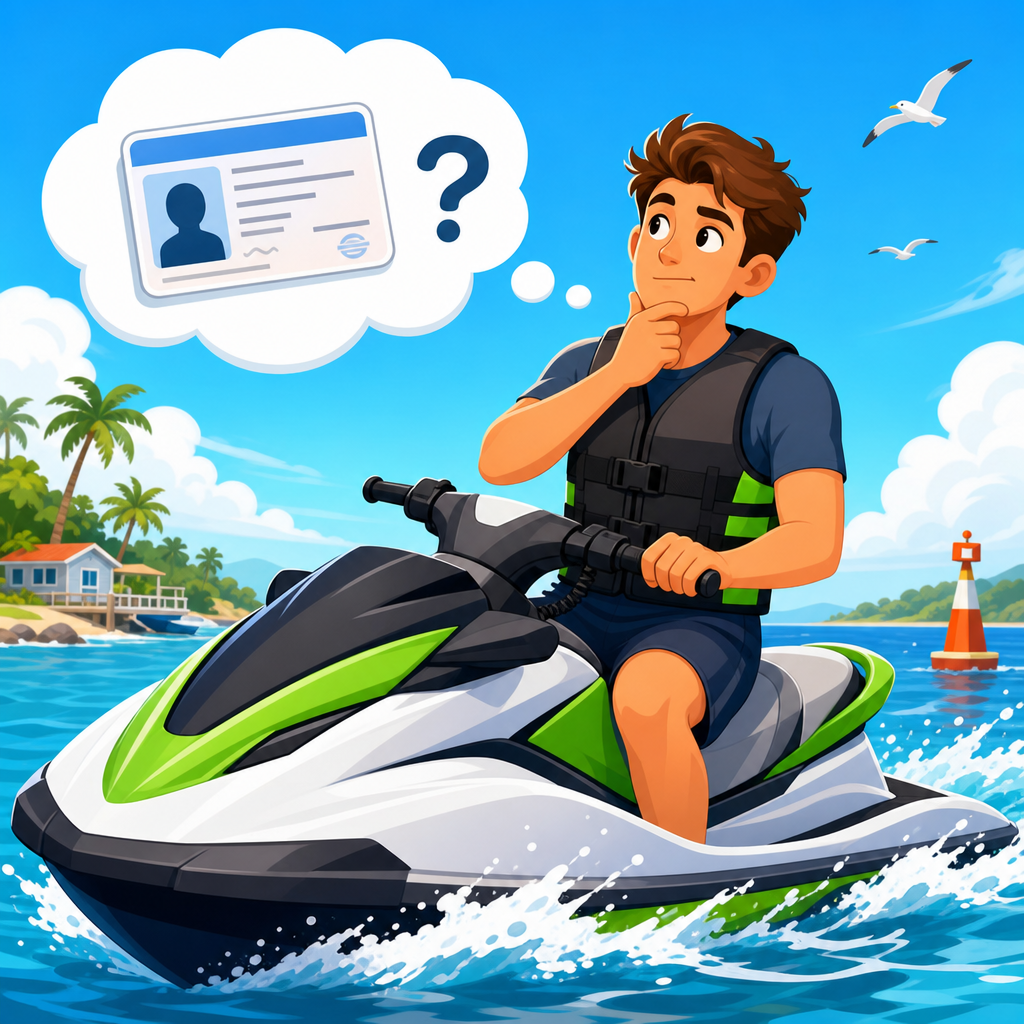
Boater education is one of the most variable state-law topics. Many states require operators born after a specific date to complete an approved boating safety course and carry a certificate or boater card. Others impose separate rules for personal watercraft, rental vessels, or temporary certificates. A common mistake is assuming a driver’s license proves boating eligibility. It does not. Boating education requirements are separate, and rental operators increasingly verify them before handing over keys.
Education rules matter because they affect both compliance and liability. In the aftermath of collisions, attorneys and insurers examine whether the operator completed a recognized course such as one approved by NASBLA. I recommend formal training even where not required. The best courses cover right-of-way, aids to navigation, weather risk, emergency procedures, trailering basics, and fueling safety, all of which reduce both citations and accidents.
| Compliance area | Federal baseline | Common state additions |
|---|---|---|
| Operator qualification | No general federal license for most recreational boaters | Boater card, age minimums, PWC restrictions |
| Boat identification | HIN standards, documentation for eligible vessels | Registration, titling, decals, number display rules |
| Safety equipment | PFDs, lights, sound devices, distress signals, sanitation | Child wear mandates, extinguisher enforcement details |
| Operations | Navigation rules, accident reporting, pollution laws | No-wake zones, towing rules, local speed limits, quiet hours |
Age restrictions deserve close review. Some states prohibit children below a certain age from operating motorboats above specified horsepower. Others allow operation only under direct adult supervision. Personal watercraft usually have stricter age rules because of their speed and handling profile. If parents, grandparents, or friends allow a minor to operate without meeting state requirements, the adult owner may face penalties as well.
Operate legally on the water: navigation, speed, alcohol, and reporting
Compliant boating is not only about what you carry; it is about how you operate. Federal navigation rules govern steering and sailing, crossing, overtaking, meeting head-on, maintaining proper lookout, safe speed, and action to avoid collision. These rules apply broadly and are enforced after incidents even when boaters insist they had informal right-of-way. In real investigations, failure to maintain lookout and excessive speed are recurring factors.
States add operational laws covering reckless operation, negligent wake damage, riding on prohibited parts of the boat, towing skiers or tubers without an observer where required, and obeying no-wake or manatee protection zones. On crowded inland lakes, many citations arise from shoreline speed violations and unsafe towing patterns. On coastal waters, operators are more often cited for channel violations, wake damage near marinas, or improper lighting during evening returns.
Boating under the influence is a major enforcement area. Every state prohibits operating a boat while impaired, and most use the same 0.08 blood alcohol concentration threshold applied to motor vehicles for adult operators, though impairment can be charged even below that number. Environmental stressors such as sun, wind, heat, and motion intensify alcohol’s effects. Penalties can include fines, jail, vessel impoundment, and loss of operating privileges.
Accident reporting is another compliance point that owners overlook. Federal rules and state laws require reporting boating accidents meeting thresholds for death, disappearance, injury needing more than first aid, significant property damage, or complete vessel loss. Reports usually must be filed promptly, often within 48 hours for serious incidents and within a set number of days for other reportable events. Delayed reporting can become a separate violation and weaken an insurance claim.
Plan for state-specific issues before every trip
The hub principle for U.S. Coast Guard and state boating laws is simple: there is no universal checklist that replaces destination research. Before each season, confirm registration validity, education credentials, insurance papers, and equipment dates. Before each interstate trip, check the destination state’s boating handbook for reciprocity rules, local PFD wear requirements, aquatic invasive species inspections, and launch permit procedures. Western states often emphasize mussel inspection and decontamination. Southern coastal states may focus more on manatee zones, seagrass protection, and saltwater equipment requirements.
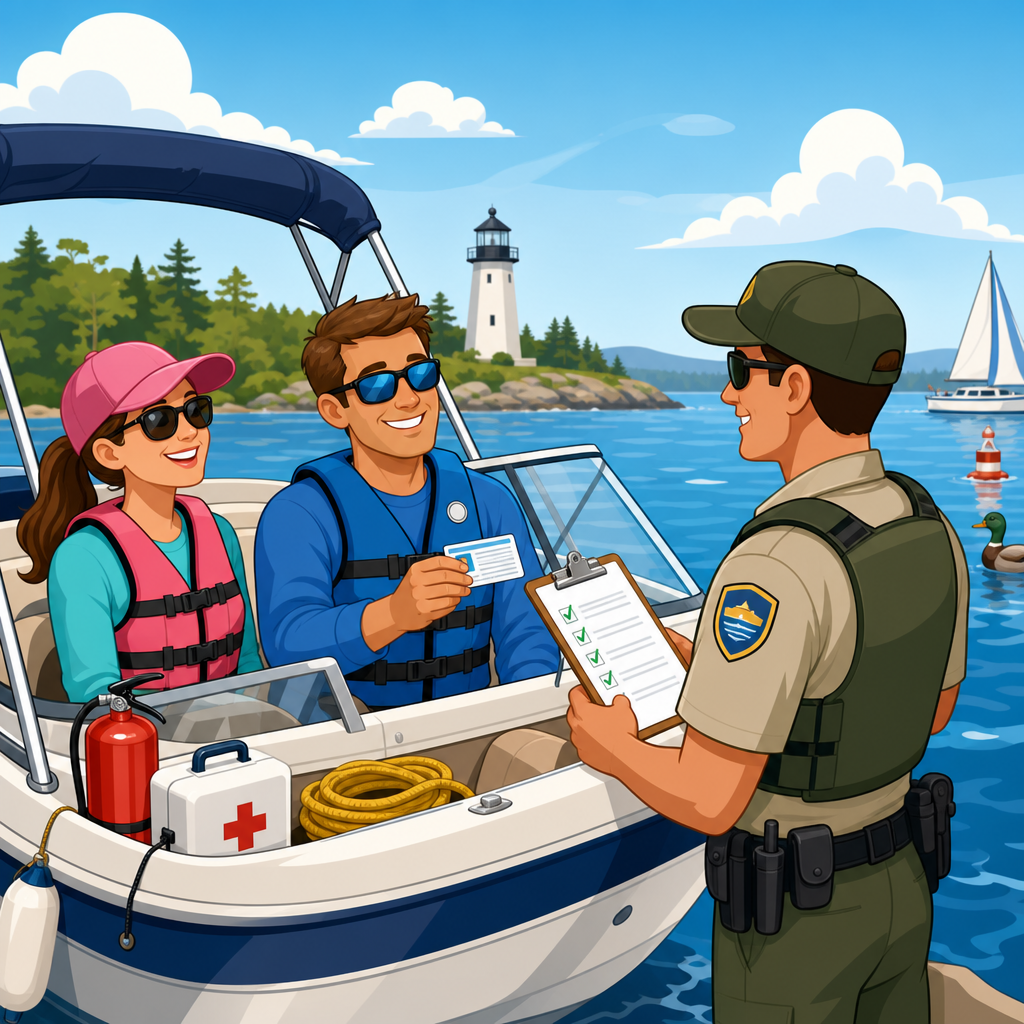
I advise owners to create a laminated compliance folder with registration, title copy, insurance card, emergency contacts, and state agency links saved on a phone. Then conduct a dockside audit: count wearable life jackets, inspect straps and labels, test lights, verify horn function, check extinguisher charge, review flares if required, and confirm anchor, line, and throwable placement. That routine takes minutes and prevents the most common citations.
Staying compliant with federal and state boating laws ultimately protects more than your wallet. It protects passengers, preserves insurance coverage, reduces accident risk, and makes interactions with marine patrol straightforward. Start with the Coast Guard baseline, add your state’s rules, and update your checklist every time your boat, crew, or cruising area changes. If you operate in multiple states, treat compliance as part of trip planning, not an afterthought. Review the rules before you launch, fix gaps immediately, and use this page as your starting point for the broader Boating Laws and Regulations hub.
Frequently Asked Questions
1. What does it actually mean to stay compliant with federal and state boating laws?
Staying compliant means much more than simply registering your boat and keeping a few life jackets on board. In the United States, boating laws work in layers. Federal regulations, including U.S. Coast Guard rules, apply broadly to vessel operation, required safety equipment, navigation lights, sound-producing devices, ventilation, backfire flame control, and carriage requirements for personal flotation devices. On top of that, each state has its own registration rules, titling requirements, boater education laws, age restrictions, personal watercraft rules, towing laws, and operating limits. Then local authorities may add waterway-specific restrictions such as no-wake zones, horsepower limits, seasonal closures, invasive species inspection rules, or launch permit requirements.
For most boat owners, real compliance means checking every category that could apply to the vessel, the operator, the passengers, and the area of operation. That includes current registration and decals, titling where required, proper display of registration numbers, required onboard documents, life jackets in the correct sizes and quantities, fire extinguishers if required, visual distress signals where applicable, navigation lights that function properly, and compliance with state-specific education certificate rules. It also means understanding operating rules related to alcohol use, careless or reckless operation, accident reporting, environmental discharge restrictions, and right-of-way requirements. If you rent, borrow, trailer, or travel across state lines with a boat, compliance becomes even more important because the rules can shift depending on where and how the vessel is being used.
2. Which boating documents and registrations should I always keep current and onboard?
The most important documents usually include your vessel registration, proof of registration renewal if recently processed, and any title or ownership paperwork required by your state, although title documents are not always required to be carried onboard. Many states require the registration certificate to be physically onboard and available for inspection. If your state requires a boater education card or safety certificate, the operator should have that available as well, either in physical form or in an approved digital format if the state permits it. If the vessel uses a marine radio, there may also be licensing considerations in limited circumstances, especially for certain international operations, though most recreational domestic users will not deal with that often.
If you use the boat in multiple states, do not assume your home-state paperwork answers every requirement. Registration reciprocity may allow temporary use in another state, but local operating rules still apply. Rented boats create another layer because the rental company may provide certain documents, but the operator is still responsible for following age restrictions, education requirements, and local operating laws. It is also wise to keep insurance information onboard, even when not legally required, along with emergency contact information and any permits related to special use areas, aquatic invasive species compliance, or marina access. In practice, the safest approach is to build a compliance folder with registration documents, education cards, inspection records, and any state-specific permits so that if you are stopped for an inspection or involved in an incident, you are ready immediately.
3. What safety equipment is legally required on a recreational boat, and why do so many owners still fail inspections?
Required safety equipment depends on the type and size of boat, where it operates, and whether it includes features such as enclosed fuel compartments or installed engines. At a minimum, most recreational boats must carry U.S. Coast Guard-approved life jackets in the correct number and size for all passengers. In many situations, children must wear them based on state law and vessel length or operation conditions. Boats may also need a throwable flotation device, fire extinguishers, properly working navigation lights, a horn or whistle, backfire flame arrestors, ventilation systems, muffling devices, and visual distress signals for certain coastal or federally regulated waters. Personal watercraft often come with additional practical requirements, including engine cut-off lanyards and stricter life jacket expectations.
Owners often fail inspections because they carry equipment that is present but not compliant. Common examples include life jackets that are the wrong size, damaged, inaccessible, or not Coast Guard approved; fire extinguishers that are expired, discharged, or mounted incorrectly; navigation lights that do not work; and registration numbers that are improperly displayed. Another common problem is assuming that factory-installed equipment remains compliant forever. Equipment standards change, and items wear out. A vessel may also become noncompliant after modifications, such as adding fuel systems, changing seating, or installing electrical accessories. The best way to avoid inspection issues is to do a pre-season compliance check and an onboard spot check before every launch. Think in terms of condition, accessibility, and current legal standards, not just whether the item technically exists somewhere on the boat.
4. Do boating laws change when I cross state lines, use local waterways, or operate a rented boat?
Yes, and this is one of the most misunderstood parts of boating compliance. Federal boating rules create a baseline, but state and local laws can significantly change how you must operate. A boat that is properly registered in one state may be allowed temporary use in another under reciprocity rules, but that does not exempt the operator from local speed zones, wake restrictions, environmental rules, fishing-area closures, life jacket wear requirements, or boater education standards. Some states are stricter about personal watercraft operation, towing skiers, nighttime use, and minimum operator age. Local lake authorities, park systems, and municipalities may also impose permit requirements, launch restrictions, no-wake rules, inspection stations, or seasonal regulations designed to protect water quality and public safety.
Rented boats deserve extra attention because many operators assume the rental company handles legal compliance entirely. The company may provide required vessel equipment and registration, but the person operating the boat can still be cited for reckless operation, violating local restrictions, failing to meet age or education requirements, or operating under the influence. If you trailer your own boat to another state, review that state’s boating agency guidance before launching. If you rent, ask for a written orientation and confirm the rules for the specific body of water. A smart compliance habit is to check three sources before any trip: your home-state boating rules, the destination state’s boating laws, and any local authority or marina restrictions for the exact waterway you plan to use.
5. What is the best way to prepare for a boating inspection or safety check and avoid violations?
The best preparation is to treat compliance as a repeatable checklist, not a one-time purchase. Start with your paperwork: confirm that registration is current, decals are properly displayed, and operator education credentials are valid and accessible. Next, inspect safety equipment one item at a time. Count life jackets and verify that they match passenger sizes and are in good condition. Check fire extinguishers, navigation lights, sound devices, throwable devices, distress signals where applicable, and engine cut-off systems. Make sure every required item is easy to reach. During an inspection, inaccessible equipment may be treated the same as missing equipment.
Then move beyond gear and review operational compliance. Confirm that your navigation lights work, your registration numbers are correctly placed, and your boat’s overall condition does not create safety concerns. Review state-specific rules on child life jacket wear, towing sports, observer requirements, no-wake operation, and alcohol limits. If the boat is newly purchased, recently modified, or used in another state, double-check that no additional titling, tax, permit, or equipment rules apply. Many owners also benefit from a voluntary vessel safety check through qualified boating safety organizations, because it can reveal small issues before they turn into citations. The goal is not just to pass an inspection when stopped; it is to create a routine where your boat is legally ready every time it leaves the dock.