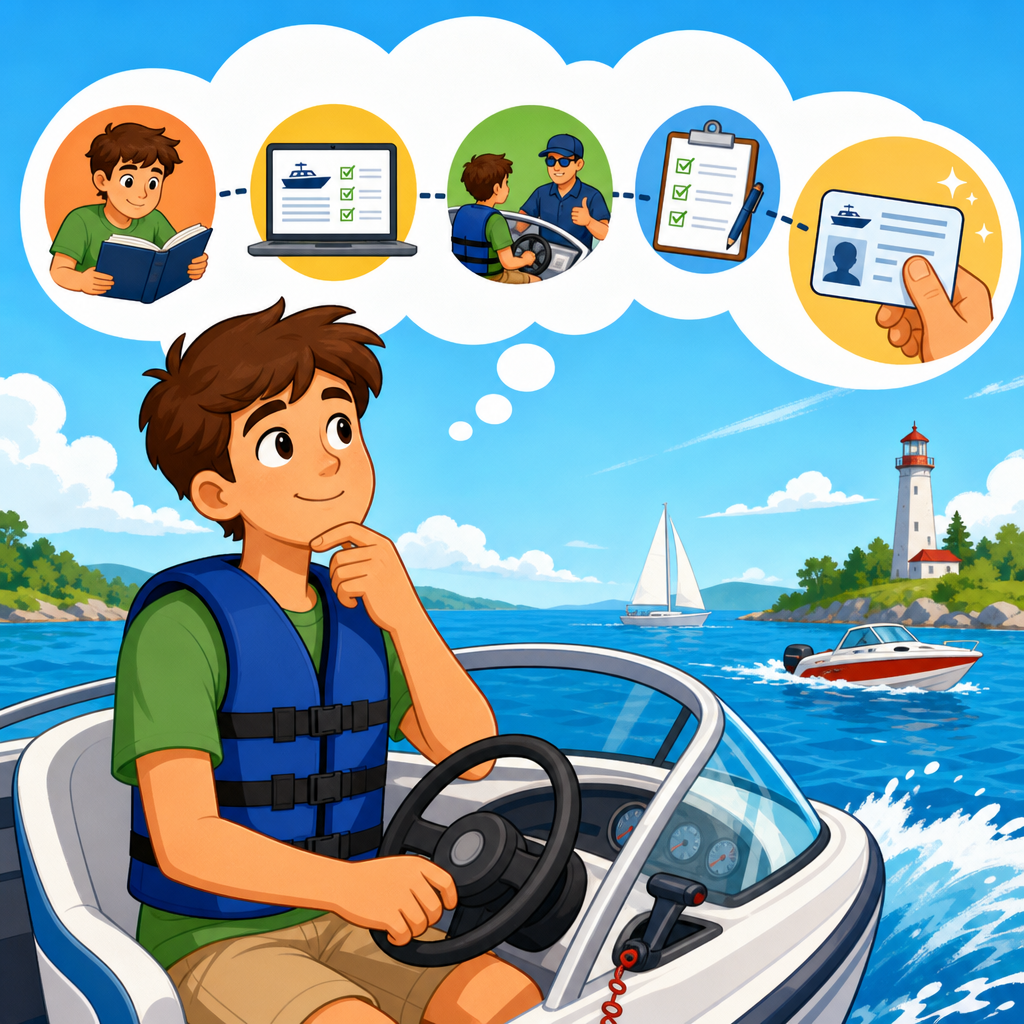
Do you need a boating license? In the United States, the answer is usually yes in practice, but not in the same way a driver’s license works. Most states do not issue a standalone “boating license” for recreational operators. Instead, they require a boating safety education certificate, boater education card, or endorsement that proves you completed an approved course. Requirements vary by state, by age, by boat type, and sometimes by horsepower. That patchwork confuses new owners, renters, anglers, and families planning vacation time on the water.
As someone who has spent years translating boating rules for first-time operators, I have seen the same questions come up in every marina office and rental dock: Who must take a class? Does a personal watercraft count? Will an out-of-state certificate work? What does federal law require compared with state law? These questions matter because boating violations can lead to citations, denied rentals, higher insurance costs, and preventable accidents. They also matter because boating law is a layered system. The U.S. Coast Guard sets and enforces national rules on vessel equipment, navigation, accident reporting, and operator responsibilities, while each state sets its own education and age requirements for recreational boating.
Understanding that division is the key to staying compliant. Federal rules apply nationwide on navigable waters, including carriage requirements for life jackets, fire extinguishers, visual distress signals where required, and adherence to Navigation Rules. States add their own rules on boater education, minimum operator age, towing, local speed zones, registration, and engine cutoff switch enforcement. This article explains how those pieces fit together, what “boating license” really means, and how to determine your state requirement quickly and accurately. If you are building your compliance checklist, this page is the hub for understanding U.S. Coast Guard and state boating laws before you launch.
What a boating license means in the United States
In plain terms, a boating license usually means proof of boater education, not a government-issued operator license identical to a motor vehicle credential. States use different labels: boating safety certificate, boater education card, certificate of completion, watercraft operator card, or safe boating card. The legal effect is similar. If your state says operators born after a certain date must carry proof of approved instruction, that document functions as your permission to operate a recreational vessel legally.
The course itself is typically approved by the state boating authority and often recognized by the National Association of State Boating Law Administrators. Many states accept NASBLA-approved courses from providers such as Boat Ed, Aceboater, the U.S. Power Squadrons, or state agencies. In some states, classroom and online options are both available; in others, younger operators may need an in-person proctored exam. The certificate may be valid for life, though moving to another state can change what proof you need to carry.
This distinction matters because people often search for “boating license” expecting a Department of Motor Vehicles process. Recreational boating compliance is usually handled through state natural resources, fish and wildlife, parks, or marine patrol agencies instead. If you already have a driver’s license, it generally does not satisfy boater education law. If you have completed a state-approved boating safety course, that often does satisfy the requirement even when the state never uses the word license on the card itself.
Federal boating law: what the U.S. Coast Guard regulates
The U.S. Coast Guard is the backbone of national recreational boating regulation. It does not generally issue recreational boating licenses for state-operated pleasure craft, but it establishes and enforces baseline rules that apply across state lines. Those include equipment carriage standards, display of navigation lights, accident reporting requirements, negligent or reckless operation prohibitions, capacity plate standards for certain boats, and the Inland and International Navigation Rules. If you operate after dark without proper lights, ignore right-of-way rules, or fail to carry required life jackets, you can be in violation regardless of whether your state requires boater education.
One federal requirement that deserves special attention is the engine cutoff switch rule. Under federal law, operators of certain recreational vessels less than 26 feet in length must use the engine cutoff switch and associated link when the boat is on plane or above displacement speed, with limited exceptions. In practical terms, that means wearing the lanyard or using a wireless cutoff device. I have seen this rule misunderstood constantly, especially by experienced operators who assume it is only a state preference. It is a federal safety mandate designed to reduce runaway vessel incidents.
The Coast Guard also oversees documented vessels, recall notices for safety defects, and nationwide boating safety statistics. Its annual Recreational Boating Statistics report consistently shows that a large share of fatal accidents involve operators with no formal boating instruction. That is one reason states have steadily expanded education requirements over the last two decades. Federal law supplies the safety framework; state law decides who must complete training before taking the helm.
How state boating license requirements differ
State boating laws differ because legislatures adopted education mandates at different times and for different risk categories. Some states require nearly all motorized vessel operators to have a certificate. Others phase in the requirement by birth year, meaning older boaters may be exempt. Some states apply the rule only above a horsepower threshold, while many treat personal watercraft more strictly than standard motorboats. Rental operators may face separate temporary certification rules. The result is that two boaters on the same lake can be subject to different legal obligations based on age, residency, and vessel type.
For example, Florida requires anyone born on or after January 1, 1988, who operates a vessel powered by 10 horsepower or more to complete an approved boating safety course and carry photo identification plus the education card or temporary certificate. California has been phasing in its California Boater Card requirement by age group and now requires all operators of motorized vessels, regardless of age, to carry the card. Texas requires anyone born on or after September 1, 1993, to complete approved boater education for certain motorized vessels and personal watercraft. New York expanded requirements so all operators of motorboats must obtain a boating safety certificate.
The practical lesson is simple: never assume your home-state rule matches the destination state. Before traveling, verify age cutoffs, horsepower triggers, and whether temporary certificates are accepted.
Common state-by-state requirement patterns
Although every state writes its own statutes, most rules fall into recognizable patterns. Use this comparison to understand where your situation likely fits before checking the exact state agency guidance.
| Requirement pattern | How it works | Common examples | What boaters should verify |
|---|---|---|---|
| Birth-year rule | Operators born after a specified date must complete approved education | Florida, Texas, many southeastern states | Exact cutoff date, horsepower threshold, accepted course providers |
| Universal card rule | All or nearly all motorized vessel operators need a card regardless of age | California, New York | Phase-in deadlines, card application process, replacement procedures |
| PWC-specific restrictions | Personal watercraft operators face stricter age or education standards | Widely used across coastal and inland states | Minimum age, supervision rules, rental limitations |
| Horsepower-based rule | Requirement applies only above a stated engine size | States using 10 hp or similar thresholds | Whether electric motors or combined horsepower count |
| Temporary certificate option | Visitors or renters can complete a short exam or temporary course | Florida rental market, tourism-heavy states | Validity period, photo ID rules, provider approval |
These patterns help, but details matter. A state may exempt operators on private ponds while fully regulating public waters. Another may honor a NASBLA-approved card from another state but still require residents who move in permanently to obtain local documentation. When I review citation issues, the problem is often not ignorance of the general rule but misunderstanding one technical detail, such as whether a 9.9 horsepower threshold applies to the vessel being rented or whether a teenager may operate only under direct adult supervision.
Age limits, personal watercraft, rentals, and reciprocity
Age is one of the biggest variables in boating law. Many states let children operate low-powered boats under supervision but prohibit them from operating personal watercraft entirely until a minimum age, often 12, 14, or 16. Personal watercraft are regulated more strictly because they accelerate quickly, turn differently than propeller-driven boats, and are involved disproportionately in novice-operator incidents. If a state appears relaxed about general motorboat operation, do not assume the same is true for Jet Skis or WaveRunners.
Rentals create another layer. A rental company may be legally required to verify boater education, issue a temporary safety checklist, or provide state-approved temporary certification before handing over keys. Even where the law allows operation, rental company policies can be stricter for insurance reasons. I regularly advise travelers to check rental rules before vacation because discovering a missing boater card at the dock can end the outing immediately.
Reciprocity means one state recognizes another state’s approved boating education credential, usually for visiting boaters. This is common, especially for NASBLA-approved certificates. Reciprocity is helpful, but it is not unlimited. States may recognize out-of-state education while still enforcing their own age restrictions, life jacket requirements, and local operating rules. A visiting boater who is legal at home can still be cited for violating destination-state towing laws, no-wake zones, or personal watercraft restrictions.
How to become compliant before you operate
The fastest compliance path is straightforward. First, identify the state where you will operate, not just where you live. Second, confirm whether your vessel is a motorboat, sailboat with auxiliary motor, or personal watercraft and note its horsepower. Third, check the operator’s age and birth date against that state’s rule. Fourth, complete a state-approved or NASBLA-approved course if required. Fifth, carry the correct proof on board with photo identification where the law requires both.
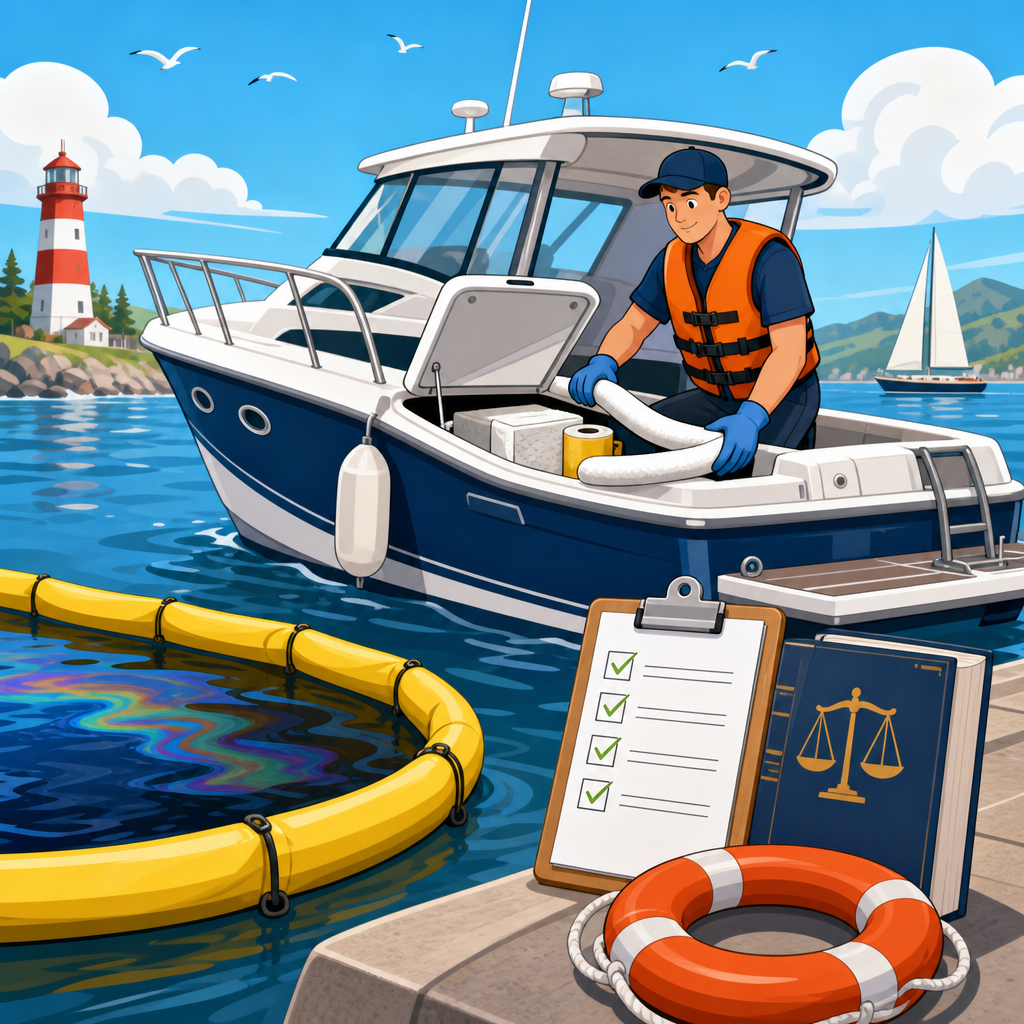
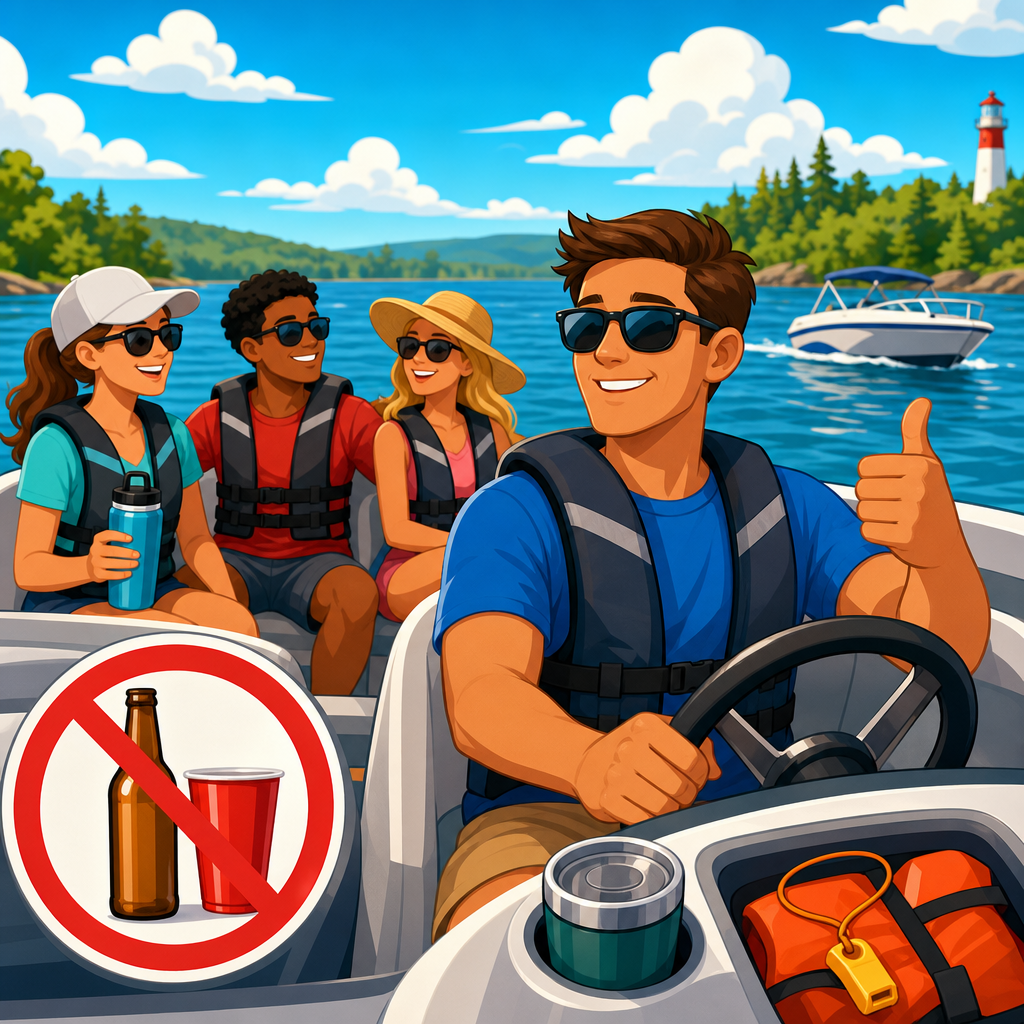
Do not stop with the education card. Legal operation also means registering the vessel when required, displaying validation decals, carrying required safety equipment, and understanding local waterway restrictions. At a minimum, most recreational boats need properly sized wearable life jackets for each person, a sound-producing device, fire extinguishers when applicable, visual distress signals in certain coastal and Great Lakes situations, and current registration documents. Operators should also understand blood alcohol concentration limits, accident reporting thresholds, and lookout obligations under the Navigation Rules.
For families, make compliance part of trip planning. Keep digital and printed copies of course certificates. Verify whether your state issues a permanent plastic card later and whether the temporary certificate expires first. If you are buying a used boat, check registration and title requirements immediately because several states impose strict transfer deadlines. The education card gets attention, but complete compliance is broader than one document. Use this hub as your starting point, then review your state-specific article and the related guides on registration, life jacket law, navigation rules, and accident reporting so every launch begins legally and safely.
The short answer to “Do you need a boating license?” is that most recreational boaters need some form of state-recognized boater education, and everyone must follow federal safety rules. The exact requirement depends on where you operate, when you were born, what type of boat you use, and whether you are driving a rental or personal watercraft. In the United States, there is no single national recreational boating license. There is a combination of Coast Guard rules that apply broadly and state laws that determine education, age eligibility, and operating restrictions.
The safest way to approach boating law is to think in layers. First, satisfy the state’s operator education rule. Second, make sure the vessel itself meets federal and state equipment standards. Third, learn the local rules for speed zones, towing, wake restrictions, and protected areas. That layered approach prevents the most common compliance mistakes and makes you a more capable operator. It also protects passengers, reduces liability exposure, and makes interactions with marine patrol straightforward.
If you are unsure about your state requirement, act before your next outing. Look up the boating agency in the state where you will launch, confirm whether your current certificate is accepted, and complete any needed course now. Then use the rest of this Boating Laws and Regulations hub to understand registration, required gear, right-of-way rules, and reporting duties. A few minutes of research today can prevent a citation, a canceled rental, or a dangerous mistake on the water tomorrow.
Frequently Asked Questions
Do you actually need a boating license in the United States?
Usually, yes in practice, but not in the way most people mean when they say “license.” In most states, recreational boaters are not applying for a standalone boating license similar to a driver’s license. Instead, they are often required to complete a state-approved boating safety course and carry proof of completion, such as a boating safety education certificate, boater education card, or operator card. That proof is what many people casually call a boating license, even though the legal requirement is typically education-based rather than a separate operator licensing system.
The key point is that requirements are not uniform nationwide. Whether you need a certificate depends on where you are boating, your age, the type of vessel you are operating, and sometimes the engine’s horsepower. Some states require all operators of certain motorized boats to have completed a boating safety course. Others apply the rule only to younger operators or to people born after a certain date. Personal watercraft, such as Jet Skis and WaveRunners, are often regulated more strictly than standard powerboats. Because of that, two people boating legally in different states may be following very different rules.
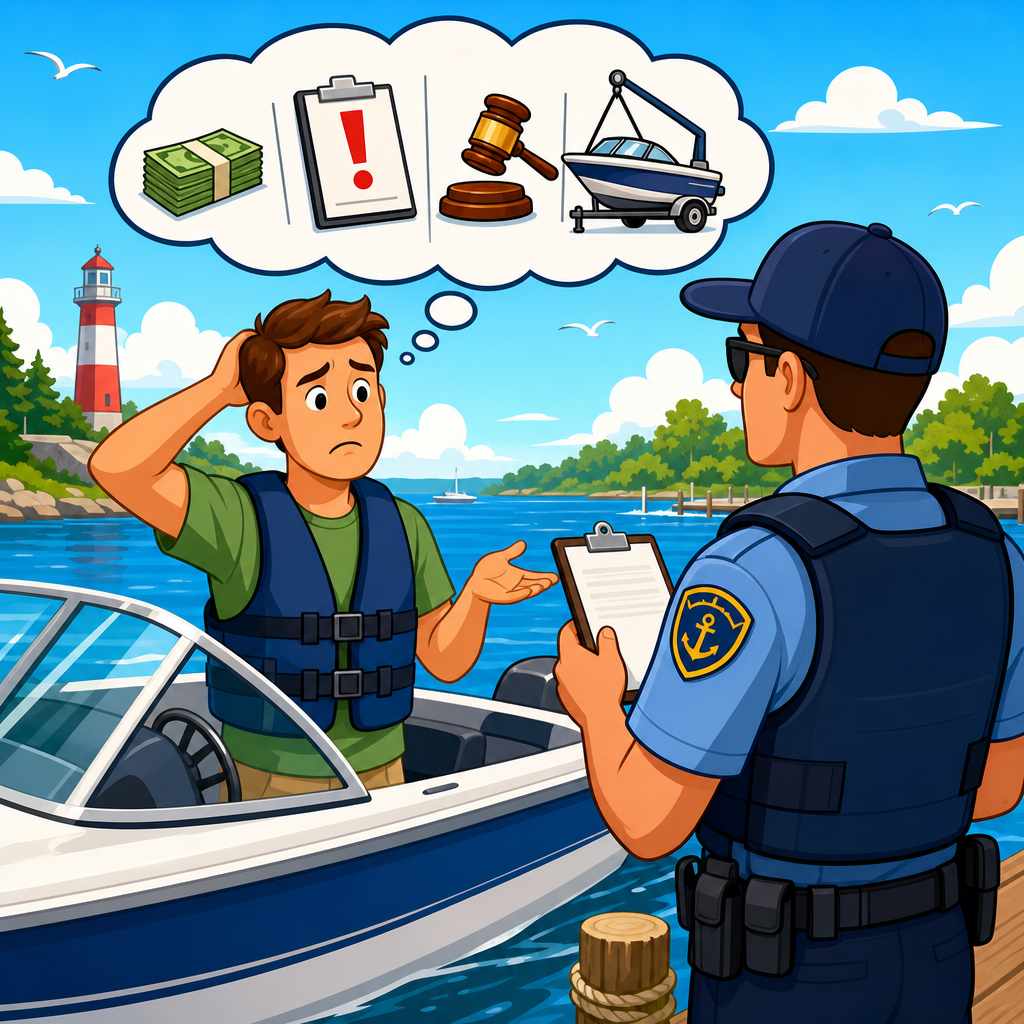
If you are buying, borrowing, or renting a boat, the safest assumption is that you should verify your state’s education requirement before heading out. In many places, failing to carry the required certificate can lead to citations, rental denials, insurance complications, or liability issues after an accident. So while the term “boating license” is technically imprecise in many states, the practical takeaway is simple: many recreational operators do need some official proof of boating education to operate legally.
What is the difference between a boating license, a boater education card, and a boating safety certificate?
These terms are often used interchangeably, which is a major reason boaters get confused. A “boating license” is usually the informal phrase people use when asking whether they are legally allowed to operate a boat. In reality, many states do not issue a traditional recreational boating license. What they commonly require instead is successful completion of an approved boating safety course. Once you pass that course, you receive a document such as a boater education card, boating safety certificate, safe boater card, or similar credential recognized by the state.
That credential serves as proof that you met the education requirement. In other words, the card or certificate is often the thing law enforcement or a rental company will want to see. Some states issue a wallet card, some provide a printable certificate, and some may connect the credential to your driver’s license or state database. The terminology varies, but the purpose is generally the same: to confirm that you completed the required instruction on navigation rules, life jacket laws, right-of-way, emergency procedures, and safe operation.
It is also important to distinguish recreational boating education from commercial licensing. If someone operates a vessel commercially, such as carrying passengers for hire, entirely different federal licensing rules can apply through the U.S. Coast Guard. For the average recreational owner or renter, however, the relevant question is usually not “How do I get a boating license?” but “Does my state require a boating safety education certificate, and do I need to carry it while operating?” That framing is much closer to how state laws are actually written.
Do boating license requirements change by state, age, boat type, or horsepower?
Yes, and that is exactly why this topic is so confusing. Boating education laws are highly state-specific. One state may require all operators born after a certain year to complete a course, while another may require certification only for operators under a certain age. Some states extend the requirement broadly to nearly all motorized boats, while others target only vessels above a specific horsepower threshold. Personal watercraft are especially likely to have their own rules, and those rules can be stricter than the rules for standard motorboats.
Age is one of the most common triggers in state law. For example, a state may allow older operators to boat without completing a course while requiring younger operators to carry a safety card. In other states, the law phases in by birth date rather than current age, meaning anyone born after a listed date must have boating education regardless of how old they are now. These distinctions matter because a family could have one person legally allowed to operate the boat and another who is not, even though both are adults.
Boat type and engine size also matter. A small sailboat with no motor may be treated differently from a motorized fishing boat, a pontoon, or a personal watercraft. Some laws apply only once the motor exceeds a certain horsepower level. Others focus on whether the vessel is mechanically propelled at all. Because enforcement happens at the state level, boaters should never assume the rules are the same just because a neighboring state has a similar boating culture. The most reliable approach is to check the official state boating agency or state wildlife, natural resources, or marine law enforcement website before operating any vessel.
If you have a boating certificate from one state, is it valid in another state?
In many cases, yes, at least for temporary boating visits, because states commonly recognize boating education credentials issued by other states if the course meets approved national standards. This concept is often referred to as reciprocal recognition. It helps travelers who bring their own boat on vacation or rent a boat while visiting another state. If you completed a course approved by the National Association of State Boating Law Administrators, often called NASBLA approval, your certificate is more likely to be accepted across state lines for recreational use.
That said, reciprocity is not a blanket guarantee for every situation. States may differ on how long a nonresident can rely on an out-of-state credential, whether the rule applies equally to rentals, and whether additional age restrictions still control. For example, a visiting boater may have a valid home-state education card but still be subject to local rules regarding minimum operator age, personal watercraft restrictions, or on-board documentation requirements. Rental operators may also impose their own standards, even where state law technically allows reciprocity.
The best practice is to carry your original proof of course completion and confirm the destination state’s nonresident rules before arrival. If you are renting, contact the marina or rental company in advance and ask what they accept. This is especially important for last-minute trips, because some states allow immediate digital proof while others may expect a physical card or temporary certificate. Reciprocity helps, but it should be treated as something to verify, not something to assume.
How do you find out your state’s boating requirements and get compliant before operating or renting a boat?
Start with your state’s official boating authority. Depending on the state, that may be the department of natural resources, fish and wildlife agency, state parks agency, marine patrol, or boating law administration office. Look specifically for sections on boater education, operator requirements, age limits, accepted course providers, and reciprocal recognition for out-of-state certificates. Official state websites are the most reliable source because boating rules change over time, and third-party summaries are not always updated quickly.
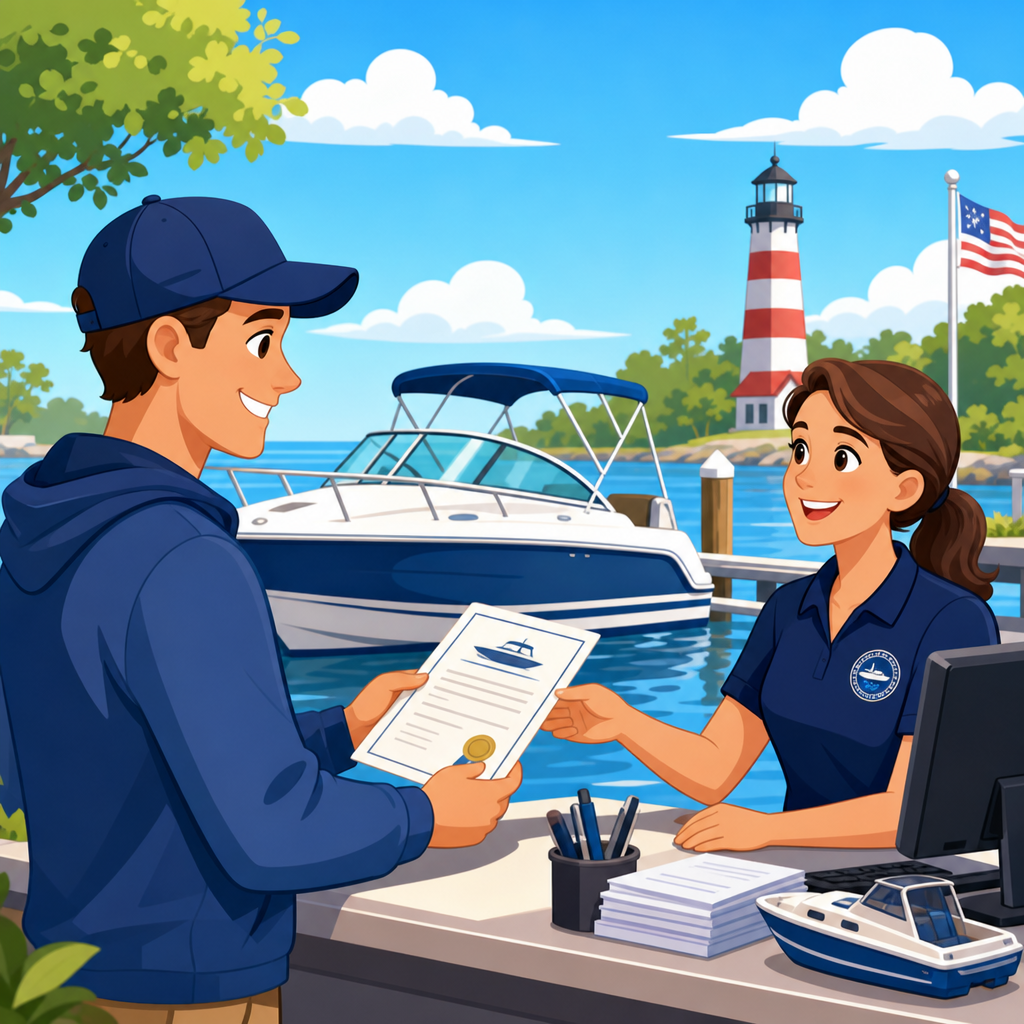
Once you confirm that a course is required, enroll only in a state-approved provider. Many states accept online courses, classroom courses, or hybrid options. After completion, you typically receive a certificate or temporary proof right away, followed later by a permanent card depending on the state. Pay close attention to whether you must carry the certificate on board, whether digital copies are accepted, and whether separate rules apply to personal watercraft. If you are under a certain age or helping a teen operator get legal, verify supervision rules as well, because some states require direct adult oversight even after course completion.
If you plan to rent rather than own, take one extra step: check with the rental company before you book. Some renters are surprised to learn that even when a state offers a temporary operating permit or allows a short-term safety checklist, the marina may still require a formal boater education card, prior experience, or a minimum age. Getting compliant early avoids canceled reservations, wasted travel time, and legal risk on the water. In short, do not rely on hearsay, do not assume “license” means the same thing everywhere, and do not wait until launch day. A quick check of the official rules and a completed approved course are the simplest way to boat legally and confidently.