Electric vs. gas-powered boats is no longer a niche debate. It sits at the center of sustainable boating because propulsion choices shape emissions, noise, operating costs, marina infrastructure, and the long-term health of waterways. When boat owners ask which option is more sustainable, they are really asking a broader question: how can boating reduce environmental harm without sacrificing safety, usability, and enjoyment? That question matters now because cleaner propulsion is moving from novelty to practical reality across fishing boats, tenders, pontoons, small sailboats, tour craft, and even larger ferries.
Sustainable boating means operating vessels in ways that lower pollution, conserve fuel and materials, protect habitats, and extend equipment life through smarter maintenance. Eco-friendly boating includes electric propulsion, efficient hull design, solar charging support, low-toxicity antifouling strategies, better waste handling, and route planning that reduces wake and fuel burn. In my work evaluating marina projects and vessel retrofits, I have seen that propulsion is usually the first decision owners make, yet it works best when viewed as part of a system. A clean motor on an inefficient boat still wastes energy, while a well-matched hull and battery setup can transform real-world range and costs.
The rise of eco-friendly boating is being driven by several forces at once. Battery prices have fallen dramatically over the past decade, electric drivetrains have become more reliable, and stricter air and noise rules are pushing manufacturers to innovate. At the same time, many lakes, harbors, and protected areas are limiting high-emission or high-noise traffic. Consumers also have better information. They can now compare lifecycle emissions, total cost of ownership, charging options, and maintenance demands rather than focusing only on purchase price. As a result, the sustainability conversation has matured. It is no longer electric good, gas bad. The better answer depends on boat type, use pattern, local power grid, and whether the vessel is used for short predictable trips or long offshore runs.
This hub article explains the rise of eco-friendly boating through that practical lens. It defines the sustainability tradeoffs between electric and gas-powered boats, identifies where each technology performs best, and connects propulsion choices to the bigger picture of greener marinas, responsible boating practices, and lower-impact ownership. If you want a clear framework for choosing the most sustainable boat for your needs, start here.
Why eco-friendly boating is growing so quickly
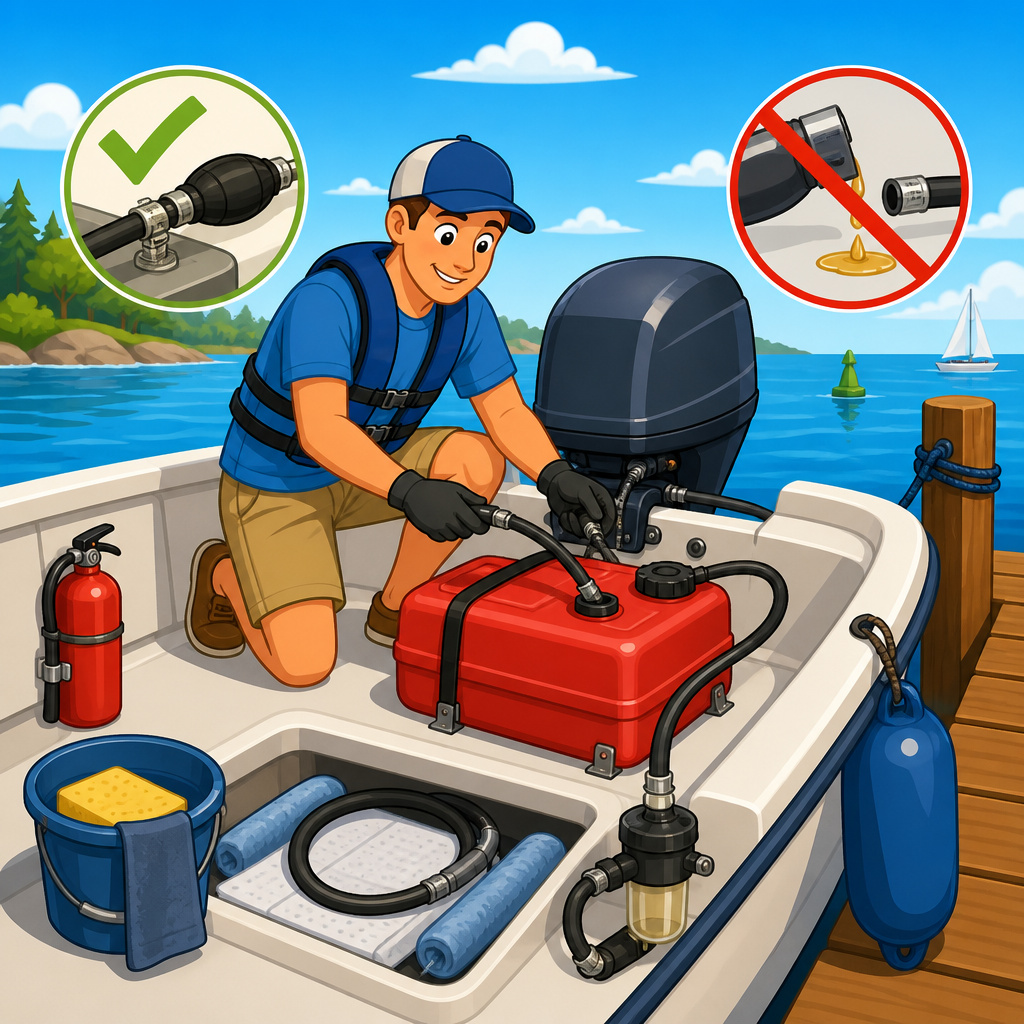
Eco-friendly boating is growing because the old model of recreational and small commercial boating carries obvious environmental costs. Gasoline and diesel engines emit carbon dioxide, nitrogen oxides, particulate matter, and unburned hydrocarbons. Two-stroke outboards, though less common than before, have historically released a significant portion of unburned fuel directly into the water. Even modern four-stroke engines, while far cleaner, still create tailpipe emissions and require oil changes, filters, spark plugs, impellers, and winterization chemicals. Add noise, wake, accidental fuel spills, bilge discharge, and hull-cleaning runoff, and the cumulative impact on sensitive waterways becomes substantial.
Electric boats address several of those problems immediately at the point of use. They produce no exhaust on the water, operate with far less vibration, and are quiet enough to reduce disturbance to anglers, paddlers, shoreline residents, and wildlife. On small inland waters, that difference is striking. I have tested electric launches in no-wake zones where conversation at cruising speed was easy, and passengers noticed birds and shoreline activity that would have been masked by engine noise in a conventional runabout. That quieter operating profile is not just a comfort feature. It is a sustainability advantage because underwater noise can alter fish behavior and stress marine mammals in busy corridors.
Technology is another major reason for the shift. Lithium-ion battery systems now offer much better energy density, charging speed, and cycle life than older lead-acid setups. Manufacturers such as Torqeedo, ePropulsion, Pure Watercraft, Candela, and Vision Marine have expanded the market from tiny auxiliary motors to high-power electric outboards and hydrofoiling craft. Established brands are also entering the segment, which improves dealer support and parts availability. At the same time, marinas are beginning to add shore power upgrades, load management systems, and dedicated charging berths, especially in Europe and North America where low-emission boating policies are accelerating.
Regulation and economics reinforce the trend. The International Maritime Organization focuses mainly on commercial shipping, but its decarbonization direction influences the broader marine sector, including port electrification and emissions accounting. National park waters, urban lakes, and tourism areas increasingly favor low-noise and low-emission vessels. For many owners, rising gasoline prices and routine engine service costs make electric propulsion attractive even before environmental benefits are counted. The result is a market where sustainability is not only an ethical preference but an operational consideration.
Electric vs. gas-powered boats: the core sustainability comparison
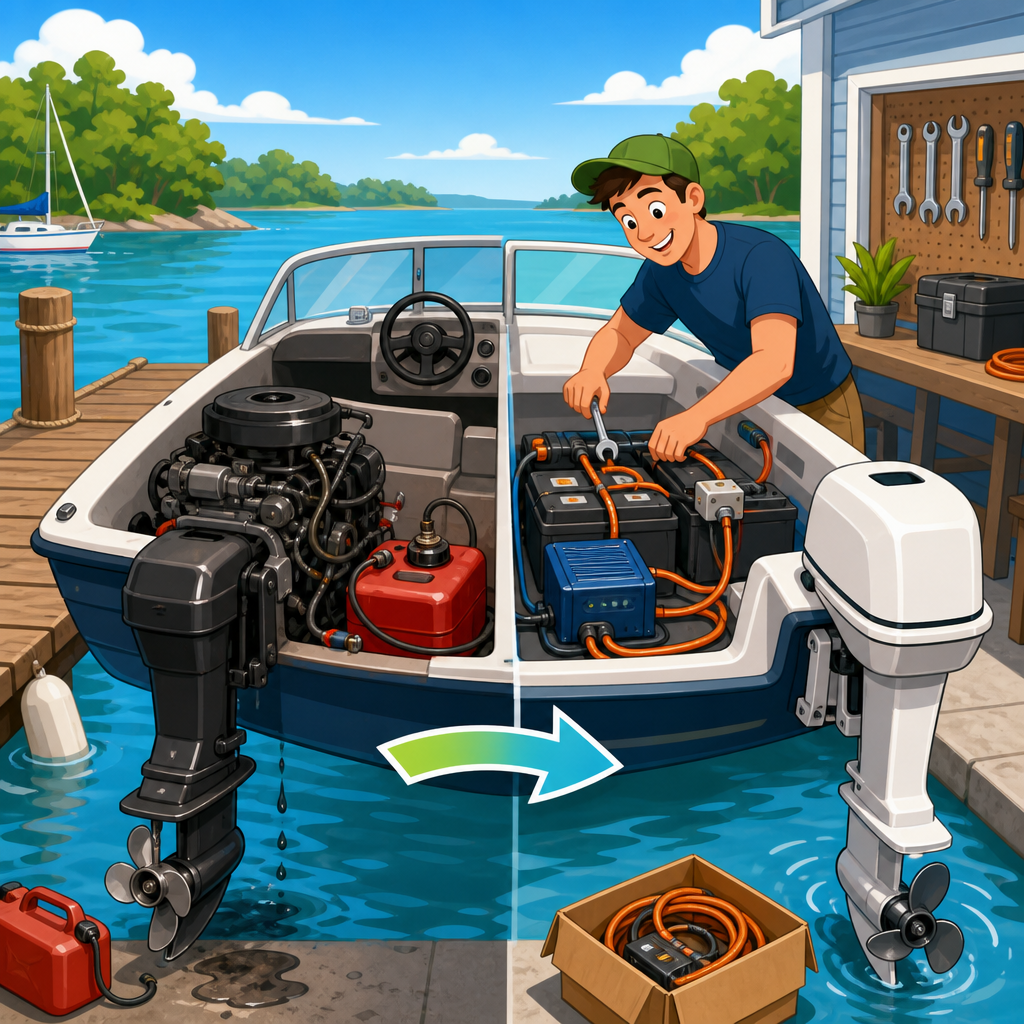
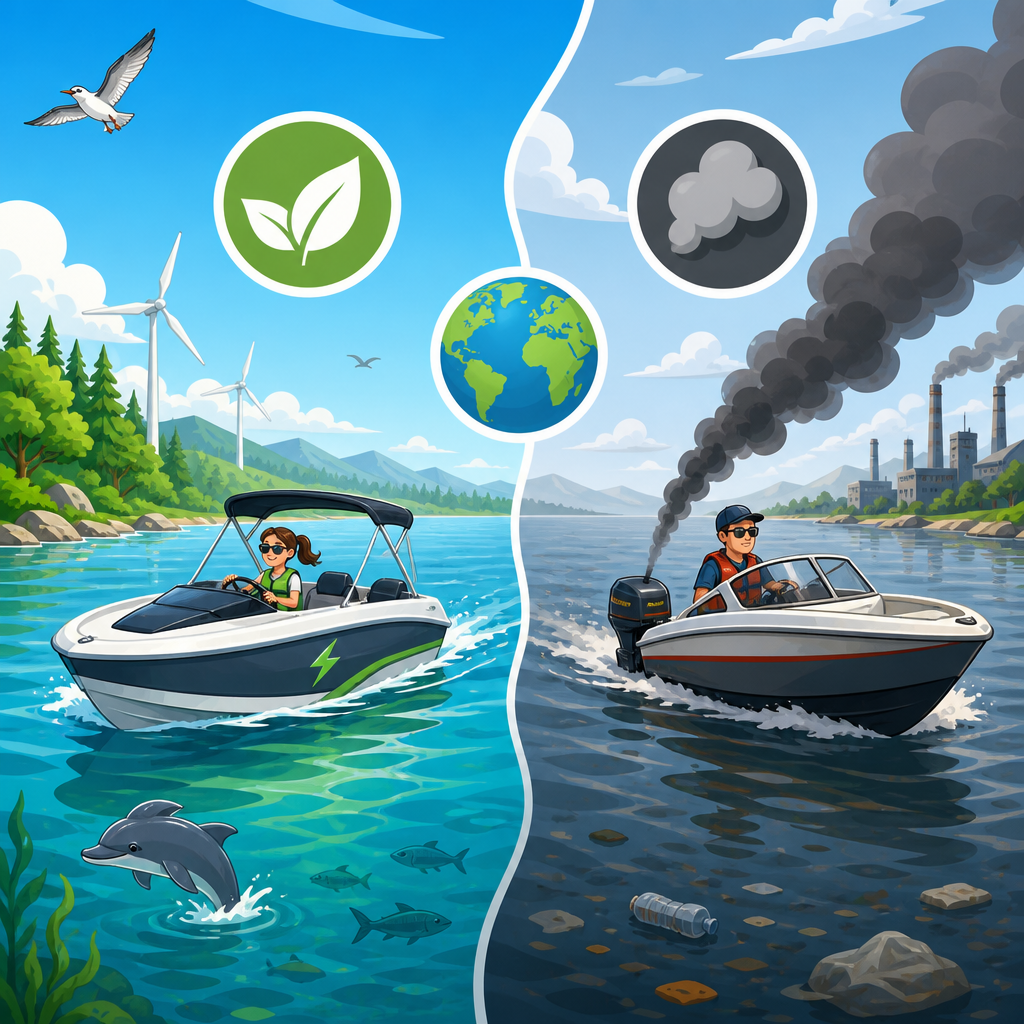
The most direct answer is this: electric boats are usually more sustainable for short, predictable trips on inland or nearshore waters, while gas-powered boats still retain practical advantages for long-range, high-speed, or infrastructure-limited use. Sustainability has to be judged across the full lifecycle, not only at the dock.
| Factor | Electric Boats | Gas-Powered Boats |
|---|---|---|
| On-water emissions | Zero tailpipe emissions during use | Direct CO2 and pollutant emissions |
| Noise and vibration | Very low, especially at cruising speed | Higher engine and exhaust noise |
| Energy source | Depends on grid mix or renewable charging | Relies on fossil fuel |
| Range and refueling | Limited by battery capacity and charging time | Long range, fast refueling |
| Maintenance | Fewer moving parts, less routine service | More frequent maintenance and consumables |
| Manufacturing impact | Battery production has high material footprint | Engine and fuel system production lower than batteries, but ongoing fuel use dominates |
| Best use case | Lakes, harbors, rentals, tenders, day boats | Offshore fishing, long cruising, high-power towing |
Electric propulsion wins clearly on local air quality and noise. If a boat operates on a lake used for swimming, paddling, or wildlife viewing, eliminating exhaust and reducing sound is a direct environmental improvement. Electric motors are also highly efficient. Internal combustion marine engines lose a large share of energy as heat, while electric drivetrains convert a much higher percentage of stored energy into propulsion. That means less energy wasted for the same movement through the water, especially at moderate speeds.
Gas-powered boats still have strengths that matter in sustainability calculations. A boat that cannot complete its intended trip safely is not a viable solution, no matter how clean its drivetrain appears on paper. For offshore anglers, patrol craft, and long-distance cruisers, today’s batteries often cannot match the energy density of liquid fuel. Gasoline contains far more usable energy per kilogram than current marine batteries, and refueling takes minutes instead of hours. In these use cases, an efficient modern four-stroke outboard or optimized diesel inboard may remain the more practical choice until battery density, charging access, and vessel design improve further.
Lifecycle assessment is the crucial lens. Battery manufacturing carries a significant footprint because it requires mining and processing materials such as lithium, nickel, cobalt, graphite, and copper. However, over years of use, electric boats can offset that initial impact through lower operational emissions, especially when charged from cleaner grids or on-site solar backed by storage. Studies across electric mobility consistently show that use-phase emissions dominate for combustion engines, while manufacturing emissions are higher upfront for battery systems. The break-even point depends on annual hours, battery size, grid carbon intensity, and boat efficiency.
How propulsion fits into the wider rise of sustainable boating
The rise of eco-friendly boating is bigger than motors. The most sustainable boat is created by combining propulsion choice with smarter design, operation, and maintenance. Hull efficiency is a good example. A displacement hull moving at moderate speed needs far less energy than a planing hull pushed hard onto plane. Hydrofoils, lightweight composites, advanced aluminum construction, and optimized propellers can dramatically reduce power demand. Candela’s electric hydrofoils are widely discussed because they cut drag enough to extend electric range beyond what a conventional hull of similar size could achieve. The lesson applies broadly: reducing resistance is often as important as changing energy source.
Marina infrastructure is another pillar. Shore power, smart chargers, and electrical upgrades determine whether electric boating scales smoothly. In marinas I have worked with, the challenge is often not the charger itself but electrical capacity, metering, cable management, and peak demand control. A marina with dozens of boats charging on summer weekends needs load balancing, clear safety protocols, and weather-protected equipment. These investments also support broader sustainability goals because upgraded electrical systems can power pump-out stations, efficient lighting, and maintenance equipment with lower overall energy waste.
Operational behavior matters too. Slow acceleration, proper trim, clean hulls, correct propeller pitch, and route planning all reduce energy use. So does avoiding unnecessary idling, a common habit with gas-powered boats. Wake management is part of the same conversation. Excessive wake erodes shorelines, damages habitat, and disturbs moored vessels. Sustainable boating therefore includes driving style, not only technology. A quiet electric boat driven aggressively in shallow habitat can still create ecological harm, while a carefully operated gas boat may have lower impact than expected on a specific trip.
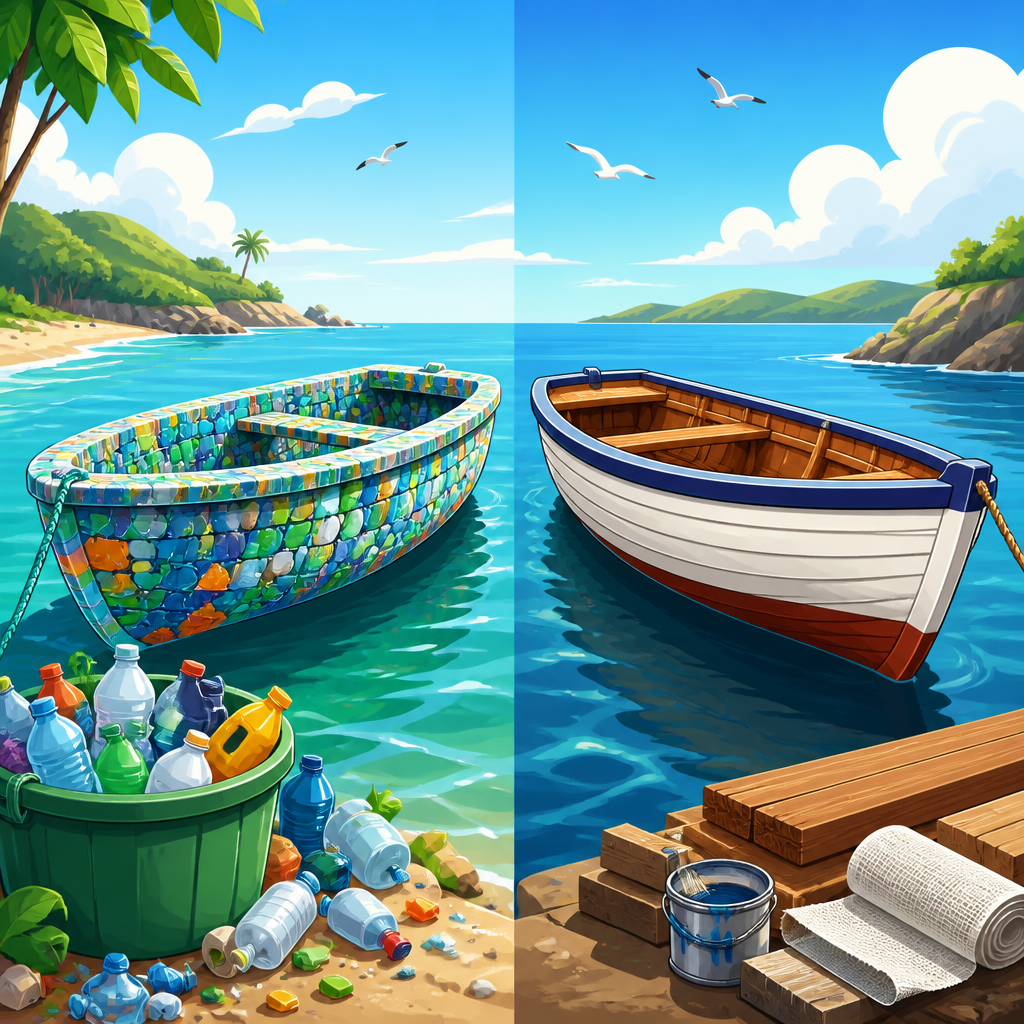
Materials and end-of-life planning are also gaining attention. Boatbuilding has long relied on fiberglass, which is durable but difficult to recycle. New approaches include thermoplastic composites, recycled aluminum, reclaimed teak alternatives, and modular battery enclosures designed for serviceability. The more repairable a vessel is, the lower its lifetime footprint. This hub topic connects naturally to articles on green marina design, low-impact hull cleaning, non-toxic maintenance products, and responsible disposal because sustainable boating is cumulative. Owners who switch to electric propulsion but continue using harsh cleaners, single-use plastics, and poor fueling practices only solve part of the problem.
Real-world performance, costs, and practical tradeoffs
For many buyers, sustainability becomes real only when tied to performance and cost. Electric boats are often cheaper to operate day to day. Electricity usually costs less per mile traveled than gasoline, and maintenance is simpler because there are fewer moving parts, no engine oil, fewer fluids, and less routine seasonal service. Torque delivery is immediate, which makes docking and low-speed maneuvering smooth and predictable. Rental fleets and yacht tenders benefit especially from that simplicity. Staff training is easier, and guests appreciate the quiet operation.
Upfront cost remains a barrier. Electric boats and marine battery packs usually cost more than comparable gas setups, sometimes substantially more. The economics improve when annual usage is high, fuel prices are elevated, and maintenance savings are captured over several seasons. Fleets with repetitive routes, such as water taxis, harbor shuttles, and resort boats, are often the strongest candidates because their duty cycles are predictable. Several Scandinavian ferry systems have already shown why electrification works there: fixed distances, regular charging windows, and public pressure to reduce emissions in populated waterfront areas.
Range anxiety is real, but it is often misunderstood. The issue is not only battery capacity. Weather, payload, currents, fouled hulls, and speed all affect real-world range. Boat buyers used to automotive EV marketing sometimes underestimate how quickly drag rises in water. Doubling speed can require far more than double the power, particularly as a hull approaches planing thresholds. That is why many successful electric boats are designed around moderate cruising rather than top-end performance. Owners who match expectations to mission are usually satisfied; owners trying to replicate every use case of a 250-horsepower outboard are usually disappointed.
Gas-powered boats continue to make sense for many applications. Offshore center consoles, tow boats, expedition craft, and heavy cruising yachts need energy density, easy refueling, and long operating windows. In remote regions, charging infrastructure may be unavailable or unreliable. In those settings, the sustainable move may be to choose the most efficient hull possible, maintain the engine meticulously, reduce unnecessary weight, and use cleaner fuels where available. Sustainable boating is not a purity test. It is a process of reducing impact with the best available option for a defined use case.
Which boat is more sustainable for your needs?
If your boating consists mainly of short day trips, lake cruising, marina hopping, sailing auxiliary power, or commercial routes with predictable distance, an electric boat is usually the more sustainable choice. It lowers local pollution, cuts noise, reduces maintenance waste, and can become significantly cleaner over time as the electrical grid adds more renewables. It is particularly compelling on protected waters, urban waterfronts, and family-oriented recreation areas where quiet operation and clean air matter immediately to other users.
If you routinely run long distances, carry heavy loads, tow skiers, or boat far from charging access, a gas-powered boat may still be the more responsible option today, provided it is modern, efficient, and well maintained. Sustainability in that case comes from reducing fuel burn, preventing leaks and spills, choosing appropriate engine size, and operating with restraint. Hybrid marine systems may eventually bridge more of this gap, but for now they remain relatively specialized in the recreational market.
The key takeaway from the rise of eco-friendly boating is that the market is expanding from a single product choice into a full operating philosophy. Electric propulsion is leading that change because it addresses visible problems first: exhaust, noise, and maintenance intensity. Yet the broader hub includes efficient design, renewable charging, better marina systems, cleaner products, and smarter boating habits. Owners who understand the whole system make better long-term decisions.
Choose your propulsion based on where you boat, how far you travel, how often you use the vessel, and what infrastructure is available. Then improve every other part of the boating experience, from hull efficiency to waste handling. That is how sustainable boating moves from marketing claim to measurable practice. If you are building an eco-friendly boating plan, start by auditing your current usage patterns and identifying whether electric propulsion can realistically meet them today.
Frequently Asked Questions
1. Are electric boats always more sustainable than gas-powered boats?
Not always, but in many real-world use cases electric boats have a strong sustainability advantage. Sustainability is not just about what happens on the water while the boat is moving. It also includes how energy is produced, how the vessel is used, how often it operates, what maintenance it requires, how much noise it creates, and what effects it has on local ecosystems over time. Electric boats produce no tailpipe emissions during operation, which means they do not release carbon dioxide, nitrogen oxides, unburned fuel, or oily residues directly into the water and surrounding air. That is a major benefit in marinas, lakes, rivers, and near sensitive shorelines where local pollution can accumulate and affect water quality, wildlife, and human health.
That said, the full sustainability picture depends on the electricity source and the boat’s battery system. If an electric boat is charged from a grid powered heavily by fossil fuels, its lifecycle emissions may be higher than if it is charged from renewable energy. Even so, electric propulsion is often more energy efficient than combustion engines, so it can still compare favorably. Battery production also carries environmental impacts, especially from raw material extraction and manufacturing, but those impacts may be offset over time through cleaner operation and lower energy waste. Gas-powered boats, by contrast, usually have a larger direct operating footprint because combustion engines are less efficient and create ongoing exhaust and fuel-related pollution. In short, electric boats are often more sustainable, especially for short trips, inland boating, and areas with cleaner electricity, but the most accurate answer depends on the vessel’s use pattern and the energy system supporting it.
2. How do electric and gas-powered boats compare in terms of emissions and waterway impact?
The biggest sustainability difference between electric and gas-powered boats is their operational impact on air and water. Gas-powered boats burn fuel onboard, which creates greenhouse gas emissions and other pollutants every time they run. Depending on the engine type and maintenance condition, they can also release small amounts of fuel and oil into the water, either through exhaust, fueling spills, or routine operation. Over time, that contributes to water contamination, surface sheen, and habitat stress, especially in enclosed or heavily trafficked waterways. Combustion engines also generate more noise and vibration, which can disturb fish, birds, and other wildlife while reducing the overall quality of the boating experience for nearby communities.
Electric boats avoid many of those direct impacts. They do not produce exhaust at the point of use, they operate much more quietly, and they generally reduce the risk of fuel spills because there is no gasoline or diesel tank to fill. Quiet propulsion can be especially valuable in ecologically sensitive environments where repeated engine noise disrupts animal behavior or degrades the natural character of the area. From a climate perspective, electric boats can significantly reduce emissions if charged from low-carbon electricity sources, and even on mixed grids they may still perform better because electric drivetrains convert energy more efficiently than internal combustion engines. However, lifecycle emissions still matter. Battery manufacturing, electricity generation, and end-of-life recycling all influence the total footprint. Even with those factors included, electric propulsion usually offers lower local pollution and a clearer path to long-term decarbonization than gas-powered boating.
3. What are the main trade-offs between electric and gas boats for everyday boat owners?
For most boat owners, the sustainability decision is tied closely to practicality. Electric boats are attractive because they are quieter, smoother, simpler to maintain, and often cheaper to operate over time. They typically have fewer moving parts than gas-powered boats, which can mean less routine service, fewer fluids, and lower ongoing mechanical complexity. Many owners also appreciate the instant torque and calm onboard experience, especially for cruising, fishing, lake recreation, and short marina-to-shore trips. From a sustainability standpoint, lower maintenance needs and reduced fuel handling can translate into fewer leaks, less waste, and a smaller day-to-day environmental footprint.
The trade-offs usually involve range, charging access, and upfront cost. Gas-powered boats still have an advantage for long-distance cruising, high-speed performance, heavy loads, and locations where charging infrastructure is limited. Refueling with gasoline is generally faster than recharging a battery, which matters for commercial use, long outings, or boaters who want maximum flexibility. Electric boats may also cost more upfront because batteries and marine-grade electrical systems remain relatively expensive, although lower energy and maintenance costs can help narrow the long-term gap. In practical terms, owners who take shorter, predictable trips and have reliable charging access often find electric boating highly workable and more sustainable. Owners with more demanding range needs may still depend on gas for now, though hybrid systems and improvements in battery technology are expanding what electric boats can realistically do.
4. Is charging infrastructure a major barrier to sustainable electric boating?
Yes, charging infrastructure remains one of the most important barriers, but it is also one of the fastest-changing parts of the marine industry. Sustainable boating is not only about the boat itself. It also depends on whether marinas, docks, yacht clubs, and waterfront communities can support cleaner propulsion at scale. For electric boats to deliver their full environmental and practical potential, owners need dependable places to charge at home, at marinas, and sometimes along travel routes. In areas where that infrastructure already exists, electric boating becomes much easier to adopt. In areas without it, range anxiety and trip planning can make gas-powered boats feel more practical even if they are less sustainable overall.
The good news is that marina electrification is increasingly being discussed as part of broader waterfront modernization. Many facilities are exploring upgraded electrical service, dedicated charging stations, and renewable energy integration such as solar canopies or battery-backed systems. As this infrastructure improves, the sustainability case for electric boats gets stronger because charging becomes more convenient and potentially cleaner. Still, infrastructure expansion must be designed carefully. Marinas need to consider grid capacity, fire safety, weather exposure, equipment standards, and user demand. In the near term, charging access may limit electric adoption in some regions, but over the longer term it is more accurate to view infrastructure as a solvable transition challenge rather than a permanent weakness of electric propulsion.
5. Which type of boat is more sustainable in the long run: electric or gas-powered?
Over the long run, electric boats are generally better positioned to be the more sustainable option. That is because they align with broader trends in energy decarbonization, cleaner transportation, and stricter environmental expectations around emissions, fuel spills, and noise pollution. Gas-powered boats depend on burning fossil fuels every time they operate, so their environmental impact continues throughout their service life. Even if engine efficiency improves, the underlying model still involves combustion, exhaust, and fuel infrastructure. Electric boats, by contrast, can become cleaner over time as electricity grids add more renewable energy and as battery manufacturing and recycling processes improve. In other words, the same electric boat may effectively get greener during its usable life if the surrounding energy system gets cleaner.
Long-term sustainability also includes regulation, public access, and waterway stewardship. More lakes, harbors, and protected areas are placing greater emphasis on quiet operation and reduced pollution, which tends to favor electric propulsion. At the same time, manufacturers are investing heavily in battery performance, charging systems, and hull designs optimized for efficiency, all of which strengthen the long-term viability of electric boating. Gas-powered boats will likely remain important in some categories for years, especially in offshore, high-power, and extended-range applications. But from a strategic sustainability perspective, electric propulsion offers a clearer path toward lower emissions, healthier waterways, and a boating experience that puts less strain on surrounding ecosystems. For many recreational users, that makes electric the more sustainable long-term choice, even if the transition will happen at different speeds depending on location, boat type, and infrastructure readiness.