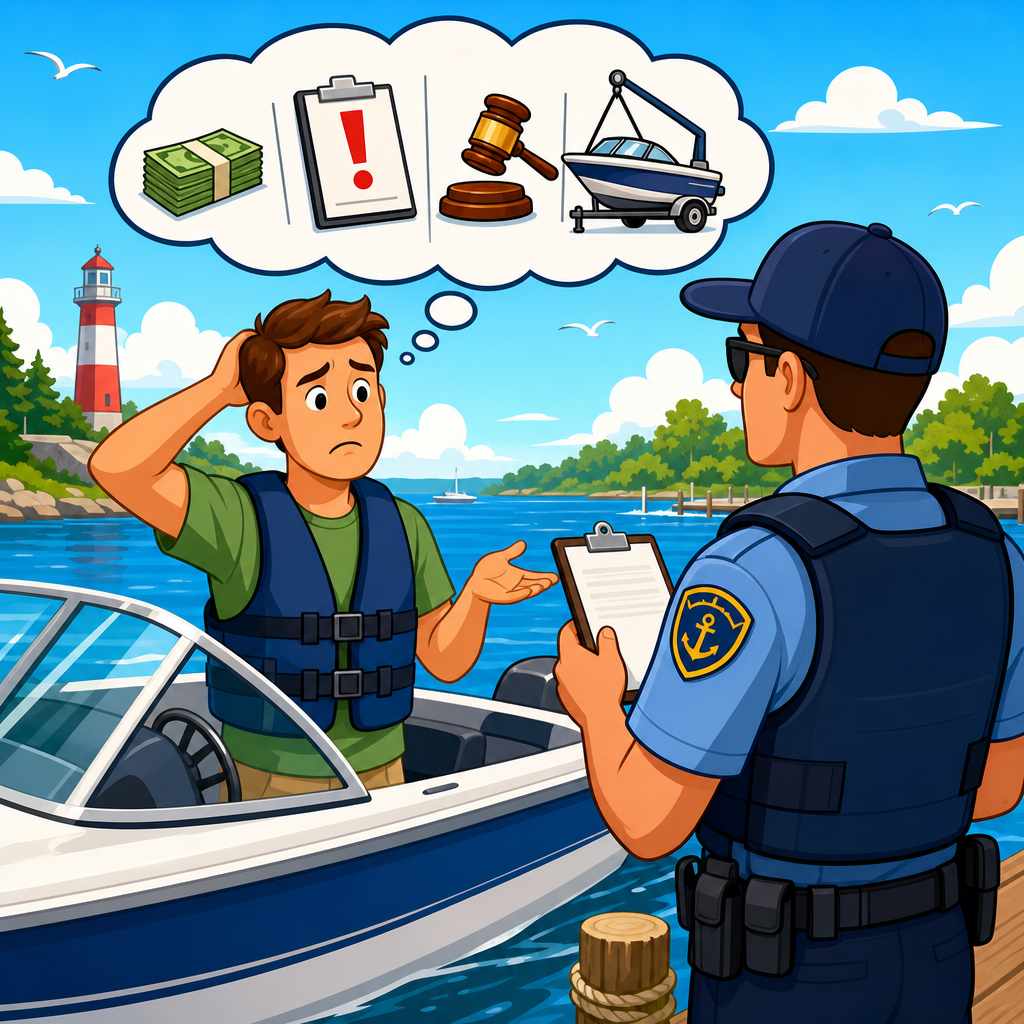
Boating without proper registration can trigger fines, citations, impoundment, loss of launch access, and insurance problems, but the exact penalty depends on the vessel, the state, and whether the issue is an expired registration, missing decals, or failure to title the boat correctly. For boat owners, registration is more than a sticker on the hull. It is the legal proof that a vessel is recorded with the state, linked to an owner, and compliant with basic identification rules used by marine patrols, wildlife agencies, lenders, and insurers. In practice, I have seen registration problems create bigger consequences than many owners expect, especially when a routine safety stop uncovers expired paperwork, incorrect hull numbers, unpaid taxes, or a title that was never transferred after a private sale.
Proper registration usually means three things: the vessel is registered with the correct state agency, the numbers and decals are displayed exactly as required, and the owner carries current proof onboard when required by state law. In many states, motorized boats of nearly any size must be registered. Some states also require registration for sailboats over a certain length, documented vessels used on state waters, or personal watercraft such as Jet Skis. Separate but related obligations may include titling, paying use tax or sales tax, obtaining a certificate of number, updating the owner address, and renewing before the expiration date. These details matter because law enforcement typically cites the specific compliance failure, not just the broad idea of “unregistered boating.”
This topic matters because registration laws sit at the center of a boat owner’s legal responsibilities. Registration affects ownership transfer, accident reporting, theft recovery, marina contracts, financing, and eligibility for some insurance policies. It also helps states fund boating access, law enforcement, and education through fees and federal apportionment formulas tied to registered vessels. If you own a fishing boat, pontoon, runabout, sailboat, or personal watercraft, understanding registration requirements can help you avoid preventable penalties and fix problems before they escalate into court costs or vessel seizure. This hub explains the penalties for boating without proper registration and shows how registration connects to the broader legal duties every boat owner should know.
What counts as proper boat registration
Proper boat registration means complying with the full set of state requirements that identify the vessel and connect it to its lawful owner. In most states, that starts with applying through the state boating agency, department of natural resources, fish and wildlife agency, or motor vehicle department. The owner submits the hull identification number, purchase documents, prior title if applicable, tax information, and registration fees. The state then issues a certificate of number, registration decals, and often a registration card that must be carried onboard. If a state titles boats, the owner may also need a separate title document, similar to a car title, before registration can be completed or transferred.
Owners often assume that having paid for the boat is enough. Legally, it is not. The vessel must be registered in the owner’s name within the time period required after purchase, commonly 15 to 60 days depending on the state. The registration numbers must appear in block letters of the required height, usually on the forward half of the bow, in a contrasting color, and spaced correctly. Decals typically must be affixed near the numbers. If any of those display rules are missed, an officer can treat the boat as improperly registered even if the fees were paid. I have seen owners cited because they kept the paperwork in a tackle bag but never applied the current decals after renewal.
Exemptions also matter. Human-powered craft such as kayaks, canoes, and paddleboards are often exempt unless they use a trolling motor. Some states exempt certain lifeboats, racing shells, or vessels documented by the U.S. Coast Guard, but even documented vessels may still need state use decals or invasive species permits. Because rules differ sharply, the safest approach is to verify your state’s boating handbook and registration statutes before launch. A boat owner’s legal responsibility is not just to register once, but to maintain compliance through renewal, transfer, display, and record updates.
Common penalties for boating without proper registration
The most common penalty is a civil citation with a monetary fine, but that is only the starting point. Many states classify unregistered operation as an infraction, noncriminal violation, or misdemeanor depending on the facts. A first offense for expired registration may bring a lower fine, while operating a completely unnumbered motorboat, displaying another vessel’s numbers, or using fraudulent decals can result in higher fines and possible criminal charges. Court costs frequently raise the total beyond the listed fine. Some states also impose administrative penalties, including back fees, late charges, and tax assessments that must be paid before renewal is granted.
Enforcement officers may also order the vessel off the water until the defect is corrected. That can mean ending a family outing immediately, losing tournament entry, or paying for an unplanned tow or storage. In more serious cases, especially where ownership is unclear or the hull identification number appears altered, officers can impound the boat pending investigation. Marinas and launch facilities may deny access if registration is expired, and repeated violations can complicate future interactions with state agencies. If the boat is involved in an accident while unregistered, the registration issue can trigger extra scrutiny of ownership, insurance, tax compliance, and operator conduct.
The financial impact often extends beyond the citation. Insurers may question coverage if a policy required the vessel to be legally operated and currently registered. Lenders may treat failure to maintain title and registration as a default under the loan agreement. Buyers back out when title history is messy, and estate transfers become harder when records are incomplete. In plain terms, the penalty for boating without proper registration is rarely just one ticket. It can become a chain of legal and financial problems that affects ownership rights and the practical use of the boat.
| Registration problem | Typical legal consequence | Common practical impact |
|---|---|---|
| Expired registration | Citation, fine, late fees | Trip interruption, renewal delays |
| No registration on a required vessel | Higher fine, order off water | Tow, missed use, possible impound |
| Failure to transfer title after sale | Administrative penalties, tax issues | Cannot resell cleanly, ownership disputes |
| Missing or incorrect decals/numbers | Equipment-style citation or compliance ticket | Stop by marine patrol, fix-before-use burden |
| Fraudulent registration display | Possible misdemeanor or fraud charge | Seizure risk, criminal record exposure |
How states enforce registration laws on the water
Registration enforcement usually begins with a visible patrol stop. State marine police, sheriff’s deputies, conservation officers, harbor patrol units, and wildlife officers routinely check registration numbers, decals, life jackets, navigation lights, and operator credentials. On busy summer weekends, officers often conduct compliance sweeps at ramps and no-wake zones because boats are moving slowly and the numbers are easy to inspect. Automated systems then let officers verify whether the certificate is current, whether the vessel is reported stolen, and whether the hull identification number matches the registered record.
Random safety inspections are legal in many jurisdictions, and registration is one of the first items examined. If the operator cannot produce proof, officers may issue a warning for failure to carry the certificate, a citation for expired registration, or both. The details matter. A boat that is properly registered but missing the card onboard may be treated differently from a boat whose registration lapsed six months ago. I have also seen enforcement intensify after an accident, reckless operation complaint, or boating under the influence stop, because paperwork defects then become part of a broader case file rather than a standalone oversight.
Ramp inspections are another common enforcement point. Officers or agency staff may review paperwork before launch, especially on waters with invasive species controls or seasonal permit checks. Some states cross-check tax payment when an out-of-state boat is principally used in-state. If the owner bought the vessel privately and never completed the transfer, that issue often surfaces at the ramp or during renewal. For owners, the lesson is simple: registration compliance is monitored both on the water and on land, and a minor administrative lapse can become a public enforcement problem at the least convenient moment.
Legal responsibilities of boat owners beyond initial registration
Registration is the entry point, not the full job. Boat owners are legally responsible for renewing on time, updating ownership records, reporting address changes, and transferring title promptly after sale, gift, inheritance, or divorce. In title states, signing the bill of sale without completing title transfer leaves both parties exposed. The seller may keep receiving violation notices, and the buyer may be unable to prove ownership after theft or accident. I regularly advise owners to treat boat paperwork with the same discipline they would apply to a vehicle closing: signed title, date of transfer, lien release, tax receipt, registration application, and copies of every document.
Owners must also maintain proper hull markings. State-assigned numbers must be displayed correctly, and the hull identification number, required under federal regulations for most boats built after 1972, must remain intact and legible. Altered or missing hull numbers raise immediate red flags because they can indicate theft, salvage fraud, or an improperly rebuilt vessel. If a boat is homemade, substantially rebuilt, or assembled from parts, the owner usually needs a special inspection and a state-issued identification number before registration. Skipping that step is a common path to denial, citation, or seizure.
Other legal responsibilities often connect directly to registration records. Insurance carriers rely on vessel descriptions, engine horsepower, and mooring location. Marinas require current registration before assigning slips. Some states require owners to notify the agency when a boat is destroyed, abandoned, or moved permanently out of state. If the boat has a loan, the lienholder’s interest must be reflected accurately on title records. These duties may seem administrative, but they protect the owner’s ability to use, finance, insure, and transfer the vessel without dispute. That is why this subtopic serves as a hub: registration sits at the center of ownership, taxes, safety compliance, and liability management.
Special situations: out-of-state boats, documented vessels, and temporary permits
Many penalties arise because owners misunderstand exceptions. An out-of-state registration is usually valid only for a limited period when the boat is visiting another state, often 30, 60, or 90 consecutive days depending on the statute. Once the vessel is principally used, stored, or moored in the new state, local registration and tax obligations often apply. Owners who keep a lake house in one state and a home in another get caught here regularly. They assume one registration covers all use, but agencies look at where the boat is actually based and how long it remains there.
Documented vessels add another layer. U.S. Coast Guard documentation is a federal ownership and nationality system commonly used for larger recreational boats and financed vessels. It does not automatically eliminate state obligations. Many states still require documented vessels to obtain state decals, pay use tax, and comply with local registration-equivalent rules. Temporary operating permits after purchase can also create confusion. These permits usually expire quickly and are not a substitute for full registration. If the permanent paperwork is delayed because of an incomplete title chain, unpaid taxes, or lien issues, operating after the temporary permit expires can trigger the same penalties as having no registration at all.
Rental boats and shared ownership arrangements present similar risks. In a boat club or co-ownership setup, someone must ensure renewals, title records, and display requirements are handled correctly. Do not assume the marina, previous owner, or club manager took care of it. The operator on the water is often the person cited first, even if the underlying paperwork failure belongs to the titled owner or business entity.
How to avoid penalties and correct registration problems quickly
The best way to avoid penalties is to build a repeatable compliance checklist. Confirm whether your vessel requires registration and title in your state, mark renewal dates on a calendar, keep the registration card in a waterproof onboard folder, and inspect numbers and decals before each season. When buying used, verify the hull identification number on the boat matches the title and bill of sale exactly. Make sure liens are released, taxes are paid, and signatures are complete. If the seller says the paperwork is “easy to fix later,” pause the sale until the chain of ownership is clean. That single decision prevents many of the hardest registration disputes.
If you discover a problem, act before the next launch. Most agencies allow online renewal for routine expirations, while transfer, lost title, homemade vessel, or hull discrepancy cases usually require in-person processing or a mail package with supporting documents. If you have been cited, read the ticket carefully. Some violations are fix-it matters that can be dismissed or reduced with proof of correction by a deadline. Others require a court appearance or payment of assessed fines and back fees. Keep copies of submissions, mailing receipts, and agency correspondence. When title history is tangled, especially after inheritance or multiple private sales, a maritime attorney or title specialist can often resolve the issue faster than repeated informal filings.
Boating law rewards owners who handle paperwork early. Proper registration lowers the risk of citations, supports insurance and resale value, and gives law enforcement a clear record if the boat is stolen or involved in an emergency. As the central guide in this legal responsibilities series, the takeaway is straightforward: know your state’s rules, maintain current registration and title records, display numbers correctly, and fix gaps before you leave the dock. Use this page as your starting point, then review your state-specific requirements and every document tied to your boat today.
Frequently Asked Questions
What penalties can you face for boating without proper registration?
Boating without proper registration can lead to several different penalties, and the outcome usually depends on state law, the type of vessel involved, and the exact problem with the paperwork. In many cases, the first consequence is a citation and a monetary fine. Some states treat an expired registration differently from a boat that was never registered at all, while others may impose additional penalties if the boat should also have been titled but was not. If law enforcement believes the vessel cannot legally operate, they may order the boat off the water immediately, deny launch access, or prevent it from being used until the issue is corrected.
More serious consequences can include impoundment, especially if the boat has no verifiable ownership records, no proper identification numbers, or repeated compliance issues. In some situations, unpaid registration fees, late penalties, and administrative charges can add up quickly. There may also be indirect costs, such as towing, storage fees, missed marina access, or difficulty selling the vessel later. While many registration violations begin as civil or administrative issues, repeated noncompliance or fraudulent paperwork can create much larger legal and financial problems for the owner.
Is boating with an expired registration treated the same as having no registration at all?
Usually not. An expired registration is often viewed as a compliance lapse, while having no registration at all may be treated as a more serious violation. That said, the difference matters most when an officer or state agency reviews how long the registration has been expired, whether the owner has a valid title, whether the boat displays prior decals, and whether there is evidence the owner simply overlooked a renewal or intentionally ignored the law. A recently expired registration may result in a warning or a smaller fine in some jurisdictions, but that is never guaranteed.
If the boat was never properly registered, or if the owner cannot produce documentation showing legal ownership and prior compliance, enforcement may become stricter. Officers may question whether the vessel was purchased legally, whether taxes and transfer fees were paid, or whether the hull identification records are accurate. Even with an expired registration, owners can still face fines, late fees, and restrictions on operating the boat until renewal is complete. In practical terms, expired registration can seem minor, but it can still interrupt a boating trip and trigger costs that are avoidable with timely renewal.
Can your boat be impounded for missing registration or decals?
Yes, in some cases it can. Missing registration numbers, absent or expired decals, or an inability to produce current registration documents can give marine patrol or other enforcement officers a reason to stop the vessel and investigate further. Whether the boat is actually impounded depends on the surrounding facts. If the problem appears to be minor and ownership is clear, an officer may issue a citation and require the owner to fix the issue. But if the boat cannot be legally identified, if the documents do not match the vessel, or if there is suspicion of theft, fraud, or repeated violations, impoundment becomes much more likely.
Impoundment can be especially disruptive because the cost is not limited to the original violation. Owners may have to pay towing fees, storage charges, release fees, and any outstanding registration or title amounts before getting the vessel back. On top of that, they may lose access to scheduled trips, tournaments, marina reservations, or launch privileges. Even when the registration issue is eventually resolved, the inconvenience and expense of recovering an impounded boat can far exceed the amount of the original fine.
How do registration problems affect boat insurance, ownership proof, and future sales?
Registration issues can create problems far beyond a ticket on the water. Registration serves as legal proof that the vessel is recorded with the state and associated with a specific owner. If that chain of ownership is unclear, insurers may raise questions during underwriting or when a claim is filed. For example, if a boat is involved in an accident, theft, or storm loss and the registration is expired, missing, or inconsistent with the title records, the insurance company may scrutinize the claim more closely. While every policy is different, documentation problems can complicate or delay payouts.
Registration compliance also matters when it is time to sell, transfer, or refinance the boat. Buyers typically want proof that the vessel is properly titled and registered, and lenders or marinas may want the same reassurance. If decals are missing, the title was never transferred, or the registration does not match the current owner, the transaction can stall or collapse entirely. In that sense, registration is not just an operational requirement for using the boat on public waters. It is also a key part of protecting value, proving ownership, and avoiding legal disputes later.
What should you do if you realize your boat is not properly registered?
The best first step is to stop operating the boat until you confirm what is required in your state. Then gather all relevant documents, including the title, bill of sale, prior registration card, hull identification number information, tax receipts, and any lien paperwork. Once you have those records, contact the appropriate state agency, often the department of natural resources, fish and wildlife agency, or motor vehicle department, depending on the jurisdiction. Ask whether the problem involves an expired registration, missing decals, a title transfer issue, unpaid fees, or a complete lack of registration. The exact fix depends on the exact defect.
Acting quickly can reduce the risk of added penalties. Many states allow owners to renew, replace decals, correct ownership records, or apply for late registration by submitting forms and paying the required fees and penalties. If the boat was recently purchased, make sure title transfer deadlines have not been missed. If you have already been cited, follow the instructions on the citation carefully and keep proof of every corrective step you take. In more complicated situations, such as disputed ownership, missing title history, or repeated enforcement action, it may be wise to speak with a boating law attorney or a local registration office before putting the vessel back on the water.