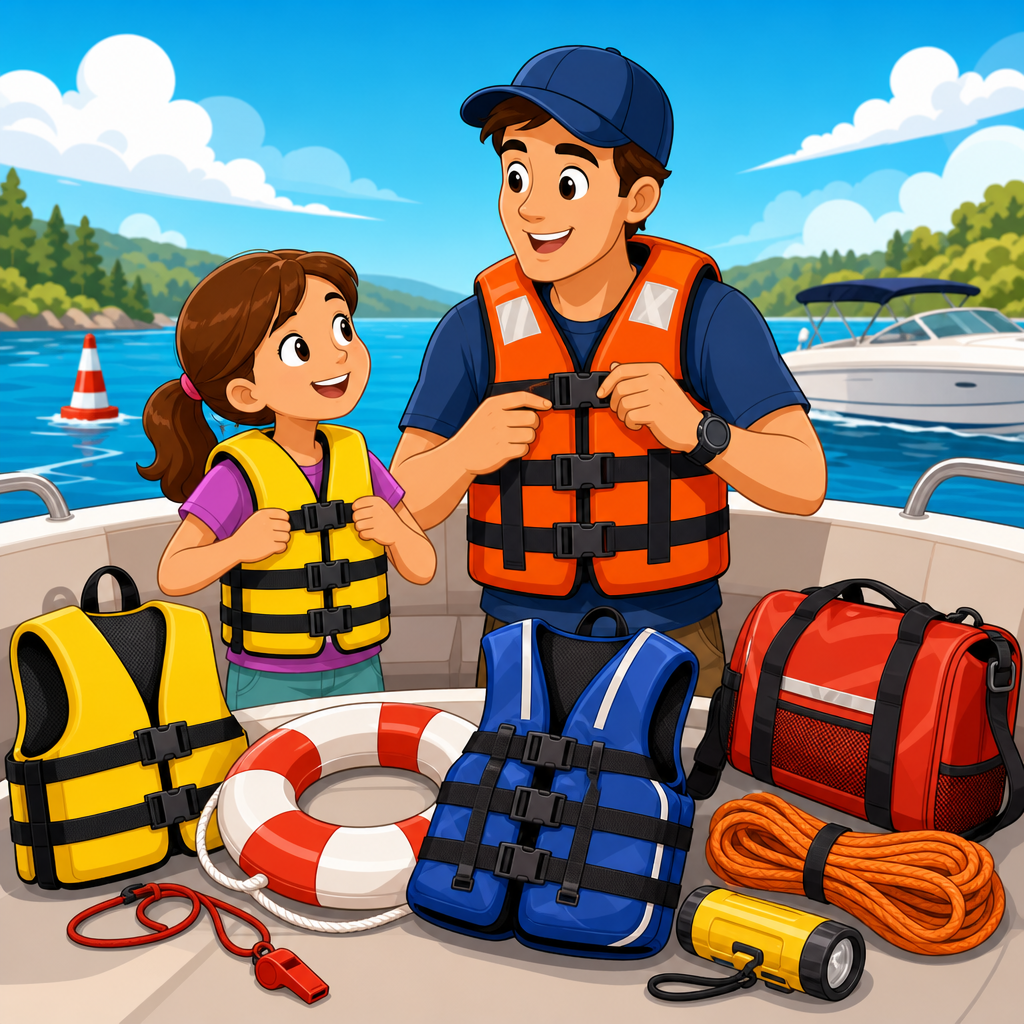
Life jacket laws are the foundation of recreational boating compliance in the United States, and they sit at the intersection of federal U.S. Coast Guard rules and state boating laws. If you own, rent, captain, or regularly ride in a boat, you need to know not only what safety gear is required on board, but also which requirements apply everywhere and which vary by state, waterway, vessel type, and passenger age. In practice, most violations happen because boaters assume one simple rule covers every situation. It does not. The legal requirements for life jackets and safety gear include federal carriage mandates, state wear rules for children, equipment standards tied to vessel length and propulsion, and situational requirements for waterskiing, personal watercraft, navigation at night, and federally controlled waters.
A life jacket, legally called a wearable personal flotation device or PFD, is approved flotation equipment designed to keep a person afloat and, depending on the type, turn an unconscious wearer face-up. Safety gear is the broader category that includes throwable flotation devices, fire extinguishers, visual distress signals, sound-producing devices, navigation lights, backfire flame arrestors on certain gasoline engines, ventilation systems, marine sanitation devices, and engine cut-off switches. The reason these rules matter is simple: they reduce fatalities. U.S. Coast Guard recreational boating statistics consistently show that drowning is the leading cause of death in boating accidents, and the vast majority of drowning victims were not wearing life jackets. I have reviewed accident reports and compliance checklists for years, and the pattern is painfully consistent: the required gear was missing, inaccessible, expired, or never worn.
This hub article explains the legal requirements for life jackets and safety gear under U.S. Coast Guard and state boating laws, with an emphasis on what applies on most recreational boats, what commonly changes by state, and how to stay compliant before you leave the dock. It also serves as a practical map for the broader Boating Laws & Regulations topic, because life jacket and equipment rules connect directly to operator licensing, accident reporting, registration, negligent operation, and passenger safety obligations.
Federal life jacket carriage rules every boater must know
The baseline rule is federal: recreational vessels must carry one U.S. Coast Guard-approved wearable life jacket for each person on board. The life jacket must be the correct size for the intended wearer, in serviceable condition, and readily accessible. Readily accessible means passengers can reach it quickly in an emergency; a life jacket sealed in original packaging, buried under gear, or locked in a compartment does not meet the standard. On most vessels 16 feet or longer, excluding canoes and kayaks, you must also carry one U.S. Coast Guard-approved throwable device, commonly a Type IV throwable cushion or ring buoy. That throwable device supplements, but never replaces, the required wearable PFD for each person.
Approval matters. Federal law requires approved devices, not generic pool vests or watersports inflatables sold without marine approval labels. Modern labels may use performance levels instead of the older Type I through Type V format, but the controlling issue is the approval marking. I always tell boaters to read the label, not the advertisement. The label states whether the device is approved, what chest size or weight range it fits, whether it counts as wearable carriage, and whether it must be worn to satisfy carriage requirements. Inflatable life jackets are a common compliance trap. Many approved inflatables are legal only for persons age 16 and older, and some count only when worn, not simply carried. That distinction affects both adults on fishing boats and operators of certain small craft.
Serviceability is another overlooked legal requirement. A torn strap, broken buckle, waterlogged foam, punctured inflatable bladder, or spent CO2 cylinder can make a PFD noncompliant. Federal and state officers routinely inspect condition as well as quantity. In enforcement terms, a boat carrying six damaged life jackets for six passengers may be treated the same as a boat carrying none. The same logic applies to throwable devices with rotted grab lines and distress signals past expiration.
When life jackets must be worn, not just carried
Many boaters know they must carry life jackets, but wear requirements create most state-specific legal questions. Federal rules mandate wear in some circumstances, while states often add stricter requirements for children, personal watercraft riders, towed watersports participants, and occupants of certain small vessels. The most common state rule requires children under a specified age to wear a U.S. Coast Guard-approved life jacket while aboard an underway recreational vessel. That age threshold varies, often under 13, though some states use under 12, under 10, or other standards. “Underway” usually means not anchored, moored, or aground, but definitions can vary and local enforcement may treat drifting or slow trolling differently depending on context.
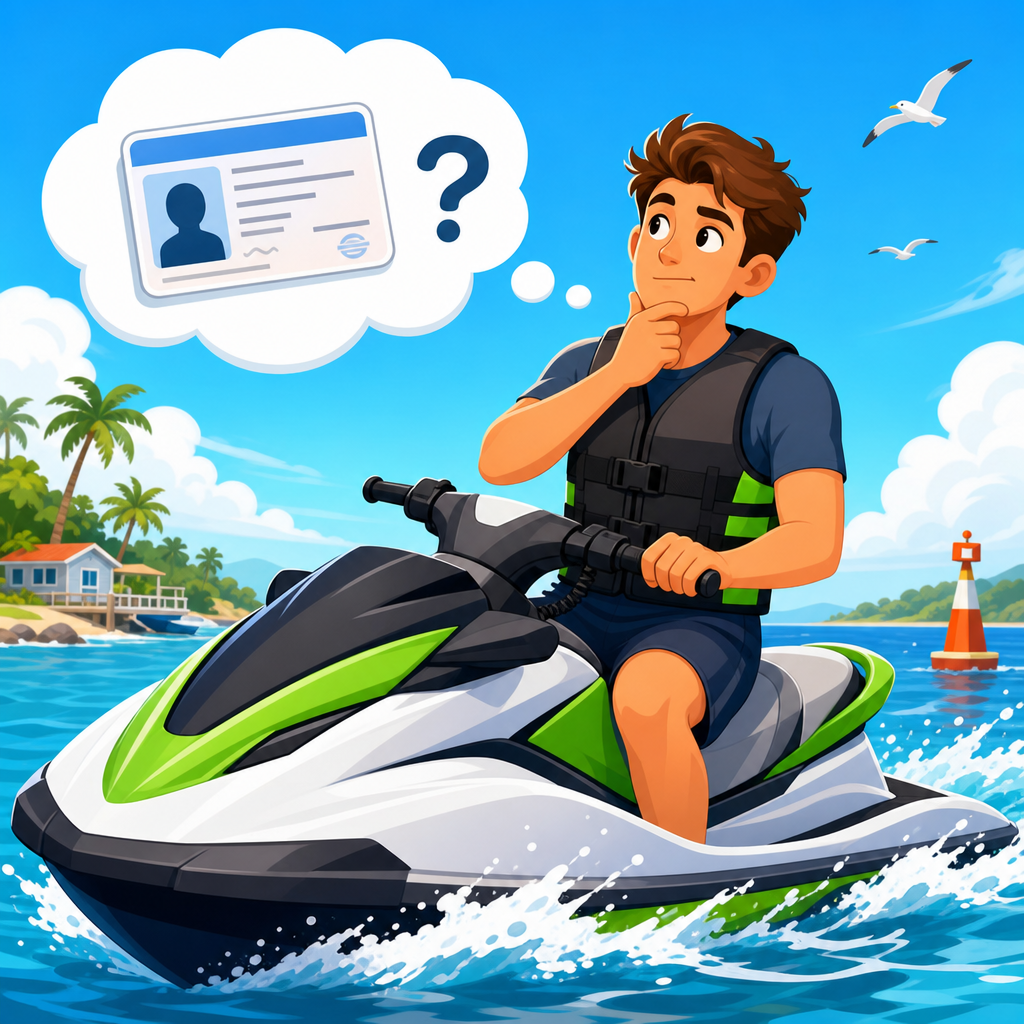
Personal watercraft, including Jet Skis, almost always trigger mandatory wear rules for both operators and passengers. Waterskiers, wakeboarders, tubers, and similar towed participants are also generally required to wear approved flotation, often with specific exclusions for inflatable devices. On federally controlled waters, engine cut-off switch wear requirements can also intersect with PFD practices on covered recreational vessels, especially under 26 feet using certain propulsion arrangements. In real inspections, officers look at the whole safety picture: if the operator is running on plane without the cut-off lanyard attached and minors are sitting on bow cushions without life jackets, the stop often escalates from an education contact to citations.
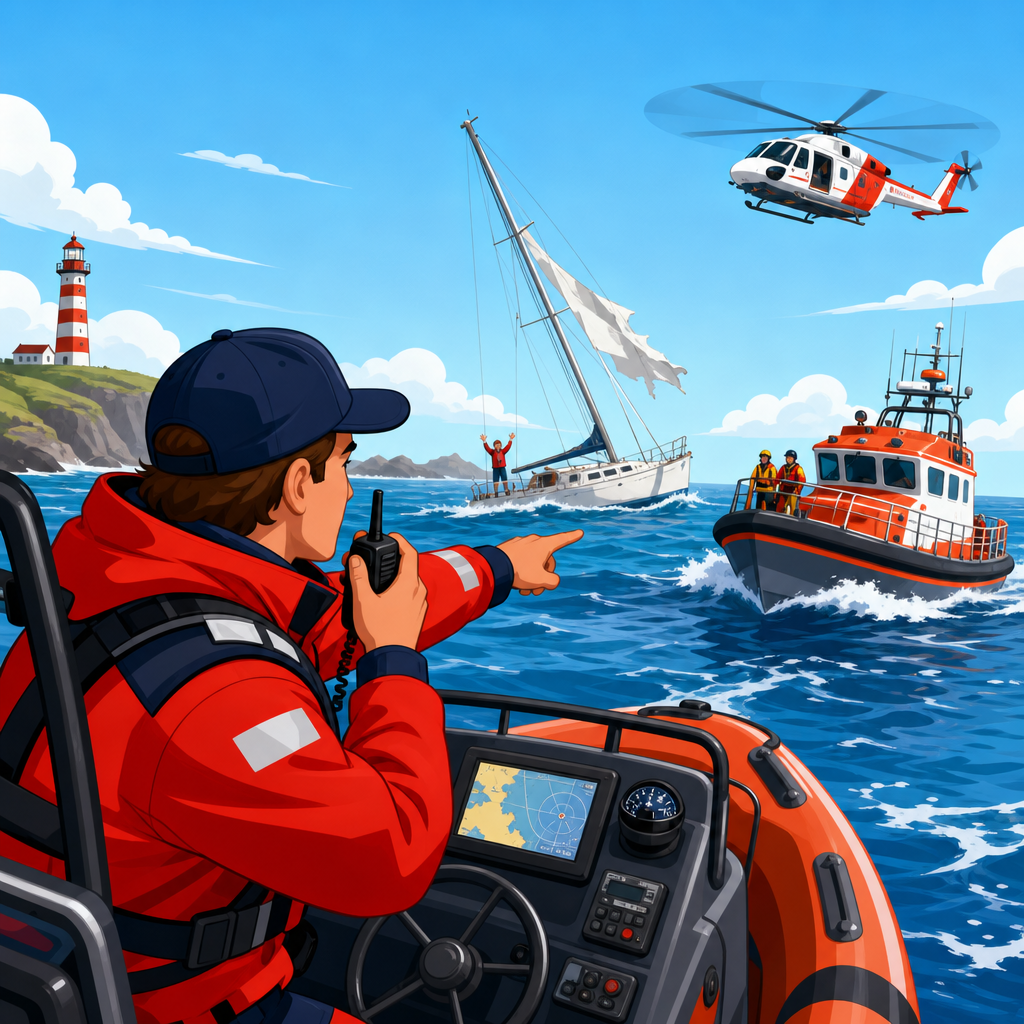
Cold water and rough water create a practical point that the law only partly captures. A life jacket in a locker may satisfy basic carriage rules for adults in some jurisdictions, but if the water is 60 degrees or below, survival time after immersion drops rapidly. Legally sufficient does not always mean operationally safe. Experienced captains often adopt a stricter onboard rule: wear life jackets anytime the vessel is underway, during low visibility, at night, on rivers with current, or in shoulder-season water temperatures.
Required safety gear beyond life jackets
Life jackets are only one part of mandatory boating safety equipment. Federal equipment carriage rules are largely based on vessel length, fuel type, engine installation, and where the boat operates. The table below summarizes the core gear categories recreational boaters most often need to verify before departure.
| Safety gear | General federal requirement | Common enforcement issue |
|---|---|---|
| Wearable life jackets | One approved, correctly sized, serviceable, accessible PFD per person | Wrong size for children or inaccessible storage |
| Throwable device | One approved throwable on most boats 16 feet or longer, except canoes and kayaks | Missing cushion or ring buoy on runabouts and pontoons |
| Fire extinguishers | Required on many motorboats depending on construction, fuel system, and installed equipment | Expired, discharged, or missing units after refits |
| Visual distress signals | Required on coastal waters, Great Lakes, and connected waters for most vessels | Expired flares or wrong mix for day and night use |
| Sound device | Whistle, horn, or bell depending on vessel length | No working horn on small powerboats |
| Navigation lights | Required from sunset to sunrise and during restricted visibility | Improper light configuration on aftermarket wiring |
| Ventilation and flame control | Required on certain gasoline inboard engine compartments | Blowers disconnected or flame arrestor removed |
| Engine cut-off switch | Required to be used on covered vessels when operating on plane or above displacement speed | Lanyard not attached to operator |
Fire extinguisher rules changed in recent years, and many boat owners still rely on outdated assumptions. Boats with model year 2018 and newer disposable extinguishers may follow newer labeling standards, while older extinguishers remain subject to carriage rules based on condition and date. The practical lesson is to inspect the label, gauge, mounting bracket, and classification, then compare them against current Coast Guard guidance. Visual distress signal rules are similarly technical. On coastal waters, the Great Lakes, territorial seas, and connected waters, most recreational boats must carry signals suitable for both day and night. Pyrotechnic devices expire 42 months from manufacture, so a flare kit can look untouched and still be illegal.
How state boating laws change the compliance picture
State boating laws can be stricter than federal baseline rules, and this is where many boaters get surprised. States commonly regulate child life jacket wear ages, mandatory boater education, PFD use on paddlecraft during certain seasons, observer requirements for towing sports, local no-wake zones, and extra equipment on specific waters. A canoe on a small inland lake may be legal under federal carriage rules with a life jacket for each paddler, but a state may additionally require children to wear them, or require all occupants of certain manually propelled craft to wear PFDs during cold-weather months.
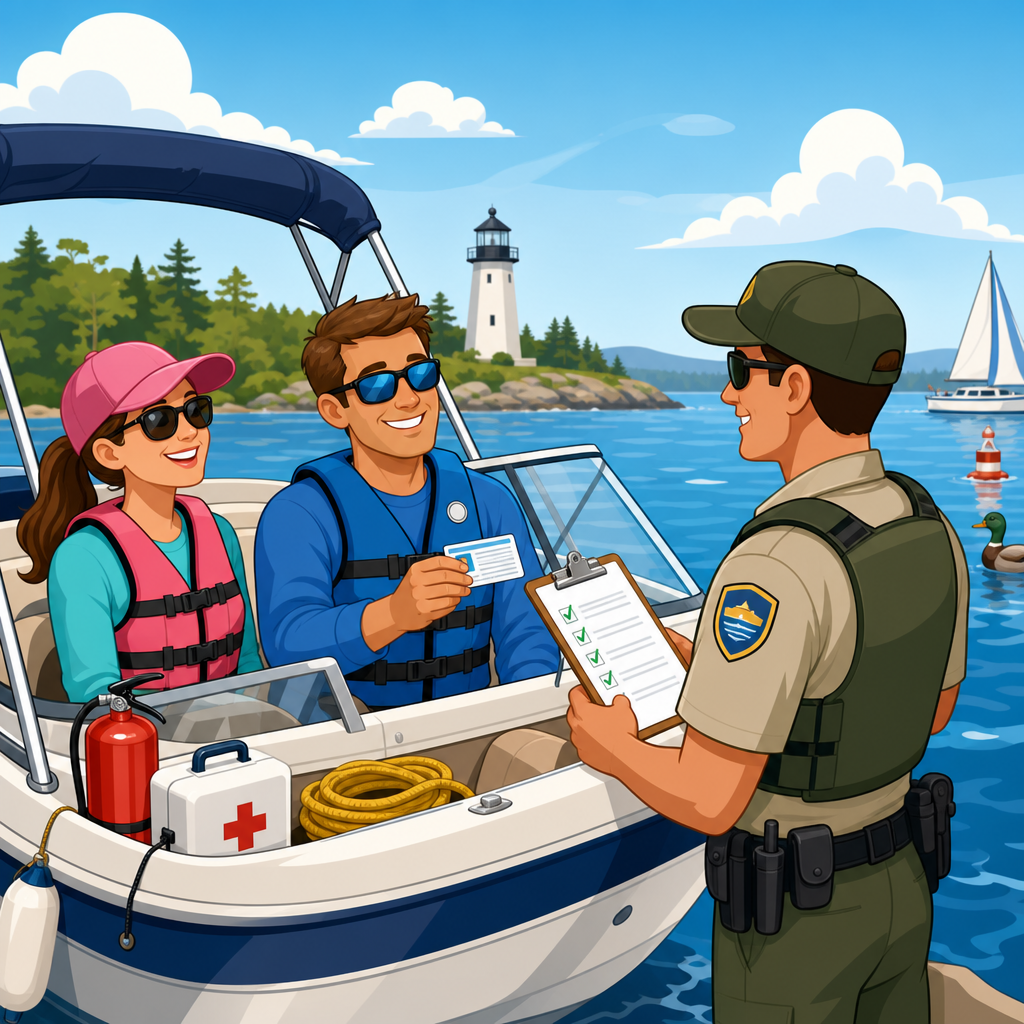
States also differ in enforcement structure. In some states, marine patrol units handle most stops; in others, county sheriffs, state police, conservation officers, or park rangers routinely conduct equipment inspections. Penalties vary from warnings to civil fines, and repeat violations or negligent operation findings can trigger larger consequences. Rental operations face another layer because liveries and outfitters may have obligations to provide properly sized life jackets and safety briefings. I have seen rental fleets cite “customer responsibility” in their paperwork, but that language does not erase statutory duties imposed on the business.
Because this article is the hub for U.S. Coast Guard and state boating laws, the safest compliance habit is to check three sources before boating: current Coast Guard equipment requirements, the boating law handbook for your state, and any local rules for the lake, river, or reservoir you plan to use. Border waters deserve special attention. If you launch in one state and cross into another on the same river, the applicable state rules can change even though the federal baseline remains constant.
Special rules for paddlecraft, sailboats, and rented boats
Not every vessel is regulated the same way. Canoes, kayaks, stand-up paddleboards, rowboats, and sailboats under auxiliary power each present distinct compliance issues. Paddlecraft generally must carry one wearable life jacket per person, but the throwable-device requirement that applies to many motorboats 16 feet or longer usually does not apply to canoes and kayaks. Stand-up paddleboards are often treated as vessels when used beyond surfing or swimming areas, which means PFD carriage and sound-device rules can apply. That catches many casual users off guard because they associate a board with beach recreation rather than boating law.
Sailboats require close attention when auxiliary engines, fuel systems, and electrical upgrades are added. A simple daysailer with no enclosed engine compartment has different equipment obligations than a cruising sailboat with installed fuel tanks, galley systems, and overnight accommodations. Rented boats add another practical wrinkle: do not assume the marina has fully compliant gear just because the business is established. Before leaving the dock, count life jackets, check child sizes, confirm the throwable device is present if required, identify the fire extinguisher location, test the horn, and ask where distress signals are stored. A five-minute dockside check prevents the most common rental-day citations and, more importantly, avoids a dangerous scramble if someone goes overboard.
Building a legally compliant pre-departure checklist
The best way to meet life jacket laws and safety gear requirements is to treat compliance as a pre-departure system, not a memory test. My standard checklist starts with passenger count, then matches an approved wearable PFD to each person by size and planned activity. Next, verify whether a throwable device is required, inspect the fire extinguisher gauge and date, check navigation lights, confirm a whistle or horn works, inspect registration and numbers, and review state-specific rules for children, towing, and personal watercraft. If the trip touches coastal waters or the Great Lakes, I also verify visual distress signals and confirm they are not expired.
Store gear where it can actually be used. Compliance officers often ask a passenger to locate a life jacket or throwable, because accessibility is a legal and practical issue. Keep children’s life jackets out of packaging and fitted before departure. For inflatables, check status indicators and cylinders. For personal watercraft, attach the engine cut-off lanyard every time. For boats with enclosed gasoline engine spaces, run the blower before starting if required by the manufacturer and rule set. These habits turn legal compliance into routine seamanship.
The core takeaway is straightforward: federal law sets the minimum carriage standards, state law often dictates who must wear life jackets and when, and responsible boaters check both before every trip. Use this hub as your starting point for the wider Boating Laws & Regulations topic, then review the specific rules for your vessel, state, and waters. A short checklist, updated each season, is the simplest way to stay legal, protect passengers, and boat with confidence.
Frequently Asked Questions
What life jackets are legally required on a recreational boat in the United States?
In general, federal boating law requires recreational vessels to carry at least one properly sized, U.S. Coast Guard-approved life jacket, also called a personal flotation device or PFD, for each person on board. That basic rule applies broadly, but the legal details matter. The life jacket must be the correct size for the intended wearer, must be in serviceable condition, and must be readily accessible. A damaged, waterlogged, ripped, or improperly fastened life jacket may not satisfy the requirement, even if it is physically present on the boat.
For most boats that are 16 feet or longer, not counting canoes and kayaks, an additional throwable flotation device is also required. This is typically a Type IV throwable device such as a ring buoy or cushion, designed to be thrown to a person in the water rather than worn. Federal standards also distinguish among different types and performance levels of PFDs, and newer labels may describe them by use category rather than by the older Type I, II, III, IV, and V system. Either way, the key issue is whether the device is Coast Guard-approved and appropriate for the activity and user.
Children’s life jacket rules often go further than the general federal standard. Under federal law, children under 13 must wear a Coast Guard-approved life jacket while the vessel is underway on a recreational boat, unless they are below deck or inside an enclosed cabin. However, many states impose stricter rules based on age, boat length, or the type of waterway. Because of that, the safest and most legally sound approach is to check both federal requirements and the law of the state where the boat is being operated.
Do passengers have to wear life jackets, or is it enough just to have them on board?
For many adult passengers, the legal rule is that the life jacket must be on board and readily accessible, not necessarily worn at all times. But that is only the starting point. There are important situations where wear is legally required, not optional. The clearest federal example is children under 13 on recreational vessels that are underway, subject to limited exceptions such as being inside an enclosed cabin. States may expand those wear requirements and often do.
Beyond age-based rules, certain vessel types and activities can trigger mandatory wear requirements. Many states require life jackets to be worn on personal watercraft such as Jet Skis, while waterskiing, tubing, wakeboarding, or when operating paddlecraft such as kayaks and canoes in specified conditions. Some states also require PFD wear during designated cold-weather months or on certain rivers, whitewater sections, or hazardous waterways. In other words, whether a life jacket must be worn depends on who is on the boat, what type of vessel is involved, what activity is taking place, and where the boat is being used.
Even when the law does not require constant wear, the requirement that life jackets be readily accessible is still significant. A life jacket stored in sealed packaging, buried under gear, locked in a compartment, or sized for the wrong person may not count in practice. For inflatable life jackets, there can be additional legal limitations, including age restrictions and use restrictions for high-impact activities. Boaters often get cited not because they had no life jackets, but because the devices were inaccessible, unapproved, or unusable for the people on board.
How do federal U.S. Coast Guard rules and state boating laws work together?
Federal U.S. Coast Guard rules create the nationwide baseline for recreational boating safety equipment, including minimum life jacket carriage requirements, throwable device rules for certain vessels, and standards for Coast Guard approval. Those federal rules apply across the United States, which is why many boaters assume one simple national rule covers everything. In reality, state boating laws frequently add their own requirements on top of the federal minimum, especially for child life jacket wear, fire extinguishers, sound-producing devices, navigation lights, engine cutoff switches, and activity-specific safety gear.
That means compliance is often a two-layer issue. First, you need to meet the federal minimum. Second, you need to determine whether the state where you are operating the vessel imposes stricter or more specific rules. States may vary by passenger age thresholds, whether life jackets must be worn on paddlecraft, what is required for personal watercraft, and whether certain bodies of water have special local safety regulations. On top of that, some waterways are subject to additional rules from local marine patrol agencies, park authorities, or lake management districts.
As a practical matter, boaters should never rely solely on a generic checklist. The more accurate approach is to confirm the vessel type, its length, the number and ages of passengers, the type of activity, and the exact state and waterway involved. If you trailer your boat across state lines, rent on vacation, or operate on rivers and lakes with special restrictions, you may face legal requirements that differ from your home waters. Federal law sets the floor, but state and local law often determine what full compliance actually looks like.
What other safety gear is commonly required besides life jackets?
Life jackets are only one part of legal boating compliance. Depending on the vessel and how it is used, other required safety gear may include a throwable flotation device, fire extinguishers, visual distress signals, navigation lights, a sound-producing device such as a whistle or horn, backfire flame arrestors for certain gasoline engines, ventilation equipment, and marine sanitation equipment where applicable. The exact list depends heavily on factors such as vessel length, propulsion method, fuel system, and whether the boat operates in coastal waters, inland waters, or federally controlled areas.
Visual distress signal requirements are a common point of confusion. Boats operating on coastal waters, the Great Lakes, territorial seas, and connected waters often must carry approved visual distress signals for both day and night use. Fire extinguishers are another area where vessel design matters. Boats with enclosed compartments, fuel tanks, or certain engine configurations may be required to carry one or more marine fire extinguishers that meet current Coast Guard standards. Navigation lights are required when operating between sunset and sunrise and during periods of restricted visibility, and they must be the correct type for the vessel.
Many states also require an engine cutoff switch and lanyard use in situations covered by federal law, especially on certain recreational powerboats. Personal watercraft usually come with their own set of specific equipment and operational rules. Because safety gear violations are often technical, boaters should review the current equipment checklist for their exact vessel type rather than relying on memory or assumptions. A well-stocked boat is not necessarily a legally compliant boat if the equipment is outdated, expired, improperly installed, or not approved for the vessel.
How can boat owners and renters make sure they are fully compliant before going out on the water?
The most reliable approach is to treat compliance as a pre-departure checklist rather than a last-minute guess. Start by identifying the vessel type, length, and propulsion system, then match those facts to current U.S. Coast Guard equipment requirements. Confirm that there is one properly sized, Coast Guard-approved wearable life jacket for each passenger, plus a required throwable device if the vessel falls into that category. Check that every life jacket is in good condition, easy to reach, and appropriate for the age and size of the intended user.
Next, verify the rules of the state where the boat will be operated. This step is especially important for renters, vacationers, and people boating near state borders. Review child life jacket wear laws, personal watercraft rules, paddlecraft requirements, and any local regulations for the specific lake, river, or coastal area. It is also wise to confirm whether the trip will involve waters where visual distress signals, lights, or additional emergency equipment are required. Rental operators may provide gear, but the operator of the vessel can still be cited if required safety equipment is missing or used improperly.
Finally, inspect expiration dates, labels, and accessibility. Flares can expire, fire extinguishers can become noncompliant, and inflatable PFDs may be legal only for certain users and conditions. If you are unsure, consult your state boating agency, the U.S. Coast Guard boating safety resources, or a certified boating safety course. The law is detailed because boating conditions vary, and most compliance issues come from assuming a single rule applies everywhere. A few minutes of checking before launch can prevent citations, reduce liability, and make the trip safer for everyone on board.