Boating age restrictions in different states shape who can operate a vessel, when supervision is required, and what training must be completed before taking the helm. For families buying a first fishing boat, rental operators screening customers, and teenagers eager to drive a personal watercraft, these rules matter because they directly affect safety, liability, and compliance. I have worked with marina operators and boating education providers long enough to see the same confusion every season: people assume one national age rule exists, then learn at the launch ramp that state law controls most day-to-day boating decisions.
At the federal level, the U.S. Coast Guard sets baseline requirements for vessel equipment, navigation rules, casualty reporting, manufacturer capacity information, and operator responsibilities for certain commercial activities. States, however, regulate most recreational boating age restrictions, boater education mandates, and personal watercraft operation rules within their waters. That division is the key concept to understand. The Coast Guard establishes broad safety standards and enforcement authority, while state boating agencies decide whether a 12-year-old may operate a motorboat alone, whether a 14-year-old may use a jet ski, and whether a boating safety certificate is mandatory.
Why does this matter beyond avoiding a citation? Age restrictions affect insurance coverage, rental eligibility, negligence claims after an accident, and even whether an adult can lawfully allow a child to operate the vessel. They also intersect with life jacket rules, engine cut-off switch requirements, registration obligations, and intoxicated operation laws. In practice, a safe and legal trip depends on reading federal requirements together with the law of the state where the boat is used, not merely where it is registered. This hub explains how U.S. Coast Guard and state boating laws work together, what age-based restrictions commonly apply, and how to evaluate state differences before you get on the water.
How Federal and State Boating Laws Work Together
The simplest answer is that the U.S. Coast Guard governs the national framework for recreational boating safety, and states fill in the operational details. Federal law covers subjects such as required carriage of wearable life jackets, sound-producing devices, visual distress signals on applicable waters, ventilation and backfire flame arrestor standards, navigation lights, accident reporting thresholds, and the Inland Navigation Rules. The Coast Guard also approves boating safety education course providers through the National Association of State Boating Law Administrators, commonly called NASBLA, even though each state decides whether a certificate is required for a specific operator.
State law generally controls minimum operator age, supervision rules, horsepower thresholds, and personal watercraft restrictions. For example, one state may allow a child as young as 12 to operate a motorboat after completing an approved course, while another may require the operator to be at least 14 or 16. Many states impose stricter rules on personal watercraft because of their speed, agility, and high collision rates among inexperienced riders. In my experience reviewing rental policies, these PWC age restrictions are often the first place visitors get tripped up because rental companies usually apply both state law and their own higher minimum age standards.
Preemption is limited in routine recreational use. A boater cannot ignore state education or age laws simply because the vessel meets Coast Guard equipment standards. At the same time, a state cannot waive federal carriage requirements on federally navigable waters. The practical takeaway is straightforward: compliance is layered. You need the right equipment under federal law, the right operator qualifications under state law, and adherence to local rules such as no-wake zones, waterway closures, or county ordinances.
What “Boating Age Restriction” Actually Means
Boating age restriction is not one single rule. It can refer to the minimum age to operate any motorboat, the minimum age to operate a vessel above a certain horsepower, the minimum age to operate a personal watercraft, or the age at which supervision is no longer required. Some states also use birth-date cutoffs tied to mandatory boater education. A 35-year-old may operate freely without a certificate in one state because they were born before a certain date, while an 18-year-old in the same state must carry proof of course completion.
Another important distinction is between operating and riding. In nearly every state, a child may ride as a passenger if safety gear requirements are met, but may not legally control the boat unless age and education rules are satisfied. Supervision is also defined differently across jurisdictions. “Accompanied by an adult” may mean on board and able to take immediate control; “direct supervision” may mean within sight and actively monitoring; and “legally qualified operator” usually means someone who independently meets the state’s age and education requirements. Those definitions matter after an accident, because a parent who is present but not qualified may not satisfy the law.
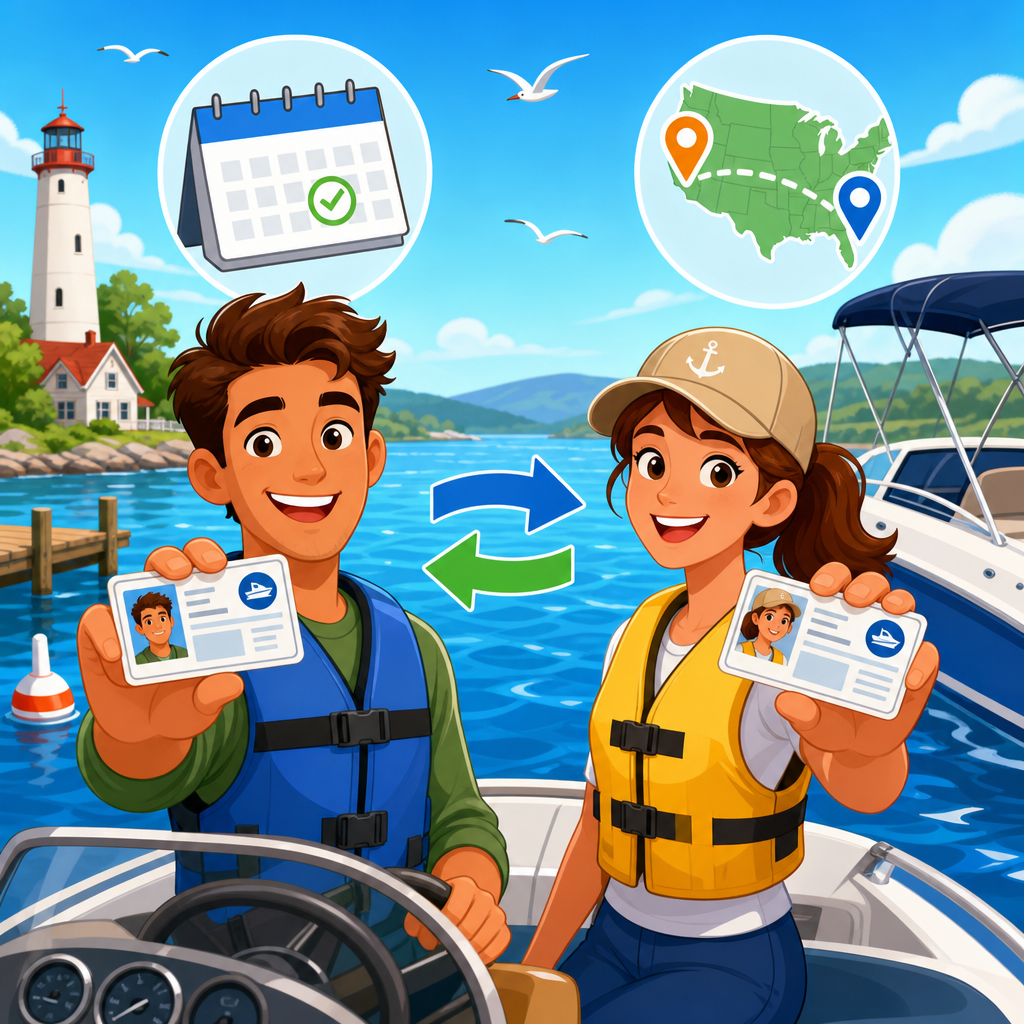
Finally, age restriction rules often connect to documentation. Many states require a boater education card, temporary certificate, or digital proof issued after a NASBLA-approved course. Enforcement officers commonly ask for that proof during a safety inspection. If a young operator meets the age threshold but cannot produce the certificate, they may still be treated as noncompliant.
Common State Patterns and Where They Differ
Although every state writes its own statute, several patterns appear again and again. Many states set a minimum age between 12 and 16 for operating a motorboat without direct supervision. Personal watercraft operation is often limited to operators at least 14 or 16 years old, and passengers may be younger than operators. Education requirements are commonly tied to age, with younger operators required to complete a boating safety course before operating alone. Some states also prohibit anyone under a certain age from renting a vessel, regardless of certification.
Regional differences are real. States with dense inland lake traffic often emphasize youth education and horsepower-based rules. Coastal states may focus more heavily on navigation, tidal conditions, and accident reporting because boating environments are more complex. Tourist-heavy states frequently have temporary certification options for visitors, while others expect nonresidents to comply with the same standards as residents unless they hold an equivalent out-of-state certificate. I have seen out-of-state boaters assume reciprocity applies automatically, only to discover that the state recognizes only approved credentials or short-term exemptions.
| Rule Category | How States Commonly Regulate It | Why It Matters |
|---|---|---|
| Minimum operator age | Often set between 12 and 16 for motorboats; sometimes lower with supervision | Determines whether a minor may legally control the vessel |
| Boater education | Required for operators born after a specific date or under a certain age | Course completion is frequently mandatory to operate alone |
| Personal watercraft age | Usually stricter than standard motorboat rules | PWC violations are common because renters and teens overlook them |
| Adult supervision | Qualified adult may need to be on board or in direct control range | Presence alone may not satisfy the legal standard |
| Visitor reciprocity | Some states accept out-of-state certificates; others limit exemptions | Traveling boaters can be legal at home but not away |
The numbers change often enough that this hub should be treated as a framework, not a substitute for checking the current state code. Legislatures amend boating laws, agencies update administrative rules, and enforcement guidance changes. The reliable approach is to verify the state boating agency page before every season, especially if a child has just reached an age threshold or the boat type has changed.
Personal Watercraft, Horsepower Limits, and High-Risk Categories
Personal watercraft deserve separate attention because states routinely regulate them more aggressively than runabouts, pontoon boats, or small tiller-steer fishing boats. Jet skis and similar craft accelerate quickly, turn sharply, and place the operator in close proximity to other riders and swimmers. Because of that risk profile, many states prohibit younger teens from operating them even when those same teens may legally operate a modest motorboat after training. Some states also ban passengers from acting as observers for towing activities unless the vessel meets additional requirements.
Horsepower limits create another layer. A state may say a child under a certain age cannot operate a vessel above 10, 25, or another horsepower threshold unless supervised. That means the same child could lawfully use a small electric-powered boat on a private lake but not a higher-powered bass boat on a public reservoir. I often advise families to look at the engine plate and registration documents before assuming a child can take over operation, because horsepower-based restrictions are easy to miss and are not always obvious from the boat’s size alone.
High-risk categories extend beyond PWC. Airboats, sailboats with auxiliary motors, and towing sports such as waterskiing or tubing may trigger extra rules. Some states require a separate observer, rearview mirror, or age-qualified operator when towing a person. Others impose time-of-day limits, such as bans on PWC use after sunset. A broad understanding of boating age restrictions should therefore include vessel type, engine power, activity, and supervision conditions rather than age alone.
Education Cards, Certificates, and Proof of Compliance
Boater education has become the main compliance tool states use to reduce youth accidents. Most approved courses cover navigation rules, aids to navigation, lookout responsibilities, crossing and overtaking situations, emergency preparedness, fueling safety, weather awareness, and legal obligations such as reporting accidents or carrying required safety gear. When I have reviewed incident files involving younger operators, lack of situational judgment is usually a larger factor than lack of mechanical skill. Education courses are designed to close that gap.
NASBLA approval is the benchmark to watch. A NASBLA-approved course generally signals that the curriculum meets recognized national standards, and many states accept approved out-of-state certificates under reciprocity rules. However, acceptance is not universal or unlimited. Some states honor nonresident certificates only for a defined number of days. Others issue temporary certificates after a short exam or require rental-specific safety instruction. Digital proof is increasingly accepted, but not everywhere, so carrying both a phone copy and printed card remains a smart practice.
For parents, the best timing is to complete a course before the boating season starts, not on vacation arrival day. For adults who think age rules do not apply to them, education can still be mandatory due to date-of-birth laws. Several states now require operators born on or after a certain date to hold a safety certificate regardless of current age. This is one reason “I’m over 18” is not a reliable legal test.
Enforcement, Liability, and Insurance Consequences
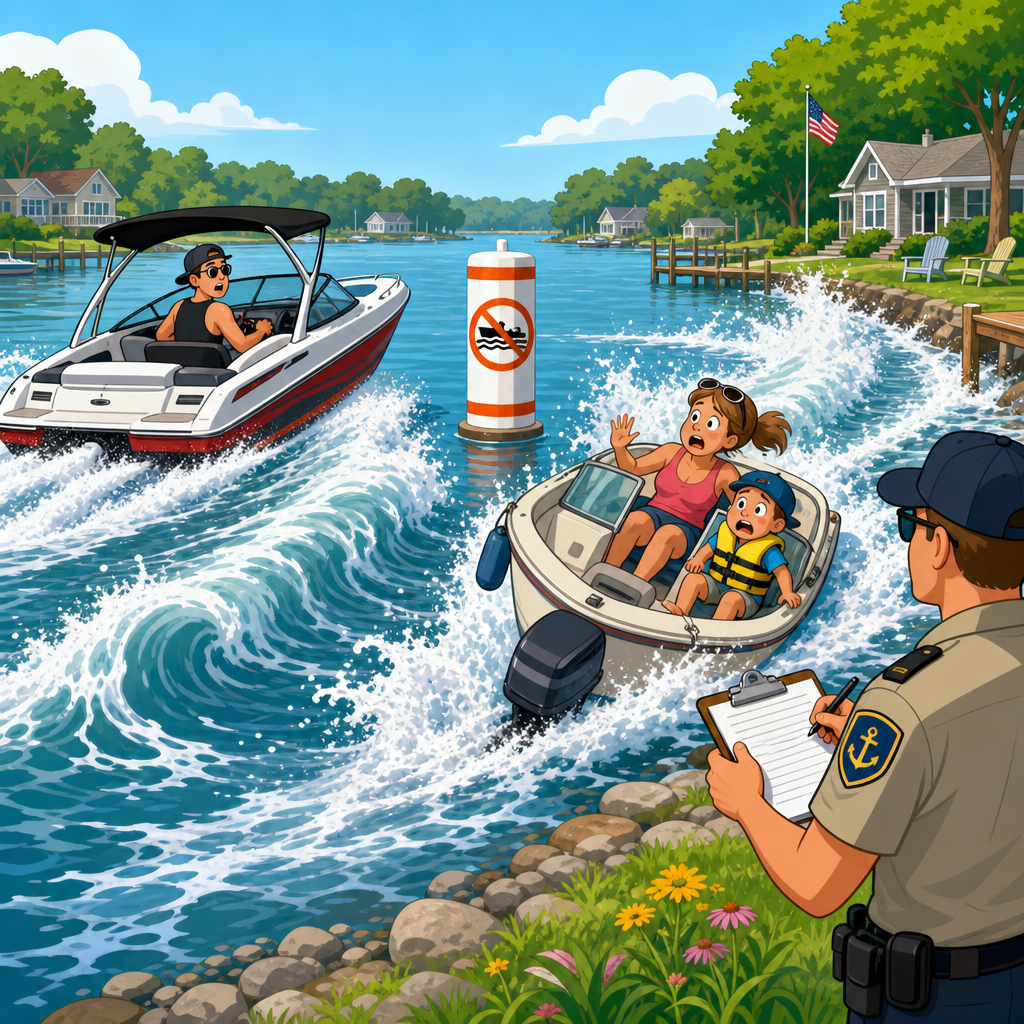
Boating age restrictions are enforceable laws, not suggestions. State marine patrol officers, county sheriffs, conservation officers, and in some areas Coast Guard personnel can stop vessels for safety inspections or observed violations. Common outcomes include warnings, citations, removal of the underage operator from control, and in serious cases charges tied to reckless or negligent operation. If alcohol, excessive speed, or an injury is involved, an initial age-rule violation can become an aggravating fact that shapes the entire investigation.
Liability exposure is often more expensive than the ticket. If a parent knowingly allows a child to operate illegally and a collision follows, that decision can support a negligence claim. Rental operators face similar risk if they hand over a vessel to someone who does not meet age or certification requirements. Insurers also care. Marine policies may not automatically deny every claim involving a violation, but unlawful operation can complicate coverage, claims handling, and subrogation. In plain terms, breaking an age restriction can turn a manageable incident into a costly legal problem.
Documentation helps. Keep registration, required safety certificates, and identification accessible in a waterproof pouch. If supervision is required, make sure the supervising adult is actually qualified under the state’s law. During investigations, officers and insurers look for facts they can verify quickly. A family that can show current registration, life jackets, and a valid education card usually resolves encounters faster and with less stress.
How to Check the Right Rule Before You Launch
The safest process is systematic. First, identify the state where the boat will operate, because use location usually controls. Second, confirm vessel type: motorboat, personal watercraft, sailboat with motor, or specialty craft. Third, verify operator age, birth date, and whether a NASBLA-approved course certificate is required. Fourth, check related rules including life jacket requirements for children, engine cut-off switch rules, towing laws, and local no-wake or seasonal restrictions. Fifth, review rental or marina policies, which may be stricter than state minimums.
The best sources are the official state boating agency, wildlife agency, natural resources department, or marine patrol page, along with the Coast Guard boating safety resources for federal requirements. NASBLA course directories are useful for finding approved education providers. If you boat across state lines, compare both states before departure rather than relying on dockside advice. Regulations are detailed enough that well-meaning local guidance is often incomplete.
This hub is the starting point for the broader U.S. Coast Guard and state boating laws landscape: registration and titling, required safety equipment, life jacket rules, boating under the influence, accident reporting, navigation rules, and personal watercraft laws. Use it as your map, then drill into the state-specific rules that apply to your boat and operator. A few minutes of verification prevents citations, protects insurance, and makes the water safer for everyone. Before your next trip, check the current law in the state where you will launch and confirm that every operator on board is legally qualified.
Frequently Asked Questions
Do boating age restrictions work the same way in every state?
No. Boating age restrictions are set at the state level, which means the legal age to operate a boat or personal watercraft can change significantly depending on where you are boating. One state may allow a younger operator to drive a motorized vessel after completing an approved boater education course, while another may require the operator to reach a specific age regardless of training. Some states draw a sharp distinction between operating a standard motorboat and operating a personal watercraft such as a Jet Ski, often imposing stricter age limits on personal watercraft because of their speed and maneuverability. In addition, supervision rules vary. A minor may be allowed to operate a boat only if a parent, guardian, or qualified adult is on board, and the required age of that supervising adult can differ as well. The most practical takeaway is that there is no reliable “national rule” to follow. Before allowing a child, teen, or first-time operator to take the helm, check the boating agency or wildlife authority for the specific state where the vessel will be used. That is especially important for families who travel with a boat across state lines or renters who assume their home-state rules automatically apply somewhere else.
At what age can a teenager legally operate a boat or personal watercraft?
The answer depends on three separate factors: the state, the type of vessel, and whether the teen has completed a required boating safety course. In many states, a teenager may be permitted to operate certain motorboats at a younger age if they carry proof of boater education, but those same states may prohibit that teen from operating a personal watercraft until an older minimum age is reached. Personal watercraft are often regulated more strictly because they are commonly used in high-traffic recreational areas and involve quick acceleration, sharp turning, and a higher risk of collision when operated by inexperienced riders. Some states also create tiered rules, where younger teens may operate only under direct adult supervision, while older teens may operate independently if they have completed a certified course. This is where many people get tripped up: they focus only on age and overlook the education requirement, or they assume a boating certificate from one situation covers every vessel type. A smart approach is to verify the minimum age, whether supervision is required, whether a boating card or certificate must be carried on board, and whether separate rules apply to personal watercraft. Those details can make the difference between a legal outing and a citation, or worse, an unsafe day on the water.
Is a boating safety course required for younger operators?
Very often, yes. Many states use boating education as the gateway that allows younger operators to legally run a vessel before they reach full adult age. These courses typically cover navigation rules, right-of-way, life jacket requirements, speed and wake laws, emergency procedures, fueling safety, and the special risks tied to alcohol use and operator inexperience. For younger boaters, the course requirement is not just a box to check for compliance; it is often the legal condition that determines whether they can operate at all. Some states require everyone born after a certain date to complete approved education, while others target only certain age groups or vessel categories. In practice, this means two teens of the same age may face different legal requirements depending on the state and boat involved. It is also important to confirm whether the course must be state-approved, whether online completion is accepted, and whether the operator must carry a physical card, digital certificate, or temporary proof of completion. From an enforcement and liability perspective, education matters a great deal. If a minor is involved in an accident and was operating without the required training, that can affect citations, insurance issues, rental eligibility, and how responsibility is evaluated afterward.
Can a child or younger teen operate a boat if an adult is on board?
Sometimes, but not automatically. Adult supervision can allow younger operators to boat legally in some states, yet the exact rule is usually very specific. The law may define the supervising adult’s minimum age, require that the adult be capable of immediately taking control of the vessel, or state that the adult must remain seated in a position that allows direct oversight of the operator. In other states, adult presence does not override a hard minimum age rule, especially for personal watercraft. This is one of the most common misunderstandings among parents and grandparents. They assume that if they are in the boat, any child can drive for a while, but the law may say otherwise. Even where supervised operation is allowed, there may still be limits based on engine size, horsepower, or the type of watercraft. Beyond legality, adult supervision should be treated as an active responsibility, not a technical loophole. A supervising adult should understand local boating laws, be sober, be able to intervene instantly, and make sure the young operator knows how to reduce speed, maintain lookout, handle wakes, and respond in crowded areas. On the water, “supervision” means much more than simply being present for the ride.
What should families, boat buyers, and rental customers do to stay compliant with state boating age laws?
Start by checking the official rules in the exact state where the boat will be used, not the state where the boat was purchased, registered, or stored. That single step prevents a surprising amount of confusion. Families buying a first fishing boat should confirm who in the household will legally be able to operate it, whether younger family members need boater education first, and whether local rules differ for lakes, rivers, and coastal waters. Rental customers should ask the operator what age, licensing, and education documentation is required before arrival, because rental companies often apply both state law and their own risk-management policies. Some businesses set stricter standards than the law requires, particularly for high-horsepower boats and personal watercraft. It is also wise to keep proof of age and boater education readily available, review insurance implications for youthful operators, and understand whether another state will honor your certificate if you are traveling. From a practical standpoint, compliance is easiest when handled before the trip: verify the operator’s age eligibility, complete the safety course early, carry the required documents, and review supervision rules in advance. That preparation protects not only against tickets and denied rentals, but also against the much bigger problems of preventable accidents, injury exposure, and disputes over who should have been operating the vessel in the first place.