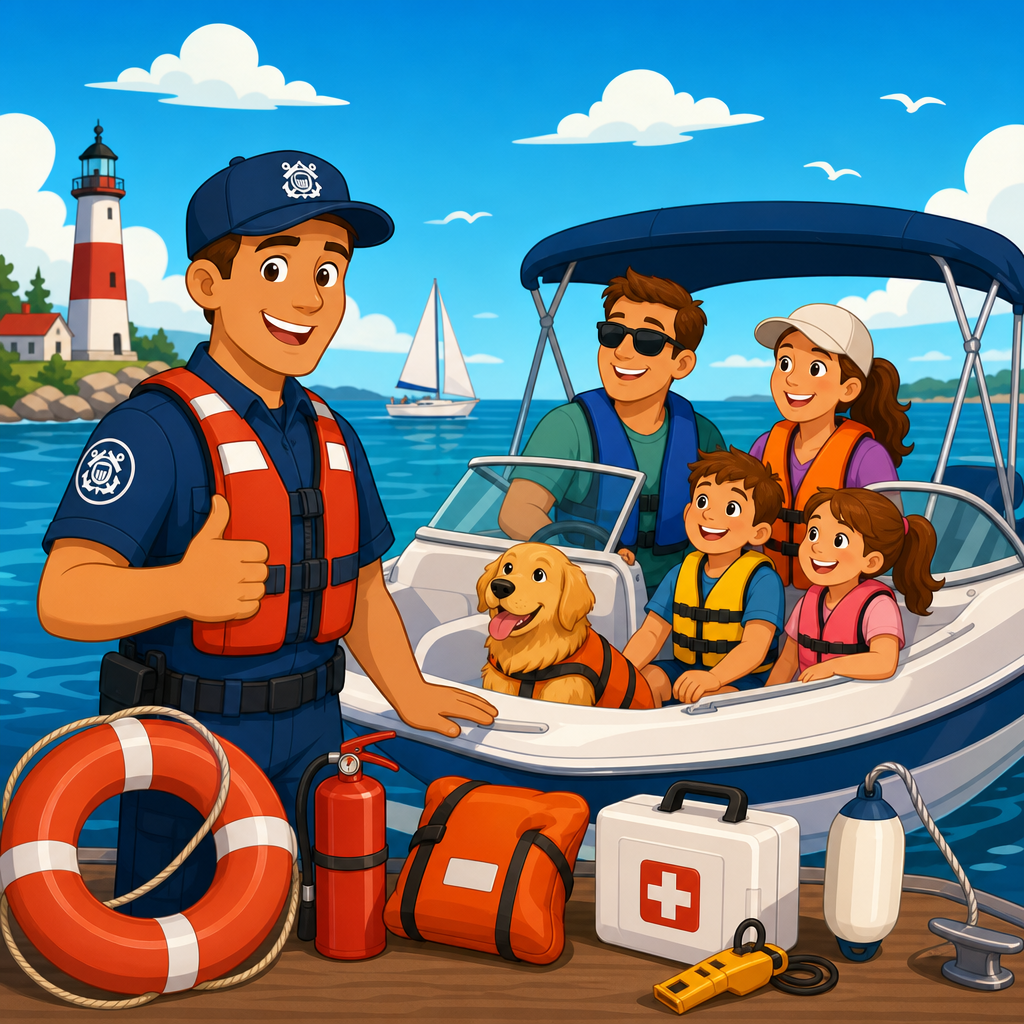
Coast Guard safety requirements for recreational boats form the legal baseline for operating almost any pleasure craft in U.S. waters, and understanding them is essential for compliance, insurance, and real-world safety. In practice, boaters must follow a layered system: federal rules enforced by the U.S. Coast Guard, state boating laws that add registration, education, and equipment obligations, and local restrictions covering specific lakes, rivers, and harbors. When I help owners prepare for vessel safety checks, the same pattern appears every season: most violations are preventable, and most dangerous situations start with overlooked basics like expired flares, missing life jackets, improper ventilation, or unreadable registration numbers.
For recreational boats, “safety requirements” means the minimum carriage, condition, and operational standards that apply to items such as personal flotation devices, fire extinguishers, navigation lights, sound-producing devices, backfire flame control, ventilation systems, marine sanitation devices, and visual distress signals. Federal law sets many of these rules through the Code of Federal Regulations and Coast Guard guidance, while states govern operator age, mandatory boater education, towing rules, speed zones, accident reporting thresholds, and titling or numbering procedures. The reason this matters is simple: a boat that is legal at the dock is far more likely to be safe underway, and a skipper who understands both Coast Guard rules and state boating laws avoids citations, delays, and preventable emergencies.
This hub article explains the core U.S. Coast Guard and state boating law framework boaters need to know before launching. It covers which boats must be registered, what safety equipment must be onboard, how carriage requirements change by vessel type and length, when navigation and right-of-way rules apply, what documents and markings must be displayed, and where state law commonly goes beyond federal standards. Use it as the starting point for every compliance checklist in the broader boating laws and regulations category, because nearly every specialized topic—PFD rules, accident reporting, lights, extinguisher requirements, or boating under the influence—connects back to the same legal structure.
How Federal Coast Guard Rules and State Boating Laws Work Together
The clearest way to understand U.S. boating compliance is to separate federal carriage and operation standards from state enforcement details. The Coast Guard regulates equipment and operational safety for recreational vessels used on navigable waters of the United States. That includes inland rivers connected to interstate commerce, coastal waters, the Great Lakes, and many shared waterways. States, usually through natural resources agencies, marine patrols, or fish and wildlife departments, then add registration systems, education requirements, and use-specific rules that federal law does not fully standardize.
In practical terms, federal law says what safety gear many recreational boats must carry, while state law often says who may operate the boat, whether a safety certificate is required, what decals or registration numbers must be shown, and what local speed or wake restrictions apply. For example, the Coast Guard requires wearable life jackets in approved types and quantities, but a state may also require children under a specific age to wear a life jacket at all times when underway. One state may set that threshold at 12 years old, another at 13, and another at any age on personal watercraft. That is why crossing a state line by water can change your legal obligations even if the boat itself does not change.
Another point many owners miss is that federal standards usually establish a floor, not a ceiling. States cannot generally authorize less safety equipment than federal law requires on waters where federal requirements apply, but they can impose added conditions in many areas. This overlap is especially important for education cards, engine cutoff switch use, no-discharge rules, and personal watercraft operation. A smart compliance process starts with the Coast Guard equipment checklist and then layers in the state rules for the waters where the boat is launched, stored, or transits regularly.
Required Safety Equipment for Recreational Boats
The most common Coast Guard safety requirements for recreational boats involve carriage of approved personal flotation devices, fire protection equipment, visual distress signals where applicable, proper lights, ventilation, and sound signals. Exact requirements depend on vessel length, propulsion, construction date, fuel system, and where the boat operates. A canoe on a small inland lake does not have the same mandatory gear list as a 28-foot gasoline-powered cabin cruiser in coastal waters.
Every recreational vessel must carry at least one wearable Coast Guard-approved life jacket for each person onboard. Life jackets must be the correct size, in serviceable condition, and readily accessible, not buried under gear. Boats 16 feet or longer, except canoes and kayaks, must also carry one throwable device. Navigation lights are required from sunset to sunrise and during periods of restricted visibility. Nearly all powered vessels also need a sound-producing device, such as a whistle or horn, and larger boats have additional bell requirements. Fire extinguisher rules changed in recent years to focus more directly on boats with enclosed spaces, permanently installed fuel tanks, or fixed fire systems, so owners should verify their category rather than relying on outdated summaries.
| Requirement Area | Typical Federal Baseline | Common State Add-On |
|---|---|---|
| Life jackets | One approved wearable PFD per person; throwable device on many boats 16 feet and over | Mandatory wear rules for children or PWC riders |
| Registration and numbers | State numbering required for most undocumented recreational boats | Title rules, decals, renewal periods, proof of tax payment |
| Fire extinguishers | Required based on boat design, fuel system, and enclosed compartments | Inspection emphasis, additional rental or liveried vessel standards |
| Navigation lights | Required between sunset and sunrise and in reduced visibility | Local enforcement priorities on specific waters |
| Education | No single nationwide boater card mandate | Age-based or universal boater education laws |
| Accident reporting | Report qualifying casualties under federal and state thresholds | State forms, deadlines, and agency contacts |
Visual distress signals are another area where boaters often guess wrong. Recreational boats operating on coastal waters, the Great Lakes, territorial seas, and directly connected waters generally must carry approved day and night signals, with narrow exceptions for manually propelled craft and certain open sailboats under set length limits. Expiration dates matter. I routinely see flare kits onboard that look untouched but became noncompliant years ago. The Coast Guard Auxiliary vessel safety check program is useful here because it identifies carriage and condition issues before an enforcement boarding does.
Beyond equipment carriage, condition matters legally and operationally. A fire extinguisher with lost pressure, a life jacket with broken straps, or navigation lights that fail underway can all create citation risk and emergency risk at the same time. The best operators inspect gear before each season, review labels, replace expiring items early, and keep equipment where crew can reach it quickly without opening multiple lockers.
Registration, Documentation, and Display Rules
Most recreational boats powered by machinery of any kind must be state registered and numbered unless they are federally documented or fit a narrow exemption such as certain lifeboats. Registration usually requires proof of ownership, hull identification number information, payment of fees, and sometimes proof that sales or use tax obligations were satisfied. States issue a certificate of number and validation decals, and the operator is generally required to carry the certificate onboard whenever the vessel is in use.
Display rules are specific. State registration numbers must usually be painted on or attached to the forward half of each side of the bow, read from left to right, and use block characters at least three inches high in a contrasting color. Spaces or hyphens between letter and number groups are prescribed by state format. Validation decals are typically placed near the registration number according to state instructions. These details matter because poor placement is one of the easiest violations for marine officers to spot from a patrol boat.
Some larger recreational vessels choose federal documentation through the National Vessel Documentation Center instead of state numbering. Documentation does not eliminate all state obligations; documented recreational boats often still must comply with state titling, taxation, or use decal requirements. Owners also need the hull identification number intact and legible. On boats built after November 1, 1972, the HIN functions much like a vehicle identification number and is central to ownership records, recalls, and theft investigations.
Navigation Rules, Operator Responsibilities, and On-Water Conduct
Safe operation under Coast Guard rules goes beyond carrying gear. Recreational boaters are legally required to follow the Navigation Rules, often called the Rules of the Road, which govern lookout, safe speed, collision avoidance, lights, sound signals, and right-of-way. These rules apply on inland and international waters with some distinctions, and states enforce them alongside reckless operation laws. In boating accidents I have reviewed, the violation is often not lack of equipment but failure to maintain a proper lookout, excessive speed in congestion, or misunderstanding of crossing and overtaking situations.
Every operator must maintain a proper lookout by sight and hearing, proceed at a safe speed for conditions, and take early, substantial action to avoid collision. “Stand-on” vessel does not mean “ignore danger.” If another operator fails to yield, the stand-on vessel must still act when necessary to avoid collision. Navigation lights must match the vessel’s type and activity: power-driven, sailing, anchored, or towing. Improvised lights or decorative LEDs do not satisfy legal requirements if they obscure or confuse the prescribed signal pattern.
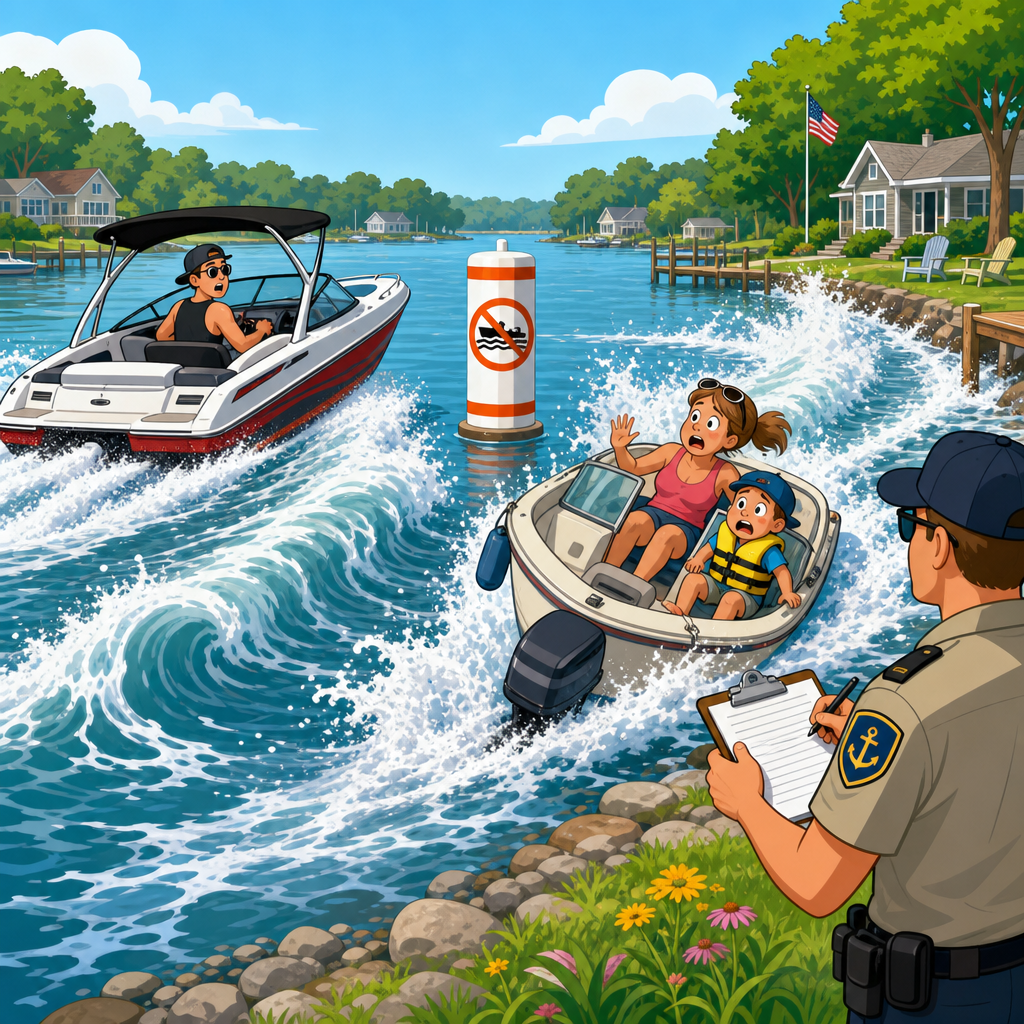
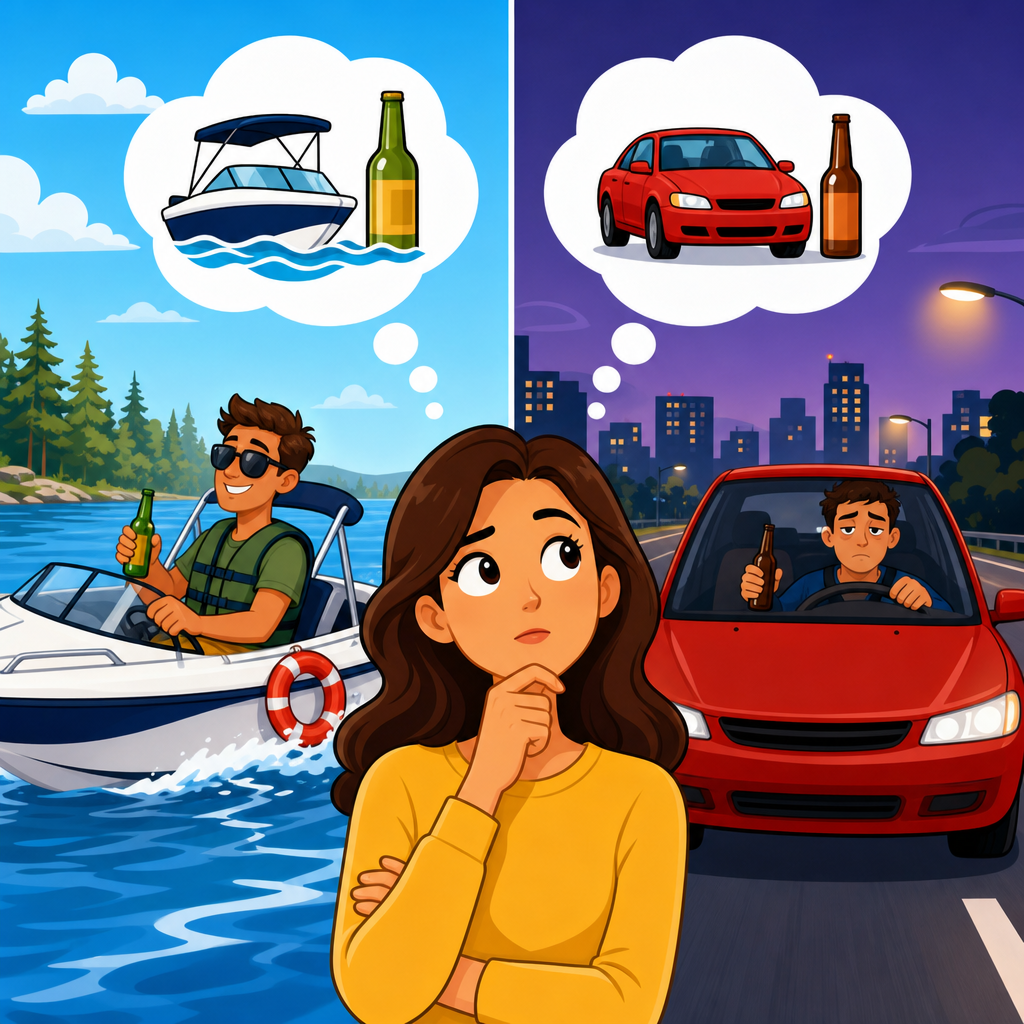
States commonly add no-wake zones, skier-down flag rules, personal watercraft time-of-day restrictions, and prohibitions on negligent operation. Boating under the influence is illegal in every state, typically with a blood alcohol threshold similar to motor vehicle law. Enforcement can involve sobriety testing, removal from operation, arrest, vessel impoundment, and consequences for future insurance coverage. Engine cutoff switch rules are another modern compliance area; federal law requires use on many recreational vessels less than 26 feet when equipped, with limited exceptions such as enclosed cabins and certain towing situations.
State-Specific Laws That Commonly Change Your Compliance Checklist
The biggest state-law differences usually involve boater education, age restrictions, life jacket wear, personal watercraft operation, and towing sports. Many states now require some or all operators to hold an approved boating safety education certificate, often based on age or date of birth. A person born after a set year may need the card, while an older operator may be exempt. Rental operators may face separate temporary certification requirements. NASBLA-approved courses are widely accepted, but reciprocity is not identical in every scenario, so visiting boaters should confirm acceptance before traveling.
Child life jacket laws vary sharply. One state may require children under six to wear a PFD only on boats under a certain length, while another requires wear by all children under 13 on any underway recreational vessel, with exceptions for enclosed cabins. Personal watercraft rules are even more state-specific. Common provisions include mandatory lanyard cutoff switch use, minimum operator age, prohibition on operation after sunset, and restrictions on wake jumping near other vessels. Towing a tube or wakeboarder often requires a dedicated observer in addition to the operator unless an approved wide-angle mirror is specifically allowed.
Environmental compliance also shifts by state and waterbody. Marine sanitation device rules interact with no-discharge zones, pumpout requirements, and freshwater lake restrictions. Aquatic invasive species laws may require draining, cleaning, or inspection before launching. Western states often enforce mussel prevention aggressively, and failure to comply can lead to denied launch access or penalties. Because these rules change regularly, the best practice is to review the state boating agency site before the season starts and again before interstate trips.
Inspections, Reporting, and Building a Reliable Compliance Routine
Compliance works best when treated as a routine, not a one-time purchase of safety gear. The Coast Guard, state marine patrols, county sheriffs, and harbor officers may stop recreational boats to check registration, life jackets, navigation lights, and other requirements. A voluntary Vessel Safety Check from the Coast Guard Auxiliary or United States Power Squadrons is one of the most efficient ways to catch problems early. It is not an enforcement action, but it mirrors the issues officers routinely inspect.
Accident reporting is another core legal duty. Federal and state rules require prompt reporting when a boating casualty involves death, disappearance, injury requiring more than first aid, significant property damage, or complete vessel loss. Deadlines vary by severity; some reports are due within 48 hours, others within 10 days. Operators should document time, location, weather, witnesses, registration numbers, and photographs immediately after the incident if it is safe to do so. Late or incomplete reporting can create separate legal exposure beyond the accident itself.
A dependable compliance routine includes five habits: verify registration and decals before launch season, inspect every required item for serviceability, confirm state education and age-based rules for all operators, test lights and sound devices before leaving the dock, and keep a printed or offline copy of state requirements onboard. That process reduces citations, supports insurance claims, and protects passengers when conditions change quickly. Coast Guard safety requirements for recreational boats are not red tape in disguise; they are the operational checklist that turns boating laws and regulations into safer decisions on the water. Review your federal and state rules now, update your gear, and schedule a safety check before your next trip.
Frequently Asked Questions
What safety equipment does the Coast Guard require on a recreational boat?
The U.S. Coast Guard requires most recreational boats to carry a core set of safety equipment, but the exact list depends on the boat’s size, type, propulsion, and where it is being used. In general, every recreational boat must have a wearable U.S. Coast Guard-approved life jacket for each person on board, and children may be subject to stricter state-specific wear requirements. Boats 16 feet and longer, except canoes and kayaks in many cases, must also carry a throwable flotation device. In addition, boats generally need a sound-producing device such as a whistle or horn, proper navigation lights if operated between sunset and sunrise or in periods of reduced visibility, and visual distress signals when operating on coastal waters, the Great Lakes, territorial seas, and connected waters where those signals are required.
Fire safety is another major part of compliance. Many motorized boats must carry marine fire extinguishers, especially if they have enclosed fuel tanks, engine compartments, or certain permanently installed equipment that increases fire risk. Ventilation and backfire flame arrestor requirements may also apply to gasoline-powered inboard engines and enclosed engine spaces. Beyond these federal baseline rules, states often add equipment requirements such as registration decals, invasive species permits, or more specific child life jacket rules. The safest approach is to think of Coast Guard rules as the minimum legal standard, then confirm state and local requirements before launching. Boat owners who keep a current checklist on board and inspect equipment regularly are much less likely to fail an inspection or face preventable emergencies on the water.
Do Coast Guard rules apply to all recreational boats, including kayaks, canoes, and personal watercraft?
Yes, Coast Guard safety requirements can apply to a wide range of recreational vessels, including small hand-powered craft like kayaks and canoes, as well as jet skis and other personal watercraft. Many new boaters assume federal rules only matter for large motorboats, but that is not the case. Even a paddlecraft may be required to carry a properly sized, Coast Guard-approved life jacket for each person aboard, and navigation lights may be necessary if the boat is used at night or in low visibility. Personal watercraft are also subject to core federal safety requirements and often face additional state rules, including mandatory education, minimum operator age, and rules requiring the operator and passengers to wear life jackets at all times.
The important distinction is not whether the vessel is used for recreation, but how it is classified and where it is operated. Some requirements, such as visual distress signals, may depend on the location and type of waterway. Others, such as registration, numbering, and titling, are usually driven by state law rather than federal law. Local authorities may also restrict where certain craft can operate, impose no-wake zones, or require added safety gear for specific reservoirs or harbors. For that reason, recreational boat owners should avoid relying on general assumptions. A kayak on an inland pond, a bass boat on a reservoir, and a center-console boat in coastal waters can each face different legal obligations. Checking the federal baseline first and then matching it against state and local rules is the most reliable way to stay compliant.
Are life jackets legally required to be worn, or do they just need to be on board?
Under federal law, recreational boats generally must have one wearable U.S. Coast Guard-approved life jacket for each person on board, and those life jackets must be the correct size, in serviceable condition, and readily accessible. On many boats, simply having the required number on board satisfies the basic federal carriage requirement for adults. However, that does not mean wearing a life jacket is optional in every situation. State laws frequently require children under a certain age to wear a life jacket whenever the boat is underway, and personal watercraft users are commonly required to wear one at all times. Certain waters, activities, or weather conditions may also trigger practical or legal expectations that go beyond the bare minimum equipment rule.
From a safety standpoint, wearing a life jacket is one of the simplest and most effective protections available. In real-world emergencies, there is often no time to locate and put on a life jacket after a collision, capsize, fall overboard, or sudden weather change. That is especially true in cold water, rough conditions, or when someone is injured or unconscious. Inflatable life jackets may be acceptable for some adults in some circumstances, but they must meet applicable approval standards and usually are not approved for children or certain activities. Because life jacket rules can vary by age, vessel type, and state, boaters should verify the exact requirements where they operate. Legally, the answer is often “at least on board,” but practically and in many situations legally, wearing one is the safer and smarter choice.
How do federal Coast Guard requirements interact with state and local boating laws?
Coast Guard safety requirements for recreational boats create the federal floor, not the entire rulebook. That means boaters must comply with federal equipment and operational rules, but they may also need to satisfy additional state and local requirements that are stricter or more specific. States commonly regulate registration, vessel numbering, titling, boater education certificates, minimum operator age, and life jacket rules for children. They may also impose extra equipment requirements, alcohol enforcement standards, and towing rules for waterskiing or wake sports. Local governments, harbor authorities, and park agencies can add another layer by setting speed limits, no-wake zones, anchoring restrictions, seasonal closures, and special rules for specific lakes, rivers, marinas, or coastal zones.
For recreational boat owners, the practical takeaway is that compliance is never just a matter of reading one federal checklist. A boat that is fully compliant under Coast Guard standards can still be operated illegally if it is unregistered, if the operator lacks a required state boater education card, or if local rules prohibit certain activities in that area. This layered structure is one reason insurance carriers, marinas, and law enforcement often focus on documentation as much as equipment. The best approach is to review Coast Guard requirements for the vessel’s class and use, then confirm the laws of the state where the boat is registered and the state or locality where it will be operated. That extra step helps avoid citations, coverage issues, launch denials, and unnecessary safety risks.
What happens if a recreational boat does not meet Coast Guard safety requirements?
If a recreational boat does not meet applicable Coast Guard safety requirements, the consequences can range from a warning during a routine inspection to fines, citations, termination of voyage in serious cases, or increased liability after an accident. Law enforcement officers and Coast Guard personnel can stop vessels for safety checks and verify required equipment, documentation, and compliance with operational rules. Missing life jackets, expired visual distress signals, inoperable navigation lights, or absent fire extinguishers are common issues that can lead to enforcement action. In some situations, especially where unsafe conditions present an immediate danger, authorities may prevent the vessel from continuing until the problem is corrected.
Noncompliance can also create problems beyond enforcement. If an accident occurs and the boat lacked required safety gear, that failure may influence insurance claims, injury lawsuits, or fault determinations. A missing or inaccessible life jacket, for example, can become a major issue if a passenger is injured or drowns. Buyers and lenders may also view compliance history as part of responsible ownership. The broader point is that Coast Guard rules are not just technicalities; they are the baseline legal and practical standards for operating safely. Regular inspections, maintenance of onboard gear, replacement of expired items, and keeping up with changes in federal and state boating laws can significantly reduce both legal exposure and on-the-water risk.