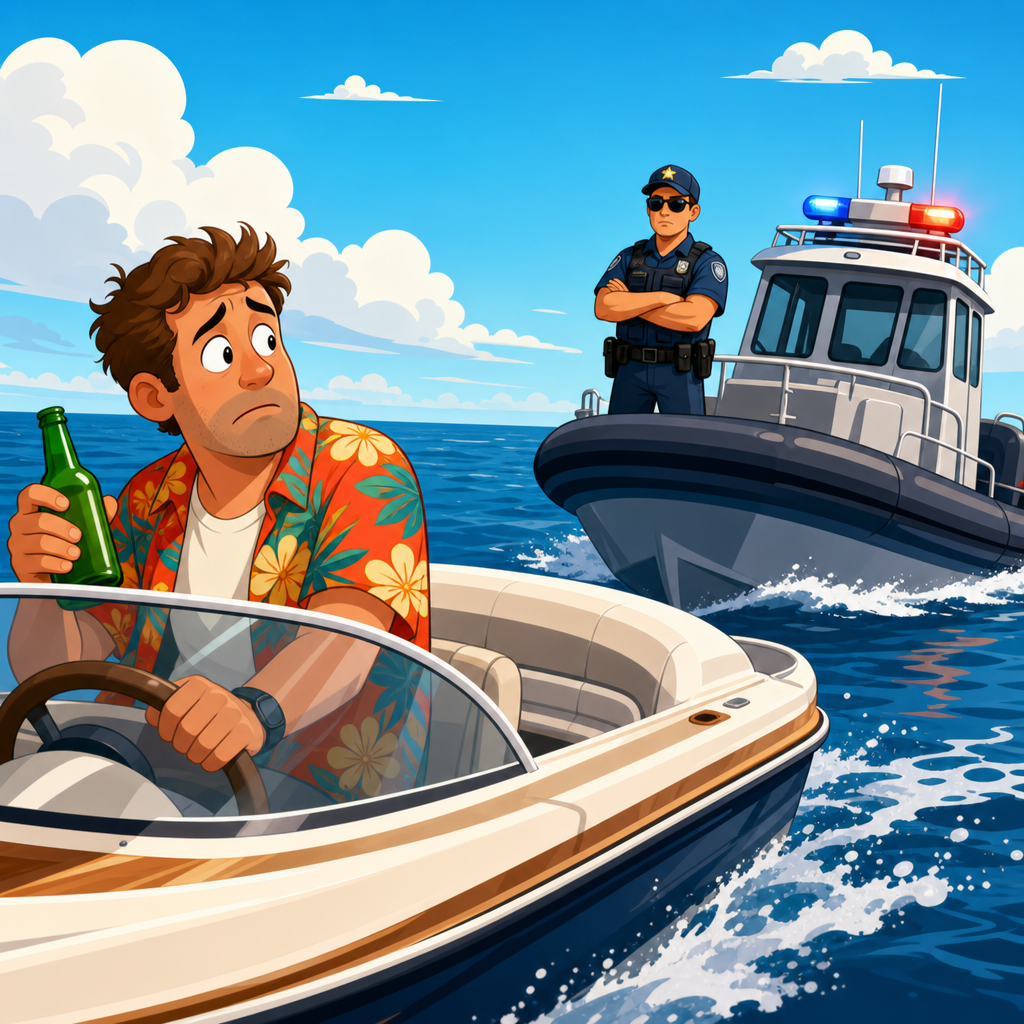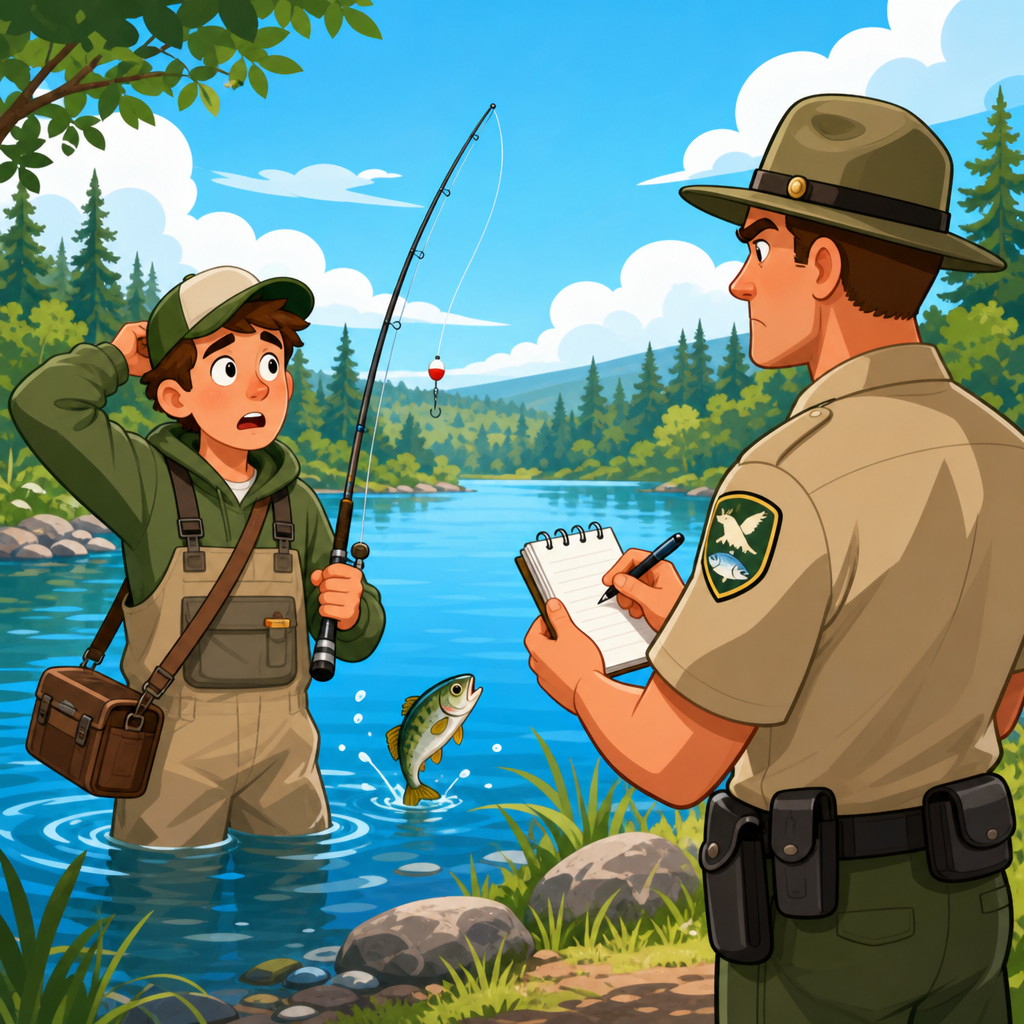
Fishing without a license can trigger fines, confiscated gear, court costs, and in some cases criminal charges, making it one of the easiest outdoor violations to avoid. A fishing license is a government-issued authorization that allows a person to catch fish under specific rules tied to location, species, season, and method. Fishing regulations are the broader legal framework behind that license: they include size limits, daily bag limits, protected waters, reporting requirements, and special permits for trout, salmon, shellfish, or saltwater harvest. Together, licensing and regulations fund fisheries management, support habitat restoration, and help agencies control harvest pressure so fish populations remain sustainable.
I have worked with boating and outdoor compliance content long enough to see the same mistake repeated every season: anglers assume a general license covers every waterbody, every species, and every trip. It does not. One state may require a basic freshwater license plus a trout stamp. Another may exempt shoreline saltwater anglers but still require harvest reporting. A third may offer no-cost youth licenses but still enforce catch limits. That confusion matters because wildlife officers usually enforce fishing rules as strict-liability offenses. In plain terms, saying you did not know the rule rarely erases the ticket.
This topic matters beyond the risk of a citation. If you fish from a boat, licensing intersects with boating laws, invasive species checks, access permits, life jacket rules, and interstate boundary issues. If you travel, the legal situation can change the moment you cross into another state, enter tribal waters, or move from inland lakes to coastal zones. As a hub for fishing regulations and licensing, this guide explains the typical penalties for fishing without a license, how states structure violations, what exceptions may apply, and what anglers should do before every trip to stay compliant.
What Happens If You Fish Without a License
The most common penalty for fishing without a license is a monetary fine, but the real cost is usually higher. A basic citation may start around $25 to $100 in some jurisdictions for a first offense, yet mandatory court fees, administrative surcharges, and replacement licensing costs can push the total far above the listed fine. In stricter states, unlawful take or repeat violations can quickly climb into several hundred dollars. If the incident involves protected species, over-limit harvest, or commercial activity without authorization, penalties can escalate sharply.
Enforcement officers often have broad discretion at the point of contact. If you are actively fishing and cannot produce a valid license, they may issue a warning, a citation, or a mandatory court appearance depending on state law and your record. Some states treat failure to carry proof differently from not having a license at all. In those places, showing valid proof later may reduce or dismiss the charge. In others, digital proof on an agency app is acceptable immediately, which is why checking approved formats before a trip matters.
Many anglers ask whether a missing license is just like a parking ticket. Usually it is not. Fishing violations are commonly written under wildlife codes, not routine traffic ordinances. That distinction matters because wildlife cases can involve seizure of fish, tackle, nets, coolers, or even a boat used in the violation. In repeated or aggravated cases, a court can suspend hunting and fishing privileges. Through the Interstate Wildlife Violator Compact, member states may also honor suspensions imposed elsewhere, so one unresolved case can affect future trips across state lines.
Typical Penalties by Violation Type
Not every licensing offense is punished the same way. Agencies generally separate simple license possession issues from harvest violations and fraud. The table below shows how penalties are commonly structured, although exact amounts and procedures depend on the state, the species involved, and whether the angler has prior offenses.
| Violation type | Typical consequence | Why it becomes serious |
|---|---|---|
| No valid fishing license | Fine, court costs, possible warning for first offense | Strict liability; proof of ignorance usually does not excuse the act |
| Fishing with expired license | Citation similar to no license | Expiration is the angler’s responsibility to track |
| No species stamp or endorsement | Additional fine per missing permit | States regulate high-value or heavily managed fisheries separately |
| Exceeding bag or size limits | Higher fines, seized fish, potential misdemeanor charges | Directly affects conservation goals and stock assessments |
| Fishing in closed season or closed water | Substantial fine, possible license suspension | Closures protect spawning runs, habitat, or safety zones |
| Providing false information | Criminal penalties, revoked privileges | Fraud undermines the licensing system and enforcement records |
In practice, the highest penalties often have little to do with the paper license itself and everything to do with resource impact. I have seen minor no-license cases resolved with modest fines, while anglers who kept undersized red drum, exceeded trout limits, or entered salmon closures faced much steeper outcomes. Courts and agencies view those acts as measurable harm to managed fisheries. That is why every licensing discussion must also include the regulations attached to the license.
Why States Require Fishing Licenses and Special Permits
Fishing licenses are not just revenue tools; they are management instruments. State fish and wildlife agencies use license sales and excise tax apportionments tied to angling participation to fund hatcheries, creel surveys, boat access, habitat work, enforcement, and aquatic education. In the United States, the Sport Fish Restoration program, created under the Dingell-Johnson framework and later expanded, returns federal excise taxes on fishing equipment and motorboat fuel to states. License data helps determine participation and supports planning. When people fish without licenses, they undercut both funding and data quality.
Special permits exist because different fisheries need different controls. Trout waters may be stocked and heavily monitored, so states often require a trout stamp or inland trout endorsement. Salmon, steelhead, sturgeon, lobster, crab, shrimp, and reef fish may require harvest cards, tags, vessel permits, or electronic reporting. Saltwater anglers in some coastal states must register separately to feed marine recreational information programs. These layers can seem burdensome, but they give managers species-level information that a basic annual license cannot provide.
A common misunderstanding is that a boat registration or marina access pass has something to do with fishing legality. It usually does not. Boat registration authorizes operation of the vessel under boating law; a fishing license authorizes the act of taking aquatic species under wildlife law. You often need both. If you are on a kayak, charter boat, or private skiff, the legal analysis starts with who is fishing, where, and for what species. Vessel ownership alone never substitutes for individual fishing privileges unless a jurisdiction expressly creates a vessel-based permit system.
Freshwater, Saltwater, Interstate, and Special Water Rules
Freshwater and saltwater rules frequently diverge. Inland fisheries often emphasize species-specific stocking programs, stream classifications, and seasonal closures tied to spawning. Saltwater systems may focus more on migratory stocks, reef protections, vessel limits, and federal-state boundary lines. For example, a coastal angler may legally fish from a public pier without a personal license if the pier holds a blanket permit, yet need a personal license the moment they launch a private boat. Another angler may be exempt from a state saltwater license but still must register for harvest reporting.
Boundary waters create another compliance trap. Lakes and rivers that touch two states can operate under reciprocal agreements, split-jurisdiction maps, or side-specific rules. On the Mississippi River, for instance, the lawful license and allowed harvest can depend on your launch point, your exact fishing location, and the reciprocal terms between bordering states. The same principle appears on reservoirs shared across state lines. Never assume one license follows the boat everywhere. Read the boundary-water section in the current regulation digest before launching.
Special waters can impose added rules regardless of your general license status. National parks, wildlife refuges, state parks, municipal reservoirs, and tribal waters may require access permits, area tags, or separate authorization. Tribal nations are sovereign governments and may issue their own fishing permits with distinct seasons and cultural resource protections. Federal waters offshore can add another layer when species fall under federal fishery management plans. If your trip moves across freshwater, tidal water, and federal jurisdiction in one day, one outdated assumption can become multiple violations.
Common Exemptions and Why They Still Require Verification
Most states offer exemptions, but none should be assumed. Common examples include children below a certain age, resident seniors, active-duty military on leave, veterans with qualifying disability status, landowners fishing private ponds, and participants on designated free fishing days. Some states exempt anglers on licensed for-hire charter boats because the operator carries a blanket vessel permit. Others waive the license but not species tags or report cards. The only safe rule is this: an exemption is valid only if the statute or current agency regulation says it is.
Free fishing days cause a lot of preventable citations. Anglers hear that no license is required and stop reading there. In reality, those events often waive only the base license. Size limits, gear restrictions, invasive species rules, and area closures still apply. If a waterbody requires a separate daily access permit, that permit may still be mandatory. I have also seen confusion around private property. Fishing a privately owned pond may be exempt in one state if the pond is entirely enclosed and privately stocked, while a connected stream on the same land remains fully regulated.
Residency is another frequent issue. States define resident differently for licensing than people expect. Owning a second home, attending college, or staying seasonally in an RV park does not automatically make someone a resident for license pricing or eligibility. Agencies often require a minimum period of domicile plus documentation such as a driver’s license, tax record, or voter registration. Buying a resident license when you do not qualify can be treated as fraud, and that carries heavier consequences than simply forgetting to renew a nonresident permit.
How to Stay Compliant Before Every Trip
The best compliance routine is simple and repeatable. First, identify the exact waterbody and jurisdiction, including whether any part of the trip enters boundary, tribal, or federal water. Second, confirm the required base license and any endorsements for your target species. Third, review season dates, bag limits, slot limits, and bait restrictions in the current year digest rather than relying on memory. Fourth, store acceptable proof in both printed and digital form if your state allows electronic display. Fifth, check for local access permits, boat inspections, or mandatory harvest reporting before launching.
Use official sources first. Every state fish and wildlife agency publishes current regulations online, and many provide mobile apps, automated license portals, emergency rule change notices, and interactive maps. Common tools include electronic licensing systems from providers such as Aspira or Brandt, state outdoor annuals, and NOAA Fisheries guidance for marine species where federal rules overlap. If any rule is unclear, call the regional office or conservation officer before the trip. A two-minute verification call is cheaper than a citation and far more reliable than social media advice.
As this hub page, the smartest next step is to build your trip plan around related topics within boating laws and regulations: state fishing license requirements, freshwater versus saltwater licensing, free fishing day rules, trout stamps and report cards, reciprocal license agreements, charter boat exceptions, catch limits, and what to do after a wildlife citation. Fishing legally is not complicated once you adopt a checklist mindset. Review the rules before every outing, buy the correct license, and keep proof with you so the only thing you bring home is your catch and a clean compliance record.
Frequently Asked Questions
What happens if you get caught fishing without a license?
If you are caught fishing without a license, the penalty usually starts with a citation and a fine, but the actual consequences can go well beyond that. In many states, wildlife officers or conservation officers can issue a ticket on the spot if you are actively fishing and cannot produce a valid license. That fine may seem manageable at first, but once court costs, administrative fees, and surcharges are added, the total amount often rises quickly. In some jurisdictions, repeat violations or fishing in specially protected waters can lead to higher fines, mandatory court appearances, or misdemeanor charges.
There can also be consequences beyond the ticket itself. Officers may confiscate fish that were caught illegally, and in more serious cases they can seize rods, reels, nets, boats, or other equipment connected to the violation. If the incident involves additional rule-breaking, such as exceeding bag limits, keeping undersized fish, fishing during a closed season, or targeting protected species, penalties can stack. That means a person may be cited not just for lacking a license, but also for violating the broader fishing regulations that govern where, when, and how fish may be taken. In practical terms, fishing without a license is often one of the easiest and most preventable outdoor violations, which is why regulators tend to enforce it consistently.
How much is the fine for fishing without a license?
The fine for fishing without a license varies significantly by state, and sometimes even by the type of water, residency status, and whether it is a first or repeat offense. In some places, a first-time violation may result in a relatively modest fine, while in others the base penalty is much higher from the start. What many people do not realize is that the amount listed in a statute is often only part of the total cost. Courts commonly add filing fees, processing charges, and other assessments, so the final bill can be substantially more than the original citation amount.
Additional factors can increase the financial penalty. For example, if someone was fishing in a trout stream that requires a special stamp, taking fish in excess of the daily bag limit, or fishing in restricted waters, the officer may issue multiple citations. Each violation can carry its own fine. Some states also impose restitution or civil penalties if protected species are involved or if illegally taken fish have a set replacement value under wildlife laws. Because of these differences, the smartest approach is not to assume the fine will be minor. A basic fishing license usually costs far less than the combined expense of a citation, court fees, lost gear, and time spent dealing with the violation.
Can you go to court or face criminal charges for fishing without a license?
Yes, in some situations you can be required to go to court or even face criminal charges for fishing without a license. Whether that happens depends on the state’s laws and the circumstances of the violation. In many first-offense cases, the matter is handled similarly to a ticket, with the option to pay the fine or resolve it through a local court. However, if the violation is repeated, intentional, tied to false identification, or combined with other serious fishing offenses, it can escalate quickly. Some states classify certain wildlife violations as misdemeanors, especially when there is evidence of knowing noncompliance or abuse of natural resource rules.
Court involvement becomes more likely when there are aggravating factors. Examples include fishing during a closed season, taking protected species, trespassing onto restricted property to fish, ignoring prior citations, or failing to appear in response to a ticket. A judge may impose higher fines, probation, suspension of fishing privileges, or other penalties depending on the facts. While many people think of fishing violations as minor, fish and wildlife laws are real legal requirements backed by enforcement authority. That is why it is important to treat any citation seriously, read the instructions carefully, and respond on time rather than assuming it will simply go away.
Can your fishing gear be confiscated if you do not have a license?
Yes, gear confiscation is possible, particularly when fishing without a license is combined with other violations or when state law gives officers authority to seize equipment used in unlawful take. In a basic case, an officer may simply issue a citation and instruct the person to stop fishing immediately. But if the situation involves illegal methods, over-limit catches, protected fish, repeat offenses, or refusal to comply, officers may confiscate rods, reels, tackle, nets, coolers, or even a boat in more severe cases. The exact authority and procedure depend on local law, but the risk is real enough that anglers should not treat licensing rules casually.
Confiscation matters because it can become one of the most expensive parts of the violation. Replacing fishing equipment can cost far more than purchasing the proper license in the first place. In addition, getting seized property back may require going through a legal process, paying fines first, or proving ownership. If fish were unlawfully taken, those fish will almost certainly be seized as evidence or disposed of according to agency policy. The broader point is that a fishing license is not just a receipt or a formality; it is proof that you are authorized to participate under the rules for that water, species, season, and method. Without that authorization, everything associated with the activity can come under scrutiny.
Are there any exceptions, temporary permits, or ways to avoid a penalty?
There are often exceptions and short-term options, but they depend entirely on the laws where you are fishing. Many states offer one-day, weekend, vacation, youth, senior, disability, or beginner-friendly licenses that are inexpensive and easy to obtain online, by phone, or through local retailers. Some states also hold designated free fishing days when a license is not required for certain anglers in certain waters. In addition, children below a certain age, landowners fishing on their own property, or anglers in private ponds may sometimes qualify for exemptions. The important part is not to guess. Exemptions are usually narrow and may still require compliance with all other fishing regulations, including size limits, bag limits, protected species rules, and seasonal restrictions.
As for avoiding a penalty after being cited, that is much less certain. Some courts or agencies may reduce or dismiss a first-time violation if the person promptly purchases the correct license and can show the oversight was unintentional, but that is never guaranteed. Other jurisdictions strictly enforce the law regardless of whether a license is bought afterward. Officers and judges generally expect anglers to know the rules before they start fishing, not after they are stopped. The best way to avoid penalties is to verify the requirements in advance, carry proof of your license in the required format, and make sure you understand any special permits or endorsements needed for particular waters or species. A few minutes of preparation can prevent fines, court costs, confiscated gear, and unnecessary legal trouble.